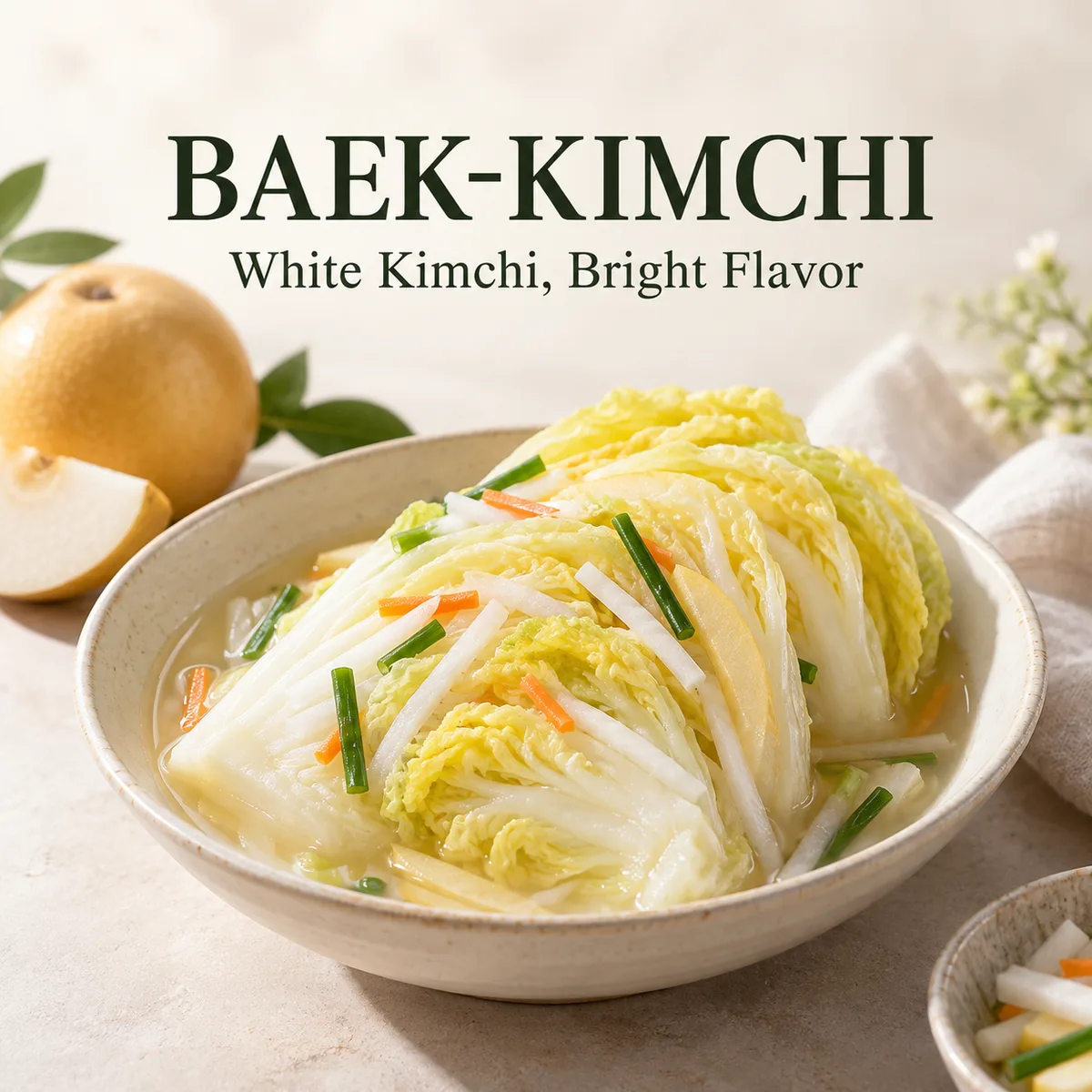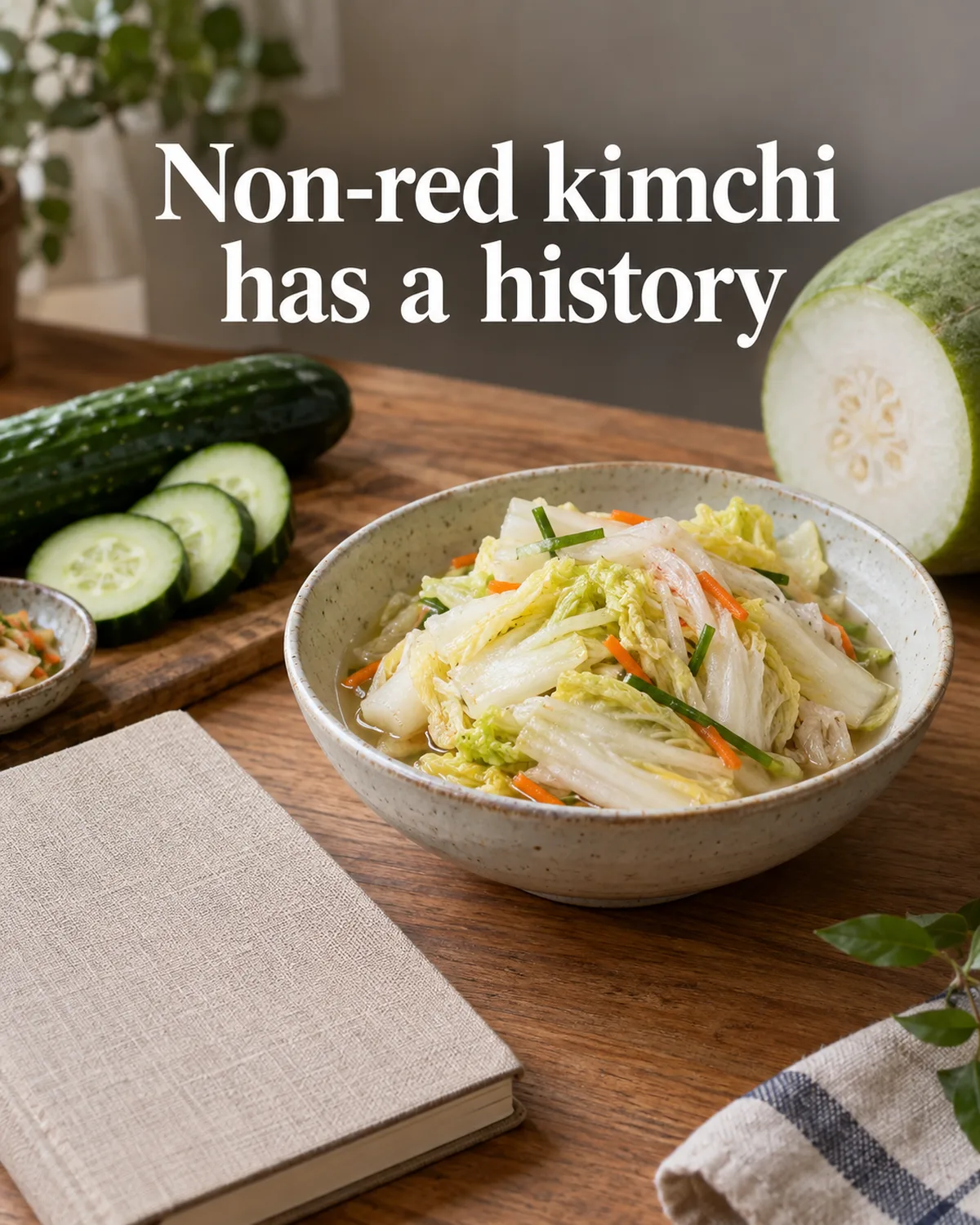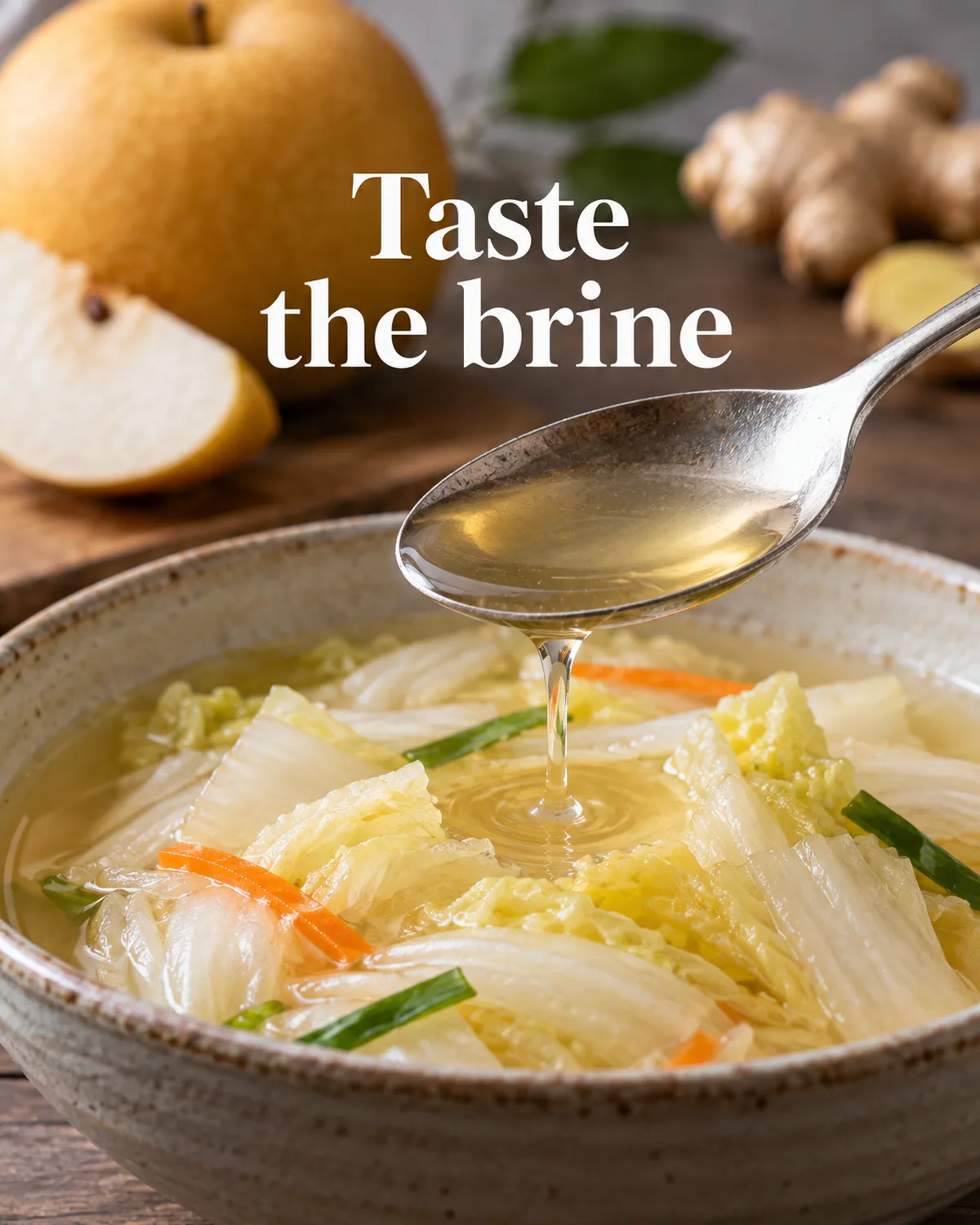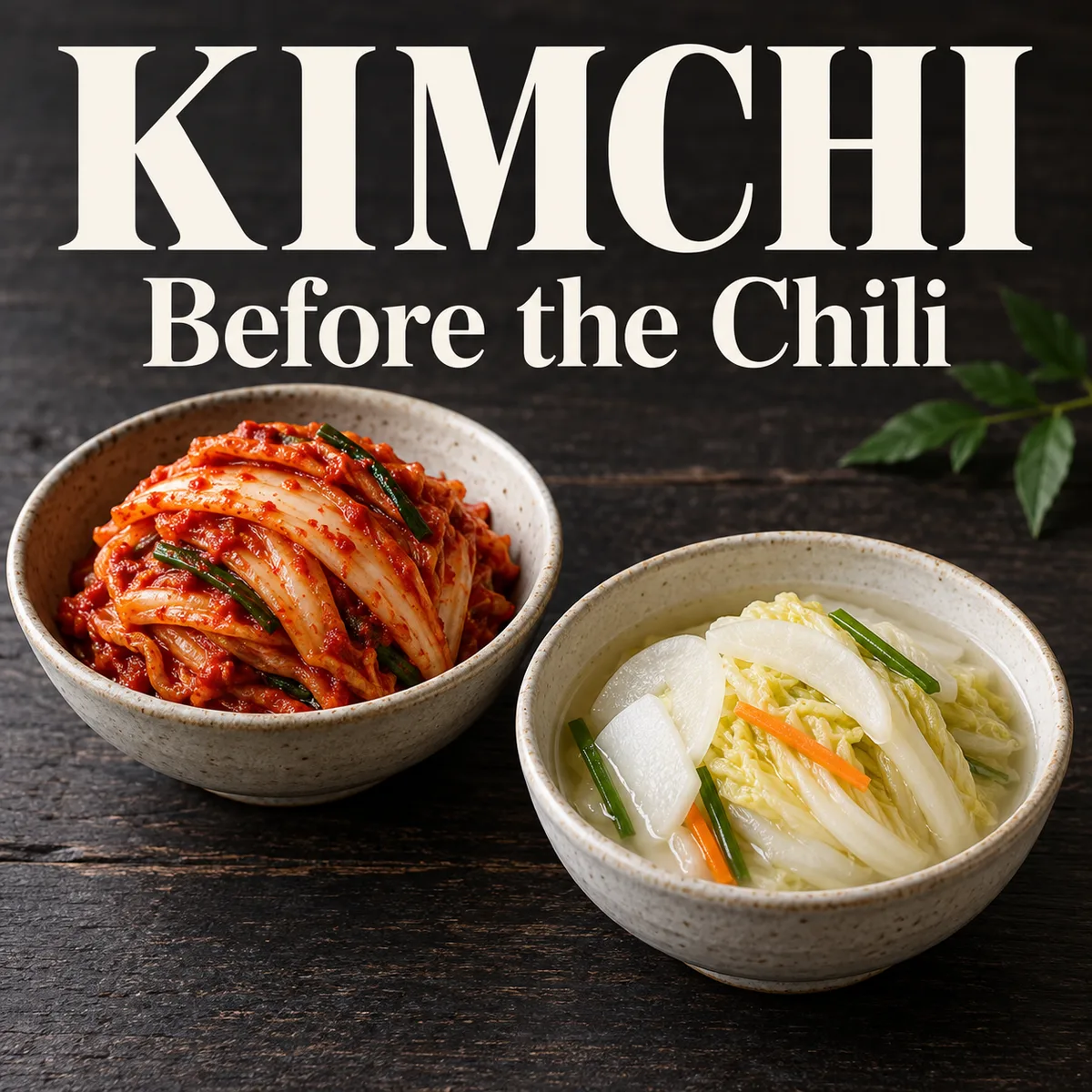
A bowl of red cabbage kimchi and a bowl of white kimchi belong to the same broad food tradition. Redness is a seasoning choice within that tradition, rather than the feature that made preserved vegetables become kimchi in the first place.
The health headline raises a separate question. This article does not establish a Europe-wide market share or a current ranking of wellness trends. Nor does it treat every jar of kimchi as a clinically tested probiotic product. A market forecast, a laboratory result and a finished food are different kinds of evidence.
NCCIH explains that probiotic products can contain different organisms and have different effects, including variation between people. It also says strong evidence for most proposed uses is lacking despite promising research in some formulations. That is a reason to ask what was actually studied before turning a broad fermentation claim into a promise about dinner.[1]
The historical answer is clearer: chili pepper was a later addition to an older vegetable-preserving tradition. The Academy of Korean Studies places the pepper’s arrival in Korea in the early seventeenth century. Its entry also records differing accounts of transmission between Korea and Japan, so a single dramatic arrival story is too precise.[2]

The older category was wider than red cabbage
The Academy’s kimchi-making entry describes salted-turnip preservation in Yi Gyu-bo’s Goryeo-period poem. It also lists several kimchi preparations in Sangayorok, compiled around 1450, including cucumber, eggplant, radish and scallion. These references precede the pepper’s Korean chronology.[3]
The comparison changes what the word original can reasonably mean. An old record can show that a preservation practice existed without giving us a complete recipe for the first-ever kimchi. The absence of chili from the older chronology does not identify one single bowl as the ancestor of all others.
Vegetables matter as much as color. A salted radish preparation, a cucumber kimchi and a modern layered cabbage kimchi have different shapes and methods. Calling all of them kimchi does not make them interchangeable when a reader tries to picture an old meal.
It is more useful to see a family of preparations that changed over time. A contemporary white kimchi can illustrate a chili-free branch without being described as an unchanged replica of a medieval recipe. Historical continuity and an exact reconstruction are different claims.

An ingredient’s arrival is not a recipe’s birthday
Three dates can answer three different questions: when a crop was present, when a recipe used it and when a form became widespread. A record of chili in Korea supplies the first kind of evidence. It cannot by itself tell us that every household immediately made red kimchi.
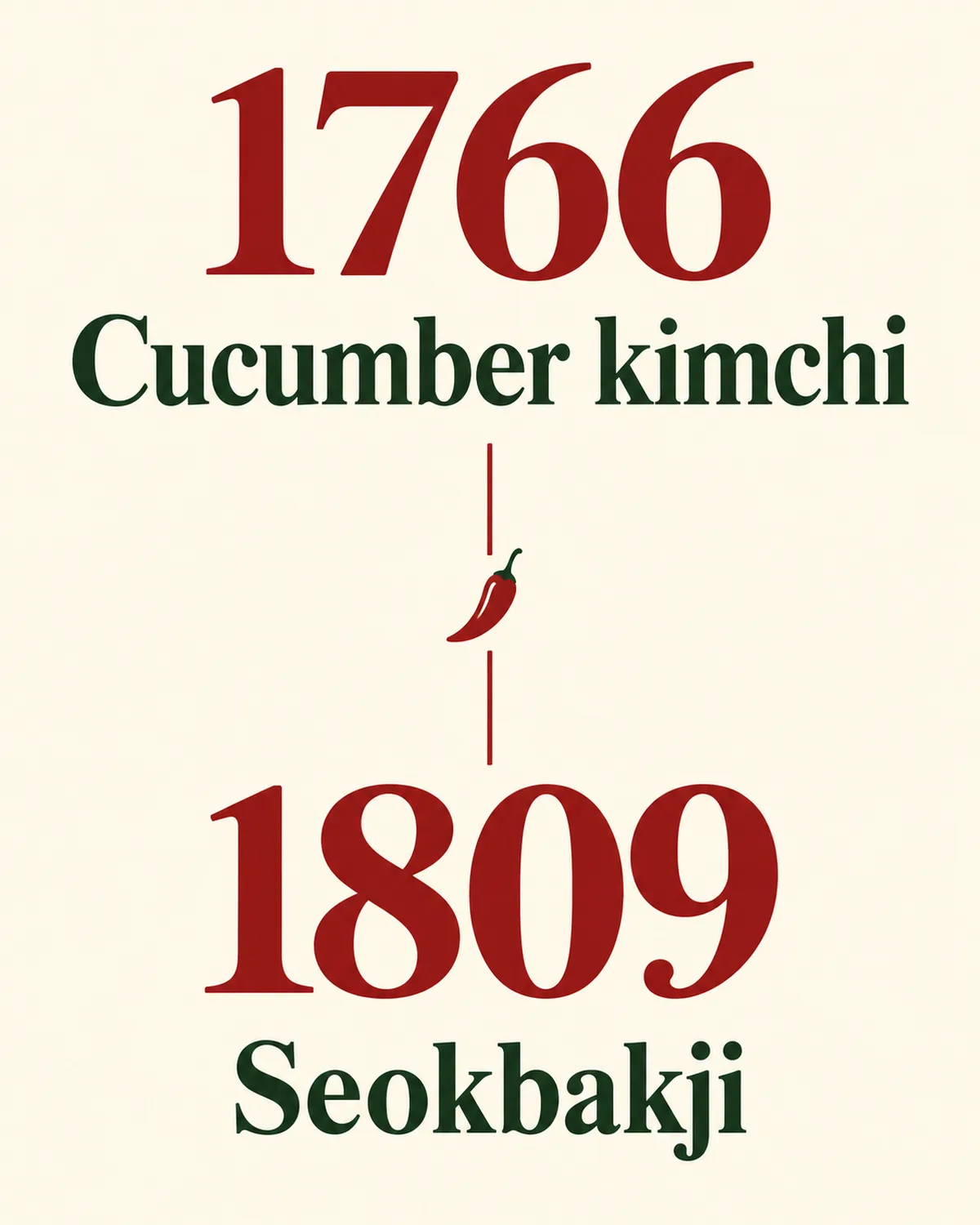
The kimchi-making entry identifies a cucumber recipe in the 1766 Jeungbo Sallim Gyeongje that uses chili powder and garlic as stuffing. It then describes the 1809 Gyuhap Chongseo’s seokbakji as combining chili powder with salted seafood. Those are recipe records, rather than one nationwide switch date.[3]
That evidence also corrects a tempting shortcut: saying chili was first added only in the nineteenth century overlooks the documented eighteenth-century preparation. Saying red kimchi appeared instantly when the pepper arrived makes the opposite mistake. The records support a gradual development.
A modern red cabbage kimchi combines a vegetable, a cut or leaf arrangement, seasonings and fermentation. Each component has its own history. Identifying one new ingredient is important, but it is not the same as dating the completed combination on every Korean table.
Scallion kimchi makes the change tangible
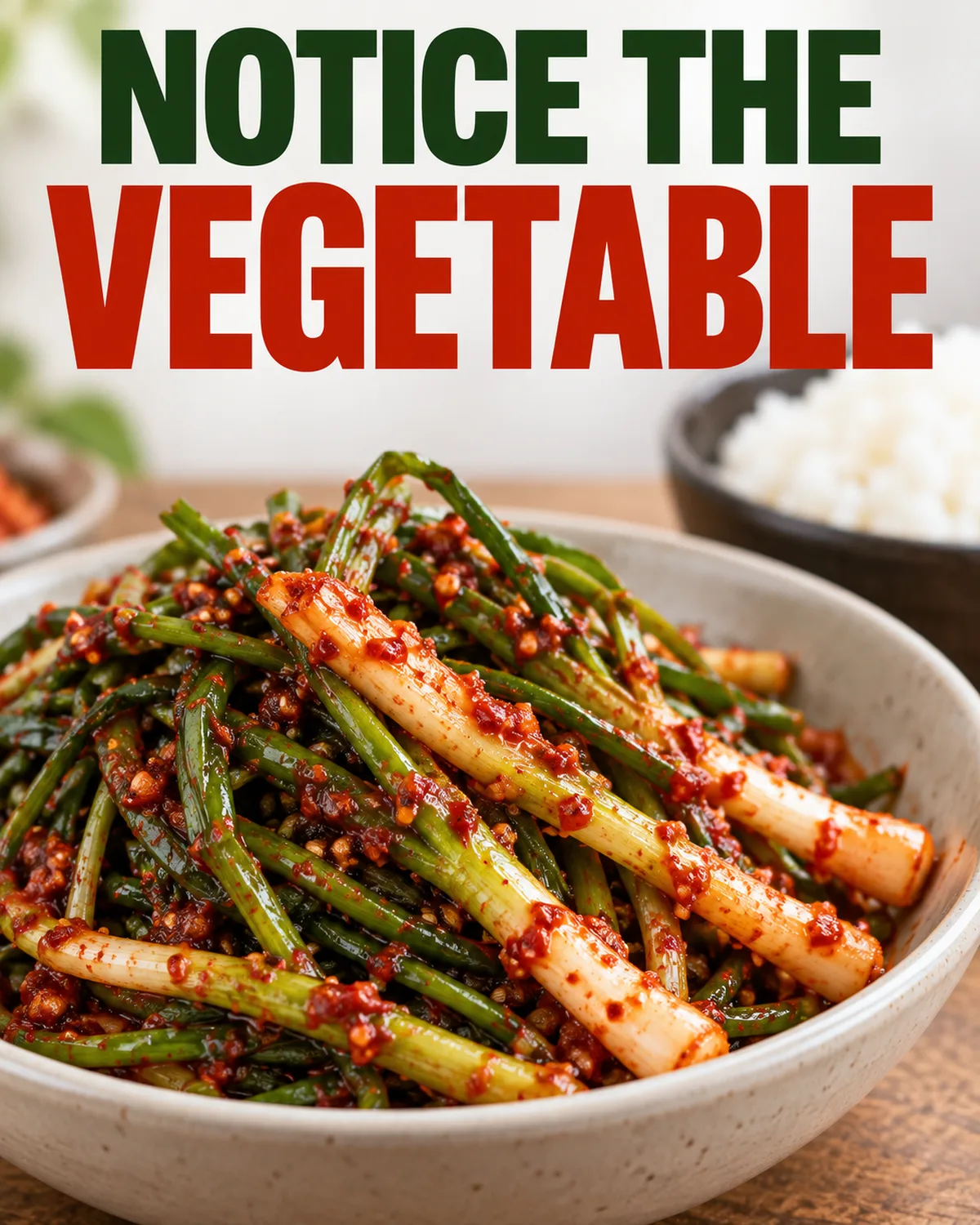
The Academy’s scallion-kimchi entry contrasts a brined preparation in Sasichanyocho with the later version seasoned using chili powder and fermented seafood liquid. It places the development of today’s style in the nineteenth century or later. That is a qualified chronology for this dish, not for every kimchi.[4]
For a diner, the scallion remains recognizable while the surrounding flavor changes. Thin green stems, a seasoned surface and the amount of liquid create a different bite from a thick cabbage rib. One can notice those structural differences without calling one preparation more authentic.
If you compare a red cabbage kimchi and pa-kimchi, begin with the vegetable itself. The cabbage presents layered leaves and a firmer rib; the scallion offers a much thinner strand. That changes how a portion is lifted, bitten and combined with rice.
The practical historical lesson is to avoid reading a familiar name as a complete ingredient list. A record called scallion kimchi does not automatically describe the red version now pictured in a restaurant menu. Read the method as well as the name.
The story branches beyond red and white
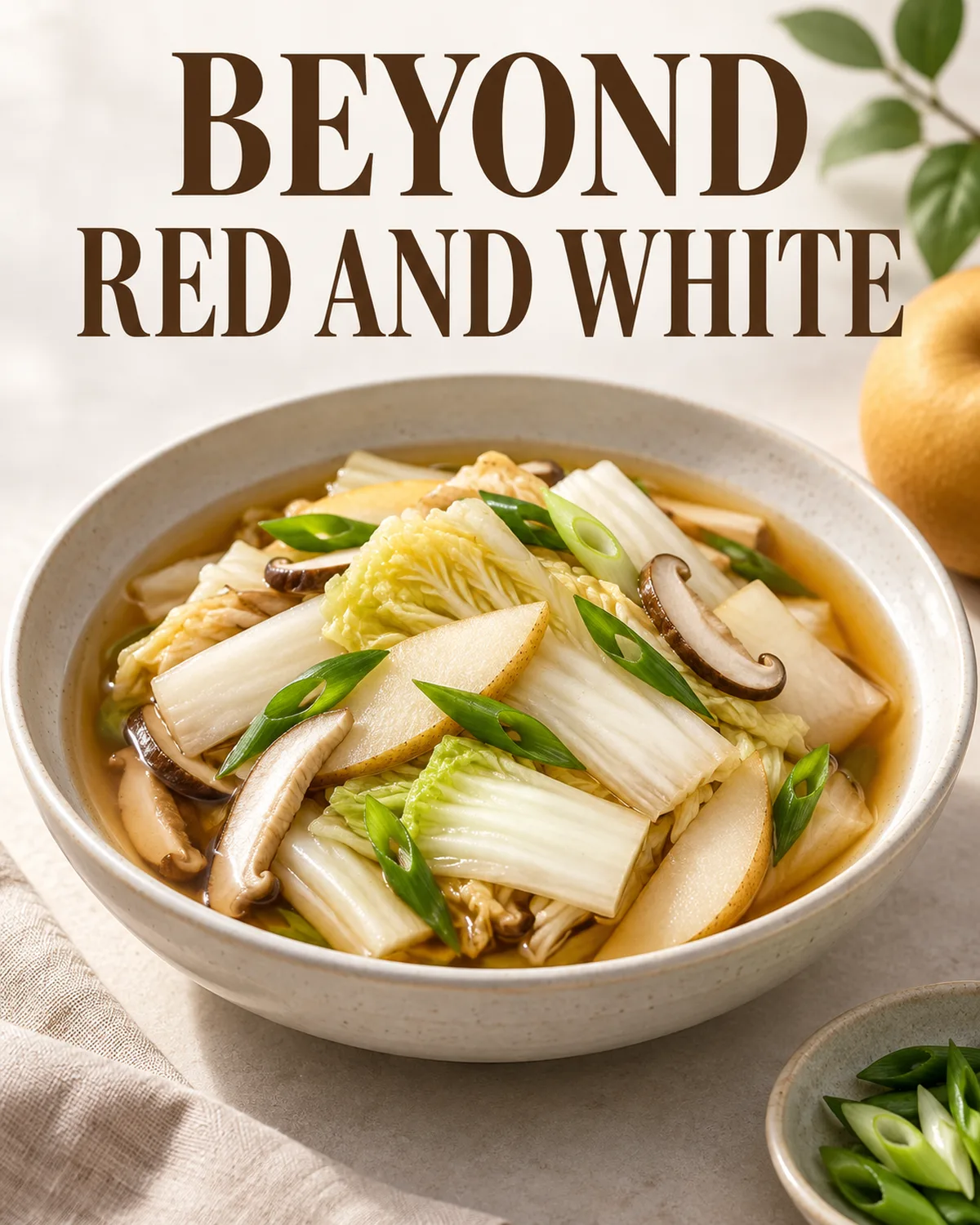
Soy-sauce kimchi offers another branch. The Academy describes jang-kimchi as a liquid kimchi based on cabbage and radish seasoned with soy sauce. Its entry lists historical references and a preparation including other vegetables, fruit and mushrooms. That makes a red-versus-white binary too narrow.[5]
Color still helps a visitor ask a question, but it cannot answer every ingredient question. A pale preparation can have a complex broth; a red one can vary in its seasonings. Ask about the particular recipe when stock, fermented seafood or other ingredients matter to the order.
At a meal, taste kimchi with the rice or main food alongside it. Notice the vegetable’s firmness, the liquid and the aroma before reducing the experience to heat. A small side can contribute acidity, texture and seasoning in different proportions.
There is no requirement to prefer one branch. Somebody may enjoy a crisp pale preparation with a mild dish and a more assertive red kimchi with another meal. The history explains why several forms coexist; it does not rank personal taste.
Read the particular food, not only the headline
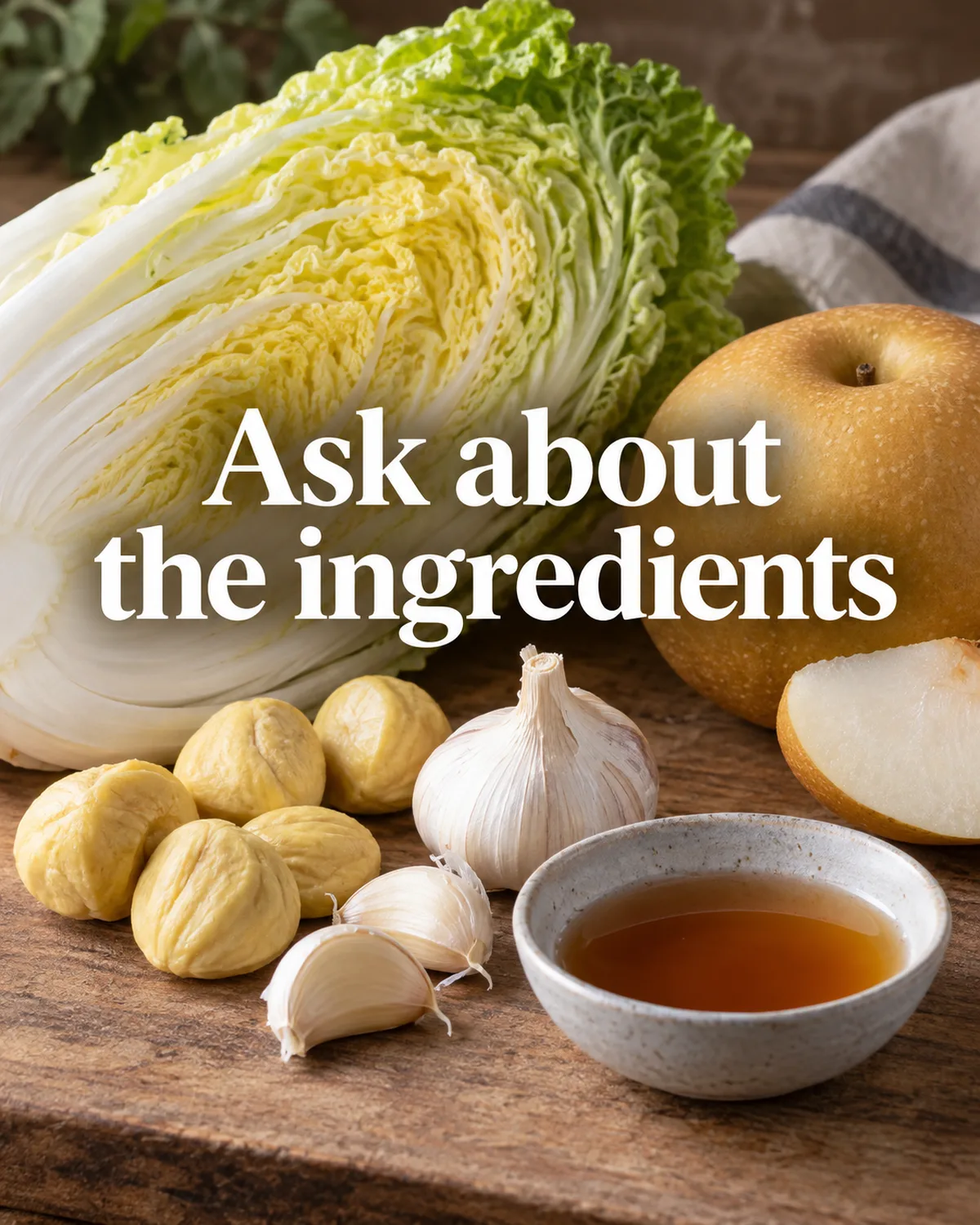
For a packaged product, read the named vegetables, seasonings and storage instructions. The photograph on the front is only one part of the information. Different recipes and processing methods should not be collapsed into a single imagined jar.
Health evidence deserves the same specificity. Ask which preparation or organism was studied, in whom and for what outcome. An interesting result does not automatically transfer to a different food, portion or person. Enjoying kimchi does not require treating it as a treatment.
For history, ask whether a date concerns a crop, a recipe or adoption. For dinner, ask what is in the preparation and how it fits the meal. Keeping those questions separate makes the article more useful than calling kimchi either a brand-new superfood or an unchanged ancient recipe.
Try the comparison with two small portions: one red cabbage kimchi and one chili-free preparation available to you. Look at the cut, smell the seasoning and notice the texture beside rice. The food itself makes the broad historical category easier to understand.