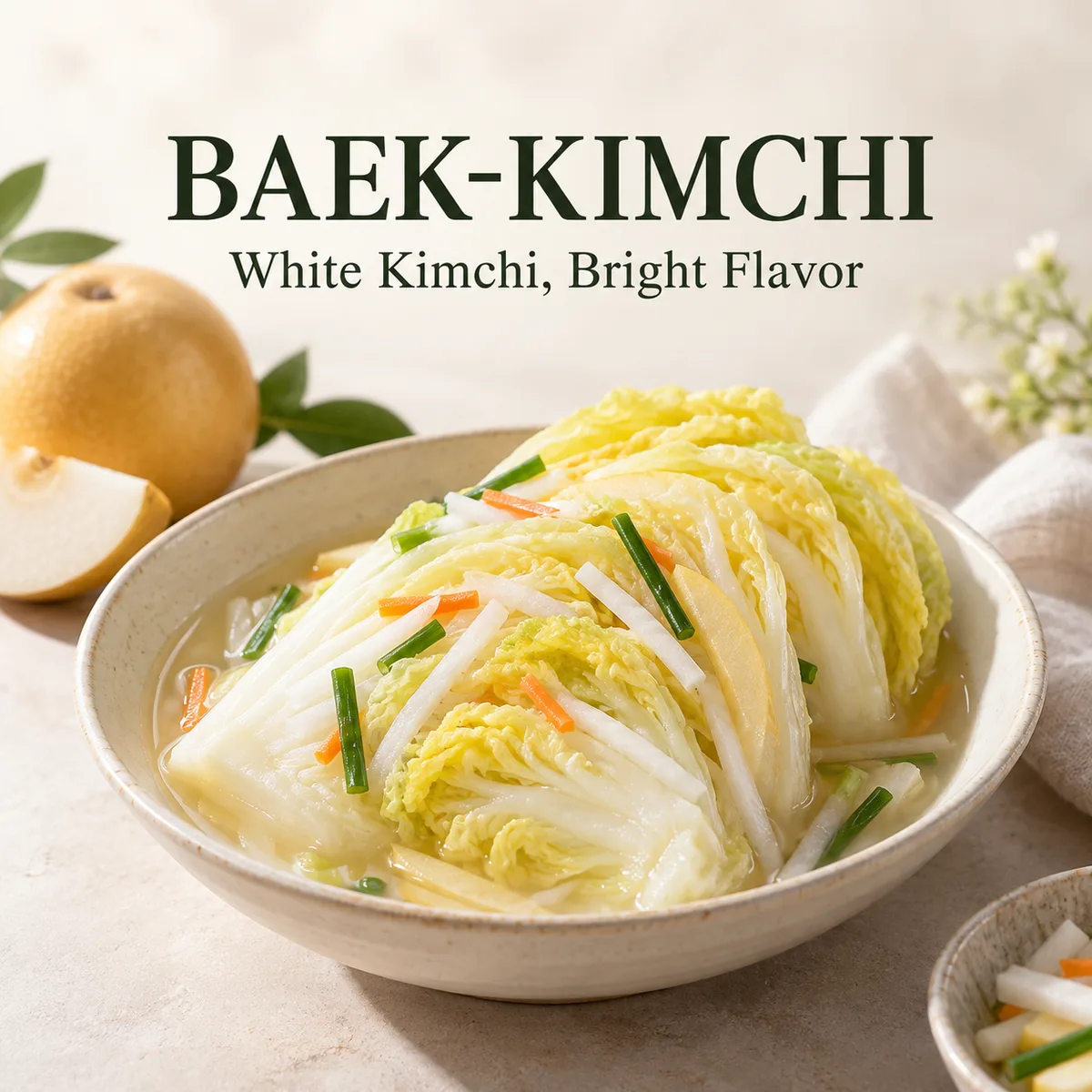
Take away the red color and other parts of kimchi become easier to notice: the cabbage, radish, pear, aromatics and brine. White kimchi is not simply an incomplete version waiting for chili; it offers its own relationship between vegetables and liquid.
At the table, the useful distinction is between the cabbage and its liquid: one gives a crisp bite, the other carries salt, fruit and acidity. The history explains why kimchi need not be red, but the modern dish deserves attention on its own terms.
A cabbage filling and a brine worth tasting
Baek-kimchi literally means white kimchi. VISITKOREA describes salted cabbage filled with shredded radish, pear and scallions, then surrounded by broth or fruit juice. Without a red-chili-powder coating, the pale cabbage and its filling stay visible. This is a distinct preparation rather than a plate of red kimchi with its seasoning washed off.[3]

The Academy of Korean Studies describes a Pyeongan-style preparation using pear, chestnut, garlic, scallion, ginger and wood-ear mushroom in the filling. Thin red-pepper threads can appear even though red chili powder is absent. Its described liquid also uses salted fish: a pale appearance does not establish that the recipe is vegetarian.[4]
For a first taste, notice the cabbage stem and leaf separately. The stem usually gives the firmer bite; the leaf holds more filling and liquid. A piece that looks almost unseasoned can still carry garlic, ginger and a pronounced salty-sour brine.

The Academy of Korean Studies defines kimchi broadly as vegetables such as radish, cabbage and cucumber that are salted, seasoned and fermented. Its historical overview traces Korean preserved-vegetable traditions through terms such as ji, jeo and later dimchae, long before the modern global image of red napa-cabbage kimchi.1
What the older records actually establish
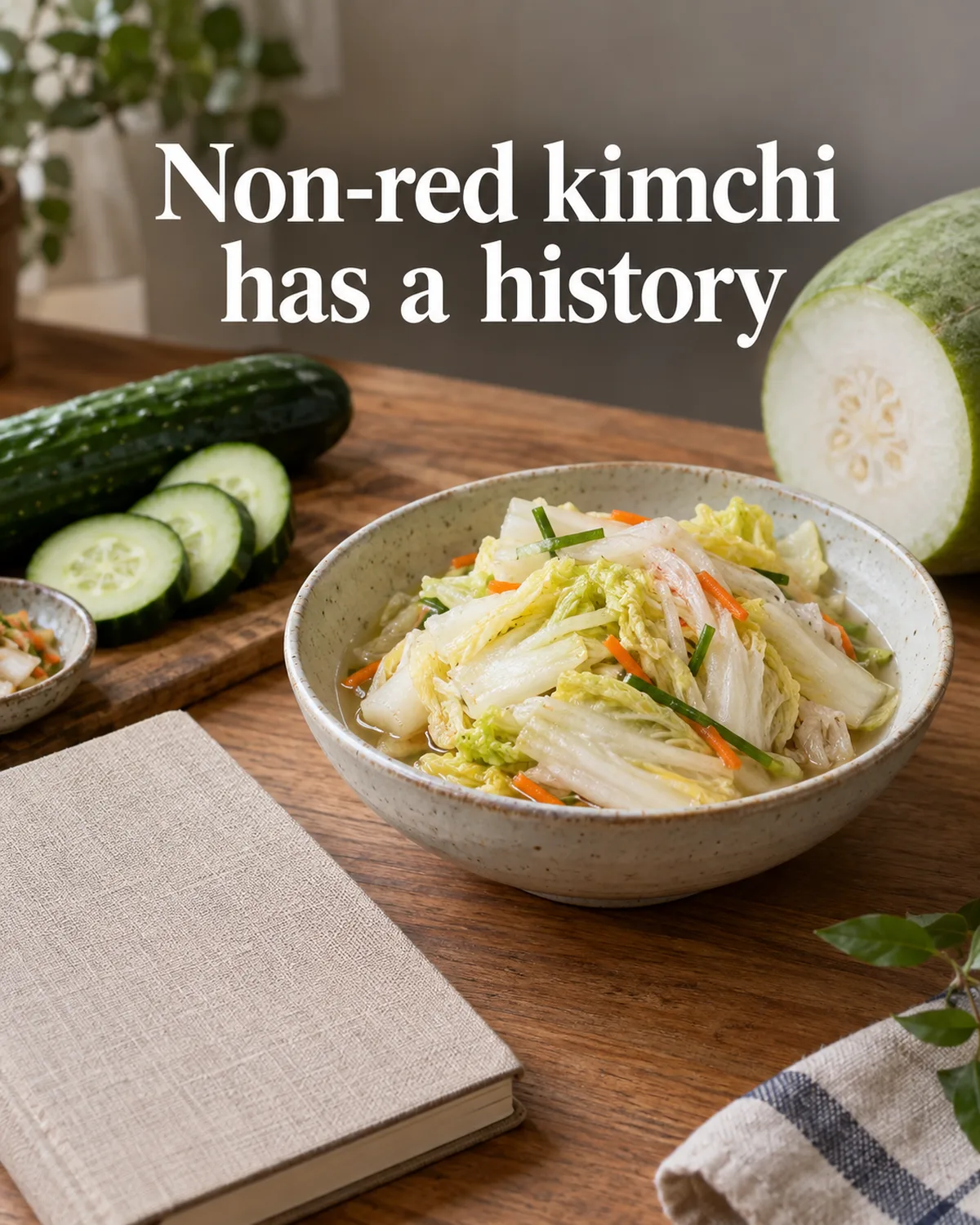
The Academy of Korean Studies’ kimchi history discusses Eumsik Dimibang, a cookbook from around 1670, and preparations without chili, including winter melon and a pheasant-and-cucumber combination. These examples support a history of non-red preserved vegetables. They do not establish that a modern stuffed napa-cabbage baek-kimchi reproduces that cookbook’s recipe.[1]
Chili’s arrival and its adoption in kimchi were separate developments. The same encyclopedia notes older non-chili preparations in early-eighteenth-century Sallim Gyeongje and chili-using preparations in Jeungbo Sallim Gyeongje in 1766. The record points to change over time rather than a single birthday for red kimchi.[1]
That history also leaves room for both dishes today. White kimchi highlights a filling and brine; red kimchi develops another seasoning balance around chili powder. One is not automatically more authentic, and a modern restaurant’s white kimchi is not evidence of what a particular Joseon king ate.
Pear, radish and the brine do the flavor work
- Appearance: white kimchi shows pale cabbage and light brine; common red cabbage kimchi carries a red seasoning coating.
- Heat: white kimchi usually has little chili heat; red kimchi is often chili-forward, though either recipe can vary.
- Aroma: white kimchi makes cabbage, radish, fruit, garlic and ginger easier to notice. Red kimchi adds the prominence of chili seasoning.
- Liquid: white kimchi often comes with brine served as part of the dish; red cabbage kimchi usually makes its seasoning paste more prominent.
These comparisons describe tendencies. Korean households make many hybrids. A baek-kimchi can contain a few threads of red pepper without becoming a red-chili kimchi, while a red kimchi can be mild despite its color.
Taste a little cabbage before taking the liquid. Then try a spoonful of the brine when it is served for drinking. Pear can lend sweetness and aroma, radish brings a firmer crunch, and garlic or ginger may stand out without chili powder. What seems mild in heat can still taste lively and strongly seasoned.
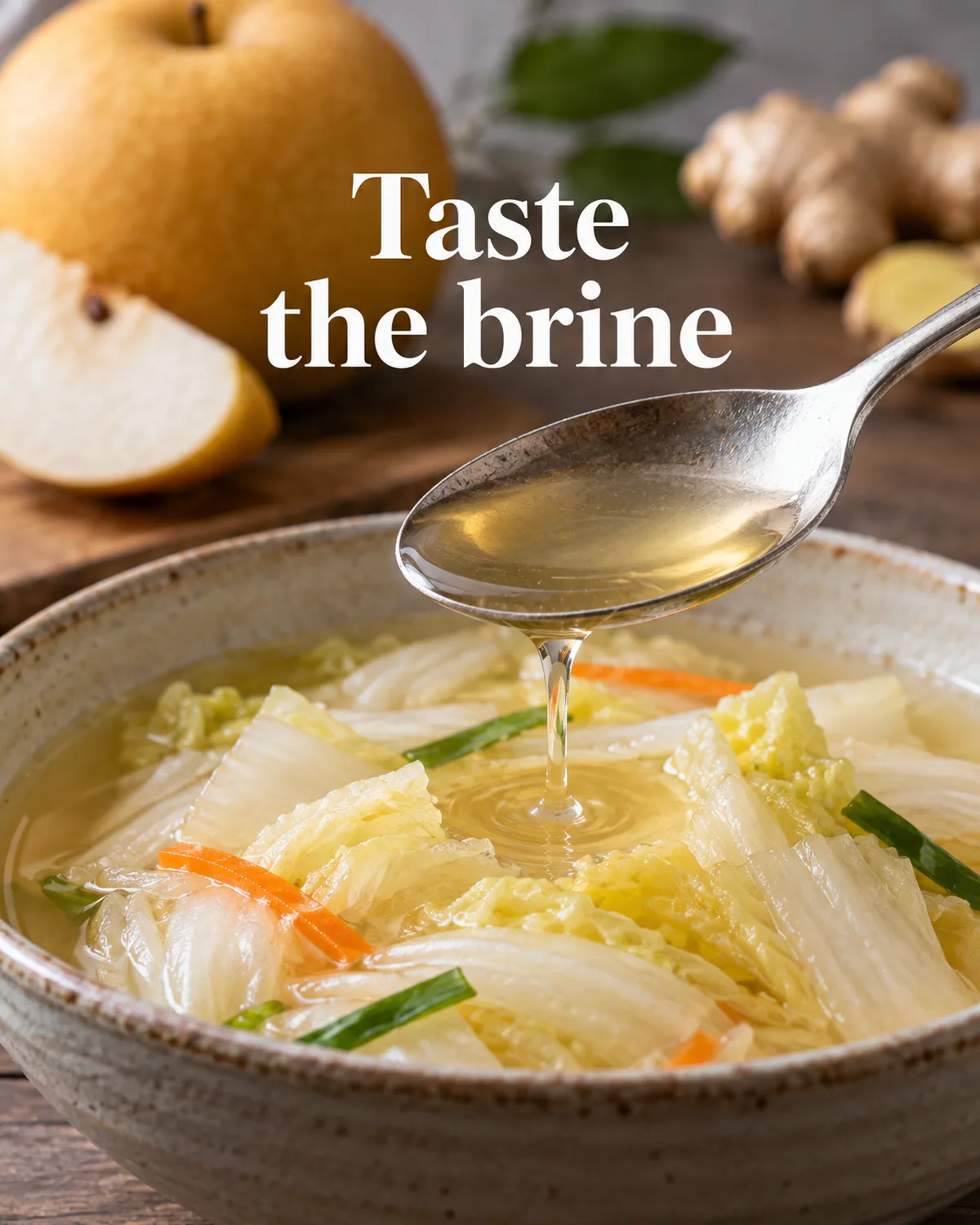
The interesting question is how the elements balance. Is the fruit a faint aroma or a clear sweetness? Does the brine taste sharper than the cabbage? Is the stem crisp while the leaf is softer? These observations make it easier to choose the version you enjoy without using chili heat as the only measure of flavor.
Many baek-kimchi versions are served with a generous amount of chilled liquid. That changes the eating experience. A bite delivers both fermented vegetable and broth-like acidity, making the dish feel lighter than a dense red seasoning paste.
The liquid also lets the kimchi work as a contrast food. Rich grilled meat, fried food or fatty dishes can feel less heavy after a cold, acidic bite. That does not mean baek-kimchi “detoxes” the body or medically neutralizes fat. It is a sensory contrast: cool against hot, crisp against soft, sour against rich.

White cabbage kimchi and dongchimi are not identical
Dongchimi is a useful comparison because radish and a generous clear brine organize it differently from stuffed cabbage white kimchi. The Academy of Korean Studies compares baek-kimchi’s use with dongchimi, but similarity in table function does not make them the same preparation. Look at the main vegetable and the filling before grouping them by color.[4]

When ordering, ask whether the white kimchi is served with its brine and how much is included with the meal. A supermarket package and a restaurant side dish may offer different proportions of cabbage and liquid. Neither the white color nor the name promises a particular sweetness, fermentation stage or portion size.
Taste the vegetable and the liquid separately
A first tasting is more informative when the goal is not “is it as good as red kimchi?” but “what is the recipe trying to balance?”
- Taste the cabbage first. Notice whether it remains crisp or has softened with fermentation.
- Try some brine separately. Check the balance of salt, sweetness, fruit aroma and acidity.
- Notice the aromatics. Garlic, ginger, scallion and pear can be easier to identify without heavy chili.
- Pair it with a rich bite. The contrast with grilled or braised meat makes the kimchi’s cool acidity clearer.
- Compare fermentation stages if possible. A younger batch can taste sweeter and greener; a more mature batch tends to become more acidic.
No stage is universally “correct.” Restaurants and households serve baek-kimchi at different points depending on the texture and acidity they prefer.

Check the actual house recipe for dietary needs. The encyclopedia’s Pyeongan-style example includes chestnut and salted-fish liquid; VISITKOREA describes a different filling and broth. Those are concrete reasons to ask about nuts, seafood seasoning and stock rather than guessing from the cabbage’s color.[4], [3]
Vegetarian or vegan diners can ask whether the brine contains fish sauce, jeotgal or animal stock. For an allergy, name the ingredient you need to avoid and ask about both the filling and liquid. Removing chili powder does not answer those questions.

A good final comparison is one small cabbage bite, one spoonful of its brine and a bite alongside rice or a richer main dish. The changes in temperature, crunch and acidity explain the dish’s appeal more clearly than treating it as a historical prop or a health supplement.