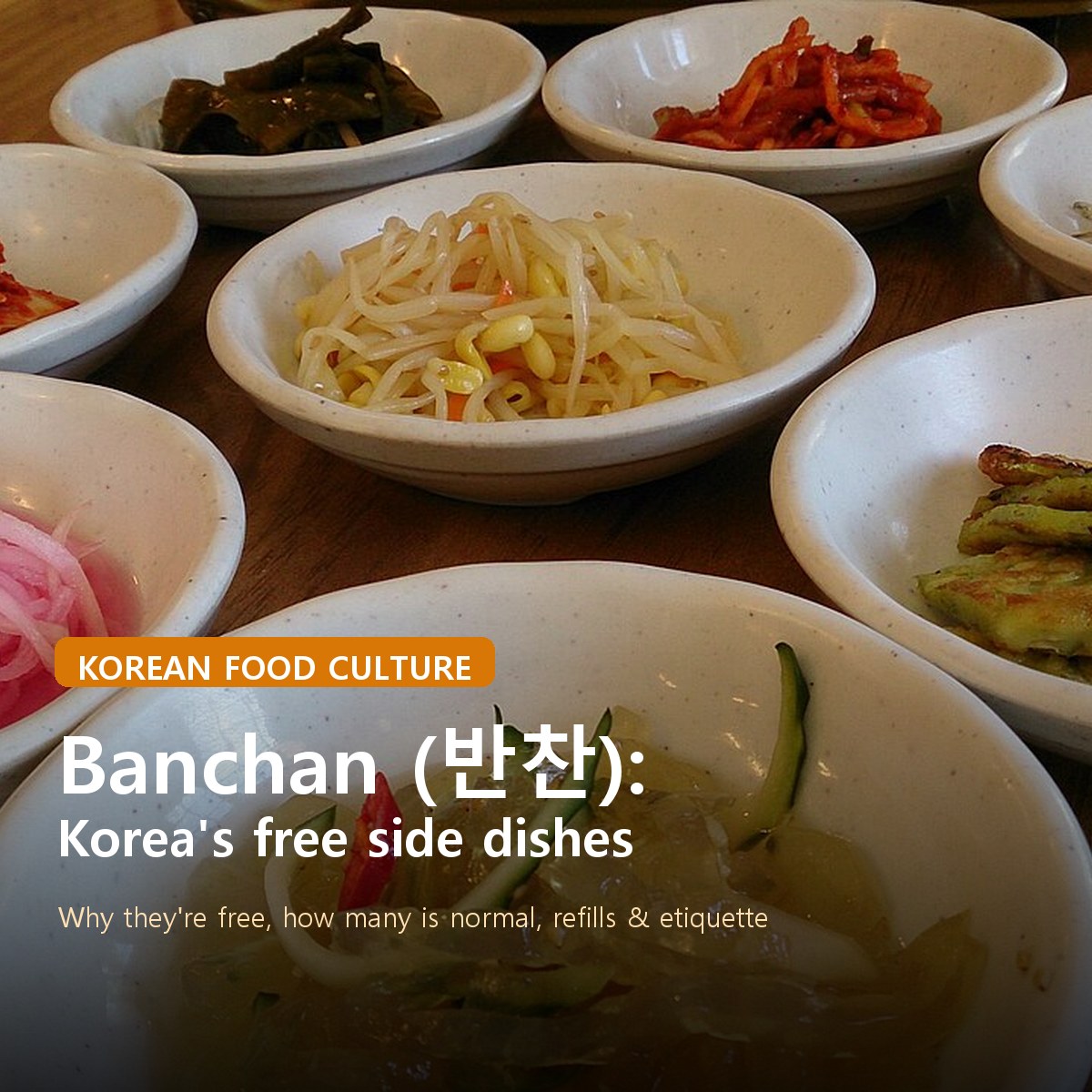

The little plates you see in every K-drama — this is banchan. Photo: Brian Johnson & Dane Kantner, CC BY-SA 2.0, via Wikimedia Commons
You’ve seen the tables in a hundred K-dramas — so crowded with little plates there’s barely room for the rice. It looks like a feast laid on for guests. Then it happens to you, at a real Korean restaurant, and for a second you’re sure there’s been a mistake.
You order one thing. A single bowl of soup. The server disappears. Then the rice comes. Then the soup. Then five small dishes you never asked for. Then another. Then another. You check the menu again — you only ordered one thing. Nobody asks whether you wanted the rest. Nobody mentions a price. Because there isn’t one.
Those little plates are banchan (반찬), Korea’s side dishes, and yes — they’re free, and the basics are usually refillable. That’s the part that stops people. The part the dramas never explain is everything after: how many you’re “supposed” to get, how to ask for more without looking clueless, and the one habit that quietly annoys every Korean server.
First, That K-Drama Dinner Table
Think of almost any home-cooked meal scene — the family in Reply 1988, a late dinner in Something in the Rain, a hangover breakfast in half the rom-coms you’ve watched. The camera pans across the table and it’s a mosaic of small white dishes: something green, something red, something braised and glossy, kimchi in the corner. Foreign viewers see a feast. Koreans see Tuesday night.
What foreigners usually assume is that this is a special spread, put on for guests. It isn’t. That wall of little plates is just how a Korean meal is built — rice and soup in front of you, and a rotating cast of side dishes in the middle for everyone to pick at. Once you know that, you start seeing banchan in every drama you watch. You can’t unsee it.
Wait — Are Korean Side Dishes Really Free?
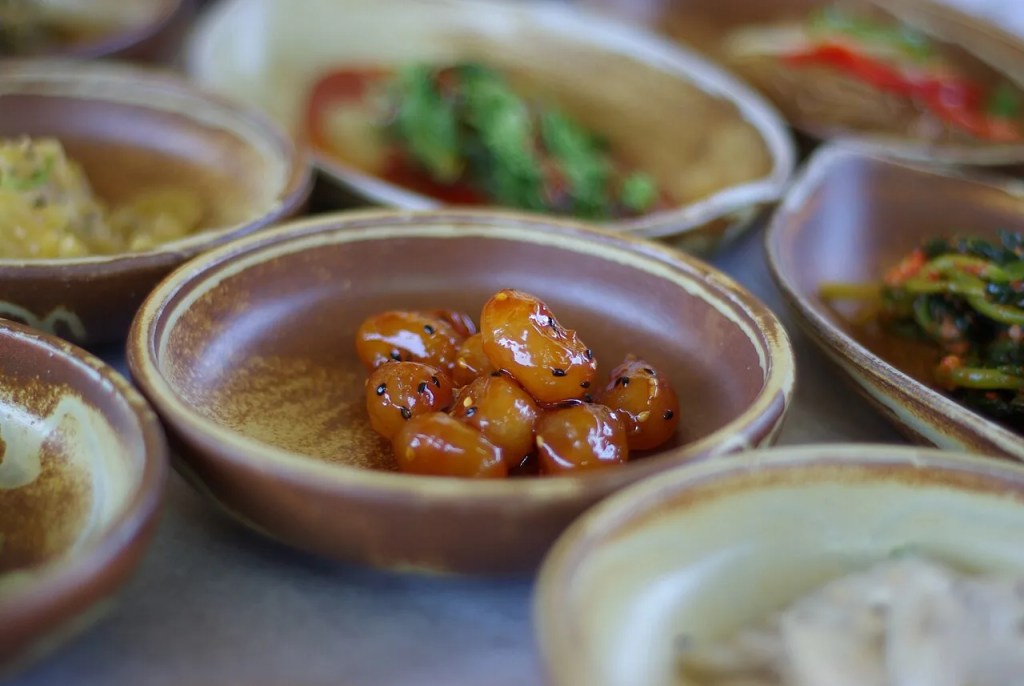
You didn’t order these. You won’t be billed for them either. Photo: egg (Hong, Yun Seon), CC BY 2.0, via Wikimedia Commons
You already know the surprise from the moment you sat down: yes, they’re free. There’s no separate “sides” charge on the bill, and — while we’re at it — no tipping either. The little dishes are simply how a Korean meal is served, not a bonus you have to earn.
What actually trips people up is which ones get refilled. The free top-ups apply to the humble everyday stuff — kimchi, seasoned bean sprouts, pickled radish — not to premium items like a good marinated crab. When in doubt, the basics are the safe bet. To a foreigner it can look like reckless generosity. To a Korean, it’s just how dinner arrives.
How Many Small Dishes Is “Normal”?
More than you’d think, and it scales with the occasion. A quick weeknight dinner at home might have three to five banchan. A proper restaurant or a Korean barbecue place can push that to a dozen or more, especially the countryside spots that pride themselves on the sheer number of plates.
Here’s the fun part the dramas skip. The number wasn’t always random — it used to signal rank. In the Joseon dynasty, a table was described by its cheop (첩) count, meaning how many side dishes it carried beyond the staples: a 3-cheop table for commoners, 5, 7, or 9 for the better-off. The king’s table? Twelve. So the next time a period drama shows a royal feast groaning under tiny dishes, that’s not set decoration — it’s a status number you can literally count.
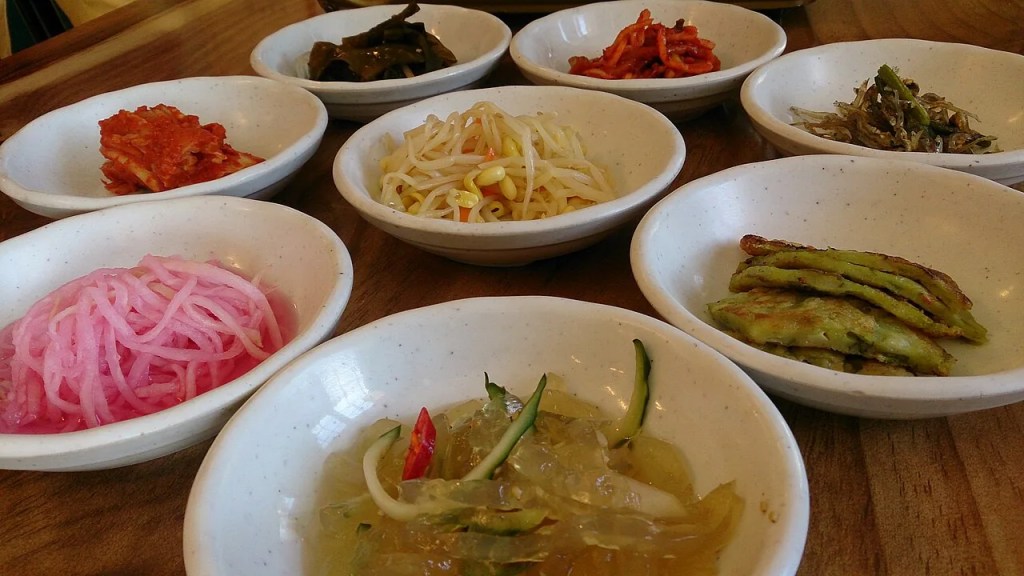
More plates than you’d expect — bean sprouts, kimchi, greens, all at once. Photo: ProjectManhattan, CC BY-SA 3.0, via Wikimedia Commons
How to Ask for More Without Looking Clueless
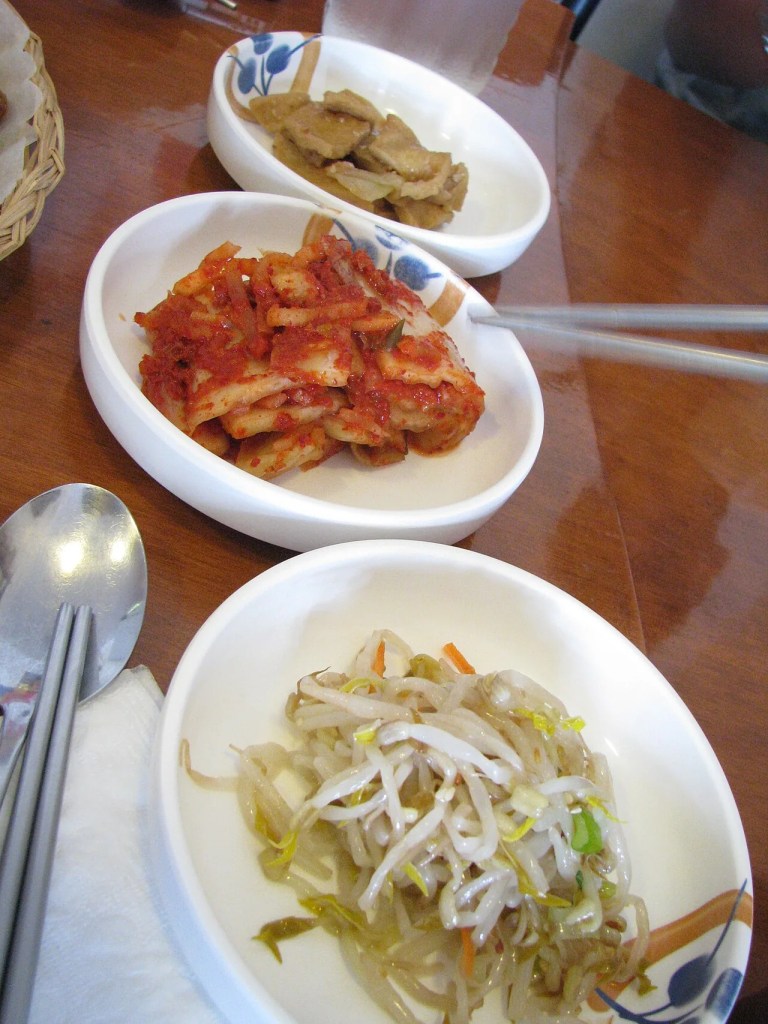
The free refills are the everyday basics — kimchi, seasoned bean sprouts. Photo: Jerine Lay, CC BY 2.0, via Wikimedia Commons
You finished the kimchi and want more. Easy. Catch a server’s eye, point at the empty dish, and say “jogeum deo juseyo” (조금 더 주세요) — “a little more, please.” That’s it. They’ll top it up and think nothing of it.
The unspoken limit is common sense. In practice people ask maybe two or three times, not ten. The refills exist so the table never runs dry, not so you can build a personal stockpile. Ask for what you’ll actually eat and you’ll be a model customer — which brings us to the one habit that does get side-eye.
Is It Rude to Leave Banchan?

Leaving a little is fine. Piling up refills you won’t finish is the real faux pas. Photo: ayustety, CC BY-SA 2.0, via Wikimedia Commons
Good news: no. Leaving a bit of banchan behind is completely normal, and nobody expects you to clean every single plate. You’re sampling, not obligated.
The actual etiquette runs the other direction. Since the refills are shared and free, ordering a mountain of something and then leaving it untouched is the move that quietly bothers people — it’s waste, and it defeats the whole “help yourself, we’ll keep it coming” spirit of the thing. So the honest rule of thumb is simple: take what you’ll eat, ask again if you want more, and don’t treat the free refill like a challenge.
The Quick Version
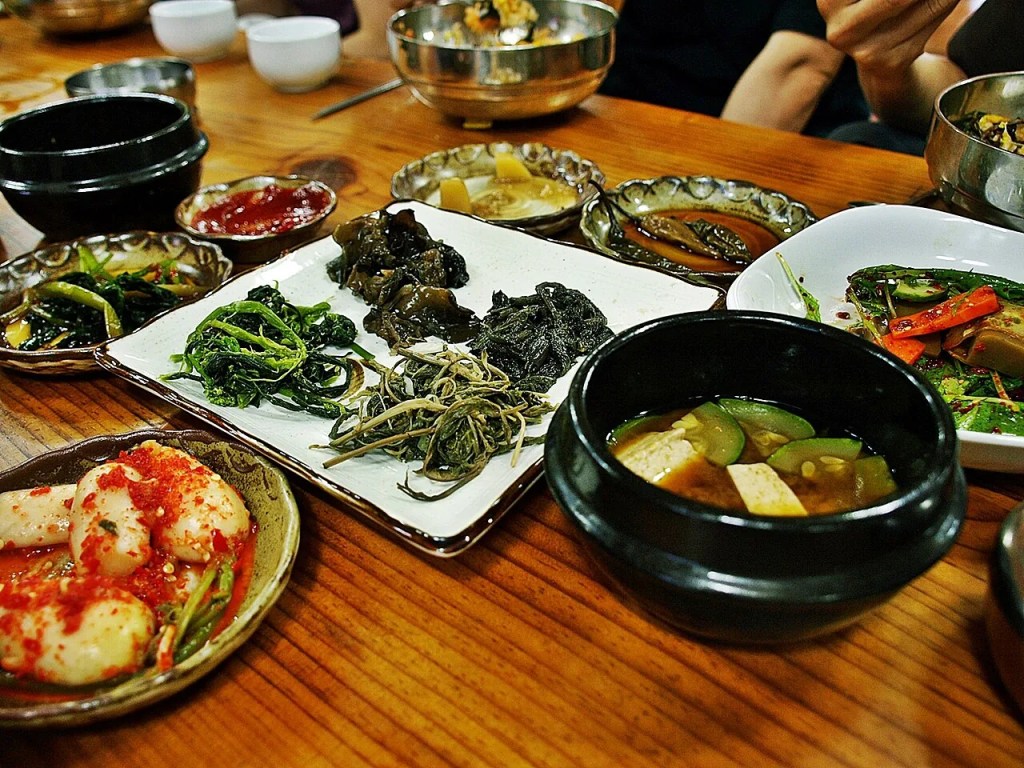
Same idea, all vegetables — a temple-style spread. Photo: magicinprogress, CC BY 2.0, via Wikimedia Commons
Banchan are Korea’s free side dishes — the little plates in every K-drama meal. Expect three to five at home, up to a dozen at a good restaurant, and free refills on the basics. Say “jogeum deo juseyo” for more, leave what you don’t finish, and don’t over-order refills you won’t eat. The number once signaled rank, all the way up to the king’s twelve-dish table.
Frequently Asked Questions
Are Korean side dishes really free?
Yes. Banchan comes free with your meal at most Korean restaurants, and the basics like kimchi and bean sprouts are usually refillable at no extra charge. There’s no separate sides charge and no tipping.
How many banchan is normal?
Three to five at a simple home meal, and anywhere from three to a dozen-plus at a restaurant. In the Joseon era the count signaled rank — the royal table had twelve.
How do I ask for more?
Say “jogeum deo juseyo” (조금 더 주세요) — “a little more, please” — and point at the dish. Refills of the basics are free, though most people only ask a couple of times.
Is it rude to leave banchan?
No — leaving a little is normal. The real faux pas is over-ordering refills you won’t finish, since the free refills are meant for sharing, not stockpiling.
So the next time you put on a Korean drama, watch the table instead of the actors. Those little dishes aren’t set decoration — they’re one of the oldest habits in Korean dining, a whole quiet language of rank and hospitality laid out in white bowls. Nobody in the show will ever explain them. They don’t have to. Every Korean at that table already understands exactly what those little bowls are saying.
Where to Try It Yourself
Want to experience it outside a drama? Skip the screen and head to a traditional market — the stalls at Gwangjang Market in Seoul lay out banchan like a painter’s palette. And if you’re curious how one humble side dish can headline a whole meal, the seasoned bean sprouts you meet as banchan grow up into kongnamul-gukbap, Jeonju’s bean-sprout rice soup. For the bigger map, our guide to what to eat in Korea shows where each dish fits.
Photos are Creative Commons (CC BY-SA), credited under each image — Wikimedia Commons and Openverse. Sources: everyday Korean dining custom on complimentary, refillable side dishes; the Joseon-era cheop (첩) table system, with the royal table at twelve dishes. Restaurant practices vary, so treat refill rules as the general norm rather than a guarantee.