

Ganjang gejang — raw crab cured in soy sauce until the flesh turns silky. Photo: KOREA.NET, CC BY-SA, via Openverse.
Koreans have a nickname for ganjang gejang (간장게장) — Korean soy-marinated raw crab — and it’s a warning as much as a compliment: bapdoduk (밥도둥), the “rice thief.” The flesh turns silky, custard-like, and so intensely savory that you look down and somehow three bowls of rice are gone. It’s one of the most addictive things you can eat in Korea. It also comes with a 300-year-old ghost story.
Quick answer first, for anyone just discovering it: ganjang gejang is a traditional Korean dish of fresh raw crab cured in a soy-sauce brine — no cooking involved — prized for its rich, umami-packed, melt-in-your-mouth meat and roe. But it’s also tied to one of Korea’s most enduring royal mysteries. Because the last time this dish made real headlines in Korean history, a king ate it — with a side of persimmon — and was dead within days. His younger brother took the throne and spent the rest of his life fighting the whisper that he’d done it on purpose. To this day, some Koreans will tell you never to eat crab and persimmon together. Let’s start with the crime scene.
“A dish so good they call it the rice thief — and so infamous a king may have died for it.”
What is ganjang gejang, and what does it taste like?
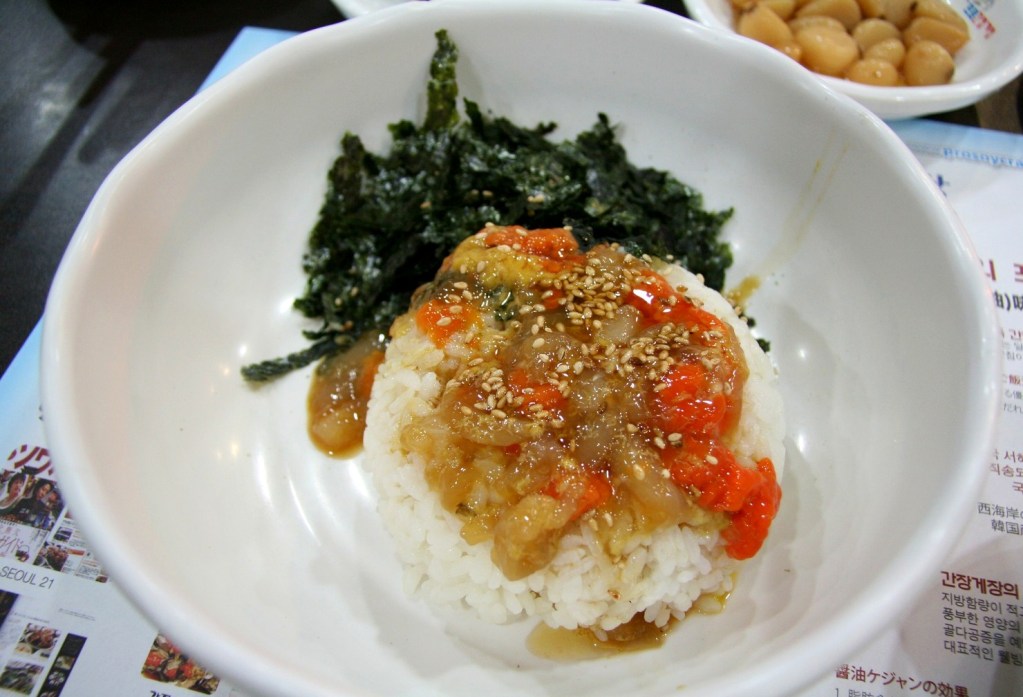
The “rice thief” in action — you never plan to eat this much rice. Photo: ayustety, CC BY-SA, via Openverse.
Here’s the thing that surprises first-timers: ganjang gejang isn’t cooked. Fresh crabs are submerged in a soy-sauce brine and cured, not grilled or steamed — raw crab in soy sauce, essentially. So what does it taste like? The high-salt marinade seasons the meat and turns it soft, glossy, and jelly-like, almost like a savory custard, with a deep umami that’s hard to describe until it’s ruining your rice discipline in real time. It’s raw, it’s briny, it’s a little intimidating on the first bite — and then it’s the only thing you want. Different Korean regions each have their own version, and cities like Yeosu are famous for it. There’s also a spicy cousin, yangnyeom gejang (양념게장), tossed in a sweet-and-fiery red-pepper marinade instead of soy — a friendlier gateway if raw-and-briny feels like a lot for a first try. Ganjang gejang has gone upscale, too: one Seoul restaurant serving it even earned Michelin recognition, and tourists now plan whole meals around it.

Glossy, soy-cured, and packed with roe — this is the “rice thief” up close. Photo: egg (Hong, Yun Seon), CC BY 2.0, via Openverse.
So how does a beloved delicacy end up attached to a royal death? For that, we go back to 1724.
The king who died five days after eating it

Persimmons — the other half of a legend Koreans still repeat at the dinner table. Photo: ally j (public domain), via Wikimedia Commons.

The Joseon court, where a king’s last meal became a 300-year-old mystery. Photo: Brady Bellini (public domain), via Wikimedia Commons.
King Gyeongjong (경종) was a sickly, tragic figure — so much so that a hit K-drama, Rooftop Prince (2012), based its doomed crown prince partly on him. According to the royal Annals, in the late summer of 1724 the ailing king ate gejang (marinated crab) and fresh persimmons. He was struck with violent abdominal pain and diarrhea, and died just five days later.
And here’s where it gets dark. According to later accounts, the crab and persimmons had been sent by his half-brother, the crown prince — the future King Yeongjo (영조), the same long-lived king you may have met in Korea’s diet story. For the rest of his 52-year reign, Yeongjo was shadowed by the rumor that he had poisoned his own brother to take the throne. In Korean folklore ever since, crab and persimmon became a forbidden pairing — a food taboo passed down for three centuries at Korean tables.
So did the crab really kill him?
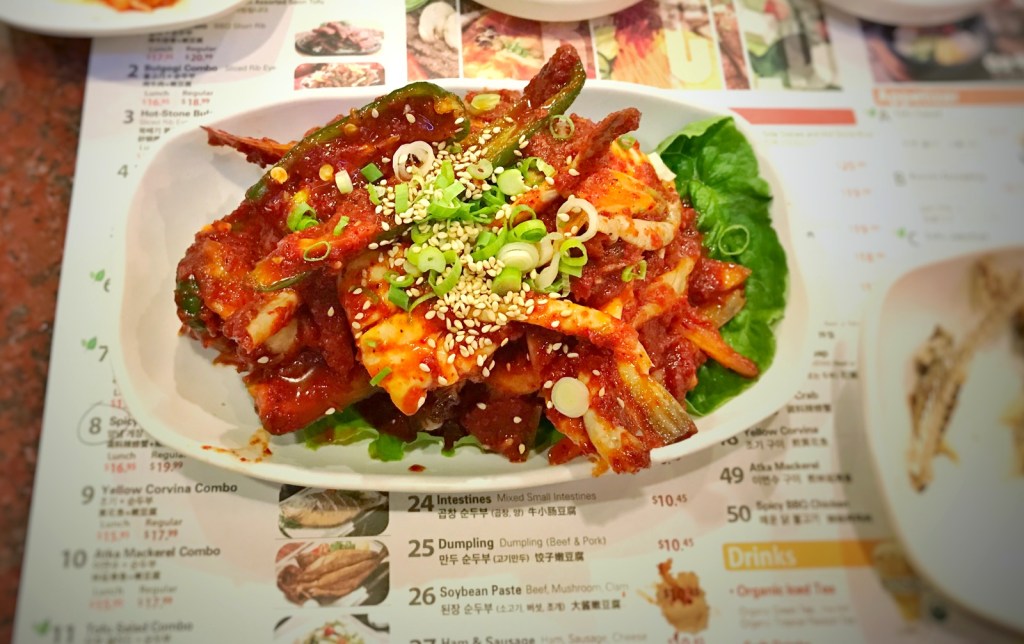
Yangnyeom gejang — the spicy, red-pepper version, a friendly gateway to Korean raw crab. Photo: T.Tseng, CC BY 2.0, via Wikimedia Commons.
Here’s the twist that the meme leaves out: modern medicine mostly clears the crab. Studies — including one in the Journal of the Korean History of Medicine — have found no convincing evidence that eating crab and persimmon together is acutely poisonous. Many historians and medical researchers believe something grimmer and more ordinary happened: Gyeongjong was already gravely weak from illness, summer heat, and loss of appetite, and the relentless diarrhea after that meal probably drove him into fatal dehydration — quite possibly plain food poisoning from raw seafood in the heat, not a poison plot.
In other words, the “crab-and-persimmon poison” is almost certainly a myth. But it’s a myth so sticky that it outlived the dynasty. Even now, the legend resurfaces — a popular Korean buffet’s sign warning guests not to combine marinated crab and persimmon recently went viral, three hundred years after the king’s last meal. That’s the real story of ganjang gejang: a dish good enough to be called a thief, and famous enough to be accused of murder.
How to eat Korean raw crab (safely) — a beginner’s guide
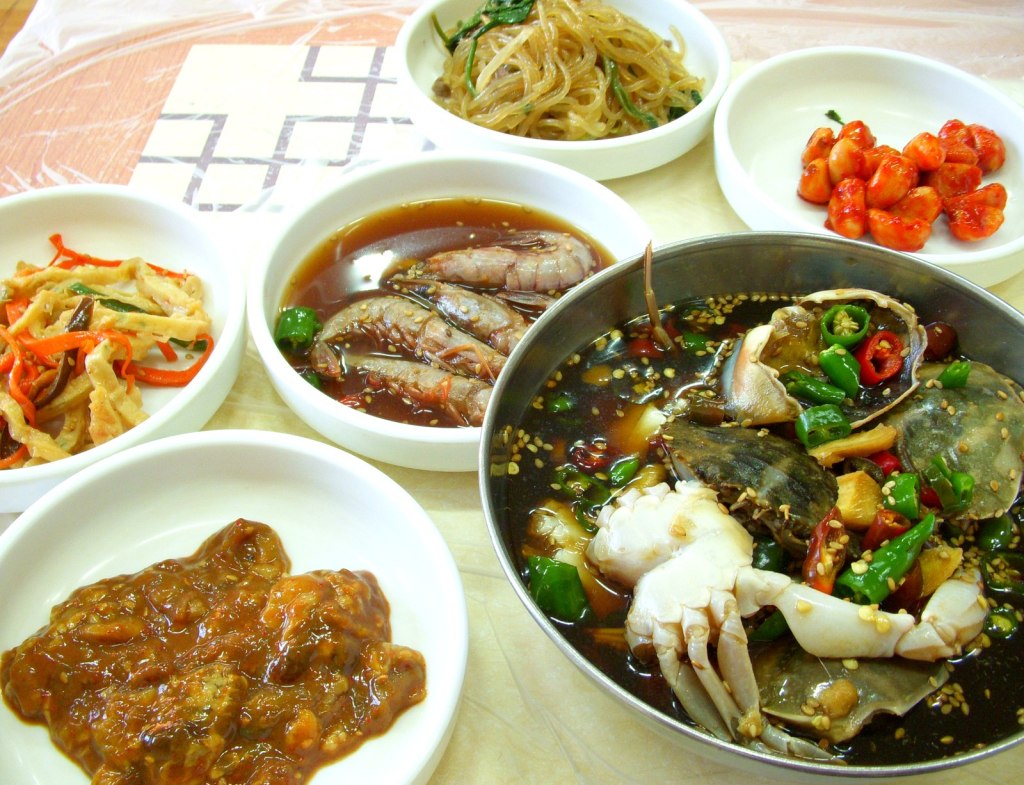
The full experience: soy-marinated crab in the middle, a spread of banchan all around. Photo: LWY, CC BY 2.0, via Openverse.
If the ghost story hasn’t scared you off — and it shouldn’t — here’s how to enjoy the rice thief like a local. First, a reassurance: like sushi or raw oysters, ganjang gejang is safe when it’s handled properly and served fresh.
- Start spicy if you’re nervous. First time with raw seafood? Order yangnyeom gejang, the sweet-and-spicy version — the bold red-pepper marinade makes it an easier entry point than the pure soy cure.
- Use the gloves and dig in. Restaurants hand you disposable plastic gloves for a reason. Don’t be shy — pick up a piece, squeeze the silky meat and roe straight over hot white rice, and eat it with your hands.
- Mix rice into the shell. For the grand finale, spoon warm rice into the crab’s body shell to soak up the leftover brine and roe. This is the move — the most bapdoduk bite of all.
- Go to a specialist. Because it’s raw and cured, freshness matters. Eat it at a reputable gejang restaurant (Yeosu and Seoul are famous for it), not from a random fridge.
- Skip the persimmon. Not because it’s poison, but because Koreans will smile knowingly if you don’t.

A midnight crab feast and one very alarmed royal physician (playful illustration)..
Questions people ask about ganjang gejang
What does ganjang gejang taste like? Rich, briny, and intensely savory, with soft, glossy, almost custard-like meat and buttery roe. The soy cure gives it a deep umami rather than a “fishy” flavor — which is exactly why it makes people eat so much rice.
Is ganjang gejang safe to eat raw? Yes, when prepared properly. The crab isn’t cooked, but the high-salt soy brine cures it and creates conditions hostile to many bacteria. As with any raw seafood — sushi, oysters — eat it fresh and from a trusted specialist.
Why is it called the “rice thief”? Because the flavor is so rich and salty-savory that you keep eating bowl after bowl of rice without realizing it — the dish “steals” all your rice.
Did a Korean king really die from eating crab? King Gyeongjong did die in 1724, five days after eating gejang and persimmons, and his brother Yeongjo was long suspected of poisoning him. But modern scholars believe it was more likely food poisoning and dehydration than any toxic crab-persimmon reaction.
Can you really not eat crab and persimmon together? It’s a traditional Korean food taboo born from the king’s death, not a proven danger. Studies find no convincing evidence that the combination is toxic — but the superstition is very much alive.
One last bite
Every culture has a dish wrapped in a story, but few come with a royal death, a suspected fratricide, and a superstition that’s survived three centuries. If you’re visiting Korea, ganjang gejang is one of the most unforgettable traditional Korean seafood dishes you can try. Order it anyway — just maybe hold the persimmon, for the drama, if nothing else.
Hungry for more of Korea’s raw and briny side? See where Seoul eats its most fearless food at Gwangjang Market, cool down with a bowl of samgyetang after all that salt, or mix your own masterpiece with Jeonju’s bibimbap.
The account of King Gyeongjong’s 1724 death after eating gejang and persimmons, and the long-standing suspicion of King Yeongjo, are drawn from the Annals of the Joseon Dynasty and Korean historical references. The medical reassessment (food poisoning and dehydration rather than a toxic food combination) reflects analysis published in the Journal of the Korean History of Medicine. The crab-and-persimmon taboo survives as folklore, not established science.