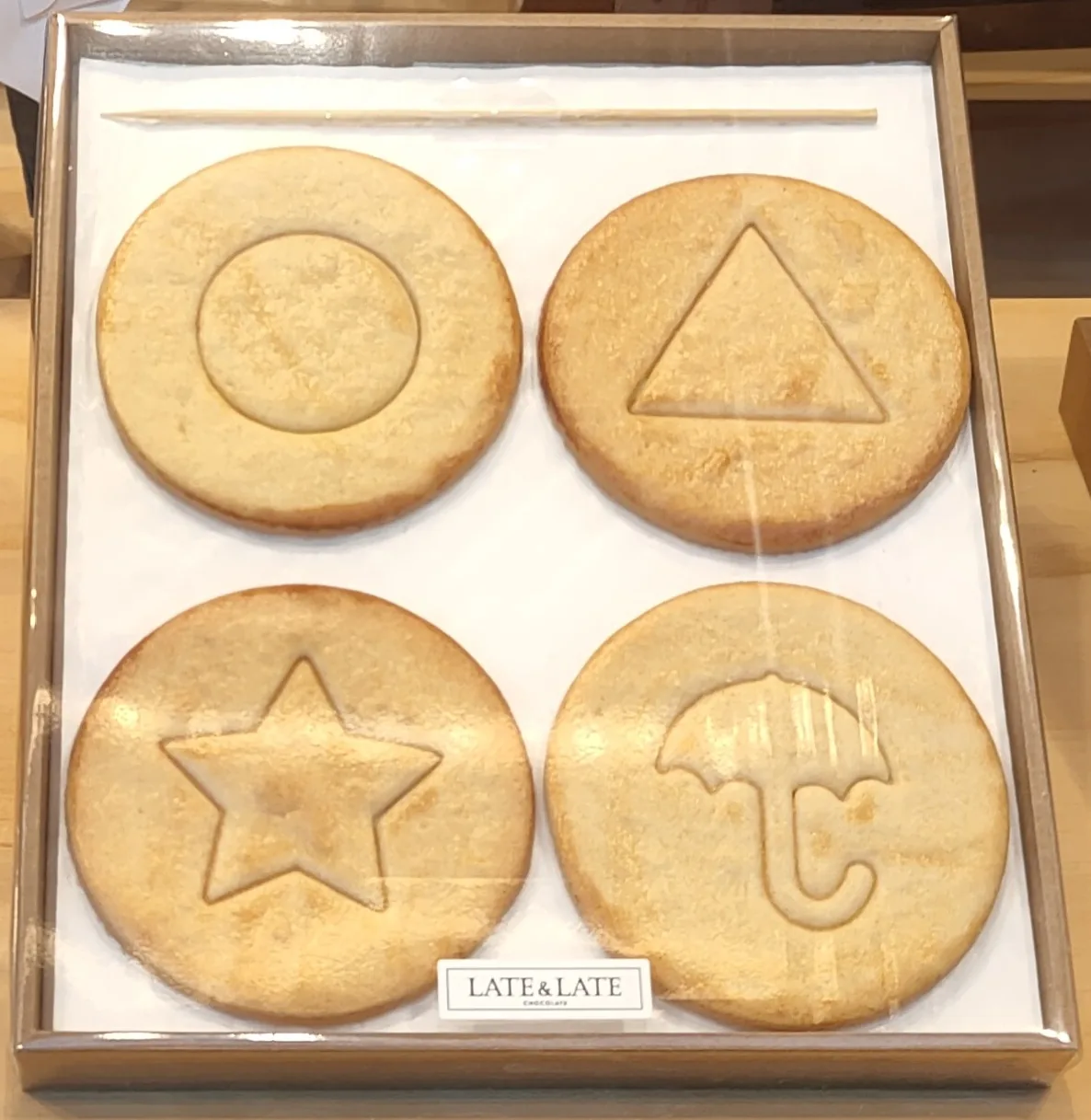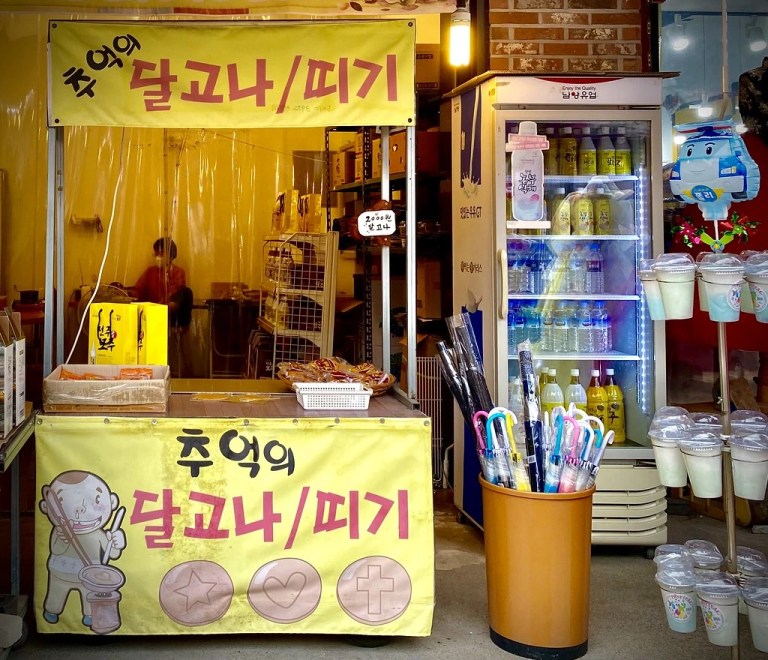
One ladle, one burner, one pinch of baking soda. The entire business. Photo: Sharon Hahn Darlin, BY, via Openverse
When people talk about what Squid Game did, they usually mean Netflix. Viewing records, a second season, an Emmy shelf. What almost nobody talks about is what it did to a handful of people in Seoul who were, at the time, standing on a street corner making candy for about a dollar a piece.
One of them was An Yong-hui. He’d been making dalgona for eight years before the show aired. Before September 2021 he sold around 200 a day. After it, more than 500 — and at the peak he didn’t go home for a week, because he couldn’t leave the stall long enough to.
That’s the part of the phenomenon nobody dramatised. Not a fortune. Not a franchise. A man who could not physically keep up with a television show.
“The show didn’t make him rich. It made him unable to go home.”
What the trade actually was, before
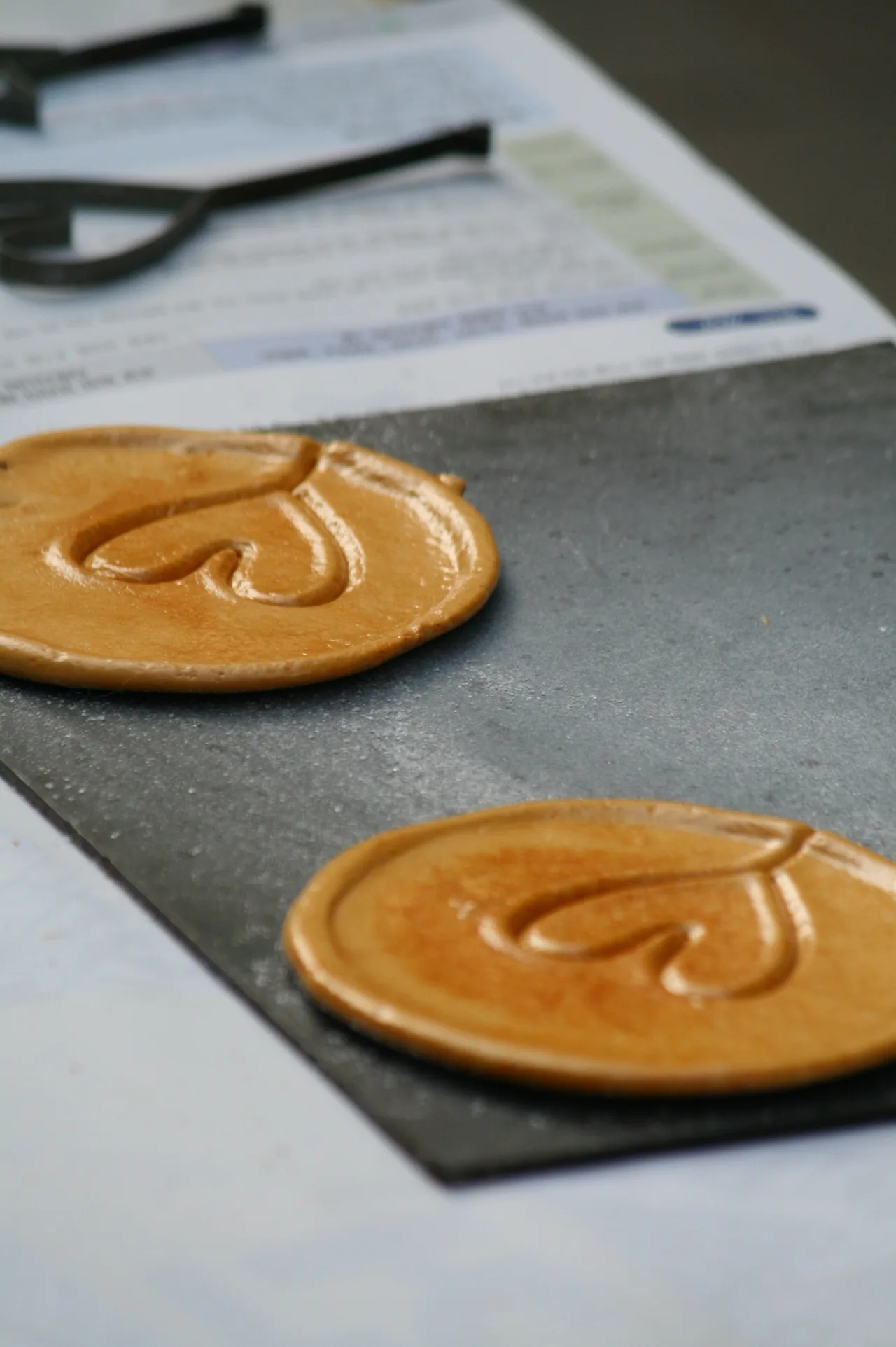
Dalgona is two ingredients. Sugar, melted in a ladle over a flame. A pinch of baking soda stirred in, which makes it foam up pale and brittle. Pressed flat, stamped with a shape, done.
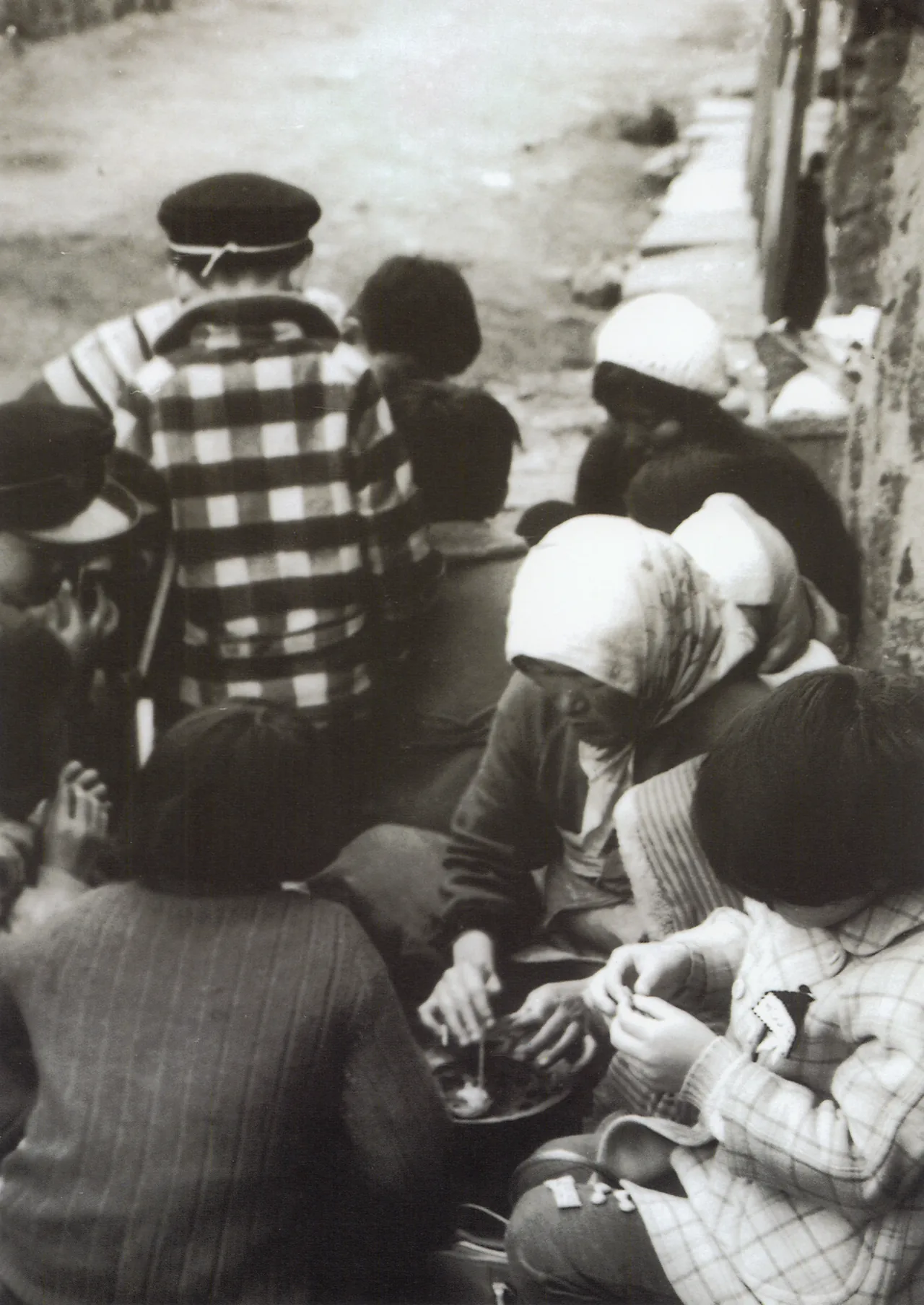
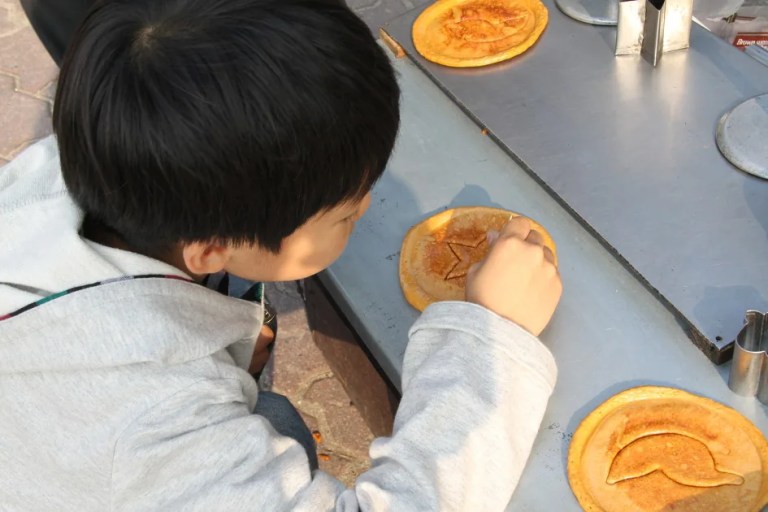
It was children’s money — sold outside schools, priced so a kid could buy one with coins. The stamped shape was the game: get the shape out intact and you won another one free. Korean kids had been beating that game, and cheating at it, for decades.
Which is to say the people making it in 2021 weren’t running a nostalgia business. They were running a low-margin street trade that had been slowly dying as the kids who bought it grew up.
Then September 2021 happened
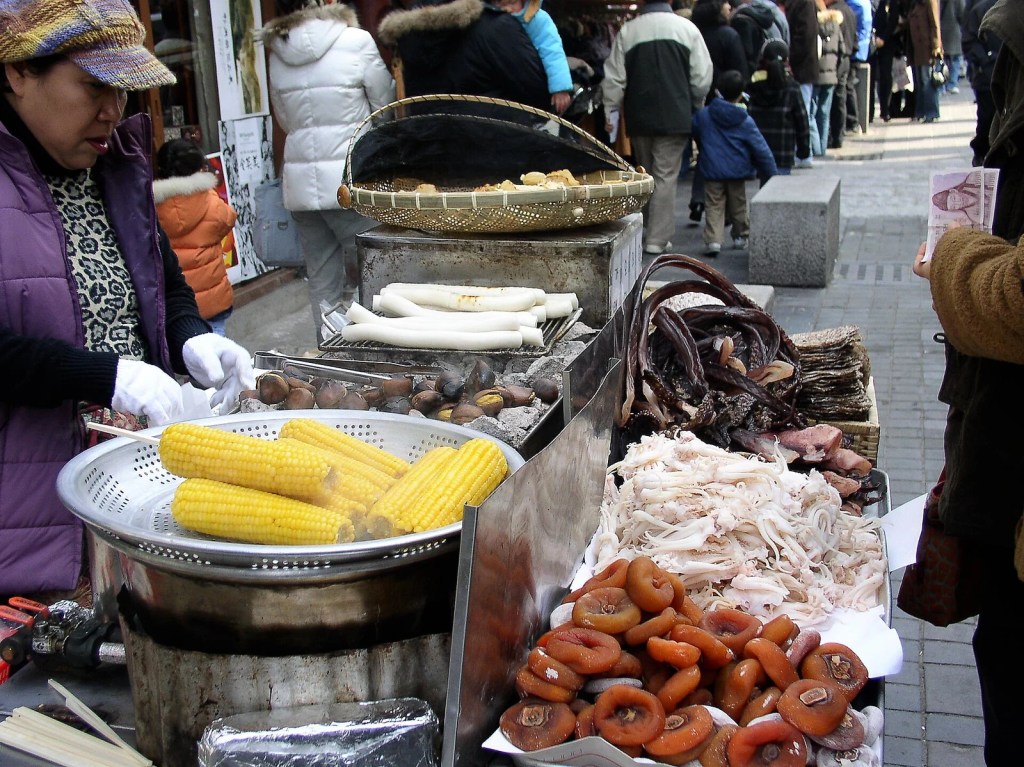
Photo: johl, CC BY-SA 2.0, via Commons

Photo: Photographer: Gabriel Wicke, BY-SA, via Openverse

The umbrella. The one shape nobody wanted. Photo: 동운맘, CC BY 4.0, via Wikimedia Commons
The show premiered, and within weeks the demand stopped being local in any sense.
- An’s daily output more than doubled — 200 to 500-plus.
- He worked through it without going home for a week.
- Meanwhile the internet was doing its own version: viewers filming their attempts on TikTok, mostly failing.
- And on Amazon, eBay and Coupang, dalgona kits and tools appeared at prices up to $29.99 — for a ladle, a stamp and some sugar.
Sit with that last number for a second. The candy itself cost pocket change. The kit for making it yourself was selling for thirty dollars, mostly to people who had never eaten one.
The gap between the craze and the trade
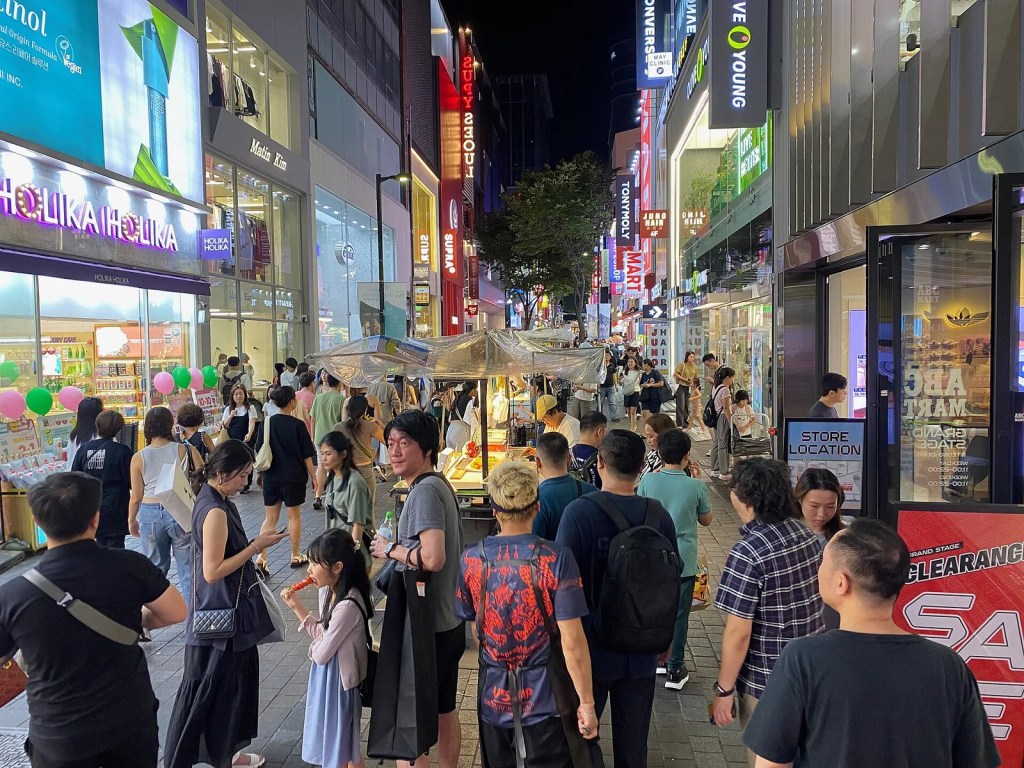
Photo: Sgroey, CC BY-SA 4.0, via Commons
This is the part worth sitting with, because it’s the pattern every viral food moment follows.
The money in a global craze doesn’t collect where the craze started. It collects where things can scale — marketplaces, kits, licensed merchandise, tourism packaging. A man with one burner and one ladle can double his output and still be doing exactly what he was doing before, just without sleep. There is no version of that stall that captures a fraction of a $29.99 kit sold in another country.
He got famous. Genuinely — reporters came, cameras came, people queued — and he kept the stall running through all of it. But fame in a street trade converts into hours, not equity.
What can honestly be said about “now”
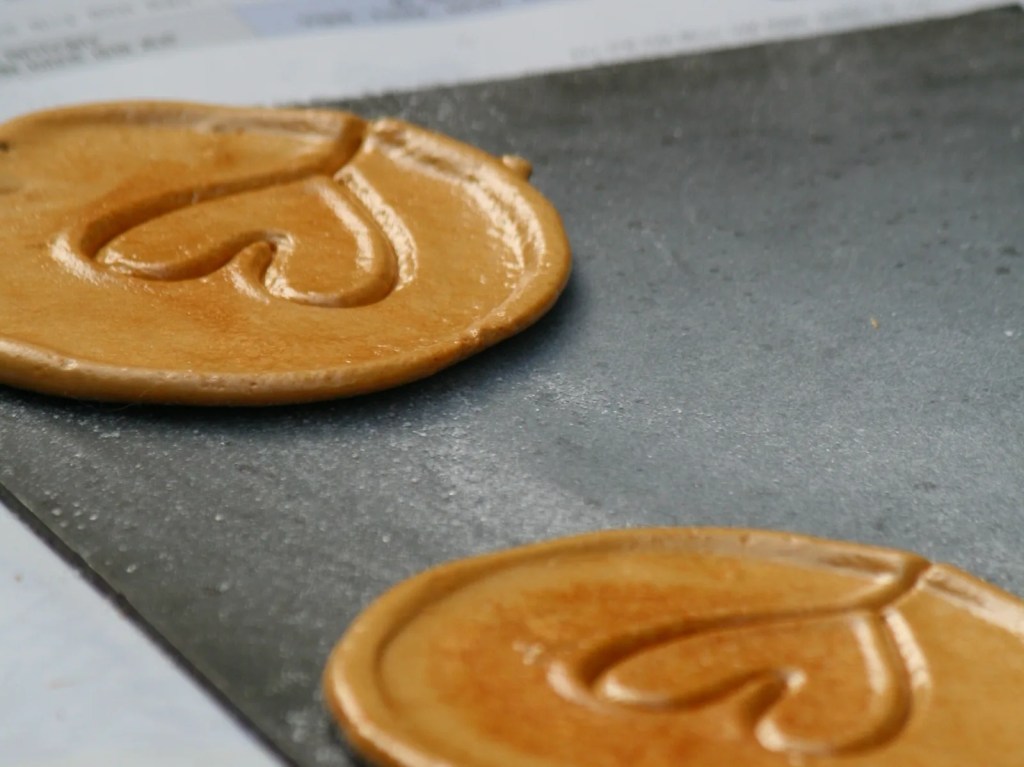
Photo: PhareannaH[berhabuk], CC BY 2.0, via Wikimedia Commons
Here’s where a lot of articles start inventing. You’ll find posts describing what happened to these vendors afterwards in confident detail — retirements, shop openings, fortunes.
What’s actually on the record is the 2021 surge, reported at the time, with names and numbers. The follow-up — who kept the stall, who moved on, who went back to 200 a day once the queues thinned — isn’t documented in the same way, and this article isn’t going to make it up.
What is visible is the residue. Dalgona stopped being a dying children’s candy and became a thing tourists arrive already knowing about. That’s a permanent change in what the product is, even for whoever is making it today.
If you want to actually try one
You don’t need to hunt for it. Dalgona is back on the streets it nearly vanished from — around Myeong-dong, Insa-dong and the big traditional markets, usually for a couple of thousand won. If the vendor stamps a shape and offers you the old challenge, take it: carve it out clean and the next one is free. Same rule the schoolkids played by, decades before Netflix showed up.
Quick answers
What did Squid Game do for dalgona vendors?
An Yong-hui’s sales went from about 200 to more than 500 a day after September 2021 — and at the peak he didn’t go home for a week.
What actually is dalgona?
Melted sugar with a pinch of baking soda, pressed flat and stamped with a shape. Get the shape out unbroken and tradition says the next one is free.
Did the vendors get rich?
Not on the record. The money in the craze collected around $29.99 kits and marketplaces, not one-burner stalls — fame in a street trade converts into hours, not equity — the vendors who actually made the candy saw almost none of the money the trend generated elsewhere.