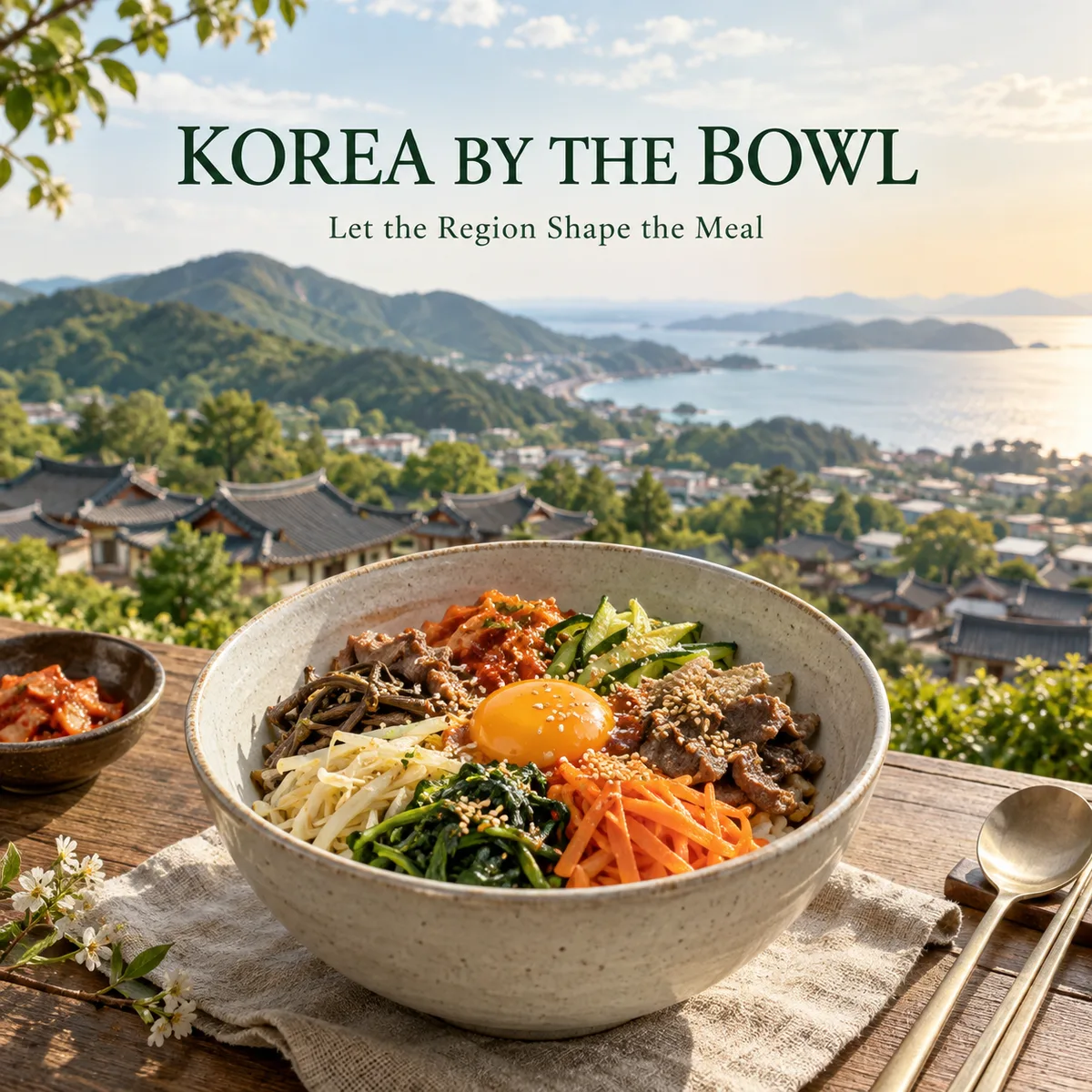
What should you eat beyond Seoul, and what does the place add to the meal? Mountain greens cooked with rice, fish incorporated into broth and meat shared around a restaurant table give different answers. Choose the next stop for a difference you want to taste, rather than another famous name.
The region on a menu is an invitation to investigate that relationship. It is not always a certificate that the dish was first invented there.
Seoul: the market, the noodle shop and the shared table
Seoul is the easiest place to sample food from across Korea, but its strongest food stories are often about urban institutions rather than remote ingredients. Seolleongtang restaurants became part of early modern city life; Myeong-dong kalguksu developed around a dense commercial district; Jangchung-dong jokbal grew with foot traffic and restaurant clustering; Sindang-dong turned table-cooked tteokbokki into a neighborhood identity; Gwangjang Market gathers cooked food into a visible market system.
This makes Seoul a good place to study how repetition builds tradition. A restaurant that serves the same soup for generations, an alley where similar shops reinforce one another, and a market where griddles, noodle stalls and side-dish counters coexist all create food heritage without requiring an ancient origin story.
If you have only one or two days in the capital, use the Seoul food guide to combine different formats rather than collecting famous names. A useful day might contrast a breakfast soup, a market lunch and a shared evening meal. The Korean street-food guide is better when the goal is to understand bunsik shops, carts, permanent markets and pojangmacha as different eating systems.
Jeonju: a composed rice bowl and a morning soup
Jeonju’s name is inseparable from bibimbap in national food tourism, but stopping at the colorful mixed-rice bowl hides half the city’s value. Jeonju is also strongly associated with kongnamul-gukbap, a hot bean-sprout-and-rice soup eaten as an everyday meal. The pair is more revealing than either dish alone.
Jeonju bibimbap demonstrates composition: rice, seasoned vegetables, gochujang and other toppings are arranged separately, then combined by the diner. The dish’s reputation depends on ingredients, preparation and the visual logic of a complete bowl. Kongnamul-gukbap works in the opposite direction. It is a steaming, integrated bowl whose identity is tied to soybean sprouts, broth, rice and the rhythm of morning eating.
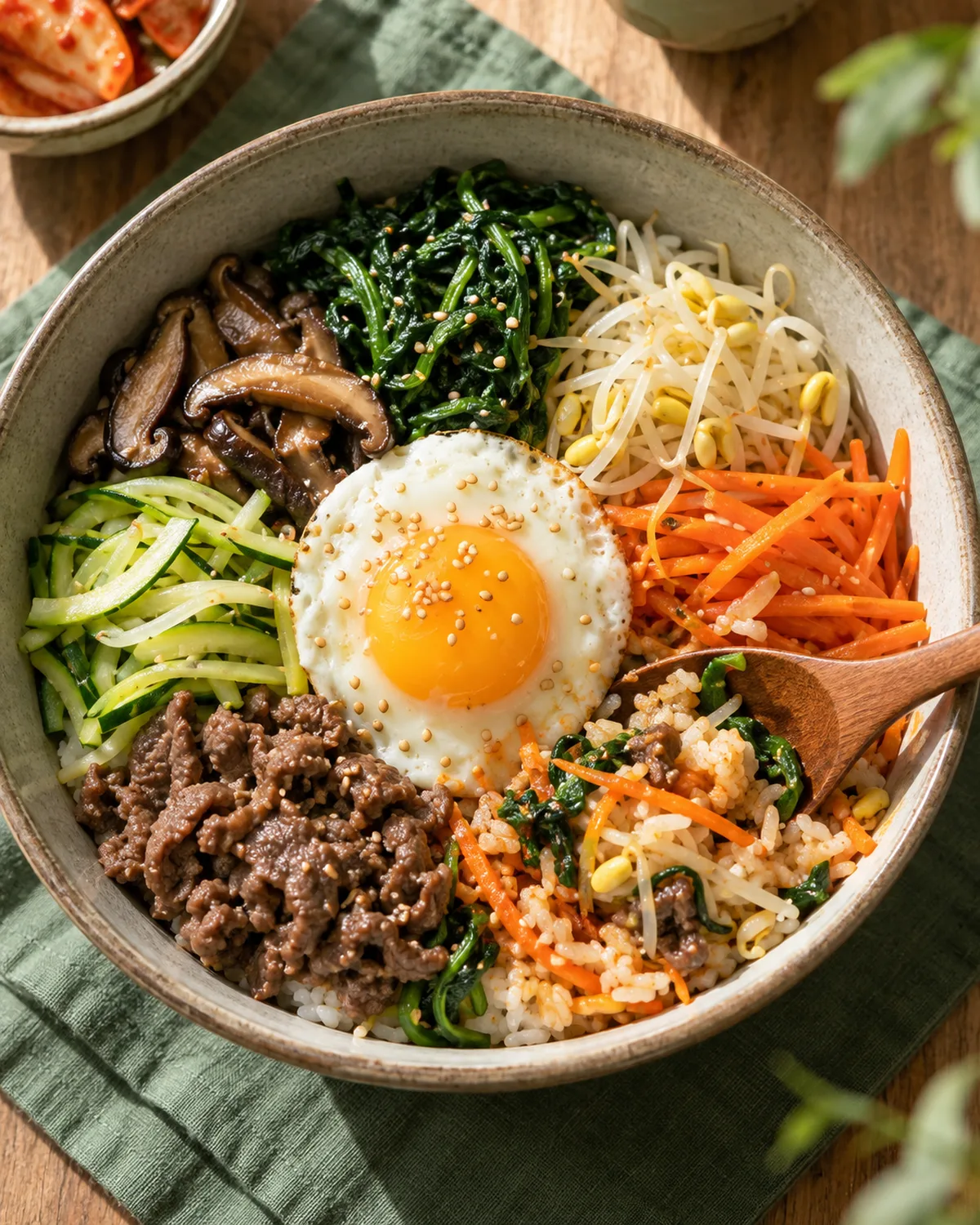
That contrast is a useful regional-food lesson. A city’s cuisine does not need one signature texture or one social occasion. Jeonju’s food reputation includes elaborate presentation and humble daily repetition. When planning a visit, make one meal about the famous icon and another about the ordinary local rhythm. The second often explains the first.
Gangwon: mountain greens and the East Sea
Gangwon is especially useful because geography changes quickly. The Taebaek mountain system, highland agriculture and East Sea coast sit close enough to be part of one regional trip but produce very different dishes. Official Korean food publications repeatedly connect Gangwon cooking with mountain produce such as potatoes, corn, buckwheat and wild greens, while coastal cities build around seafood.
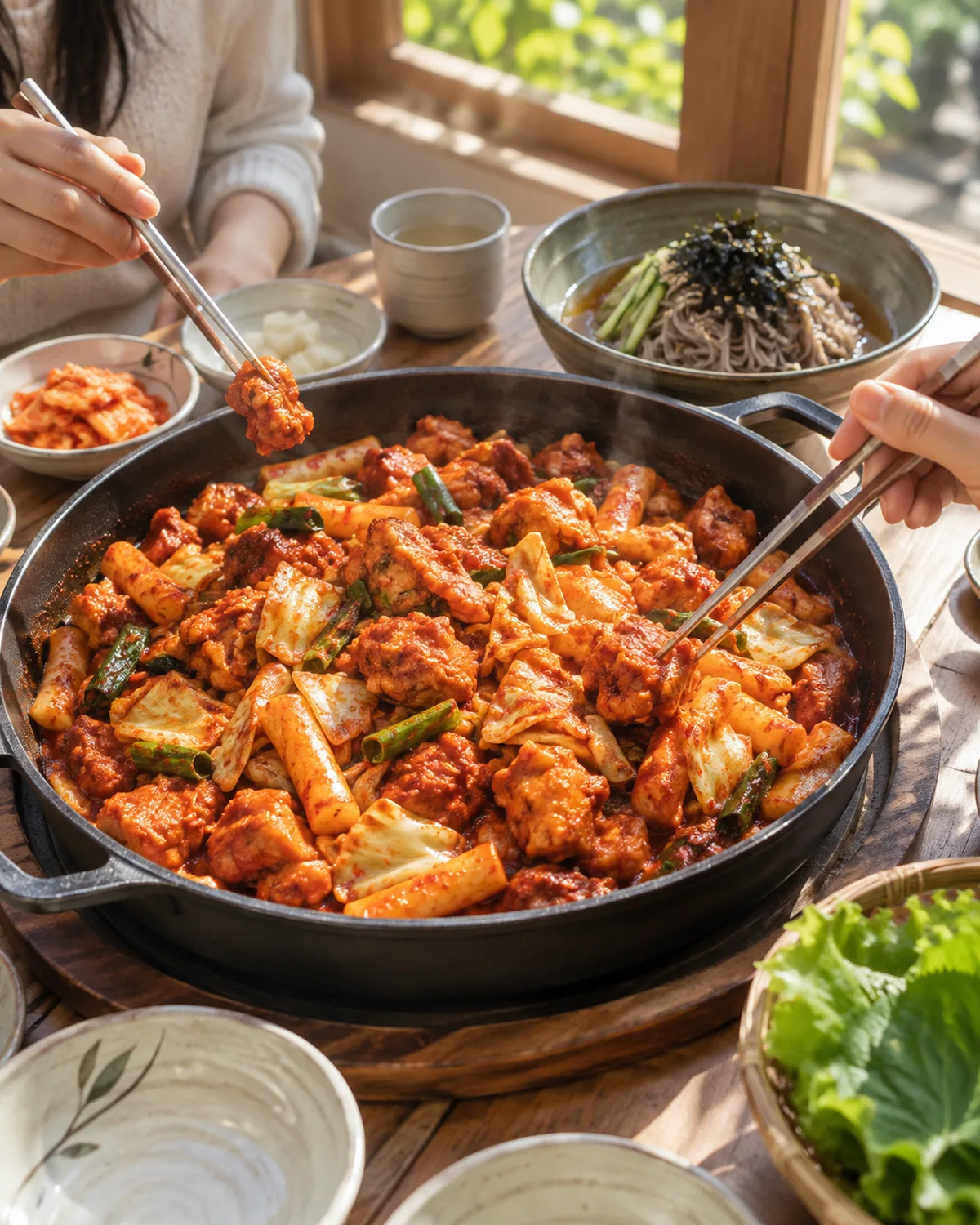
Chuncheon shows urban restaurant culture through dakgalbi. Modern Chuncheon dakgalbi is commonly cooked as a shared pan meal with marinated chicken and vegetables, while charcoal-grilled forms also remain. Rather than repeat one disputed invention tale, pay attention to how inexpensive group dining, restaurant equipment and the finishing fried-rice ritual turned the dish into a social meal.
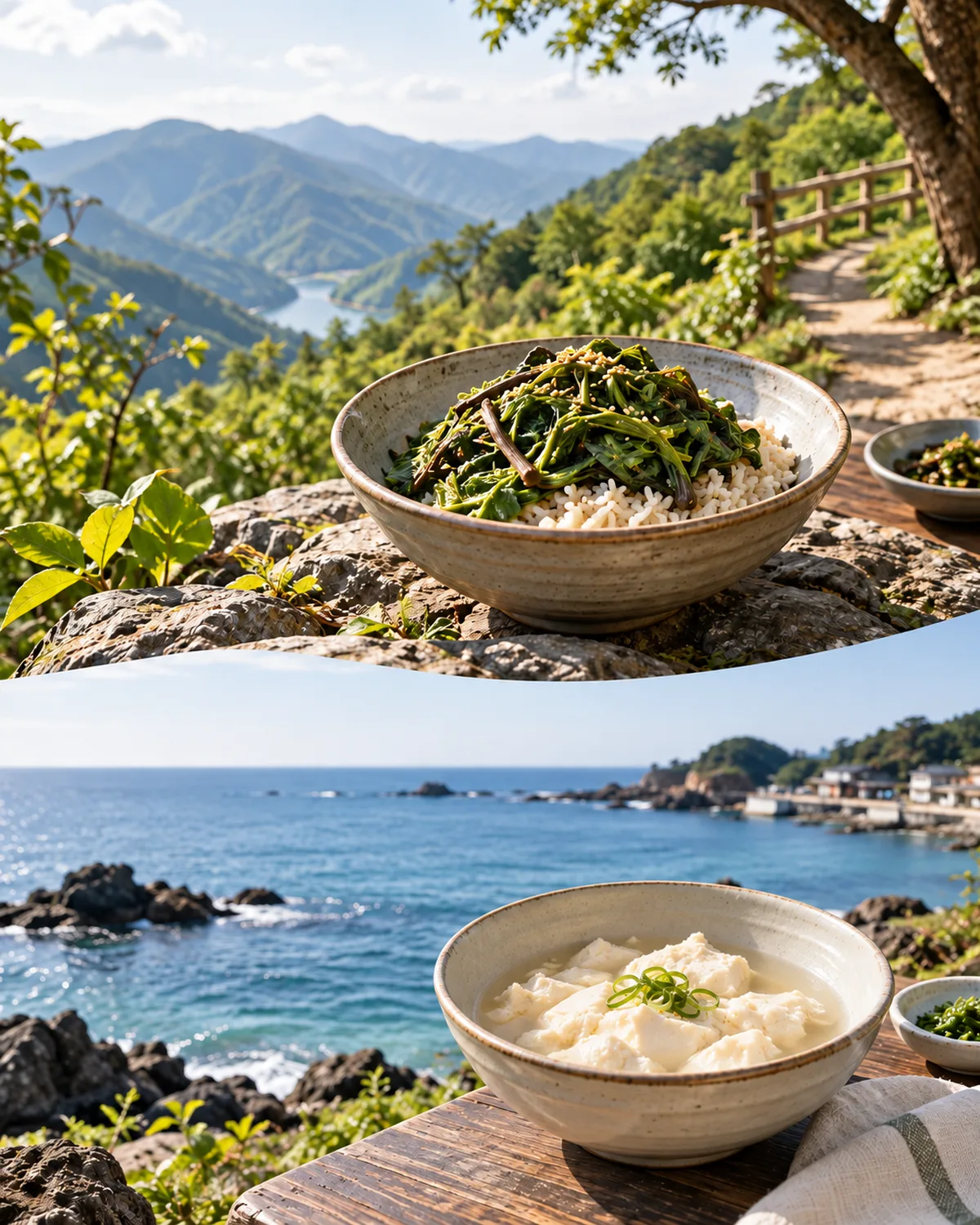
Gangneung gives you a different relationship between landscape and technique. Korea Tourism Organization describes Chodang tofu as ground beans set with salt water from the East Sea. A relatively plain bowl makes the soft curds the focus; spicy restaurant versions turn them into a different meal. The coastal connection is useful without turning a local origin story into a proven invention date.
Jeongseon shifts the focus back to the mountains. Gondeure namul bap places a local edible green directly into rice rather than treating it as a garnish. Fresh and dried greens behave differently, and the dish reflects the preservation logic of a highland environment. The Five-Day Market provides context because mountain vegetables appear as products, not just ingredients in one restaurant bowl.
Sokcho adds migration history. Abai Village was established by people displaced from North Korea during the Korean War, and official tourism material still describes restaurants there serving northern-style abai sundae alongside ojingeo sundae. Ojingeo sundae uses the coastal ingredient—squid—as a casing for a stuffed preparation, while the village story explains why northern food memory remains visible in an East Sea port city.
One province therefore gives four different regional connections: restaurant equipment in Chuncheon, coastal salt-water tofu making in Gangneung, mountain greens and preservation in Jeongseon, and migration plus seafood in Sokcho. Each suggests a different meal.
Chungcheong: bread, tofu and the tidal-flat pantry
Chungcheong is where a regional guide earns its value. Several foods here are well known in Korea but rarely lead international “top Korean food” lists. That makes them good tests of whether you are traveling for place or only for global fame.
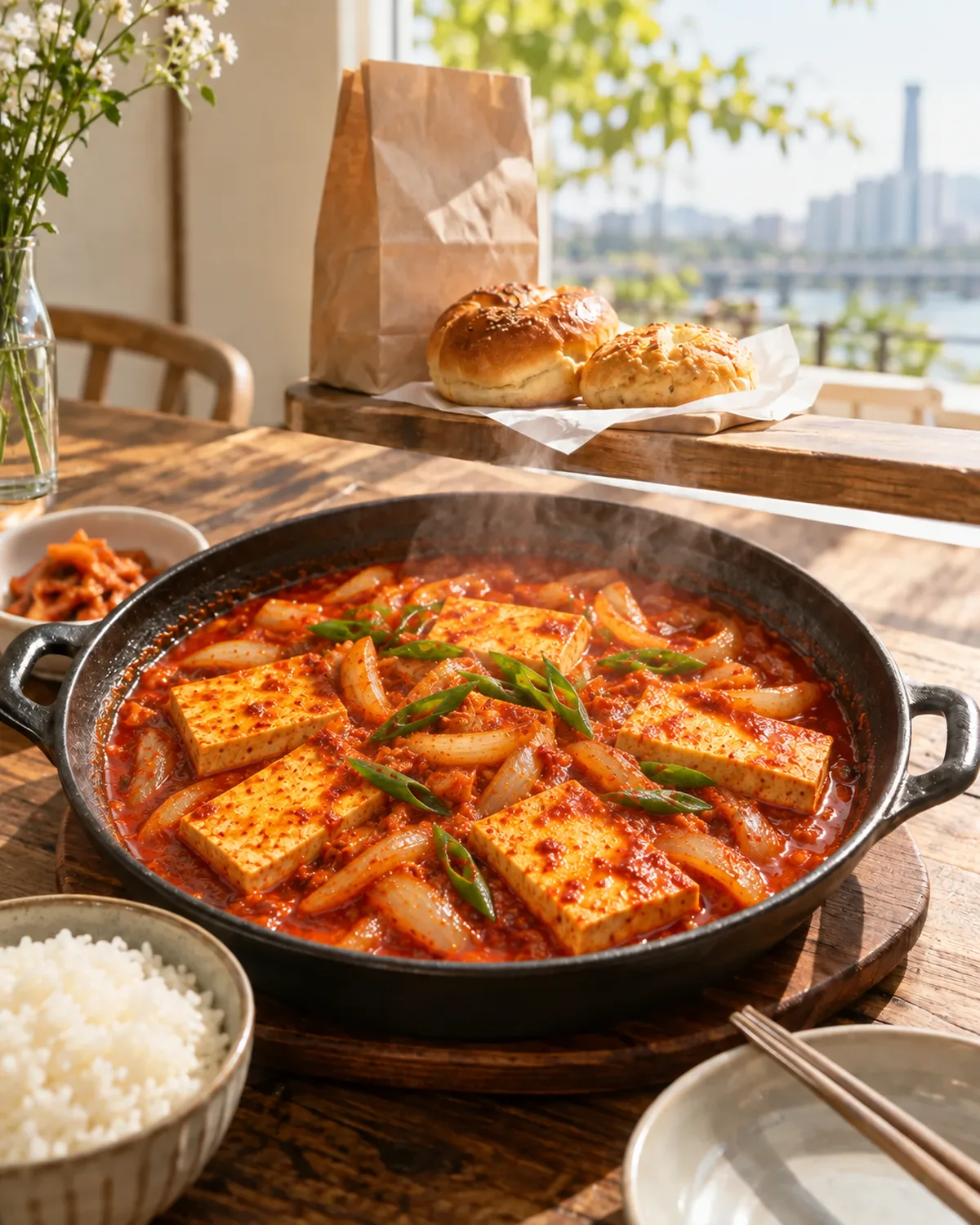
Daejeon holds two very different food stories. Sungsimdang traces its beginning to a steamed-bun shop near Daejeon Station in 1956. Bread that travelers can carry away belongs to a different eating occasion from dubu-duruchigi: broad tofu pieces cooked in a spicy sauce. The bakery and the restaurant pan show how a city becomes recognizable through businesses as well as ingredients.
Cheonan’s Byeongcheon area is associated with sundae. The useful comparison is not “blood sausage versus no blood sausage,” because Korean sundae varies widely. It is how stuffing, casing, grain or noodle content and soup service change from region to region. A plate of sliced sundae and a bowl of sundae-guk are different eating formats even when they share the same family of ingredients.
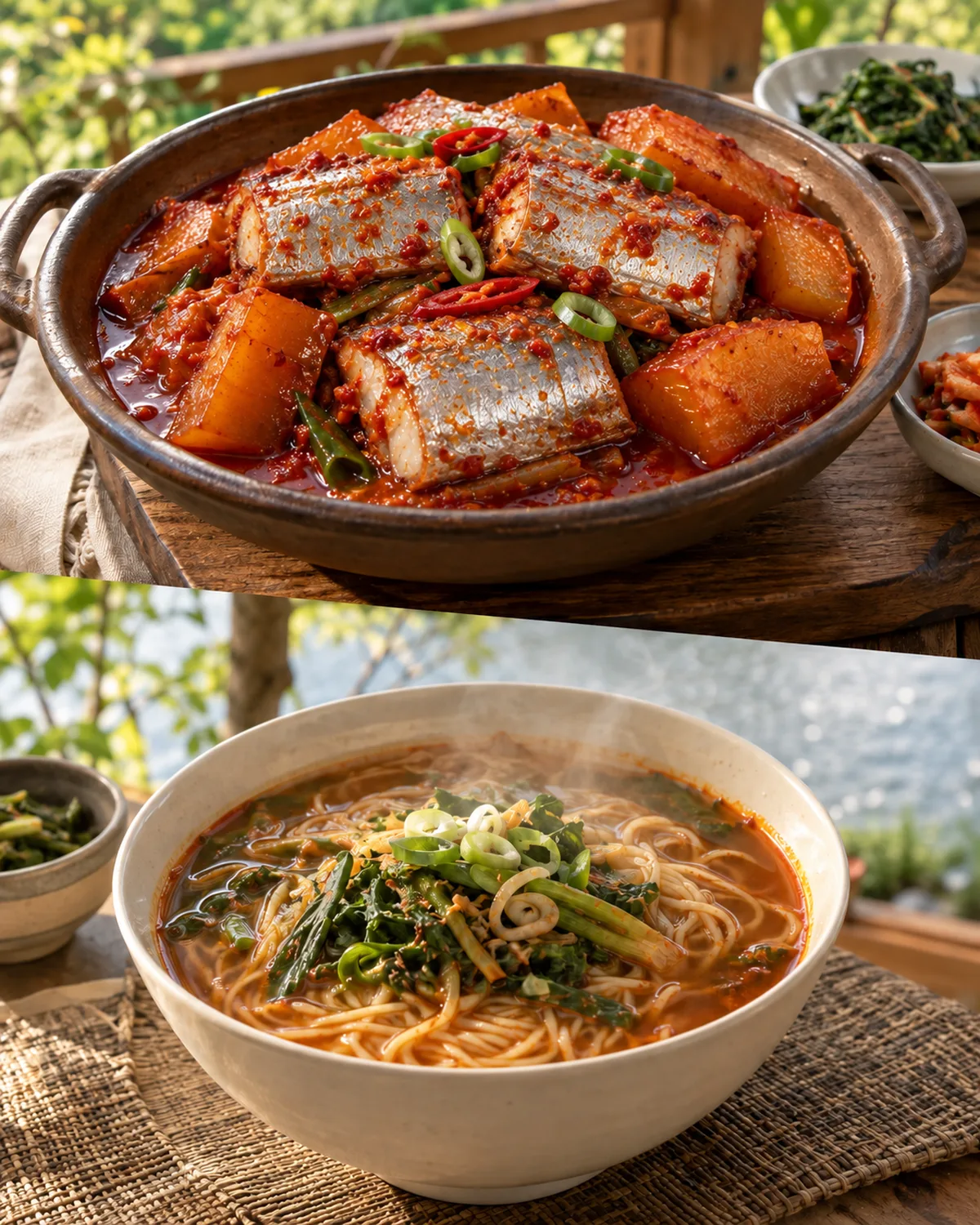
Okcheon offers an even more local case: saengseon-guksu, a freshwater-fish noodle soup associated with Cheongsan. The important mechanism is river-fish cooking. Fish is cooked down into a strongly flavored broth and paired with noodles, connecting inland waterways to a dish that feels very different from coastal seafood soup.
Seosan and Taean connect preservation with the coast. Gaegukji has roots in vegetables preserved with seafood brine; modern restaurant versions often add whole crab. Baksok nakji-tang pairs octopus with white gourd in a lighter broth. The two soups offer different cooking histories, rather than interchangeable seafood meals.
Pocheon: a meat village shaped by its customers
Idong galbi shows that regional identity can grow around restaurants. Korea Tourism Organization describes the Pocheon village as starting with two shops in the early 1960s, followed by more sellers as its reputation grew. Marinated beef short ribs became a destination meal through that concentration; the story does not require an ingredient found nowhere else.
The dish itself is structurally simple—beef short ribs, seasoning, grilling—but restaurant technique changes the result. Cut thickness, scoring, marinade balance, charcoal heat and the timing of turns all affect texture. The Idong galbi guide is useful if you want the deeper history instead of treating every sweet marinated rib as identical.
This kind of trip is best when the meal fits another reason to visit the area. Traveling several hours only to prove you ate the “original” can be disappointing; combining food with landscape, history or another destination makes the regional context do real work.
Jeju: ask how the fish is cooked
Jeju offers much more than black pork. Cutlassfish, abalone, seaweed and other ingredients appear in soups, grills and braises. Looking at these preparations reveals the island’s food culture without assuming that every restaurant ingredient was produced locally.
Galchi, or cutlassfish, is a useful example because the same fish becomes different meals. Galchi-jorim braises pieces in a red, seasoned liquid, often with radish. Galchi-guk uses a clearer broth. Grilled galchi emphasizes the flesh and skin more directly. Choosing among them is not a ranking exercise; it is a way to compare how one ingredient behaves under different cooking methods.
For travelers, Jeju also changes the logistics of a food trip. Distances, driving time and the spread of coastal towns matter more than in a dense Seoul neighborhood. Build meals into the route you already plan to take instead of crossing the island repeatedly for famous restaurant names that may have queues, branch differences or changing hours.
Use markets and geography to choose the next meal
Food tourism language often turns association into invention. Those are not the same claim. A dish can become identified with a city because local ingredients suit it, because a market or restaurant cluster concentrated sellers, because a famous business popularized it, because migrants carried a food into a new place, or because tourism promotion later strengthened the connection.
That distinction protects several stories in this guide from becoming folklore presented as fact. Sindang-dong is deeply associated with modern spicy tteokbokki, but older forms of tteokbokki existed. Chuncheon has a powerful dakgalbi identity, but official tourism materials preserve more than one chronology for the dish’s emergence. Gangneung’s Chodang tofu is tied to local brine and place memory, while modern restaurants now serve versions that earlier diners would not have recognized. Regional identity is often a process, not a single invention date.
For travelers, this is good news. You do not need to prove that a town invented a food to justify eating it there. What matters is whether the place still provides a richer context: a specialized alley, concentrated producers, a distinctive ingredient supply, a market ecosystem, or a documented local history.
A regional market can broaden the picture beyond one celebrated dish. Jeongseon Market, for example, provides a place to see mountain produce sold alongside prepared food. Ingredients on a stall and the same ingredient in a bowl answer different questions about what a place eats.
A market also prevents a common travel mistake: assuming one branded dish represents an entire city. Jeonju has more than bibimbap. Busan has more than dwaeji-gukbap. Jeju has more than black pork. Regional markets reveal seasonal greens, seafood, dried products, fermented foods, pancakes, noodles and snacks that may never become internationally famous.
Do not, however, freeze a market into a permanent list of prices, stall numbers and opening times. Vendors change, individual businesses keep different schedules, and seasonal items come and go. Use official market information to verify the market itself, then treat the exact stall mix as part of what you discover on the day.

You can often make a better food choice before reading a restaurant review by asking four questions about the place.
First: what does the landscape produce? Mountain regions suggest greens, buckwheat, potatoes, corn or preserved vegetables. Islands and coasts suggest seafood, seaweed and salt-linked preservation. River areas may support freshwater fish traditions.
Second: what had to be preserved? Fermentation, drying, salting and brining are not decorative “traditional” techniques. They solved storage and seasonal-supply problems. Gaegukji makes more sense when you think about preserved seafood brine and vegetables; dried mountain greens make more sense when you think about a growing season that does not last all year.
Third: who moved through or settled in the area? Sokcho’s refugee communities, military-city foodways and port migration all show that regional cuisine is shaped by people as much as soil. A local dish can be local precisely because newcomers adapted memory to a new environment.
Fourth: where did restaurants cluster? Sindang tteokbokki, Jangchung jokbal and Idong galbi demonstrate how a neighborhood can become a destination because sellers and customers reinforce one another. The cluster becomes part of the food’s identity even when the ingredients are available nationwide.
Plan contrasts that fit your appetite and route
A common food-trip failure is scheduling three heavy specialties in one afternoon. Regional food works better when meals have different weights. A soup breakfast, market snack, bakery stop and shared grilled dinner can fit into one day. Bibimbap, dakgalbi, galbi and a full sundae-guk sequence cannot always fit simply because each is famous.
Think in four categories: meal, light meal, snack and tasting stop. Gimbap can move between meal and snack depending on size. Tteokbokki can be a cup-sized snack or a shared pan meal. Bindaetteok may be one market taste or a full plate with drinks. Sundae can be a few slices or the foundation of a soup. Classifying the format before the trip keeps the route realistic.
Also leave one slot unplanned. Regional travel produces better discoveries when every meal is not locked to an internet-famous restaurant. An unexpected market, seasonal ingredient or local recommendation can be more informative than the fifth item on a checklist.
Korean regional food cannot be divided neatly into spicy and non-spicy. A red dish may be sweet and moderately hot; a pale broth may contain strong fermented seafood; a mild-looking pancake may include meat or seafood. Ask about the ingredient that matters rather than relying on color.
Vegetarian travelers should ask about the ingredient that matters. Vegetable dishes can contain fish or meat stock, egg or seafood seasonings. Confirm the actual bowl, sauce, soup and side dishes with the kitchen; a regional name or pale color cannot answer those questions.
Regional foods are also often promoted with words such as “restorative,” “energizing” or “good for stamina.” These phrases can have cultural meaning without being medical evidence. This guide treats them as part of food culture, not as disease-prevention or treatment claims.
If you are building a first food-focused Korea trip, maximize contrast rather than the number of famous dishes. One useful structure is:
- Seoul: urban institution + market system.
- Jeonju: composed rice icon + everyday bean-sprout soup.
- Gangwon: mountain greens or tofu + an East Sea seafood or migration story.
- Chungcheong: one highly local dish that is difficult to substitute elsewhere.
- Jeju: compare multiple preparations of an island ingredient instead of chasing one “best restaurant.”
A route like this lets you compare a city market with a mountain bowl and an island fish meal. If the trip is short, choose two contrasting settings and leave time to explore each. The difference is easier to remember when the journey itself remains enjoyable.
In Jeonju, a mixed-rice presentation and a morning bowl of bean-sprout soup explain different uses of rice in the same city. Along Gangwon’s mountain and coastal routes, vegetables grown or gathered inland and squid prepared near the sea do not need to compete for the title of representative food. Their difference is the point.
Chungcheong rewards a similarly specific approach: river-fish noodles, a market-town sundae cluster and Taean’s distinct coastal soups reveal different settings within a broad provincial label. A national checklist can make those foods look interchangeable when the cooking methods say otherwise.
Keep the practical plan proportionate. Use a modest market snack before a shared evening meal, or make a substantial regional bowl the main event and let the remaining stops be small. Travel time, companions and dietary needs can determine the route without making it less meaningful. A comparison you can finish and remember is more valuable than a collection of half-eaten famous dishes.
Sources and reading
- Korea.net — Taste Your Korea regional food selections
- Korea Tourism Organization — Abai Village
- Korea Tourism Organization — Chodang Dubu Village
- Korean Culture and Information Service — mountain greens and rice
- Korea Tourism Organization — Jeongseon Market
- Sungsimdang — bakery history
- Daejeon Metropolitan City — dubu duruchigi
- Korea Tourism Organization — Byeongcheon sundae
- Korea.net — Okcheon freshwater-fish noodles
- The Korea Times — firsthand reporting from Seosan and Taean
- Korea Tourism Organization — Idong Galbi Village
- Jeonju City — Nambu Market soup and toryeom
- Jeju Tourism Organization — island food culture