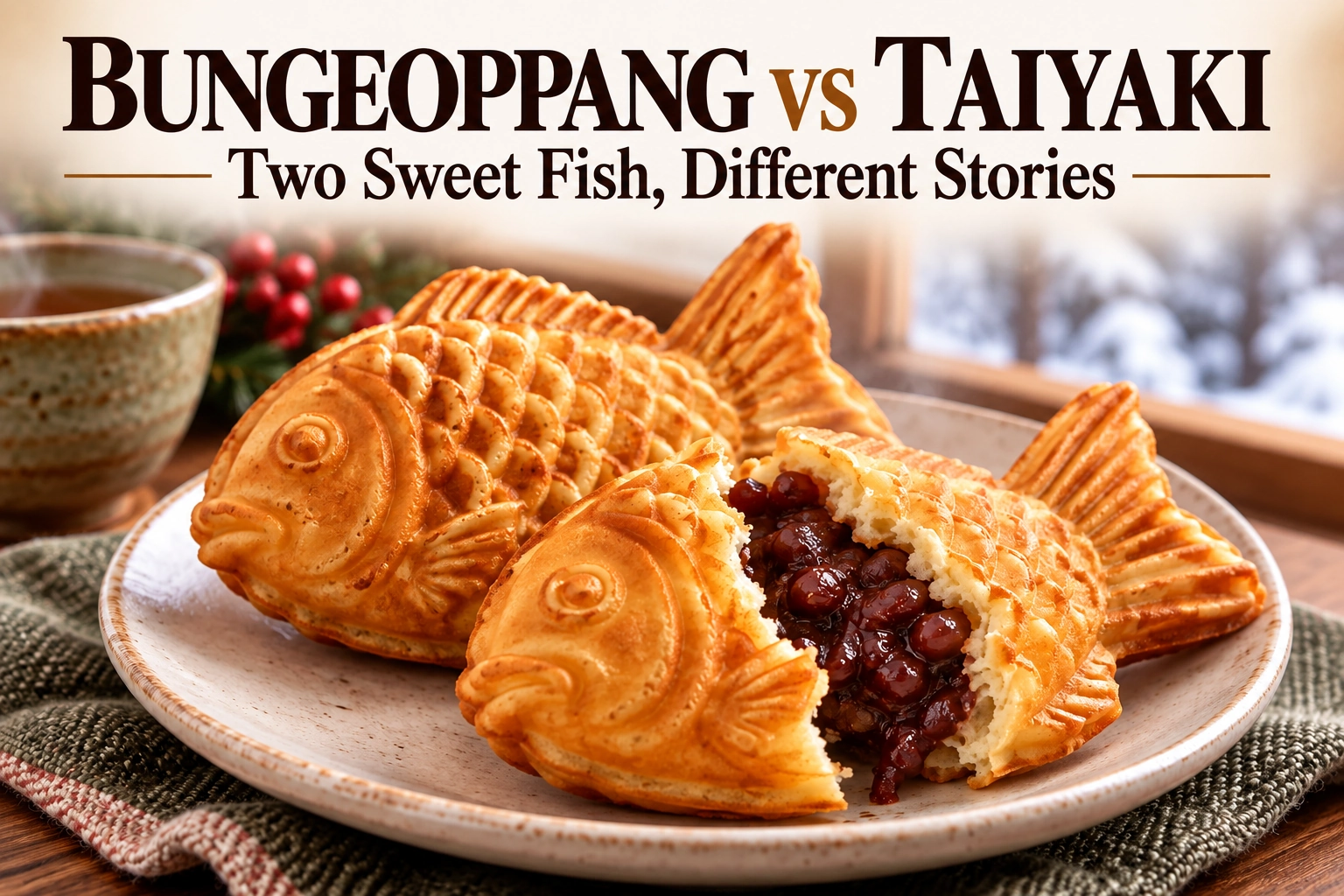
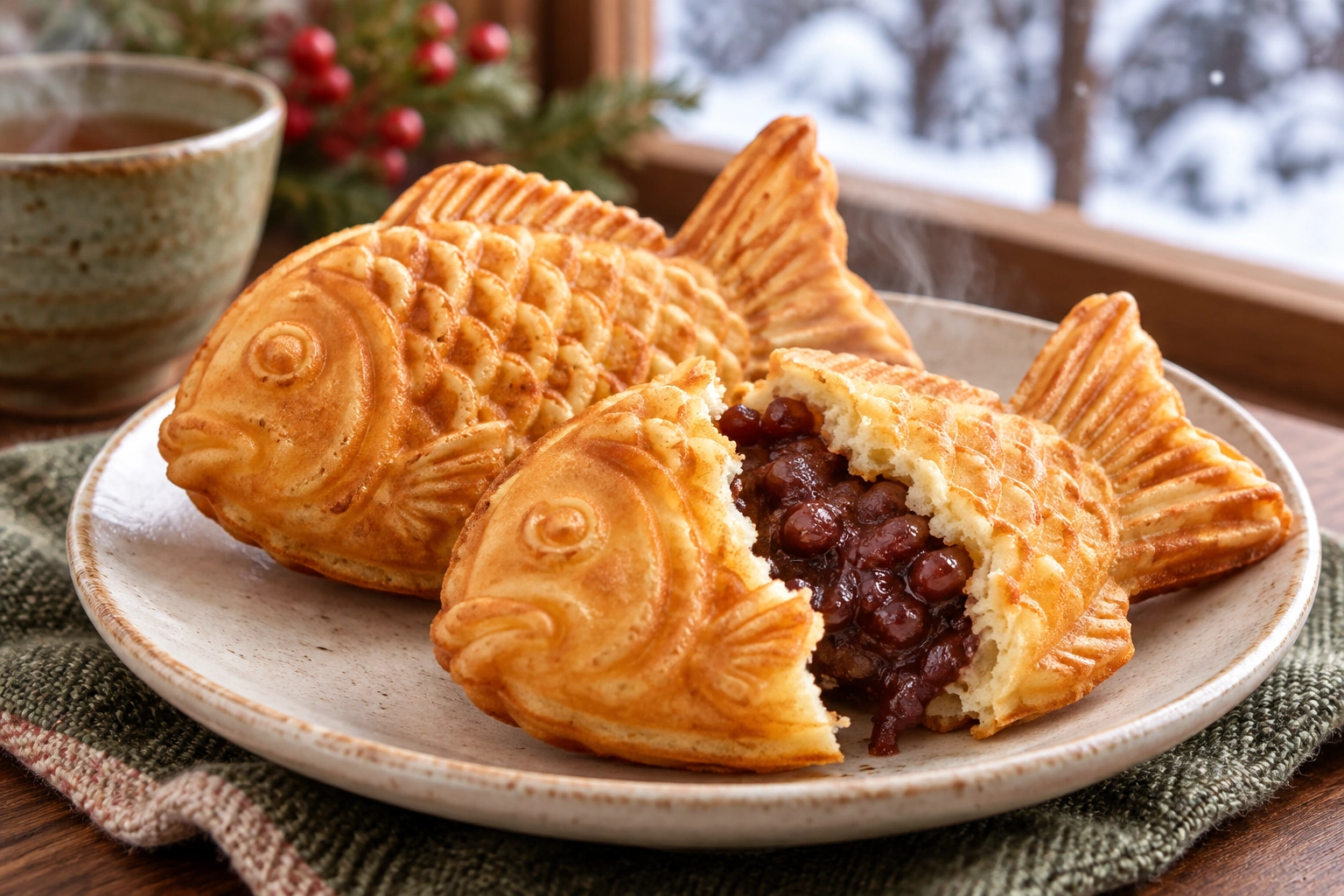
A fish-shaped snack is a small joke you can eat. The mold supplies an eye, scales, fins, and a tail; the filling supplies something much sweeter than seafood. Korean bungeoppang and Japanese taiyaki share that basic pleasure, yet their names point to different fish and their histories lead into different everyday settings.
Bungeoppang means crucian-carp bread; taiyaki refers to a baked sea bream. The names identify different fish, while both pastries enclose a filling in a molded shell.
Does Korean fish bread contain fish?
The familiar bungeoppang is a batter-based pastry cooked in a fish-shaped mold around a sweet filling. Sweetened red bean is a classic choice; custard and other fillings also appear. Its fish is an outline, not the usual ingredient.
Korea.net’s winter-snack feature explicitly explains that contrast between the literal name and the food. It describes bungeoppang as a winter street snack while recording changes in fillings and preparation. Monthly KOREA: Best Winter Snack.
That distinction is useful on an English menu. “Fish bread” can sound like bread containing seafood, while “fish-shaped pastry” tells you what to expect visually. The latter is a clearer translation when you are introducing the snack to someone who has never seen it.
The name still cannot identify every ingredient. A red-bean version and a custard version can come from the same mold. Ask about the filling rather than treating the fish silhouette as a complete description.
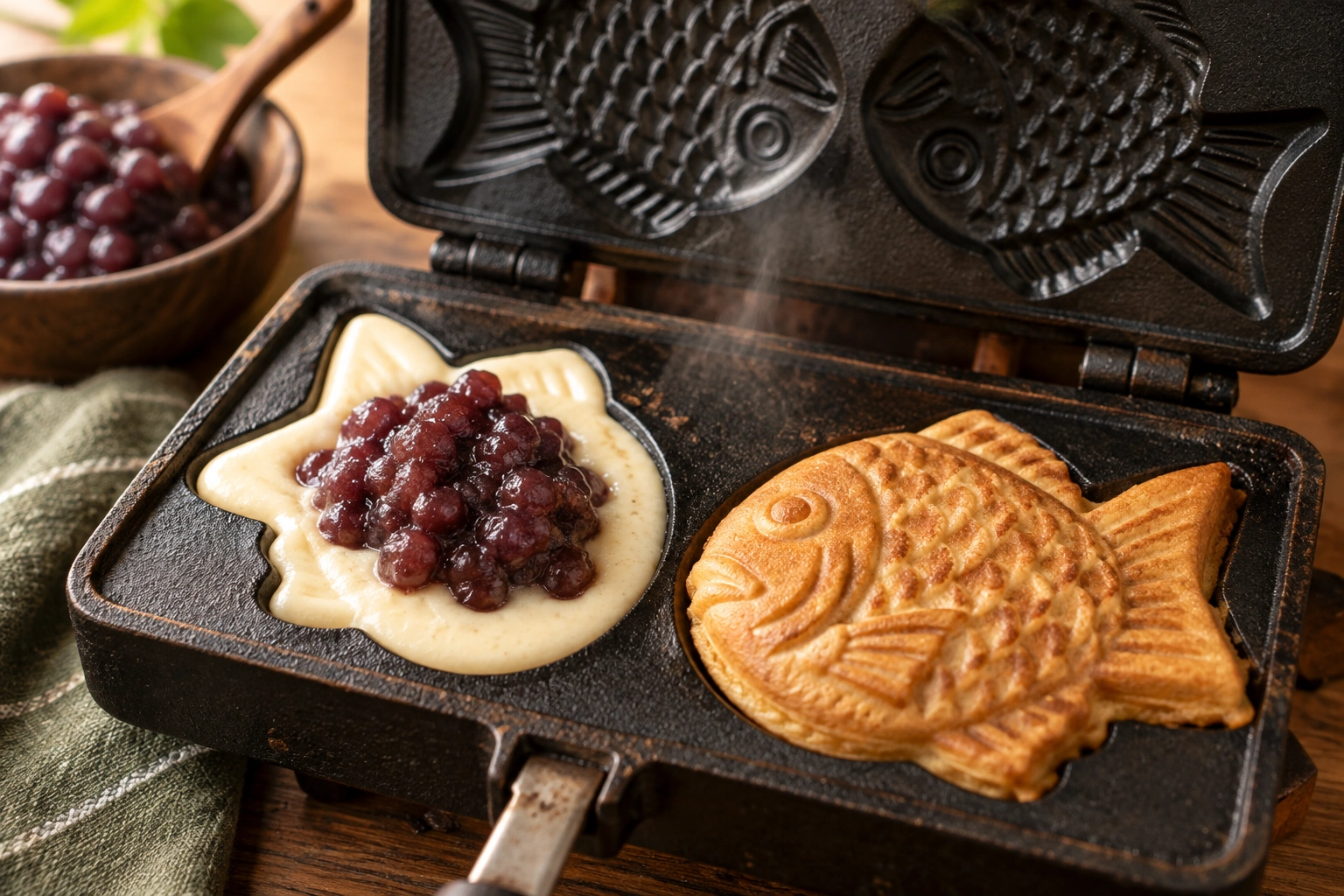
The closed mold explains the outline’s repetition. Batter goes in, filling is placed inside, and the second half closes around it. When it opens, the fish appears as a complete little object, including details that would be awkward to shape by hand for every customer.
Taiyaki’s sea bream carried a wish
Sea bream has a different role in the Japanese story. In a 2023 interview published in Highlighting Japan, Naniwaya Sohonten’s fourth-generation owner Kanbe Masamori recalls the fish’s association with expensive celebratory gifts. He interprets the founders’ sweet fish as a way to make that desirable shape available in an inexpensive snack.
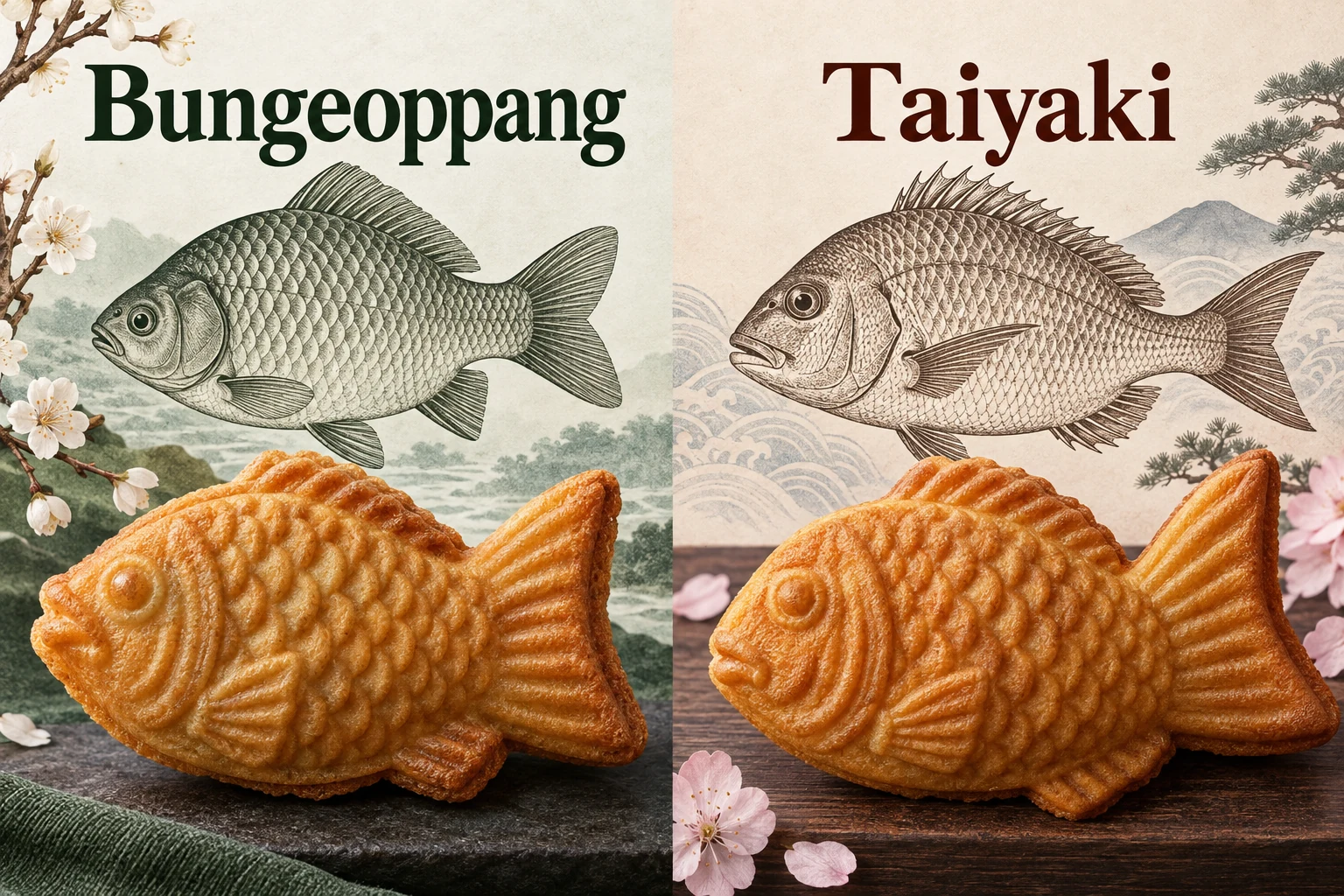
The shop’s beginnings are dated to 1909. The account connects the choice of a mold with a larger idea: customers could enjoy the image of a prized fish without buying the real one. Highlighting Japan: Taiyaki and Naniwaya Sohonten.
It is a family account and the owner’s explanation of the founders’ business sense. It should be read in that form. The Tokyo confectionery association also lists the shop’s 1909 establishment, providing a separate reference for its long history. Tokyo confectionery association: Naniwaya Sohonten.
In an earlier interview with Nippon.com, Kanbe is candid that the distant beginnings are not documented precisely enough to know everything. The interview discusses the auspicious connection between tai and medetai, a word associated with congratulations. That playful sound helps explain why a sea-bream shape can say more than “here is a fish.” Nippon.com: An Interview at Naniwaya Sohonten.
What traveled from taiyaki to bungeoppang?
Recipe author Sue at My Korean Kitchen describes bungeoppang in relation to Japanese taiyaki. The shared form is plain to see: a shaped mold, a cooked shell, and a filling enclosed inside. The Korean name identifies a crucian carp rather than a sea bream. My Korean Kitchen: Bungeoppang.
That connection does not require an invented story about the first Korean seller deciding to change fish species. The surviving names tell us what the snacks are called. Establishing the exact first transaction or redesign would require a different kind of evidence.
The relationship is still worth recognizing. Food traditions can be connected through equipment as well as ingredients. A mold carries a recognizable form from kitchen to kitchen. Cooks can change the batter, filling, and way the snack is sold while retaining the object customers recognize.
Think of the shape as a format with room for choices. The same outline can hold a generous bean center, a softer cream, or a different dough altogether. The continuity is visible before the first bite; the variation becomes clear when you eat.
A winter memory has a particular place
The Korean winter association becomes more concrete in personal accounts. Sue describes bungeoppang as a childhood favorite and remembers carts or vans selling it during winter. That is her recollection, not a memory this article claims on your behalf.
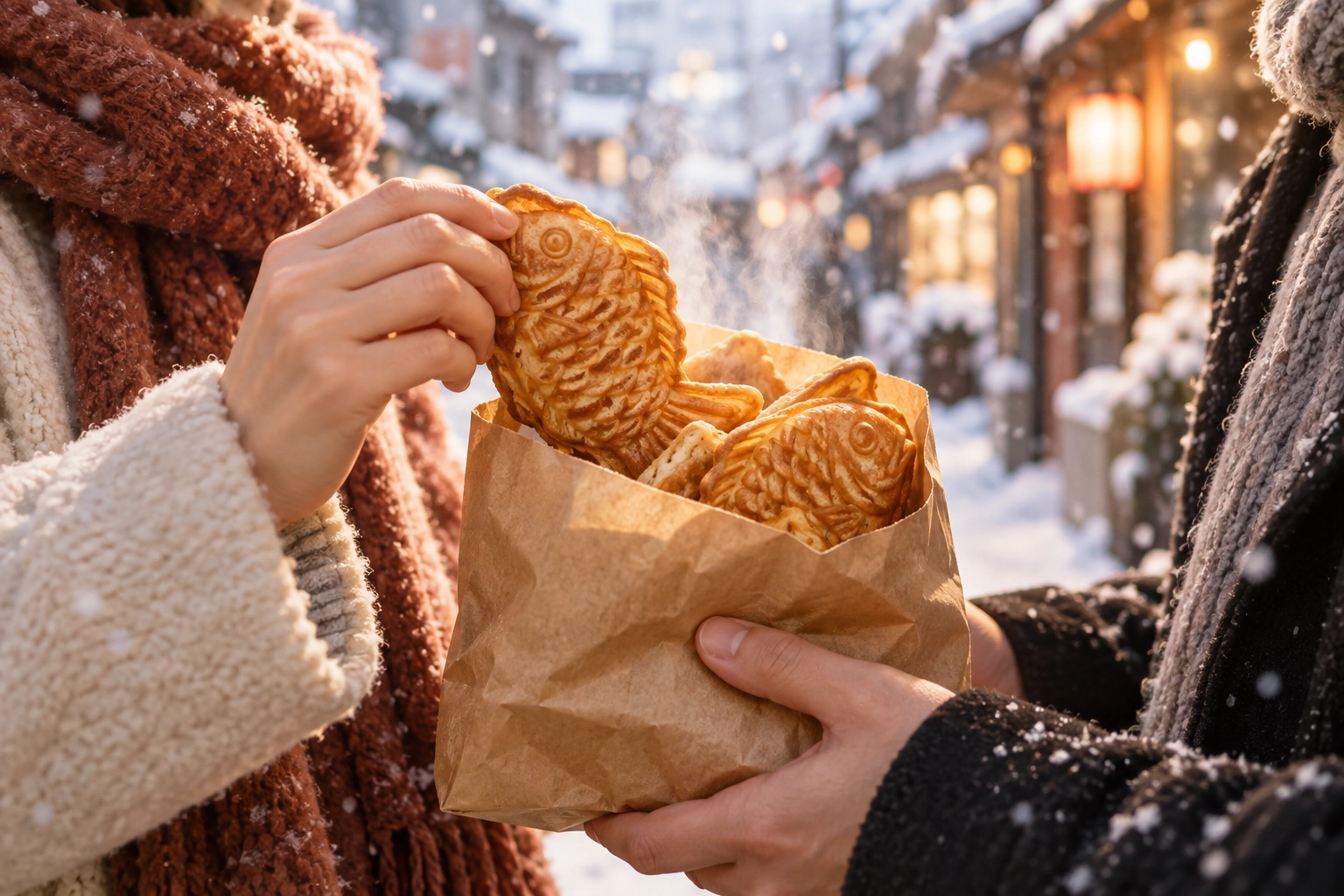
Another account comes from Korea.net staff member Elias Molina from Costa Rica. In a 2021 feature, he recalls first encountering bungeoppang near his school after arriving in Korea during a snowy winter. He describes later recommending it to visiting family and friends. Korea.net Staff Picks: Winter Snacks.
For an English-speaking traveler, that second perspective matters. You can understand why people feel attached to bungeoppang without pretending to share their entire past. The first warm fish you buy can become your own encounter with the food.
The setting also differs from a plated restaurant dessert. You may watch a batch being cooked, choose a filling, and receive a small bag. The exchange is brief, and the snack fits into a walk or a trip home. Those ordinary circumstances are part of its identity.
The same outline became a cold dessert
The fish did not remain tied to a hot mold on a winter street. Binggrae states that it developed Bungeo Samanco in 1991 to carry the familiar bungeoppang idea into an ice-cream product that could be enjoyed beyond winter.
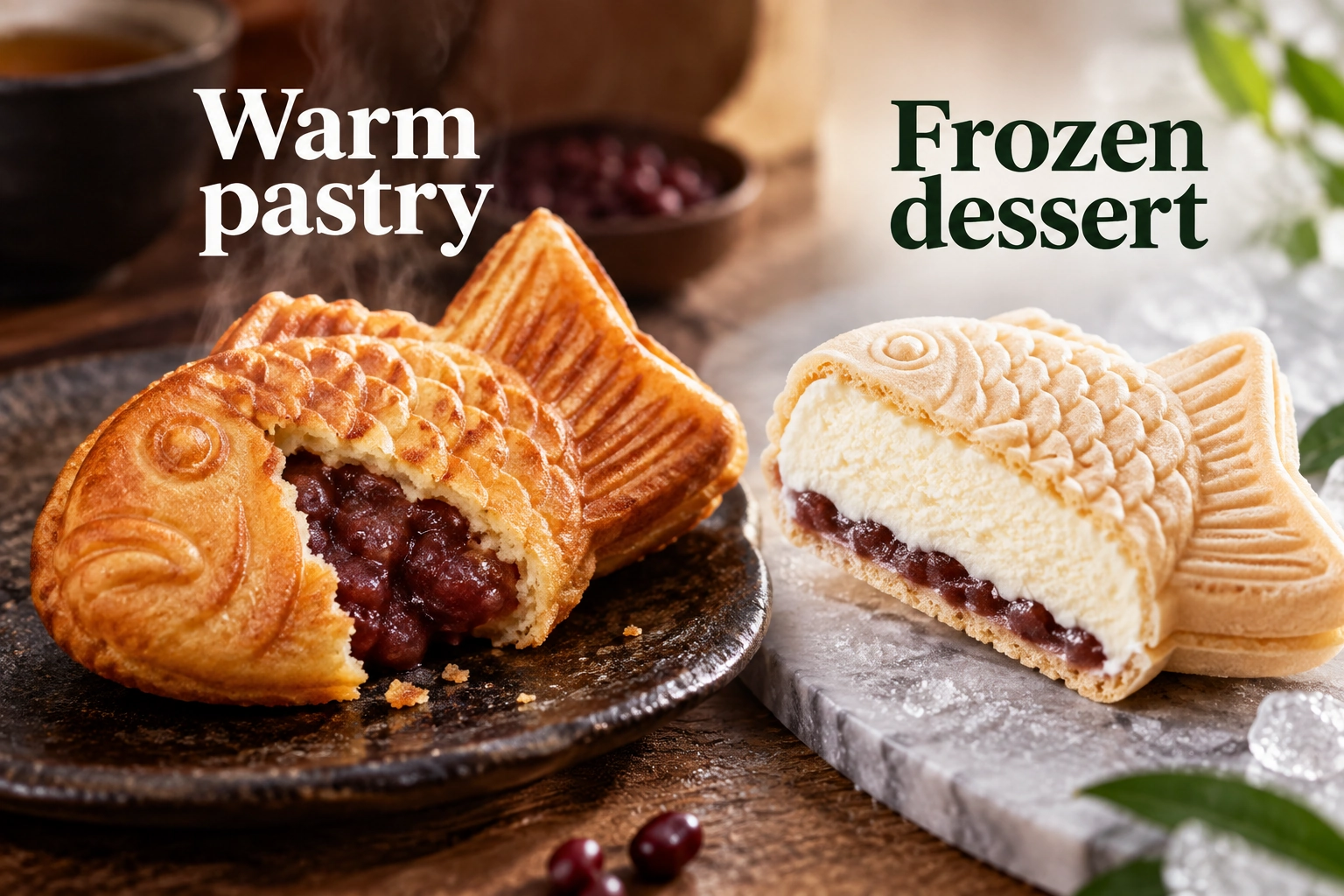
The manufacturer’s account identifies a fish-shaped confection enclosing ice cream and sweet elements. It documents that product’s development, rather than proving that Binggrae invented every fish-shaped ice-cream dessert. Binggrae: Bungeo Samanco.
This is a striking change in eating experience. The outline survives while temperature, storage, and texture change. Instead of waiting for a mold to open, you open a wrapper. Instead of a hot center, you bite into frozen filling.
If you encounter the packaged ice cream overseas, distinguish it from the fresh pastry. They are connected through an image and an idea; they are not interchangeable examples of the same hot bread.
Comparing the bite, not guessing from the flag
For a meaningful taste comparison, identify the actual versions in front of you. Naniwaya’s owner describes a deliberately thin, crisp shell that brings its bean filling forward. Sue’s published Korean recipe uses a particular batter and filling approach. Neither account is a specification for every shop in its country.
Notice the shell-to-filling balance. A thinner layer lets the filling dominate; a thicker one gives you more pastry in the same bite. Then look at texture: the tail or fin can supply a crisp edge while the central body holds a softer filling.
Temperature and timing matter too. A freshly cooked pastry and one carried in a bag will not necessarily have the same shell texture. Let the filling cool enough to eat comfortably, then pay attention to the contrast between the edge and center.
You can start with red bean if you want to compare a shared classic. A custard or ice-cream version answers a different curiosity: how far can the familiar fish travel while remaining recognizable?