
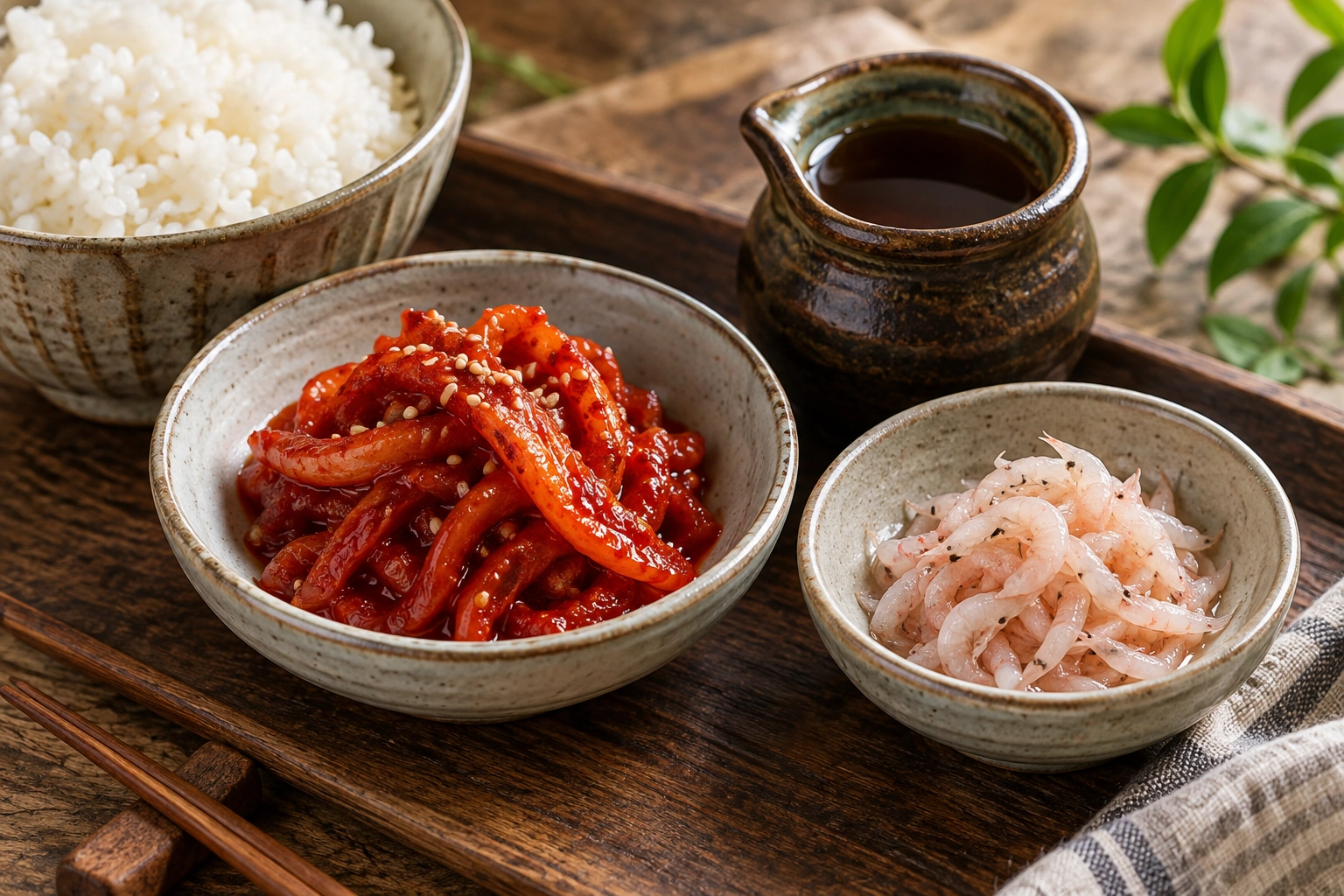
The sea can appear on a Korean table in a surprisingly small portion: a few seasoned squid pieces beside rice, tiny shrimp beside pork, or a seafood seasoning already mixed into kimchi. The portions do different work. Looking only for a plate of fish makes part of the story easy to miss.
Jeotgal is a broad category of salted, matured seafood, used both as food to eat and as seasoning. Food scholar Seo Hye-gyeong’s Academy of Korean Studies entry includes seafood flesh, internal organs and reproductive parts, rather than limiting the term to one species or one texture.
A royal wedding record, without an invention story
The Samguk Sagi records preparations for King Sinmun of Silla’s marriage in the second lunar month of 683. Its list of gifts includes rice, wine, oil, honey, sauces, meju, dried meat and an item rendered as jeotgal in the National Institute of Korean History’s Korean translation. The database entry presents the historical text with translation and editorial notes.
A modern reader should not turn that list into the birthday of today’s spicy squid side dish. It establishes a preserved-food reference in an account of a royal marriage. It does not identify the contents of every container, its seasoning formula or a modern retail product.
That narrower conclusion is still interesting. Preserved food appears alongside other valuable provisions in the recorded exchange. The context invites us to think about foods that could be assembled, moved and offered, rather than only dishes cooked immediately for a meal.
Why a river town belongs in a seafood story
Ganggyeong, in Nonsan, helps make the geography less obvious. The municipal account describes the town’s connection to the Geum River and the West Sea, and its history as a significant fishing port. Nonsan’s town profile gives the river a place in the story even though a visitor is not standing at an ocean beach.

Nonsan’s tourism material identifies a jeotgal exhibition hall with photographs of Ganggyeong’s past and present. Its exhibition description describes older methods of maturing jeotgal in buried containers or cool caves.
The exhibition provides a history of storage, rather than specifications for a jar on sale today. Ask the seller how the product was matured and follow its storage instructions.
The visible branch: squid as a rice side dish
One clear example of jeotgal eaten directly is ojingeojeot, seasoned fermented squid. Maangchi introduces her own version as a small morsel to eat with rice, describing a combination of salty, chewy, garlicky, gingery and sweet qualities. In her method, preserved squid is cut and combined with a separate seasoning paste. Her recipe distinguishes the preserved seafood from the preparation of the finished side dish.
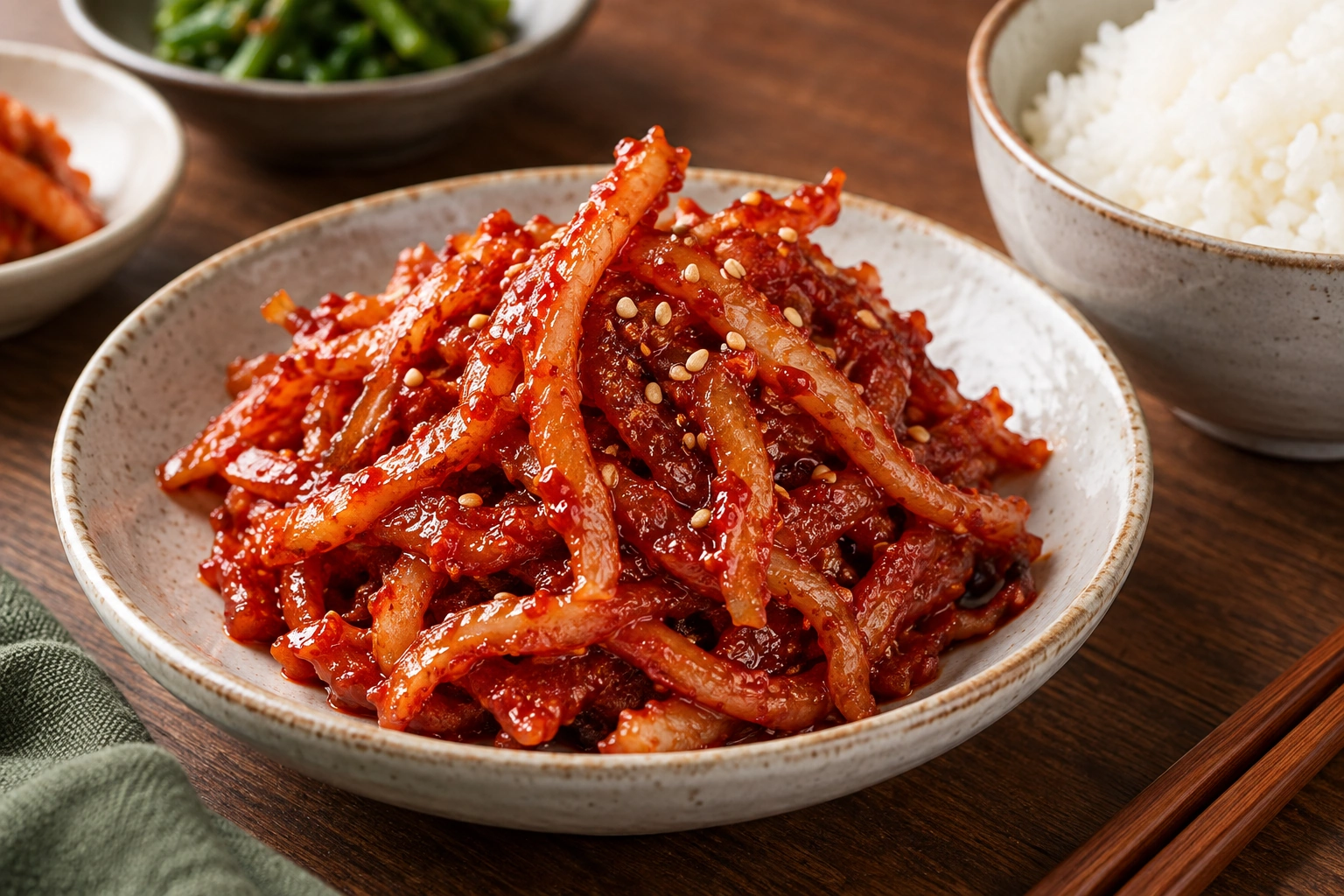
At the table, a small portion can accompany several bites of rice. The experience is different from treating it as a large standalone seafood serving. Rice allows the eater to adjust how much of the concentrated side dish is present in each mouthful.
If you are choosing a first jeotgal, identify the seafood and how it has been seasoned. The category name is only a starting point. A preference for chewy squid does not automatically predict a preference for tiny shrimp or fish roe, and disliking one example need not settle the whole category.
The seasoning branch: tiny shrimp moving through a meal
Saeujeot means salted fermented shrimp. Maangchi’s ingredient guide describes its use to season dishes in place of salt and its inclusion in many cooks’ kimchi paste. The tiny seafood can contribute to a dish without becoming its visible centerpiece.

There is also a useful moment when the ingredient’s roles meet: kimchi-making and a meal of boiled pork wraps. Cook Hyosun recalls her mother boiling pork while the family made kimchi, with salted cabbage and radish filling already available. Her father helped slice the meat and made a wrap with a small amount of salted shrimp. Her family account at Korean Bapsang shows a seasoning becoming part of the meal beside the work of preparing preserved vegetables.
This is a particular household’s memory, not a required sequence for every kimchi-making day. Its value is the connection it reveals: the ingredients used for one task can also shape what people eat while doing it.
For a diner, the visible shrimp condiment offers control over a bite. For a cook, shrimp mixed into a batch of kimchi has already been distributed through the preparation. You encounter the ingredient differently even when its name is familiar.
What disappears into kimchi is still an ingredient
A concrete recipe makes that second use easy to see. Maangchi’s tongbaechu-kimchi, whole napa cabbage kimchi, includes chopped saeujeot with its brine as well as fish sauce in the seasoning mixture. The ingredient list shows two seafood preparations participating in one version of vegetable kimchi.
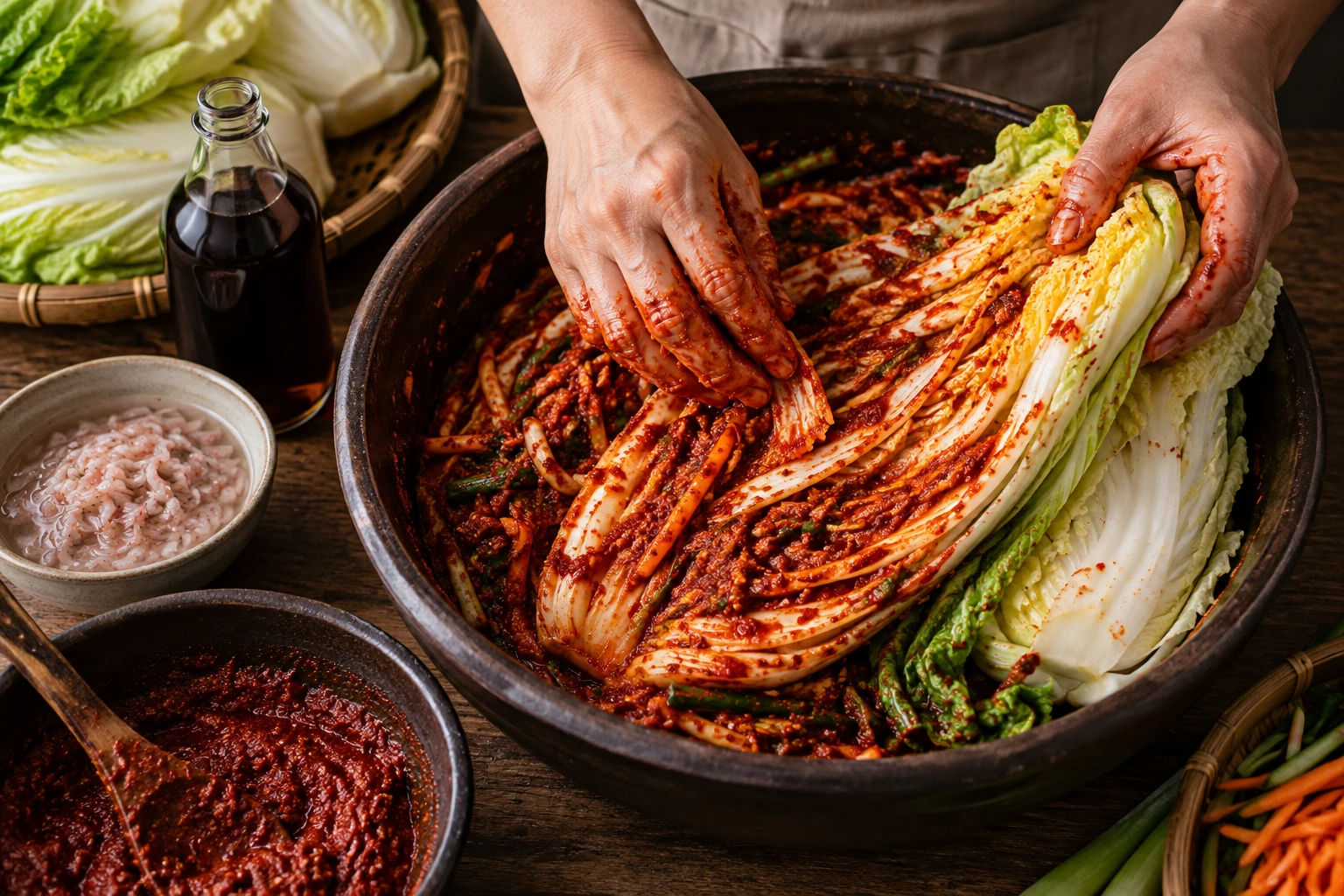
That matters for understanding a finished dish. The cabbage remains visible; the seasoning ingredients may be much harder to identify by looking at a served piece. Reading a recipe or asking the cook reveals more than the color of the kimchi can.
Another preparation, myeolchi-jeot, uses salted fermented anchovies. Maangchi’s anchovy ingredient page discusses its use in kimchi, especially in Southern Jeolla, and notes how the anchovies break down with extended fermentation. This gives a specific example of a seafood ingredient changing form before the eater meets it.
These are examples of variation, not a rule that all kimchi contains the same seafood. To understand the version in front of you, the useful question is whether the maker used shrimp, anchovy preparation, liquid fish sauce, another seasoning or a seafood-free approach.
Read the seafood name, form and intended use together
Three pieces of information make a market display easier to navigate. The seafood name tells you what the preparation begins with. The form tells you whether you are looking at pieces, roe, tiny whole shrimp or a liquid condiment. The intended use tells you whether the seller expects it to accompany rice, season a pork bite or enter another preparation.
Aekjeot, fish sauce, belongs to the liquid side of this vocabulary. Maangchi’s fish sauce guide identifies that name and describes its use as a savory, salty seasoning. Recognizing the liquid helps prevent confusing a bottle of sauce with a bowl of seasoned seafood pieces, while leaving room for their related uses in cooking.
If you are purchasing a jar, ask whether it is ready to eat as a side dish or intended as an ingredient. Check its actual seasoning list and storage instructions. A recipe that calls for saeujeot has specified more than the generic words “shrimp sauce,” so choose by the product’s contents and form rather than an approximate English name alone.