A family seasoning can travel surprisingly far. A December 2024 article from Korea’s Ministry of Culture, Sports and Tourism describes how master artisan Ki Soon-do’s ssiganjang, or seed soy sauce, was used at the state banquet during Donald Trump’s 2017 visit to Korea. A sauce associated with continuity at home entered an international diplomatic meal. The ministry’s account makes that connection tangible: the cook’s inheritance was also something guests could taste.
What does jang mean in Korean food?
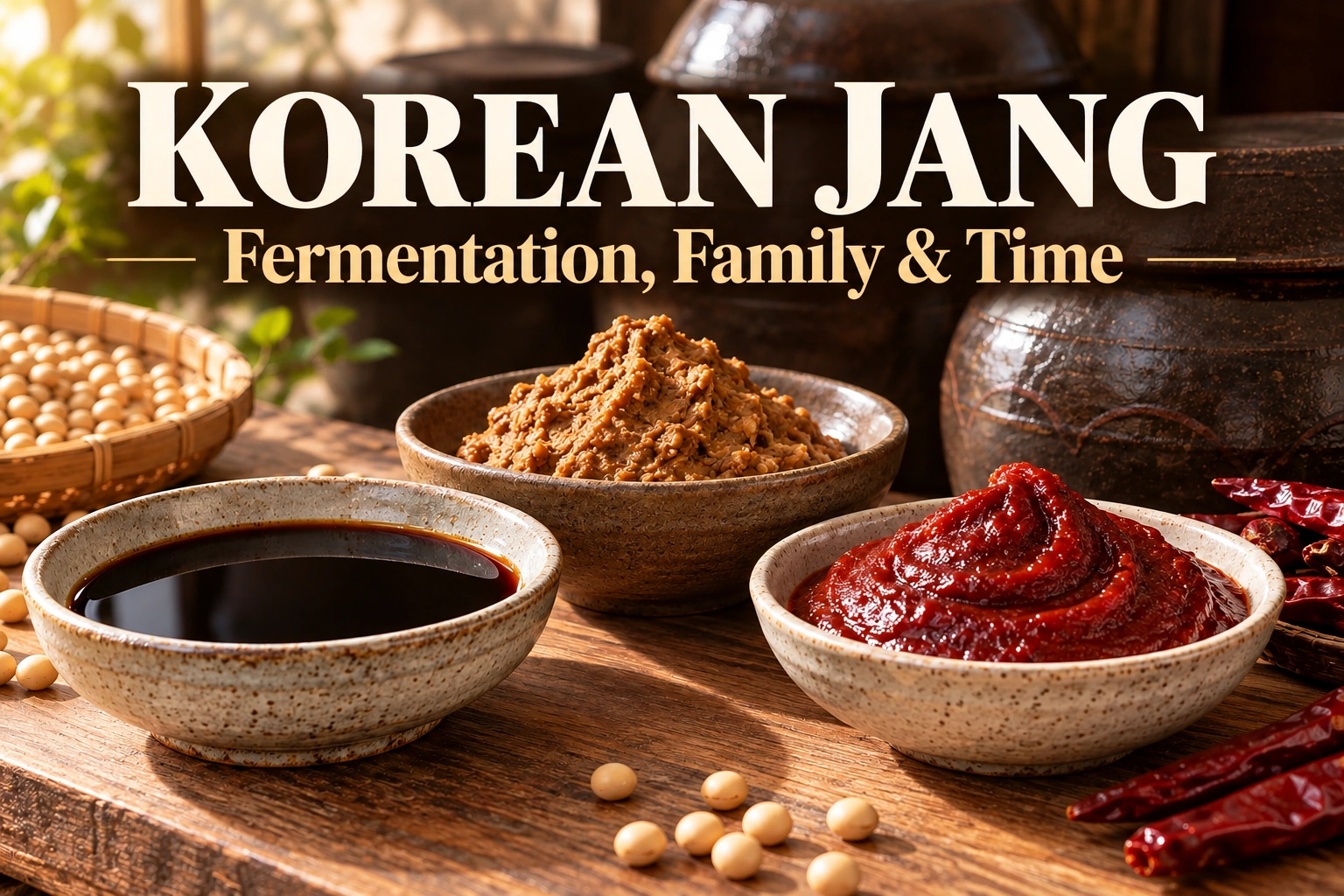
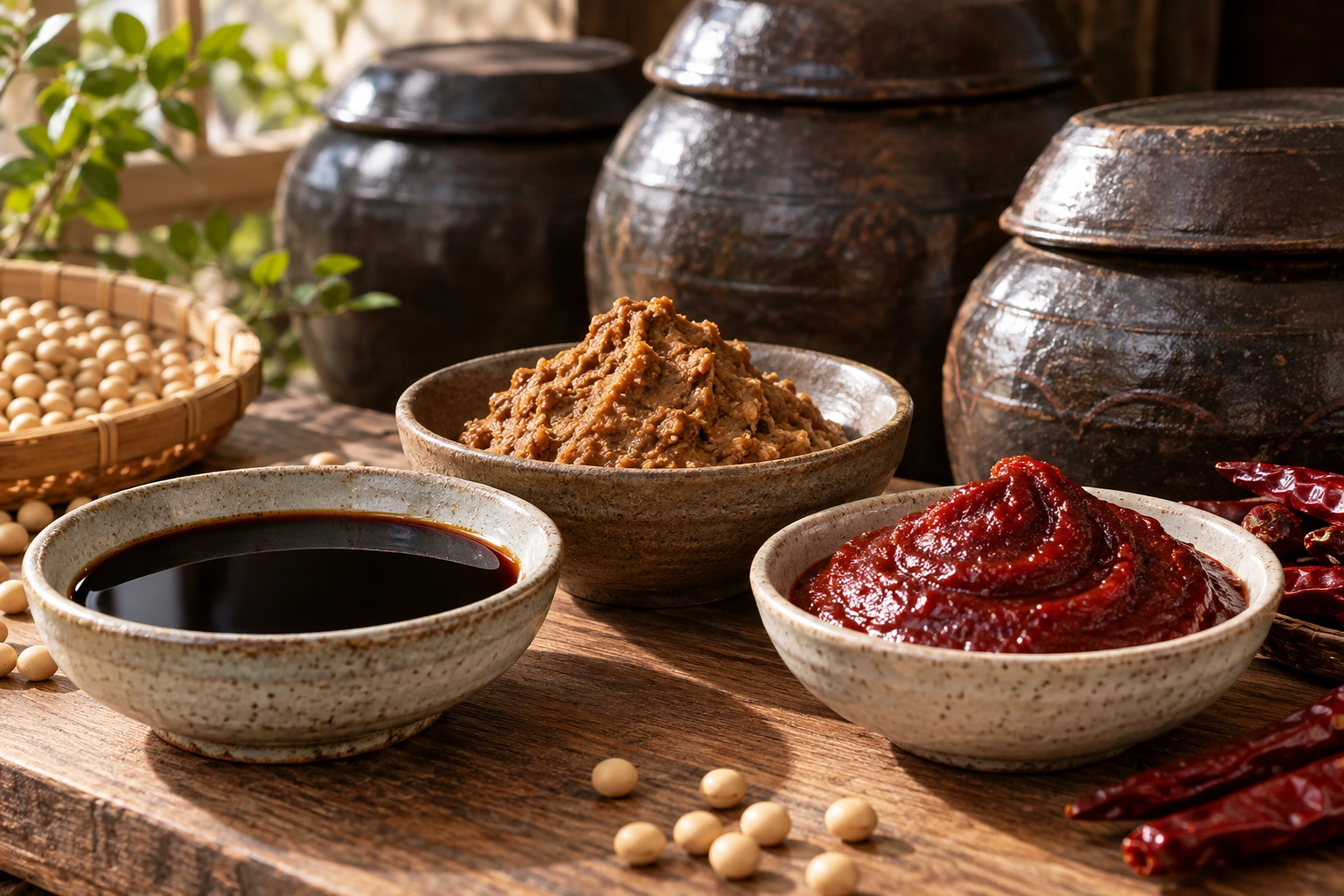
The three names most useful to a newcomer are ganjang, soy sauce; doenjang, fermented soybean paste; and gochujang, red pepper paste. They belong to the wider jang tradition recognized by UNESCO. Knowing those names helps you recognize the category, but it does not make the seasonings interchangeable.
Why UNESCO recognized a practice, not one perfect recipe
In 2024, UNESCO inscribed knowledge, beliefs and practices related to jang-making in the Republic of Korea on its Representative List of the Intangible Cultural Heritage of Humanity. The wording matters. The recognized element encompasses making, keeping and consuming jang, with households preserving distinctive tastes and histories. Its transmission includes family teaching as well as schools, universities and community groups. UNESCO’s description places people’s continuing involvement at the center.

A jar can survive as an object while the knowledge needed to use it is lost. The age of a seasoning tells us little about how a maker judges its flavor or teaches the next person.
A seven-year paste that receives attention every year
A concrete example comes from jang maker Jeong Seung Hwan, interviewed by Korea.net in December 2024. He described his jugyeom hong doenjang, a red soybean paste made with bamboo salt, as a seven-year preparation. During that period, he adds deotjang annually, using a porridge mixture incorporating rice, barley, glutinous rice flour and bamboo salt. This is his account of his own production, rather than a rule for every doenjang. The original interview shows that “aged” need not mean untouched.
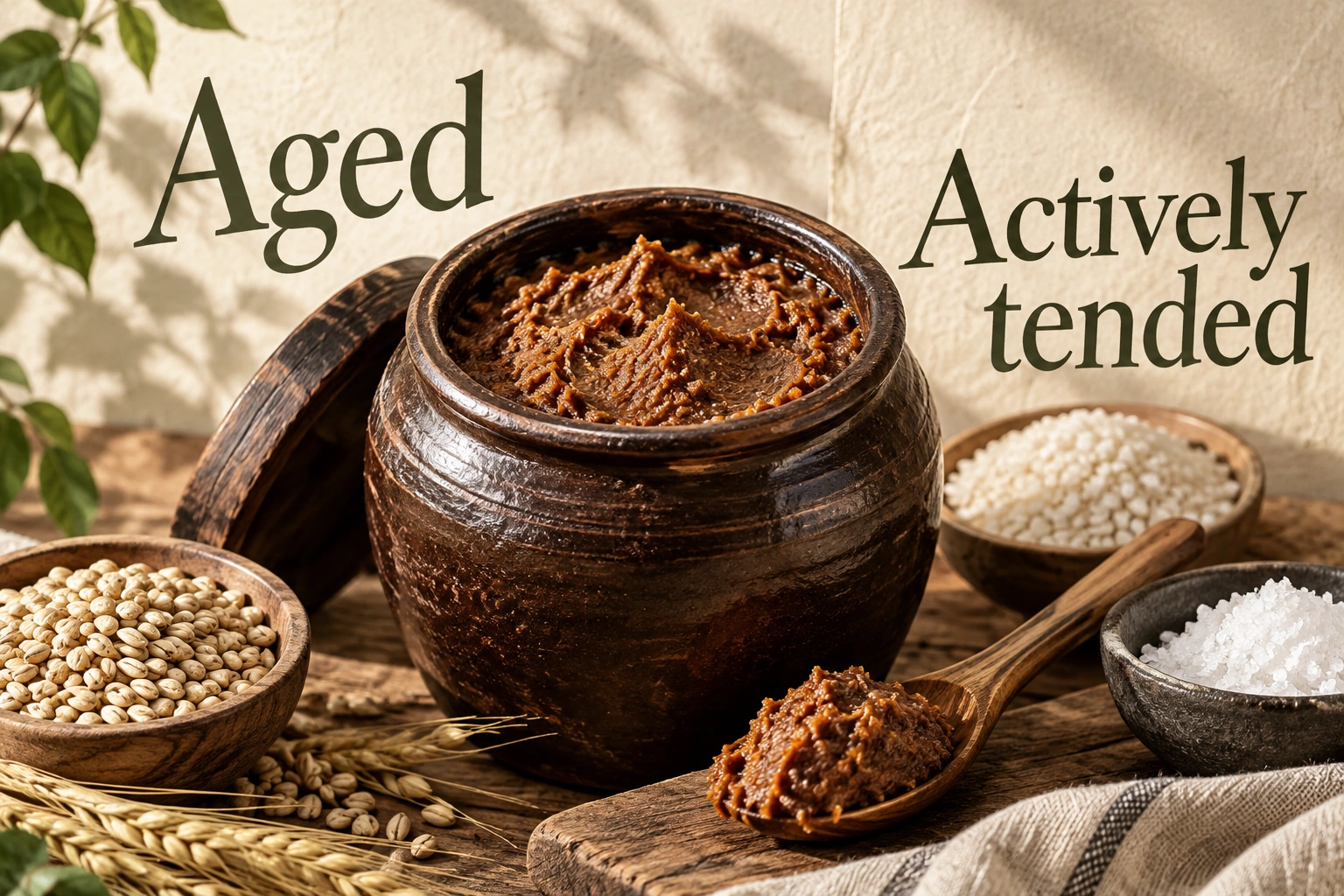
If you meet a producer, an informative question is therefore “What do you do during the aging period?” It invites an explanation of actual work. “How old is it?” can then follow, with a clearer understanding of what those years contain.
How family taste survives beyond a written formula
A written formula can preserve quantities and sequence. Teaching can add the reasons a cook pays attention to particular results. That difference is familiar even without making jang: someone can hand you a soup recipe, while cooking together allows you to hear why they stop adjusting the seasoning at a certain point.
For families living apart, this suggests a practical way to preserve food memories. Record the name of the seasoning used in a favorite dish, how the cook describes its flavor and what they look for when choosing it. Those details may help more than writing “soy sauce” beside an approximate quantity.
The same approach respects the work involved. Calling a taste “grandmother’s secret” can express affection, but it can also turn years of attention into something mysteriously effortless. Asking what she learned, changed or repeated makes the skill easier to appreciate—and easier to communicate to another cook.
Seed soy sauce, protective ropes and the meaning of continuity
The ministry’s account describes ssiganjang as a seed soy sauce maintained by some families across generations, and connects Ki Soon-do’s practice with that continuity. It also describes geumjul, ropes around fermentation jars, containing elements such as charcoal, red peppers and traditional paper. Their stated purpose belongs to folk belief: protection against harmful spiritual interference with fermentation. The cultural account connects seasoning with ancestry and household care.

A reader can appreciate that symbolism without treating a ritual rope as a scientific safety test. Its interest lies in what people considered worth protecting. A seasoning central to future meals could attract care extending beyond a cooking procedure into belief and custom.
Likewise, continuity should be described carefully. A family history measured in generations is not proof that every drop in a present container has remained there unchanged for centuries. The meaningful connection is the maintained practice and the maker’s account of it. That is a stronger story than an exaggerated claim about a supposedly untouched ancient substance.
The sauce at Ki Soon-do’s diplomatic table and the annually tended paste described by Jeong offer two different answers. One emphasizes inheritance reaching new guests; the other reveals work inside an aging period. Together, they show why Korean fermented sauces can carry family knowledge: someone must keep making decisions, and someone else must learn what those decisions mean.