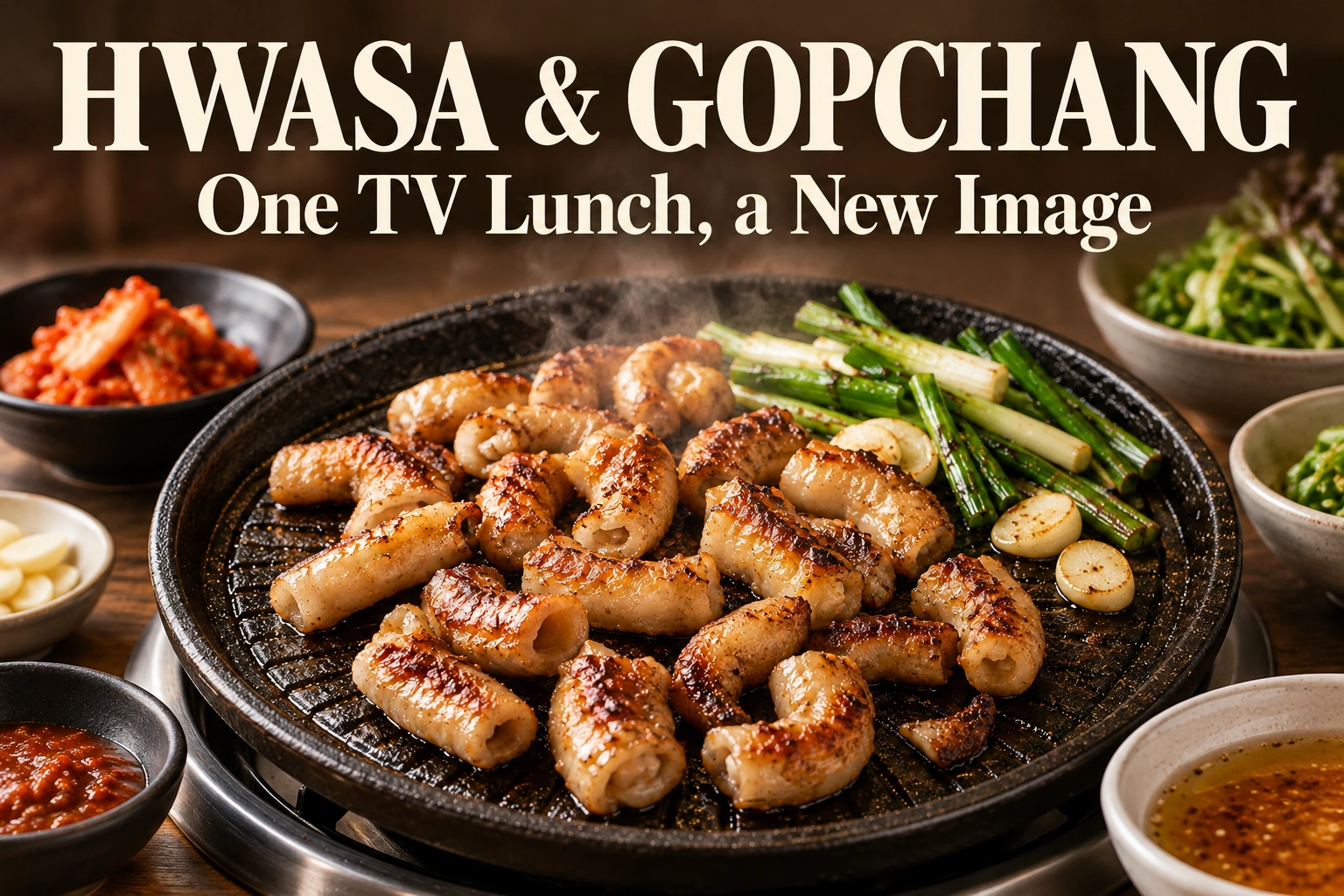
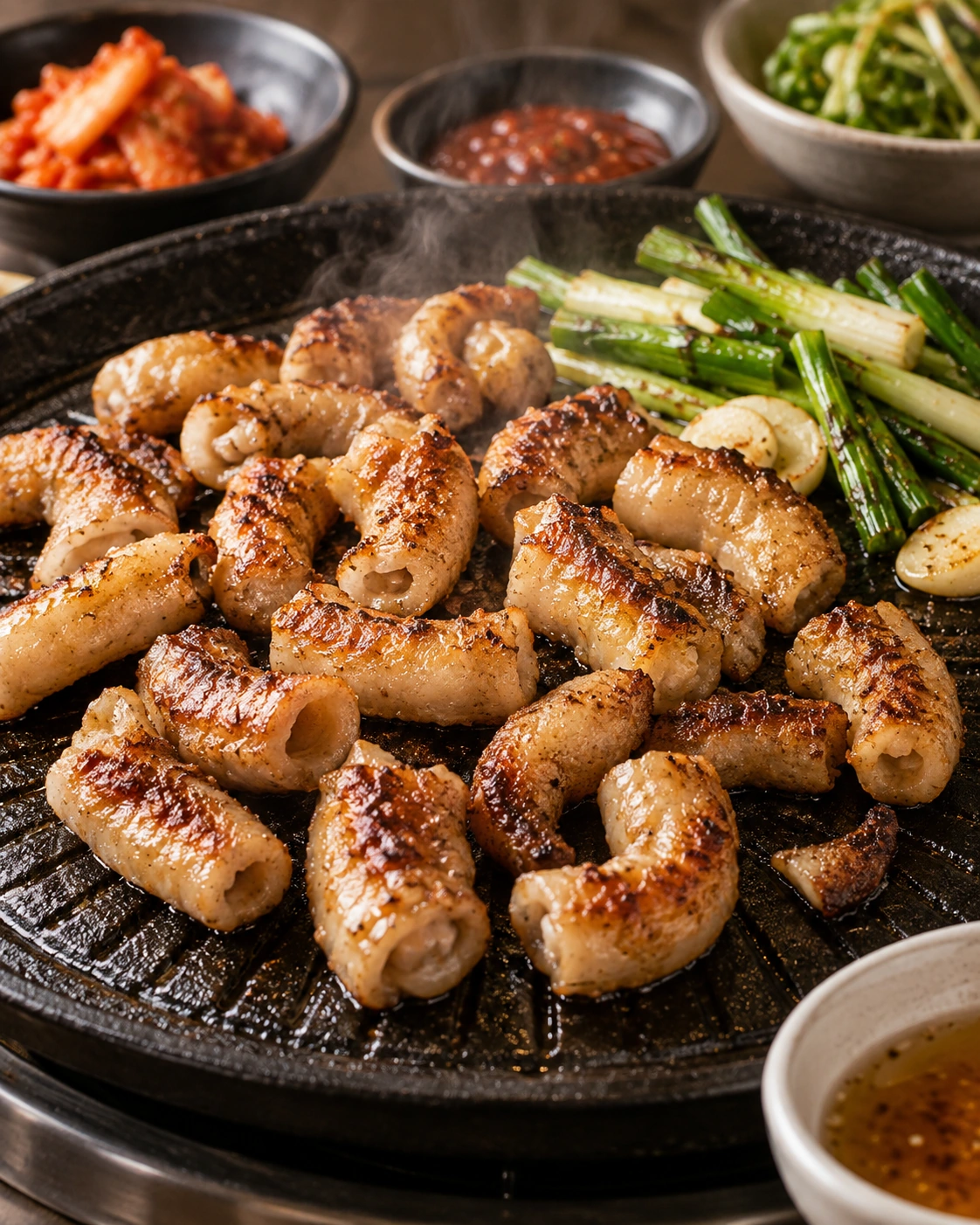
A singer sits down alone, outdoors, for a meal of grilled beef intestines. She knows what she likes and makes herself comfortable. On June 8, 2018, that ordinary pleasure became an extraordinary television moment when MAMAMOO’s Hwasa appeared on episode 247 of MBC’s I Live Alone. iMBC’s episode recap
For viewers discovering gopchang through K-pop, the interesting question is how an established food acquired a different public face. Behind the celebrity scene sit livestock markets, neighborhood restaurants and cooks whose work had already made these ingredients desirable. Following that connection gives a first meal more meaning than simply ordering whatever a famous person ate.
What is gopchang, and what did Hwasa order?
Gopchang is a useful starting word, but a restaurant menu needs closer reading. The Korea Tourism Organization’s entry for gopchang-gui identifies the grilled ingredient as beef small intestine and describes salted or marinated preparations. The name of the cooking method matters: gui identifies grilling. VISITKOREA’s gopchang-gui entry

Translating every organ-meat dish as “Korean tripe” can be confusing. Before ordering, establish which animal and which cuts the restaurant serves, then whether the order is grilled, stir-fried or presented in a hot pot.
The small eating decisions that made the scene memorable
In its contemporary recap, iMBC describes Hwasa ordering beef gopchang and moving to an outdoor table. She also adds gopchang hot pot and fried rice. The meal has stages rather than a single spectacular bite.
The account highlights her attention to temperature: she eats freshly grilled heart promptly and sets pieces of gopchang aside in a sauce dish to cool. The studio cast is captivated. Jeon Hyun-moo jokes about memorizing the telephone number of a massage business behind her; Park Na-rae suggests calling it to identify the restaurant opposite. iMBC, June 9, 2018
That reaction reveals an unusually practical kind of television appetite. The viewers in the studio are already looking for a route from the screen to a real table.
What Hwasa herself said about the sudden attention
Eleven days after the broadcast, Sports Seoul published a direct interview with Hwasa. She said she had not anticipated the response. A friend had told her about waiting more than two hours at a gopchang restaurant, although Hwasa herself was cautious about judging the scale of the supposed boom.
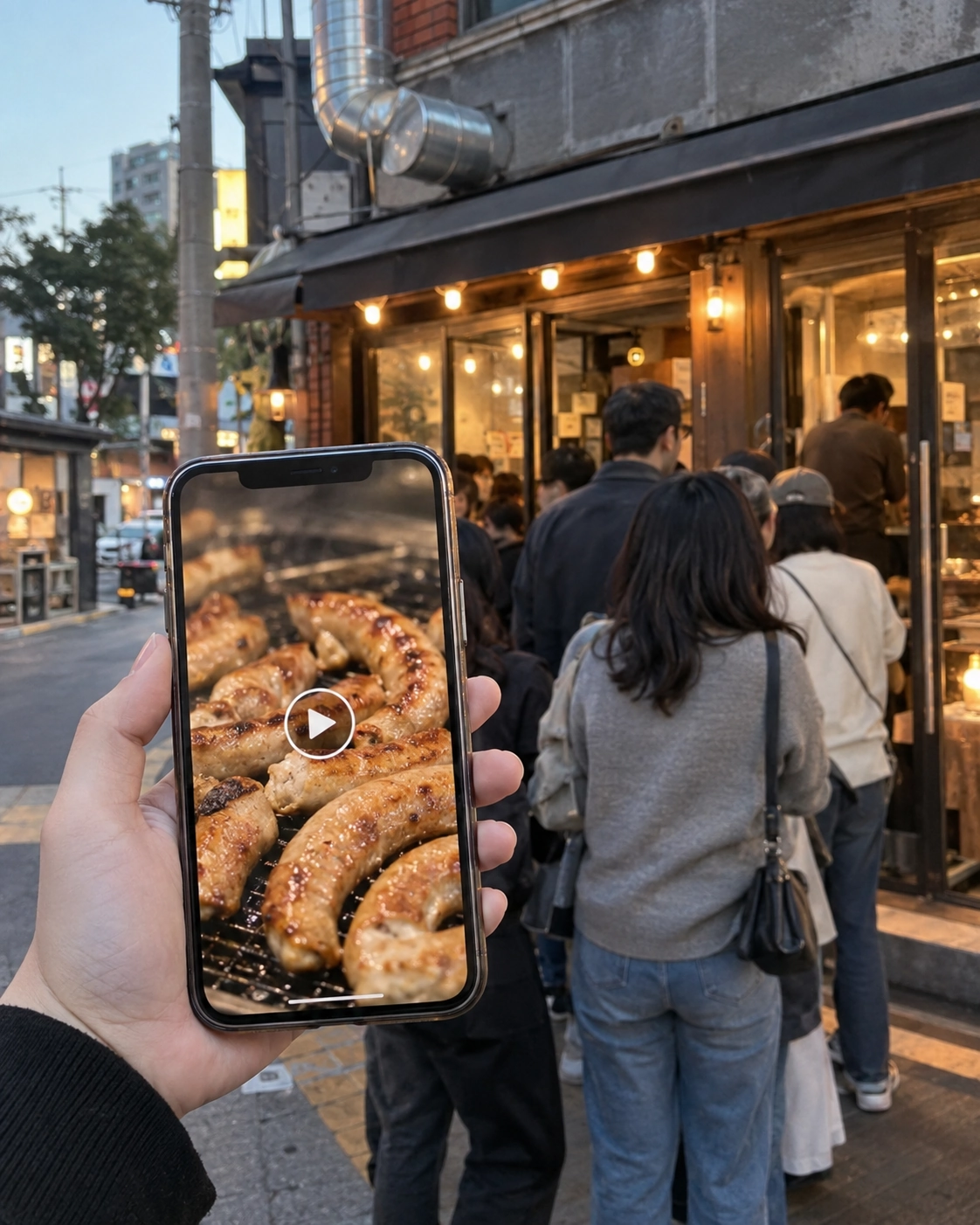
Asked about the restaurant owner, she explained that she had not returned since the broadcast and wanted to express her own thanks. She also hoped people would enjoy good food with people they cared about, whether the food was gopchang or something else. Lee Ji-seok’s Sports Seoul interview, June 19, 2018
Her answer brings the story back to a diner’s relationship with a place. The restaurant was part of her life before the public treated it as a destination.
A sold-out notice gives the “Hwasa effect” a human scale
One contemporary piece of evidence is especially tangible. A Korea Times photograph taken in Seoul on June 29 showed a restaurant notice explaining that its beef intestines had sold out because of the eating show and asking customers to return another day.
The paper’s August report also included university student and MAMAMOO fan Lee Jeong-in. Her response centered on seeing an approachable person behind the glamorous performer. Ko Dae-ho’s report and Kim Rahn’s restaurant photograph
Together, those details connect two sides of the event: identification with a celebrity and changed conditions at a restaurant door. For one person, the scene offers recognition; for another, it becomes a queue, an unavailable ingredient or an altered working day.
The photograph records a particular place and date. It is strong evidence of a local response, while a nationwide sales percentage would require different evidence. Keeping that scale clear makes the story more credible without making it less interesting.
Before the broadcast: market supply and working neighborhoods
Seoul’s official tourism guide places Wangsimni’s gopchang restaurants in a much older neighborhood economy. Its account describes small ironworks and eateries that grilled otherwise unsold pork and beef innards from nearby Majangdong Livestock Market for laborers.
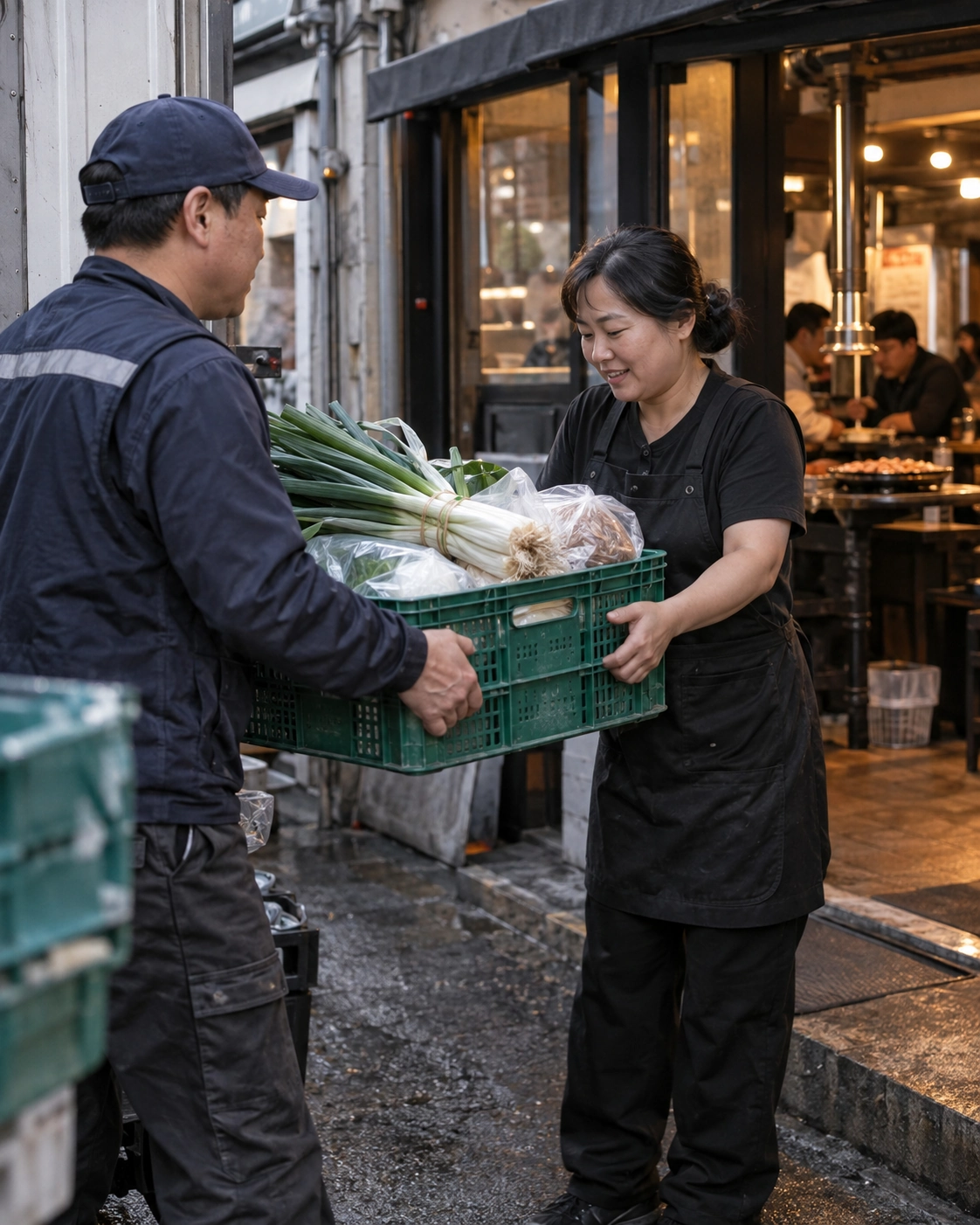
The guide also records disruption: redevelopment removed the former restaurant street in 2008, and businesses relocated to the area opposite Seongdong-gu Office. Proximity to the livestock market remained important. Visit Seoul’s Wangsimni Gopchang Street history
Here, the route into the food runs through supply, work and the geography of a city. Restaurant skill gives ingredients a market; customers establish habits around places accessible to them. Later, redevelopment changes where those habits can continue.
Wangsimni’s account is a neighborhood history, not a claim that all Korean gopchang originated there. It nevertheless restores the people missing from a celebrity-only explanation. A televised meal enters an established food world with its own businesses, customers and disruptions.
One food name can lead to different tables
The same Seoul guide describes both an assorted beef-organ plate and pork gopchang cooked with vegetables. Its vegetable preparation includes cabbage and glass noodles, eaten with perilla leaves and garlic. Visit Seoul’s menu description

Ask whether a pictured platter is an assortment or a single cut. If you want only one component, check whether it can be ordered separately. If your group wants fried rice afterward, establish whether that is part of the restaurant’s usual meal sequence before filling the table with extra dishes.
For shared meals, check how portions and separate orders are counted before deciding what the table needs.
These questions help you enjoy the restaurant you actually visit. There is no need to reproduce a television personality’s entire order to understand why the food appealed to her.
How a lunch became a recognizable pop-culture scene
By December 2018, iMBC’s own year-end roundup included Hwasa’s gopchang appearance among its memorable entertainment moments. It also noted that a gopchang association had given her an appreciation plaque. The broadcaster was remembering the meal as an event beyond the original episode. iMBC’s 2018 retrospective
The scene had another afterlife in January 2019. In coverage of the January 11 broadcast, iMBC described Lee Si-eon dressing as Hwasa and reenacting her gopchang eating. Hwasa responded through a video call. iMBC’s account of the reenactment
A joke like that depends on recognition. The lunch had become a performance other people could refer to and imitate. Its cultural effect included more than people choosing a dish: it supplied an image of how someone could enjoy it.