The History and Culture of Korean Food

Category: Grilled & BBQ

  • Dakgalbi (닭갈비): Chuncheon’s Famous Spicy Stir-Fried Chicken

    Dakgalbi (닭갈비): Chuncheon’s Famous Spicy Stir-Fried Chicken

    About an hour and a half east of Seoul, wrapped in lakes and low green hills, sits Chuncheon (춘천), the capital of Gangwon-do (강원도). Foreign visitors usually come for Nami Island (남이섬) and its tree-lined paths, or to pedal the old railway at Gangchon Rail Park. Koreans come for those too. But mention Chuncheon to anyone here and the first word out of their mouth is almost always the same: dakgalbi. This lake city is the home of dakgalbi (닭갈비), chicken marinated in a sweet-spicy red sauce and stir-fried in front of you on a big round iron plate, and there’s a whole downtown alley devoted to it.

    Chuncheon Myeongdong dakgalbi alley in Gangwon Korea with rows of dakgalbi restaurants and warm lantern light in the evening
    Chuncheon’s Myeongdong Dakgalbi Alley — a short downtown street lined on both sides with dakgalbi houses.

    ⭐ Chuncheon at a glance

    🏛️ Sights & things to do ★★★★☆
    🍗 Food ★★★★★
    🚆 Easy to reach ★★★★☆

    A personal take from our own visits — how much there is to see nearby, how good the eating is, and how easy it is to get to. Chuncheon is one of the easiest day trips out of Seoul: a direct train, lakes and islands to wander, and dakgalbi that tastes of the place it was born. Your own mileage may vary.

    New to Korean food? Start with our complete guide to what to eat in Korea.

    The short version: Dakgalbi is Chuncheon’s signature dish — boneless chicken cut into chunks, marinated in a sweet, spicy gochujang (고추장) sauce, and stir-fried at your table on a wide iron griddle with cabbage, sweet potato, chewy rice cake and perilla leaves. When the chicken’s nearly gone, you fry rice in the leftover sauce, or finish with cold buckwheat noodles. It started cheap in the 1960s and became a whole city’s calling card. Here’s what makes it special, how it got there, and where to eat it.

    What to eat in Chuncheon — dakgalbi off the iron plate

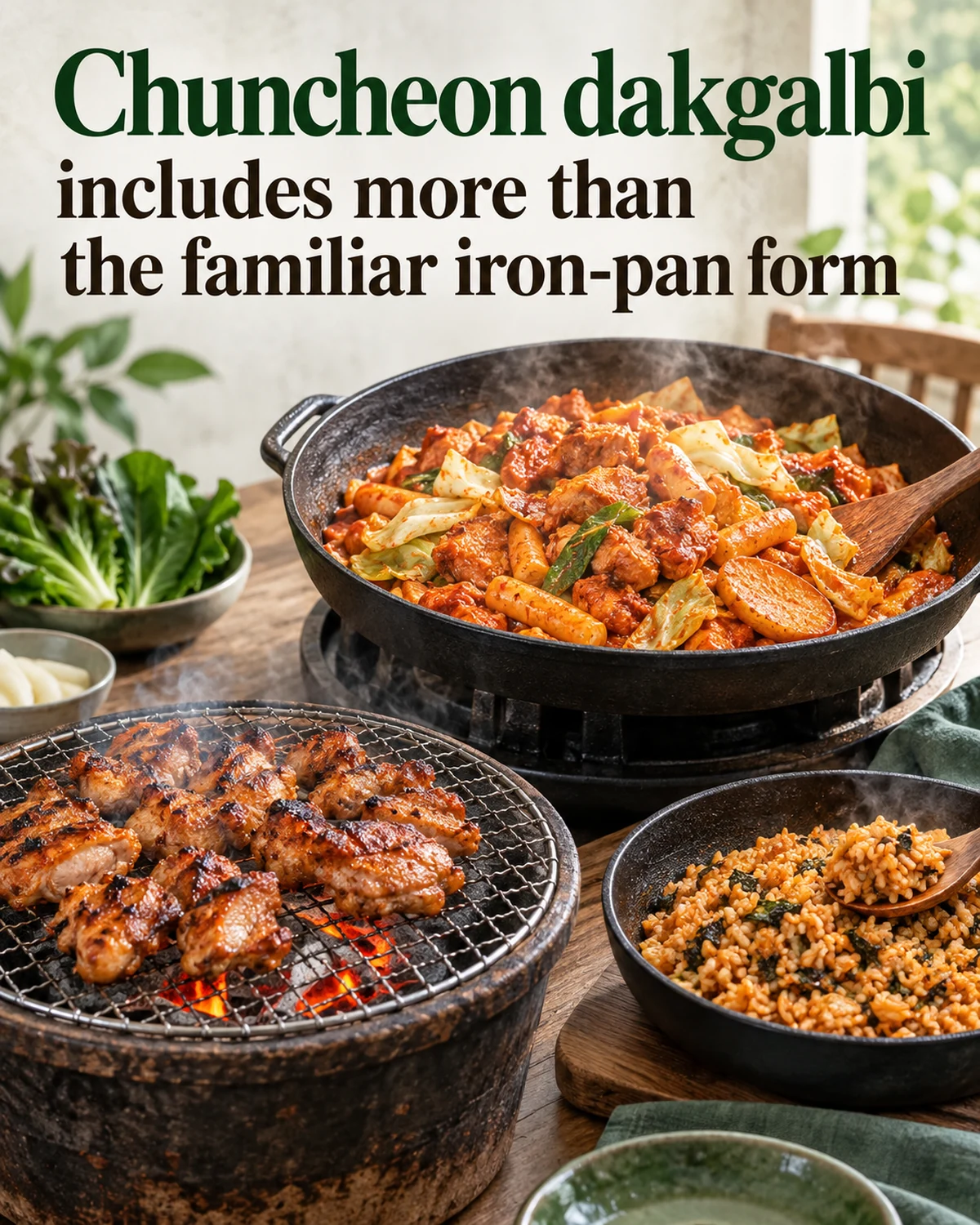
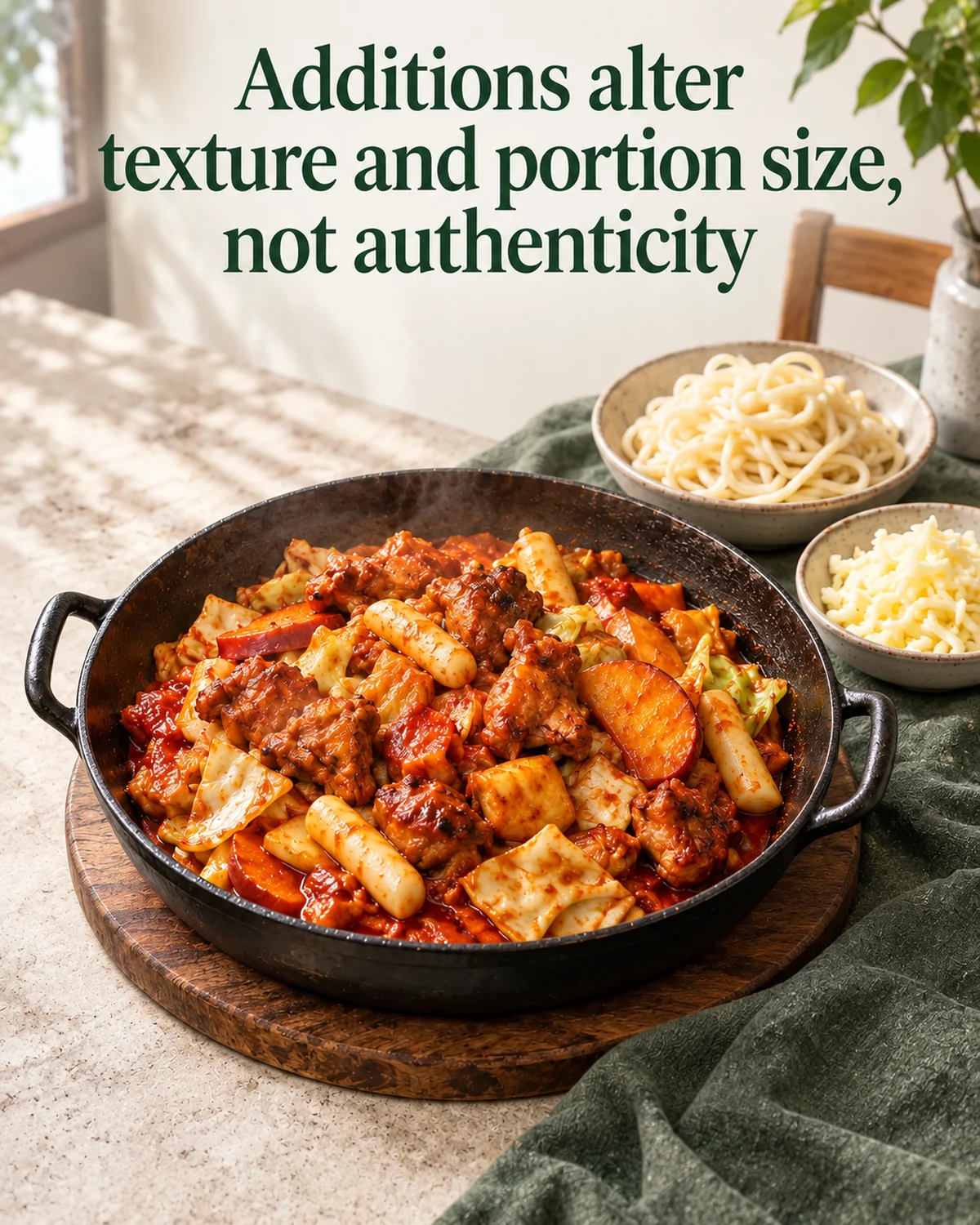
    Order dakgalbi and it arrives raw: a mound of red-marinated chicken piled with shredded cabbage, batons of sweet potato, rings of scallion, a handful of chewy rice cakes (tteok, 떡) and green perilla leaves, all heaped on a broad, shallow iron pan set over a burner in the middle of your table. A server usually starts it off, pressing everything flat and turning it as it sizzles. Then it’s yours to tend. You push the chicken to the hottest part, fold the cabbage over the top, and wait for the sauce to catch and go glossy.

    The flavor is the thing people miss when they leave. Chuncheon dakgalbi is built on gochujang, so it reads spicy first, but there’s a real sweetness underneath from the sugar and the sweet potato, and the chicken stays juicy because it’s cut small and cooks fast. It’s not delicate food. It’s the kind of meal you eat shoulder to shoulder with friends, everyone reaching into the same pan, the burner keeping it hot until the last bite.

    Chuncheon dakgalbi spicy marinated chicken stir-frying on a round iron plate with cabbage sweet potato and rice cake in gochujang sauce
    Dakgalbi on the griddle — chicken, cabbage, sweet potato and rice cake going glossy in a gochujang sauce.

    How to eat it like a local

    Let it cook longer than feels necessary. Dakgalbi is better when the edges of the cabbage char a little and the sauce thickens onto the chicken, so resist digging in too early. When a piece looks done, wrap it in a perilla or lettuce leaf with a smear of the sauce and a sliver of garlic if you like. The chewy rice cakes soak up the most flavor of anything in the pan, so hunt for those.

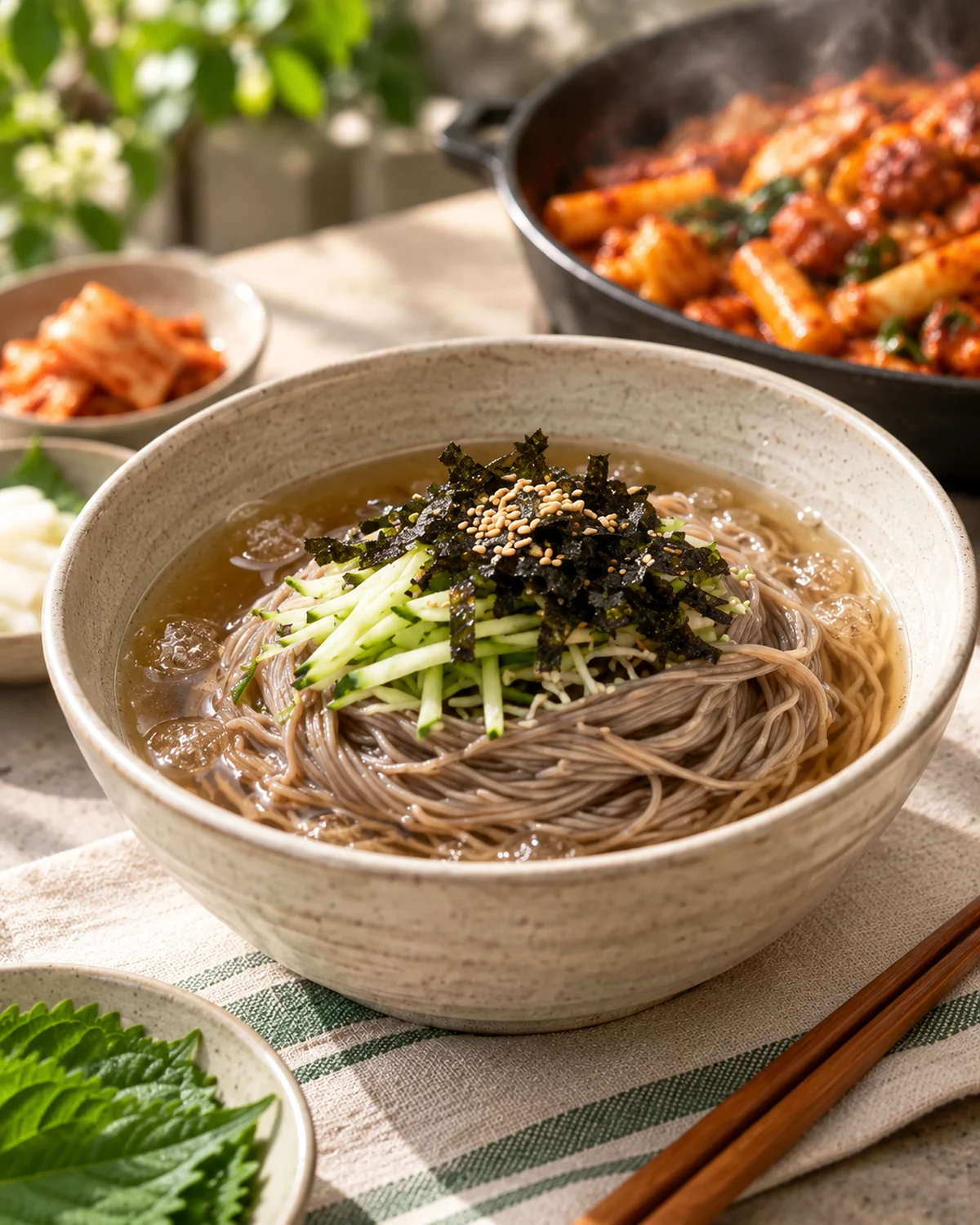
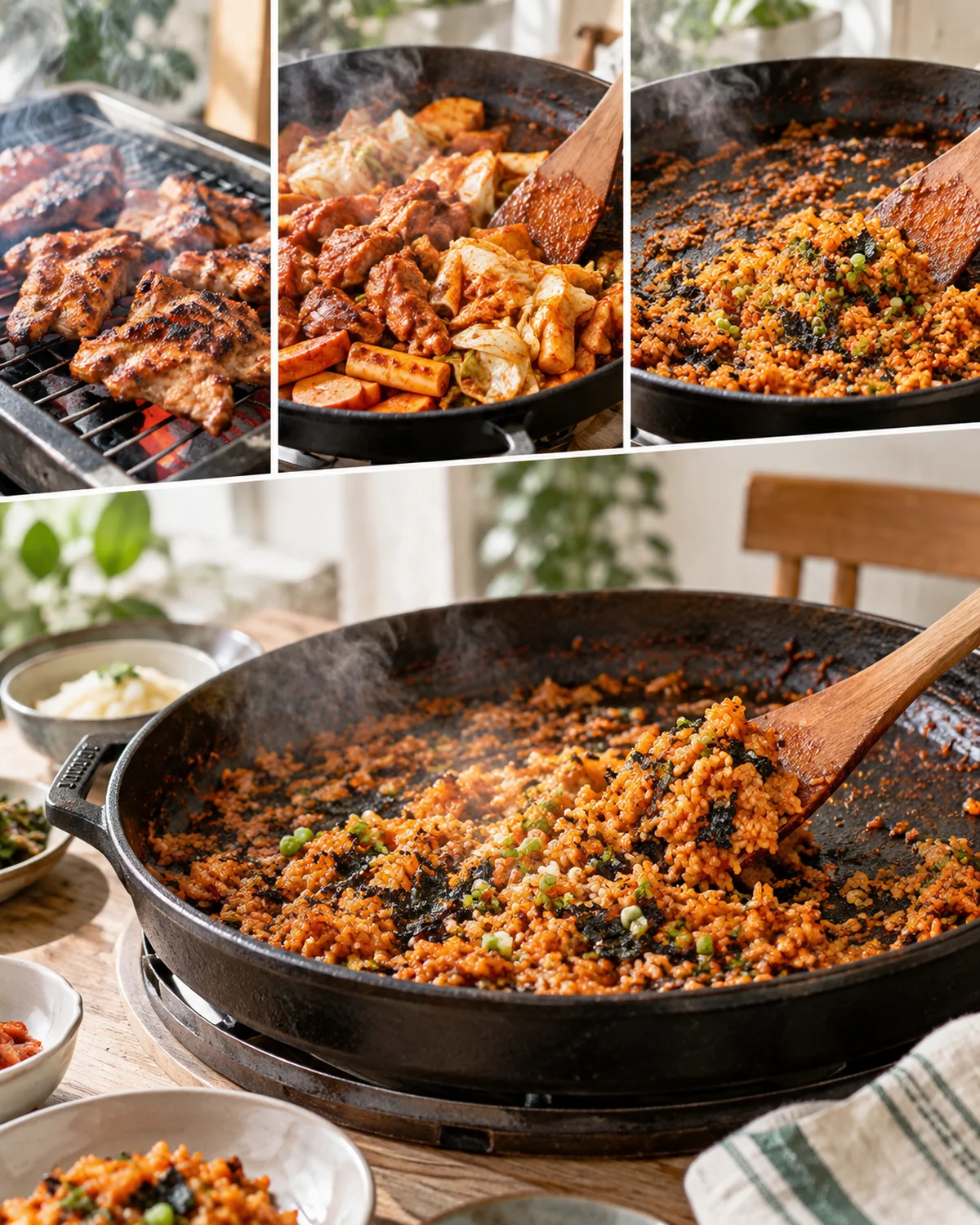
    Here’s the part first-timers don’t expect. You’re not finished when the chicken’s gone. Tell the staff bokkeumbap (볶음밥) and they’ll bring cooked rice, seaweed flakes and more sauce and fry it all in the pan you’ve been eating from, scraping up every caramelized bit stuck to the iron. It’s the best thing on the table, honestly. Some people order a myeon (면) noodle bundle instead, or both. And Chuncheon has one more trick: many houses serve makguksu (막국수), cold buckwheat noodles, alongside — the city’s other great specialty, and a cool, tangy foil to all that spice. In my experience the ideal order is dakgalbi, then a shared fried rice, with a bowl of makguksu to reset your mouth in between.

    How a cheap chicken dish became Chuncheon’s pride

    Illustration of a 1960s Chuncheon eatery grilling marinated chicken over charcoal with students and soldiers eating folk painting style
    Chuncheon in the 1960s — cheap grilled chicken that fed students and soldiers, where the dakgalbi story began.

    From charcoal ribs to the iron plate

    The name is a small joke. Galbi (갈비) means ribs, usually pork or beef, and dak (닭) means chicken. So dakgalbi is, roughly, “chicken ribs” — a dish that borrowed the idea of marinated grilled ribs and swapped in chicken because chicken was cheap. The story most often told in Chuncheon traces it to the late 1950s and early 1960s, when a cook marinated chicken and grilled it over charcoal, ribs-style, to sell as a drinking snack. Pork was dear; chicken wasn’t. The idea caught.

    By the late 1960s cheap dakgalbi houses were multiplying, and the dish earned two affectionate nicknames that tell you exactly who was eating it: seomin galbi (서민갈비), “the common people’s ribs,” and daehaksaeng galbi (대학생갈비), “college students’ ribs.” Chuncheon is a university and garrison town, and dakgalbi was the meal you could afford on a student’s or a soldier’s budget — plenty of food, not much money.

    The version you eat now, stir-fried on a flat iron plate, came a little later. As dakgalbi shops crowded into downtown, cooking each order over charcoal grills got slow. Someone in the food alley switched to a wide round griddle, which could handle far bigger batches at once, and the dish quietly changed with it — cabbage, sweet potato and rice cake tumbled in, the marinade shifting to suit the pan. That griddle-fried style is what the world now knows as Chuncheon dakgalbi.

    The alley that made it famous

    Through the 1970s and 1980s, dakgalbi restaurants opened one after another on a back street of Chuncheon’s Myeongdong (명동) downtown, until the lane became known simply as Dakgalbi Golmok (닭갈비 골목), the Dakgalbi Alley. It’s a short strip, only around 150 meters, but both sides are packed with dakgalbi houses, their griddles going all day. The city leaned into it and made the street an official destination, and for a lot of Koreans a trip to Chuncheon isn’t complete without a meal here.

    What sealed dakgalbi’s fame beyond Gangwon was the same thing that lifts a lot of regional food: people started coming to the source. When the old Gyeongchun line and, later, fast trains made Chuncheon an easy escape from Seoul, day-trippers turned “go to Chuncheon, eat dakgalbi, wander by the lake” into a set routine. The dish rode along. Today you’ll find dakgalbi chains across Korea and abroad, but the ones in this alley still carry the weight of having started it.

    🗓️ Plan your visit

    When: Dakgalbi is good year-round and eaten indoors, so weather’s no obstacle. Chuncheon is loveliest in autumn, when the foliage around Nami Island and the lakes turns, and pleasant in late spring. Weekends draw crowds to the alley and the sights, so a weekday visit is calmer. If you can, come for an early lunch and beat the queue.

    Getting there: This is one of the simplest day trips from Seoul. The ITX-Cheongchun train runs from Yongsan or Cheongnyangni Station to Chuncheon (and Namchuncheon) in roughly an hour to an hour and a half; the subway Gyeongchun Line reaches the same stops more slowly but cheaply. From downtown Chuncheon the Myeongdong alley is a short walk or taxi. From Incheon Airport, plan on a transfer through Seoul, so many visitors fold Chuncheon into a wider trip.

    Costs: Dakgalbi is famously good value — usually sold per person, often with a two-serving minimum, and a shared fried rice or noodle finish costs little more. It’s one of the cheaper sit-down meals you’ll have in Korea. Prices creep up over time, so treat any figure as a guide, and note that some out-of-town houses need a car or taxi to reach.

    Where to eat dakgalbi in Chuncheon

    Full Chuncheon dakgalbi table setting with spicy stir-fried chicken on the iron plate cold makguksu buckwheat noodles and side dishes
    The full Chuncheon spread — a griddle of dakgalbi with cold makguksu noodles to cool the spice.

    You have two easy ways to do this: dive into the downtown alley, or make the short trip out to one of the big destination houses by the lake. Two well-known places to start:

    • 📍 Umi Dakgalbi, main branch (우미닭갈비 본점): 4 Geumgang-ro 62beon-gil, Chuncheon, Gangwon-do (강원 춘천시 금강로62번길 4)
    • 🕒 Hours: roughly 10:00–21:00 (varies by season; often runs until the day’s chicken sells out) · 033-253-2428
    • 🍗 Dakgalbi around 14,000–15,000 won per serving, usually a two-serving minimum; cheese dakgalbi a little more · a long-running house right in the Myeongdong Dakgalbi Alley, going since the 1970s · no private lot, but free weekend parking at nearby public lots
    • 📍 Tongnamujip Dakgalbi, main branch (통나무집닭갈비 본점): 763 Sinsaembat-ro, Sinbuk-eup, Chuncheon (강원 춘천시 신북읍 신샘밭로 763) — about 10:30–21:30 (last order ~20:30); dakgalbi around 14,000 won per serving; a large lakeside destination house with its own big parking lot · 033-241-5999

    One honest note: dakgalbi is sold by the serving (1인분) and usually needs a two-person minimum, so it’s a dish best eaten with company. The Myeongdong alley alone holds twenty-odd houses, and hours, closing days and prices shift over time, so it’s worth a quick check before a special trip — especially on a busy weekend.

    🔗 More Gangwon meals worth the trip: stay in the province with Gangneung’s seawater-set soft tofu, chodang sundubu, or head into the mountains for Jeongseon’s gondeure namul bap. Back in the capital, graze the stalls at Seoul’s Gwangjang Market.

    A few quick questions

    What exactly is dakgalbi?
    It’s a Chuncheon dish of boneless chicken marinated in a sweet, spicy gochujang sauce and stir-fried on a flat iron plate at your table with cabbage, sweet potato, rice cake and perilla leaves. Despite the name — “galbi” means ribs — there are no ribs and usually no bones; it borrowed the idea of marinated grilled ribs and used cheap chicken instead.

    Is dakgalbi very spicy?
    It’s moderately spicy, not punishing. The gochujang marinade brings a chili heat, but the sugar, the sweet potato and the cabbage round it out, so most people find it more sweet-and-savory than fiery. If you’re sensitive to heat, the cold makguksu noodles served alongside cool things down nicely.

    Why is Chuncheon the home of dakgalbi?
    The dish grew up there. It started in Chuncheon around the late 1950s and 1960s as a cheap grilled-chicken snack, earned nicknames like “the common people’s ribs” and “college students’ ribs” in a university and garrison town, and then spread from a downtown alley of dakgalbi houses that still exists today. The griddle-fried style Korea now eats was shaped in that alley.

    What should I order to finish the meal?
    Ask for bokkeumbap (fried rice). When the chicken’s mostly eaten, the staff fry rice, seaweed and extra sauce right in your pan, scraping up the caramelized bits — it’s the highlight for a lot of people. You can also add a noodle bundle, and many places serve cold buckwheat makguksu on the side, Chuncheon’s other famous dish.

  • Idong Galbi (이동갈비): Korea’s Sweet Marinated Short Ribs (K-BBQ)

    Idong Galbi (이동갈비): Korea’s Sweet Marinated Short Ribs (K-BBQ)

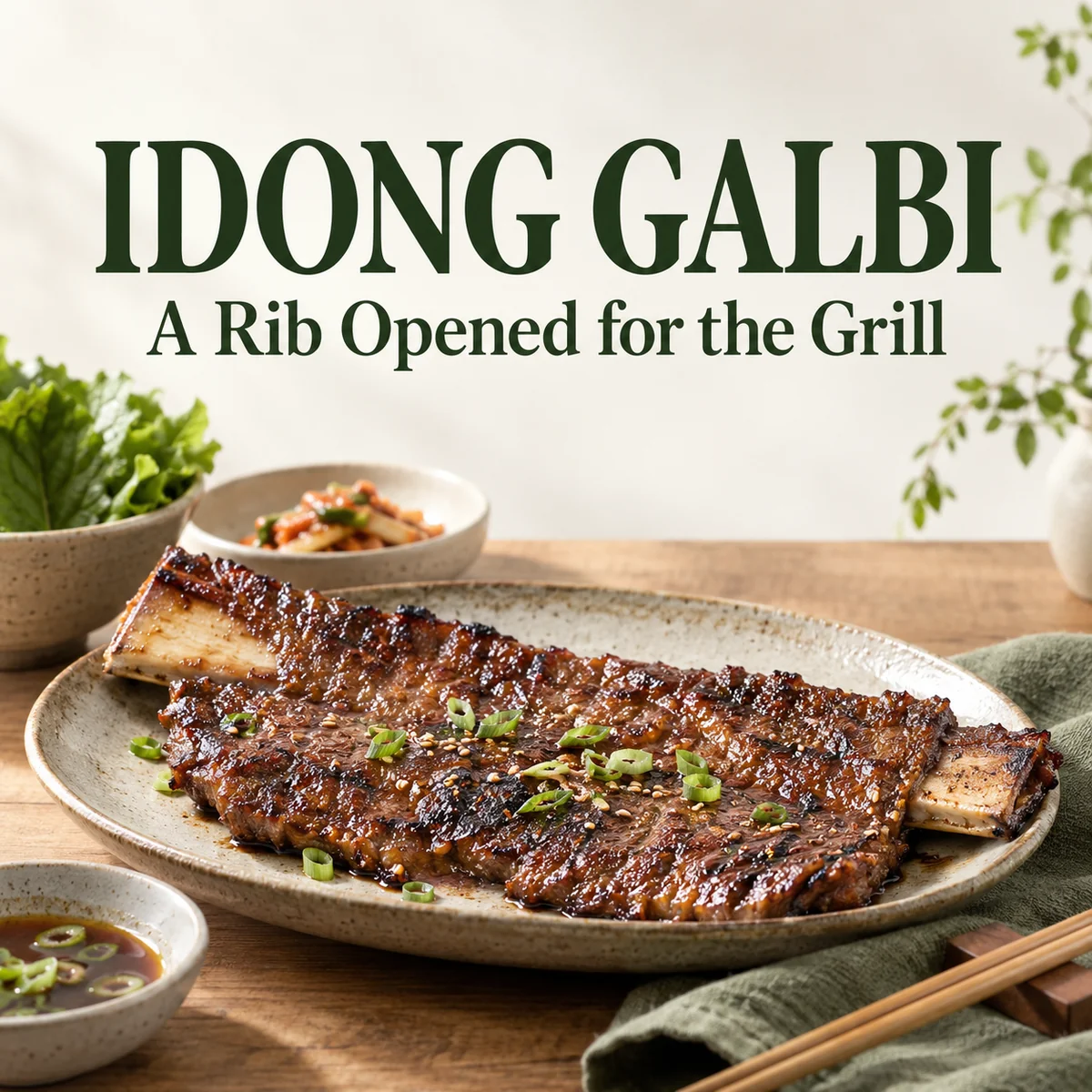
    Head northeast out of Seoul, up to where Gyeonggi-do runs into the mountains near the old DMZ, and you reach a small town called Idong-myeon (이동면) in the city of Pocheon (포천). It’s not on most travel itineraries. But say the name to a Korean and there’s a fair chance they’ll answer with one word: galbi. This quiet corner of Idong is the home of Idong galbi (이동갈비), thin, sweet, soy-marinated beef short ribs that a whole village of restaurants has been grilling for more than sixty years.

    Pocheon Idong-myeon galbi village countryside road in Gyeonggi-do Korea with mountains and restaurant fronts in autumn light
    Idong-myeon, Pocheon — a mountain town in northern Gyeonggi-do where a whole village grills galbi.

    ⭐ Pocheon (Idong) at a glance

    🏛️ Sights & things to do ★★★★☆
    🍖 Food ★★★★★
    🚆 Easy to reach ★★★☆☆

    A personal take from our own visits — how much there is to see nearby, how good the eating is, and how easy it is to get to. Pocheon rewards a car: the galbi village pairs beautifully with Sanjeong Lake and the autumn hills, but it’s a rural trip, not a subway ride. Your own mileage may vary.

    New to Korean food? Start with our complete guide to what to eat in Korea.

    The short version: Idong galbi is beef short ribs, sliced thin, marinated in a sweet soy sauce, and grilled at the table. It was born in the 1960s in Idong-myeon, Pocheon, feeding soldiers cheaply — cooks even pinned extra meat onto each bone with a toothpick to stretch a serving. You eat it hot off the grill, wrapped in lettuce with garlic and ssamjang. Here’s what makes it special, how it got famous, and where to eat it.

    What to eat in Idong — galbi, and the table around it

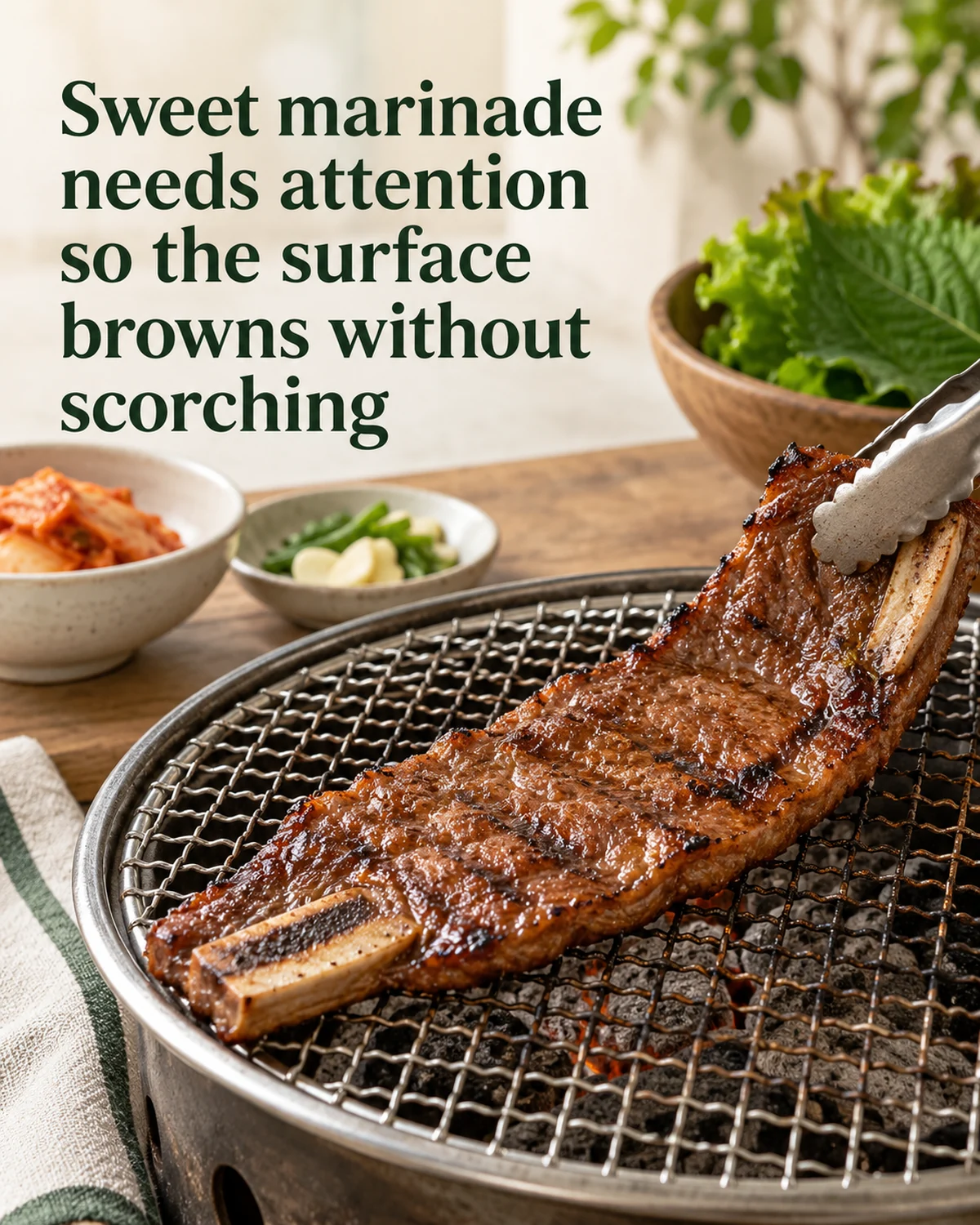
    Order galbi and it comes to you raw, glistening in its dark marinade, ready for the grill built into your table. The ribs are cut thin and butterflied open, so they cook fast and pick up char at the edges while staying tender in the middle. The first thing you notice is the sweetness. Idong’s marinade leans sweeter than most, and as the sugars hit the fire they caramelize into a glossy, savory glaze. It smells incredible. That’s the trap. You’ll order more than you meant to.

    Idong galbi Korean marinated beef short ribs grilling over charcoal with glossy soy glaze at a Pocheon restaurant table
    Idong galbi on the grill — thin, sweet, soy-marinated short ribs turning glossy over the fire.

    How to eat it like a local

    Grill the ribs until the edges catch, then snip them into bite-size pieces with the kitchen scissors on the table. The classic move is ssam (쌈): lay a piece of galbi on a leaf of lettuce or perilla, add a sliver of raw garlic, a dab of ssamjang (쌈장, seasoned soybean paste) and maybe a ring of green chili, wrap it, and eat the whole parcel in one go. The garlic and paste cut the sweetness. The leaf keeps it from feeling heavy.

    Idong houses round out the meal with sides that reset your palate between rich bites — most famously a bowl of dongchimi-guksu (동치미국수), thin noodles in cold, tangy radish-water kimchi broth. Many places also finish you off with naengmyeon (냉면) or a pot of doenjang-jjigae (된장찌개). If you want the leftover bones to earn their keep, some spots do a wang-galbi-tang (왕갈비탕), a rib soup. In my experience the smart order is fewer servings of galbi than you think you need, plus a bowl of cold dongchimi noodles to share. You leave full and happy, not defeated.

    How an army town invented Korea’s favorite ribs

    Illustration of 1960s Pocheon Idong galbi eatery with cooks grilling skewered beef ribs and soldiers eating folk painting style
    Idong in the 1960s — humble grill houses feeding soldiers, where the galbi story began.

    The toothpick trick

    Idong sits in Korea’s far north, close to the military belt near the DMZ, and in the early 1960s its first grill houses were feeding soldiers who didn’t have much money. Beef ribs are expensive, and a single bone doesn’t carry much meat. So Idong’s cooks did something clever. They sliced the rib meat thin and butterflied it open, then took the odd trimmings and scraps and pinned them back onto the bone with a wooden toothpick (이쑤시개, ijjusigae). One modest bone arrived at the table fanned out with a generous portion of meat.

    That toothpick method is said to have started right here. It’s baked into the name. Locals will tell you “Idong galbi” is as much a technique as a place. And it did more than stretch a serving. Thin, opened-out slices give the sweet marinade far more surface to soak into, and they cook quickly and evenly over the fire. Cheap, generous, and better for it. Not a bad accident.

    The marinade itself is where Idong makes its case. Soy sauce is the backbone, rounded out with sugar, sesame oil, garlic, ginger, scallion, black pepper and a splash of rice wine — some houses run through twenty-odd seasonings — and the ribs rest in it for two or three days before they ever see heat. The result reads sweet first, then savory and deep.

    From bargain meal to weekend pilgrimage

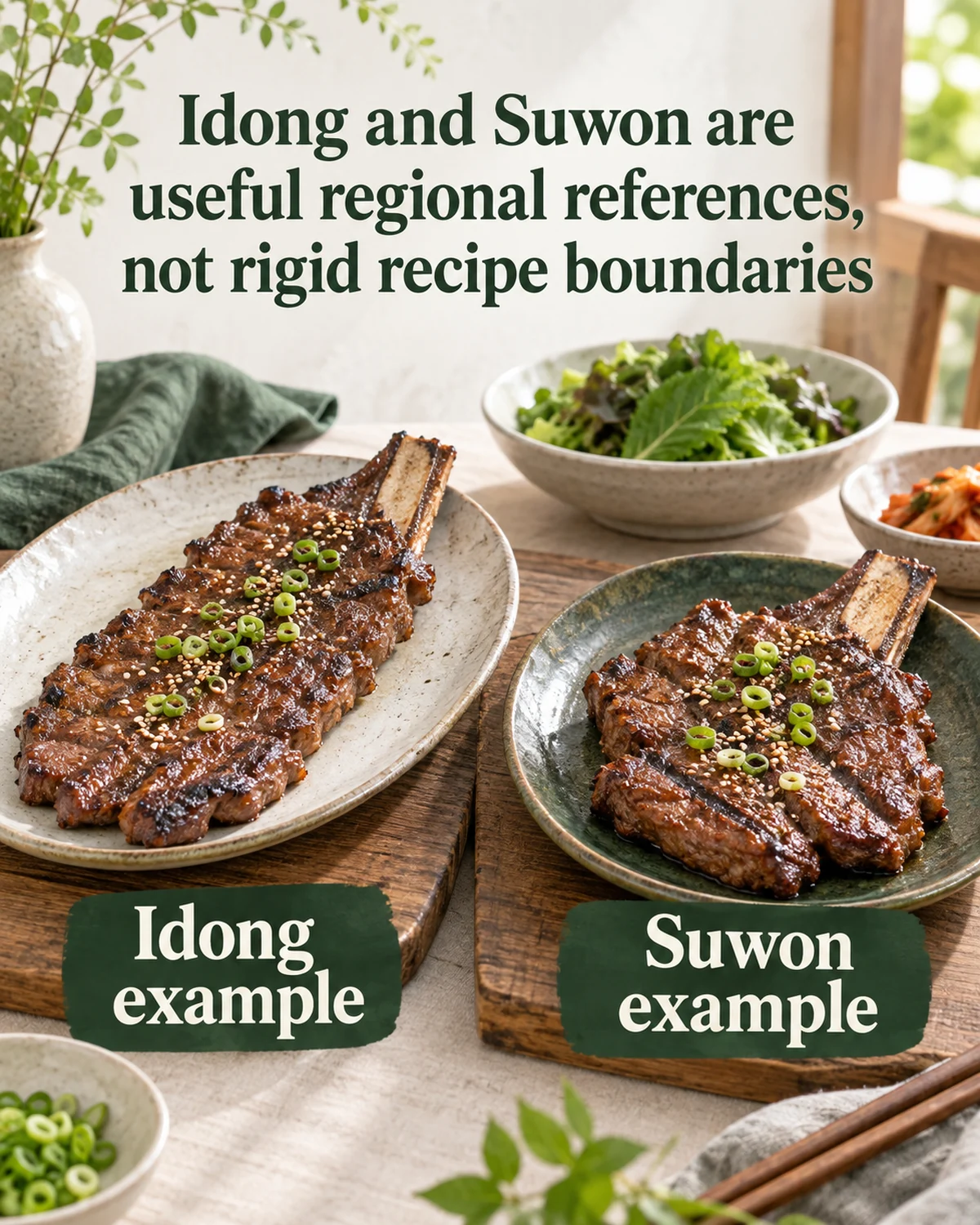
    Every galbi region in Korea has its own character. Suwon, south of Seoul, is famous for wang galbi (왕갈비) — big, long ribs, less sweet, grilled hard. Idong went the other way: thinner cuts, a sweeter soy marinade, portions built for value. If Suwon galbi is about the size of the rib, Idong galbi is about the glaze.

    So how did a soldiers’ town food become a national name? Two things, mostly. Through the 1980s, hikers coming down off Gukmangbong (국망봉) and the peaks around Idong started stopping in to eat, and they carried the word back to the city. Then Korea put itself on wheels. As family cars became common in the late 1980s, a weekend drive out to Gyeonggi for a famous meal turned into a national habit, and newspapers and TV were glad to point the way. At its peak the strip grew into a whole street of galbi houses, dozens of them lined up side by side. An army-town bargain had become a name known across the country.

    🗓️ Plan your visit

    When: The galbi is good all year, and the grills are indoors, so weather isn’t a concern. But autumn is the sweet spot: the silver-grass fields at Myeongseongsan (명성산), above Sanjeong Lake (산정호수), turn a famous gold in October, a short drive from the galbi village. Weekends and holidays get busy, so come on a weekday or for an early lunch if you can.

    Getting there: A car is easiest, honestly. From Seoul it’s roughly an hour to ninety minutes northeast, up National Route 47 toward Ildong and Idong. Without a car, take an intercity bus from Dong-Seoul Bus Terminal toward Pocheon/Idong, then finish with a local bus or taxi to the galbi village. From Incheon Airport, plan on the better part of a half-day by public transit, which is why many visitors rent a car or make it a day trip.

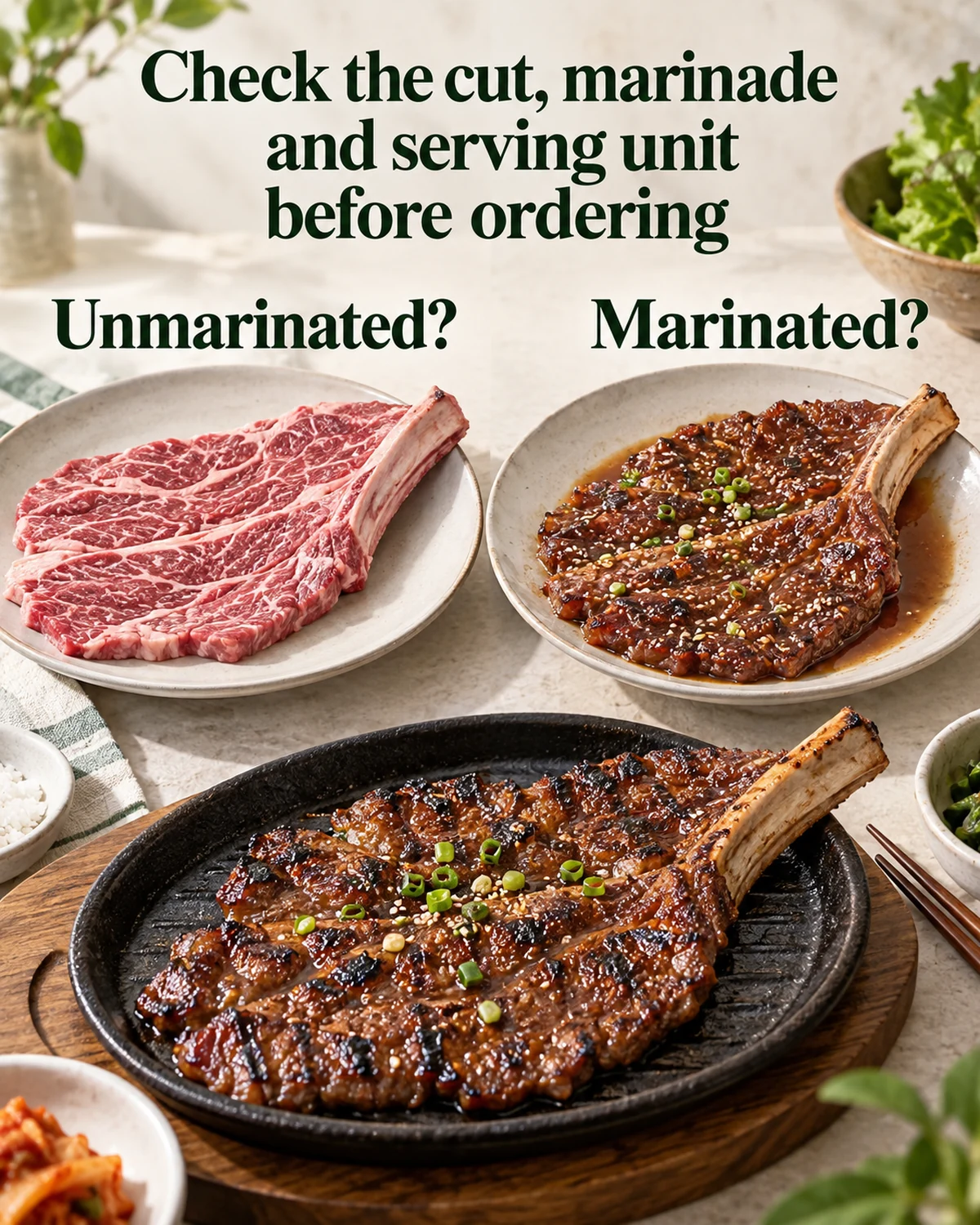
    Costs: Beef galbi isn’t cheap anywhere in Korea, and Idong is no exception. Expect a serving to run into the tens of thousands of won, with fresh (unmarinated) ribs costing more than marinated. The upside is that portions are generous and made for sharing, and the cold-noodle sides fill in the gaps. Prices drift over time, so treat any figure as a guide.

    Where to eat Idong galbi

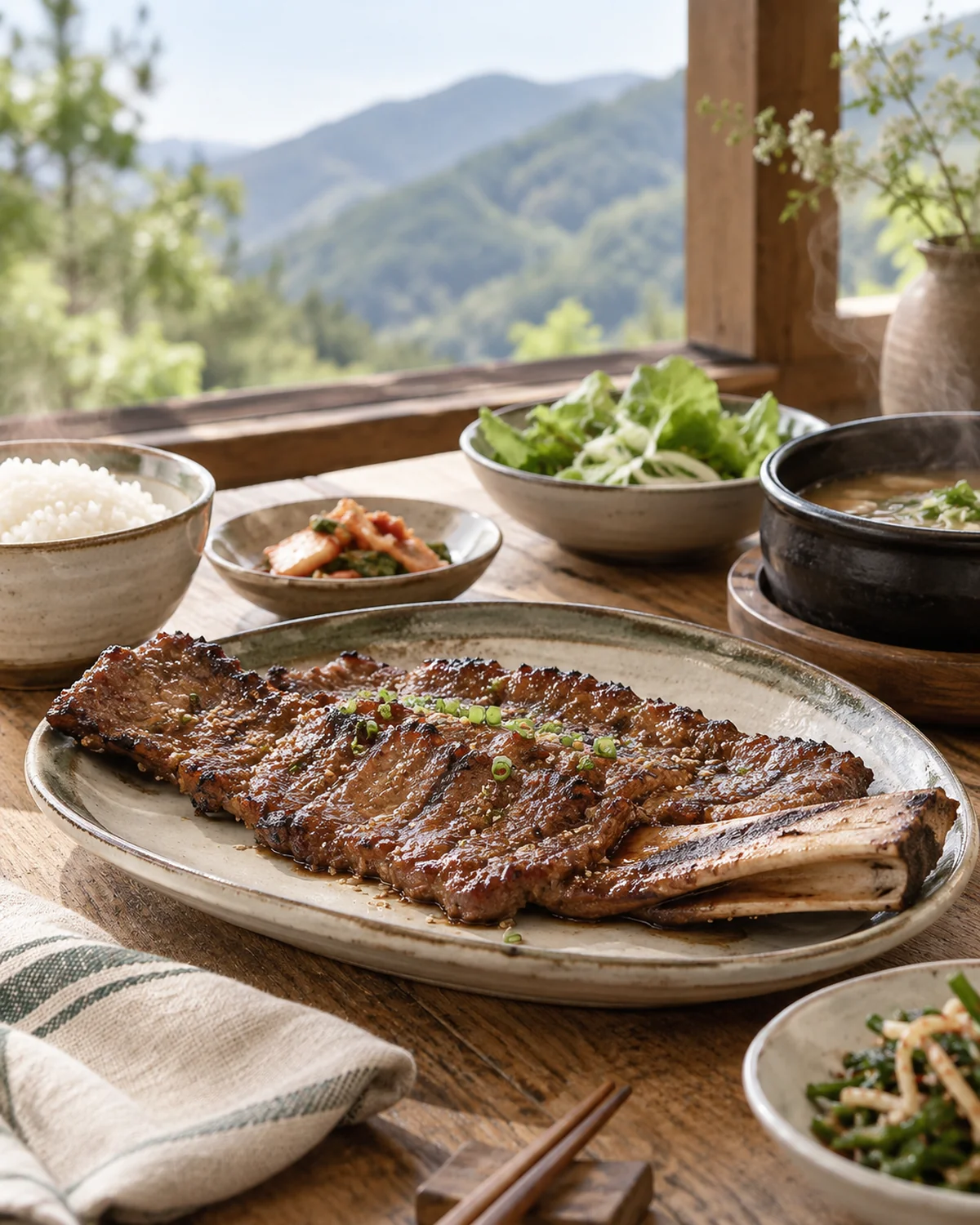
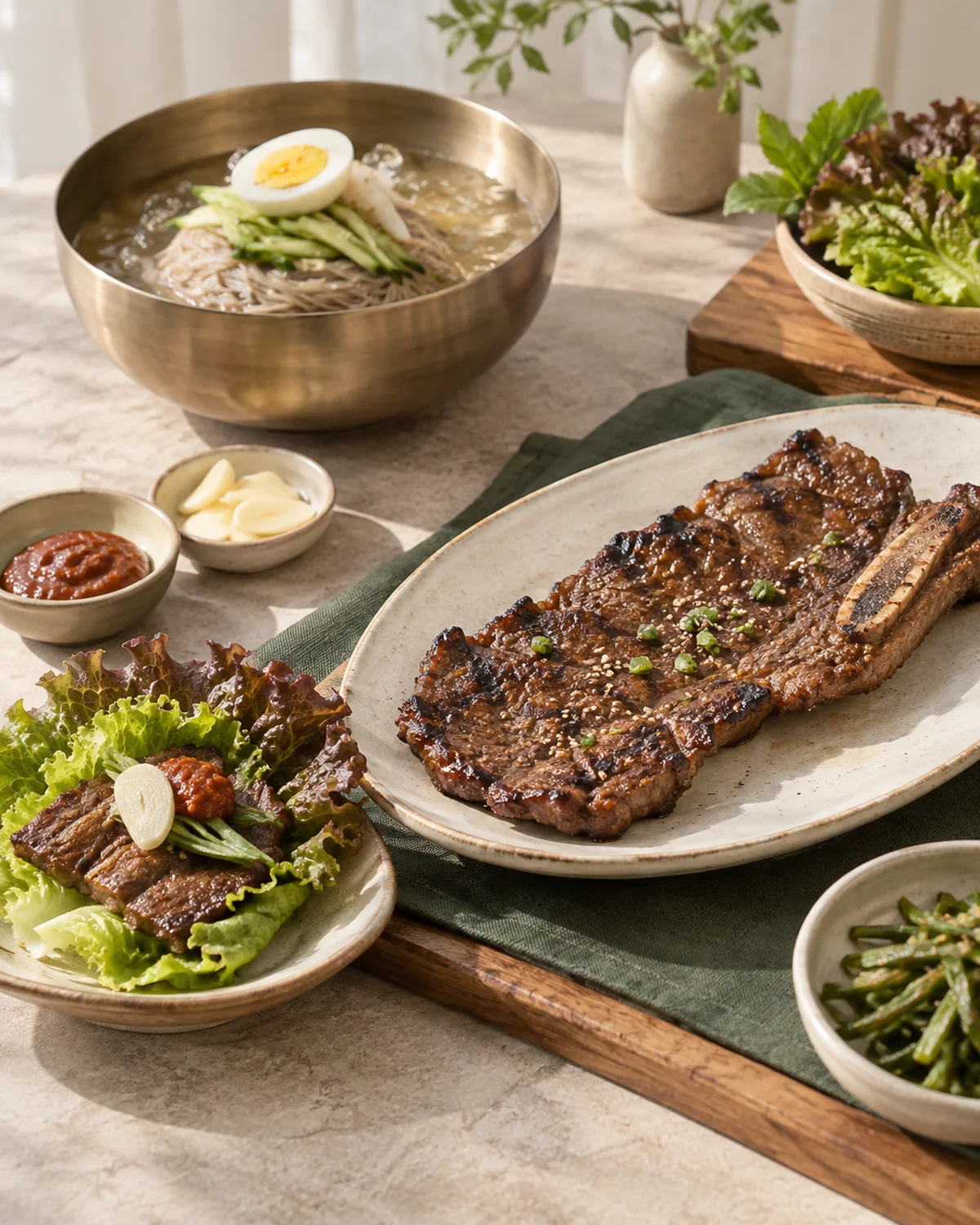
    Full Idong galbi table setting with grilled marinated beef ribs lettuce wraps ssamjang garlic and cold dongchimi noodles side dishes
    The full Idong spread — grilled galbi, lettuce for wrapping, and a bowl of cold dongchimi noodles.

    The galbi village strings along Hwadong-ro (화동로) in Idong-myeon, so once you’re there you can drive the strip and take your pick. Two long-running places to start:

    • 📍 Wonjo Idong Kim Mija Halmeoni Galbi (원조이동김미자할머니갈비): 2087 Hwadong-ro, Idong-myeon, Pocheon, Gyeonggi-do (경기 포천시 이동면 화동로 2087)
    • 🕒 Hours: about 10:00–21:00 (last order ~20:00), open daily
    • 🥩 Marinated galbi around 47,000 won, fresh galbi around 57,000 won per serving · one of the village’s old, well-known houses, known for handmade ribs and a long-aged soy marinade · free parking, valet available
    • 📍 Galbi 1987 (갈비1987): 2065-1 Hwadong-ro, Idong-myeon, Pocheon (경기 포천시 이동면 화동로 2065-1) — noon–21:00 weekdays, 11:00–21:00 weekends (break ~16:00–17:00); its thick “11cm” Idong galbi runs around 63,000 won; free parking

    One honest note: galbi is sold by the serving (1인분), and the price adds up fast for a group, so decide how many servings you actually want before you sit down. Hours, closing days and prices shift over time, and the village has dozens of houses beyond these two, so it’s worth a quick check before you go, especially on a weekend.

    🔗 More Korean meals worth the trip: stay on the beef trail with a bowl of Seoul’s milky ox-bone soup, seolleongtang, graze the beef tartare and street food at Gwangjang Market, or head south for Jeonju’s famous bibimbap.

    A few quick questions

    What exactly is Idong galbi?
    It’s beef short ribs from Idong-myeon in Pocheon, Gyeonggi-do, sliced thin, marinated in a sweet soy sauce for a couple of days, and grilled over fire at your table. Compared with other Korean galbi it’s known for thinner cuts and a sweeter, glossier glaze.

    Why are the ribs held together with a toothpick?
    It started as a way to stretch a serving. In the 1960s, Idong’s cooks trimmed the extra meat and scraps from the bone, then pinned them back on with a wooden toothpick so one small rib bone carried a generous, fanned-out portion. The thin slices also soak up more marinade and cook faster. The toothpick trick is said to have begun in Idong, and it’s part of what the name means.

    How is Idong galbi different from Suwon galbi?
    Suwon is famous for wang galbi — big, long ribs with a lighter, less sweet seasoning, grilled hard over charcoal. Idong went for thinner cuts, a sweeter soy marinade, and generous, value-focused portions. Same cut of beef, two different philosophies.

    Is Idong galbi worth the trip from Seoul?
    If you’re driving and pairing it with the Pocheon countryside — Sanjeong Lake, the autumn hills, the hot springs nearby — it makes a lovely day out. For galbi alone, you can eat very well in Seoul too. But there’s something to eating a dish where it was invented, in the village that gave it its name.