
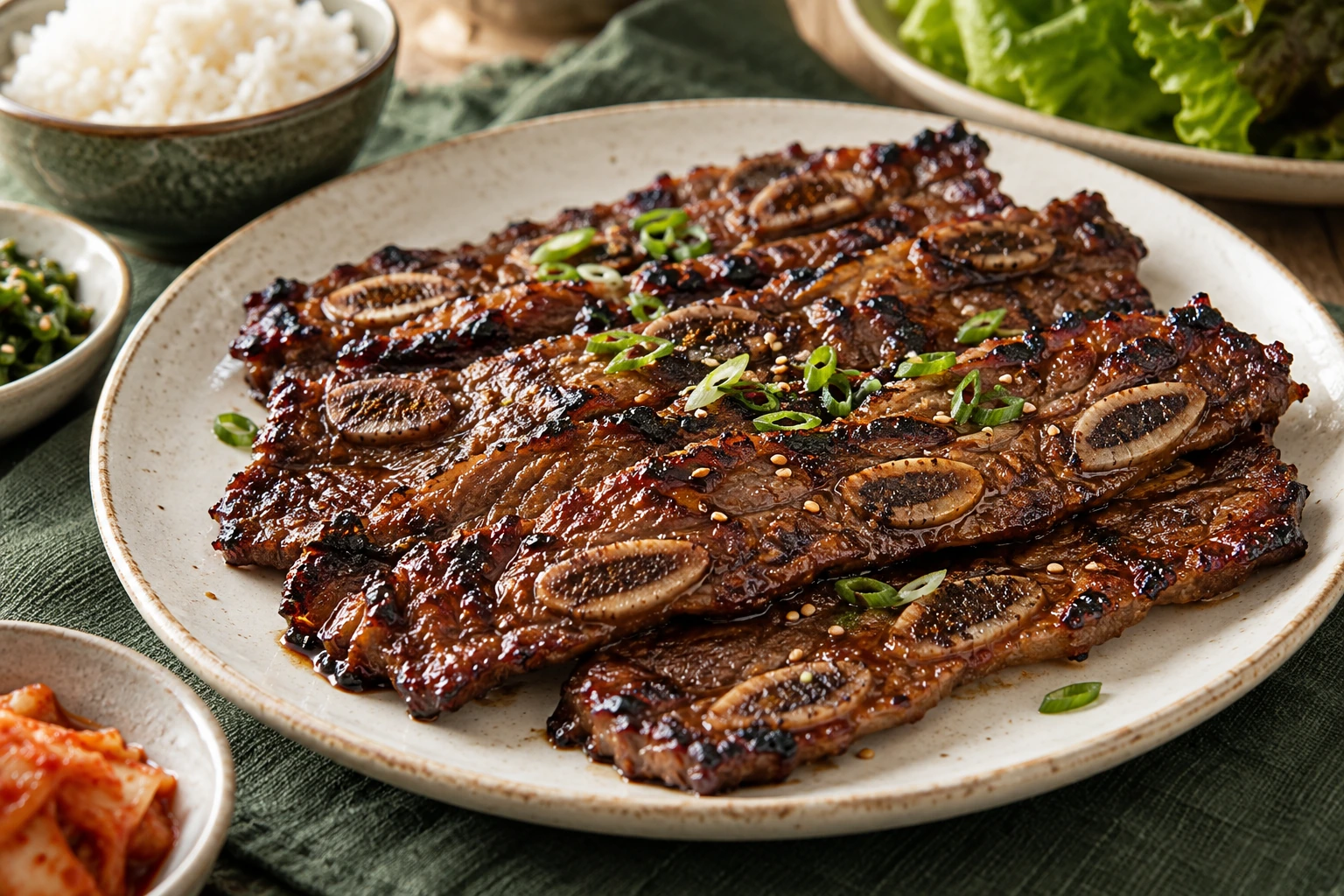
The small rounds of bone are the clue. A strip of LA galbi can look quite different from a thick short rib served in a Western braise: several cut bones sit along one piece of meat, showing where a saw passed across the ribs. Before you taste the sweet-savory seasoning, the butcher has already changed how this beef will be cooked and eaten.
LA galbi is a thin, cross-cut form of Korean marinated beef ribs. It brings familiar Korean seasoning to a cut available in another country.
Why LA galbi has a row of little bones
In flanken-style cutting, the blade goes across rib bones rather than separating the meat into individual sections between them. The American beef industry’s cut guide calls the result cross-cut short ribs and also lists “Korean short ribs” among its names. This is the physical distinction to look for, even when a shop’s wording differs. Beef Checkoff: Flanken Style Short Ribs.
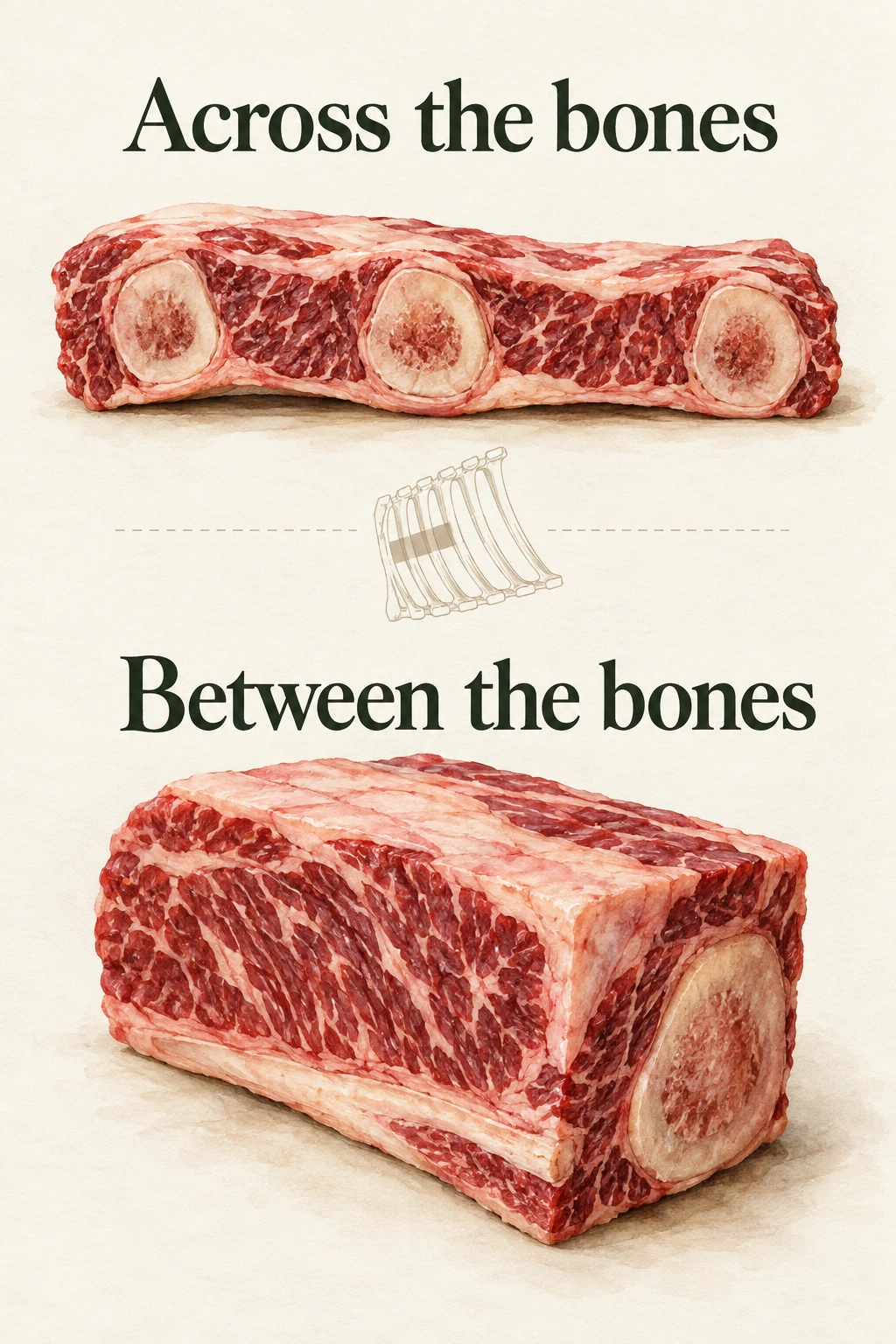
A row of bone sections is a better guide than a promise of exactly three bones. Three is familiar in descriptions and photographs, but the portion cut from a rack can vary. Thickness matters too: a cross-cut piece intended for slow cooking is not automatically interchangeable with a thin strip intended for quick grilling.
This gives you a useful shopping question. Instead of asking only for “short ribs,” explain that you want thin, cross-cut beef ribs for Korean-style grilling. If the butcher shows you large blocks with one long bone each, you are discussing a different preparation. If you have a particular recipe, show its photograph and specified thickness.
The direction of the cut cannot tell you where the animal was raised. LA galbi can be made from beef supplied by different countries. “LA” on a menu is not a certificate that the meat came from California.
An immigrant explanation, with an uncertain first chapter
The Academy of Korean Studies presents several accounts of the name. In the immigrant account it considers most persuasive, early Korean residents of Los Angeles noticed flanken-cut ribs associated with Jewish butchery and prepared them as Korean seasoned ribs. That explanation describes adoption of an available cut, rather than invention of cutting across a bone.
The entry also discusses theories involving meat marketing and the word “lateral.” It does not supply an established first inventor or an exact date of introduction to Korea. Its firmer historical evidence includes Korean newspaper material from 1990 and a restaurant advertisement from 1991, showing that LA galbi was already a recognizable commercial name by the early 1990s. LA Galbi—Encyclopedia of Korean Culture.
Official food introductions do not entirely settle the naming argument. Korea’s tourism organization favors the Los Angeles diaspora explanation, while a Korean Food Promotion Institute article favors the cutting-direction explanation. There is therefore a good reason to avoid turning either account into a perfectly dated invention story. VisitKorea: LA Galbi, Korean Food Promotion Institute: Grilled Galbi.
The immigrant account remains valuable when presented with that boundary. It helps us understand a common experience of cooking away from home: you recognize a possibility in the ingredients and tools around you, then bring an established taste to a new form. That is an interpretation of the story, not a recovered conversation with a particular butcher.
A sister’s table, before a question about the name
A more personal account comes from Maangchi. In her LA galbi recipe, first published in 2010, she recalls visiting a sister in Los Angeles and being served the ribs with her family. She remembers enjoying them while being surprised by the thin pieces cut across the bone.
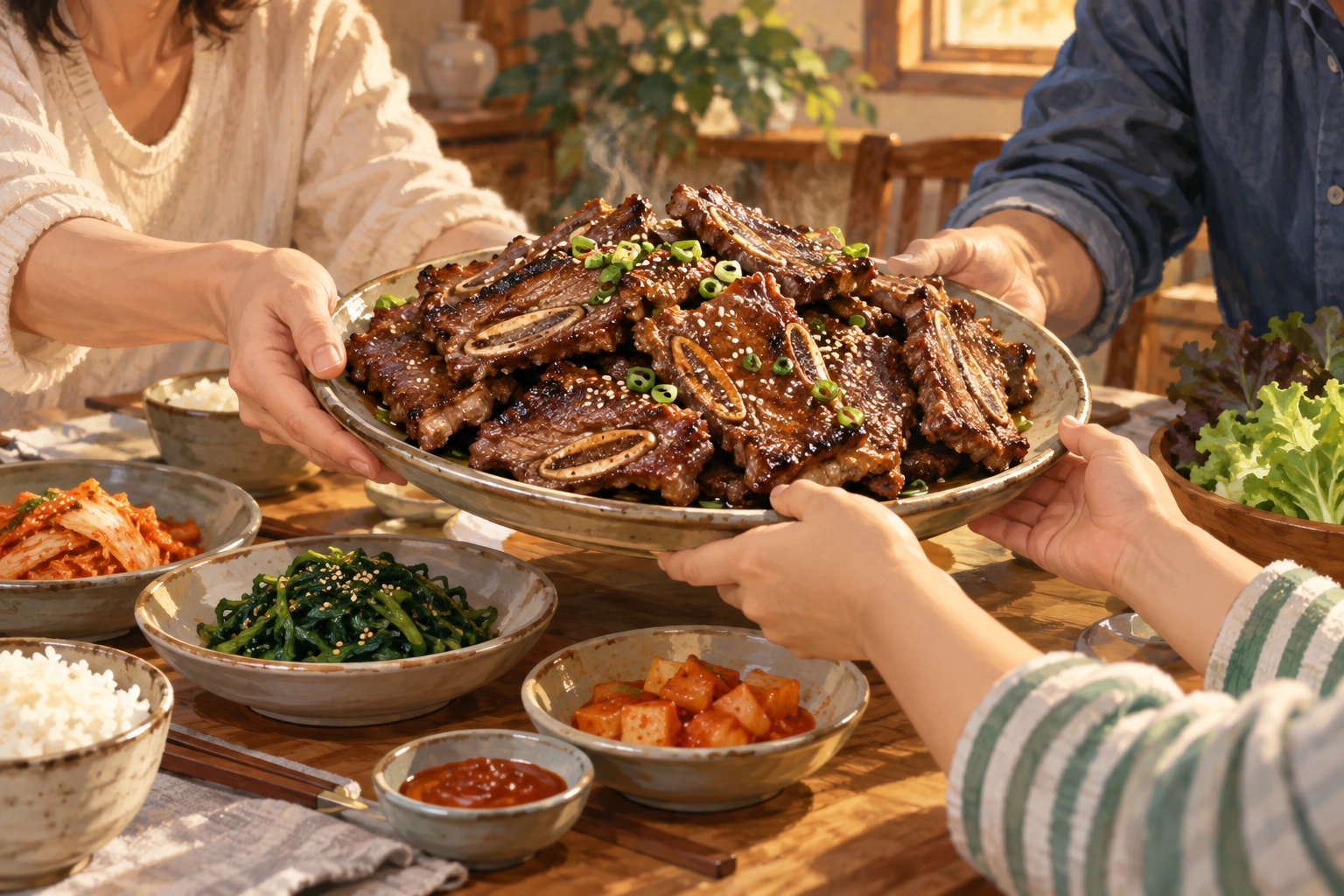
Her account also separates recognition from explanation. She had eaten LA galbi before investigating why it was called that, and she describes the competing name theories without claiming to have found the first inventor. It is a cook’s documented memory of encountering the dish, not proof of its earliest appearance. Maangchi: LA-Style Grilled Beef Short Ribs.
LA galbi vs other galbi: separate cut from seasoning
Galbi means ribs. LA galbi is one form within that larger category, so it is confusing to treat “galbi” and “LA galbi” as two completely unrelated foods.
The distinction is easiest to understand in layers. First identify the animal and the cut. Next find out whether the meat is seasoned. Finally ask how it is cooked. A thin cross-cut beef rib, a butterflied rib attached to one bone, and a bowl of braised ribs create different experiences even when all belong to a rib tradition.
A sweet-savory marinade does not explain the cross-cut by itself. Similar seasoning can be used with another rib form, and two kitchens can season the same form differently. The geometry and the flavor are connected in the finished meal, but they answer separate questions. For a different rib preparation, see how Idong galbi is opened for marinating and grilling.
This matters particularly on English menus, where “Korean BBQ ribs,” “kalbi,” and “galbi” can overlap. The spelling kalbi is another rendering of the Korean word, not a different species of rib. If the menu gives only a general name, a photograph or a short question about the cut is often more useful than guessing from the spelling.
What the thin cut changes at the table
With thin strips, the browned exterior becomes a large part of each bite. The experience is different from separating a substantial piece of meat from a long bone or eating ribs softened in a braise.
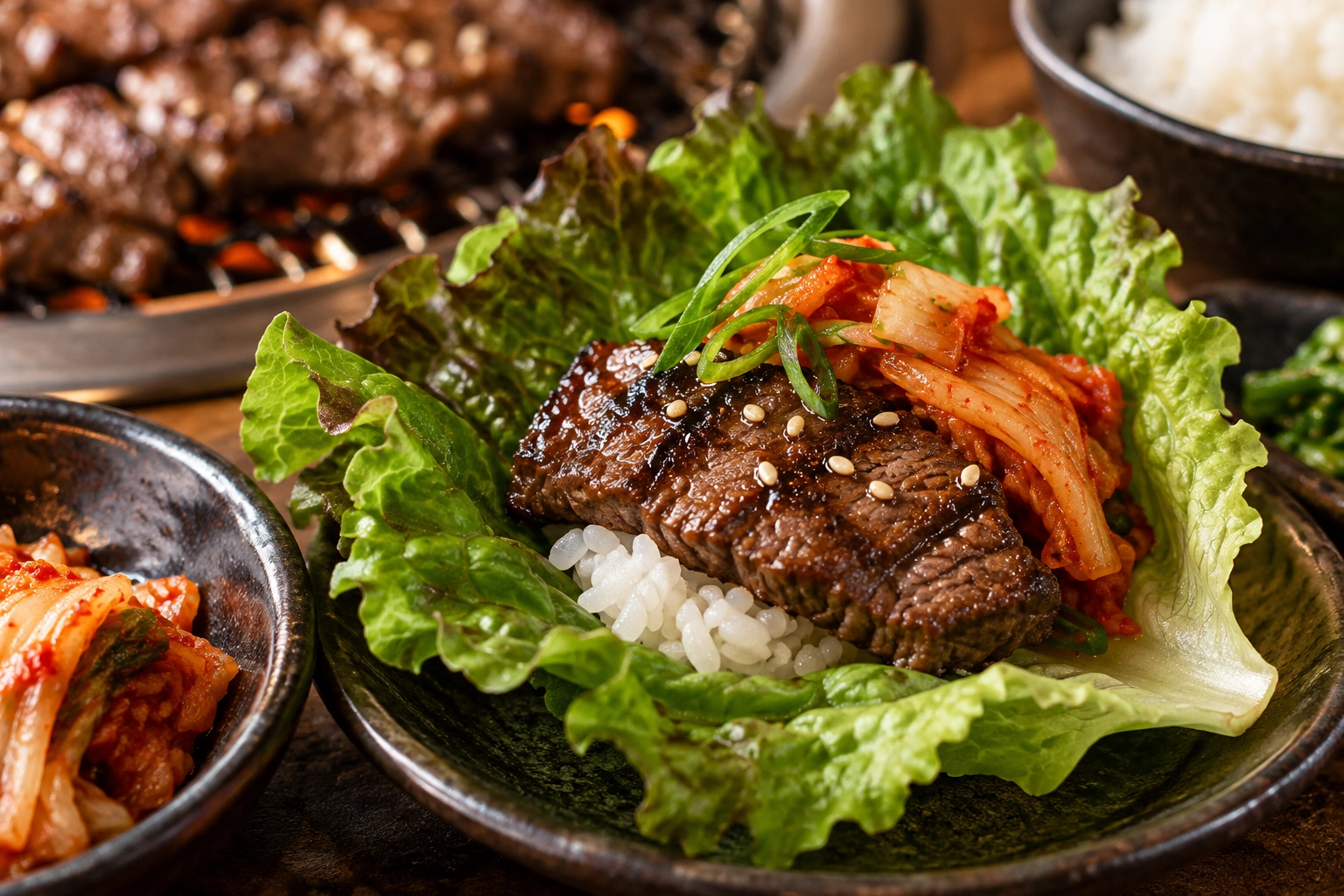
The bone sections also encourage a particular kind of attention. You may cut the meat into smaller pieces, work around the bones, and combine a bite with rice or vegetables. The ribs can become part of a table’s rhythm rather than a large individual slab that occupies the whole plate.
A published recipe such as Maangchi’s pairs the ribs with leaves and a dipping sauce and also suggests rice and kimchi. Those accompaniments offer choices: a bite of meat alone, then a wrapped bite, then a little rice. Their role is to change the balance and texture of the next mouthful. They do not have to hide the beef beneath every condiment at once.
At a restaurant, check whether the order arrives cooked or is meant to be cooked at the table. Portion units also deserve attention: a platter for sharing and a meal with rice included can have similar photographs but very different quantities.
Buying LA galbi without buying the wrong meal
If you want to cook it, begin with the cut specified by a reliable recipe. Thin grilling ribs and thick braising ribs require different approaches; one package labeled “short ribs” cannot stand in for both without changes.
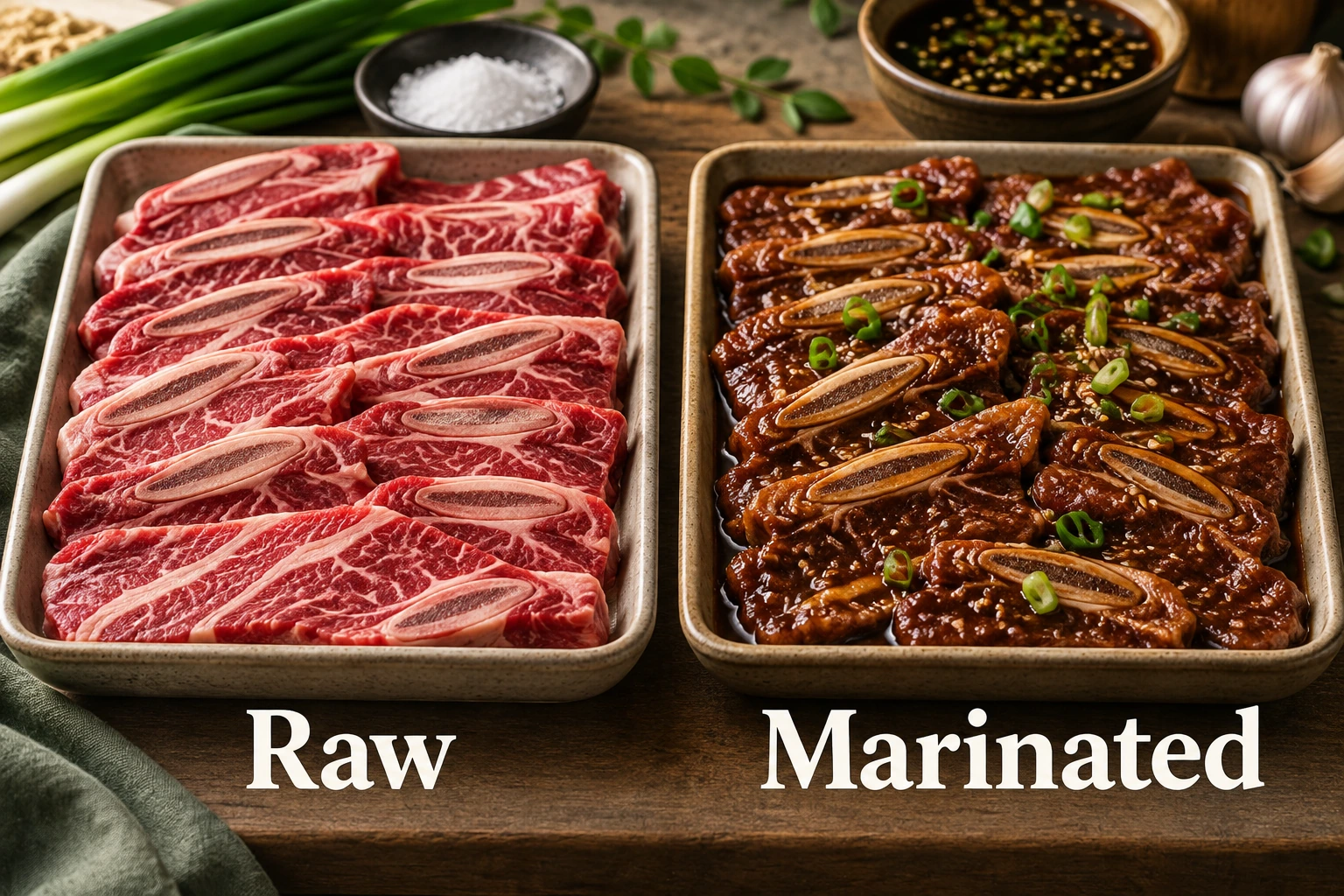
Then distinguish raw ribs from pre-marinated ones. A prepared package may already contain a sweetener, soy sauce, garlic, fruit, or other ingredients. Adding a full second marinade can change the result considerably. The package in your hand should guide that decision.
The same care applies to dietary needs. Wheat can appear in a soy-based seasoning; sesame may be present in the marinade or accompaniments. A visible piece of beef does not reveal everything used to prepare it. Check the ingredient list or ask the kitchen about the particular version.
LA galbi’s row of bones records a practical adaptation: a cut available at a new meat counter, prepared with familiar Korean seasoning. Its disputed name need not obscure that connection.