
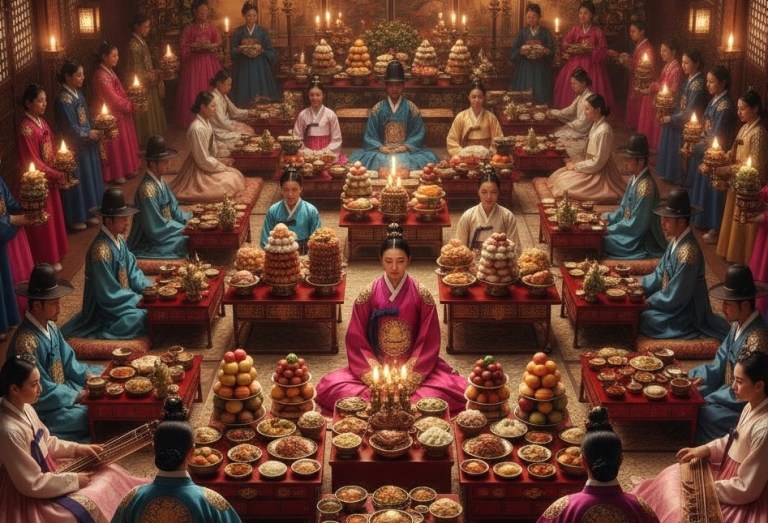
A Joseon-style royal banquet, richly recreated — the kind of table a tyrant king demanded, night after night.
Every great Korean historical drama needs a villain, and Korea keeps casting the same man. In the 2025 hit foodie sageuk Bon Appétit, Your Majesty, a modern chef time-slips into the palace and has to cook for a terrifying tyrant king. In the 2005 blockbuster film The King and the Clown — over 12 million tickets sold — a pair of street clowns mock a paranoid, murderous ruler. Both are inspired by the same real king. And both, in their way, are about food and power.
His name was Yeonsangun, the most notorious tyrant king of Korea’s Joseon dynasty, and he wasn’t a screenwriter’s exaggeration. The real one was worse — and his banquets, the kind you see recreated on screen, were the stuff of legend. Before we lift the lid, meet Korea’s favorite villain.
“Screenwriters didn’t invent Korea’s worst king. They toned him down.”
The villain K-dramas can’t stop casting
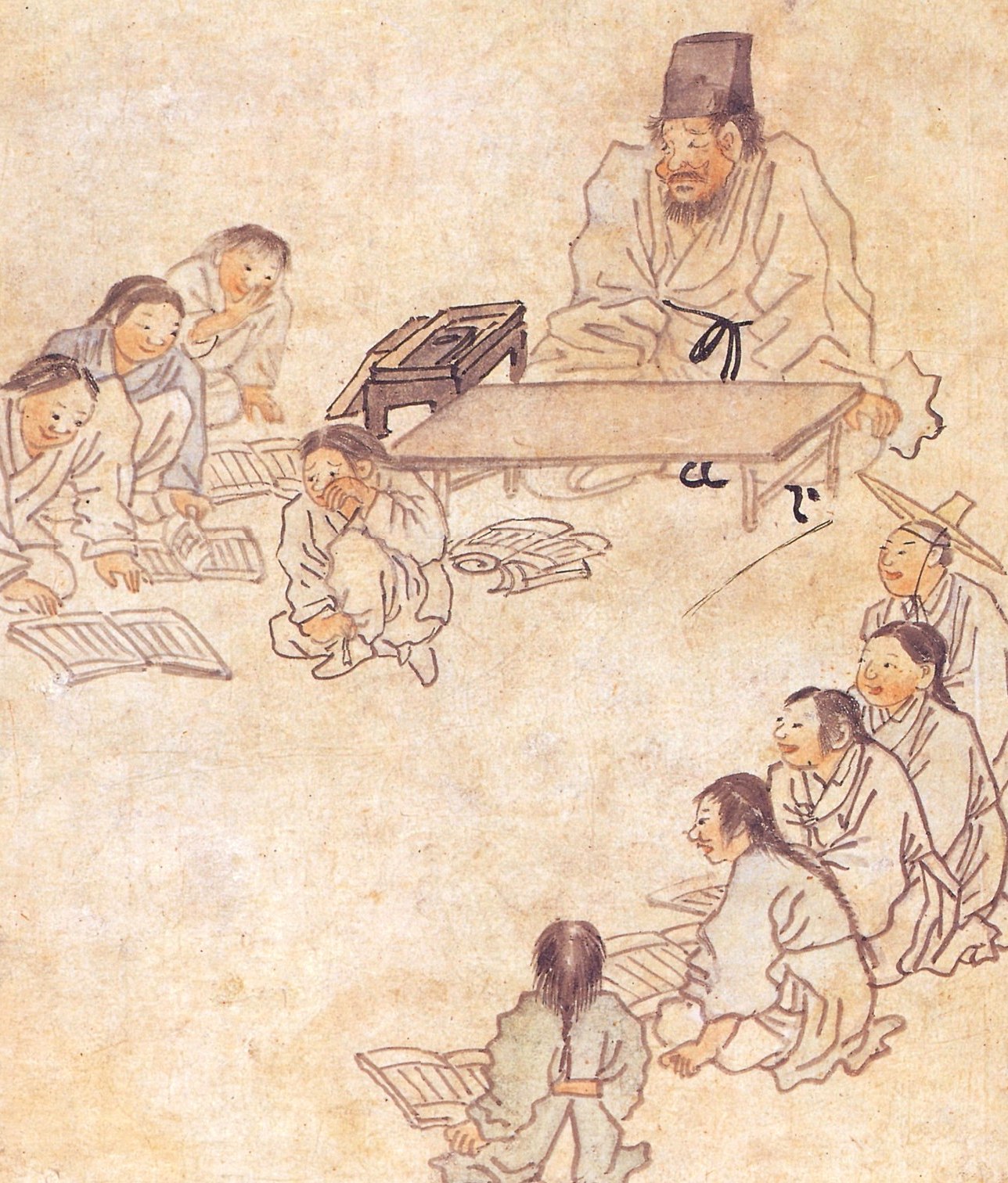
A Joseon world painted by Kim Hong-do — the era every sageuk brings back to life. Painting: Kim Hong-do (public domain), via Wikimedia Commons.
If you’ve watched more than a couple of Korean historical dramas, you’ve met a version of Yeonsangun without knowing his name — the beautiful, unstable young king who executes anyone who displeases him. He’s an irresistible character because he was real: the tenth king of Joseon, who ruled from 1494 to 1506, and who is widely regarded as one of the most notorious rulers in Korea’s history. I hadn’t clocked how many different shows had quietly borrowed his face until I started listing them.
The King and the Clown (2005), which launched Lee Joon-gi to stardom and earned Korea’s official Oscar submission that year, put him at the center of a story about clowns brave — or foolish — enough to satirize him. Twenty years later, Bon Appétit, Your Majesty did something cleverer: it dropped a modern chef into his palace kitchen, forcing our hero to please a king who might execute the cook over a bad dish. That premise only works because everyone in Korea already knows what this king was like at the table.
What a tyrant’s banquet actually looked like

Braised short ribs, court-banquet richness — the opposite of the peasant famine outside. Photo: Junho Jung, CC BY-SA 3.0, via Wikimedia Commons.
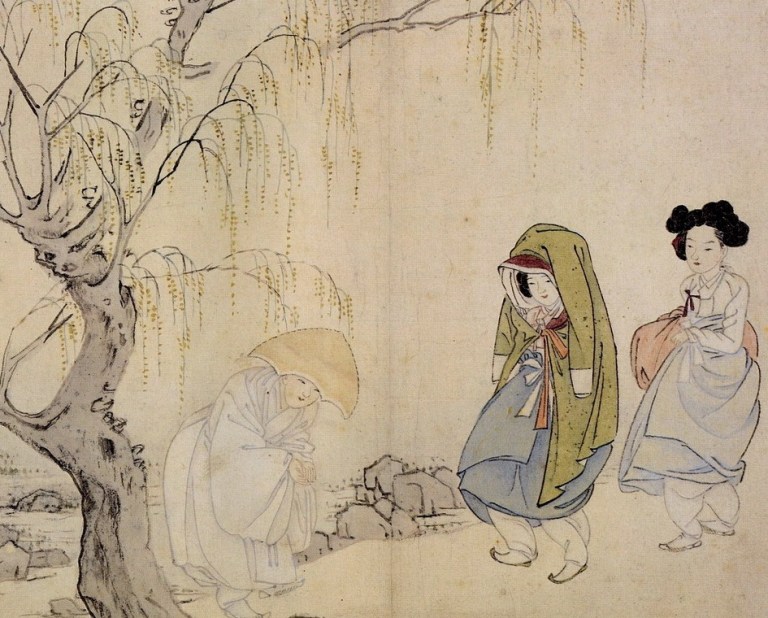
The world of Joseon entertainers and leisure, painted by Shin Yun-bok — the kind of court pleasure Yeonsangun took to ruinous extremes. Painting: Shin Yun-bok (Hyewon), public domain, via Wikimedia Commons.
Here’s the part the dramas get right. Yeonsangun became infamous for extravagant banquets and hunts even as his people starved through famine. He seized homes and temples for his own pleasure, and — most shockingly to Confucian Korea — he turned the Sungkyunkwan, the nation’s most sacred academy for scholars, into a private playground. He gathered enormous numbers of female entertainers and musicians into the palace for endless revelry. Korean even keeps a word tied to that excess: heungcheong-mangcheong, meaning to squander wildly and live it up, is an expression Koreans still use today — popularly traced to the entertainers (“heungcheong”) he assembled.
A Joseon royal feast was already spectacular in normal times — towering arrangements of grilled and braised meats, jeon (savory pan-fried delicacies), elaborate hot pots, rare seafood, honeyed sweets, all plated with obsessive care. Under a king like Yeonsangun, that machinery of luxury ran nonstop, for his pleasure, while the country buckled. The banquet you admire on screen isn’t set dressing. It’s the crime.
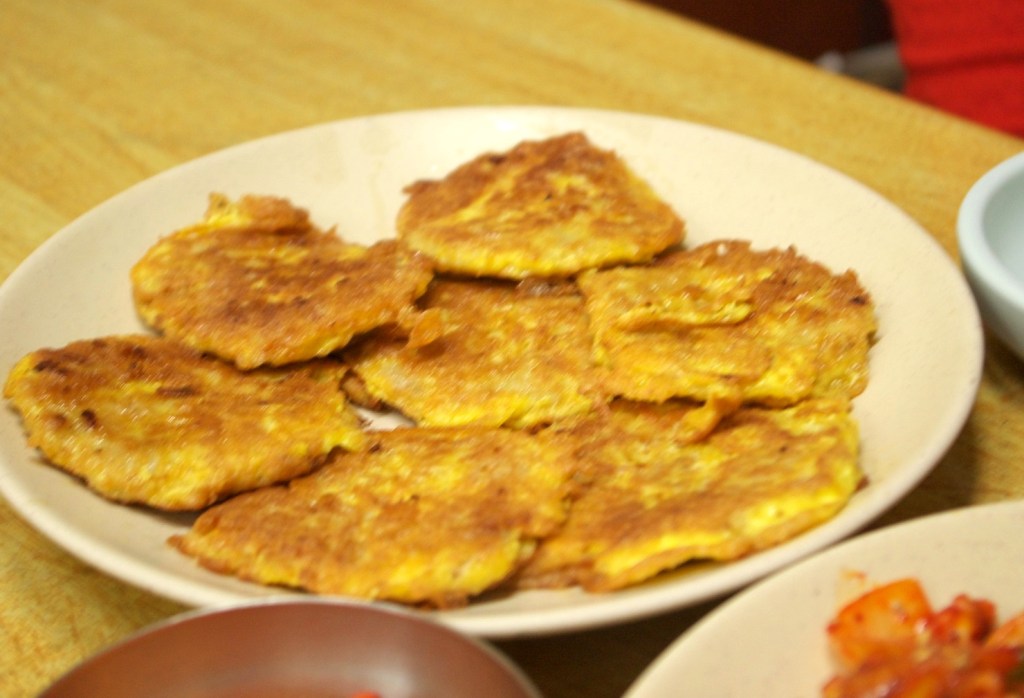
Jeon — the golden pan-fried delicacies that crowd any Korean feast table. Photo: 南宮博士, CC BY-SA, via Openverse.
How the story really ended

Hangwa — the jewel-like honeyed sweets that closed a Joseon royal banquet. Photo: KOREA.NET, CC BY-SA, via Openverse.
Real life doesn’t grant villains a redemption arc. Yeonsangun’s cruelty — including bloody purges of scholars and officials — finally united his enemies against him. In 1506 he was deposed in a coup, stripped of his royal title (which is why he’s called “Yeonsan-gun,” a prince, not a king with a temple name), and exiled to Ganghwa Island, where he died within months. The most feared man in Korea ended his life powerless on a small island. The feasts stopped overnight.
That’s why he’s such perfect drama material: beauty and terror, appetite and ruin, all in one doomed young king. When a K-drama sits him down to a groaning banquet table, it’s showing you both his power and the exact reason he lost it.
Joseon royal feast dishes you’ll spot on screen
Next time a sageuk cuts to the king’s table, look for these:
- Galbijjim (갈비찜) — luxuriously braised short ribs, a centerpiece of celebration and court cooking.
- Jeon (전) — an array of savory pan-fried fritters (fish, vegetable, meat), essential to any feast.
- Hwayangjeok (화양적) — colorful skewers of meat and vegetables, as much art as food.
- Sinseollo (신선로) — the ornate royal hot pot, a brass vessel of meat, seafood, and vegetables simmered at the table.
- Gujeolpan (구절판) — a nine-section platter of colorful fillings and thin crepes, court cuisine at its most beautiful.
- Hangwa (한과) — honeyed traditional confections and rice sweets, the court’s glittering finale.

Hwajeon — delicate flower rice cakes, court cooking treated as art. Photo: KOREA.NET, CC BY-SA, via Openverse.
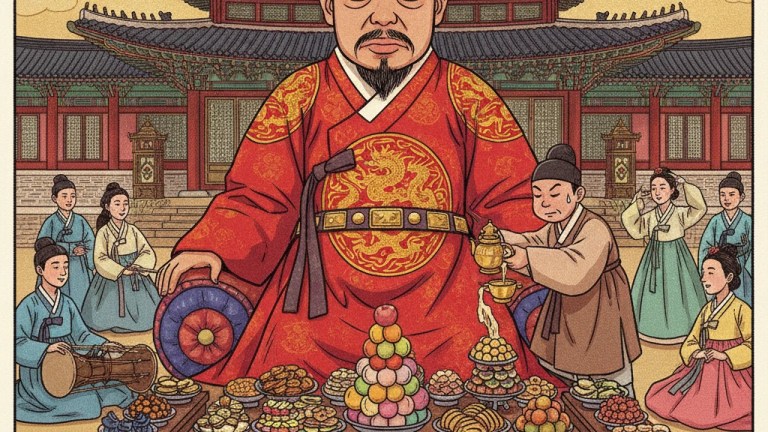
Yeonsangun’s legendary banquets — dramatic even by K-drama standards (playful illustration)..
Questions people ask about Korea’s villain kings
Who was the real tyrant king in Korean dramas? Most often it’s Yeonsangun, the tenth Joseon king (reigned 1494–1506), remembered as one of the cruelest — famous for lavish banquets, purges of scholars, and being deposed. He inspired films and dramas including The King and the Clown and Bon Appétit, Your Majesty.
Is Bon Appétit, Your Majesty based on a true king? The tyrant king in the 2025 drama is inspired by Yeonsangun. The chef and romance are fiction, but the ruler’s fearsome, excessive reputation comes straight from history.
What did Joseon kings eat at banquets? Court feasts featured braised and grilled meats, jeon (savory fritters), elaborate hot pots, seafood, colorful skewers, and honeyed sweets — all prepared and plated with extraordinary precision by palace cooks.
Was Yeonsangun really that cruel? By the historical record, yes. The Annals of the Joseon Dynasty describe bloody purges of scholars and officials, seizures of homes and land, and lavish excess amid famine. Even allowing for the fact that his successors wrote the history, he’s remembered as one of Joseon’s worst rulers.
Why is he called Yeonsan-gun and not King Yeonsan? Because he was overthrown. A Joseon monarch who was deposed lost his royal temple name and was demoted to the rank of “gun” (prince). So he’s Yeonsangun, not a king with an honored posthumous title.
Why was Yeonsangun overthrown? His tyranny — including deadly literati purges, seizing property, and reckless excess while people suffered — turned officials against him. He was deposed in 1506 and exiled, dying soon after.
The feast and the fall
The reason Yeonsangun keeps coming back to your screen isn’t just the violence — it’s the banquet. A table overflowing with the finest food in the kingdom, set by a man too dangerous to refuse, in a country going hungry. Every sageuk that seats him down to feast is quietly telling the same story: power, appetite, and the fall that always follows.
Curious what a real royal kitchen actually served, minus the tyranny? Step inside the palace with our Jeonju bibimbap and samgyetang guides, or wander the commoners’ feast at Gwangjang Market.
Yeonsangun’s reign (1494–1506), his lavish banquets amid famine, seizure of Sungkyunkwan, literati purges, deposition, and exile to Ganghwa are drawn from the Annals of the Joseon Dynasty and Korean historical references (Wikipedia, historical summaries). The King and the Clown (2005) box-office figures and Bon Appétit, Your Majesty (2025) being inspired by Yeonsangun are matters of record; the “heungcheong-mangcheong” etymology is a widely repeated popular attribution.