
Seoul has around 17,000 cafes — coffee here is a whole way of life. Photo: Uri Tours, CC BY-SA 2.0, via Wikimedia Commons.
Seoul has roughly 17,000 cafes. Not restaurants — cafes. Korean coffee culture is so intense that “let’s get coffee” is the default way friends meet, first dates happen, and whole afternoons quietly disappear inside beautifully designed rooms. Coffee in Korea isn’t really about caffeine; it’s about space, style, and spending time. Korea drinks coffee the way other countries breathe. And in 2020, when the world was stuck at home whipping instant coffee into fluffy peaks, that trend — dalgona coffee — came from here too.
Here’s what almost nobody outside Korea knows: this entire national obsession can be traced back to one man, in one very strange year, drinking coffee inside a foreign embassy while hiding for his life. He was the king. But before we rewind to 1896, let’s talk about what modern Korean cafe culture actually looks like — because it’s unlike anywhere else on earth.
“A country of 17,000 cafes, all descended from one frightened king’s cup.”
What makes Korean cafe culture unique
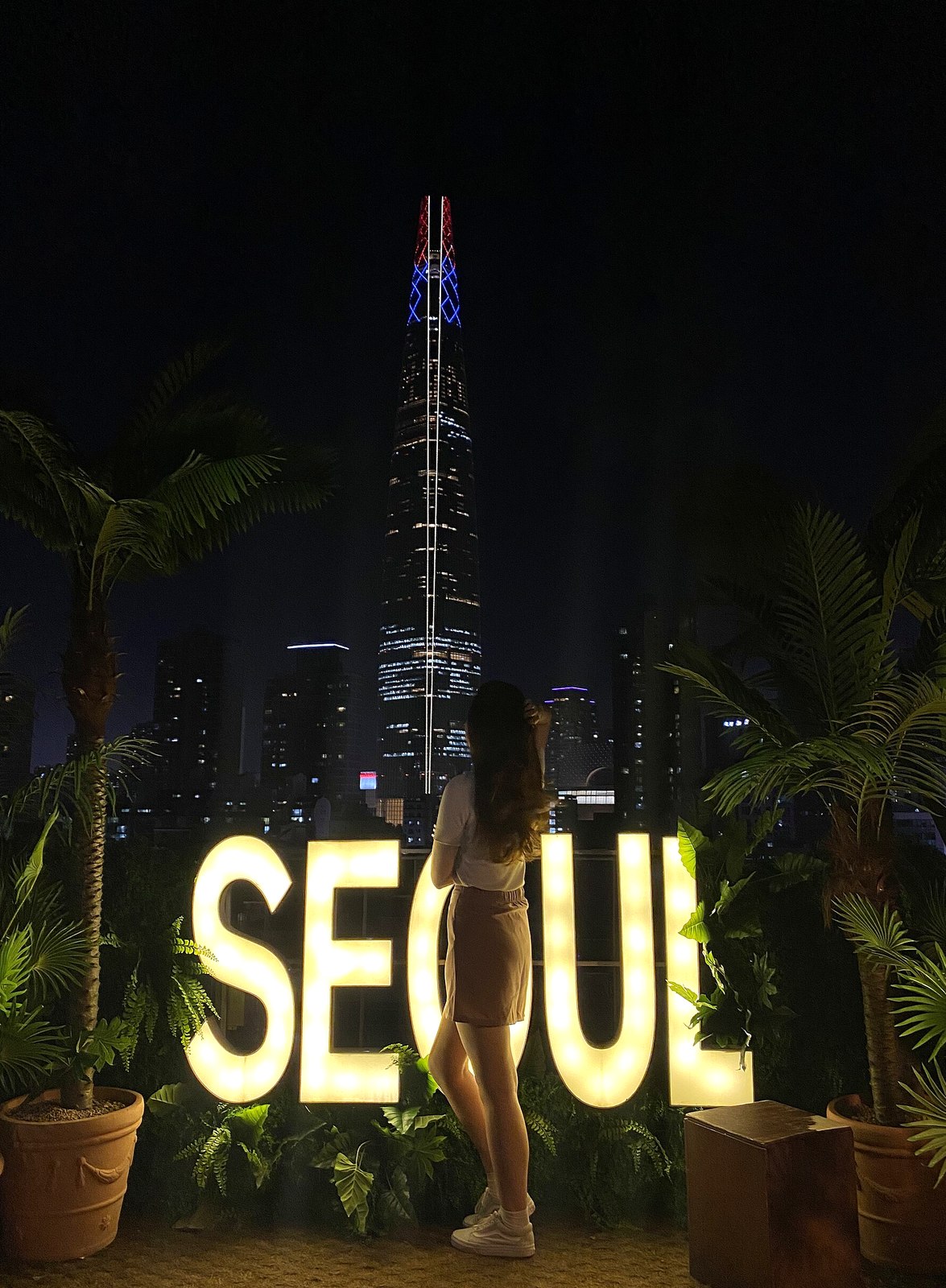
Aesthetic, photo-ready, open late — a Seoul rooftop cafe is a destination, not just a coffee run. Photo: Yeajin12, CC BY-SA 4.0, via Wikimedia Commons.
In Korea, a cafe is a second living room. Nobody rushes you out. Students camp for hours in “study cafes” with a laptop and a single iced americano; friends linger over dessert; couples pick a cafe the way others pick a restaurant. The coffee is almost the entry ticket — what you’re really buying is the room. That’s why Korean cafes obsess over design: themed interiors, gallery-like spaces, rooftop views, and photo zones built for exactly one perfect shot. This is the aesthetic backdrop of half the K-dramas you’ve ever watched.
One drink rules them all: the iced americano. Koreans drink it year-round — yes, even in freezing winter — so devotedly that there’s a slang phrase for it, eol-juk-a (“I’d rather freeze to death than give up my iced americano”). Coffee in Korea ranges from global giants and homegrown chains to tiny, fiercely independent specialty cafes, and the fun is hopping between them. If you’re visiting Seoul, the best cafe-hopping neighborhoods are Seongsu-dong (the “Brooklyn of Seoul,” full of converted red-brick warehouses), Yeonnam-dong (cozy, Instagrammable alley cafes), and Ikseon-dong (traditional hanok houses reborn as vintage coffee houses). Every one of these Korean cafes is a small world of its own.
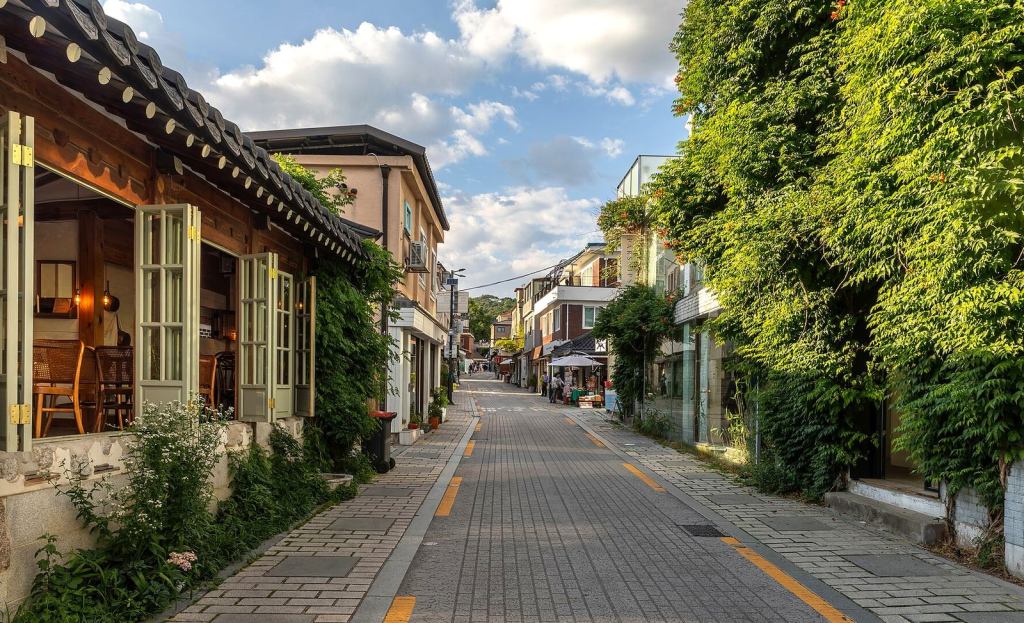
Cafe-hopping in Seoul: old hanok lanes lined with coffee houses, a whole afternoon’s worth of them. Photo: Basile Morin, CC BY-SA 4.0, via Wikimedia Commons.
The dalgona coffee the whole world copied
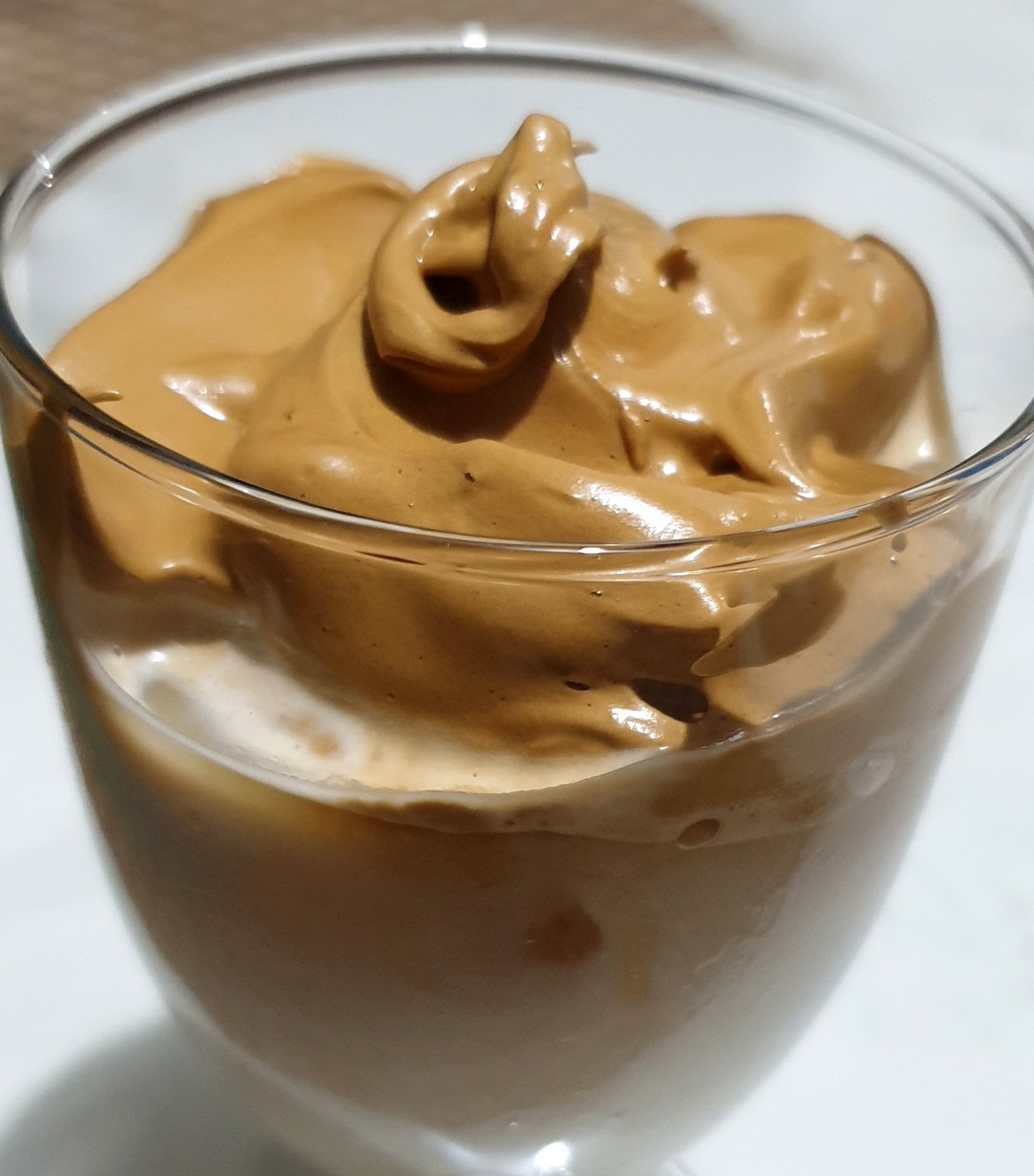
Dalgona coffee — the whipped drink that took over the internet in 2020, named after a Korean street candy. Photo: Kguirnela, CC BY-SA 4.0, via Wikimedia Commons.
You already met the biggest export of this culture without realizing it. Dalgona coffee — instant coffee, sugar, and hot water whipped into a caramel-colored cloud over milk — exploded globally in early 2020 as locked-down people looked for something to do with their hands. Its name comes from dalgona, the old Busan street candy of melted sugar and baking soda (yes — the same one made famous worldwide by a certain Korean survival drama). A 1960s sugar snack, a 19th-century king, and a viral pandemic drink all sit inside the same cup. To understand why, you have to go back to the king.
The king who fell for coffee while in hiding
King Gojong discovering coffee — Korea’s very first coffee lover (playful illustration).

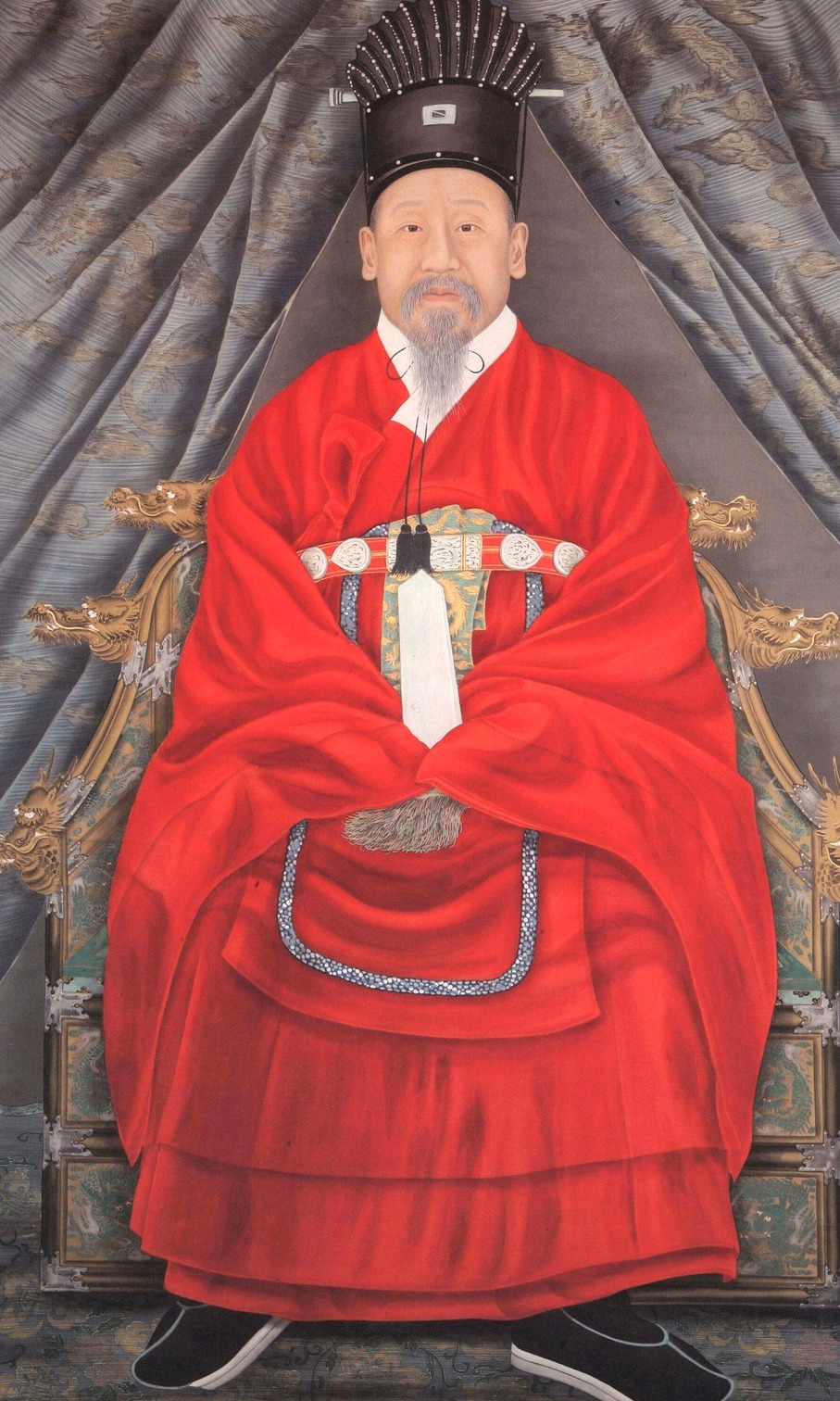
Emperor Gojong — often called Korea’s first true coffee devotee. Photo: Yi Hancheol and Yu Sook (public domain), via Wikimedia Commons.
In late 1895, King Gojong’s wife, Queen Min, was assassinated by Japanese agents inside the palace. Fearing for his own life, at dawn on February 11, 1896, Gojong and his son slipped out of the palace in covered sedan chairs and took refuge inside the Russian legation in Seoul — an episode Koreans call the Agwan Pacheon, the king’s flight to the Russian mission. He would stay for about a year, effectively running the country from a foreign embassy.
And it was there, in that gilded exile, that Gojong’s love of coffee took hold. He was reportedly served coffee by Antoinette Sontag, a Western woman connected to the Russian diplomatic circle. Historians note he may have tasted coffee before — but it was during this anxious year in the legation that he became a genuine, committed fan. A frightened monarch, cut off from his own palace, found comfort in a hot, bitter, foreign drink. Korea’s love affair with coffee starts in that room.
Korea’s first cafe was built for a king
Deoksugung Palace, home to Gojong’s coffee pavilion Jeonggwangheon — often called Korea’s first cafe. Photo: travel oriented, CC BY-SA 2.0, via Wikimedia Commons.
When Gojong finally left the legation and settled at Deoksugung Palace, he didn’t leave the coffee behind. He built a room for it: Jeonggwangheon, a graceful Western-style pavilion in the palace grounds, where he could drink coffee and receive guests. It still stands at Deoksugung today, and it’s frequently described as Korea’s first cafe — a coffeehouse for exactly one very important customer.
Think about the arc for a second. A king drinks coffee to calm his nerves during the worst year of his reign, then builds a little cafe in his palace to keep doing it. A century later, his country has 17,000 cafes in its capital alone and exports a whipped-coffee trend to the entire planet. Every obsession has to start somewhere. This one started with a crown.
Korean coffee drinks worth trying

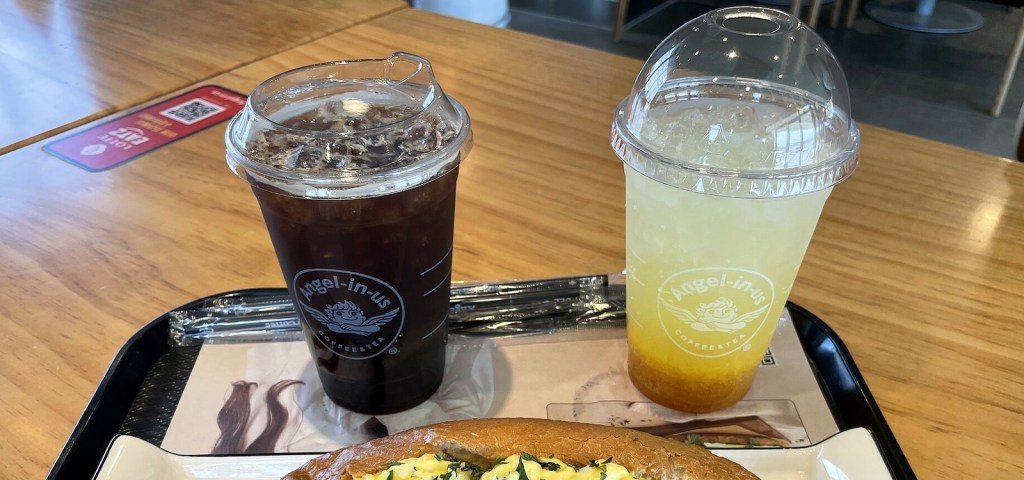
The iced americano — Korea’s default coffee, ordered year-round, freezing weather and all. Photo: 김바삭 (Kim Ba-sak), CC BY 4.0, via Wikimedia Commons.
If you want to taste the range of Korean coffee culture, here’s where to start:
- Iced Americano (아이스 아메리카노) — quietly the most-ordered drink in Korea, and the fuel of students and office workers. Order it any month of the year; that’s the eol-juk-a way.
- Dalgona coffee (달고나커피) — the viral whipped coffee; sweet, fluffy, and genuinely fun to make at home.
- Dabang-style instant coffee (다방커피) — the old-school “coffee, cream, and sugar” mix from Korea’s retro tea rooms of the 1970s–80s. Nostalgic and sweet.
- A themed specialty cafe — the real experience isn’t a drink, it’s the room. Find a beautiful cafe and stay a while. That’s the culture.
Questions people ask about Korean coffee culture
What is Korean cafe culture? It’s a social ritual built around spaces, not just caffeine. Korean cafes are designed for lingering — studying, meeting, dating — with beautiful interiors and photo zones, and there are around 17,000 of them in Seoul alone.
Why do Koreans drink so much iced americano? The iced americano is Korea’s default coffee: cheap, clean-tasting, and endlessly Instagram-friendly. Koreans drink it all year — even in winter — so faithfully that they coined the slang eol-juk-a, “I’d freeze to death before giving up my iced americano.”
Why are there so many cafes in Korea? Because a cafe is Korea’s default social space — a second living room and office where people spend hours. That constant demand, plus a love of cafe-hopping and design, keeps thousands of cafes thriving, especially in Seoul.
Is dalgona coffee actually Korean? Yes. The whipped-coffee trend spread worldwide in 2020, but it’s Korean, and it’s named after dalgona, a traditional Busan street candy of melted sugar and baking soda.
Who introduced coffee to Korea? Coffee is closely tied to Emperor Gojong, often called Korea’s first devoted coffee drinker. He embraced it during his 1896 stay at the Russian legation and later drank it at Deoksugung Palace, where his pavilion Jeonggwangheon is frequently called Korea’s first cafe.
One more cup
The next time you’re in a gorgeous Seoul cafe, or whisking instant coffee into foam at home, remember it started with a king hiding in an embassy, finding a little courage at the bottom of a cup. Korea took that one nervous habit and turned it into a whole way of life — 17,000 cafes and counting.
Want more of Korea’s most beloved everyday flavors? Wander the food stalls of Gwangjang Market, warm up with a bowl of samgyetang, or build the perfect bite at Jeonju’s bibimbap table Want to stand where Gojong actually drank that first cup? Our guide to Deoksugung Palace covers his pavilion, Jeonggwangheon, in person..
The account of King (later Emperor) Gojong’s 1896 flight to the Russian legation, his embrace of coffee there, and the Jeonggwangheon pavilion at Deoksugung are drawn from Korean historical records and coffee histories (The Korea Herald, Specialty Coffee Association). Cafe figures and the dalgona coffee trend reflect reporting on Korea’s modern coffee market; “first coffee drinker” and “first cafe” are widely repeated attributions rather than absolute firsts.