
Jung Kook’s Bulgeuri starts with instant noodles, but the important move happens in the pan: two seasoning systems meet, liquid reduces, and the noodles pick up a stronger coating. His perilla-oil noodle posts take another route, using a mixed dressing and cooled buckwheat noodles. These are specific dishes you can learn about, rather than a guessed list of seven permanent favorites.
The original Weverse posts and official recipe-program pages offer useful starting points for a BTS-inspired Korean meal. This guide follows what the foods taste like, how their methods differ and which preparation might suit your appetite. A published recipe documents that version; it does not establish what every member always orders.
Bulgeuri: look at the pan, not just the packet
On March 16, 2023, Jung Kook posted a Bulgeuri recipe on Weverse. It combines Buldak liquid sauce with Neoguri seasoning and noodle components. The visible instructions specify using a frying pan, reducing the liquid while watching the noodles, and adding water if the result is too salty.[1]
This makes the dish different from simply preparing two separate bowls of ramyeon. As liquid leaves the pan, seasoning remains with the noodles. A loose broth and a clinging sauce can begin with similar ingredients but deliver quite different mouthfuls. That is the useful cooking idea behind the mix.
Watch the finished consistency rather than treating a brand combination as a guarantee. If a reduction goes too far, the noodles can sit in an overly concentrated coating; if it stops much earlier, the bowl will be soupier. Noodle firmness and the amount of liquid are linked decisions because they change while the same pan is heating.
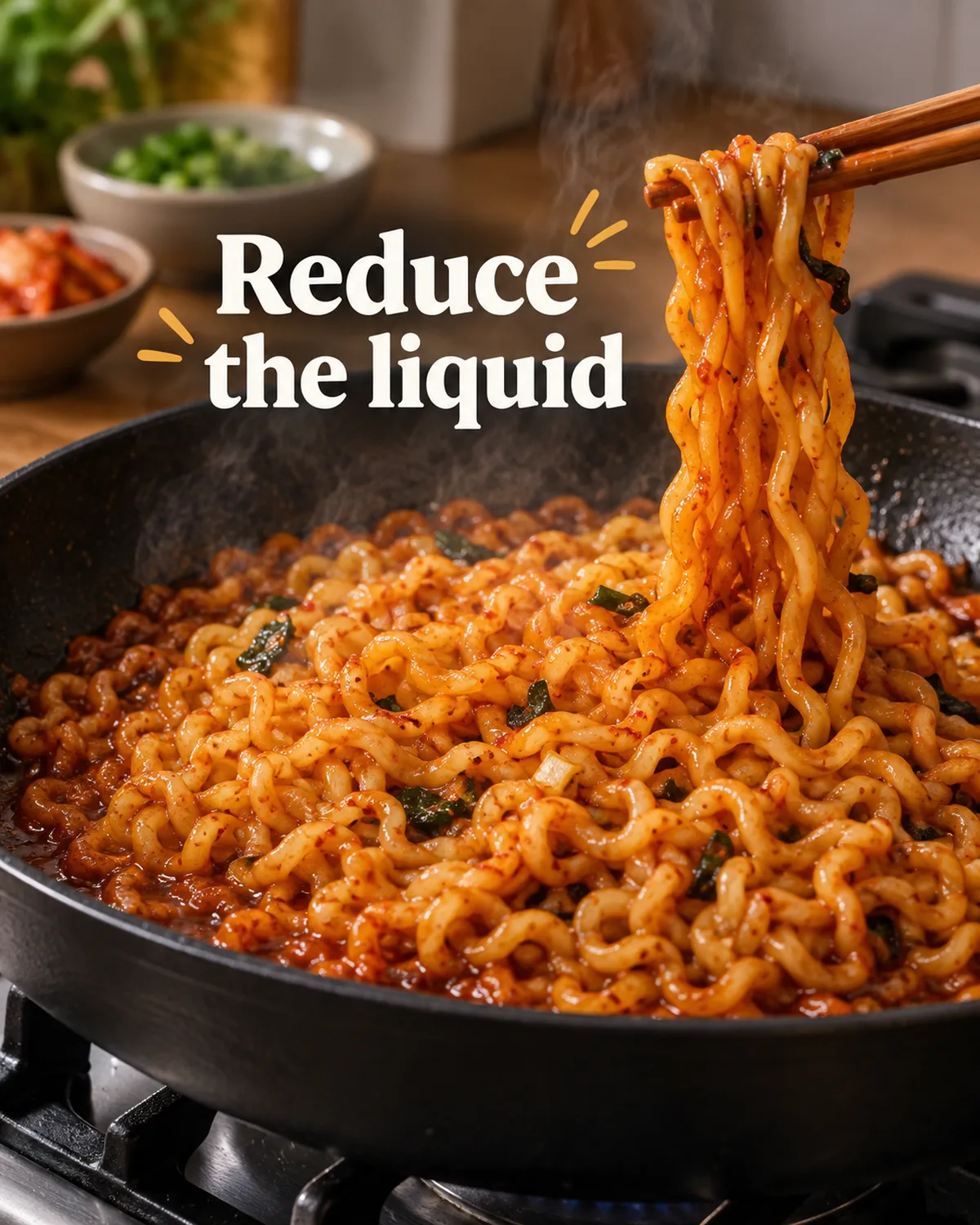
For a first taste, notice the spring of the noodles, then the heat and saltiness of the coating. Make a small serving before committing to a large batch. Adding more spicy sauce is not the only way to change the bowl: the original post explicitly allows water as a correction.
Perilla-oil noodles use a different kind of balance
The April 25, 2023 post is titled around perilla-oil makguksu. Its visible text lists perilla oil, Cham sauce, Buldak sauce, Buldak mayonnaise and egg yolk, then describes cooking buckwheat noodles and rinsing them with cold water. This is a dressed noodle preparation rather than the reduced hot pan used for Bulgeuri.[2]
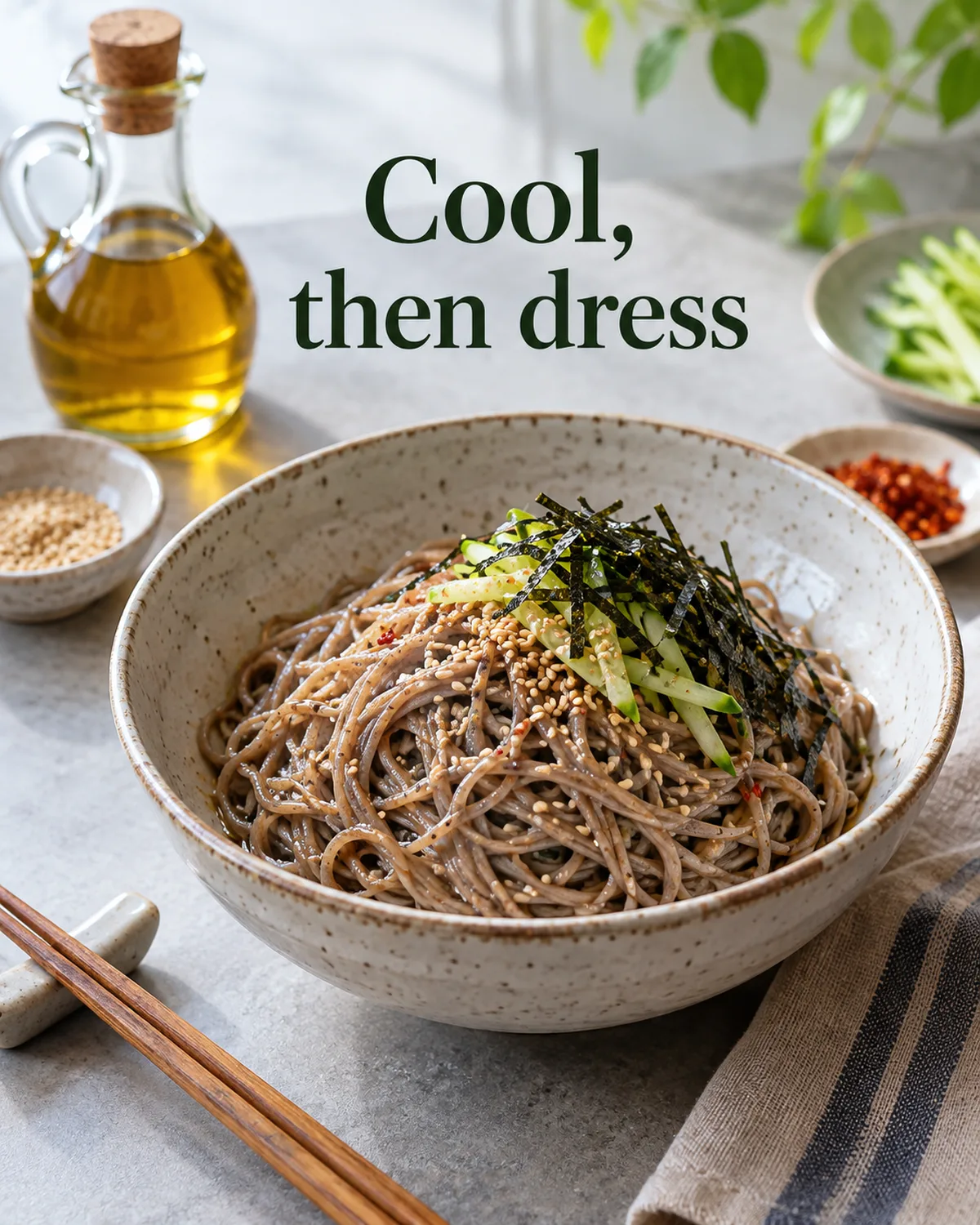
Perilla oil contributes a distinctive nutty aroma. The other sauces bring their own salt, sweetness, heat and richness. Their roles overlap, so adding several of them does not automatically make the dish balanced. The noodles must carry the dressing without disappearing beneath it.
Jung Kook returned to the mixture on July 31, 2023. That post adds soy sauce, pepper and crushed roasted sesame to a revised ingredient list and identifies a 200-gram, two-person basis. It also explains his concern that people were making the dish too salty. The revision matters: the April and July versions should not be blended into one supposedly unchanged recipe.[3]
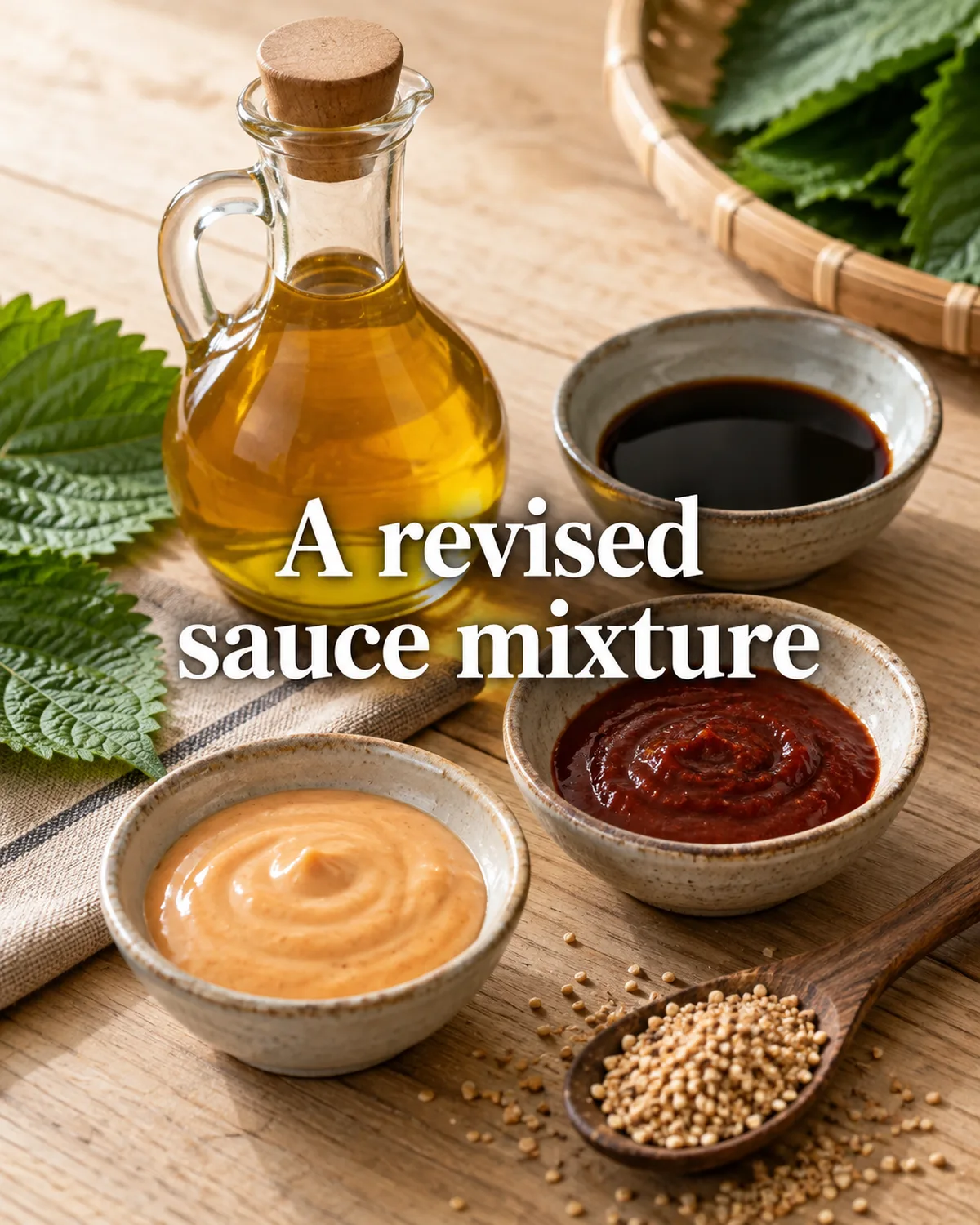
When comparing these noodles with Bulgeuri, look for what happens after cooking. One method keeps heating to concentrate the liquid. The other cools the noodles and coats them with a prepared mixture. You can understand that contrast without turning either dish into an all-time favorite claim.
Choose the original recipe or make a clearly named adaptation
If recreating a specific post, keep its date and link with your notes. If changing the noodle type, leaving out egg or choosing another sauce, call the result your adaptation. That makes the bowl easier to discuss: a difference in texture might come from your ingredients rather than from the original method.
Check the actual packets available where you live. A familiar product name does not guarantee identical ingredients across markets. Noodles and sauces can contain wheat, soy, seafood ingredients, egg, dairy or sesame, depending on the product. Read every component rather than treating the combined dish as a new ingredient label.
The uncooked yolk in a dressing needs a separate decision. USDA FSIS guidance advises against uncooked ordinary eggs and identifies in-shell pasteurized eggs as suitable for use without cooking. Ordinary raw yolk does not become safe merely because it is mixed with sauce. If you omit it, expect the texture to change; that is an adaptation.[9]
A sensible first comparison is modest: prepare one version, notice its coating and aroma, and adjust a later batch deliberately. Changing the water, oil, sauce and noodle type all at once makes it hard to know which choice improved the result.
Kimchi fried rice gives the same pantry another job
The official The BTS Recipe in KOREAN catalog includes a kimchi-bokkeumbap program page. That confirms a dish featured in the series. The catalog title alone is not a full ingredient list or proof that every member prefers that exact serving.[4]
The food itself is a useful contrast to the noodle bowls. Kimchi fried rice brings cooked rice into contact with chopped kimchi and pan heat. The rice takes on seasoning, while the cabbage supplies small pieces to bite through. A spoonful can contain soft grains and firmer cabbage instead of a continuous strand of noodle.
Kimchi can also be served beside rice as banchan. Putting it into the pan changes its role: the seasoning is distributed through the rice rather than selected separately with each bite. If you are choosing a meal, decide whether you want that integrated flavor or the freedom of a rice-and-side-dish table.

Egg, meat, cheese and other additions depend on the recipe or restaurant. A photograph of one attractive bowl does not tell you which extras are included in the menu item you are ordering. Ask about the actual preparation, particularly if a topping or ingredient matters to you.
Gimbap, tteokguk and suyuk invite different meals
Official program pages also identify gimbap, tteokguk and suyuk. They are distinct food formats, rather than interchangeable items on a celebrity checklist. Their catalog presence is the connection used here; the following descriptions explain the dishes themselves.[5][7][6]
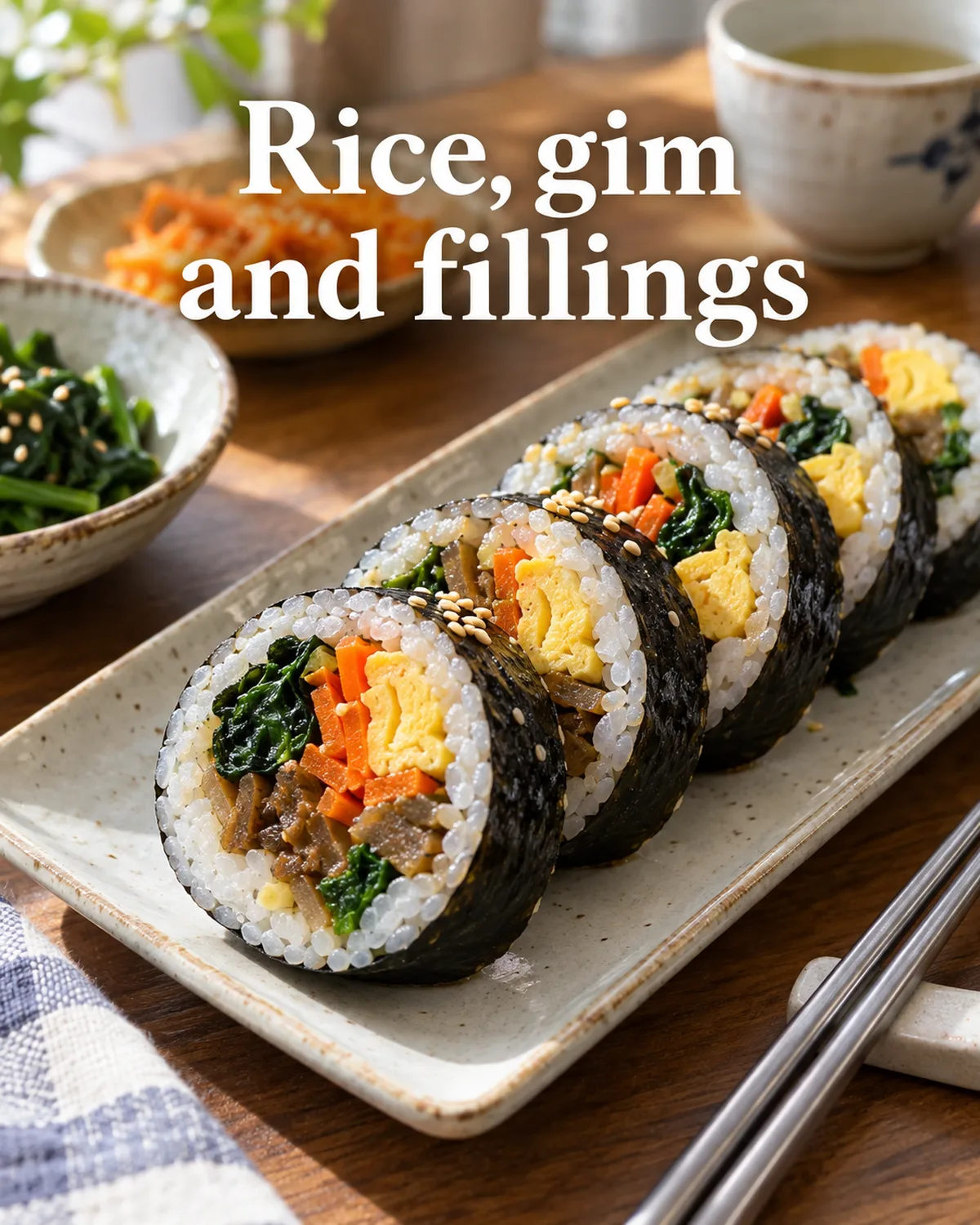
Gimbap wraps rice and fillings inside gim, then is sliced into rounds. Its appeal lies in the combination inside each slice: rice, seaweed and the textures of the chosen fillings arrive together. Check the filling list; a vegetable-looking roll may still contain egg or a meat-based component. It is a practical choice when you want portions that are easy to divide.
Tteokguk is a rice-cake soup. The sliced rice cakes offer a chewy bite in broth, making the meal quite different from dry dressed noodles or a rice roll. Broth and garnishes vary, so check them rather than assuming that a white-looking soup is vegetarian. Choose it when a warm spoon-and-bowl meal sounds more appealing.

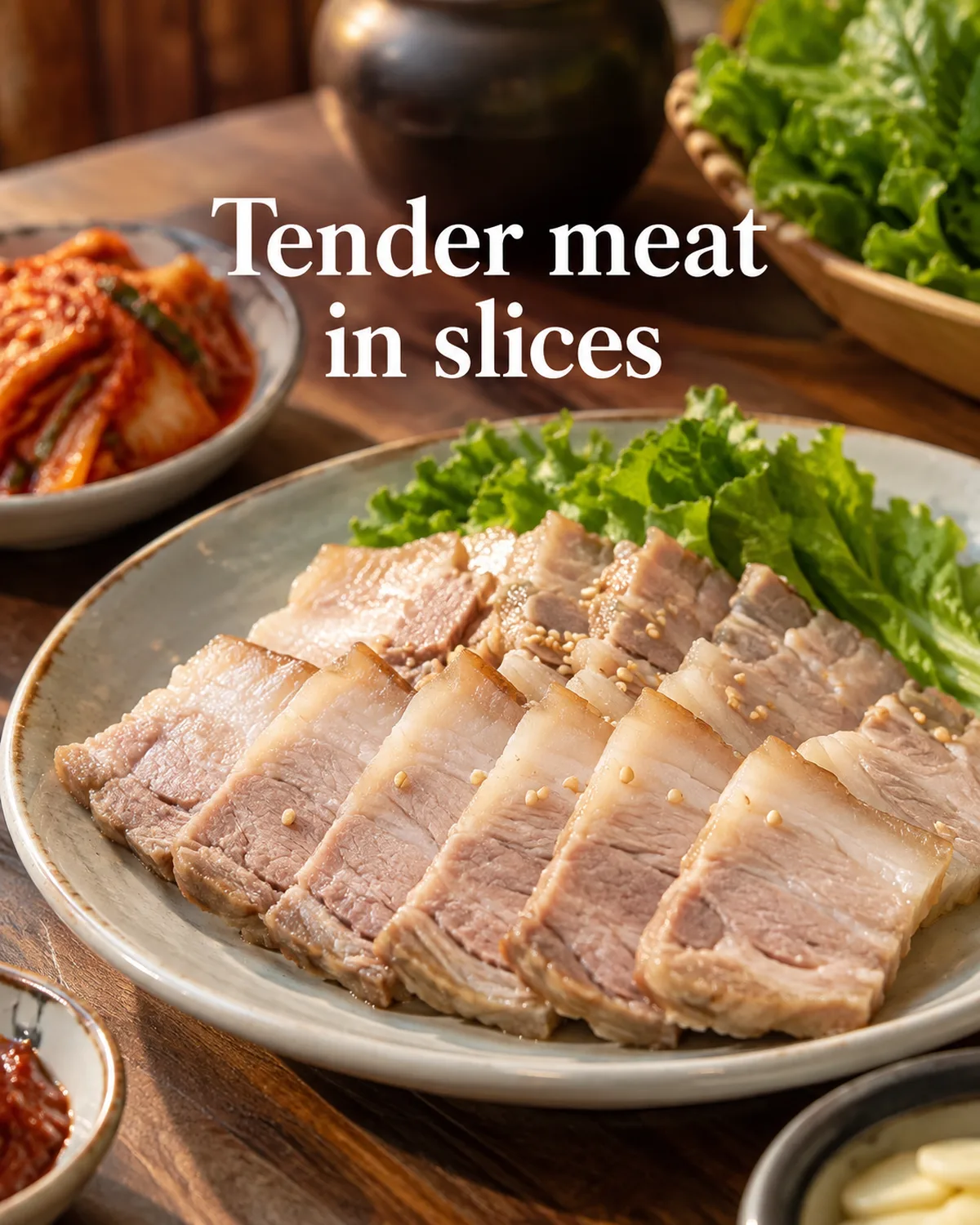
Suyuk is boiled meat served in slices. It can be eaten with accompaniments, but the cut, serving size and sides belong to the particular menu. Its tender sliced format differs from cooking raw meat at a tabletop grill. Ask how much a serving contains before deciding whether it suits one diner or a group.
Dalgona offers a snack instead of another full meal
The official recipe series has a dalgona program page too. Its presence connects the catalog to a sugar candy whose interest includes making, stamping and handling, not simply another bowl to finish.[8]
A cooled dalgona disc breaks with a thin, porous crunch. A stamped outline can turn it into a shape-removal challenge, but playing is optional. For a snack after a meal, a small edge piece lets you notice the caramel-like sweetness without attempting the whole game.

This is where food choice becomes more useful than collecting every reference. A noodle bowl, gimbap, soup, sliced meat and a sweet do not need to be eaten in one outing. Choose a meal that fits your hunger, then a snack if you still want one. The catalog can introduce variety without prescribing a full day’s intake.
Plan around the dish and the actual menu
Start with the kind of eating you want: a hot noodle bowl, cooled dressed noodles, a rice dish, a warm soup or shared meat. Then look for a place serving that preparation. The dish remains useful even if a restaurant mentioned in an old food clip has closed or changed its menu.
Before a planned visit, check the restaurant’s current menu, opening information and ordering conditions. A past artist visit documents a past visit; it does not establish today’s hours or a continuing personal recommendation. The same applies to a limited food promotion whose dates have ended.
When the food arrives, compare something concrete. Does the noodle sauce cling or pool? Can you distinguish kimchi pieces from the rice? Does a gimbap filling add crunch? Those observations make the meal your own, while the original recipe or official program remains the starting point.
Sources and reading
- Jung Kook on Weverse — Bulgeuri recipe, March 16, 2023
- Jung Kook on Weverse — Perilla-oil makguksu, April 25, 2023
- Jung Kook on Weverse — Revised perilla-oil sauce, July 31, 2023
- The BTS Recipe in KOREAN — Kimchi-bokkeumbap program page
- The BTS Recipe in KOREAN — Gimbap program page
- The BTS Recipe in KOREAN — Suyuk program page
- The BTS Recipe in KOREAN — Tteokguk program page
- The BTS Recipe in KOREAN — Dalgona program page
- USDA FSIS — Shell Eggs from Farm to Table