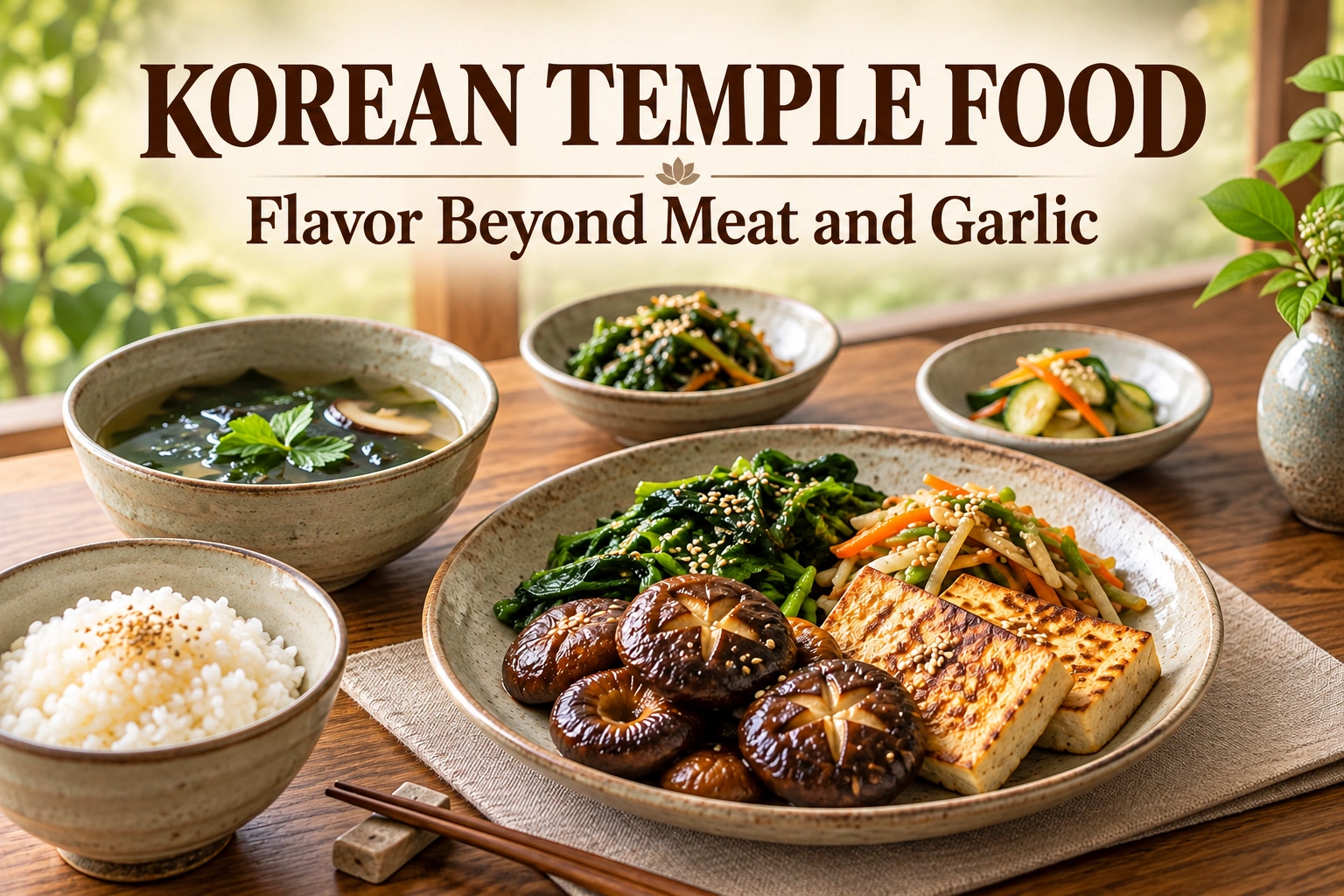
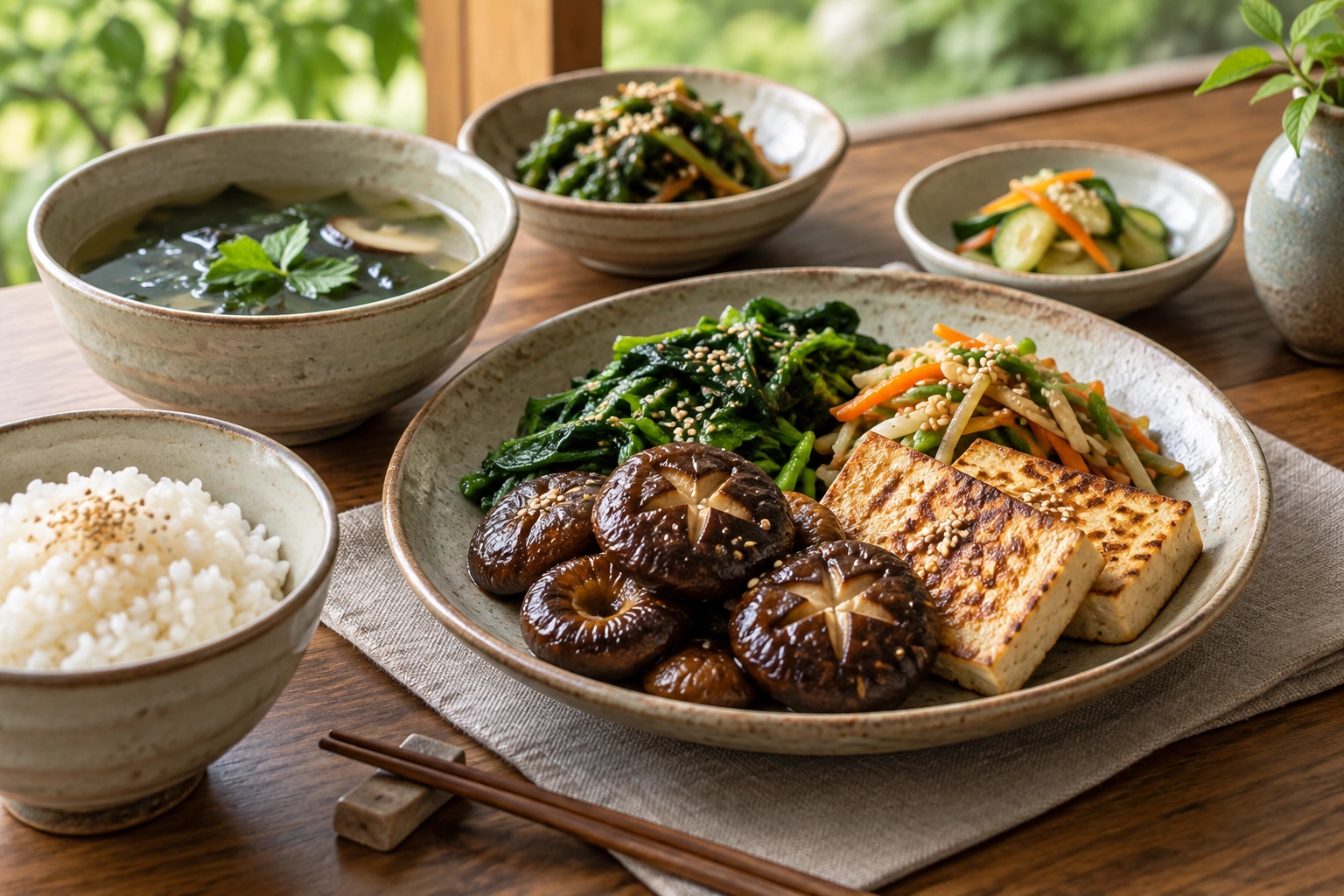
At a Yale dinner in 2025, Buddhist nun Jeong Kwan explained why braised shiitake mushrooms mattered to her. Years after she entered the monastery, her father visited and worried about her life without meat or fish. She recalled preparing mushrooms for him; enjoying the dish helped ease his concerns about her decision to remain a nun. Yale’s report of her account places a particular food inside a difficult family conversation.
Korean temple cooks build flavor through ingredients and techniques of their own: fermented seasonings, mushrooms, sea vegetables, seeds, drying, braising and careful use of plants. Understanding what they add is more informative than counting what they leave out.
Why Korean temple food avoids meat and pungent vegetables
The Cultural Corps of Korean Buddhism explains the avoidance of meat through compassion for living beings, and the avoidance of oshinchae, five pungent vegetables including garlic, through concern for spiritual practice and attachment to strong flavors. Its temple-food guide presents eating as part of monastic life, rather than a separate restaurant-style pursuit of excitement.
That purpose matters when approaching the food. Removing garlic from a favorite recipe may leave a noticeable gap. A cuisine developed with another set of assumptions can begin somewhere else: with the character of a vegetable, the seasoning available and the meal’s place in the day.
It also prevents a common misunderstanding about the word “pungent.” The category is a religious food classification, not a ban on every pronounced flavor. It does not tell you that a fermented seasoning must be bland or that every dish must taste like unseasoned steamed vegetables.
Mushroom, kelp and perilla powders give cooks different tools
The same official guide identifies mushroom powder, kelp powder, perilla seed powder and raw bean powder among seasonings used in soups, kimchi and vegetable preparations. The listed ingredients make the flavor-building process more concrete than a general claim about “natural food.”
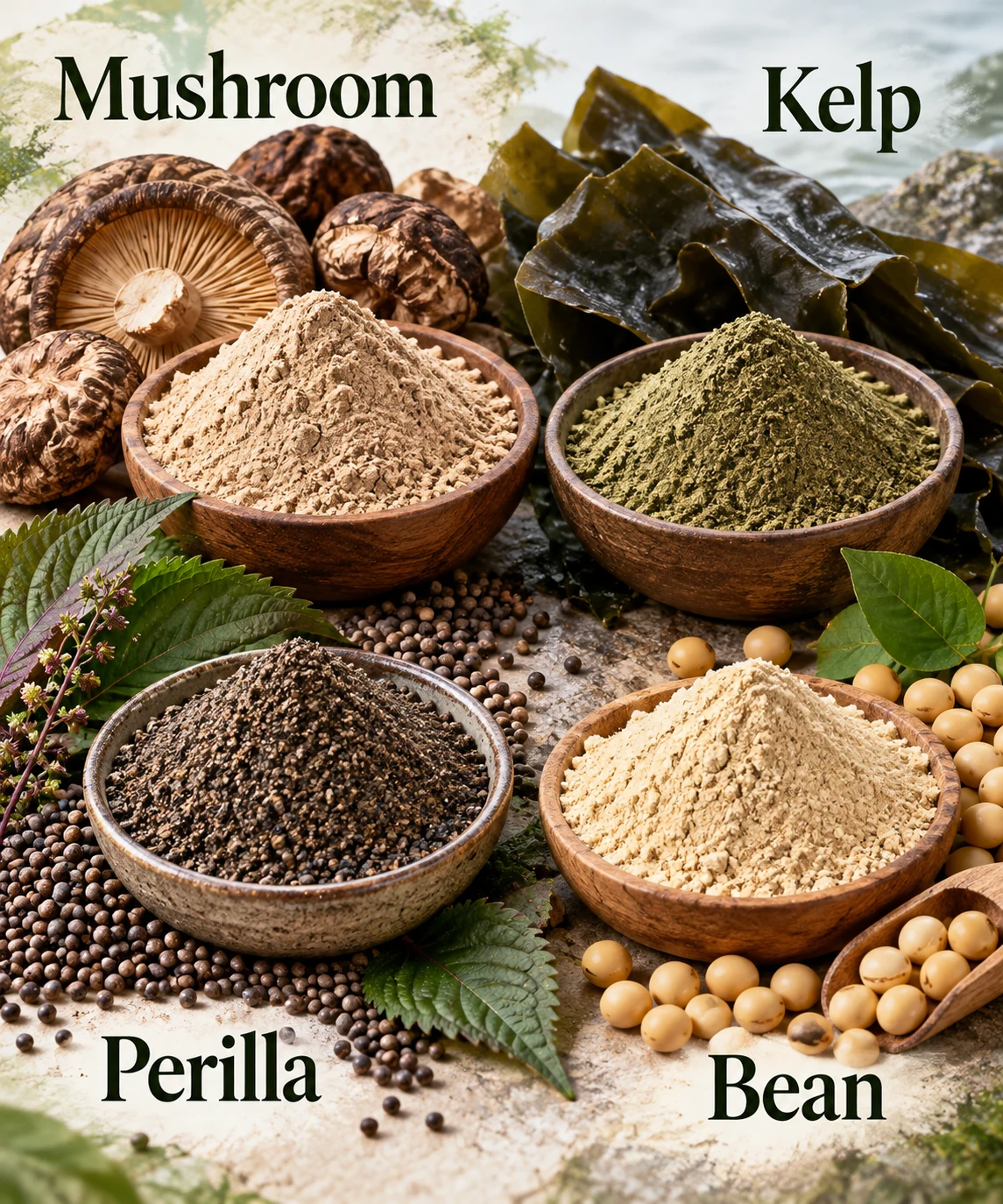
These ingredients are useful to think about as different tools, not interchangeable replacements for a spoonful of garlic. A powder can become part of a broth or coat a vegetable. Its contribution depends on the ingredient, amount and preparation.
For a diner, that encourages a specific tasting question. Does the soup have a seed-based character, a mushroom note or a sea-vegetable flavor? Asking the cook which ingredient creates that impression teaches more than praising the meal simply for lacking meat.
Soy sauce provides a base; a radish provides several possibilities
In a 2022 interview with CNA Luxury, Jeong Kwan described soy sauce as fundamental to her cooking. She also explained how she uses different parts of a radish: young leaves in a dressed preparation, the upper green portion raw, the firmer white middle braised and the bottom portion in broth or soup. Her interview connects seasoning with close attention to the plant itself.

The radish example is especially revealing. The starting ingredient is one plant, but the cook does not require every part to undergo the same treatment. Differences in the ingredient become reasons for different dishes.
This is another way to understand satisfying variety without meat. Variety need not mean purchasing a new centerpiece for each preparation. It can come from recognizing which part is suited to a particular role and changing how it is cooked.
Soy sauce, meanwhile, should be understood through its role in the dish. Its importance in Jeong Kwan’s cooking does not mean every preparation needs to taste predominantly of sauce. A foundation can support the ingredient rather than replace its character.
Drying and frying can create crispness, too
Temple food has room for changing texture as well as building broth. Bugak offers an example: the Academy of Korean Studies describes a preparation in which ingredients are coated with glutinous-rice paste, dried and later fried. The entry includes seaweed and several plant ingredients, while also documenting a distinct potato preparation at Songgwangsa: thin slices briefly treated in salt water, sun-dried and fried before eating. The expert entry shows why one generic “vegetable chip” description is insufficient.

The sequence is important to the eating experience. A vegetable can be prepared for later use, then transformed again close to serving. Drying and frying belong to different moments, so the crisp bite can contain work carried out well before the meal.
The documented Songgwangsa example also cautions against forcing every dish into the same procedure. The potato preparation is described differently from the rice-paste-coated category. Asking how a particular crisp was made can reveal that difference.
For a diner, this creates a contrast worth noticing beside a softer dish. A crisp accompaniment changes the rhythm of the meal without requiring a meat substitute. Texture becomes part of the composition, alongside seasoning and the choice of vegetables.
A temple’s ingredients can meet a new place
At the Yale meal, Jeong Kwan’s bibimbap brought together dried ingredients carried from the temple with locally sourced oyster mushrooms, grilled tofu and spinach. Yale’s account describes the spinach seasoning as sesame oil, sesame powder and an eight-year-fermented soy sauce. The event’s menu description gives a concrete example of a meal assembled across places.
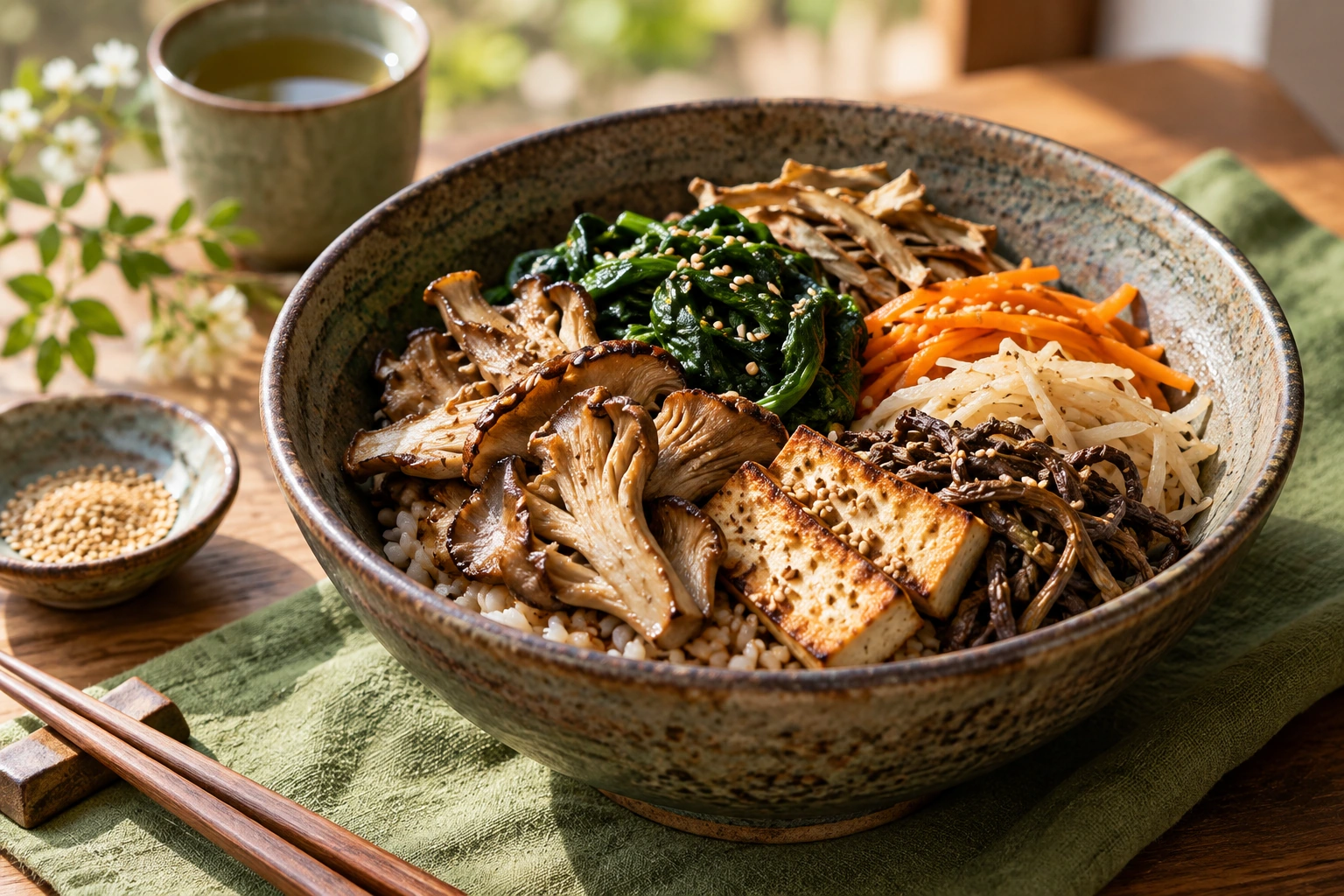
That combination is useful for readers living far from a Korean mountain temple. The example does not require every ingredient to come from the same landscape. It shows a practitioner choosing how preserved ingredients and available local produce can participate in one meal.
Is all Korean temple food vegan—and how should you approach a meal?
Jeong Kwan’s cuisine is described as vegan in the accounts above. The Cultural Corps’ general characteristics page, however, explicitly makes an exception for dairy products in its description of animal-product avoidance. The official wording means that “temple food” and “vegan” should not be treated as automatically identical labels. If that distinction matters to your meal, ask about the actual menu.

The setting matters too. Barugongyang is a formal monastic meal, which the Cultural Corps describes through bowls for rice, soup, side dishes and water, taking an appropriate amount and eating in harmony with others. Its explanation of the practice places attention to portions and gratitude alongside the food.
A restaurant meal, cooking demonstration and formal monastic meal offer different experiences. Learn which one you are attending and follow the host’s instructions. You do not need to arrive already knowing every gesture to approach the experience thoughtfully.
The mushrooms in Jeong Kwan’s account show what that attention can achieve on a human level. They were more than proof that a meatless dish could taste good: they helped her explain a chosen life to her father. Looking closely at the seasoning, plant, technique and setting allows a newcomer to understand the food on similarly specific terms.