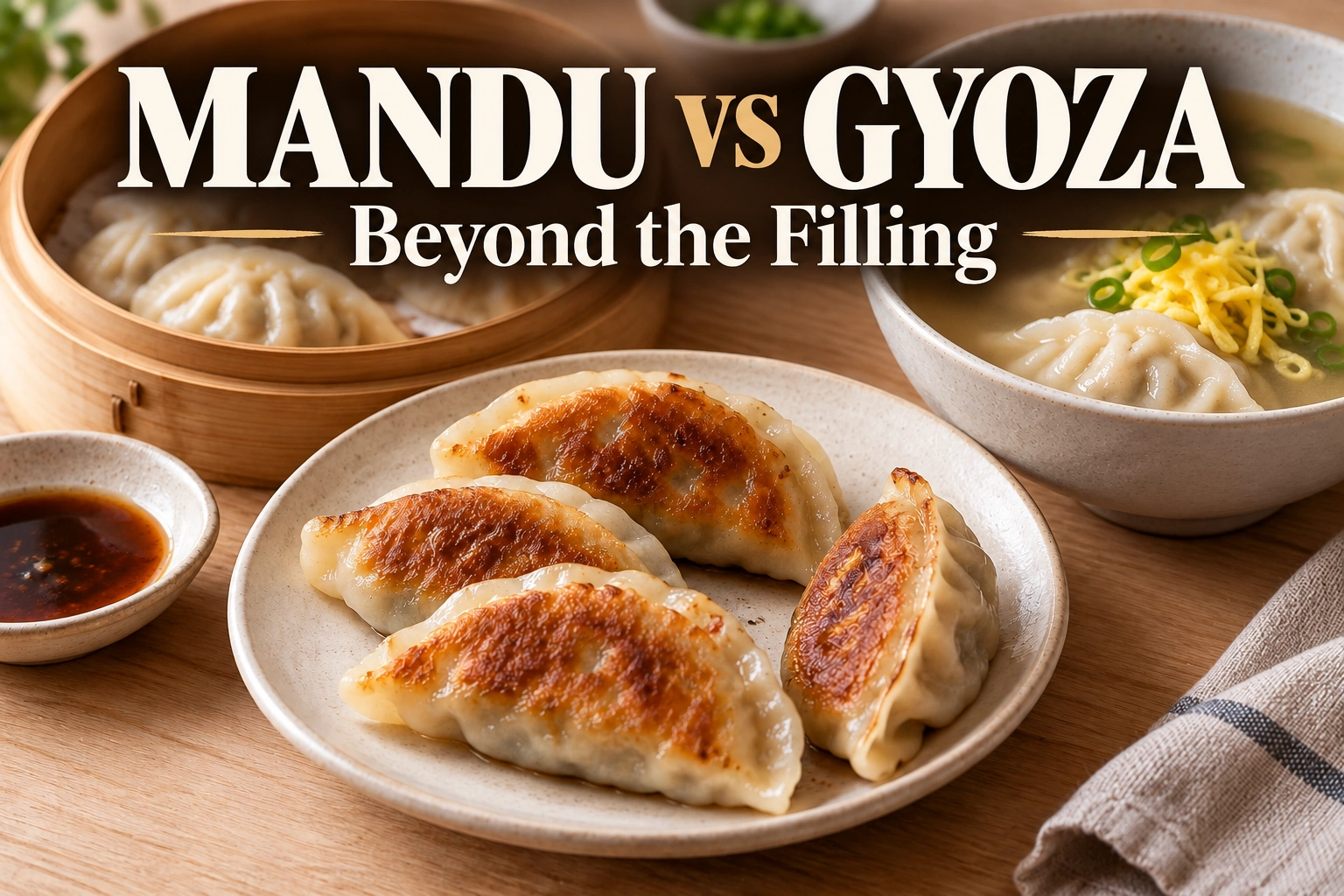
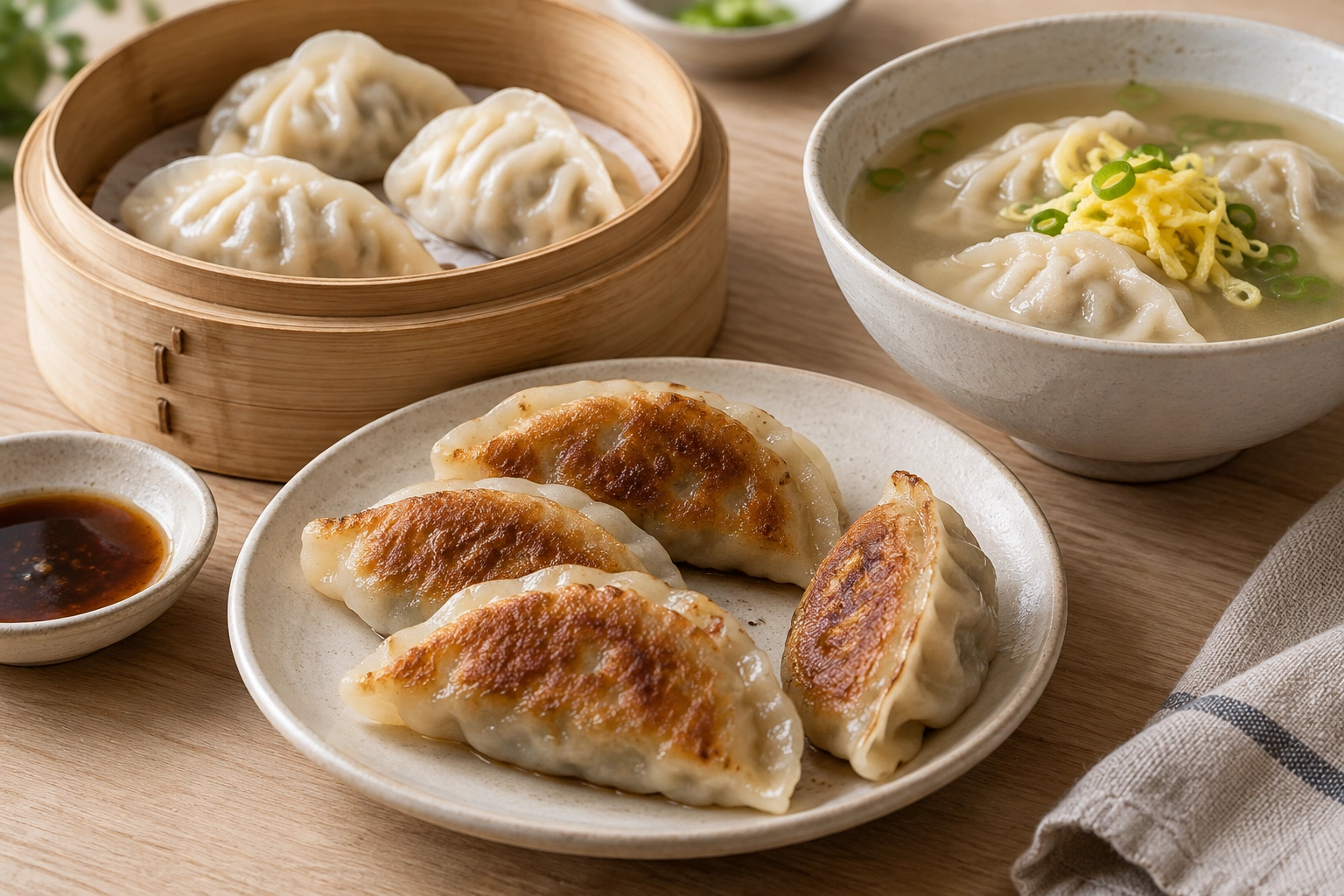
A dumpling can arrive on a plate with a browned underside, sit upright in a steamer, or disappear beneath the surface of a bowl of broth. On a Korean menu, all three may belong to the same family: mandu (만두). If you search for “mandu vs gyoza,” the usual answer is a list of national differences—thicker skin, more vegetables, a larger dumpling. That list becomes much less useful when two kitchens make very different versions of the same dish.
The more revealing question is what happens to the dumpling between being folded and being eaten. Heat changes the wrapper. Broth changes the meal. A filling that works beautifully in soup may be experienced differently against a crisp, fried surface. Korea’s mandu story is a history of those possibilities, rather than a fixed specification for one national dumpling.
An old name does not identify one unchanging dumpling
The Academy of Korean Studies’ mandu entry points to a record in the history of Goryeo concerning a person punished for stealing dumplings from a royal kitchen. The same entry cautions that the particular form described by that record is uncertain. It establishes that dumplings were known, not the date someone invented today’s thin-skinned mandu. That distinction matters when a familiar supermarket shape is projected back across centuries. Mandu—Encyclopedia of Korean Culture.
Names create another complication. An older word in a song or cookbook cannot always be translated directly into the dumpling on your plate. Dough may have been fermented; wrappers and fillings could differ. The surviving category is broader than a single photograph.
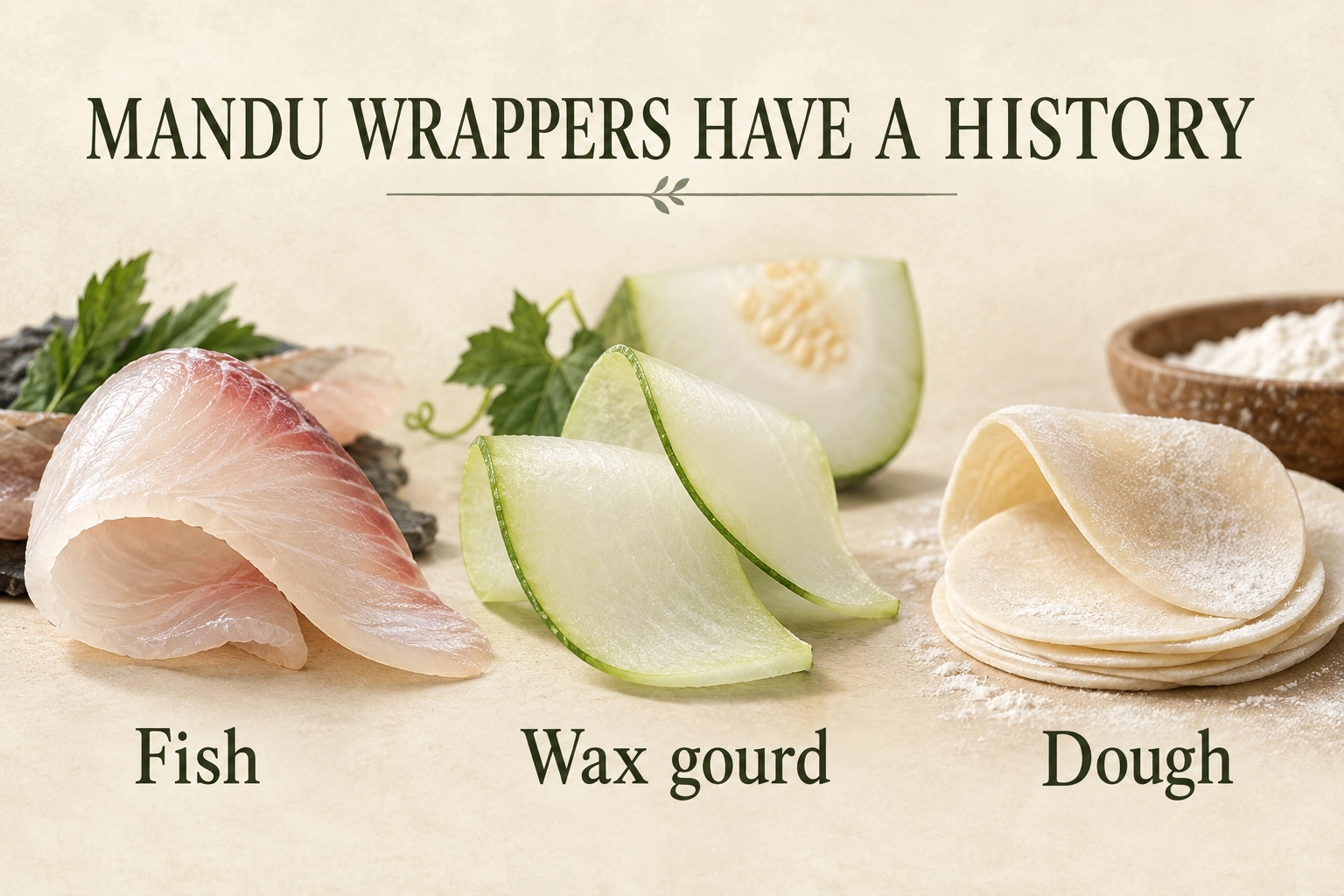
The Korea Foundation describes historical variations that stretch that category further: eo-mandu could use fish flesh as its outer covering, while donga-mandu used sliced wax gourd. These examples make the wrapper itself part of the story. Mandu was not simply an empty flour pocket waiting for pork. It was a way to enclose ingredients, and cooks could change what did the enclosing. Korea Foundation, “Shared Tastes: Mandu and Its Cousins”.
What changes when mandu meets a pan?
Pan-fried mandu, often called gun-mandu, gives the wrapper a second job. It still holds the filling together, but its browned surface also supplies a crisp contrast. A bite now moves between two textures: the exterior and what is enclosed.
Steamed mandu does not ask you to make that same contrast. Without a fried surface dominating the first bite, you can pay more attention to the wrapper’s chew and the filling’s structure. Neither method tells you how much meat, tofu, or vegetable must be inside. They tell you how that mixture will reach you.
This is why comparing dumplings by country alone can mislead. A steamed Korean dumpling and a pan-fried Korean dumpling may differ more obviously in the mouth than two pan-fried dumplings from different countries. Start the comparison with cooking method; then consider the wrapper and filling.
At the table, take a bite before adding much dipping sauce. A vinegar-and-soy dip can bring acidity and salt, but it can also overwhelm a lightly seasoned filling. You are deciding whether you want a sharp contrast or to keep the dumpling’s own flavor in front. There is no reason every dumpling on the plate has to receive the same amount.
In manduguk, the broth becomes part of the dumpling
Mandu-guk, or manduguk, is dumpling soup. Its importance is not that a cook has merely put a side dish into a bowl. The liquid changes the wrapper’s eating texture, and the dumplings help determine how substantial the bowl feels.
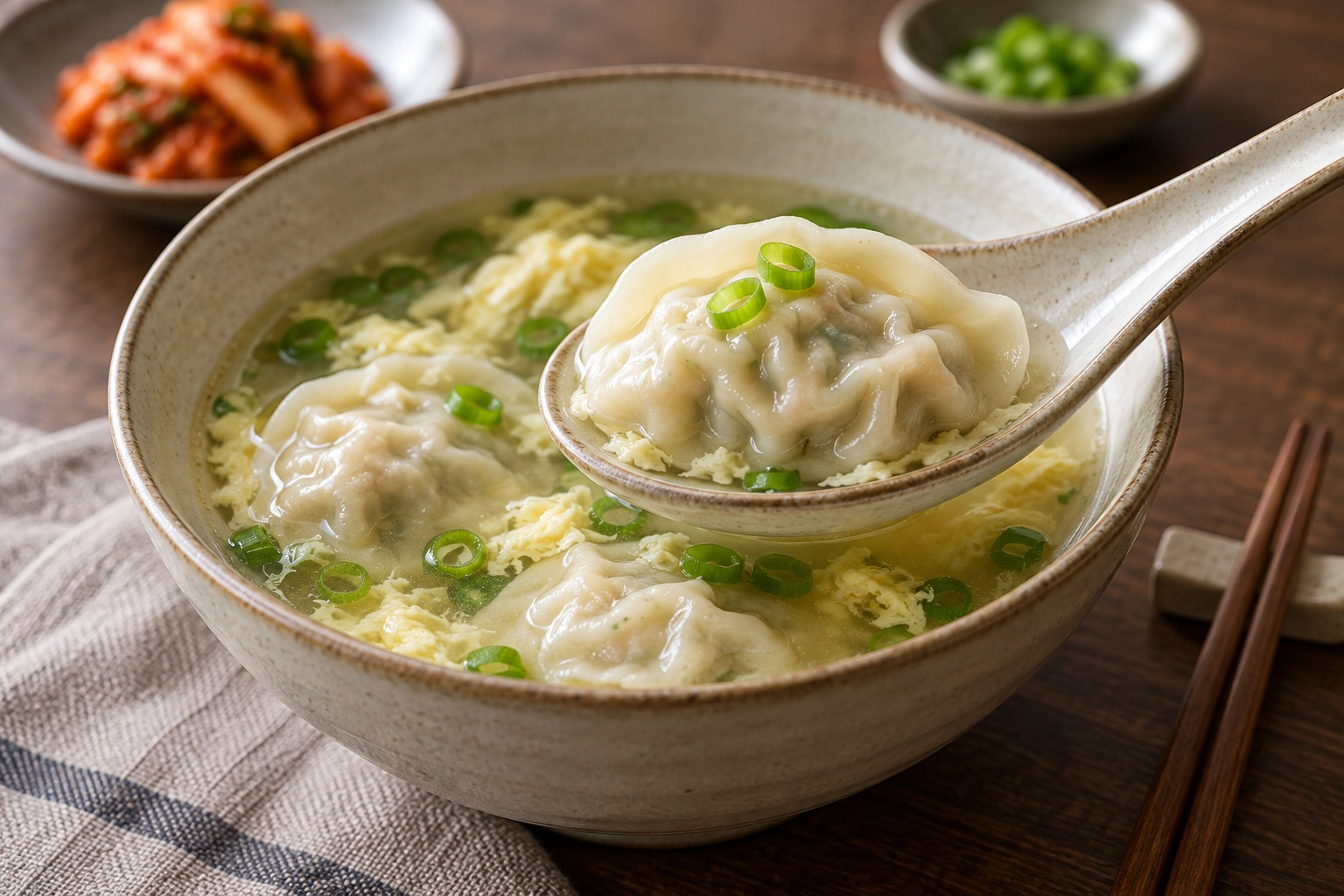
Maangchi’s published manduguk uses dumplings with broth and finishes the soup with egg and other additions. Her discussion places it within New Year eating while distinguishing dumpling soup from versions containing rice cakes. This is a documented home-cooking example, not a rule for every Korean household. Maangchi’s manduguk.
For the reader choosing lunch, the soup raises questions a plate does not. What is the stock made from? Are rice cakes included? Is rice served separately? Does the menu describe one bowl or a portion to share?
A meatless filling does not answer the stock question. A clear broth can contain animal ingredients even when no meat is visible. Ask about the whole bowl if that affects whether you can eat it.
Soup also slows the experience. Rather than repeatedly dipping crisp dumplings, you move between spoonfuls of broth and bites of filling. The same family of food has become a different kind of meal.
What is inside Korean mandu?
There is no single filling that makes every mandu Korean. Pork, beef, kimchi, tofu, vegetables, seafood, and starch noodles appear in different combinations. Their presence is more informative when you ask what each contributes than when you use them as a national checklist.
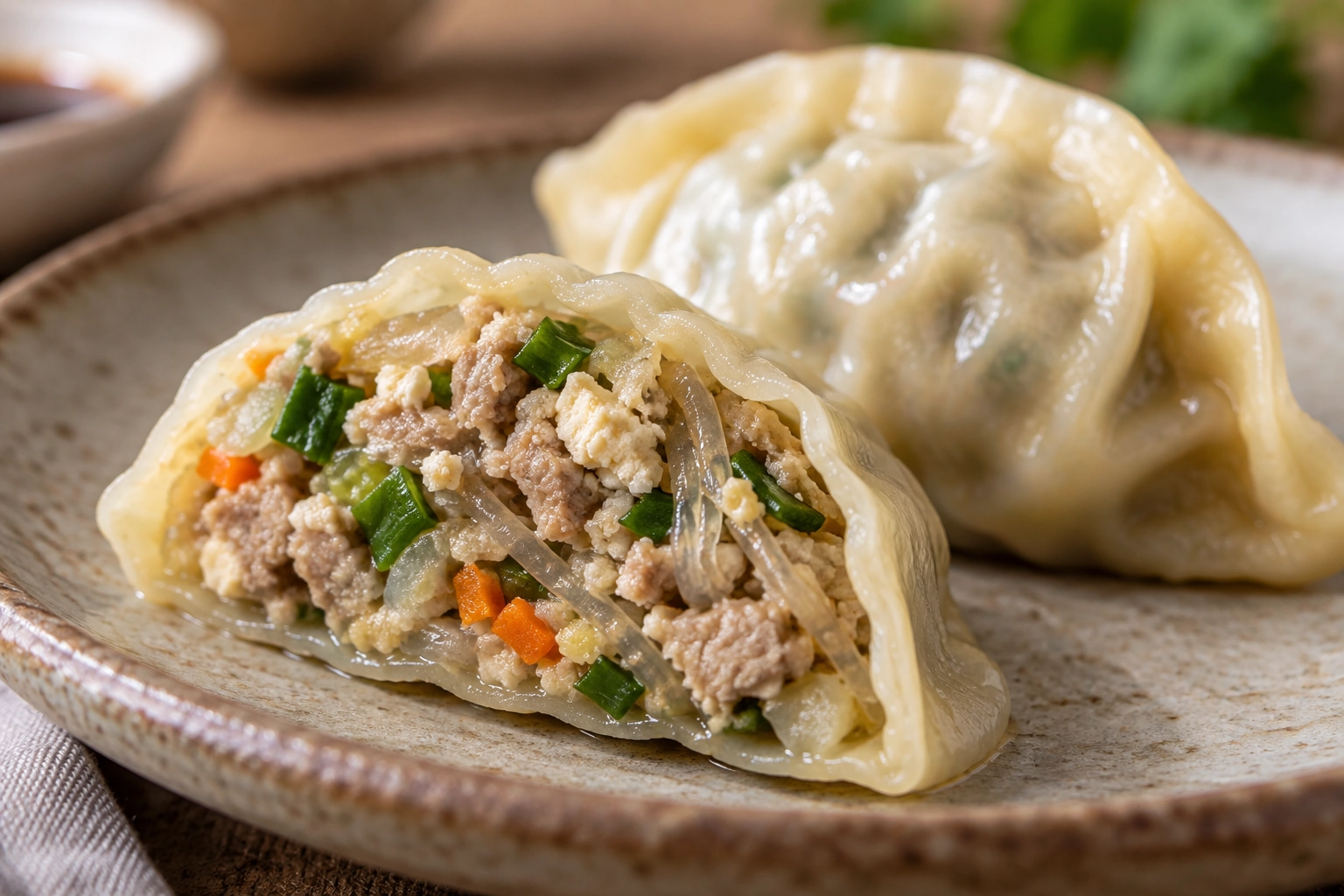
A documented example is Maangchi’s pork mandu, which combines meat with tofu, vegetables, and sweet-potato starch noodles and offers several cooking methods. It shows one cook balancing tastes and textures within a parcel. It does not establish that all mandu contain those ingredients. Maangchi’s mandu recipe.
When you cut or bite into a dumpling, notice the filling’s structure. Is it a compact mixture, or can you distinguish pieces of vegetable? Does kimchi supply acidity as well as heat? Does the filling remain juicy against the wrapper? These observations explain more about the individual dumpling than a claim that an entire country prefers one thickness of skin.
Kimchi mandu deserves the same care. “Kimchi” tells you something about the filling’s direction; it does not promise a fixed heat level or a meatless recipe. Tofu is similarly inconclusive. It can sit beside meat rather than replace it.
Mandu, gyoza, and jiaozi: compare a version, not a flag
Japanese gyoza and Chinese jiaozi are useful reference points, especially if they are the dumplings you already know. The mistake is treating each name as a rigid package of ingredients, size, and cooking method.
Japan’s tourism organization describes Utsunomiya’s pan-fried dumplings and their thin wrappers. This is a regional example you can actually compare with a plate of fried mandu. It is stronger evidence than saying all Japanese dumplings have one texture. Japan National Tourism Organization: Utsunomiya dumplings.
Beijing’s tourism material likewise records a range of dumpling fillings and restaurant styles, including vegetable, meat, and seafood examples. Chinese dumplings are not a single control sample against which everything else must be measured. Beijing tourism: dumpling examples.
A fair comparison therefore needs a named form. Compare pan-fried with pan-fried, or soup dumplings in the sense of dumplings served in broth with another broth-based meal. Look at wrapper material, filling, heat, and accompaniment. You may find differences, but you will also find overlap.

That overlap does not erase Korean food identity. Identity can live in a particular combination, regional practice, or meal context without requiring an ingredient that no other cuisine has ever used.
Choosing mandu without guessing from the name
If you want contrasting textures, a fried version is a sensible starting point. If you want to examine a soft wrapper and filling together, choose steamed mandu. If you want a bowl that includes liquid, garnishes, and possibly rice cakes, investigate manduguk.
For packaged mandu, read the specific ingredients and cooking directions. A brand name or photograph is less reliable than the label in your hand. Bibigo’s European chive-and-vegetable product, for example, lists tofu and starch noodles alongside vegetables, with wheat and soy ingredients. It also provides separate preparation instructions. That is evidence about that product—not every package sold under the mandu name. Bibigo product ingredients.
For allergies, check both ingredients and cross-contact information. Removing a visible topping cannot remove wheat from a wrapper or soy from a filling. At a restaurant, include dipping sauce and soup stock in the question.
Mandu becomes easier to understand when you stop looking for one national fingerprint. Its long history includes changing names and wrappers; its present includes different fillings and ways of cooking. The next time you order it, choose the experience first: a browned edge, a soft parcel, or a dumpling you lift from broth. The story continues in what the kitchen does to the package, and in how you decide to eat it.