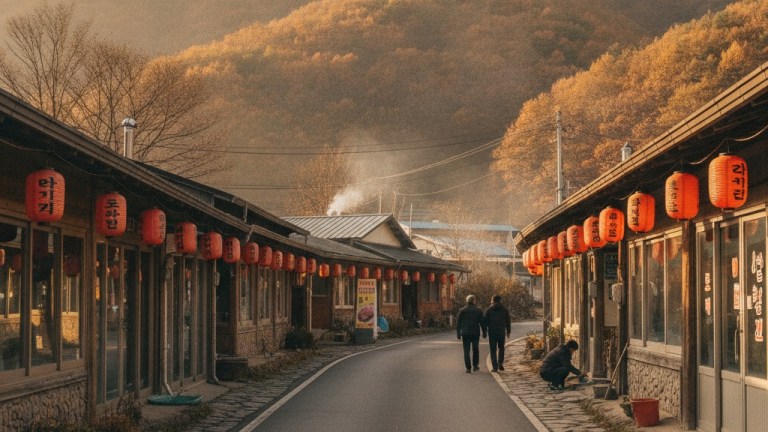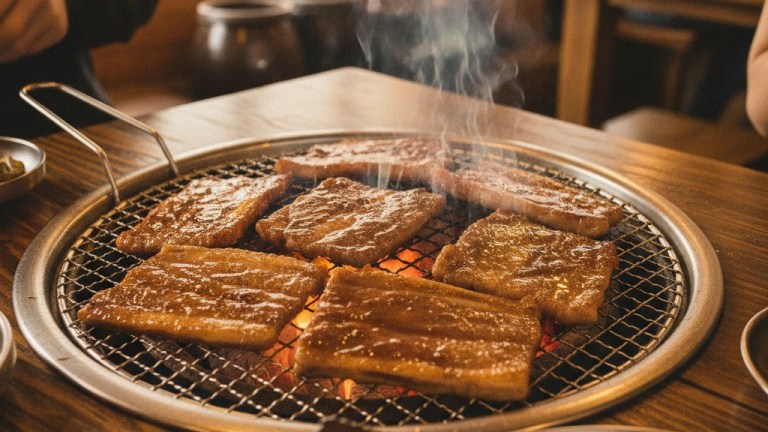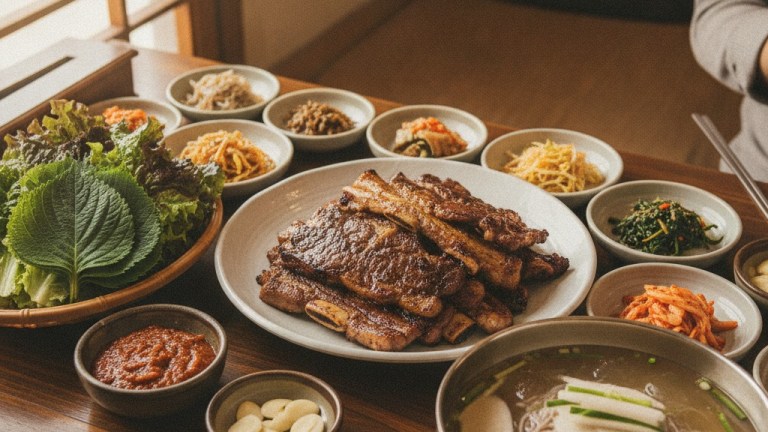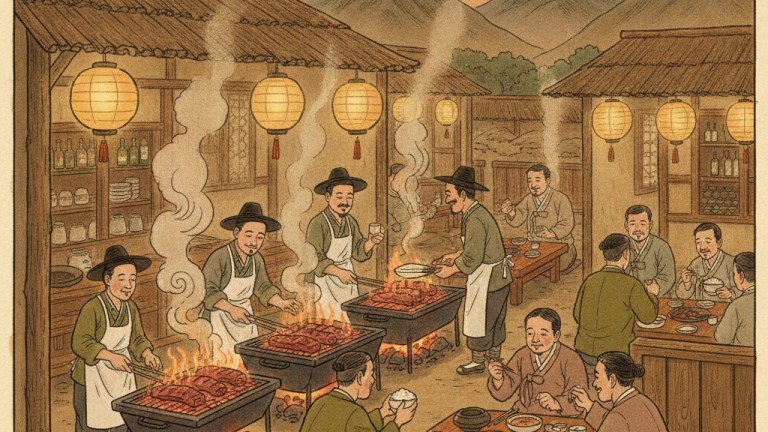
The scene every K-drama eventuallycuts to: sizzling meat on the grill, everyone leaning in. Photo: Lil’ Dee, CC BY-SA 2.0
You have seen it a hundred times without noticing. Two characters in a Korean drama finally talk things out — and they do it over a sizzling grill, tongs in hand, a slab of pork belly crisping between them. Korean BBQ (also called Korean barbecue) isn’t just food on these shows. It’s where Koreans cry, make up, celebrate, and get drunk enough to tell the truth. So why does an entire country route its most important moments through a grill?
The short answer: Koreans have been obsessed with grilled meat for well over a thousand years, and that obsession has a surprisingly royal, slightly tragic backstory. There’s even a beloved genius king in it — the one who invented the Korean alphabet — who loved meat so much it may have wrecked his health. We’ll get to him. First, the grill.
“To a foreigner it’s a barbecue. To a Korean, it’s a conversation.”
Why Korean BBQ is a whole culture, not a meal
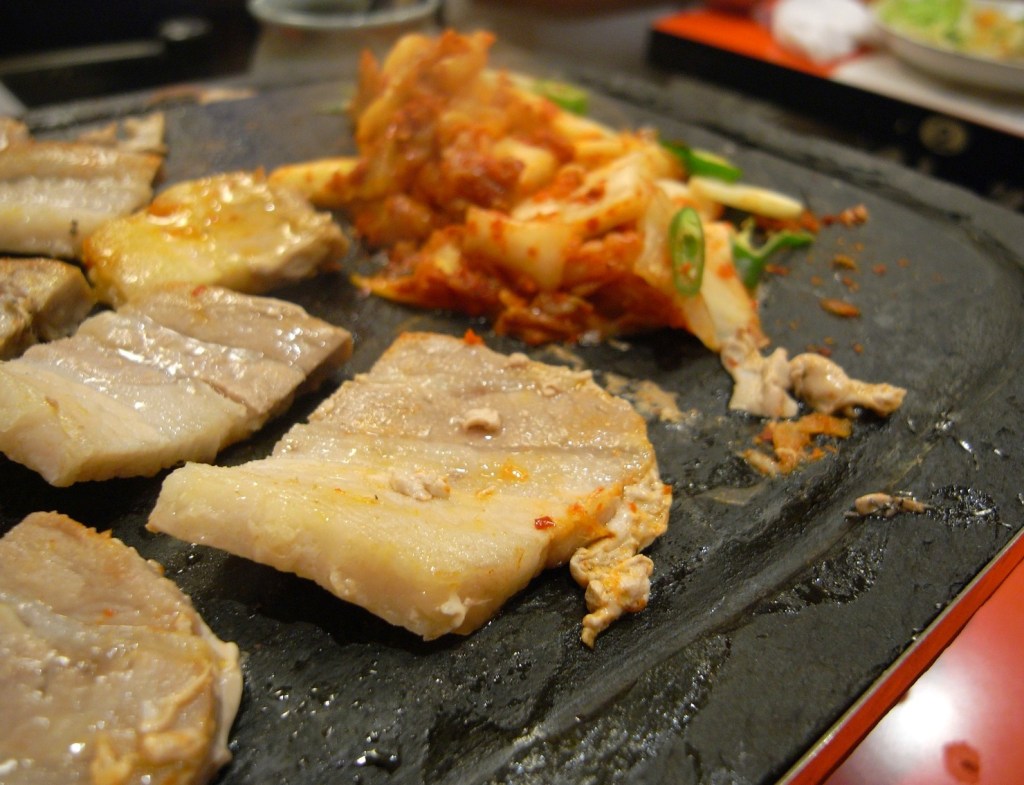
You cook it yourself, at your own table, together — that’s the whole point. Photo: moso, CC BY
If your only reference for Korean barbecue is the all-you-can-eat place near your apartment, you’re missing what makes it tick. The first time I sat at an actual table-grill restaurant instead of a buffet line, the difference was obvious within a minute. In Korea, the grill sits in the middle of the table, and you cook your own meat — flipping, snipping with scissors, arguing over who’s letting it burn. It is loud, hands-on, and social by design. Nobody just eats. You wrap a bite of pork in a lettuce leaf with garlic and ssamjang (a thick, savory fermented soybean-and-chili paste), hand the next piece to the person across from you, and pour each other’s soju. That’s why K-dramas keep returning to it: a barbecue table is the one place Korean characters can be honest.
This is also why Korean BBQ exploded worldwide. It travels perfectly — the theater of the tabletop grill, the small side dishes called banchan (free and endlessly refillable), the mukbang-friendly sizzle. But the reason it means so much inside Korea goes back way, way before the first Gangnam grill house.
A meat obsession 2,000 years in the making
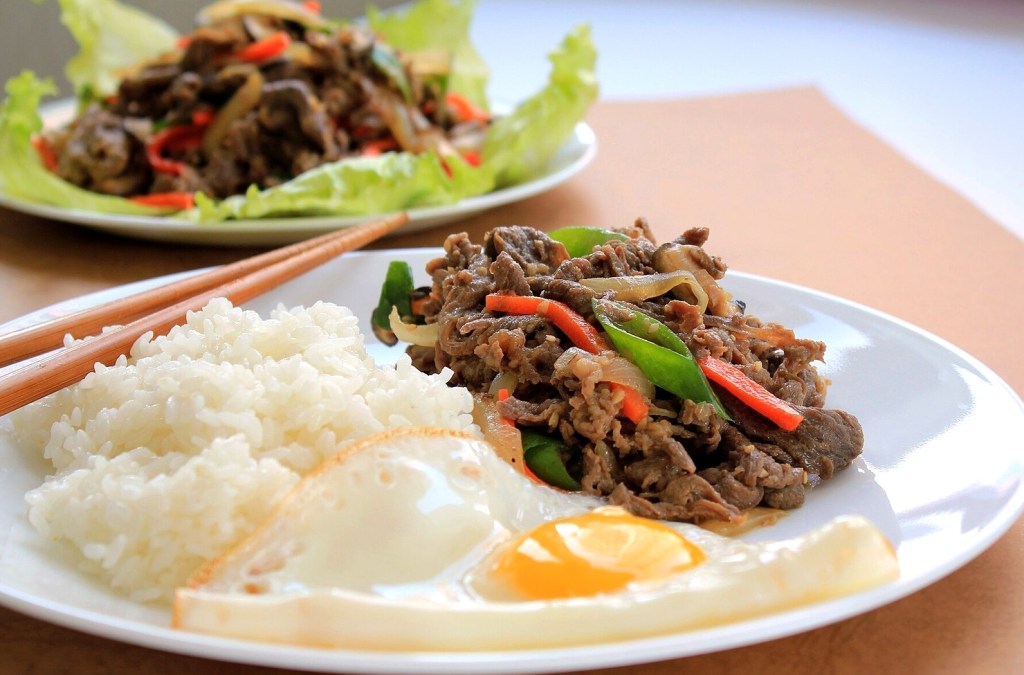
Bulgogi (불고기) literally means “fire meat” — the polished descendant of a 2,000-year-old skewer. Photo: ayustety, CC BY-SA 2.0
Koreans were grilling meat back in the Goguryeo era, two thousand years ago, on skewers over open flame — a dish the records call maekjeok. That’s the ancient ancestor of bulgogi (불고기), which literally means “fire meat.” So far, so predictable. Then came the plot twist.
When Buddhism became the dominant faith through the Goryeo dynasty, killing animals fell out of favor, and meat grew scarce on many Korean tables for a long stretch. Here’s the part nobody mentions: that shift is a big reason Korea developed its incredible universe of vegetable side dishes — the seasoned greens, pickles, and small plates you now see at every meal. A vegetable-rich, temple-influenced food culture helped shape the banchan tradition that still defines the Korean table.
Then, in the 13th century, Mongol influence helped revive and popularize grilled meat, especially beef. By the Joseon dynasty, grilled beef had been refined into neobiani — thin, marinated slices grilled for kings and aristocrats. Ordinary people rarely got it; beef was a luxury for the powerful. And that’s where our king comes in.
The genius king who couldn’t eat without meat
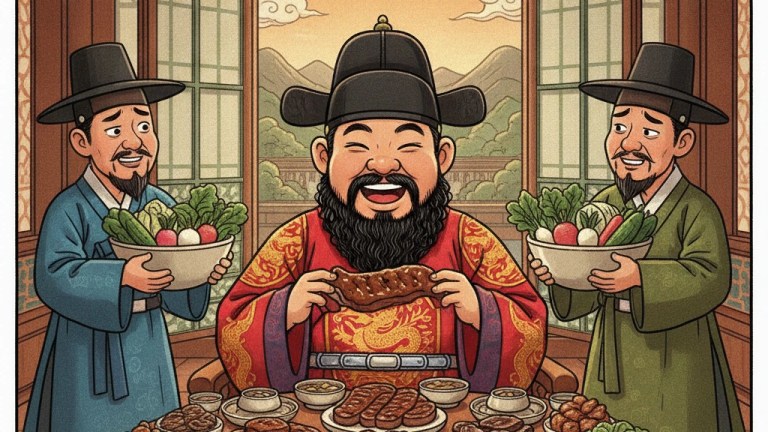
King Sejong and his beloved meat table — even his ministers gave up (playful illustration).
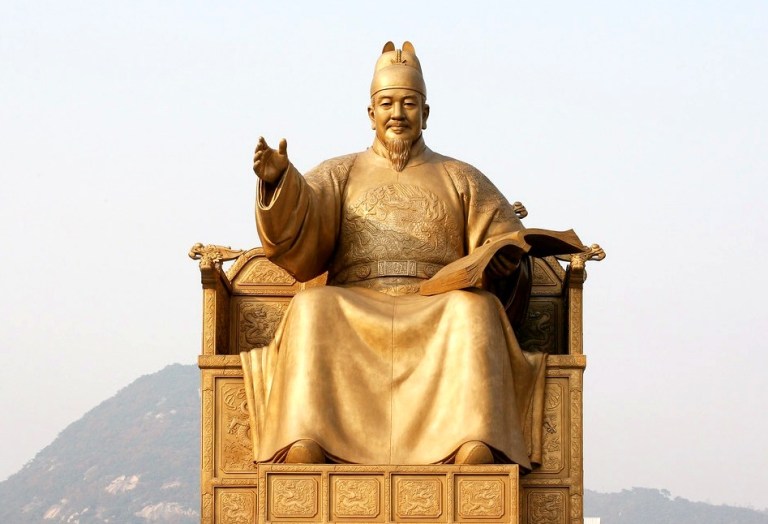
King Sejong the Great atGwanghwamun — inventor of Hangul, and a legendary carnivore. Photo: KOREA.NET, CC BY-SA
Ask anyone in Korea about King Sejong the Great and they’ll tell you the same thing: he created Hangul, the elegant alphabet Koreans still use today, and he’s on the 10,000-won bill. That’s the part everyone knows. Here’s the part they don’t.
According to the Annals of the Joseon Dynasty — the meticulous royal records — Sejong was a committed carnivore. He reportedly refused to eat a meal if there was no meat on the table. He is said to have been so devoted to it that his father, the previous king, worried about his health and eating habits. There’s even a telling detail: the one meat Sejong wouldn’t touch was lamb, because Joseon didn’t raise sheep and it had to be imported — and he refused to spend the people’s money importing meat just for himself.
But the meat may have come at a cost. The Annals describe the king, later in life, suffering from a stack of ailments that historians have suggested may be consistent with conditions such as obesity, diabetes, high blood pressure, and joint and eye problems — the kind of “rich man’s diseases” you might expect from a meat-heavy diet and little exercise. The man who gave Koreans their alphabet also, quietly, gave them one of history’s most relatable stories: a brilliant person who just really, really loved eating meat. Koreans have never entirely gotten over it.
The main types of Korean BBQ meat, explained

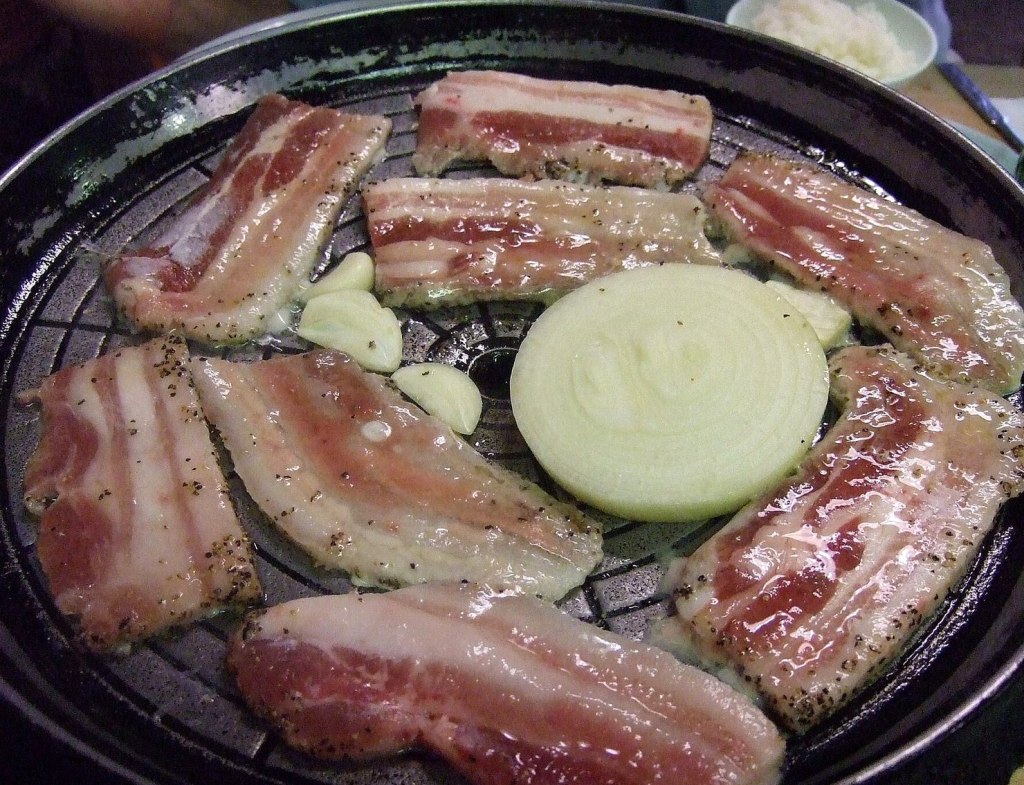
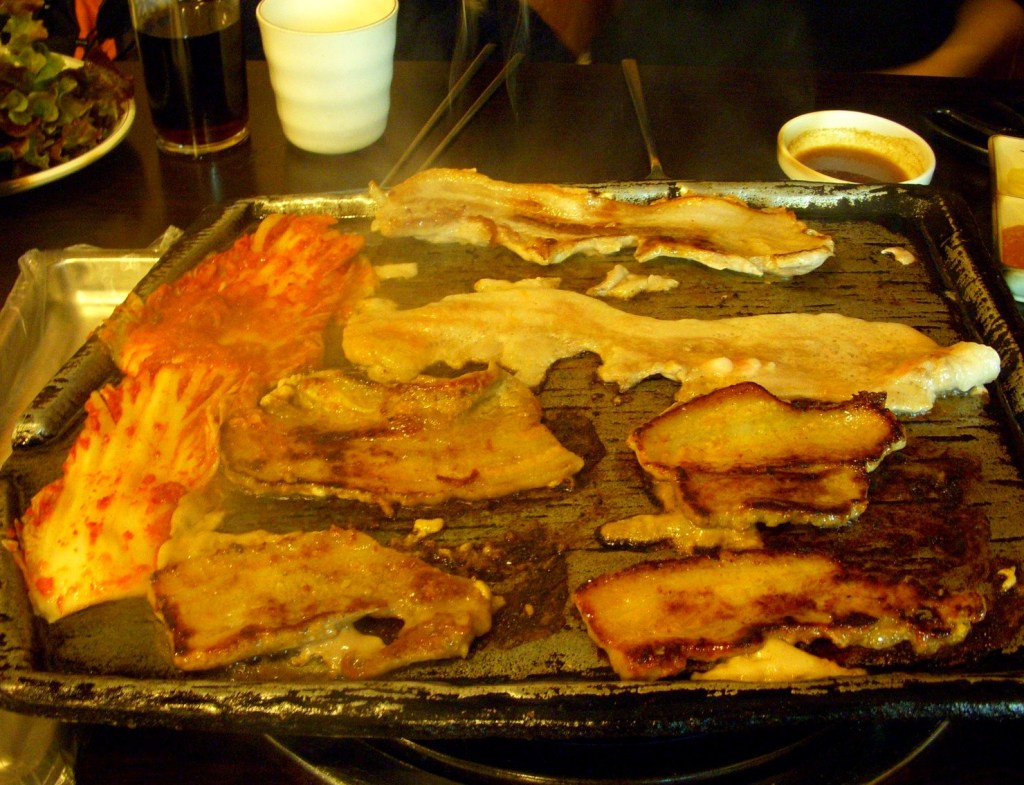
Samgyeopsal (삼겹살) — sizzling, unmarinated pork belly, the everyday people’s champion. Photo: LWY, CC BY
If you’re planning your first Korean BBQ, here’s the quick map of what to order:
- Samgyeopsal (삼겹살) — thick-cut, unmarinated pork belly, grilled until crispy on the outside and juicy in the middle. The undisputed national favorite, cheap and beloved. Wrap it in lettuce with garlic.
- Bulgogi (불고기) — thin beef marinated in a sweet-savory soy sauce until tender and glossy. The polished, historic one — this is the descendant of the royal neobiani.
- Galbi (갈비) — marinated beef or pork short ribs, richer and a little fancier. Special-occasion meat.
- Ssam (쌈) — not a meat, but the move: the lettuce-and-perilla wrap that turns every bite into a little parcel with rice, garlic, and ssamjang.
Galbi (갈비) — marinated short ribs, the special-occasion splurge. Photo: Junho Jung, CC BY-SA 3.0
Notice the throughline. Bulgogi and galbi, the marinated cuts, descend directly from the meat that once graced royal tables. Samgyeopsal, the plain pork belly everyone actually eats on a Friday night, only became the people’s champion in the last few decades — once thin-slicing technology after the Korean War made meat cheap enough for everyone. In one meal, you’re eating both halves of the story: the king’s luxury and the commoner’s dream, finally on the same grill.
How to eat Korean BBQ like a local
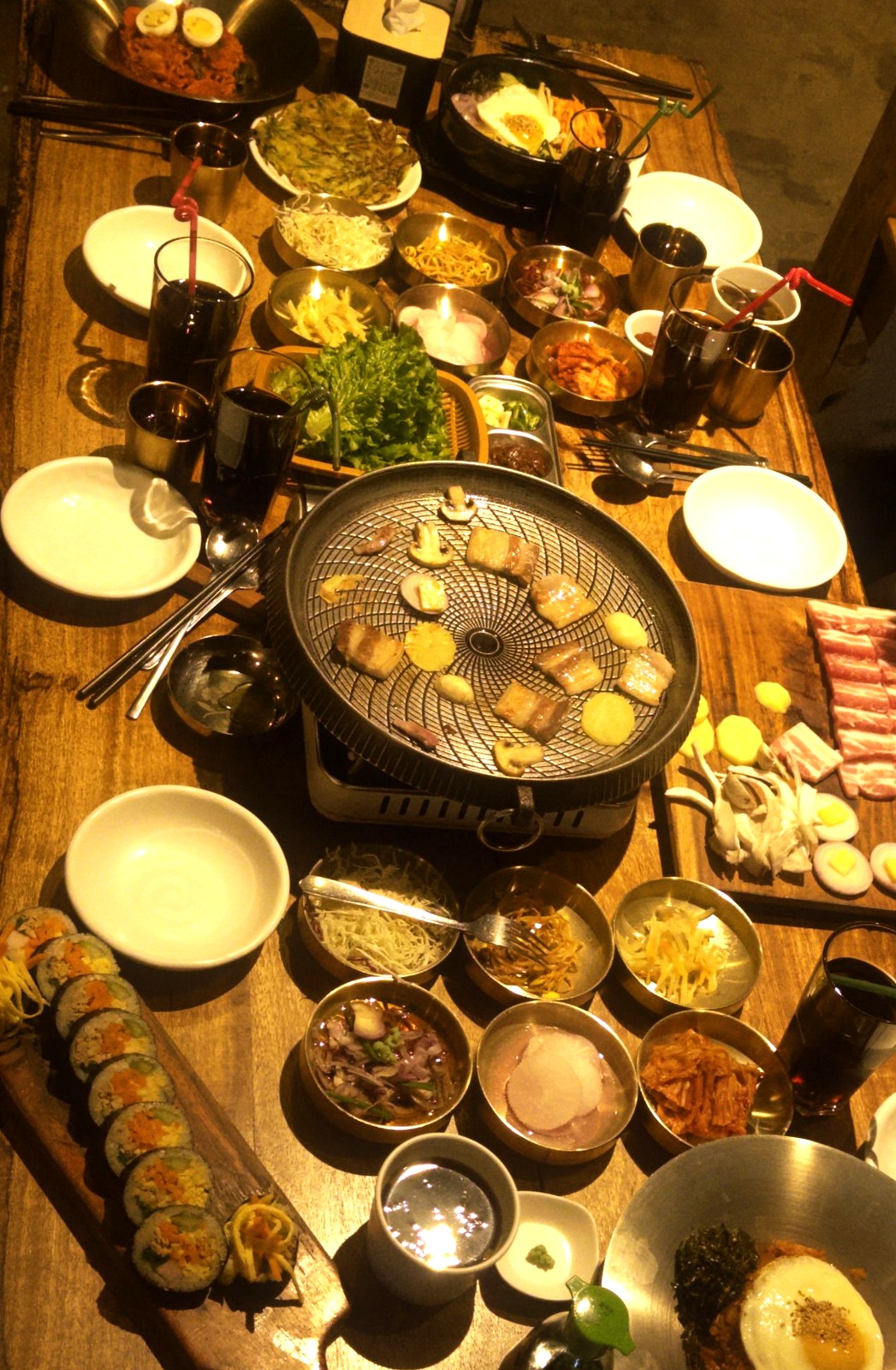
A full Korean BBQ spread: grill in the middle, banchan and lettuce for ssam all around. Photo: Manjil Aryal (public domain / CC0)
First time at a Korean barbecue restaurant? You grill the meat yourself, right at the table — and there’s a rhythm to doing it like a Korean. Three rules cover almost everything:
- Don’t fear the scissors. Kitchen shears are a grillmaster’s best friend here. Once the meat is about halfway cooked, snip it into bite-sized pieces right on the grill — no knife-and-fork required.
- Build a ssam, eat it in one bite. Lay meat on a lettuce leaf, add garlic, a dab of ssamjang, maybe a little rice, then wrap and pop the whole parcel in your mouth at once. Biting it in half is how you end up wearing it.
- The banchan is bottomless. Those little side dishes — kimchi, seasoned greens, pickles — are free and refillable. When one runs low, just ask for more (“Deo juseyo!”).
Questions people always ask about Korean BBQ
Why is Korean BBQ so popular? Because it’s an experience, not just a meal: you grill it yourself at a shared table, wrap each bite fresh, and graze on endless banchan while you talk. That social, hands-on theater — plus K-dramas and mukbang showing it off — is what made Korean barbecue a global favorite.
How do you eat Korean BBQ? You cook thin slices of meat on the tabletop grill, snip them with scissors, then wrap a piece in lettuce with garlic and ssamjang to eat in one bite — alternating with rice, banchan, and a drink between rounds.
What is the most popular Korean BBQ meat? Samgyeopsal (삼겹살), grilled pork belly. It’s the cheap, unmarinated, wrap-it-in-lettuce staple that most Koreans mean when they say “let’s get gogi (meat).”
What’s the difference between bulgogi and Korean BBQ? Bulgogi (불고기) is one specific dish — thin beef marinated in sweet soy sauce. “Korean BBQ” is the whole grill-it-yourself experience, which includes bulgogi, samgyeopsal, galbi, and more.
Why do Koreans wrap the meat in lettuce? The wrap, called ssam (쌈), balances the rich grilled meat with something fresh and crunchy, plus garlic and ssamjang for a punch. It’s also deeply Korean: a little of everything in one bite.
Did Korean kings really eat barbecue? In a sense, yes. Marinated grilled beef (neobiani, the ancestor of bulgogi) was refined for royalty and aristocrats during the Joseon dynasty. King Sejong the Great, per the royal Annals, was an especially famous meat lover.
Where the grill takes you next
Next time a K-drama cuts to a grill scene, watch what’s really happening. It isn’t about the meat. It’s a thousand years of history — a faith that nudged Korea toward its vegetables, invaders who brought back the fire, kings who hoarded the beef, and a genius who couldn’t say no to it — all landing quietly on one small tabletop grill between two people who need to talk. That’s why Korean barbecue remains one of the country’s most beloved social traditions.
Hungry for the rest of the table? See where the whole meat-and-side-dish tradition still runs wildest at Seoul’s Gwangjang Market, taste what beef became in a bowl with Seolleongtang, Korea’s milky ox-bone soup, or find out why Koreans fight summer heat with a boiling bird in our samgyetang guide.
Korean BBQ history (Goguryeo maekjeok, the Buddhist-era decline of meat, Mongol-era revival, and Joseon neobiani) compiled from Wikipedia and Korean culinary histories. King Sejong’s meat preference and later illnesses are drawn from accounts of the Annals of the Joseon Dynasty as reported by The Korea Herald and Korean historical references; modern disease names are later interpretations, and some details survive as court anecdote and are noted as such.