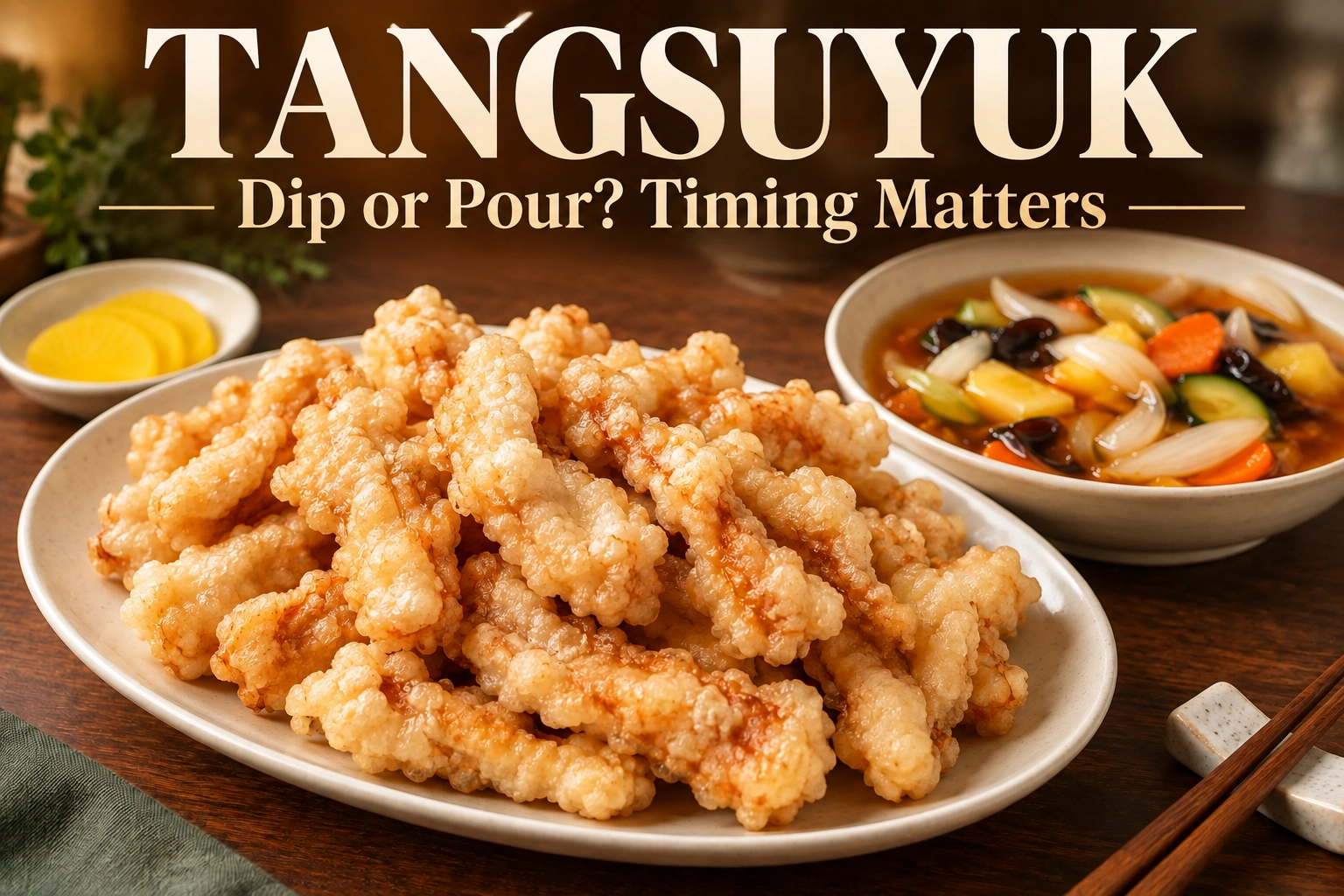
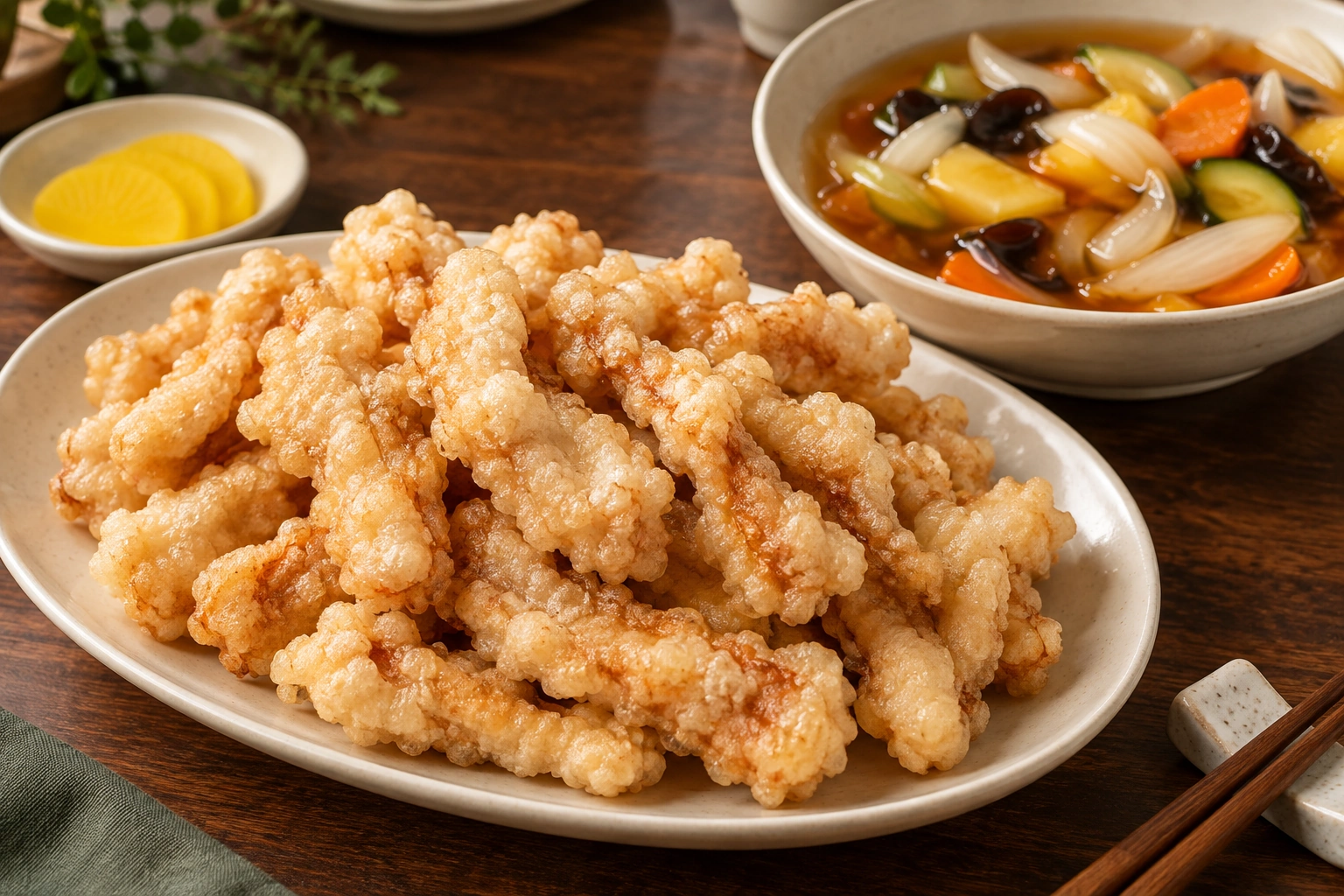
A plate of tangsuyuk can start an argument before anyone takes a bite. Should its sweet-and-sour sauce cover the fried meat, or stay beside it? The Korean terms bumeok and jjikmeok describe pouring and dipping. For a first-time diner, however, a more revealing question is: when will the sauce meet the crust?
Tangsuyuk is Korean-Chinese sweet-and-sour fried meat, commonly pork, with beef versions too. The sauce may contain vegetables and fruit. It is easy to recognize the dish through its contrast of crisp coating and glossy sauce, yet that contrast changes while you eat. A restaurant plate carried a short distance from the kitchen and a separate-container delivery order give the diner different starting points.
A childhood treat became one man’s long search
For author Shin In-cheol, tangsuyuk carried the memory of adults making an occasion special. In a May 2026 interview with Park Kyung-eun of Kyunghyang Shinmun, he recalled celebrations such as graduation or moving to a larger home. Later, even when he could buy the dish himself, he struggled to find the taste he remembered. His search through older restaurants eventually took him overseas to examine Chinese cooking in different communities. The original Korean interview presents that journey through his own recollections.
Shin favored meat finished with sauce over heat, or with sauce spread over the freshly fried pieces. Those are his descriptions of the preparation he valued. They should not be turned into proof that every Korean restaurant followed one identical method.
His story makes the nostalgia understandable. A remembered taste belongs partly to its setting: who ordered the food, why the family gathered, and the feeling that an ordinary meal had become a treat. Changing sauce color or coating texture can therefore feel larger than a small recipe adjustment.
There are two sauces worth distinguishing
The large sweet-and-sour sauce and a small soy-based dipping sauce do different jobs. Confusing them can make the pouring debate surprisingly difficult to follow.
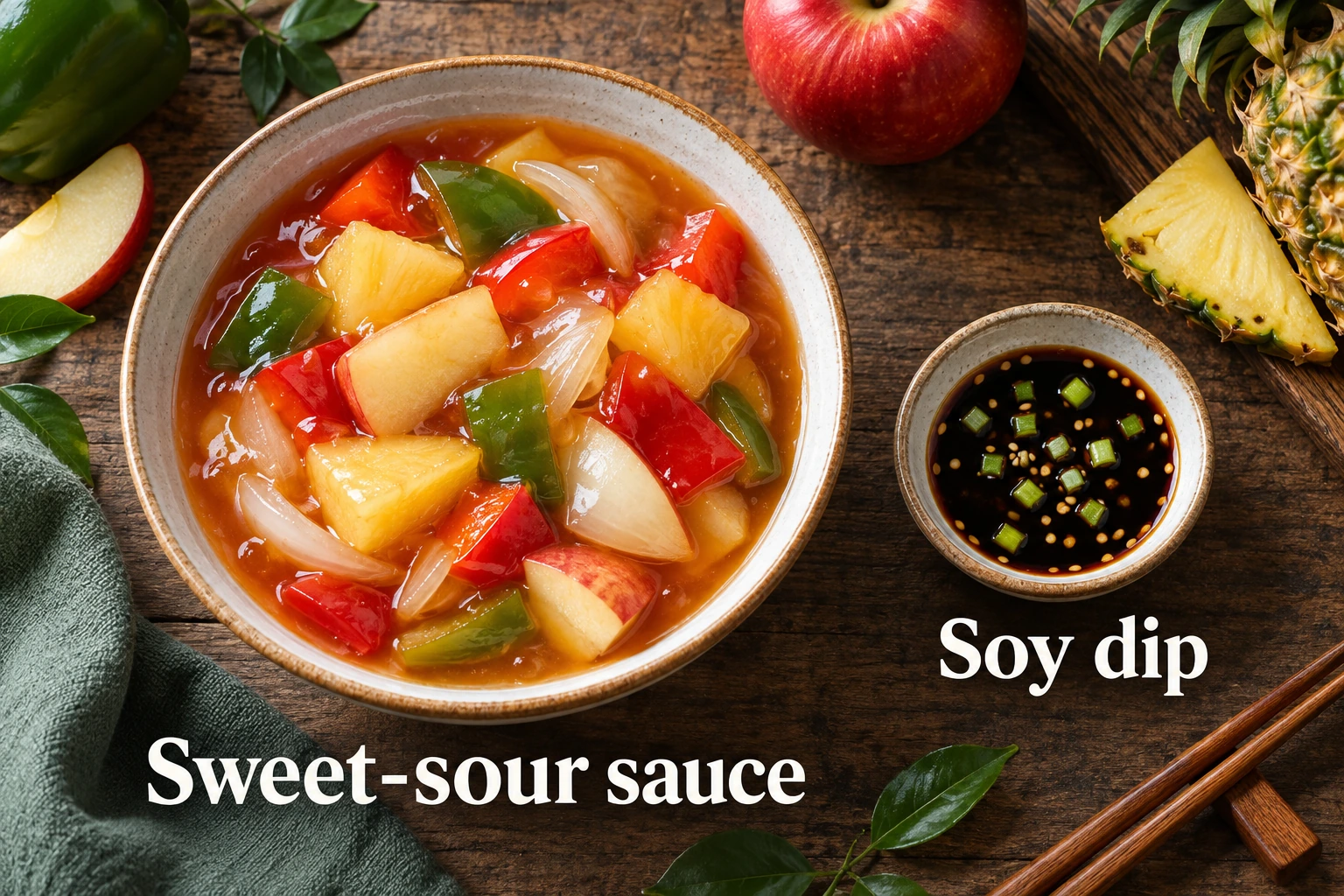
In Maangchi’s own tangsuyuk recipe, the substantial sauce includes vegetables, apple and pineapple, thickened with starch. She offers two serving choices: keep it alongside the pork, or pour it over. A separate mixture of soy sauce and vinegar stays on the side in either case.
Look at how much sauce clings to one piece. A brief dip can cover an edge while leaving much of the crust exposed. A more complete coating spreads sweetness and acidity through the mouthful. Neither action is merely ceremonial; each changes what reaches your tongue first.
There is no need to empty either bowl simply because it was served. Start with a small amount and taste. You can then adjust the balance using the sauces actually provided, rather than assuming every tangsuyuk order has the same sweetness, thickness or seasoning.
The cook prepares a crust for the meal to come
Maangchi recalls learning her batter method from a friend in Korea: soaked, settled starch mixed with egg white, followed by two fryings. She prepares a crisp coating for a dish served with sweet-and-sour sauce. Her recipe does not establish how long every restaurant’s coating will remain crisp.

Another home cook, Hyosun of Korean Bapsang, describes a slightly chewy yet crisp coating made with soaked starch. She also fries the meat twice. Her tangsuyuk account allows either pouring or serving sauce alongside, while explaining that she personally prefers pouring.
Together, these examples show why “sauce makes it soft” is an incomplete description. Cooks are already thinking about the combination when they prepare the coating. Crispness and chewiness can be intended to coexist.
You can notice that combination without treating dinner as a technical test. Listen to the first bite, then feel the coating after a little sauce. Does it still break sharply? Does it become pleasantly yielding around the meat? Does the sauce sit on the surface, or dominate the bite?
Delivery adds time between frying and eating
A restaurant can bring meat and sauce together close to the moment of serving. Delivery adds a journey and an interval before the diner opens the containers. Separating the components lets their meeting happen later.

In Cha Hyeong-seok’s May 2026 direct interview for SisaIN, available in its syndicated version, Shin connected sauce separation with delivery restaurants trying to avoid softening the meat during transport. He had initially disliked that version. After visiting many establishments, he came to recognize the care it could represent for people who could not eat at the restaurant.
Food research also helps explain why time matters. Clara O. Rovedo, Susana E. Zorrilla and R. Paul Singh studied moisture distribution and crust properties in a fried potato-starch patty during post-frying storage. Their published abstract reports a relationship between moisture changes and the crust’s mechanical properties. This was a model food, not a tangsuyuk delivery trial, so it cannot tell us exactly how long a particular order will stay crisp.
The practical inference is modest: delaying sauce contact can preserve a choice for the diner, but it cannot stop every change caused by holding cooked food. A separate sauce bowl is an opportunity to finish the dish at your table, not a guarantee of a freshly fried texture.
A shared plate gives pouring a social consequence
Hyosun describes her family ordering a large plate to share at Korean-Chinese restaurants, and making tangsuyuk for gatherings at home as her mother did. This helps explain why the question can become social. One person’s decision to pour changes the common plate for everybody.
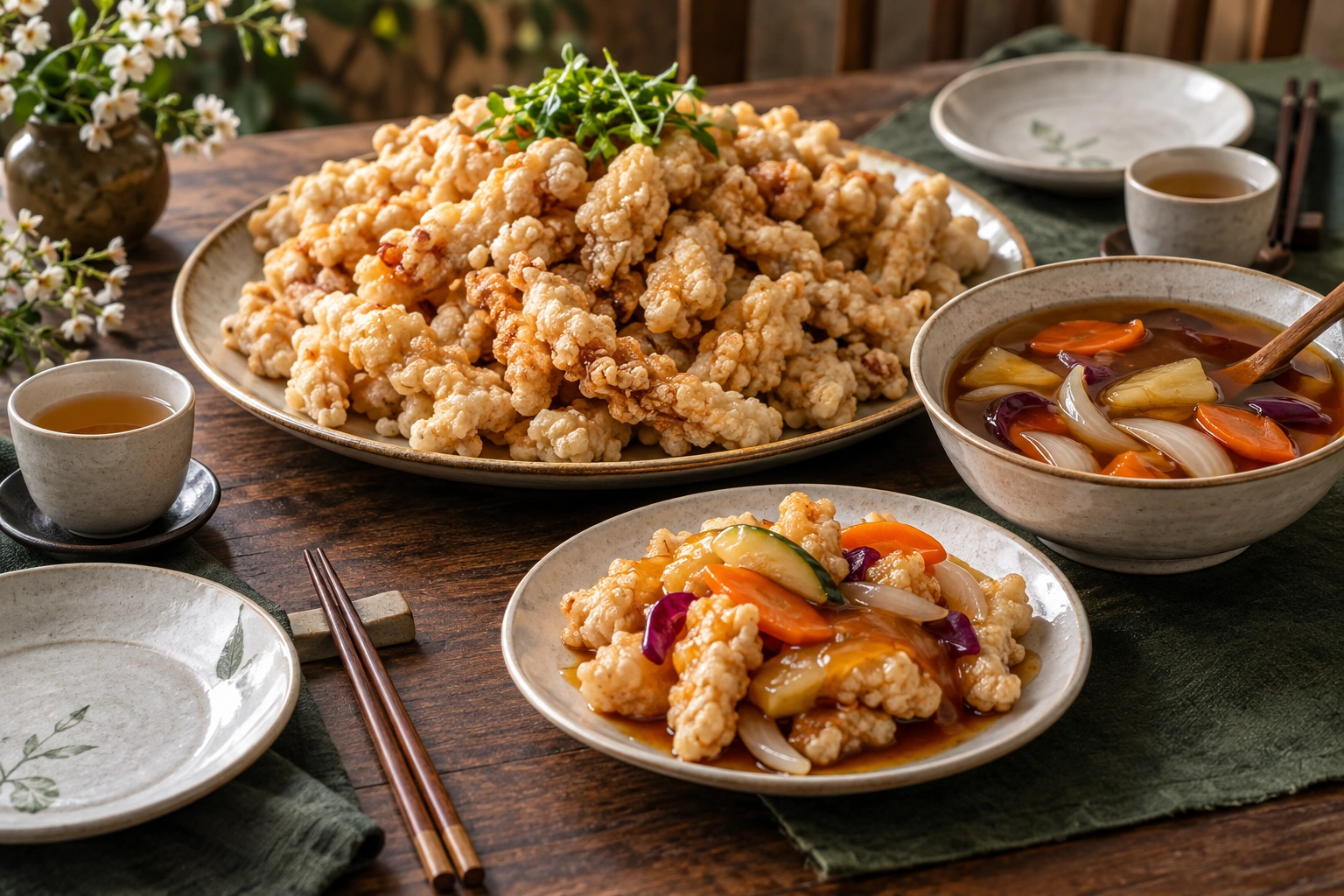
Individual noodle bowls and shared tangsuyuk invite different kinds of control. You can season your own bowl without much discussion. Covering the shared meat commits everyone to a sauce contact time they did not necessarily choose. For a noodle-bowl comparison, see how jjajangmyeon’s sauce meets the noodles.
An easy approach is to agree before pouring. If preferences differ, move a few pieces to a separate plate and sauce that portion. The rest can remain available for dipping. This suggestion follows from the serving format; it does not require a supposed rule of Korean dining etiquette.
Try the dish at two moments, not as two opposing teams
For your first order, take one lightly sauced bite and another with fuller coverage. Pay attention to the contrast immediately, then notice how the coated portion develops during the meal. A changing texture is part of the experience.
If the kitchen has already finished the meat with sauce, begin by tasting that preparation. If the components arrive separately, you have more control over their meeting. These are different opportunities to understand what the cook has sent.