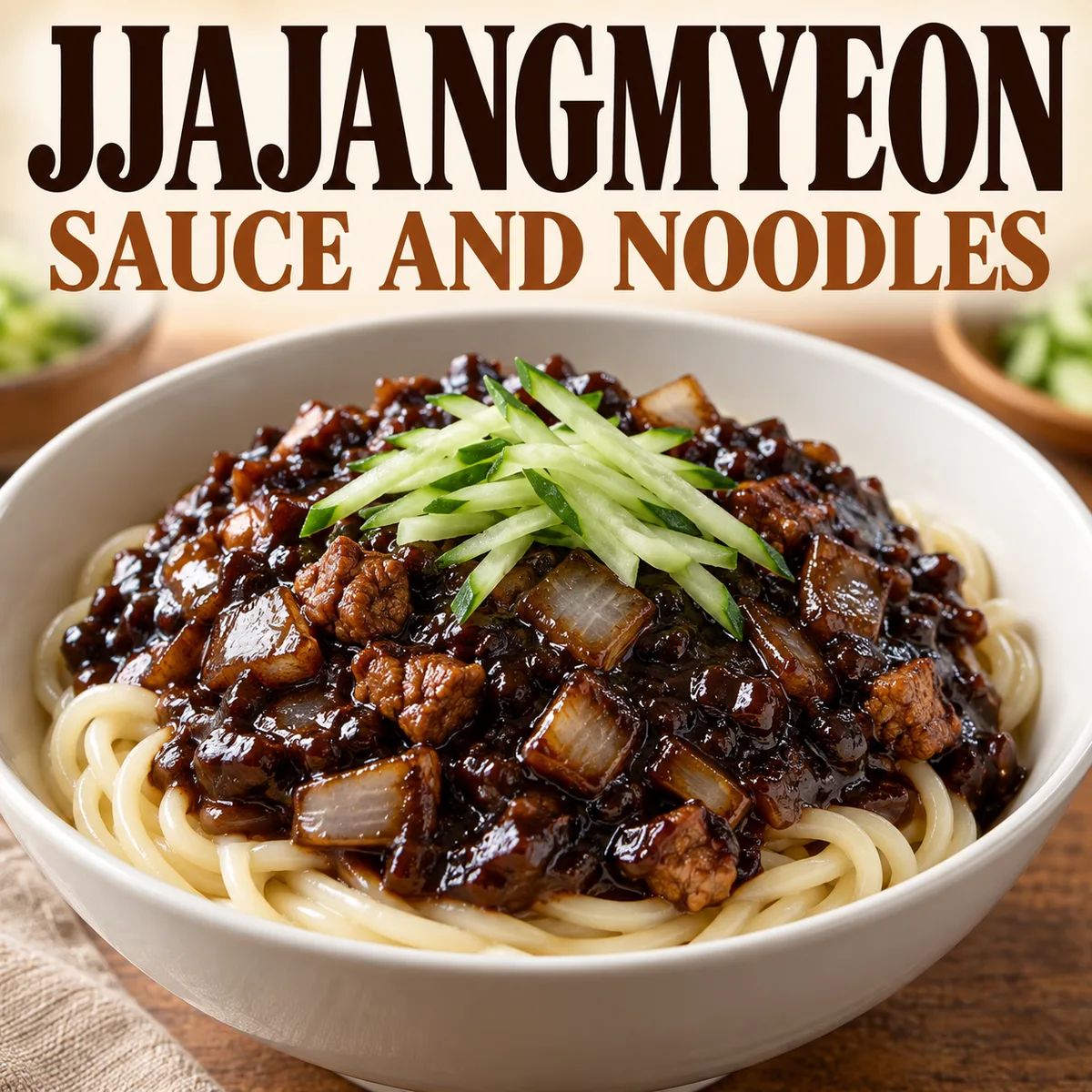
Jjajangmyeon is easiest to understand while mixing it: pale wheat noodles become coated in a dark, glossy sauce, and pieces of onion or other ingredients come into view. The sauce needs to reach the noodles below the first visible layer. Its flavor and texture are part of the bowl, not simply a color poured over it.
The headline needs a qualification. Korean jjajangmyeon developed through Chinese migration and adaptation in Korea; Korean-Chinese is a useful description of that history. The Academy of Korean Studies traces its ancestry to Shandong and connects its Korean development with the opening of Incheon’s port in 1883 and the restaurants that followed.[1]
Hwasa’s dated television scene is a different category of evidence. iMBC reported on February 23, 2019 that she had prepared jjajang-flavored instant noodles with truffle oil in the preceding broadcast of I Live Alone. That documents a home preparation, rather than an invention of restaurant jjajangmyeon.[2]
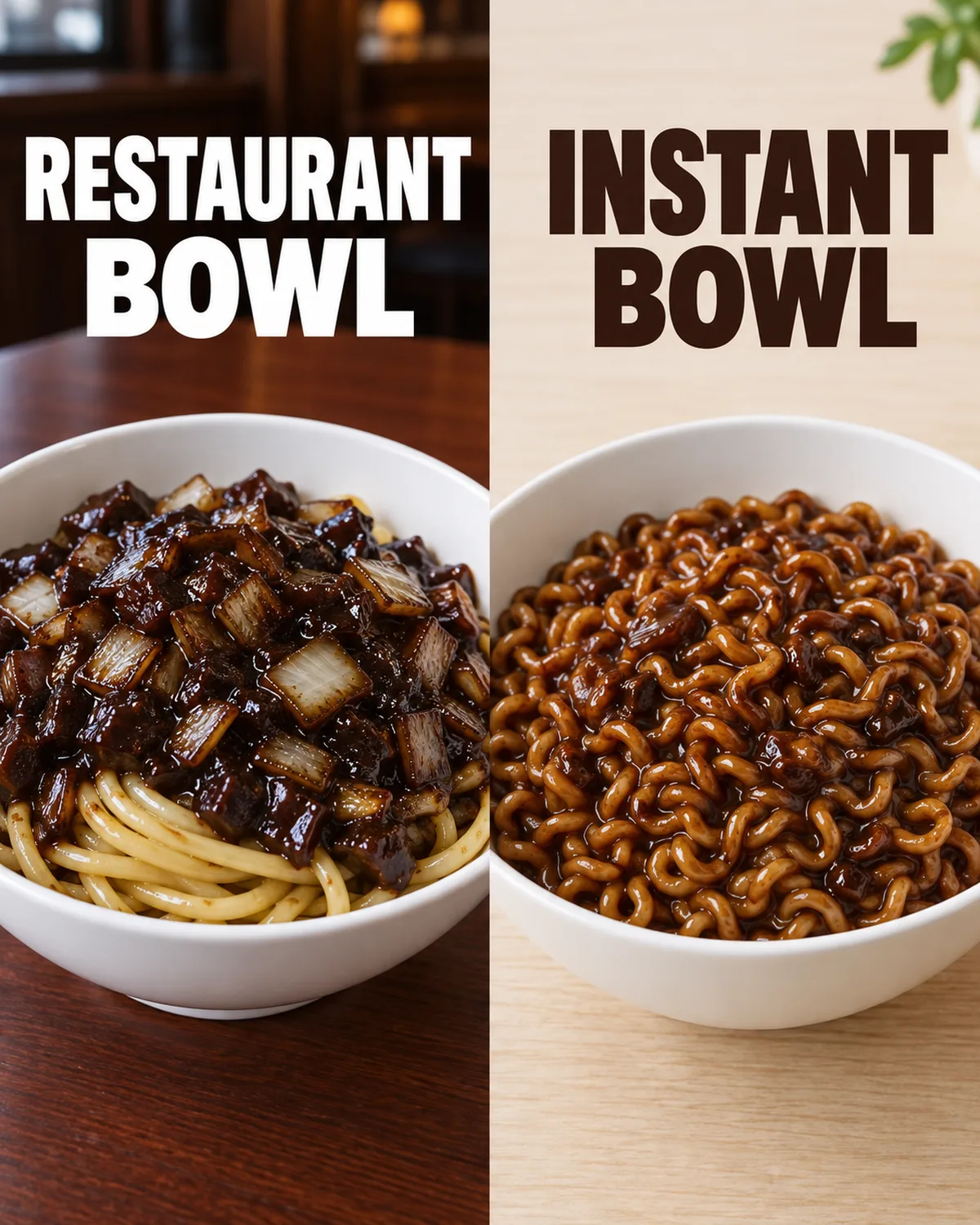
You can follow either food story while keeping the two bowls distinct. A restaurant sauce made with its own ingredients and an instant packet have different preparations. A famous finishing choice may attract attention, but the sauce, noodles and mixing explain the meal more directly.
Incheon explains a meeting of food traditions
The tourism organization’s 2025 account places the dish in Incheon’s Chinese immigrant community. It describes a business opened as Sandong Hoegwan in 1905 and renamed Gonghwachun in 1912. The former Gonghwachun building now houses the Jajangmyeon Museum, giving the story a physical setting rather than a single unnamed cook.[3]
Those dates should be read as milestones in a business and a developing food culture. A port opens, people settle, restaurants serve customers and dishes change. One date cannot show that every ingredient and cooking method of a modern delivery bowl already existed together.
Calling the dish Korean-Chinese preserves both parts of that history. It recognizes the Chinese contribution and the Korean setting in which a distinctive everyday bowl developed. Reducing the story to a competition over national ownership makes the history less informative.
For a museum visit or a restaurant stop, check the venue’s current information before setting out. A historical building and a present business are different destinations. The history can guide your interest without fixing today’s opening hours, prices or available menu.

Read the sauce before adding anything
The Academy describes chunjang-based seasoning prepared with meat, vegetables or seafood and served over boiled wheat noodles. Its method includes starch thickening. These elements explain the relation between a paste used in cooking and a finished sauce ready to coat a bowl.[1]
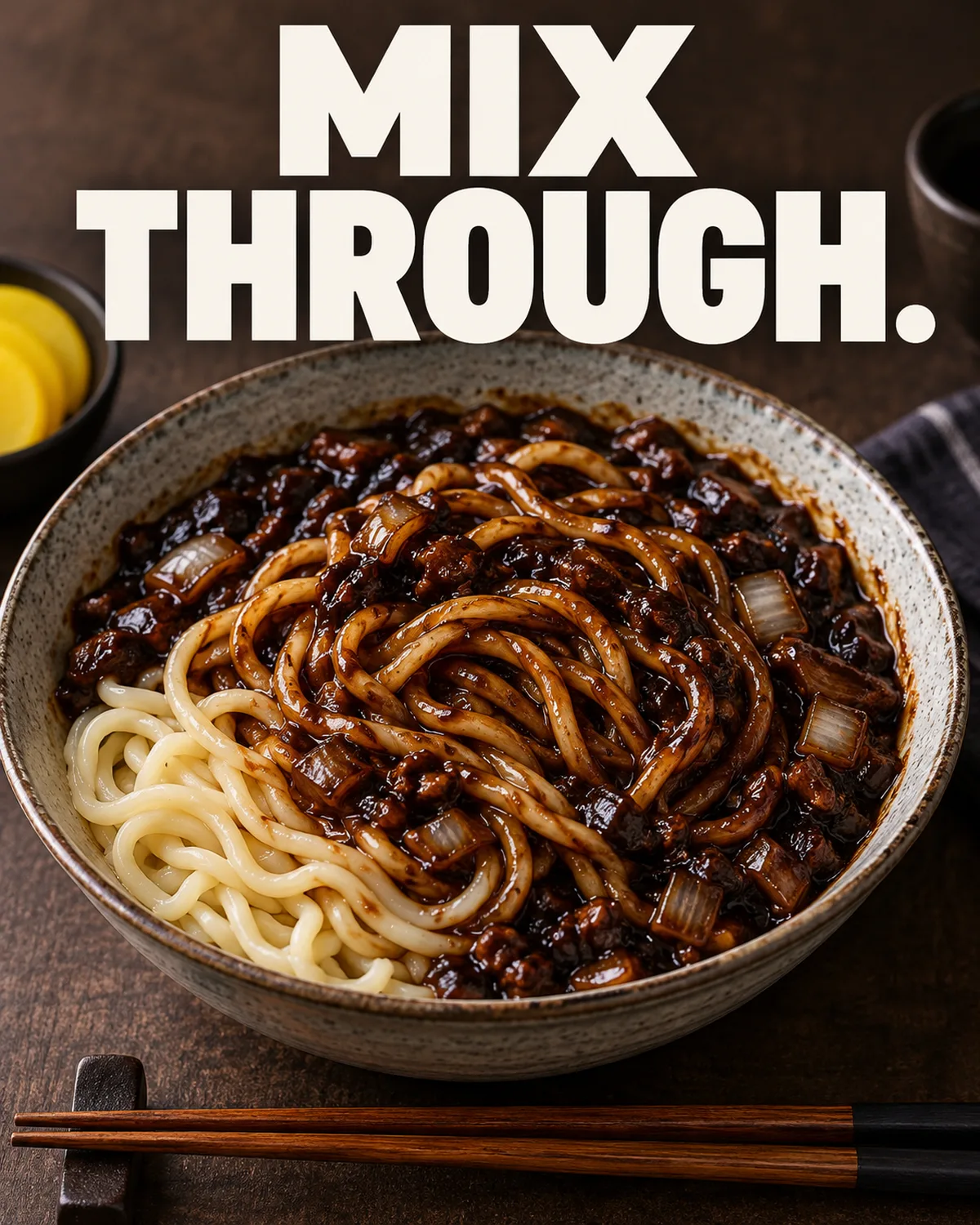
A spoonful taken from the top may contain mostly sauce. After mixing, a mouthful brings noodles and sauce into the same proportion. This is why the first unmixed taste and the later noodle bite can feel different without the food itself having changed ingredients.
Work from the bottom of the bowl and fold the noodles through the sauce instead of leaving a pale clump underneath. Take a manageable bite once the coating looks more even. The goal is a consistent taste, rather than a performance with one very long strand.
Garnishes change the first impression too. A crisp topping stays more distinct if tasted before it disappears into the sauce. Choose whether to preserve that contrast or mix it through; the actual bowl gives you a better guide than a rule about every restaurant.
Menu names point to useful differences
The tourism feature distinguishes ganjjajang by its cooked-to-order sauce, yuni-jjajang by finely minced ingredients and samseon-jjajang by seafood. These names give a starting point for an order. Ask the restaurant how it prepares the specific item when texture or ingredients matter.[3]
In a separate-sauce order, notice what is in the sauce dish before combining it with the noodles. More visible onion pieces and a finer mince create different mouthfuls. Adding some sauce first can make that contrast easier to notice than emptying everything immediately.
A shared platter changes the dining format as well as the amount. Ask how many people the listed portion is intended for and what else is included. A platter photographed from above does not reveal the edible quantity in each person’s bowl.
Seafood in a name is useful information, but an ordinary dark sauce is not evidence of a vegetarian dish. Likewise, removing a visible piece cannot identify the stock or paste. The kitchen serving the actual order is the source for its ingredient details.

Hwasa’s instant bowl has its own context
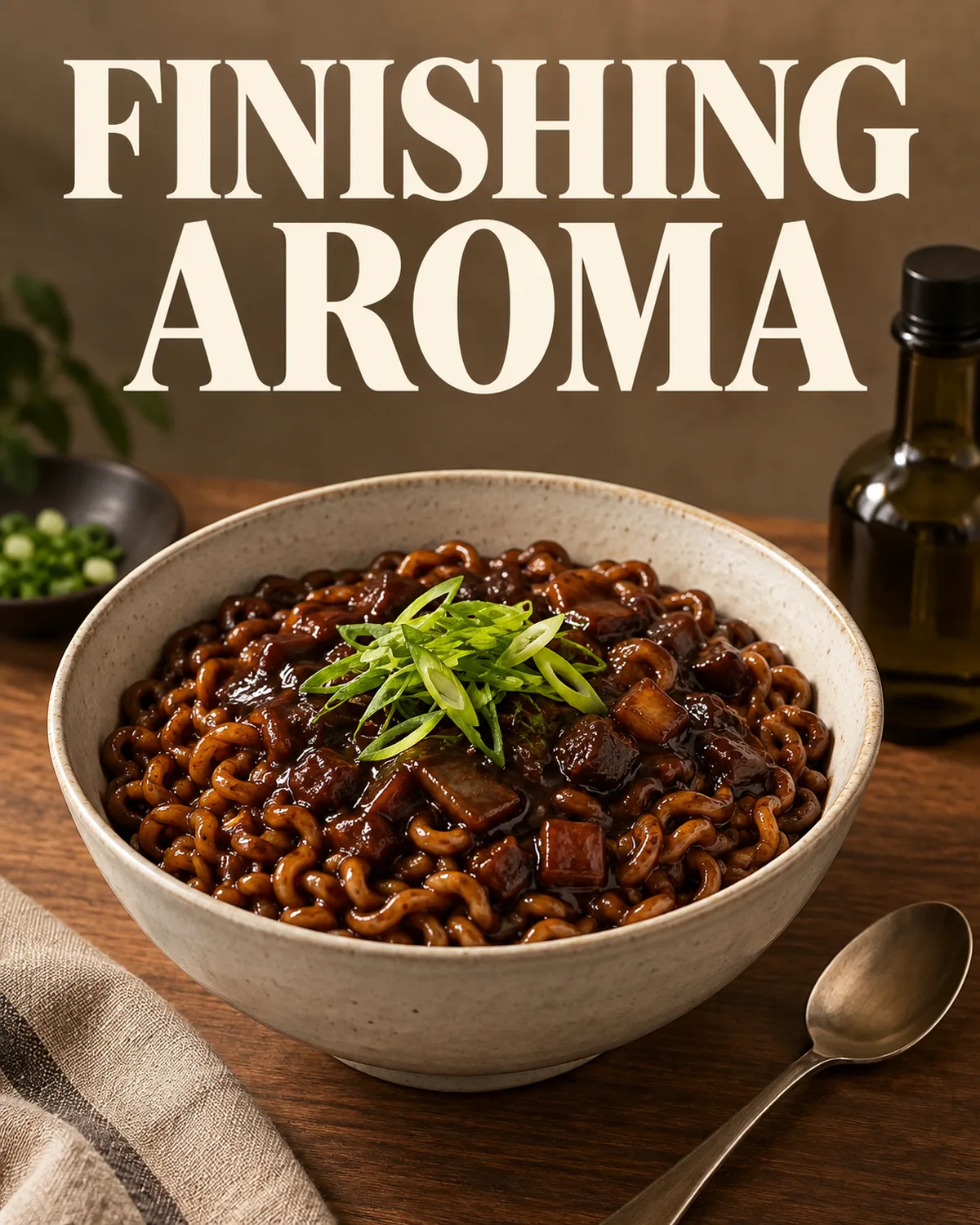
The iMBC account describes reducing the noodles during cooking, using truffle oil and adding egg yolk near the end; meatballs accompanied the meal. That is a dated report of her preparation, not a required method for every instant noodle product.[2]
For an instant version at home, begin with the directions on the particular packet. Noodle thickness, seasoning format and intended cooking liquid vary. The package’s instructions remain relevant even when another person’s finishing choice makes an appealing television moment.
An aromatic oil affects the aroma arriving before a bite. It cannot turn an instant seasoning into the same ingredient-by-ingredient preparation as a restaurant sauce. Taste the bowl as the food it is, rather than using the celebrity connection as a guarantee of equivalence.
There is also no reason to reproduce a raw topping merely because it appeared on television. Choose ingredients and preparation suited to the people eating. The useful lesson from the clip is that a finishing ingredient can change a familiar instant bowl’s character.
Make the next order a concrete comparison
Try to name the feature you want to compare: a sauce with larger pieces, a finer mince, seafood or a packet prepared at home. Those choices produce clearer observations than asking whether a whole cuisine is sweeter or saltier than another.
For the restaurant bowl, notice three things after mixing: how the sauce coats the noodles, how the onion or other pieces feel and which flavor remains after swallowing. A very dark appearance alone cannot measure sweetness or identify the recipe.
The instant bowl offers another comparison in convenience, noodle texture and aroma. It belongs in the food’s modern everyday story, while the Incheon history explains a longer path of migration and adaptation. Both are interesting without collapsing them into one origin tale.
Start with the actual menu and the bowl in front of you. Mix the sauce through the noodles, leave room to notice the pieces and ask about the variation you are ordering. That is enough to turn a headline or a television scene into a useful understanding of jjajangmyeon.
