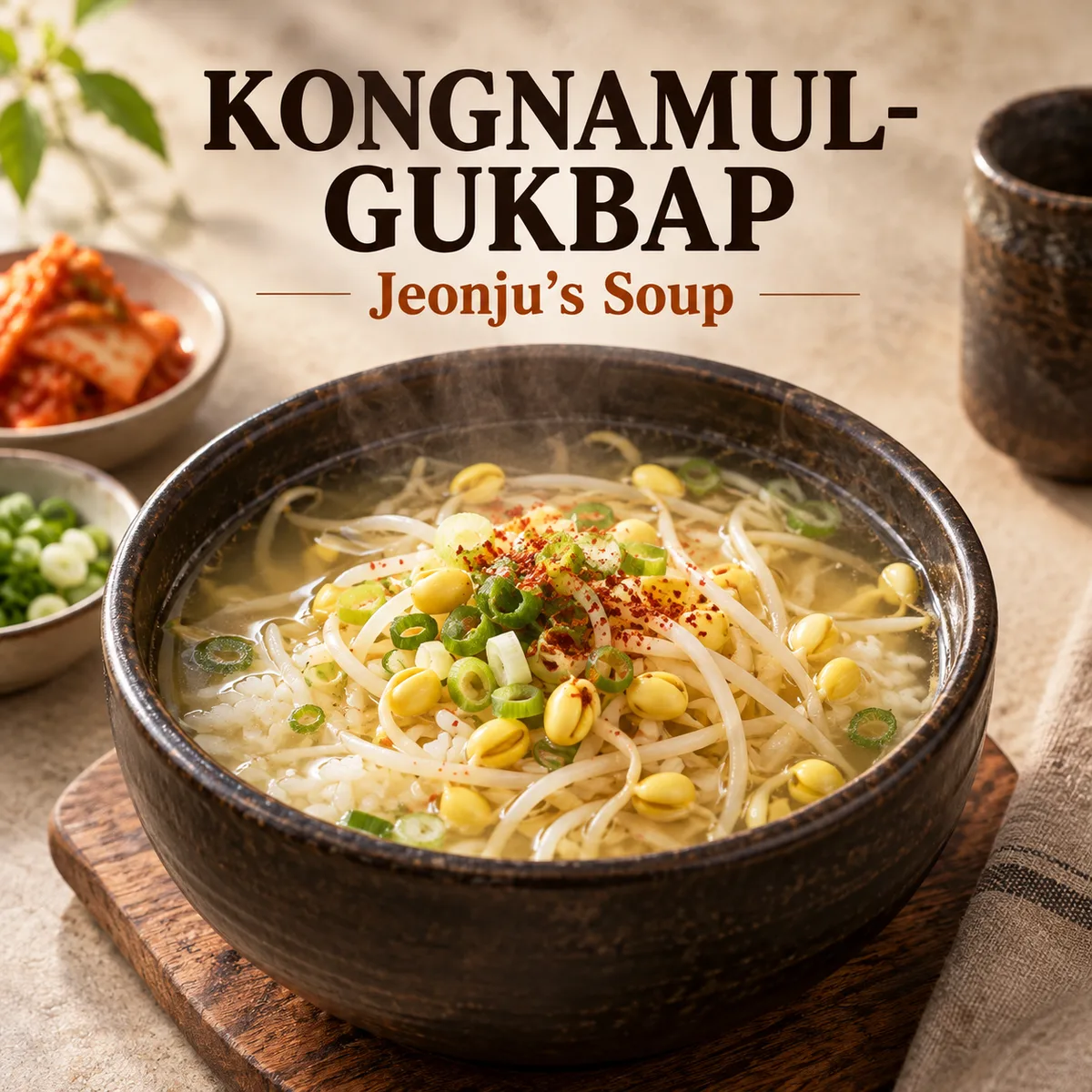
A soup does not have to arrive violently bubbling to have been carefully heated. In Jeonju’s kongnamul-gukbap, the repeated pouring of hot broth can bring rice and other components to an eating temperature in a different way from boiling everything together in a stone bowl.
That difference—and the egg sometimes served separately—makes this bean-sprout rice soup more interesting than the familiar label of hangover cure.
Why a bean-sprout bowl belongs to Jeonju
Jeonju is famous internationally for bibimbap, but official city food materials give soybean sprouts their own prominent place. Jeonju publications describe local sprout cultivation, the long use of kongnamul in many dishes and the special place of kongnamul-gukbap in the city’s everyday food culture.
That matters because the dish is not simply a generic national soup that happens to have a famous branch in Jeonju. The city built a dense relationship among ingredient supply, markets, breakfast trade and specialist restaurants. Jeonju’s Nambu Market became especially associated with a style designed for people who needed a hot meal quickly.
This is a useful contrast with Jeonju bibimbap. Bibimbap displays ingredients separately and asks the diner to mix them. Kongnamul-gukbap begins as a unified hot bowl. One represents composition and visual abundance; the other represents speed, warmth and repetition. Together they explain more about Jeonju than either dish alone.
Kongnamul means soybean sprouts, guk means soup and bap means rice. That literal name can create the impression that every restaurant serves the same thing. In practice, broth strength, seasoning, chili, seafood additions, egg treatment, seaweed and heating method vary.
The core texture is built around contrast. Rice softens in broth. Soybean sprouts should retain enough snap to keep the bowl from becoming mushy. Dried seaweed adds roasted aroma and dissolves into the broth as it sits. Scallion and chili can add freshness and heat. Salted shrimp or other seasonings may be offered for diners to tune salinity.
Because the ingredient list is modest, cooking method becomes unusually visible. In a heavily sauced stew, small differences in rice warming may disappear. In a clear bowl of sprouts and broth, overcooked rice and limp sprouts change the entire experience.
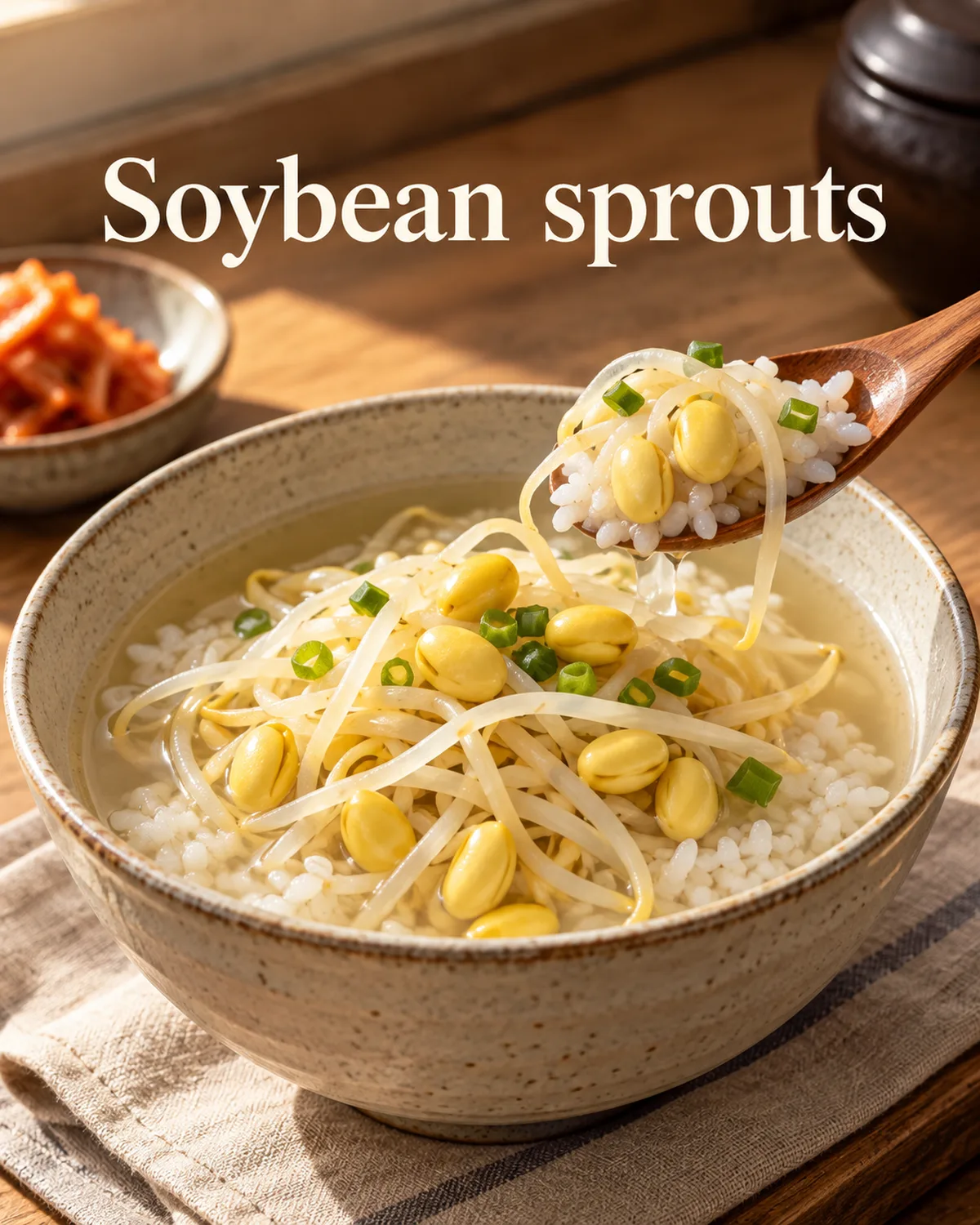
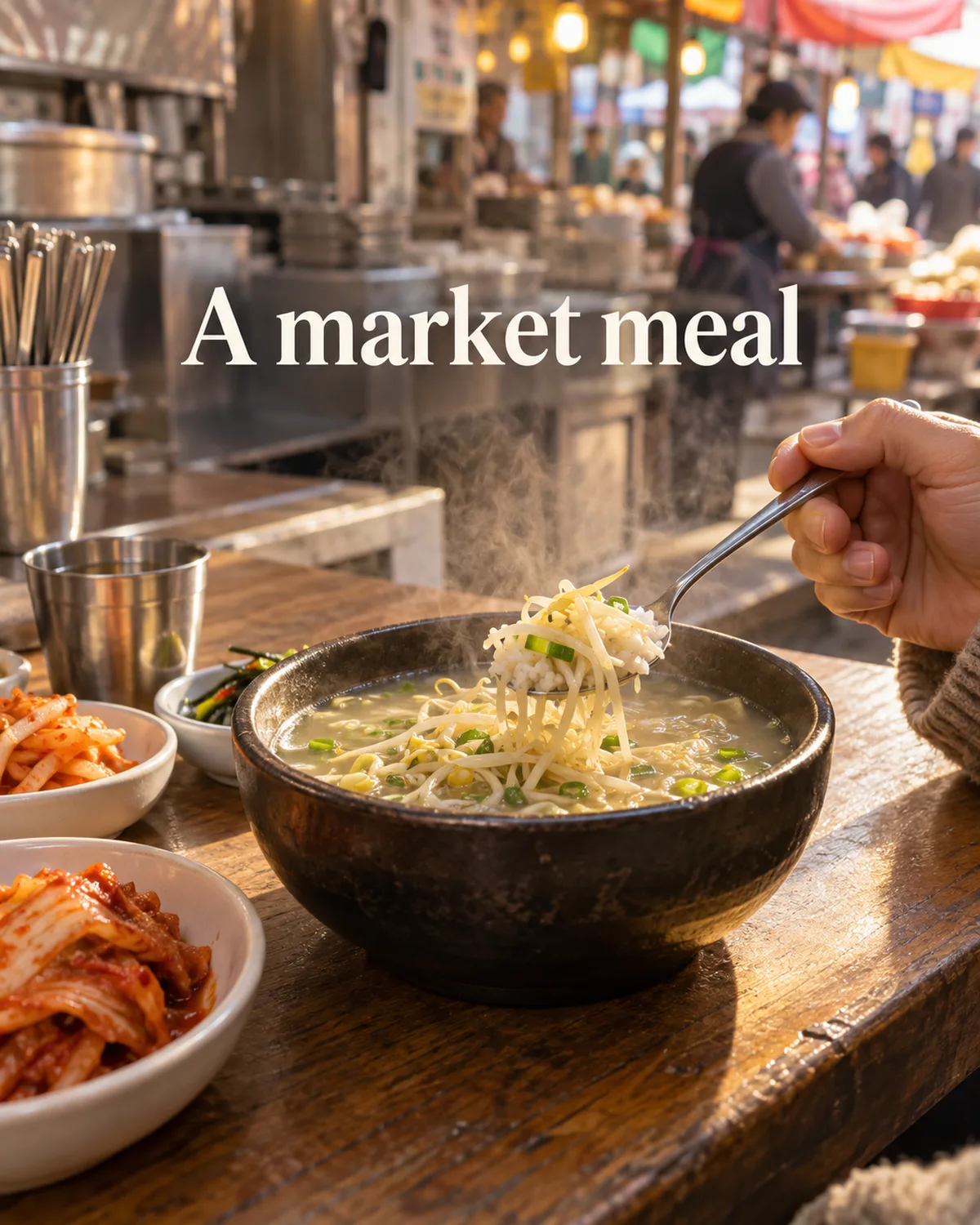
Traditional markets are not only tourist attractions. They are workplaces. Jeonju city material on the Nambu Market style explicitly links toryeom to merchants and porters who needed to eat quickly while working. That detail is more informative than a generic claim that the soup is “traditional.”
It tells you what the dish had to accomplish: inexpensive ingredients, fast service, enough substance to support physical work, and a method that could produce bowl after bowl without waiting for each portion to boil from cold.
When travelers eat the soup in or around Nambu Market, that functional history is part of the experience. The market context also explains why breakfast and early-day eating remain culturally important even though many modern restaurants serve the dish much later.
Toryeom and the bubbling earthenware pot
The Nambu Market style is strongly associated with toryeom. The basic idea is to heat rice or ingredients by repeatedly ladling hot broth over them, draining or returning the liquid, and repeating the process rather than boiling the assembled bowl aggressively for a long time.
Jeonju city material describes this market method as a practical response to speed: merchants and porters moving through the market needed food that could be served quickly. The method warms the rice while avoiding the same degree of continued boiling that can turn rice swollen and sprouts soft.
From a food-science perspective, the logic is straightforward. Heat moves from broth into the rice and sprouts, but exposure is controlled. Repeated contact raises temperature without subjecting every component to a long rolling boil. That helps explain why a toryeom bowl can feel cleaner and more texturally separated even though it is still served hot.
Toryeom is not a mystical Jeonju-only principle. Similar repeated-pouring logic can appear in other Korean soup-and-rice traditions. What makes it important here is the way Nambu Market restaurants turned the technique into part of a recognizable local service style.

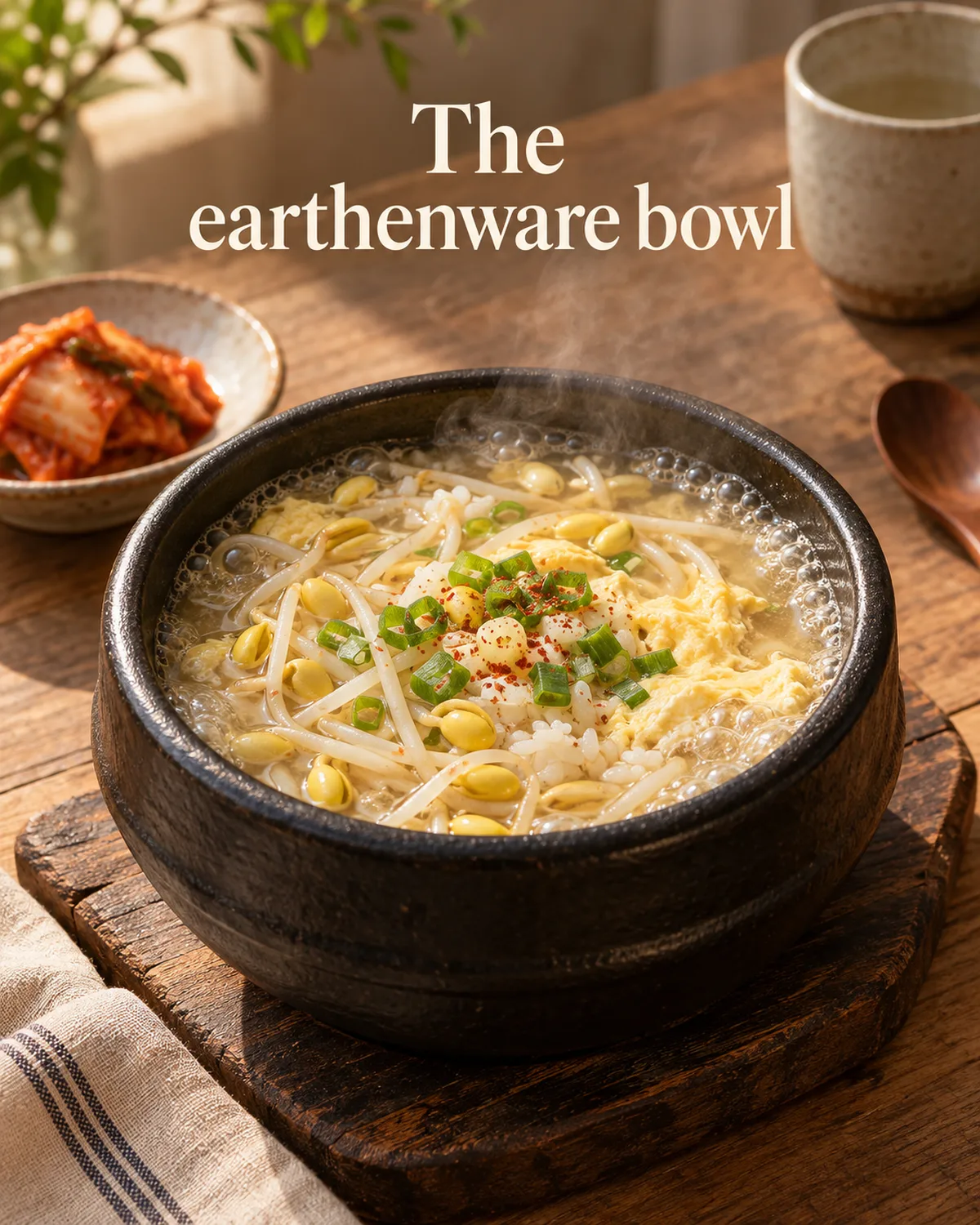
Not every Jeonju kongnamul-gukbap shop relies on the Nambu Market toryeom format. Another familiar style heats the bowl more aggressively and may bring it to the table in a hot earthenware vessel, with egg incorporated directly into the soup.
The result emphasizes heat retention and integration. A ttukbaegi keeps boiling or near-boiling food hot at the table, so the diner experiences a bowl that changes while eating. Egg thickens slightly, rice continues to soften and aromatics keep releasing into the broth.
It is tempting to turn these differences into a rigid “two schools of Jeonju soup” taxonomy. That goes too far. Restaurant practices overlap, individual houses adapt, and the details can change. It is more accurate to say that Jeonju preserves multiple service styles, with toryeom and separately served egg especially associated with the Nambu Market tradition.
The separate egg has a role of its own
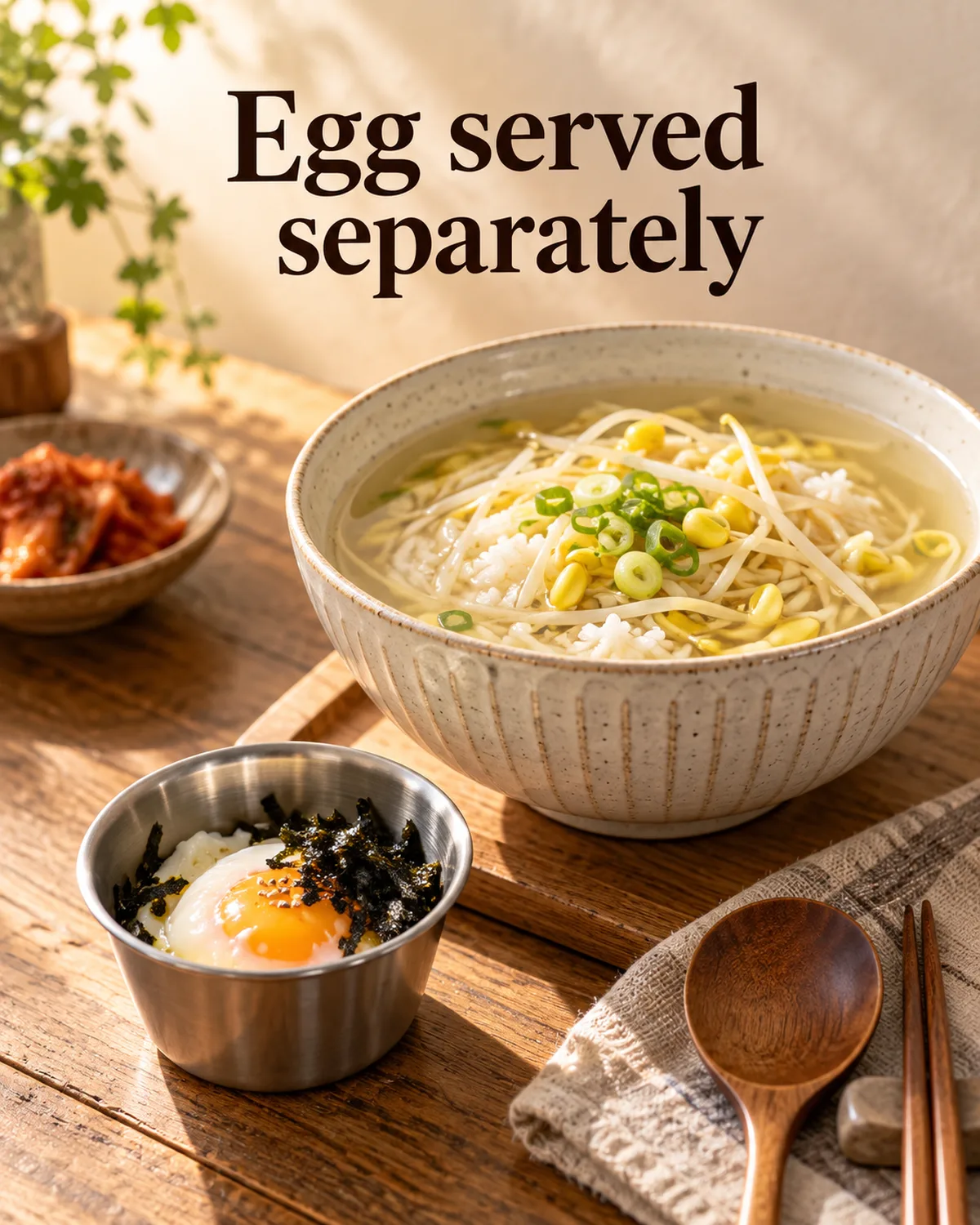
Some Jeonju shops serve a soft or partially cooked egg separately, often with crumbled seaweed. Diners may add a little hot broth, season it, eat it between spoonfuls of soup or combine it gradually.
Keeping the egg outside the main bowl changes two things. First, the clear broth stays clearer because yolk does not immediately disperse through it. Second, the diner controls richness. A spoonful of egg can soften the salty, hot soup without turning the entire bowl creamy.
Restaurants differ, so there is no universal etiquette. If an egg arrives separately, follow the house setup rather than assuming it must be poured into the soup. If it is already cooked in the bowl, there is no need to imitate the market style. The variation is part of the regional culture, not a test of correct behavior.
Broth, sprouts and the timing of the seaweed
Travel descriptions sometimes define kongnamul-gukbap entirely by the sprouts, but the broth changes the bowl just as much. Different restaurants may use anchovy, kelp, seafood, dried ingredients or house-specific seasoning combinations. Some bowls are almost transparent and restrained; others are deeper, saltier or spicier.
That creates an important dietary boundary. A bowl that appears vegetable-based is not automatically vegetarian. Anchovy or seafood stock is common in Korean soup traditions, and salted shrimp may be used for seasoning. Travelers avoiding animal products should ask about the broth rather than judging from visible toppings.
The same rule applies to allergies. Seafood-derived broth or condiments may be present even when no obvious fish or shellfish sits on top of the rice.
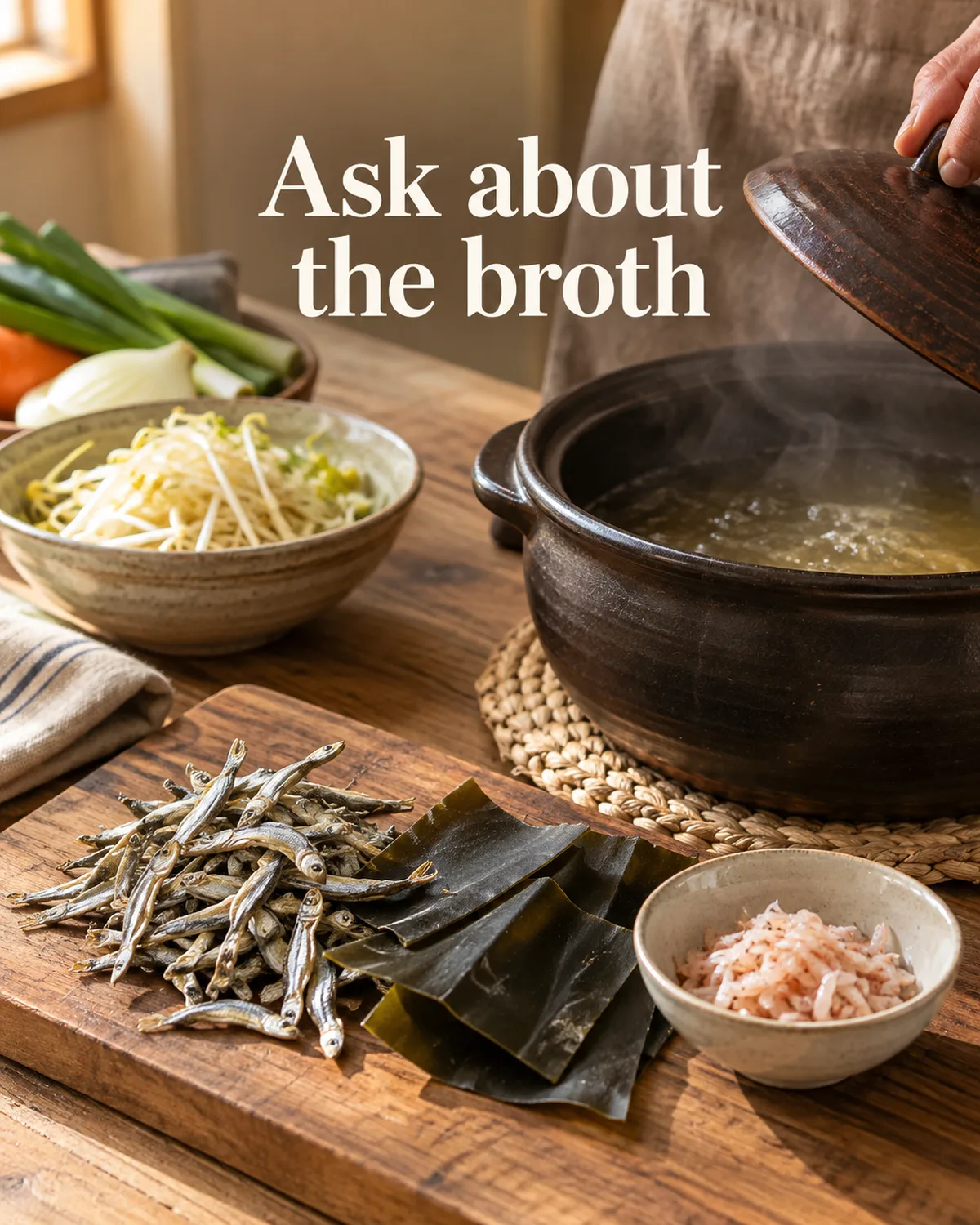
Soybean sprouts are mostly water, but their stems and roots retain a crisp structure when cooked appropriately. Long boiling softens that structure, while insufficient cooking can leave a raw bean aroma. Kongnamul-gukbap depends on finding a useful middle point.
The sprout also creates volume without making the bowl extremely heavy. Rice supplies starch and satiety; broth supplies heat and fluid; sprouts create chew and freshness. That balance explains why the dish can function as breakfast even when many Korean soups are meat-heavy.
Restaurants that emphasize toryeom often make texture part of their identity because repeated broth contact allows the cook to warm the rice without turning every sprout limp. The technique and the ingredient therefore reinforce one another.
Roasted gim can arrive crumbled on the soup or separately. At first it contributes a dry, crisp texture and toasted aroma. Once it contacts broth, it collapses and disperses, increasing savory marine character.
This gives the diner control over timing. Adding all the seaweed immediately produces a more integrated bowl. Adding it gradually preserves some crispness and aroma. Neither is more authentic; the choice simply changes texture over the course of the meal.

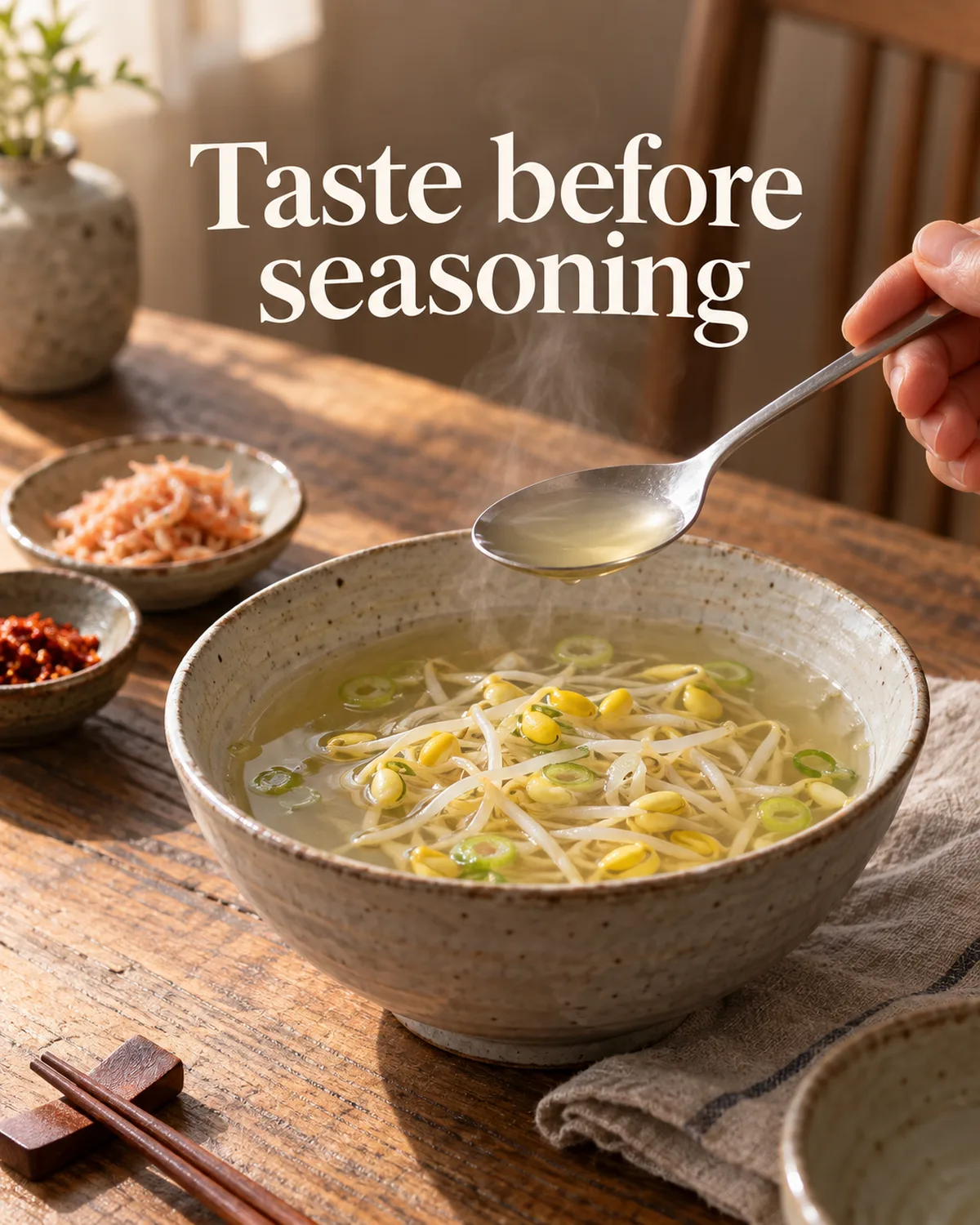
The same principle applies to chili and salted seasonings. Taste the broth before adjusting. A bowl designed for customer seasoning can seem mild or under-salted if you expect the kitchen to make every decision in advance.
Comfort after a late night is not a cure
Korea has a broad category of haejangguk and morning-after foods associated with drinking. Kongnamul-gukbap fits that cultural logic extremely well: it is hot, salty, easy to eat, contains fluid and carbohydrate, and can be served quickly in the morning.
Those properties explain the ritual without requiring a medical promise. After drinking, people may be thirsty, tired, nauseated or have low appetite. A warm soup-and-rice meal can feel comforting and familiar. Social repetition then strengthens the reputation: people drink at night, meet again over soup in the morning, and the dish becomes part of the expected sequence.
So the accurate formulation is simple: kongnamul-gukbap is one of Korea’s classic hangover foods, not a proven hangover cure.
Taste two styles without turning it into a rivalry
If you have time to try more than one kongnamul-gukbap in Jeonju, compare mechanisms instead of brand prestige. Look at four variables:
- Heating: toryeom-style warming or more direct boiling.
- Egg: separate, gently cooked in the bowl or fully incorporated.
- Broth: light and clear versus deeper, spicier or more seafood-forward.
- Texture: how firm the sprouts and rice remain when the bowl reaches the table.
This framework survives restaurant changes better than a permanent “best shop” ranking. Businesses can move, close, franchise or alter service, but the cooking choices remain understandable.
Start with the broth before adding extra seasoning. This tells you how the kitchen intended the base to taste. Then eat a spoonful containing rice and sprouts together so you can judge the textural balance.
If seaweed arrives separately, add some rather than all. If salted shrimp or chili seasoning is provided, adjust gradually; both can change the bowl quickly. If a separate egg is part of the service, use it as a rich side element or combine it in small amounts rather than assuming the whole egg must disappear into the soup immediately.
Most importantly, eat while the temperature and sprout texture are still working together. This is not a soup improved by a long photo session while the rice continues absorbing broth.
A separate egg and a gently warmed bowl invite a different sequence from a bubbling earthenware pot. Taste the broth, notice the sprouts, then decide how much seaweed or egg to combine. That sequence lets the service method show itself instead of disappearing under extra seasoning.
Finding the meal beside Jeonju’s better-known rice dish
International tourism often gives Jeonju one headline dish: bibimbap. Kongnamul-gukbap complicates the picture in a useful way.
Bibimbap is often described through ingredients, color and arrangement. Kongnamul-gukbap is described through temperature, speed and repetition. Bibimbap can carry ceremonial or restaurant prestige; gukbap carries market and morning associations. One is mixed by the diner at the table; the other is assembled as a hot bowl before it arrives.
The market sits near Jeonju’s central heritage area, making the soup easy to combine with a walk rather than a separate cross-city food expedition. A morning bowl followed by the Hanok Village area also solves a practical itinerary problem: you begin with a substantial but relatively light meal before a heavier lunch or dinner.