Why Koreans Eat That

Tag: banchan

  • The Traditional Korean Diet That Kept a King Alive to 83 — Long Before It Was a Wellness Trend

    The Traditional Korean Diet That Kept a King Alive to 83 — Long Before It Was a Wellness Trend

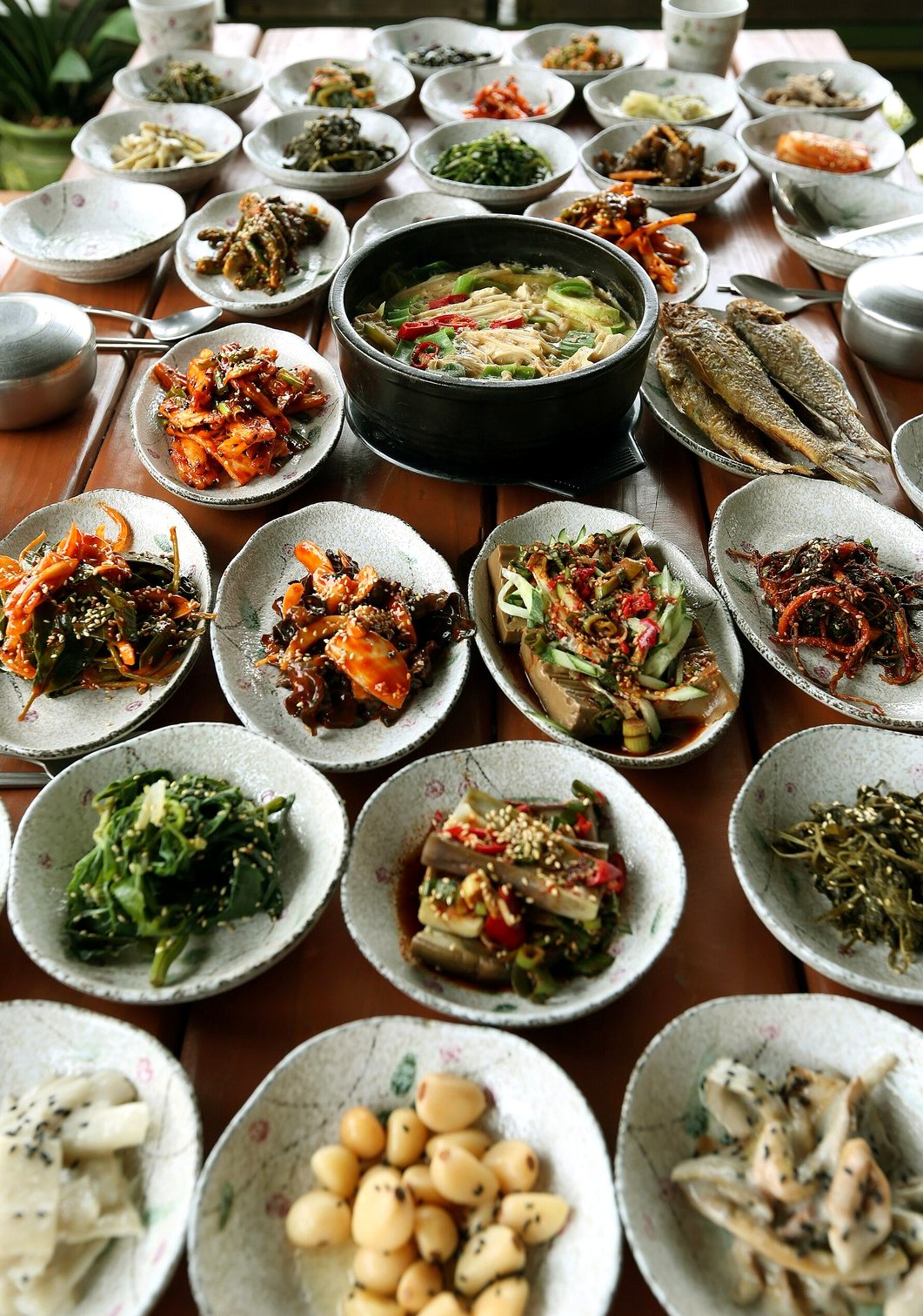
    A traditional Korean diet meal of rice, soup, kimchi, and many vegetable side dishes (banchan) — korean diet king

    The traditional Korean diet in one photo: a little rice, a lot of vegetables, and something fermented. Photo: Republic of Korea, CC BY-SA 2.0, via Wikimedia Commons.

    Every few months the internet rediscovers the Korean diet. K-pop idols make being slim look effortless, wellness accounts swear by kimchi and fermented soybean paste, and everyone wants to know how Koreans eat so much and stay so lean. The honest answer is boring and beautiful: the traditional Korean diet is mostly a bit of rice, a lot of vegetables, something fermented, and not much red meat. It’s one of the healthiest ways of eating in the world — and researchers often point to it as one reason Koreans live so long.

    But here’s the part the wellness feeds skip. The most famous person ever to eat this way wasn’t an influencer. He was a king — the longest-living king in five centuries of Korean royalty — and he did it surrounded by the most lavish feast in the country, by choosing, meal after meal, to push it away. First, let’s answer what everyone actually searches for: what is this diet, and what do Koreans really eat?

    “He had the richest table in Korea. He ate like a monk on purpose.”

    What is the traditional Korean diet?
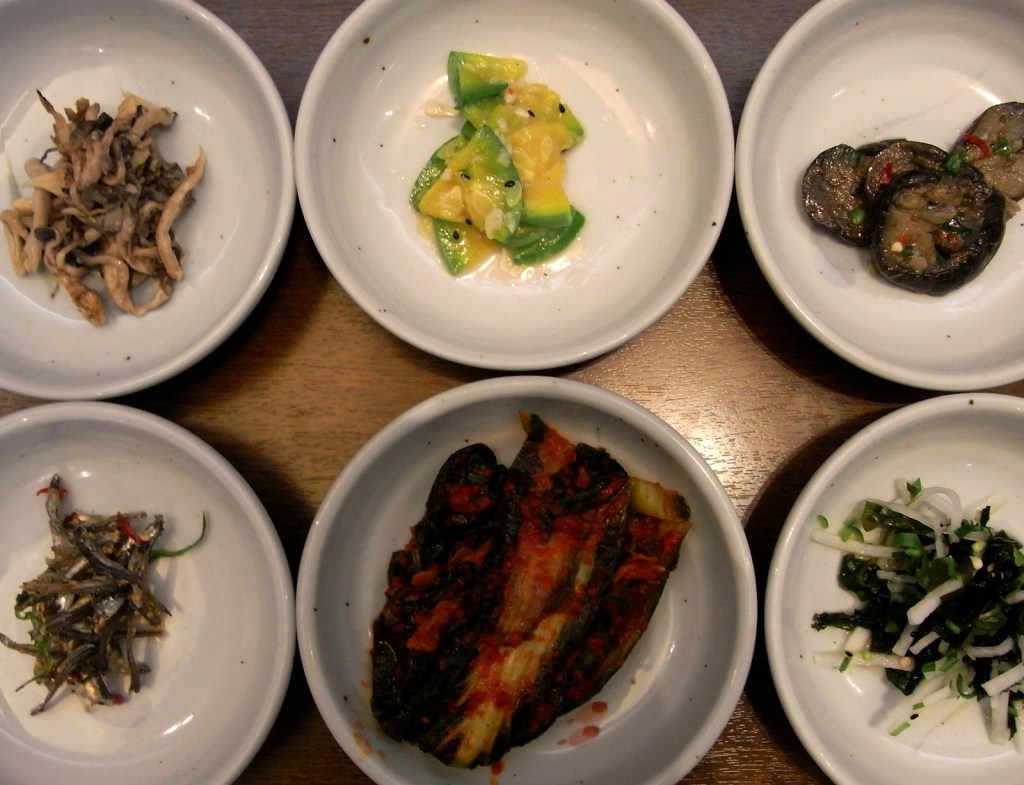
    An overhead spread of Korean banchan, small vegetable and fermented side dishes — korean diet king

    Banchan — the many small side dishes that turn every Korean meal into a spread of vegetables. Photo: Matt @ PEK, CC BY-SA 2.0, via Wikimedia Commons.

    A typical Korean meal follows a simple structure Koreans call bansang — rice at the center, a soup or stew, and a spread of small side dishes called banchan (반찬). Those side dishes are the whole trick. Instead of one big plate, you get a bowl of rice, a light broth, and anywhere from three to a dozen little dishes of vegetables, greens, and fermented foods to share.

    So what do Koreans eat every day? Roughly this: whole or mixed grains instead of just white rice; a soup like doenjang jjigae; kimchi at nearly every meal; several vegetable side dishes (namul); and fish or legumes more often than red meat. It’s naturally high in fiber and vegetables and low in heavy, processed food — which is exactly why “healthy Korean food” and “Korean diet for weight loss” have become such popular searches. And crucially, unlike many modern diets, the traditional Korean diet isn’t built around restriction. There’s no rule banning carbs or fat. The balance just happens: rice, soup, ferments, and a table full of vegetables add up to a meal that’s filling without being heavy.

    Why the whole world suddenly wants healthy Korean food
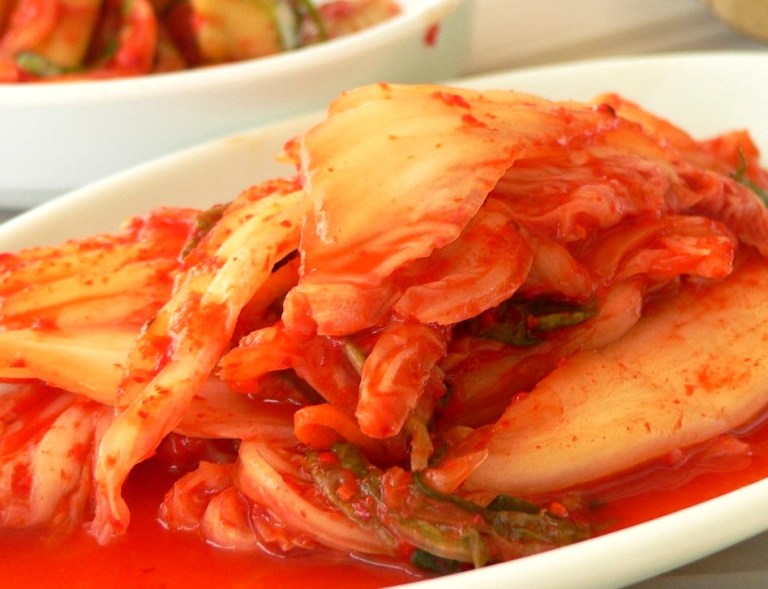
    Assorted Korean kimchi and fermented side dishes in bowls — korean diet king

    Fermented foods — kimchi, doenjang, gochujang — are the diet’s not-so-secret weapon. Photo: Nagyman, CC BY-SA, via Openverse.

    This isn’t just a trend hunch. A large 2017 study in The Lancet projected South Korea to reach one of the highest life expectancies in the world by 2030, and the country already sits near the top for healthy years lived. Longevity has many causes — healthcare, income, and lifestyle all matter — but researchers keep pointing at the same suspects on the Korean table: vegetables, and fermentation.

    The star is namul (나물) — vegetables and wild greens quickly parboiled, then seasoned with sesame oil, garlic, and soy. Blanching them, it turns out, can strip away harsh or harmful compounds while keeping the good stuff, which is one reason Koreans eat an enormous variety of greens without it ever feeling like “eating your vegetables.” Then there’s the fermented backbone: kimchi, doenjang (fermented soybean paste), and gochujang, all rich in gut-friendly bacteria, some even generating vitamins as they age. Add moderate fish and legumes, keep red meat occasional, and you’ve basically described the traditional Korean plate. Today, nutrition experts would recognize many of these habits — but they’re actually centuries old.

    The king who out-lived everyone by eating less

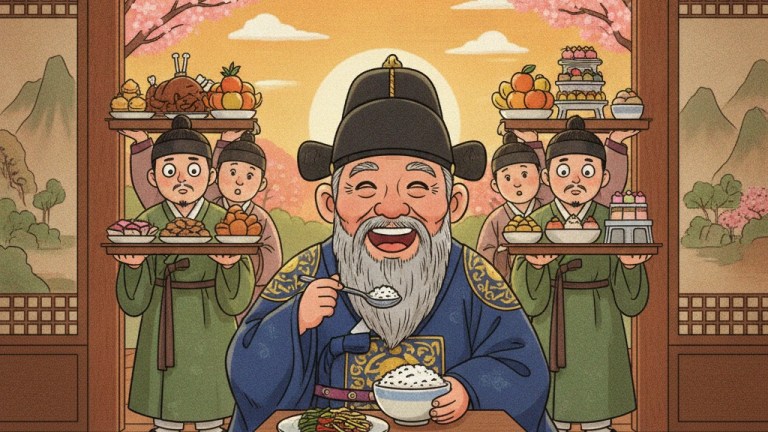
    King Yeongjo simple diet longevity — Korean diet history playful illustration — korean diet king

    King Yeongjo waving away the lavish trays — small table, long life (playful illustration).
    Portrait of King Yeongjo of Joseon in royal robes — korean diet king

    King Yeongjo — the longest-reigning, longest-living Joseon king, and an accidental diet icon. Photo: Chae Yong-sin / Jo Seokjin (public domain), via Wikimedia Commons.

    Meet King Yeongjo, who ruled Joseon Korea for 52 years and lived to 83. That number needs context: in an era when reaching old age was rare, living to 83 was almost science fiction — the rough equivalent of passing 100 today. And he did it from the one seat in Korea with unlimited access to rich food.

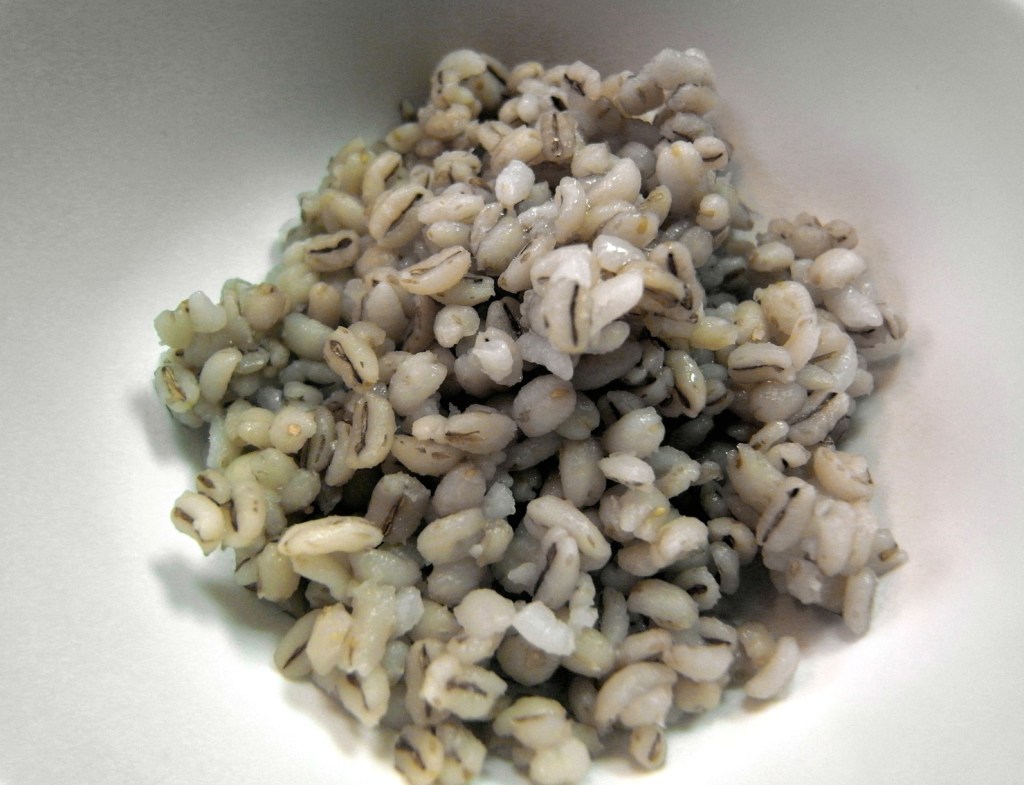
    You already know Korean kings ate like kings — five elaborate meals a day, meat at the center. Here’s what nobody mentions: Yeongjo refused almost all of it. Where other kings took five meals, he took three. His portions were so small that the royal cooks reportedly worried he wasn’t eating enough. He leaned toward seasonal vegetables and namul, plain broths, and restraint — he even preferred humble millet and barley to the polished white rice reserved for royalty. A frail young prince turned himself into the longest-living king in the dynasty, on purpose, one modest meal at a time. It’s a strange kind of willpower to picture: the one man in the country who could have anything, choosing barley over rice at every single meal for decades.

    What was actually on the longevity king’s table

    A bowl of Korean mixed grains and barley rice with vegetables — korean diet king

    Barley and mixed grains over polished white rice — Yeongjo’s quiet preference. Photo: Dalgial, CC BY-SA 3.0, via Wikimedia Commons.

    Strip Yeongjo’s habits down and they look strikingly like the advice a modern longevity doctor would give you: eat mostly plants, keep portions small, favor whole grains over refined ones, and don’t stuff yourself. He wasn’t counting macros — he was practicing restraint as a discipline. In old age he also leaned on ginseng as a restorative tonic, reportedly working through a remarkable amount of it in his later years, in a very Korean marriage of food and medicine.

    The lesson isn’t that vegetables are magic. It’s that the healthy Korean diet everyone’s chasing today isn’t a hack invented for Instagram. It’s a way of eating that a weak prince used to outlast every strong king around him — a table built on greens, grains, and knowing when to stop.

    What actually makes the Korean diet healthy
    A bowl of doenjang jjigae, Korean fermented soybean paste stew, with vegetables — korean diet king

    Doenjang, fermented soybean paste, turns humble vegetables into deeply savory, gut-friendly meals. Photo: Suohros (public domain), via Openverse.

    If you want to actually eat this way, here’s what the traditional Korean plate is built on:

    • Namul (나물) — parboiled, seasoned vegetables and wild greens, eaten in huge variety. The real engine of the diet.
    • Fermented foods — kimchi, doenjang, gochujang. Gut-friendly bacteria, big flavor, near-zero effort once made.
    • Whole grains — barley and millet mixed into rice, more fiber and slower energy than polished white rice alone.
    • Fish and legumes over red meat — protein without the heavy saturated fat, most days of the week.
    • Small rice, many sides (the bansang layout) — the shape of the meal itself nudges you toward vegetables and away from overeating.

    3 easy ways to bring the Korean table home
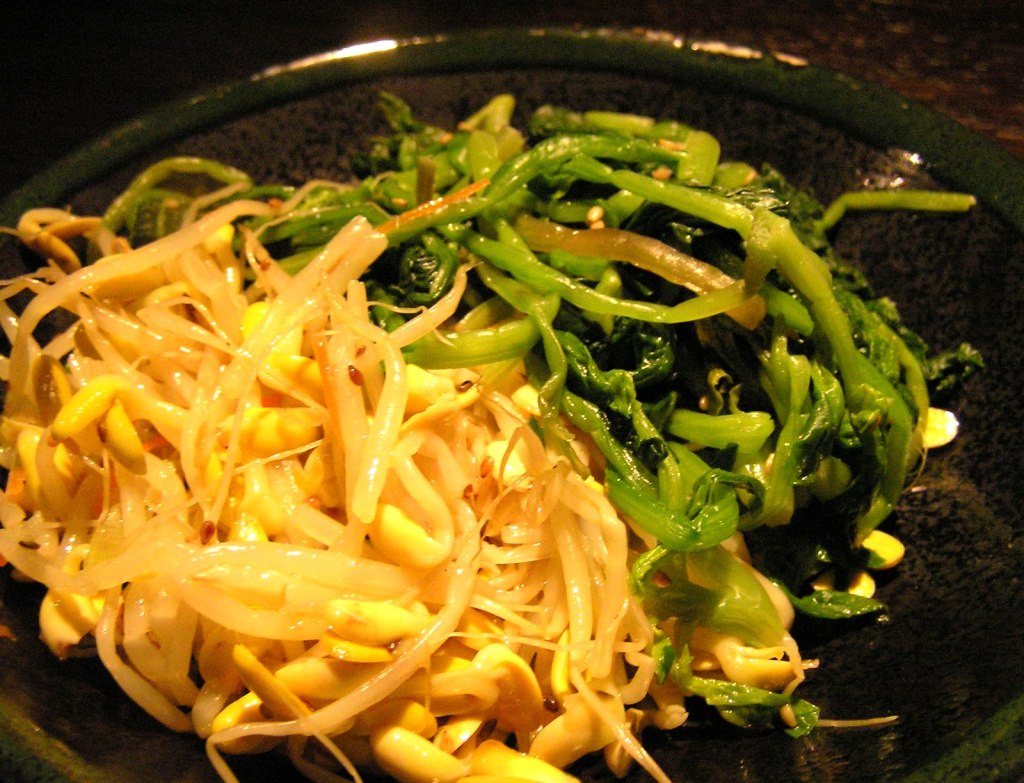
    Korean namul, seasoned bean sprouts and spinach vegetable side dishes — korean diet king

    Namul — quickly blanched, lightly seasoned greens and sprouts. The easiest Korean habit to steal. Photo: Laurel Fan, CC BY-SA 2.0, via Wikimedia Commons.

    You don’t need a Korean grandmother or a pantry of special ingredients to eat a little more like this. Three simple habits get you most of the way:

    • Make an instant namul. Take spinach, kale, or bean sprouts, blanch them for a minute, drain, and toss with a splash of sesame oil, a little minced garlic, and soy sauce. That’s a real vegetable side dish in five minutes.
    • Keep a ferment in the fridge. A jar of good kimchi or a tub of doenjang adds instant gut-friendly bacteria and deep, savory umami to almost anything. When buying kimchi, check the label for a short, natural ingredient list (cabbage, chili, garlic, fish sauce) and few additives.
    • Flip the plate ratio. Let vegetables and a light soup be the main event, with rice playing the supporting role instead of the star. That single switch is the quiet logic behind the whole Korean table.

    Questions people ask about the Korean diet

    What is the Korean diet? It’s a traditional way of eating built on rice, soup, kimchi and other fermented foods, and lots of vegetable side dishes (banchan), with fish and legumes more often than red meat. It’s naturally high in fiber and vegetables and low in heavy, processed food.

    What do Koreans eat every day? A typical Korean meal is rice, a soup or stew (like doenjang jjigae), kimchi, and a few small vegetable side dishes — the bansang structure. Whole grains often replace plain white rice.

    Is the Korean diet good for weight loss? The traditional version tends to be, because its structure does the work: a little rice, a bowl of soup, and a spread of low-calorie, high-fiber vegetables means you eat until satisfied without overloading. (Modern fried and processed Korean foods are a different story.)

    What are banchan? Banchan (반찬) are the small shared side dishes served with almost every Korean meal — seasoned vegetables (namul), kimchi, pickles, and more. They’re what makes a Korean table mostly vegetables by volume.

    Is Korean food healthy? Traditional Korean food — vegetables, fermented foods, fish, legumes, and modest red meat — lines up closely with what research links to long, healthy lives, and Korea is projected to reach one of the world’s highest life expectancies. As always, deep-fried and heavily processed dishes are the exception.

    Did a Korean king really live to 83 on a simple diet? King Yeongjo did live to 83 and is remembered for eating modestly — three small meals, plenty of vegetables, and whole grains — despite having access to the richest food in the kingdom. Historians credit his careful health management, diet included.

    Where to start eating the Korean way

    The next time a wellness account sells you the “Korean diet” as a new discovery, remember the frail prince who quietly out-lived every king around him by pushing the feast away. The whole system is right there on any ordinary Korean table — you just have to load up on the little green plates.

    Want to taste the vegetable side of it? Start with a mountain-herb rice bowl in our gondeure namul bap guide, see how a rainbow of vegetables becomes one perfect bowl in Jeonju’s bibimbap, or wander the endless side-dish stalls of Gwangjang Market.

    Longevity projections from a 2017 study in The Lancet; the roles of namul and fermented foods drawn from published nutrition research and Korean culinary scholarship. Life expectancy has many contributing factors beyond diet. King Yeongjo’s reign length, lifespan, and modest eating habits are recorded in Korean historical sources; some details of his portions and ginseng use survive as court accounts and are noted as such.
  • Korean BBQ Guide: Why Koreans Are Obsessed With K-BBQ — and the King Who Couldn’t Stop Eating Meat

    Korean BBQ Guide: Why Koreans Are Obsessed With K-BBQ — and the King Who Couldn’t Stop Eating Meat

    Korean BBQ pork belly grilling over charcoal at a Korean barbecue table — korean bbq sejong

    The scene every K-drama eventually cuts to: sizzling meat on the grill, everyone leaning in. Photo: Lil’ Dee, CC BY-SA 2.0, via Wikimedia Commons.

    You have seen it a hundred times without noticing. Two characters in a Korean drama finally talk things out — and they do it over a sizzling grill, tongs in hand, a slab of pork belly crisping between them. Korean BBQ (also called Korean barbecue) isn’t just food on these shows. It’s where Koreans cry, make up, celebrate, and get drunk enough to tell the truth. So why does an entire country route its most important moments through a grill?

    The short answer: Koreans have been obsessed with grilled meat for well over a thousand years, and that obsession has a surprisingly royal, slightly tragic backstory. There’s even a beloved genius king in it — the one who invented the Korean alphabet — who loved meat so much it may have wrecked his health. We’ll get to him. First, the grill.

    “To a foreigner it’s a barbecue. To a Korean, it’s a conversation.”

    Why Korean BBQ is a whole culture, not a meal

    A busy Korean BBQ restaurant table with side dishes, grill, and shared plates — korean bbq sejong

    You cook it yourself, at your own table, together — that’s the whole point. Photo: moso, CC BY, via Openverse.

    If your only reference for Korean barbecue is the all-you-can-eat place near your apartment, you’re missing what makes it tick. The first time I sat at an actual table-grill restaurant instead of a buffet line, the difference was obvious within a minute. In Korea, the grill sits in the middle of the table, and you cook your own meat — flipping, snipping with scissors, arguing over who’s letting it burn. It is loud, hands-on, and social by design. Nobody just eats. You wrap a bite of pork in a lettuce leaf with garlic and ssamjang (a thick, savory fermented soybean-and-chili paste), hand the next piece to the person across from you, and pour each other’s soju. That’s why K-dramas keep returning to it: a barbecue table is the one place Korean characters can be honest.

    This is also why Korean BBQ exploded worldwide. It travels perfectly — the theater of the tabletop grill, the small side dishes called banchan (free and endlessly refillable), the mukbang-friendly sizzle. But the reason it means so much inside Korea goes back way, way before the first Gangnam grill house.

    A meat obsession 2,000 years in the making

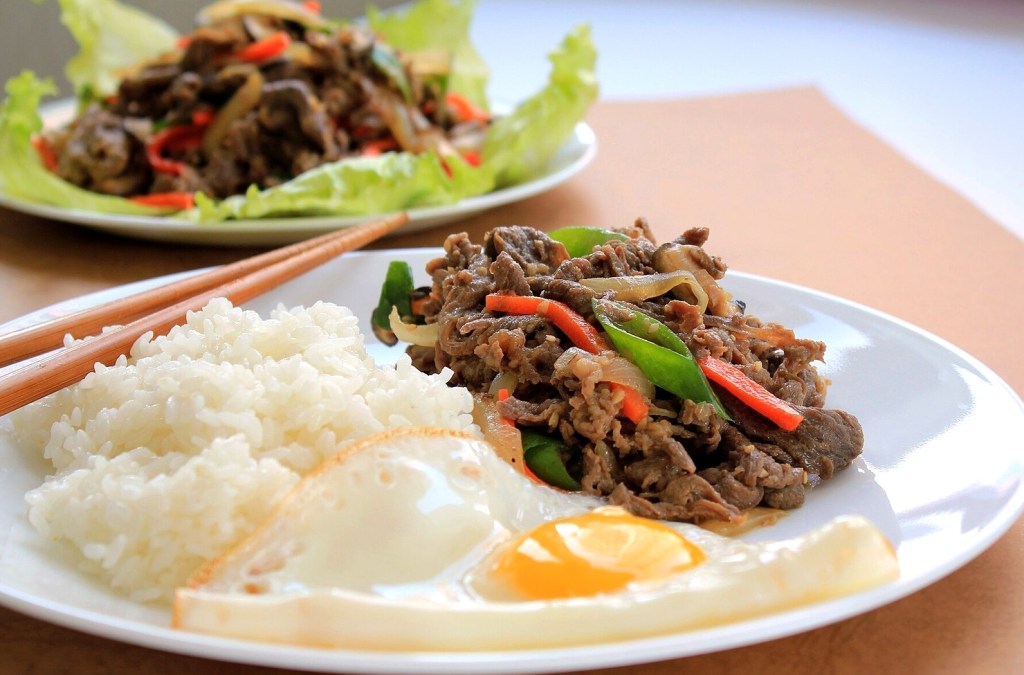
    Bulgogi, thin marinated Korean beef, grilling with onions — korean bbq sejong

    Bulgogi (불고기) literally means “fire meat” — the polished descendant of a 2,000-year-old skewer. Photo: ayustety, CC BY-SA 2.0, via Wikimedia Commons.

    Koreans were grilling meat back in the Goguryeo era, two thousand years ago, on skewers over open flame — a dish the records call maekjeok. That’s the ancient ancestor of bulgogi (불고기), which literally means “fire meat.” So far, so predictable. Then came the plot twist.

    When Buddhism became the dominant faith through the Goryeo dynasty, killing animals fell out of favor, and meat grew scarce on many Korean tables for a long stretch. Here’s the part nobody mentions: that shift is a big reason Korea developed its incredible universe of vegetable side dishes — the seasoned greens, pickles, and small plates you now see at every meal. A vegetable-rich, temple-influenced food culture helped shape the banchan tradition that still defines the Korean table.

    Then, in the 13th century, Mongol influence helped revive and popularize grilled meat, especially beef. By the Joseon dynasty, grilled beef had been refined into neobiani — thin, marinated slices grilled for kings and aristocrats. Ordinary people rarely got it; beef was a luxury for the powerful. And that’s where our king comes in.

    The genius king who couldn’t eat without meat

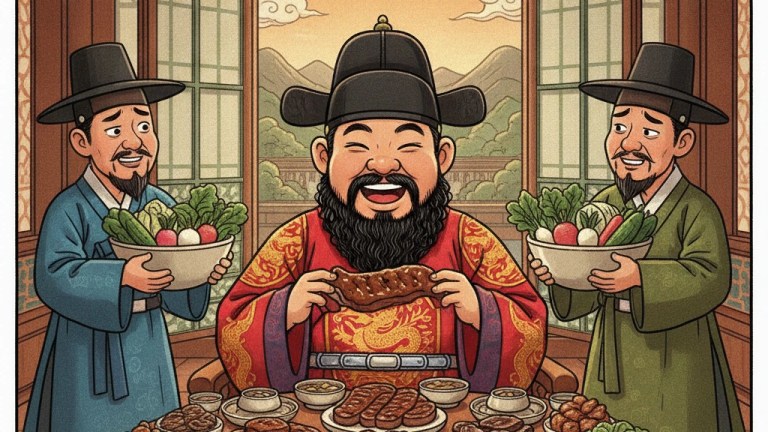
    King Sejong grilled meat feast — Korean BBQ history playful illustration — korean bbq sejong

    King Sejong and his beloved meat table — even his ministers gave up (playful illustration).

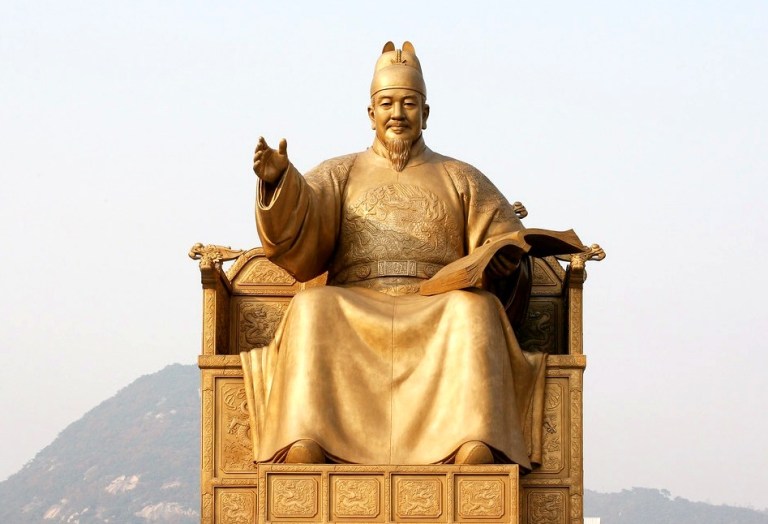
    Statue of King Sejong the Great at Gwanghwamun Square in Seoul — korean bbq sejong

    King Sejong the Great at Gwanghwamun — inventor of Hangul, and a legendary carnivore. Photo: KOREA.NET, CC BY-SA, via Openverse.

    Ask anyone in Korea about King Sejong the Great and they’ll tell you the same thing: he created Hangul, the elegant alphabet Koreans still use today, and he’s on the 10,000-won bill. That’s the part everyone knows. Here’s the part they don’t.

    According to the Annals of the Joseon Dynasty — the meticulous royal records — Sejong was a committed carnivore. He reportedly refused to eat a meal if there was no meat on the table. He is said to have been so devoted to it that his father, the previous king, worried about his health and eating habits. There’s even a telling detail: the one meat Sejong wouldn’t touch was lamb, because Joseon didn’t raise sheep and it had to be imported — and he refused to spend the people’s money importing meat just for himself.

    But the meat may have come at a cost. The Annals describe the king, later in life, suffering from a stack of ailments that historians have suggested may be consistent with conditions such as obesity, diabetes, high blood pressure, and joint and eye problems — the kind of “rich man’s diseases” you might expect from a meat-heavy diet and little exercise. The man who gave Koreans their alphabet also, quietly, gave them one of history’s most relatable stories: a brilliant person who just really, really loved eating meat. Koreans have never entirely gotten over it.

    The main types of Korean BBQ meat, explained

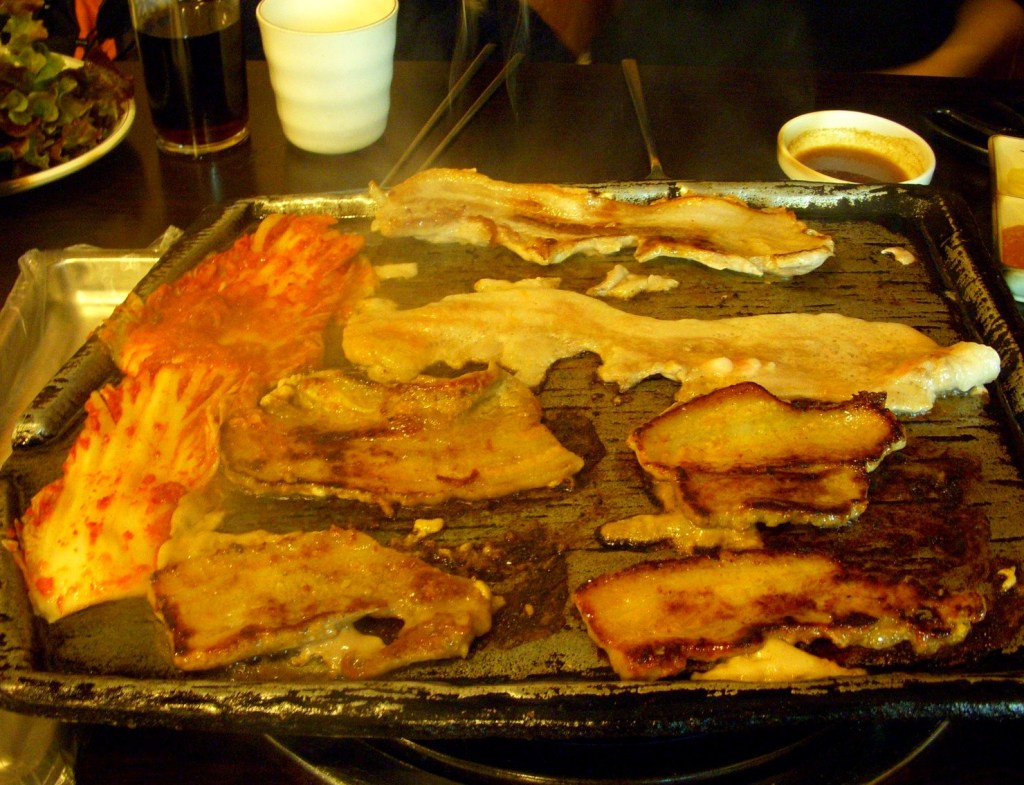
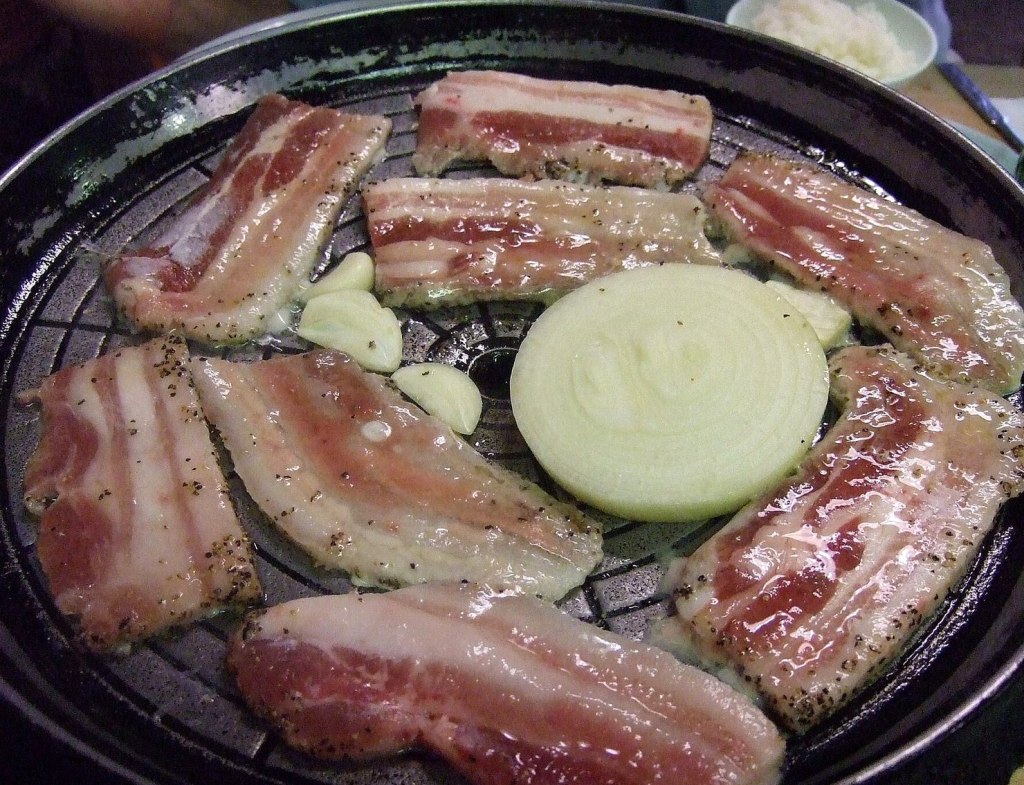
    Samgyeopsal, thick slices of Korean pork belly grilling on a metal plate — korean bbq sejong

    Samgyeopsal (삼겹살) — sizzling, unmarinated pork belly, the everyday people’s champion. Photo: LWY, CC BY, via Openverse.

    If you’re planning your first Korean BBQ, here’s the quick map of what to order:

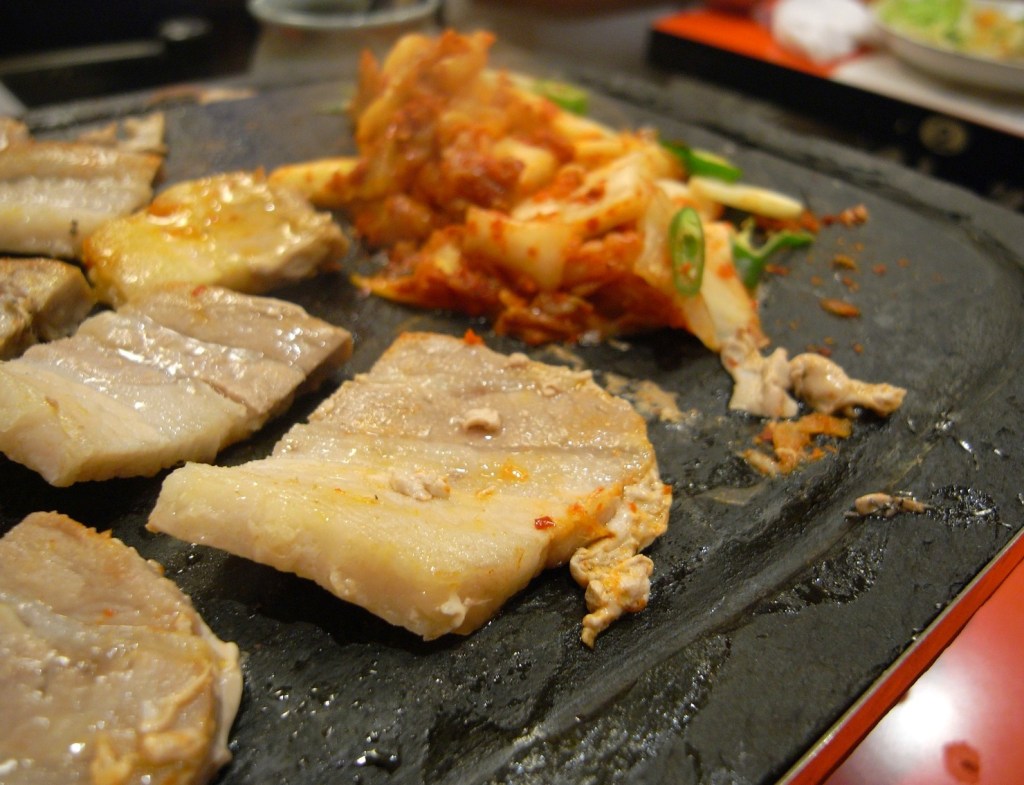
    • Samgyeopsal (삼겹살) — thick-cut, unmarinated pork belly, grilled until crispy on the outside and juicy in the middle. The undisputed national favorite, cheap and beloved. Wrap it in lettuce with garlic.
    • Bulgogi (불고기) — thin beef marinated in a sweet-savory soy sauce until tender and glossy. The polished, historic one — this is the descendant of the royal neobiani.
    • Galbi (갈비) — marinated beef or pork short ribs, richer and a little fancier. Special-occasion meat.
    • Ssam (쌈) — not a meat, but the move: the lettuce-and-perilla wrap that turns every bite into a little parcel with rice, garlic, and ssamjang.

    Galbi, marinated Korean short ribs grilling over charcoal — korean bbq sejong

    Galbi (갈비) — marinated short ribs, the special-occasion splurge. Photo: Junho Jung, CC BY-SA 3.0, via Wikimedia Commons.

    Notice the throughline. Bulgogi and galbi, the marinated cuts, descend directly from the meat that once graced royal tables. Samgyeopsal, the plain pork belly everyone actually eats on a Friday night, only became the people’s champion in the last few decades — once thin-slicing technology after the Korean War made meat cheap enough for everyone. In one meal, you’re eating both halves of the story: the king’s luxury and the commoner’s dream, finally on the same grill.

    How to eat Korean BBQ like a local

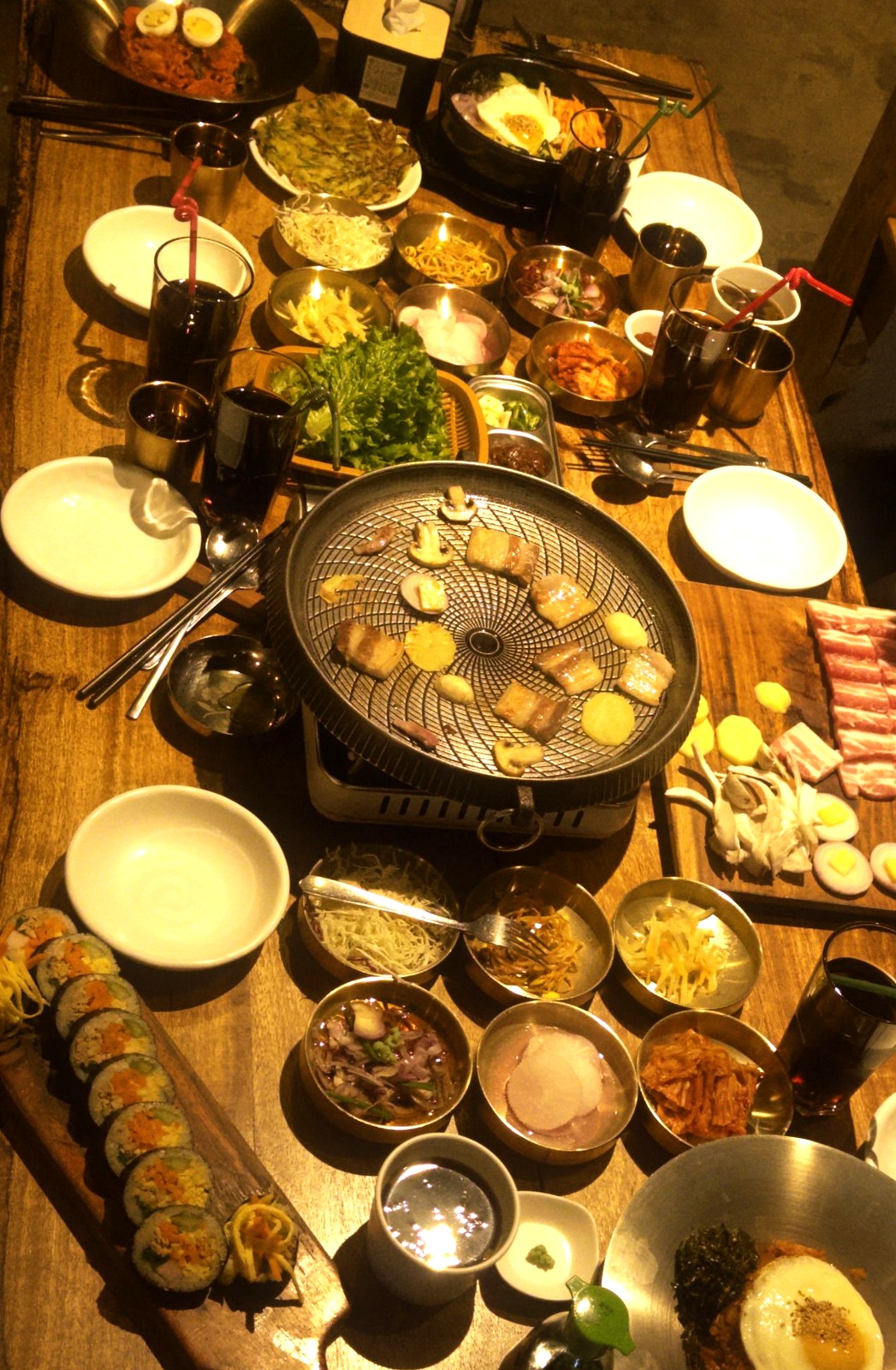
    An overhead spread of a Korean BBQ table with grill, pork belly, and many banchan side dishes — korean bbq sejong

    A full Korean BBQ spread: grill in the middle, banchan and lettuce for ssam all around. Photo: Manjil Aryal (public domain / CC0), via Openverse.

    First time at a Korean barbecue restaurant? You grill the meat yourself, right at the table — and there’s a rhythm to doing it like a Korean. Three rules cover almost everything:

    • Don’t fear the scissors. Kitchen shears are a grillmaster’s best friend here. Once the meat is about halfway cooked, snip it into bite-sized pieces right on the grill — no knife-and-fork required.
    • Build a ssam, eat it in one bite. Lay meat on a lettuce leaf, add garlic, a dab of ssamjang, maybe a little rice, then wrap and pop the whole parcel in your mouth at once. Biting it in half is how you end up wearing it.
    • The banchan is bottomless. Those little side dishes — kimchi, seasoned greens, pickles — are free and refillable. When one runs low, just ask for more (“Deo juseyo!”).

    Questions people always ask about Korean BBQ

    Why is Korean BBQ so popular? Because it’s an experience, not just a meal: you grill it yourself at a shared table, wrap each bite fresh, and graze on endless banchan while you talk. That social, hands-on theater — plus K-dramas and mukbang showing it off — is what made Korean barbecue a global favorite.

    How do you eat Korean BBQ? You cook thin slices of meat on the tabletop grill, snip them with scissors, then wrap a piece in lettuce with garlic and ssamjang to eat in one bite — alternating with rice, banchan, and a drink between rounds.

    What is the most popular Korean BBQ meat? Samgyeopsal (삼겹살), grilled pork belly. It’s the cheap, unmarinated, wrap-it-in-lettuce staple that most Koreans mean when they say “let’s get gogi (meat).”

    What’s the difference between bulgogi and Korean BBQ? Bulgogi (불고기) is one specific dish — thin beef marinated in sweet soy sauce. “Korean BBQ” is the whole grill-it-yourself experience, which includes bulgogi, samgyeopsal, galbi, and more.

    Why do Koreans wrap the meat in lettuce? The wrap, called ssam (쌈), balances the rich grilled meat with something fresh and crunchy, plus garlic and ssamjang for a punch. It’s also deeply Korean: a little of everything in one bite.

    Did Korean kings really eat barbecue? In a sense, yes. Marinated grilled beef (neobiani, the ancestor of bulgogi) was refined for royalty and aristocrats during the Joseon dynasty. King Sejong the Great, per the royal Annals, was an especially famous meat lover.

    Where the grill takes you next

    Next time a K-drama cuts to a grill scene, watch what’s really happening. It isn’t about the meat. It’s a thousand years of history — a faith that nudged Korea toward its vegetables, invaders who brought back the fire, kings who hoarded the beef, and a genius who couldn’t say no to it — all landing quietly on one small tabletop grill between two people who need to talk. That’s why Korean barbecue remains one of the country’s most beloved social traditions.

    Hungry for the rest of the table? See where the whole meat-and-side-dish tradition still runs wildest at Seoul’s Gwangjang Market, taste what beef became in a bowl with Seolleongtang, Korea’s milky ox-bone soup, or find out why Koreans fight summer heat with a boiling bird in our samgyetang guide.

    Korean BBQ history (Goguryeo maekjeok, the Buddhist-era decline of meat, Mongol-era revival, and Joseon neobiani) compiled from Wikipedia and Korean culinary histories. King Sejong’s meat preference and later illnesses are drawn from accounts of the Annals of the Joseon Dynasty as reported by The Korea Herald and Korean historical references; modern disease names are later interpretations, and some details survive as court anecdote and are noted as such.

  • “We Didn’t Order These” — The Truth About Korea’s Free Side Dishes (Banchan)

    “We Didn’t Order These” — The Truth About Korea’s Free Side Dishes (Banchan)

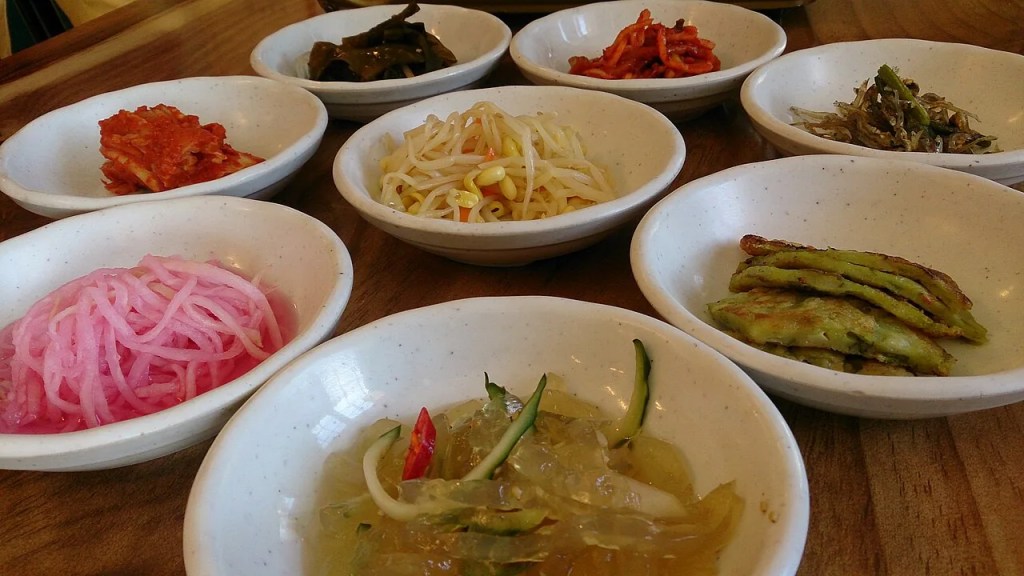
    Many small white dishes of Korean banchan neatly arranged on a table, seen from above — banchan korean side

    The little plates you see in every K-drama — this is banchan. Photo: Brian Johnson & Dane Kantner, CC BY-SA 2.0, via Wikimedia Commons

    You’ve seen the tables in a hundred K-dramas — so crowded with little plates there’s barely room for the rice. It looks like a feast laid on for guests. Then it happens to you, at a real Korean restaurant, and for a second you’re sure there’s been a mistake.

    You order one thing. A single bowl of soup. The server disappears. Then the rice comes. Then the soup. Then five small dishes you never asked for. Then another. Then another. You check the menu again — you only ordered one thing. Nobody asks whether you wanted the rest. Nobody mentions a price. Because there isn’t one.

    Those little plates are banchan (반찬), Korea’s side dishes, and yes — they’re free, and the basics are usually refillable. That’s the part that stops people. The part the dramas never explain is everything after: how many you’re “supposed” to get, how to ask for more without looking clueless, and the one habit that quietly annoys every Korean server.

    First, That K-Drama Dinner Table

    Think of almost any home-cooked meal scene — the family in Reply 1988, a late dinner in Something in the Rain, a hangover breakfast in half the rom-coms you’ve watched. The camera pans across the table and it’s a mosaic of small white dishes: something green, something red, something braised and glossy, kimchi in the corner. Foreign viewers see a feast. Koreans see Tuesday night.

    What foreigners usually assume is that this is a special spread, put on for guests. It isn’t. That wall of little plates is just how a Korean meal is built — rice and soup in front of you, and a rotating cast of side dishes in the middle for everyone to pick at. Once you know that, you start seeing banchan in every drama you watch. You can’t unsee it.

    Wait — Are Korean Side Dishes Really Free?

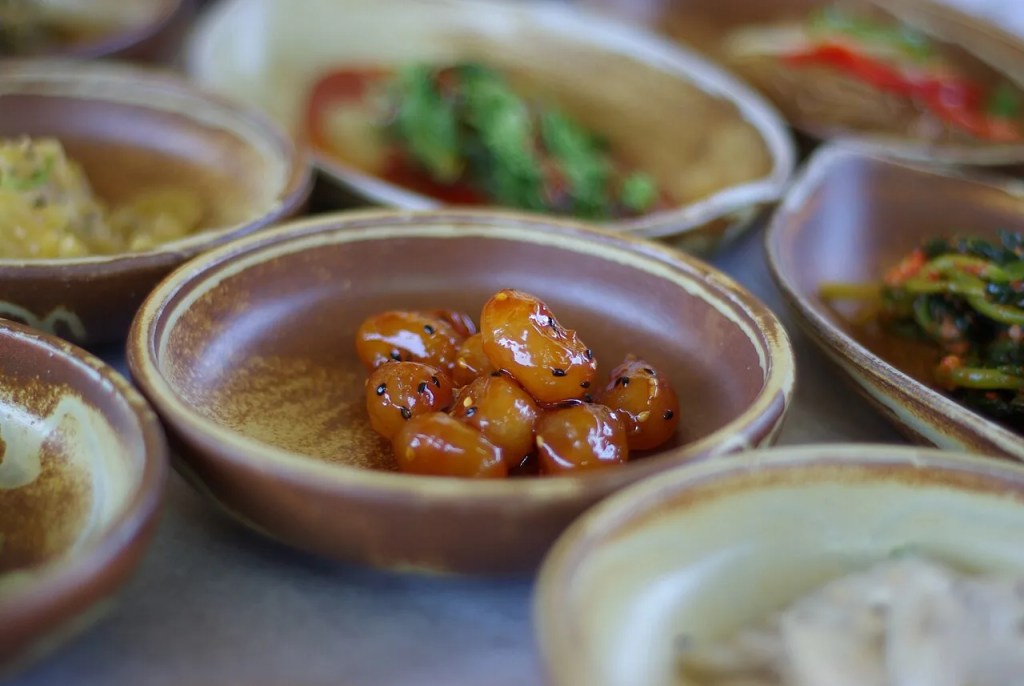
    A glossy bowl of braised, sweet-savory Korean banchan — banchan korean side

    You didn’t order these. You won’t be billed for them either. Photo: egg (Hong, Yun Seon), CC BY 2.0, via Wikimedia Commons

    You already know the surprise from the moment you sat down: yes, they’re free. There’s no separate “sides” charge on the bill, and — while we’re at it — no tipping either. The little dishes are simply how a Korean meal is served, not a bonus you have to earn.

    What actually trips people up is which ones get refilled. The free top-ups apply to the humble everyday stuff — kimchi, seasoned bean sprouts, pickled radish — not to premium items like a good marinated crab. When in doubt, the basics are the safe bet. To a foreigner it can look like reckless generosity. To a Korean, it’s just how dinner arrives.

    How Many Small Dishes Is “Normal”?

    More than you’d think, and it scales with the occasion. A quick weeknight dinner at home might have three to five banchan. A proper restaurant or a Korean barbecue place can push that to a dozen or more, especially the countryside spots that pride themselves on the sheer number of plates.

    Here’s the fun part the dramas skip. The number wasn’t always random — it used to signal rank. In the Joseon dynasty, a table was described by its cheop (첩) count, meaning how many side dishes it carried beyond the staples: a 3-cheop table for commoners, 5, 7, or 9 for the better-off. The king’s table? Twelve. So the next time a period drama shows a royal feast groaning under tiny dishes, that’s not set decoration — it’s a status number you can literally count.

    A Korean home meal spread with many colorful banchan side dishes — banchan korean side

    More plates than you’d expect — bean sprouts, kimchi, greens, all at once. Photo: ProjectManhattan, CC BY-SA 3.0, via Wikimedia Commons

    How to Ask for More Without Looking Clueless

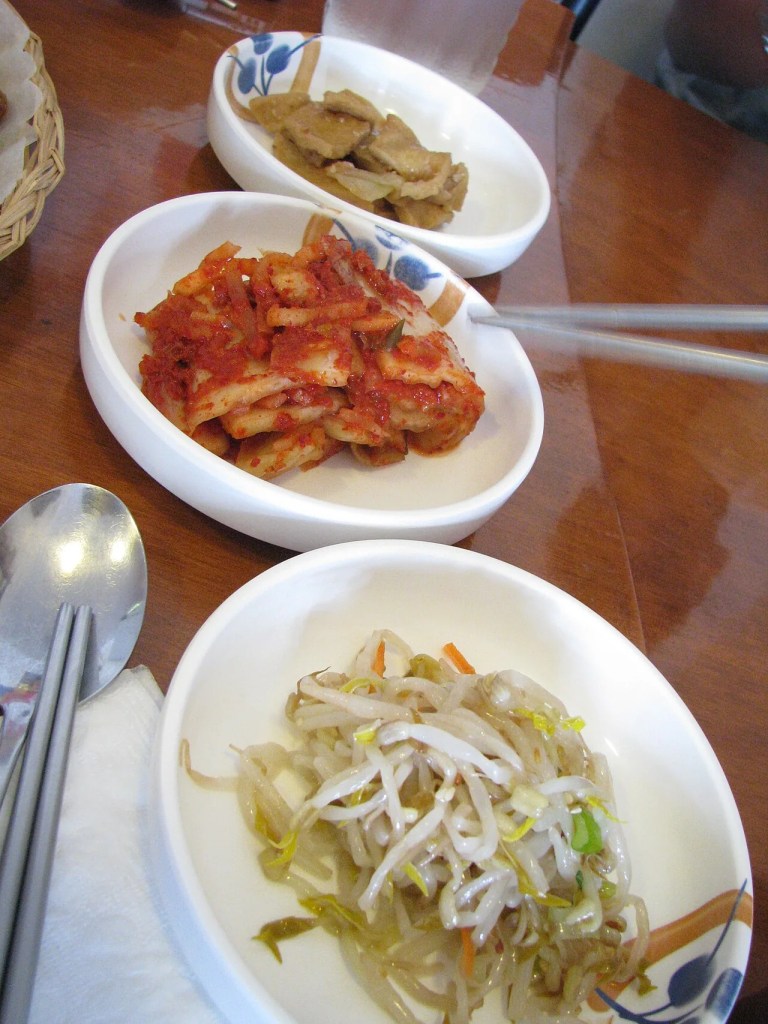
    Fresh Korean kimchi and seasoned bean sprouts, the refillable banchan staples — banchan korean side

    The free refills are the everyday basics — kimchi, seasoned bean sprouts. Photo: Jerine Lay, CC BY 2.0, via Wikimedia Commons

    You finished the kimchi and want more. Easy. Catch a server’s eye, point at the empty dish, and say “jogeum deo juseyo” (조금 더 주세요) — “a little more, please.” That’s it. They’ll top it up and think nothing of it.

    The unspoken limit is common sense. In practice people ask maybe two or three times, not ten. The refills exist so the table never runs dry, not so you can build a personal stockpile. Ask for what you’ll actually eat and you’ll be a model customer — which brings us to the one habit that does get side-eye.

    Is It Rude to Leave Banchan?

    Korean kimchi and namul side dishes in small white bowls — banchan korean side

    Leaving a little is fine. Piling up refills you won’t finish is the real faux pas. Photo: ayustety, CC BY-SA 2.0, via Wikimedia Commons

    Good news: no. Leaving a bit of banchan behind is completely normal, and nobody expects you to clean every single plate. You’re sampling, not obligated.

    The actual etiquette runs the other direction. Since the refills are shared and free, ordering a mountain of something and then leaving it untouched is the move that quietly bothers people — it’s waste, and it defeats the whole “help yourself, we’ll keep it coming” spirit of the thing. So the honest rule of thumb is simple: take what you’ll eat, ask again if you want more, and don’t treat the free refill like a challenge.

    The Quick Version

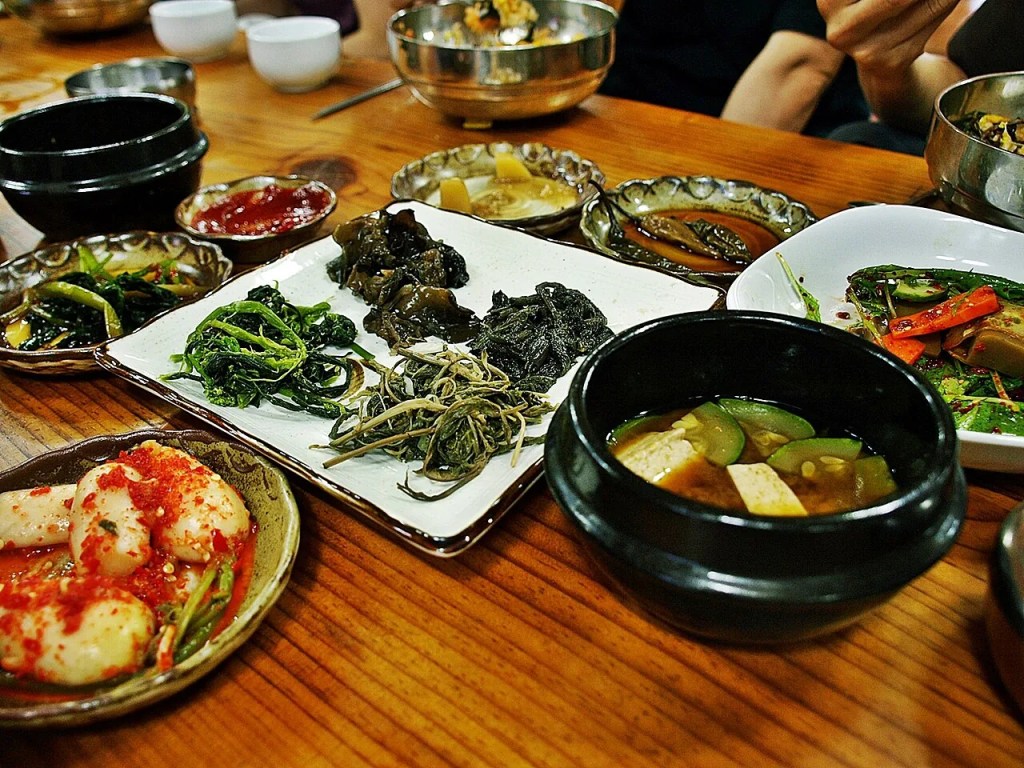
    A tidy Korean temple-style tray of vegetable banchan with doenjang stew — banchan korean side

    Same idea, all vegetables — a temple-style spread. Photo: magicinprogress, CC BY 2.0, via Wikimedia Commons

    Banchan are Korea’s free side dishes — the little plates in every K-drama meal. Expect three to five at home, up to a dozen at a good restaurant, and free refills on the basics. Say “jogeum deo juseyo” for more, leave what you don’t finish, and don’t over-order refills you won’t eat. The number once signaled rank, all the way up to the king’s twelve-dish table.

    Frequently Asked Questions

    Are Korean side dishes really free?

    Yes. Banchan comes free with your meal at most Korean restaurants, and the basics like kimchi and bean sprouts are usually refillable at no extra charge. There’s no separate sides charge and no tipping.


    How many banchan is normal?

    Three to five at a simple home meal, and anywhere from three to a dozen-plus at a restaurant. In the Joseon era the count signaled rank — the royal table had twelve.


    How do I ask for more?

    Say “jogeum deo juseyo” (조금 더 주세요) — “a little more, please” — and point at the dish. Refills of the basics are free, though most people only ask a couple of times.


    Is it rude to leave banchan?

    No — leaving a little is normal. The real faux pas is over-ordering refills you won’t finish, since the free refills are meant for sharing, not stockpiling.

    So the next time you put on a Korean drama, watch the table instead of the actors. Those little dishes aren’t set decoration — they’re one of the oldest habits in Korean dining, a whole quiet language of rank and hospitality laid out in white bowls. Nobody in the show will ever explain them. They don’t have to. Every Korean at that table already understands exactly what those little bowls are saying.

    Where to Try It Yourself

    Want to experience it outside a drama? Skip the screen and head to a traditional market — the stalls at Gwangjang Market in Seoul lay out banchan like a painter’s palette. And if you’re curious how one humble side dish can headline a whole meal, the seasoned bean sprouts you meet as banchan grow up into kongnamul-gukbap, Jeonju’s bean-sprout rice soup. For the bigger map, our guide to what to eat in Korea shows where each dish fits.

    Photos are Creative Commons (CC BY-SA), credited under each image — Wikimedia Commons and Openverse. Sources: everyday Korean dining custom on complimentary, refillable side dishes; the Joseon-era cheop (첩) table system, with the royal table at twelve dishes. Restaurant practices vary, so treat refill rules as the general norm rather than a guarantee.