
You have room for a snack, not three lunches. So what should your first stop be: a skewer, a crisp pancake or a small rice roll? All three can be called Korean street food, but they ask different things of your appetite—and of the place where you eat them.
Start with the texture you want, then choose a portion and a place to pause. Following sauce, broth, crispness and filling gives the outing a shape. It also leaves room to understand why a dish that looks portable may belong at a counter or around a shared pot.
Four eating settings hidden inside “street food”
Visitors often imagine a continuous row of outdoor carts. Korea certainly has carts and temporary stalls, but many foods associated with “street food” are sold in permanent markets, tiny snack shops or seated alleys. The category is broader than the English phrase suggests.
Traditional markets are the best place to see cooking as part of the attraction. Large griddles, steaming pots, chopped ingredients and shared counters are visible to the customer. Gwangjang Market in Seoul is a classic example: Seoul Tourism Organization’s market guide highlights mung-bean pancakes, small gimbap rolls and other ready-to-eat foods.
Bunsik shops are inexpensive snack or light-meal businesses. Tteokbokki, eomuk, twigim, gimbap, sundae and ramyeon often overlap on the same menu. These shops may be fully indoors, so calling every bowl “street food” describes the food culture more than the architecture.
Carts and kiosks specialize in speed and portability. Bungeoppang, hotteok, skewered eomuk and some fried foods work because they can be cooked or held in small spaces and eaten immediately. Their exact locations are less stable than a market building, which is why a fixed “best cart” list ages quickly.
Pojangmacha literally evokes the covered wagon or tent-stall format. Modern versions range from simple outdoor drinking stalls to permanent businesses using the aesthetic. They are closer to an informal bar-and-food setting than to a pastry cart. The menu can include fish cakes, noodles, stir-fries, seafood and alcohol, and the experience is usually about staying rather than walking away with one snack.
A hot, savory first round
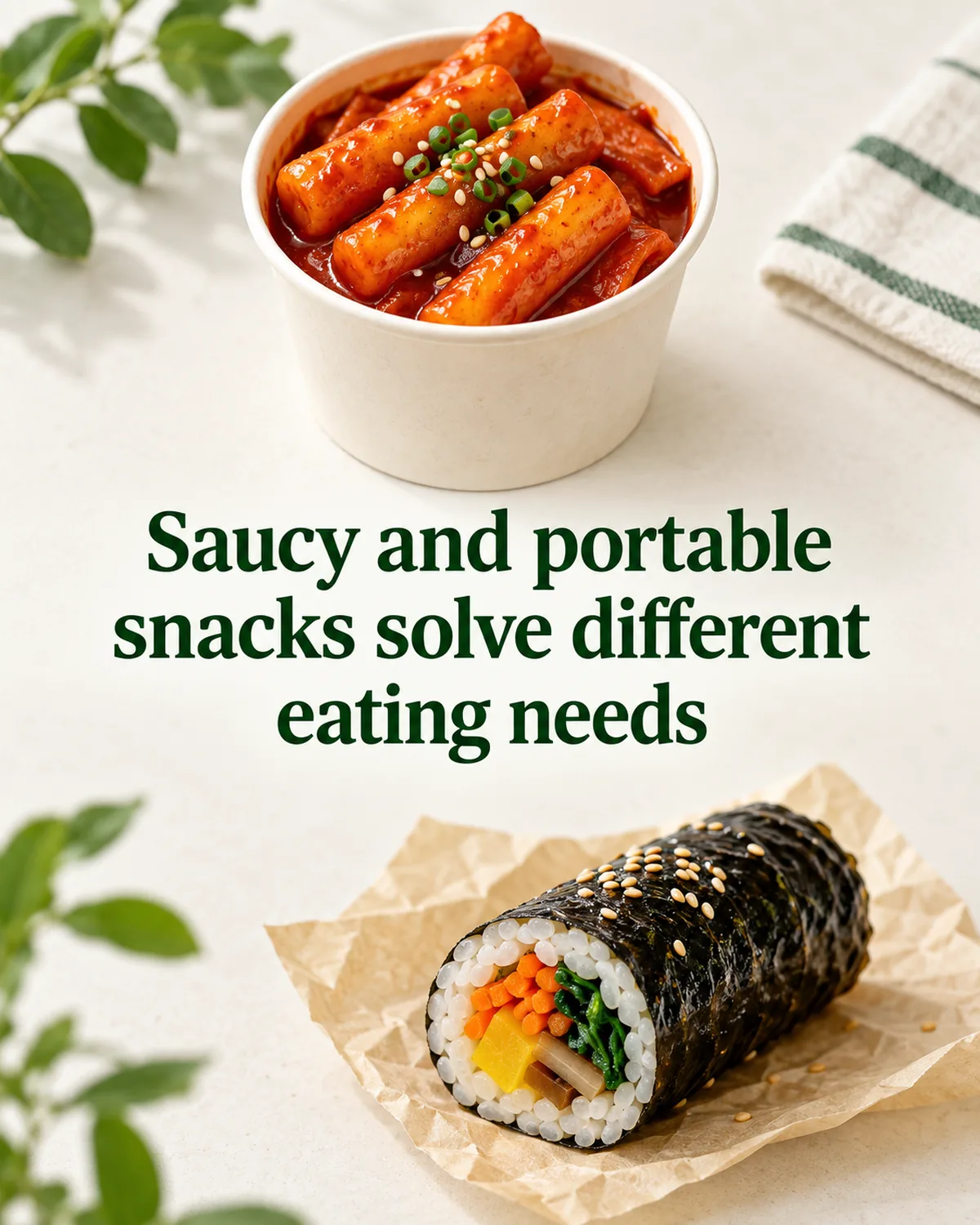
Modern spicy tteokbokki is one of the clearest visual symbols of Korean snack food: cylindrical rice cakes simmered in a red sauce commonly built around gochujang, with fish cake, scallion, cabbage or boiled egg depending on the vendor. The sauce thickens as starch from the rice cakes and other ingredients enters the pan, which is why a busy stall can look glossy and almost lacquered by the end of service.
The history needs more care than the familiar “one person invented tteokbokki” story. Rice-cake dishes called tteokbokki existed before the modern red street-food form. Earlier versions could be soy-seasoned and closer to a stir-fry. Sindang-dong later became a major center for the spicy, table-cooked form that now defines the neighborhood.
A stall snack and a shared restaurant pan carry different memories. Korea Tourism Organization’s account of Sindang-dong attributes early rice-cake sales to Ma Bok-rim’s restaurant-owner history, including customers visiting the nearby theater; the neighborhood later became associated with student outings. These are accounts of local trade and eating habits, not proof that one person invented every form of tteokbokki. Today, the distinction remains practical: a ready-served portion can fit a short stop, while a pan cooked at the table asks you to sit, wait and share.
There is also a format difference worth noticing. At many snack counters, tteokbokki is already cooked and served by portion. In Sindang-dong’s better-known restaurant style, a larger pan may arrive at the table with rice cakes, fish cake and additions that continue cooking together. One is optimized for speed; the other turns the sauce and starch development into part of a shared meal.
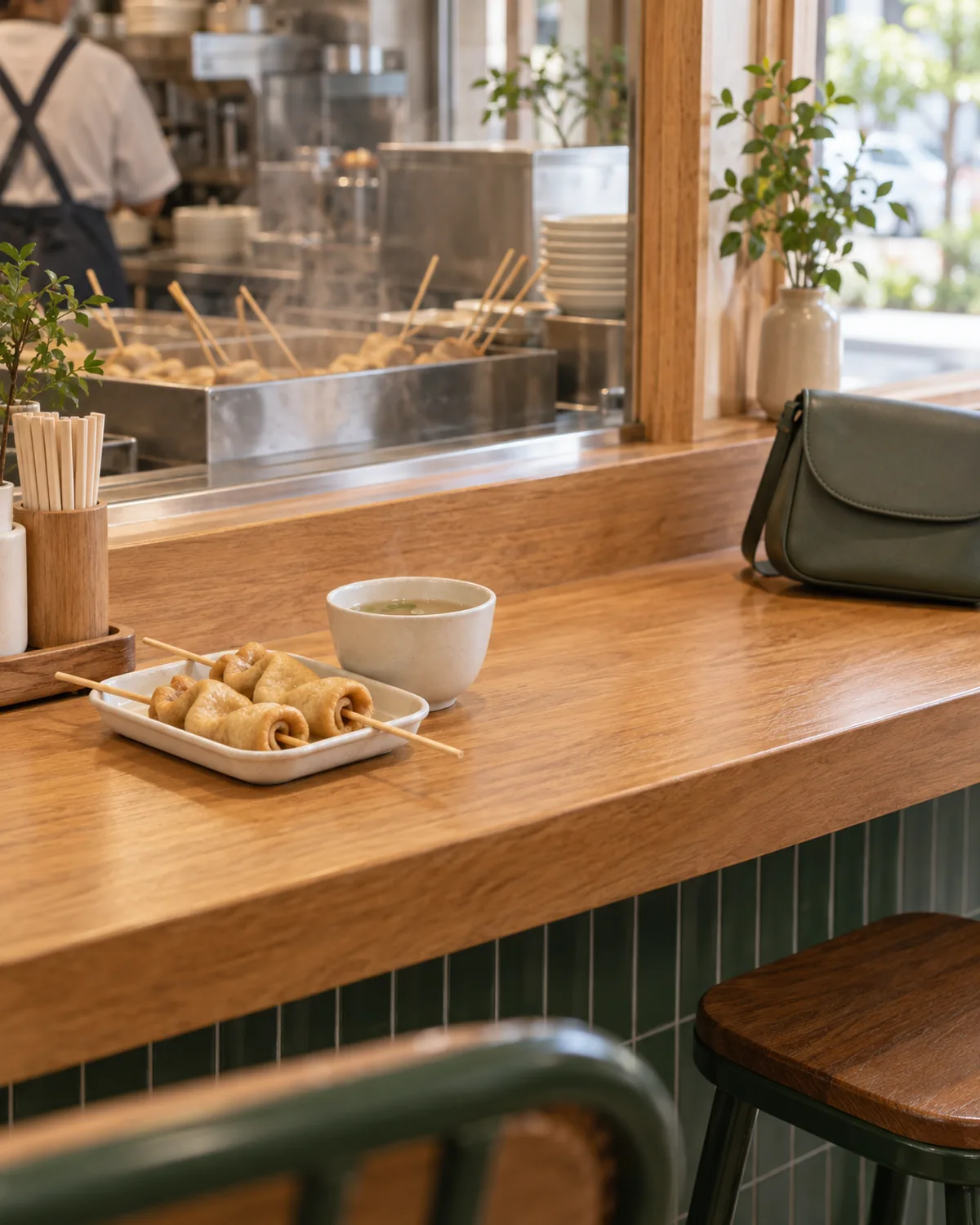
Eomuk is ground fish formed into cakes, sheets, bars or other shapes. On the street, the familiar version is folded onto a skewer and kept hot in broth. The skewer is not decorative: it makes a soft, slippery food easy to handle while standing, and the broth keeps the product hot through cold weather.
Busan has a particularly strong association with fish cakes. Korea Tourism Organization’s Busan guide places eomuk alongside the snacks found in the coastal city’s markets. That regional link is useful because it shows why “Korean street food” cannot be reduced to Seoul alone.
The broth deserves attention too. It is often treated as a free extra in simplified travel descriptions, but serving rules differ by business. More important is its function: hot broth adds warmth, moisture and a mild savory counterpoint to the denser fish cake. In a winter market, the skewer-and-broth combination is almost a complete piece of food design—portable, fast, easy to portion and suited to cold hands.
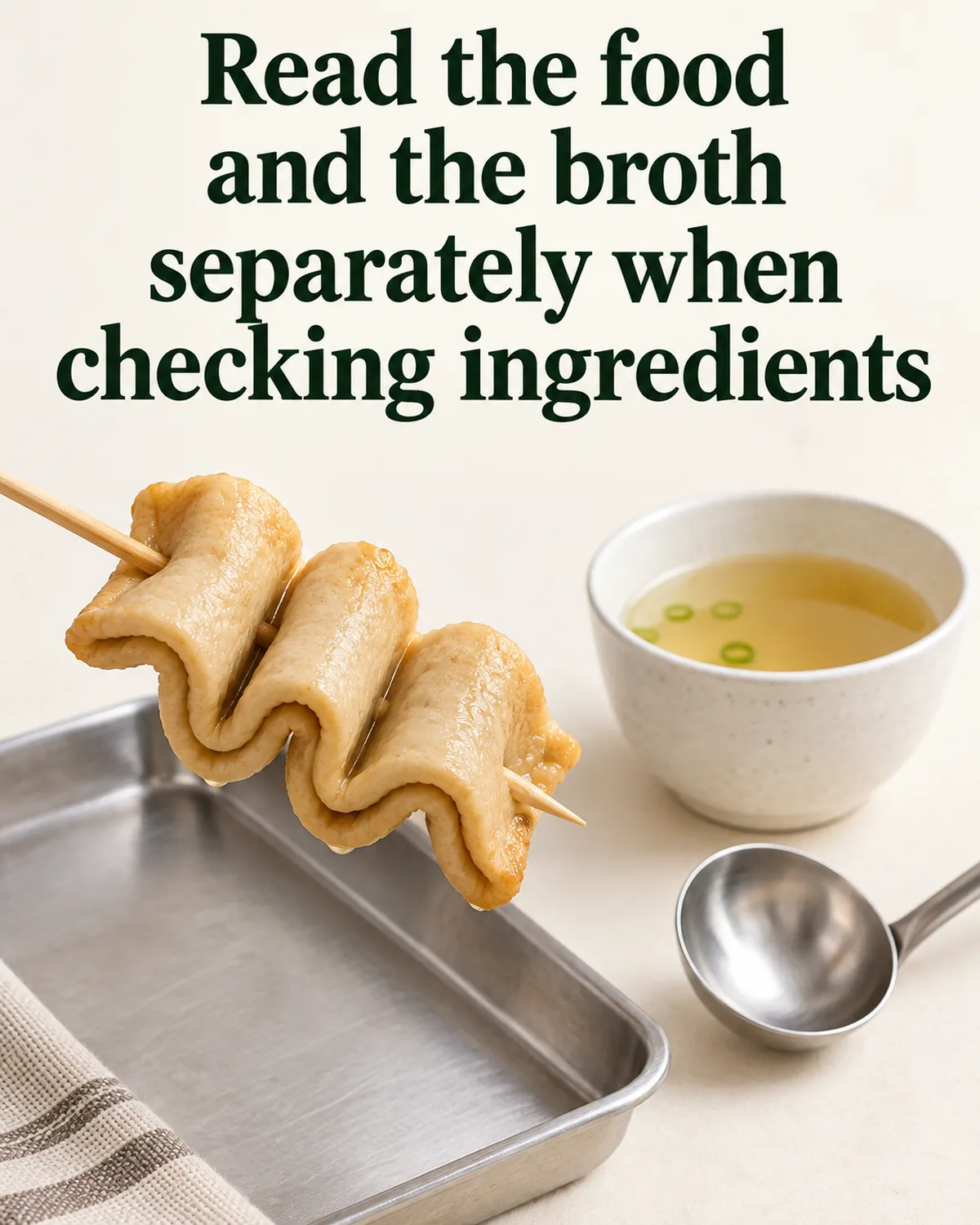
For travelers with fish or shellfish allergies, eomuk requires caution. The exact seafood mixture and broth ingredients vary by product and vendor, and the same cooking area may handle multiple seafood items. The word eomuk tells you the category, not the complete ingredient list.
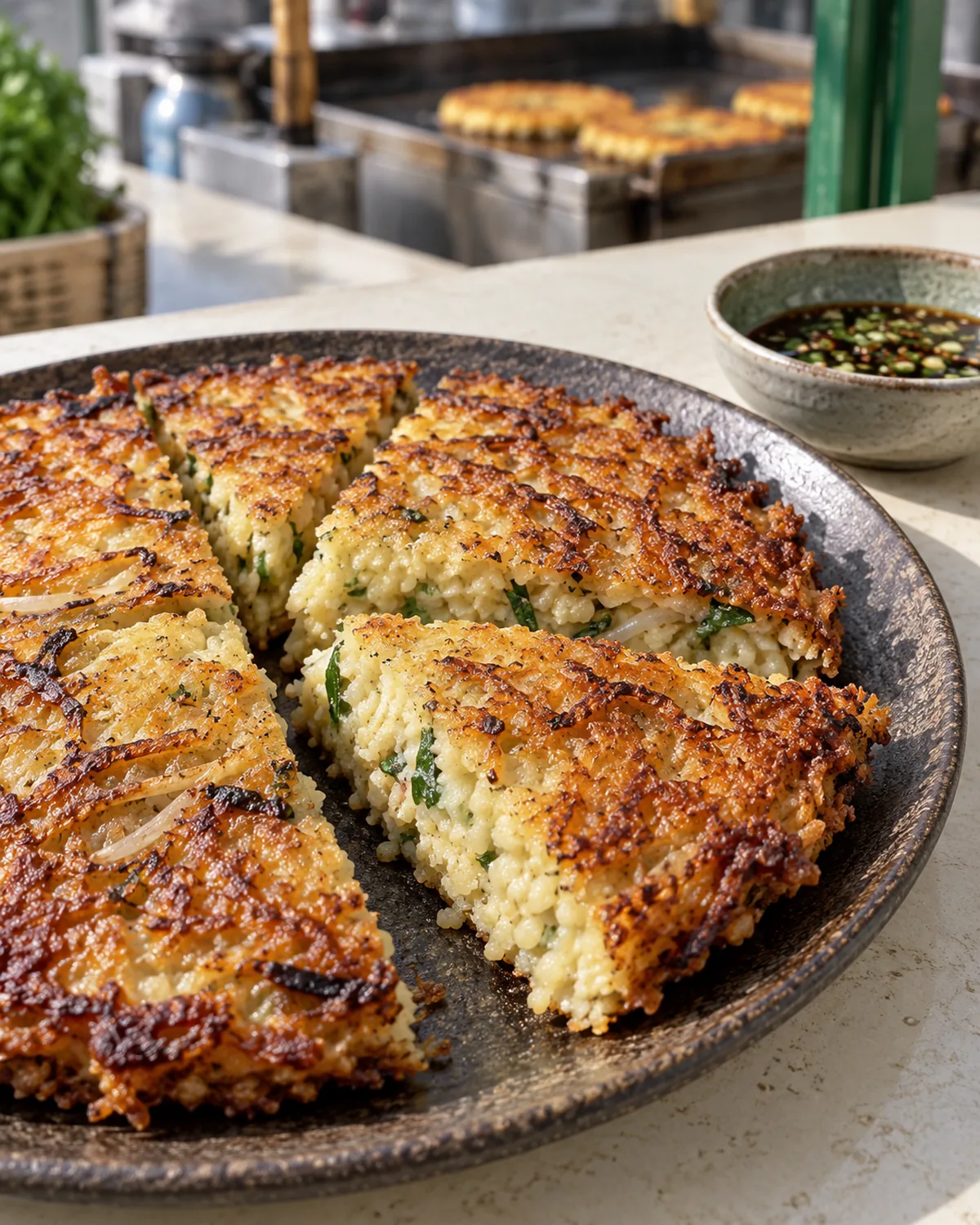
Bindaetteok is a mung-bean pancake, and Gwangjang Market is one of the places most strongly associated with it. Seoul Tourism Organization lists bindaetteok among the market’s representative foods. The pancake offers a crisp contrast to softer rice rolls and broth-held skewers.
This is not a food that becomes better merely because you walk with it. The batter is cooked on a large hot surface until the outside browns and crisps while the interior stays softer. Freshness matters because crispness declines as steam is trapped during holding or transport.
The market setting also turns cooking into a visible performance. Grinding, ladling batter, turning pancakes and cutting portions happen in front of customers. That creates a different relationship between cook and eater from a packaged snack.
For a deeper market route, see the Gwangjang Market guide. It is more useful to understand one market’s food ecology—what is cooked, what is shared, what is seasonal—than to treat every traditional market as interchangeable.
A roll can be a meal, not just a snack
Gimbap works differently from a sweet snack or fried skewer. Rice and fillings are rolled in seaweed, sliced and carried easily, so the food can function as breakfast, lunch, picnic food, convenience-store meal or market snack depending on portion and filling.
The small rolls sold at Gwangjang Market show how the format changes when portability is pushed further. The small rolls are widely known as kkoma gimbap or nicknamed mayak gimbap; Seoul Tourism Organization includes mayak gimbap among the market’s familiar foods. A dipping sauce may accompany them, so check the serving rather than assuming every roll is prepared alike. “Mayak” literally means a narcotic drug in Korean, but in food naming it is informal hyperbole for something considered hard to stop eating; it is not an ingredient claim.
This is a useful reminder about translation. Korean food names often carry jokes, marketing language or cultural shorthand that sounds more literal in English than it is in context. A guide should explain the phrase rather than repeat it as exotic spectacle.
Full-size gimbap and mini rolls also solve different hunger levels. A large roll can replace a meal. Mini rolls make it easier to sample several foods in one market visit without becoming full after the first stop.
Two sweets that ask you to slow down
Hotteok is a filled pancake cooked on a griddle, usually until the exterior is browned and the interior filling melts. The classic sweet version commonly uses brown sugar with cinnamon and nuts or seeds, although regional and modern fillings can be savory or much more elaborate.

Korean Air’s Morning Calm food feature links hotteok’s spread to Chinese people who settled in Korea from the late nineteenth century. The useful point for today’s eater is adaptation rather than one frozen “original” filling: dough, sweetness, seeds, frying style and fillings can change as a food becomes part of local markets.
The dangerous pleasure is thermal rather than spicy. Sugar liquefies inside a sealed or partly sealed dough pocket, so the center can remain much hotter than the surface feels. A hotteok that is comfortable to hold can still contain near-molten syrup. Waiting briefly before the first deep bite is practical advice, not etiquette.
Korea Tourism Organization’s recent winter-snack material still treats hotteok as a cold-weather market food and points to regional examples, including Busan’s seed-filled versions. Seasonality is part of the experience: some permanent shops sell hotteok all year, while temporary carts may appear or disappear with the weather.
Bungeoppang is the fish-shaped pastry that confuses first-time visitors for exactly one second. The shape resembles a carp, but the standard pastry contains no fish. A batter shell is cooked in a fish-shaped mold around a filling, classically sweet red bean paste and increasingly custard, chocolate, cheese or other variations.
Bungeoppang has a close relationship with Japanese taiyaki. In a Korea JoongAng Daily account, food and culture critic Yun Deok-no traces the Korean pastry to that Japanese form. The Korean name, fillings and winter-cart memories help explain why travelers encounter it as its own familiar snack today.
Texture changes quickly. Fresh from the mold, the shell can be crisp at the edges while the filling is soft and hot. As steam migrates through the pastry, the shell softens. That explains why bungeoppang is a “buy it when you see it, eat it now” food more than a souvenir for later.
Recent VISITKOREA winter-food coverage shows how much the category has diversified, including the familiar red-bean-versus-custard preference debate and newer fillings. It also reinforces a practical point: famous winter stalls can draw lines or sell out, while other vendors appear throughout ordinary neighborhoods. A traveler does not need to cross the city for a single fish-shaped pastry unless the stall itself is the destination.
Fried sides and the modern cheese pull
Street-food eating rarely means ordering one isolated signature item. Tteokbokki stalls often sit beside or sell twigim, a broad category of battered and fried items such as vegetables, squid, dumplings or seaweed rolls. Diners may dip fried pieces into tteokbokki sauce, turning two menu categories into one combined experience.
Sundae is Korean blood sausage, generally made by stuffing intestine with a mixture that can include noodles, grain and blood, with regional versions differing substantially. It can be sliced as snack food or served in soup as a full meal. Travelers who only know the market-plate version miss how strongly sundae changes by region; the Byeongcheon sundae guide is one example of that regional depth.
Korean-style corn dogs occupy a more recent global-pop-culture position. The modern category includes sausage, cheese or mixed fillings inside a thick coating, sometimes with potato pieces or sweet dusting on the outside. The useful distinction is not “traditional versus fake.” Street food constantly absorbs new formats. A food can be recent and still become a real part of contemporary Korean snack culture.
Build the route around how you want to eat
If the goal is variety in one stop, a traditional market is efficient. You can move from pancake to mini gimbap to noodles or sweets without traveling across the city. Gwangjang is the obvious first reference in Seoul, but it is not a template for every market in Korea.
If the goal is one dish with a neighborhood story, Sindang-dong makes more sense for tteokbokki because the district itself is part of the subject. If the goal is winter snacks, look for active shopping streets, market entrances, transport hubs and neighborhood commercial areas rather than assuming one fixed street operates every night.
If the goal is contemporary novelty, tourist shopping districts such as Myeong-dong can show newer skewers, sweets and visually dramatic snacks. The trade-off is that novelty changes quickly. A trending menu item can disappear long before a travel article is updated.
For a broader neighborhood plan, use the Seoul food guide to decide whether street food should be the meal, the snack between meals or one stop inside a larger day.
Instead of chasing ten famous names, build the first outing around four contrasts. Start with tteokbokki to understand sauce, starch and bunsik culture. Add eomuk to see how a skewer-and-broth format works in cold weather. Choose either hotteok or bungeoppang for a seasonal sweet snack. Then eat one market-specific food such as Gwangjang bindaetteok or mini gimbap.
That sequence covers four different design problems: sauced snack, broth-held skewer, hand-held sweet and market griddle food. It also leaves room for a fifth item that belongs to the actual neighborhood rather than to an internet checklist.
If several people are eating together, order one portion at a time and share. Street-food sampling becomes much easier when each person does not commit to a full serving at every stop. This is also how the market becomes legible: you can compare textures, cooking methods and service styles instead of simply counting dishes.
Order by portion, not by the length of the queue
Payment practices vary by vendor. Permanent market restaurants and snack shops may accept cards, while some small temporary stalls may prefer cash or a local transfer method. Foreign mobile-wallet compatibility is another separate question.

The practical approach is redundancy: carry a physical payment card that works internationally and a modest amount of Korean won rather than relying on one phone app or assuming every stall is cash-only. Look for posted payment signs before ordering when language is a concern.
For a group, one person can pay while another tracks the shared total, but avoid mixing several tiny transactions if the stall is busy. Market service is designed for fast turnover, so having the payment method ready is more useful than memorizing a fixed national rule that does not exist.
Many street-food transactions are visual. You can point to the item, show the desired quantity with fingers, or use a translation app for ingredient questions. Basic food names help: tteokbokki for spicy rice cakes, eomuk for fish cake, twigim for fried items, gimbap for seaweed rice rolls and mandu for dumplings.
For allergies or dietary restrictions, pointing is not enough. Sauces, broth, fillings and shared frying oil can contain ingredients that are not visible. Ask specifically about the ingredient that matters rather than asking whether a dish is simply “safe.” Vegetarian-looking tteokbokki can contain fish cake or seafood-based broth; gimbap can contain egg, ham or processed fish; fried foods can share oil with meat or seafood.
Spiciness also cannot be read from color alone. Red sauce often signals chili, but sweetness and heat level vary. Conversely, non-red foods such as mustard-dressed mini gimbap can have a sharp bite. If spice tolerance is low, start with a small portion instead of assuming one national heat level.
Choose one warm savory item, then pause before buying the next. If that first portion already feels like lunch, let it be lunch. A dense pancake, a rice roll and a fried filled snack do not become light merely because they are sold on the street.
Look at how the food is being prepared and served, while remembering that popularity does not certify food safety. Ask about ingredients that are not visible in the final shape: fish-based broth, egg in a filling, or meat in a seemingly vegetable-centered item. A fish-shaped bungeoppang tells you about the mold, not that the filling is fish.
Timing matters to taste and comfort. A hotteok’s molten filling can remain much hotter than its outer surface; a crisp pancake changes as steam softens it. Keep the items you want to enjoy immediately separate from food you plan to carry away, and use the vendor’s storage guidance. Leaving space for a second round is not missing out. It lets the first tastes inform a better next choice.
Check preparation and today’s stall information
Street-food prices vary by neighborhood, portion, ingredient cost and tourist demand. Temporary vendors may not operate every day. Even permanent markets contain businesses with different closing days and hours. That makes exact price-and-hour lists unusually fragile.
A better planning method is to set a food budget range for the whole outing rather than expecting every skewer or pancake to match an old blog price. For timing, verify the market or district itself, then treat individual stalls as variable unless the vendor publishes a current schedule.
This is especially important at famous markets. KTO pages can provide useful market-level context, but individual businesses inside the market may open later, close earlier, sell out or take a day off. “The market is open” does not guarantee that one specific food stall is serving.
A long line can indicate turnover, but it is not a scientific guarantee of food safety. A quieter stall is not automatically unsafe either. What a traveler can observe is process: whether hot foods are kept hot, whether cooked and raw ingredients are handled separately, whether the cooking surface is active, whether serving utensils are used consistently and whether the food appears to be turning over rather than sitting for long periods.
A guide cannot inspect a vendor’s whole kitchen from the queue. CDC’s travel guidance advises avoiding street vendors; for travelers who choose street food, it emphasizes food cooked and served steaming hot and avoiding raw items. A busy counter is not a substitute for those precautions or for checking ingredients that matter to you.
For most travelers, the best strategy is the same one that works in any food environment: choose food that is prepared and handled sensibly, ask questions when an ingredient matters, and skip a vendor if the handling makes you uncomfortable.
Sources and reading
- english.seoul.go.kr — source reference
- Seoul Tourism Organization — Gwangjang Market and its food stalls
- Korea Tourism Organization — food and travel reference
- Korea Tourism Organization — food and travel reference
- Korea Tourism Organization — Sindang-dong neighborhood and restaurant-owner history
- Korea Tourism Organization — Busan markets and coastal-city snacks
- Korean Air Morning Calm — Hotteok food feature (2021, PDF)
- Korea JoongAng Daily — Bungeoppang and food critic Yun Deok-no
- CDC — Food and drink considerations when traveling