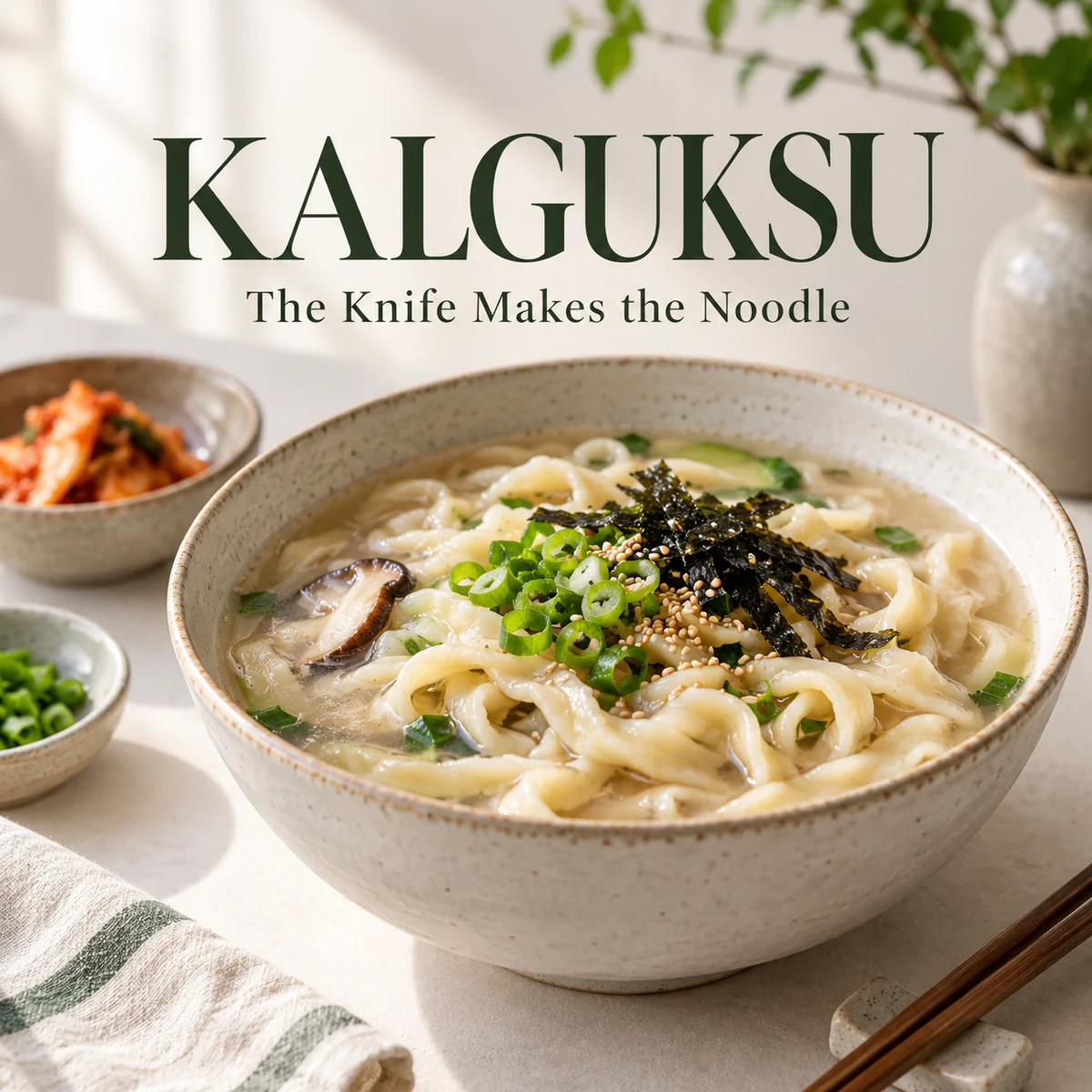
A bowl of kalguksu can be chicken-rich, clam-scented or thickened with perilla. What connects those bowls is not one broth but a name built around cutting dough into noodles.
That small distinction changes how you read the menu. Myeongdong’s famous restaurant style is one branch of a much larger family. Older Korean recipes also do not always describe the white wheat noodles that many visitors now expect.
The knife in the name
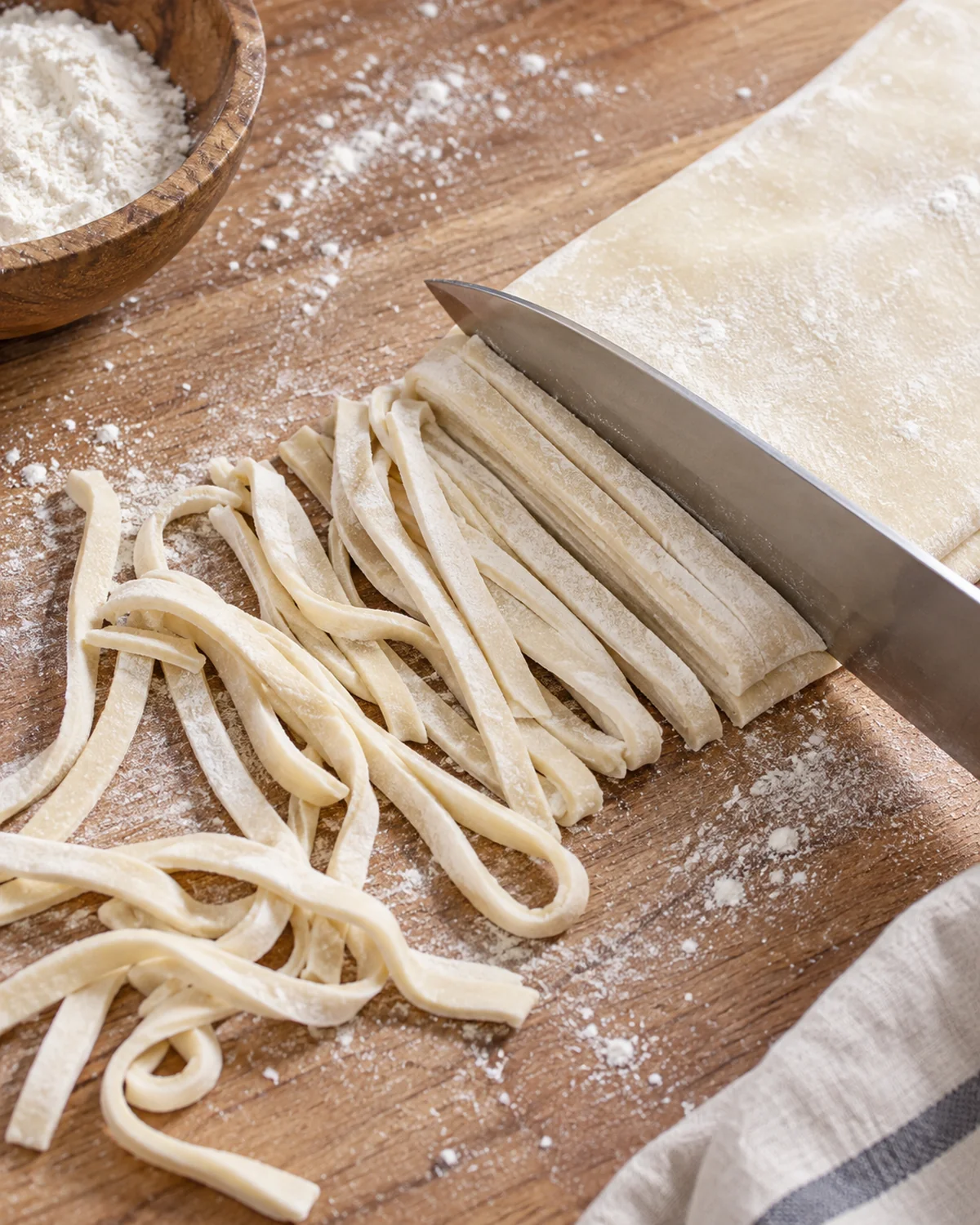
Kal means knife and guksu means noodles. In the simplest method, dough is kneaded, rested, rolled thin, folded or layered, and cut into strands. The cut noodles are then cooked in or served with broth. That knife-cut identity is the common thread.
Everything around the noodles can change. Broth may be based on chicken, anchovy, clam, seafood, beef or vegetables. Some versions include zucchini and potato; others emphasize shellfish, perilla seed or minced meat. The dough can differ in thickness and hydration. A restaurant can make very soft noodles while another serves a chewier strand. Kalguksu is therefore better understood as a noodle family than as one standardized soup.
Knife cutting is not only a visual tradition. Rolling and cutting dough lets a cook control thickness and width directly. Thicker noodles retain more chew and take longer to cook through. Thin noodles soften quickly and release starch faster. Slight variation in hand-cut strands means some pieces can feel softer while others keep more bite.
Dough hydration and resting matter as well. Water lets gluten-forming proteins interact; kneading develops structure; resting relaxes the dough so it can be rolled without springing back too aggressively. Flour dusted between folded layers prevents the cut strands from sticking before they enter the pot.
Once the noodles cook directly in broth, loose starch thickens the liquid. That is one reason kalguksu broth can feel more substantial than a clear soup poured over separately rinsed noodles.
The cultural name describes the noodle tradition. Modern restaurants may use dough sheeters, cutting machines or partially standardized production while still serving a dish recognized as kalguksu. Some shops visibly hand-roll and hand-cut; others prioritize consistency and volume.
This matters because authenticity claims can become theatrical. A slightly irregular strand can be evidence of hand cutting, but perfect uniformity does not automatically make a bowl culturally illegitimate. The defining family resemblance is the flat cut-noodle form and how it works in broth, not a certification system for each noodle.
Buckwheat, wheat and the changing noodle dough
The Academy of Korean Studies traces an early knife-cut noodle preparation to the Joseon cookbook Gyugonsiuibang, where the dish appears under the name jeolmyeon (절면), literally “cut noodles.” The significant detail is the flour composition: the older recipe used buckwheat as the main flour and mixed in wheat flour as a binder.1
Another historical recipe cited by the Academy also relies on buckwheat, using water from cooked glutinous rice in the dough. Those examples show that the knife-cut method is older than the modern expectation that kalguksu must begin with a bag of white wheat flour.
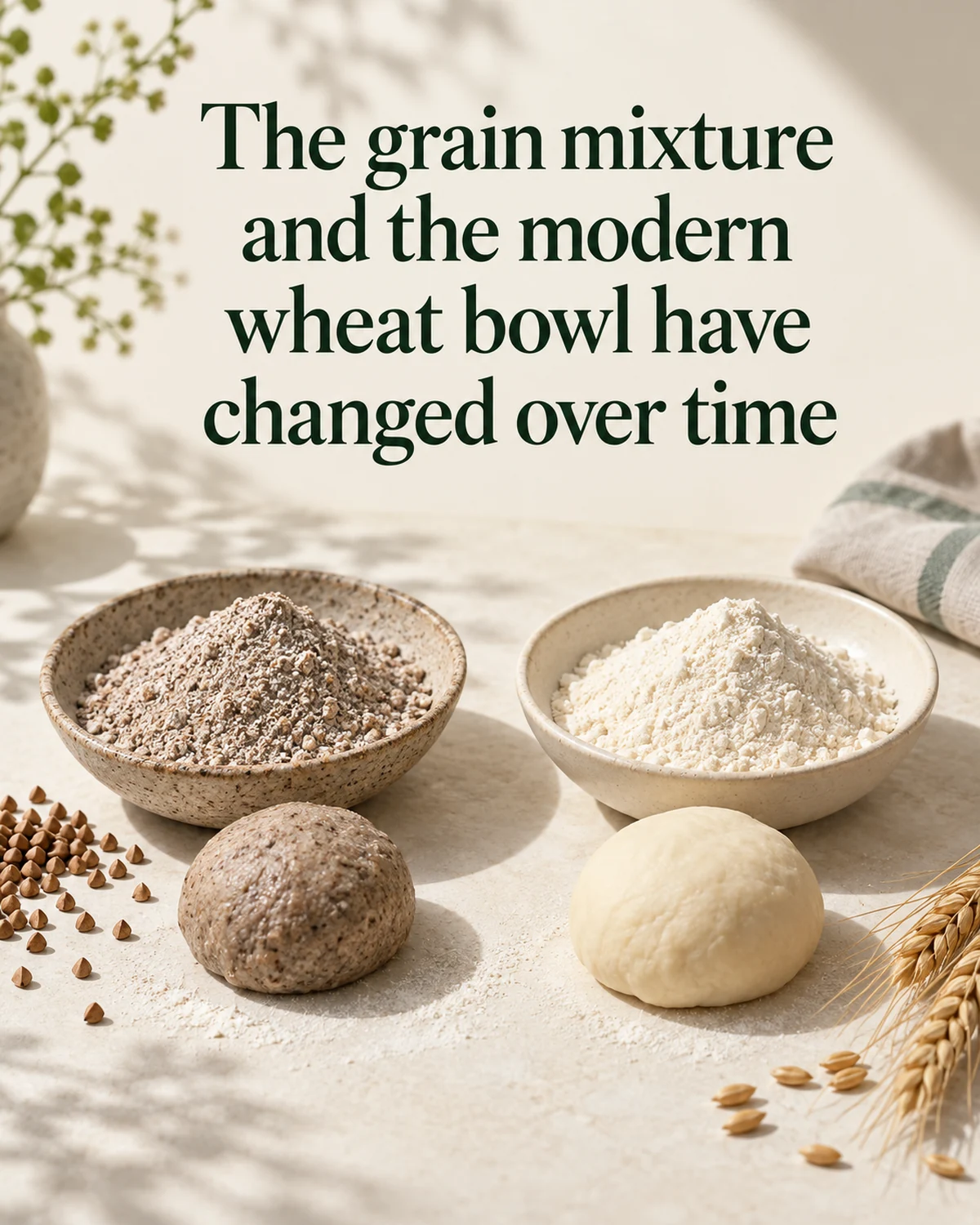
This is an important correction because visual continuity can be deceptive. A bowl of modern kalguksu looks “traditional,” but the availability and relative price of grain changed across centuries. Technique can persist even as the ingredient ratio changes.
The Academy of Korean Studies cites the medieval text Goryeodogyeong to explain that wheat was scarce enough in Korea to be imported and expensive. That does not mean no Korean ate wheat noodles. It means wheat flour occupied a different economic position than it does in a modern urban restaurant.
If an ingredient is relatively scarce, cooks stretch it, reserve it, combine it with other grains or use it in contexts where its value makes sense. Buckwheat, which grows well in conditions that are difficult for some other grains, was an important noodle grain in many Korean regions. Mixing wheat into buckwheat dough could improve binding while still reflecting the relative scarcity of wheat.
That historical reality is more informative than repeating unsourced claims that kalguksu belonged to one exact ceremony or one social class. The evidence securely supports scarcity and older buckwheat-heavy formulations; more specific claims about weddings, birthdays or harvest feasts require their own documentation.
The Academy of Korean Studies also cites twentieth-century cookbooks in which kalguksu is made much more like the noodles recognized today: wheat flour mixed with water and salt, kneaded firmly, rolled thin and cut. Some older modern recipes boiled the noodles separately, rinsed them in cold water and then added clear broth.
Contemporary kalguksu is often cooked directly in the broth. That cooking method releases some surface starch into the soup, making the liquid slightly cloudy and giving it a thicker, more integrated texture. The noodles and broth become part of the same cooking system rather than two components assembled at the end.
This difference shows why “traditional” is not one frozen point. Even within the wheat-flour era, technique shifts between boiling separately and cooking directly in broth.
Modern kalguksu depends on a condition that earlier cooks could not take for granted: wheat flour that is widely available and affordable enough to form the main body of the meal. The twentieth century transformed the place of wheat in Korean diets, but that broad change should not be reduced to one unsupported sentence such as “U.S. food aid invented modern kalguksu” or “government flour policy created the dish.”
Those policies and postwar grain flows are important subjects in Korean food history, but they need dedicated sources. For this dish, the safer conclusion is narrower: as wheat became more available, a noodle technique that had previously accommodated expensive wheat and buckwheat could become a routine wheat-flour restaurant food.
That is enough to explain why the same name can connect historically different bowls without pretending that one policy created a centuries-old technique.
Myeongdong is a style, not the starting point
MICHELIN documents Myeongdong Kyoja as a family-run restaurant operating since 1966. That date is important because it anchors a famous modern Seoul expression of kalguksu. It does not place the restaurant at the beginning of the dish’s history; Joseon-era written evidence is much older.
The restaurant became influential because its bowl is distinctive. Myeongdong Kyoja is associated with a richer chicken-based broth, soft noodles, minced-meat topping and intensely garlicky kimchi, along with mandu as another signature item. The combination is different from the lighter anchovy or seafood broths many diners encounter elsewhere.

Its historical role is therefore best described as modern urban institution, not inventor. It made one Seoul style famous enough that international visitors sometimes mistake the Myeongdong bowl for the national definition of kalguksu.
Travel around Korea and kalguksu changes with local ingredients. Coastal areas may use clams or mixed seafood. Inland bowls may use chicken or anchovy broth. Perilla-seed versions become nutty and opaque. Some soups are clear and light; others are thick with starch or ground seeds.
The common noodle technique allows the broth to express place. This makes kalguksu structurally different from a dish defined by one sauce or one topping. The noodles create a canvas, and the local broth supplies much of the regional identity.
A useful comparison is with Okcheon saengseon-guksu, where river-fish broth gives a noodle dish a completely different regional logic. The existence of such variations is why no famous Seoul shop should be treated as the sole authentic template.
Broth is the other half of the bowl
When fresh flour-dusted noodles are cooked directly in soup, starch leaves the noodle surface and disperses into the broth. That starch increases viscosity and reduces clarity. The cloudiness is therefore not necessarily a sign of heavy fat or dairy; it can be a natural consequence of cooking fresh noodles in the serving broth.

The effect varies with how heavily the noodles are floured, how much they are agitated, how concentrated the broth is and whether the cook boils them separately. A very clear kalguksu and a cloudy one can both belong to the category.
Think of a kalguksu menu in two layers: the cut noodle and the liquid around it. Words for clams, chicken or perilla tell you about the second layer. A photograph of pale broth cannot reliably tell you whether it contains seafood, meat or a seed-based addition. Dietary questions should address the stock and seasonings as well as visible toppings.
At the table, taste a little broth before adding strong kimchi or condiments. Then compare a strand near the surface with the broth it carries. Thickness, surface starch and cooking time all affect the experience, so “knife-cut” is more useful as a technique description than as a promise that every strand was sliced moments before your order.
Restaurant age and dish age also need separate labels. A restaurant can have an important modern history without inventing the whole category. Use a named shop to understand one version, then use the broth modifiers to explore another; that is a more revealing comparison than trying to crown one bowl the only authentic kalguksu.
Taste the noodles before the kimchi
Start with the noodles and broth before eating much kimchi. This establishes the baseline: noodle softness, chicken depth, starch level and seasoning. Then eat the kimchi in small bites alongside the soup.

Myeongdong Kyoja is famous for very garlicky kimchi. That pungency is part of the restaurant’s identity, but garlic and chile can overwhelm subtle broth if added or eaten in large quantities immediately. Alternating bites preserves the contrast better than treating the kimchi as a compulsory flavor booster.
Mandu pairs naturally with kalguksu because the dumpling provides a firmer wrapper, meat filling and different texture. It is a classic companion at the restaurant, not a requirement for understanding the noodle dish itself.
Many versions are not chile-hot, especially clear anchovy, clam or chicken broths. But “mild” does not mean flavorless. Garlic, black pepper, fermented kimchi, seafood salinity and concentrated stock can all create strong flavor without red chile broth.
Restaurants may also serve spicy versions. The broth style, not the word kalguksu itself, determines heat level.
Kalguksu is strongly associated with warmth and comfort, but there is no rule that it belongs only to winter. Hot noodle shops operate through Seoul summers, and restaurants can pair them with seasonal cold noodles or other menus. The appeal is partly practical: a bowl combines starch, broth and toppings in one filling format.
Weather changes how the dish feels, not whether the dish remains culturally appropriate.
Check the stock, then the restaurant details
Kalguksu is not vegetarian by default. Wheat noodles themselves can be simple flour-and-water dough, but the broth may contain anchovies, clams, chicken, beef or other animal ingredients. Toppings and kimchi can also contain animal-derived seasonings.
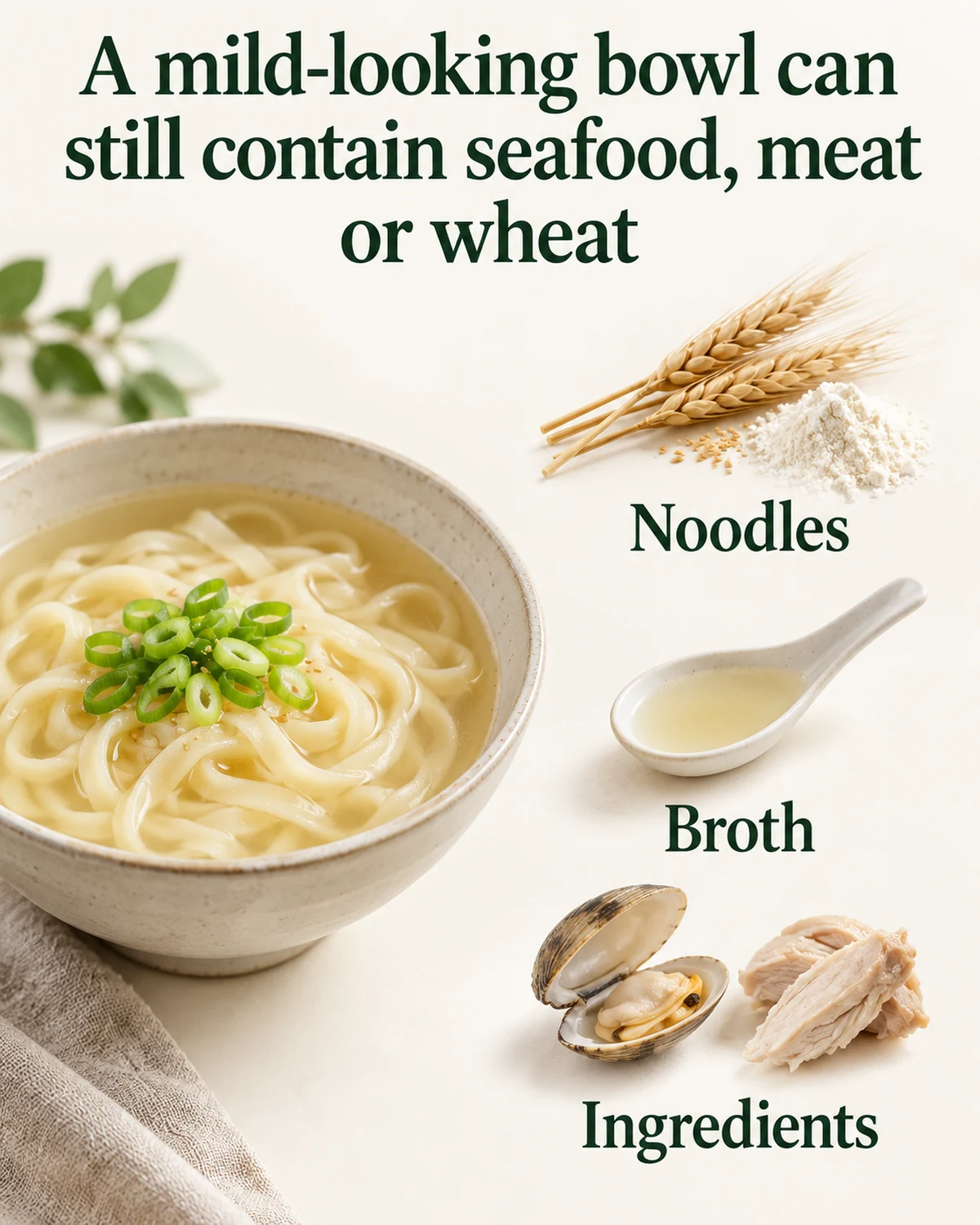
If you need a vegetarian or vegan meal, ask about the broth first. Removing visible meat from the top does not change an anchovy, seafood or chicken stock underneath.
For a planned visit, verify the restaurant’s current information close to the day you go. The history of the noodle does not expire; practical logistics do.
Kalguksu looks like a simple continuity story: Koreans cut noodles with a knife long ago and still do it today. The documentary record reveals something more useful. Older recipes relied heavily on buckwheat because wheat had a different economic value. Later wheat-flour recipes moved closer to the modern noodle. Contemporary restaurants then developed highly recognizable regional and urban broths.
The continuity is the technique; the change is the ingredient economy and the restaurant culture around it. Myeongdong Kyoja belongs near the end of that timeline as a 1966 Seoul institution, not at the beginning as an inventor.
That sequence—scarce wheat, buckwheat-heavy cut noodles, increasingly wheat-based modern dough, then diverse regional broths and urban specialists—explains far more than calling kalguksu an “ancient comfort food.”