
A stew shared with friends and a meal cooked at home tell a quieter BLACKPINK story than a tour headline. In a November 2016 interview carried by YG LIFE, Rosé remembered cooking and eating with the members, Jennie remembered restaurant outings, and Lisa named gamjatang as a Korean dish she had discovered.[1]
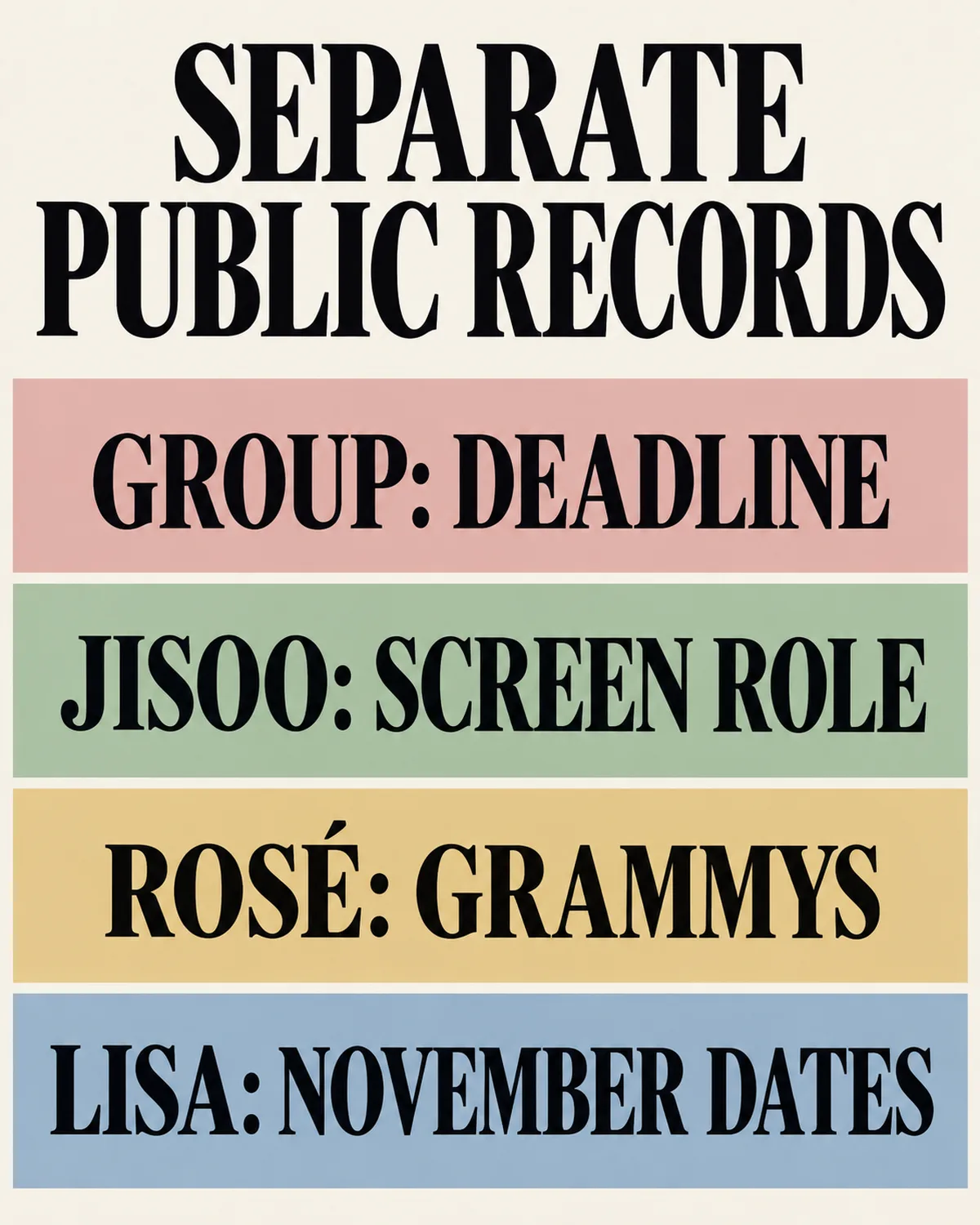
The post-tour question has a separate, verifiable answer. YG’s official discography dates the group’s DEADLINE mini album to February 27, 2026. The members’ individual projects have their own records; a shared meal memory cannot explain their contracts or predict the group’s next schedule.[2]
The tour and solo projects belong on a dated timeline
YG LIFE’s January 30, 2026 report says the DEADLINE tour had concluded across sixteen cities and thirty-three shows. The January 15 announcement had listed Hong Kong’s January 24–26 dates as the final stop.[3]Tour announcement
For Jennie, her official website checked on October 5 links to the Fallen Angel EP and its music video. For Jisoo, Netflix’s March 6 article identifies her as the lead of Boyfriend on Demand. These are identifiable projects, rather than guesses about private relationships or the order of unreleased albums.[4][5]
For Rosé, the Recording Academy records her performance of APT. with Bruno Mars opening the 2026 Grammys. For Lisa, Caesars’ September 29 announcement lists six November 2026 Las Vegas residency dates. The November shows were still forthcoming at this source check, rather than completed performances.[6][7]
These records answer different parts of the headline. They do not form a complete diary of the six months after the tour, and October’s source check is later than that six-month window. Follow the date of each announcement instead of treating every project as happening simultaneously.
Return to the food memory at its original scale
The 2016 recollections are worth reading without turning them into a current favorites list. Rosé described an activity, Jennie a kind of outing, and Lisa a particular dish. That is three different starting points for exploring food.[1]
A home meal invites participation: somebody cooks, somebody sets out the dishes, and the table belongs to the people eating. A restaurant outing offers a menu and a different set of decisions about portions and sharing.
Discovering a dish can be a third experience altogether. You learn what arrives, which part to eat first and how it differs from a familiar food. The interest is in that encounter, not in reproducing somebody’s private routine.
For your own evening, decide which experience you want. Cooking together, trying a shared stew and stopping at a cafe are all possible pleasures, but they call for different amounts of preparation and time.

Cooking together begins with one manageable dish
Choose a preparation that gives everyone a clear contribution. With a vegetable jeon, one person can prepare the vegetables while another follows the batter recipe; plates and dipping sauce can be ready before cooking begins.
Make the cooking stage the focus rather than adding dishes just to imitate a lavish table. The contrast between a crisp pancake edge, soft vegetables and a little dipping sauce is already something worth noticing.
If rice and a few side dishes accompany the main preparation, think about their role in the bite. A crisp cucumber side contrasts with a soft main dish; a strongly seasoned side asks for a different amount from a mild vegetable.
Use a recipe with quantities and cooking instructions for the dish you choose. An interview supplies the idea of cooking together, but it does not reveal the recipe used in that home or replace directions for your own kitchen.

A restaurant outing starts with how the menu counts
Before choosing a shared main dish, check whether its price refers to one person, one portion or a pot for the table. A group meal works better when that unit is clear before everybody starts adding favorites.
A pork-bone stew such as gamjatang requires another small decision: is the order a shared pot or an individual meal? Lisa’s remembered preference gives the dish a name to investigate; it does not tell you the portion offered at a restaurant today.
Ask what comes with the order and which additions are separate. Rice, noodles or a finishing stage can change the meal. You do not need every option simply because a photograph shows them together.
Keep the conversation about the actual menu. An unnamed restaurant in an old interview cannot become a verified destination from a neighborhood clue, and a past recollection does not establish current opening hours.

Give the meal a finish that suits the evening
A cafe can offer a different pace after dinner. Coffee and a shared sweet create a smaller decision than another main dish, especially when the table wants to keep talking.
Yakgwa offers a useful contrast to coffee: a fried, syrup-soaked sweet whose texture and sweetness differ from a fresh pastry. Decide how much you want to share, rather than ordering a dessert for each person by default.
The cafe need not have a celebrity connection for that contrast to work. Choose according to the menu available, the people at the table and the kind of stop you want.
A memorable evening can remain modest: one dish cooked together, a shared main ordered with care, or a sweet divided over conversation. The details of serving make it yours.

Keep the two stories clear
For BLACKPINK’s public work, use dated album, broadcaster, artist and venue records. For their old food recollections, keep the November 2016 interview attached to the occasion it describes. Neither story needs to be inflated to make the other interesting.
The durable food lesson is participation. Learn how a dish is prepared, how the menu divides portions and how the table shares it. That curiosity can lead to an enjoyable Korean meal long after a tour cycle has ended.

Plan the food part of your evening
Sources and reading
- YG LIFE — BLACKPINK food and friendship interview, 3 November 2016
- YG Entertainment — DEADLINE album, 27 February 2026
- YG LIFE — DEADLINE tour concluded, 30 January 2026
- JENNIE — Official music website
- Netflix Tudum — Boyfriend on Demand, 6 March 2026
- Recording Academy — ROSÉ and Bruno Mars, 2026 Grammy performance
- Caesars Entertainment — LISA residency announcement, 29 September 2026