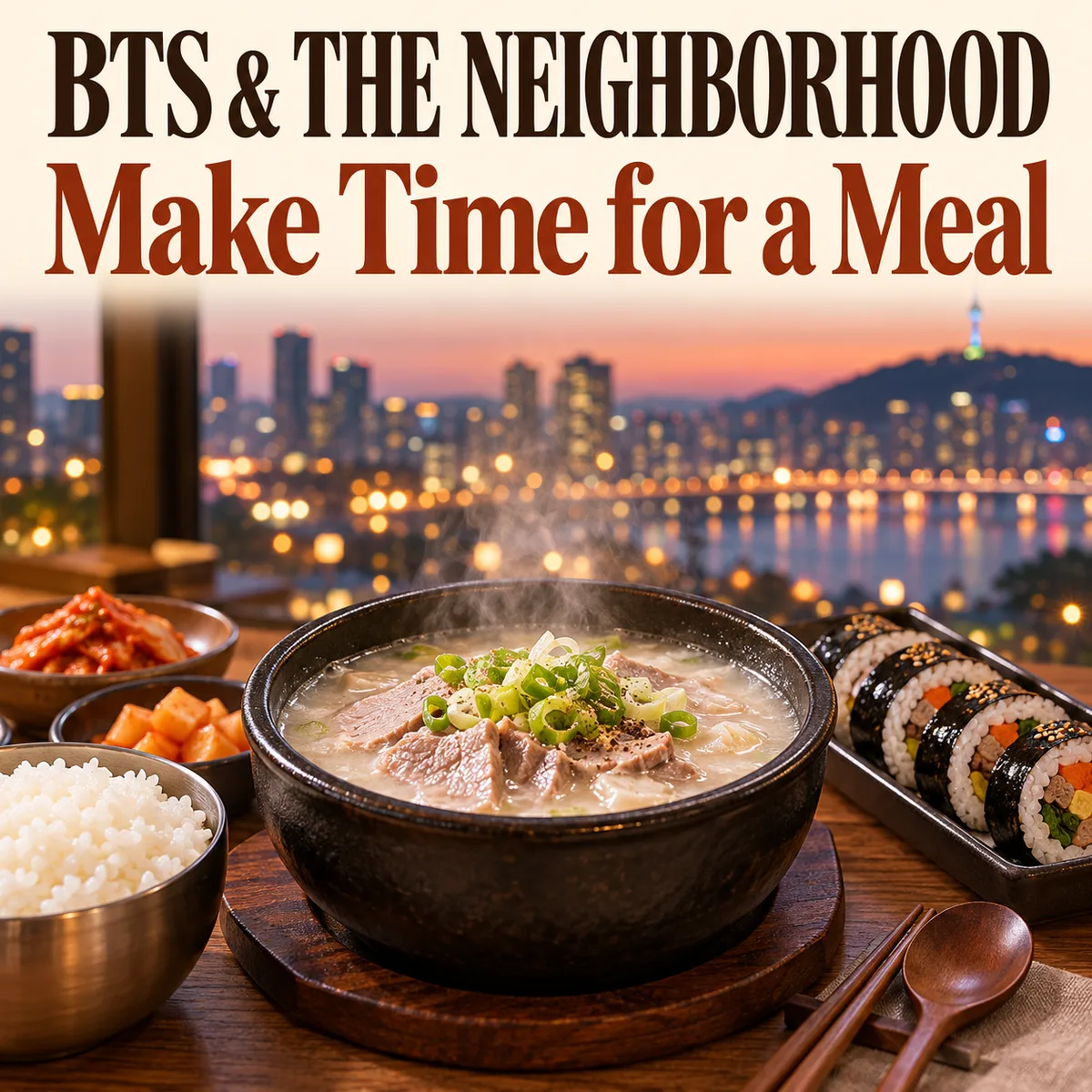
A concert neighborhood has to feed people whose clocks are suddenly synchronized. For a visitor, the practical question is whether to sit down to a bowl, carry a rice roll or make a shared dinner part of the evening. The serving format matters as much as the name on the restaurant sign.
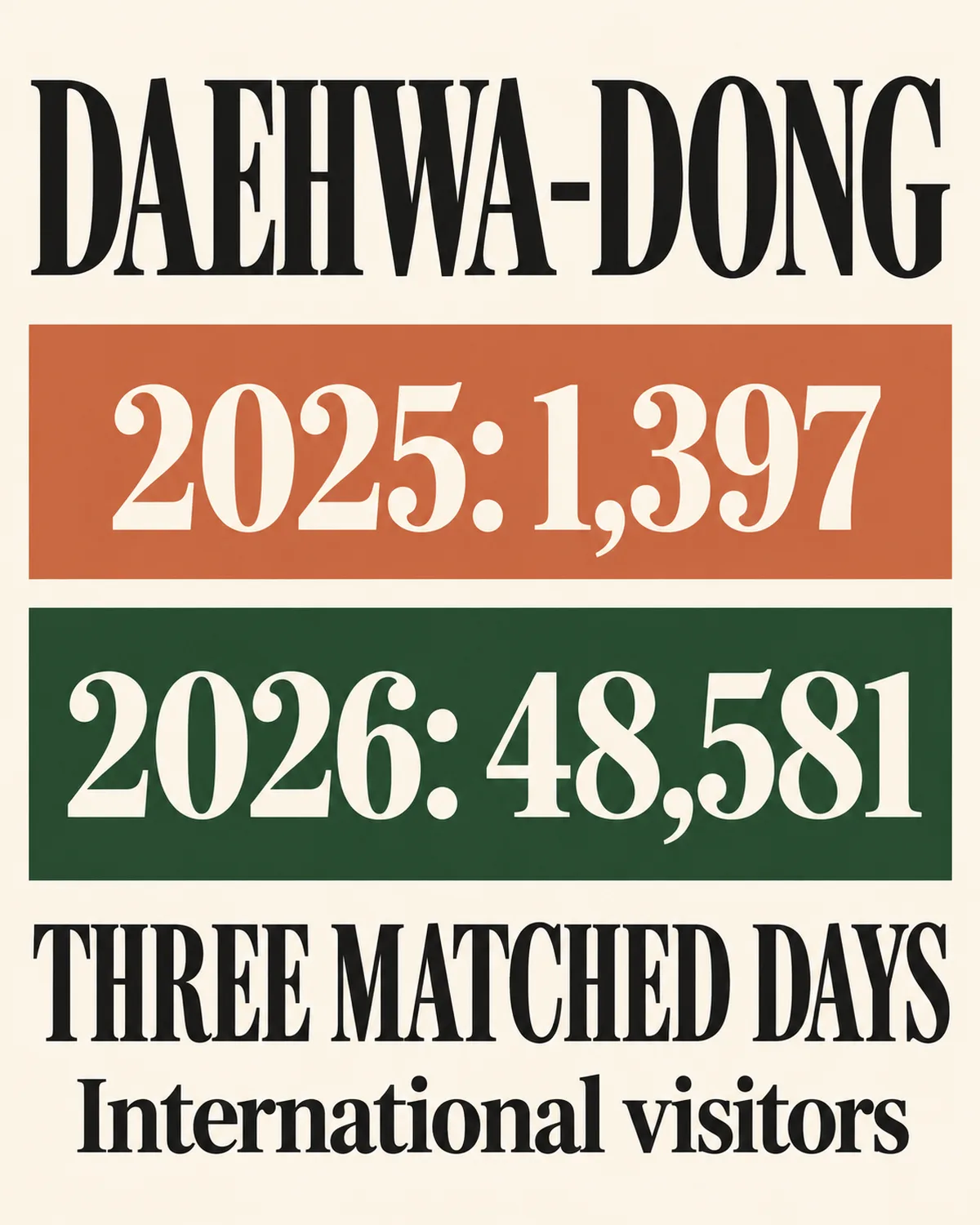
The BTS neighborhood effect has a measured example. MCST’s April 30, 2026 release reported 48,581 international visitors in Daehwa-dong across the April 9, 11 and 12 Goyang concert days, against 1,397 across three comparable days in 2025. It was a year-on-year comparison, not a count of permanent residents or a typical weekend.[1]
What the neighborhood figures actually compare
For the same comparison, international visitor card spending rose from KRW 8.9 million to KRW 337.8 million. The release identifies mobile-network and card data as the basis. These totals describe the measured district and dates; they do not tell you the turnover of every restaurant.[1]
A separate on-site audience survey found average stays of 8.7 days for international visitors at Gwanghwamun and 7.4 days at Goyang. That helps explain why a concert trip can include meals well beyond the stadium neighborhood.[1]
Neither dataset proves that a specific gimbap shop sold out or that a particular cafe raised prices. Those questions need their own business records. For planning dinner, treat the concentration of visitors as a reason to leave room for queues, rather than a precise forecast for one counter.
The food plan can have two places: a dependable meal where you are already spending the day, and a smaller fallback along the actual journey to the event. This avoids making the closest restaurant responsible for the whole evening.
A bowl makes the serving decision visible
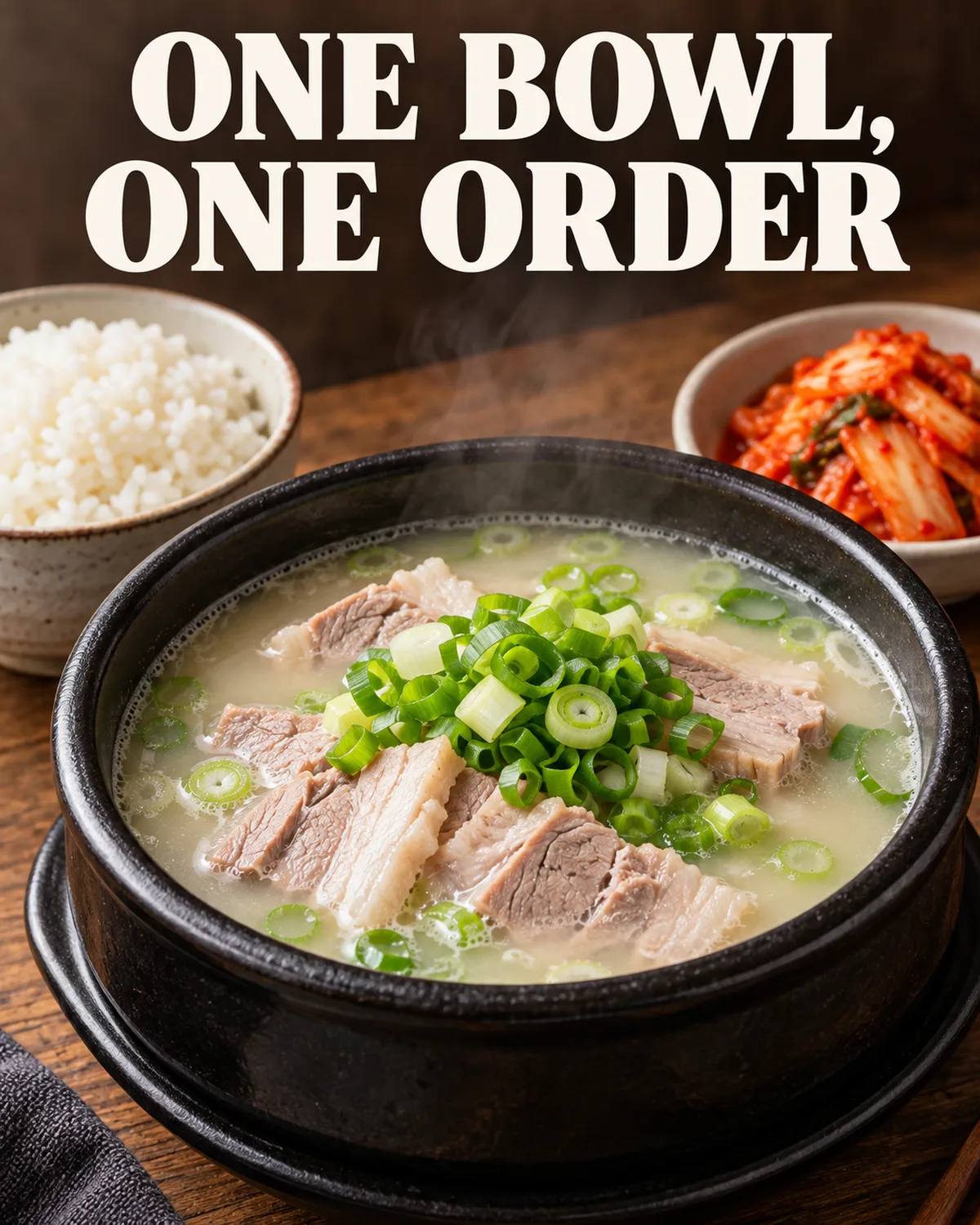
An individual gukbap order gives each diner a recognizable main dish: soup and rice, with the exact combination determined by the menu. It can make ordering easier for a group whose members want different portions or need to leave at different times.
Read beyond the word gukbap. A pork-based bowl, a bean-sprout soup and a beef soup have different ingredients. Rice can be served separately or already added, and the broth may come with condiments for the diner to adjust.
Taste the soup before adding more seasoning. Notice the broth, the rice and the main ingredients as separate parts of the meal. A pale broth does not identify every ingredient, and a red one does not measure its heat for you.
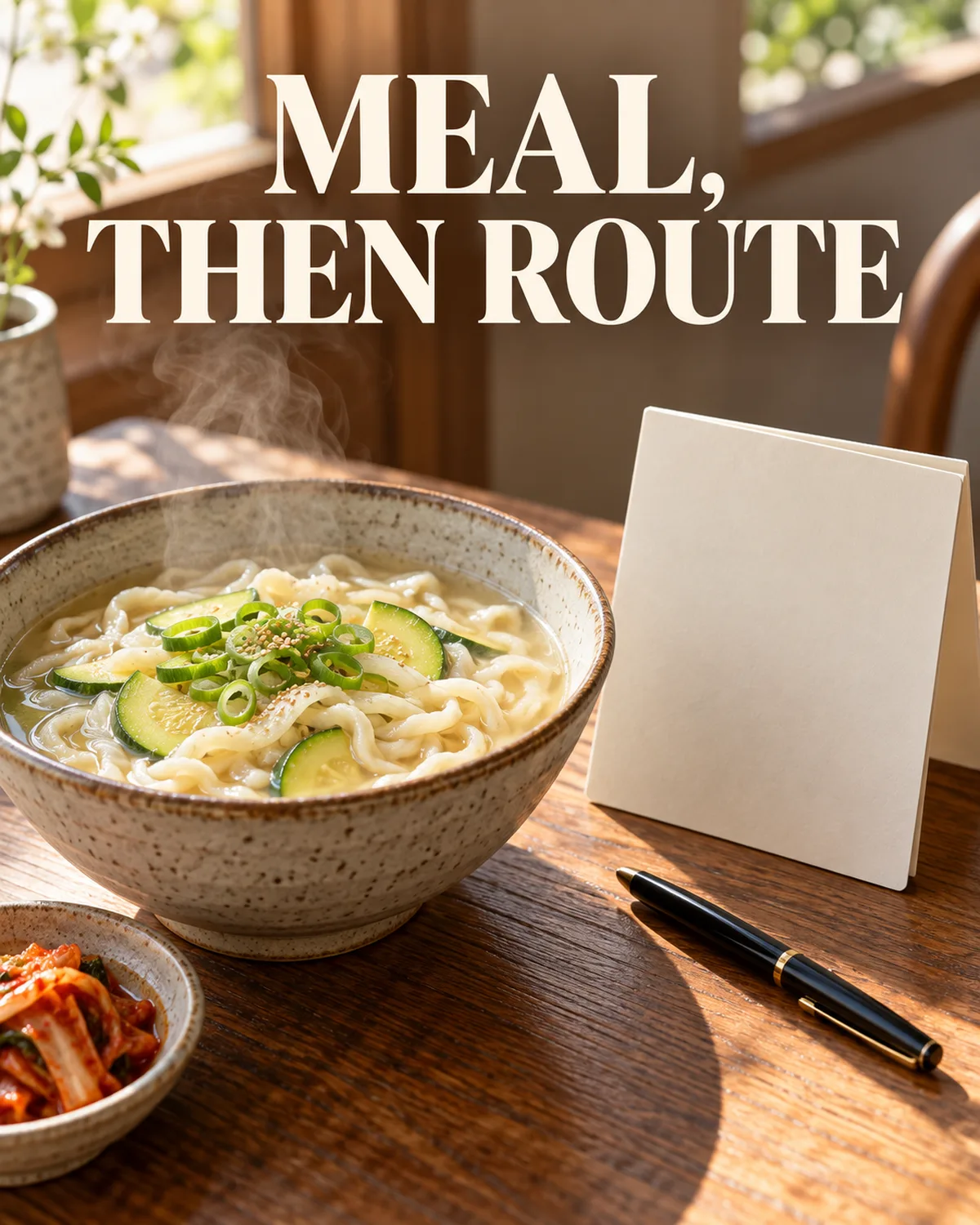
Kalguksu offers another individual serving format, with noodles in a prepared bowl. Choose it because you want that meal and have time for the restaurant’s actual service, rather than assuming that noodles guarantee a quick turnaround.
Gimbap is portable food with a storage decision
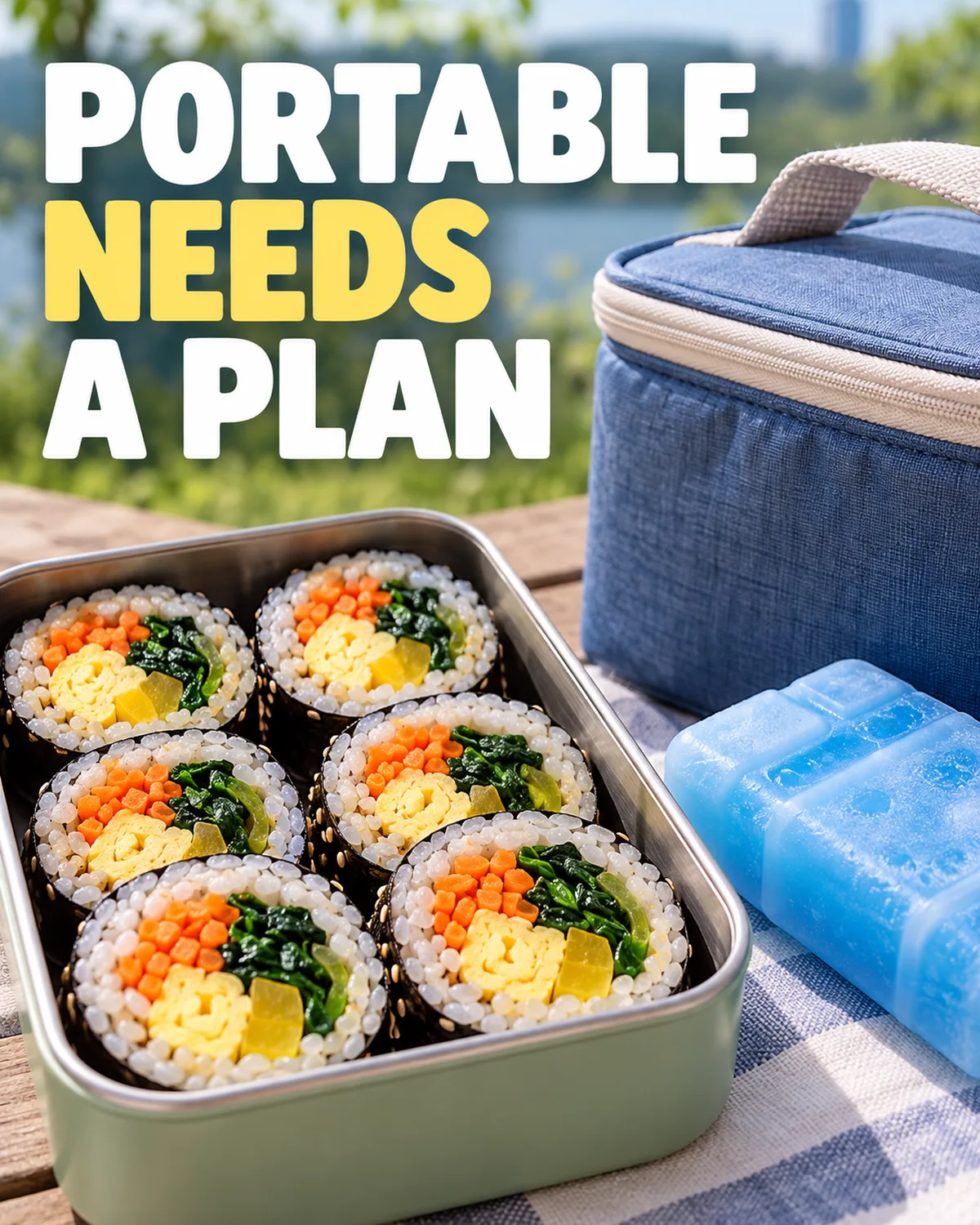
Sliced gimbap can be divided without setting up a communal pan. Its seaweed wrapper holds rice and fillings together, which is useful when a sit-down meal is difficult. It does not show all of those fillings from the outside.
Check the ingredients and storage directions on a packaged order. At a shop, ask what is inside before paying. Egg, fish cake, meat, sauces or shared preparation may matter even when the name emphasizes vegetables.
USDA guidance for outdoor food handling says to keep cold perishable food at 40°F or below and hot food at 140°F or above. Perishable food should not remain between those temperatures for more than two hours, reduced to one hour above 90°F outdoors. A concert bag supplies none of that temperature control.[2]
Choose something you can eat and store as directed. Carrying freshly prepared gimbap through a long afternoon is a different decision from buying it shortly before eating. A packaged fallback still needs its own ingredient and storage check.
A shared pan asks for a shared evening
Korean barbecue keeps part of the meal at the table. Meat cooks, pieces are divided and wraps are assembled while the group continues eating. It is enjoyable when that activity fits the evening, but awkward when one person is watching the door time.
Ask how the menu counts an order: price per portion, minimum number of portions and what accompanies the meat. Rice and soup may be separate. A photograph of a full table cannot explain the bill for your group.
Dakgalbi has another sequence, with chicken and vegetables cooking in a shared pan. Optional additions and a fried-rice finish can extend the meal. Decide together which stages you actually want before ordering everything pictured.
After the concert, a shared pan can become the gathering itself. Confirm that everyone has time for it and that the restaurant is still accepting food orders. The cooking format should be a choice the table enjoys.

Place the meal on the route you will take
A restaurant’s position on a map is only the start. The official entrance, the path to it and the return journey determine whether a stop fits. A nearby street can still require an inconvenient detour.
Check the current event’s arrival instructions and outside-food policy. A rice roll being easy to carry does not establish permission to take it inside, and rules from another venue do not answer that question.
Confirm restaurant service and last-order information directly. If the queue changes the plan, switch the serving format as well as the address: an available individual bowl may work when both shared-dinner choices are busy.
For a late meal, include the return journey in the decision before sitting down. Coffee and a small bite, a complete bowl and a long shared dinner serve different needs. Let the group choose the one that fits its appetite and available time.
Let ingredient questions come before cooking
Ask early about broth, sauces and preparation when an ingredient matters to you. Removing a visible topping cannot remove an ingredient that has entered the soup or seasoning. For a serious allergy, obtain preparation information from the provider.
The neighborhood figures show a concentrated event with a wider travel footprint. Your own meal can stay simpler: choose a serving format, identify one realistic fallback and leave enough room to enjoy the food before the first song or after the last.