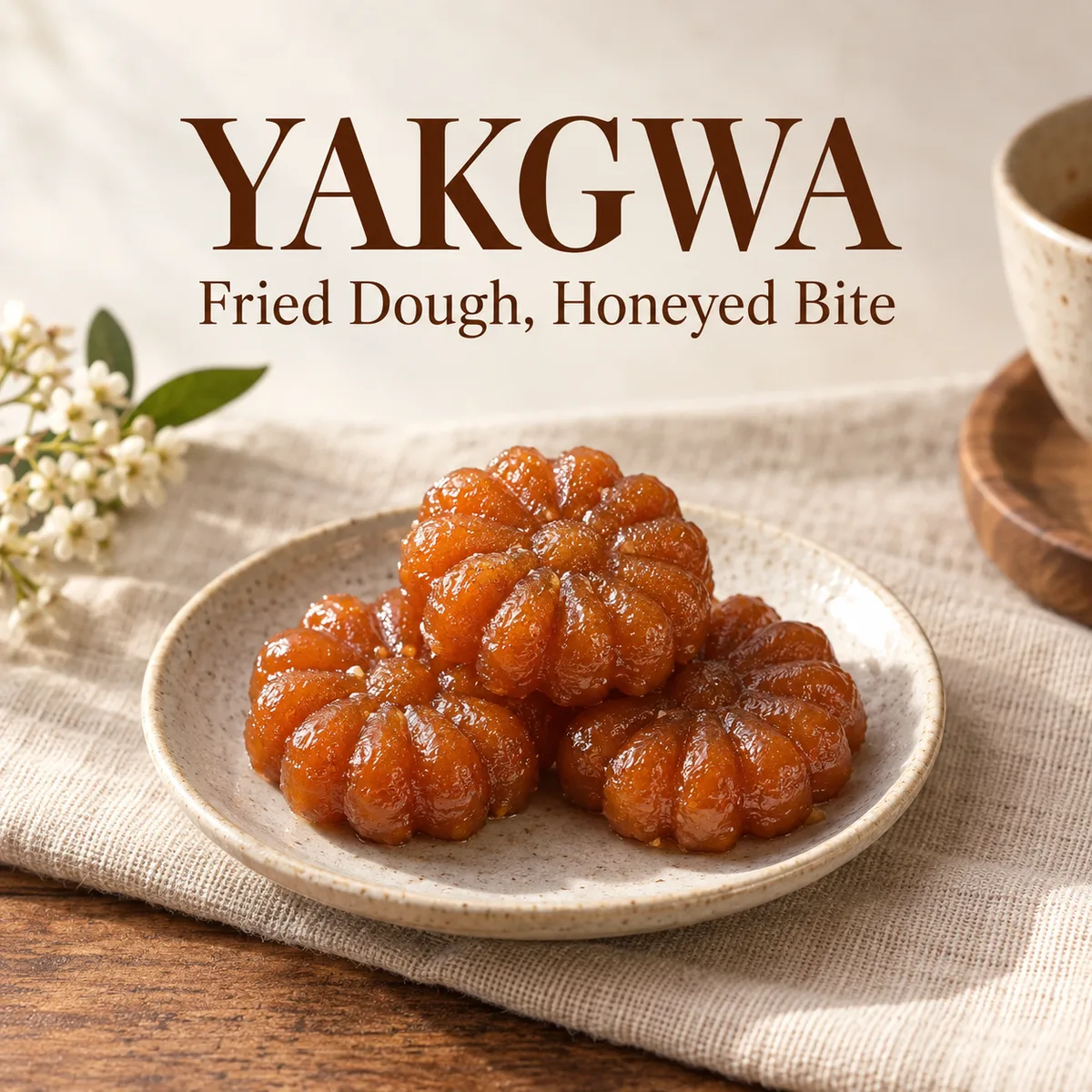
A small flower-shaped yakgwa can look like a molded biscuit until you pick it up. Its glossy surface and substantial bite belong to a different kind of sweet: dough is fried, then soaked in syrup. Start with a small piece and notice how the edge and center behave.
Its older history is best understood through yumilgwa, the wider family of oil-and-honey confections. A royal association and a long tradition do not mean that every modern flower-shaped cookie follows one unchanged, thousand-year-old recipe.[2]
Frying and syrup create the distinctive bite
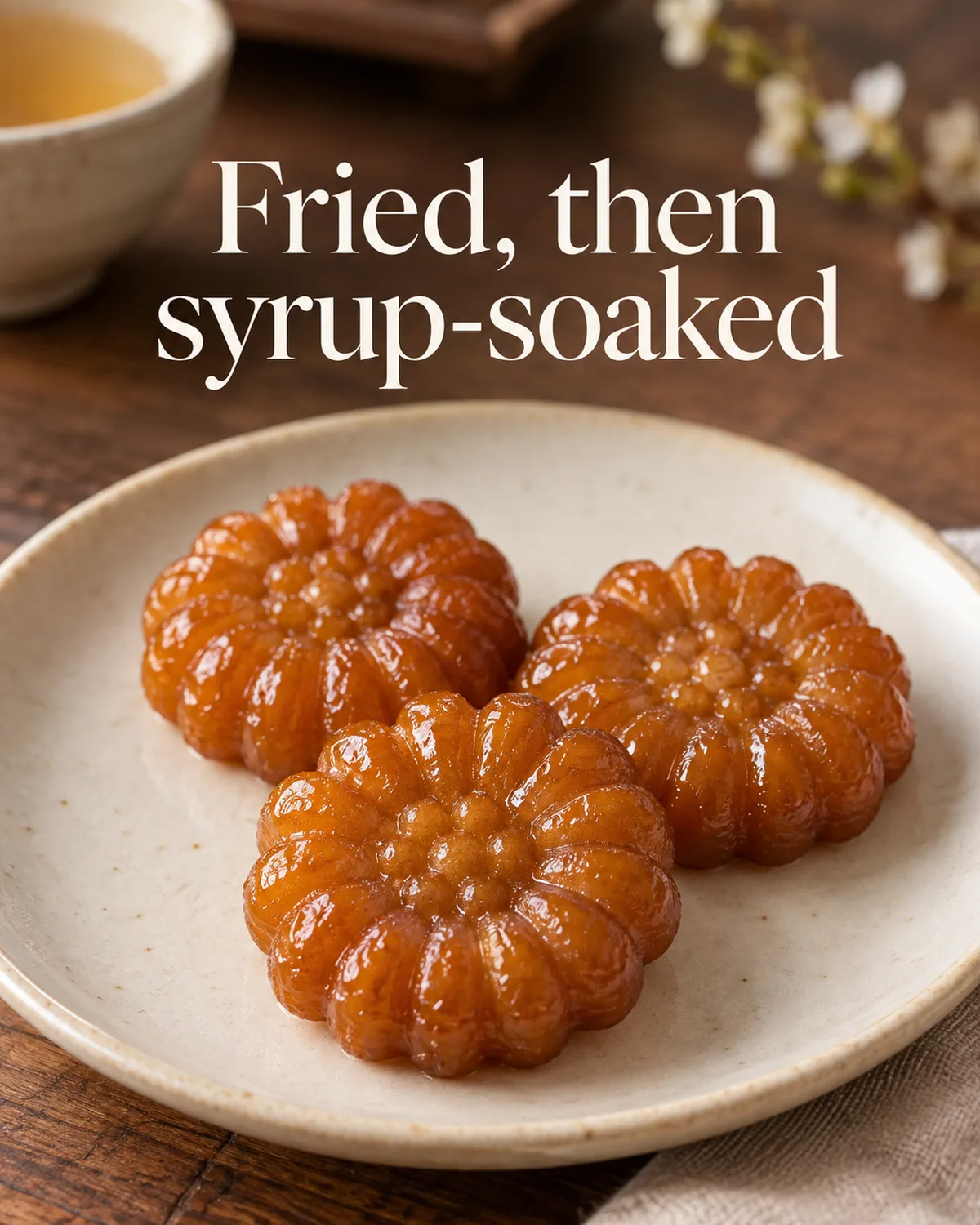
The Academy of Korean Studies defines yakgwa as wheat-flour dough made with honey and sesame oil, pressed into a mold and cooked in vegetable oil. It then goes into honey or grain syrup.[1]
That sequence helps explain why the word “cookie” only gets you part of the way. Look at a cut or broken piece: the inside is a cooked dough structure carrying sweetness, rather than a crisp biscuit with a thin icing on top.
Taste an edge first, then a piece from the center. Compare resistance, softness and the way syrup coats the mouth. Different makers can deliver a firmer, more crumbly piece or a softer, denser one; a flower outline alone cannot predict the result.
The encyclopedia’s recipe includes ginger juice and clear rice wine in the dough, with cinnamon in the soaking syrup. Those details describe a documented preparation, not an ingredient guarantee for every packaged or handmade product.[1]

Choose the product, not just the photograph
A molded flower is the familiar image, but shape and size vary. The same reference distinguishes small and large yakgwa and a large angular form called moyakgwa.[1]
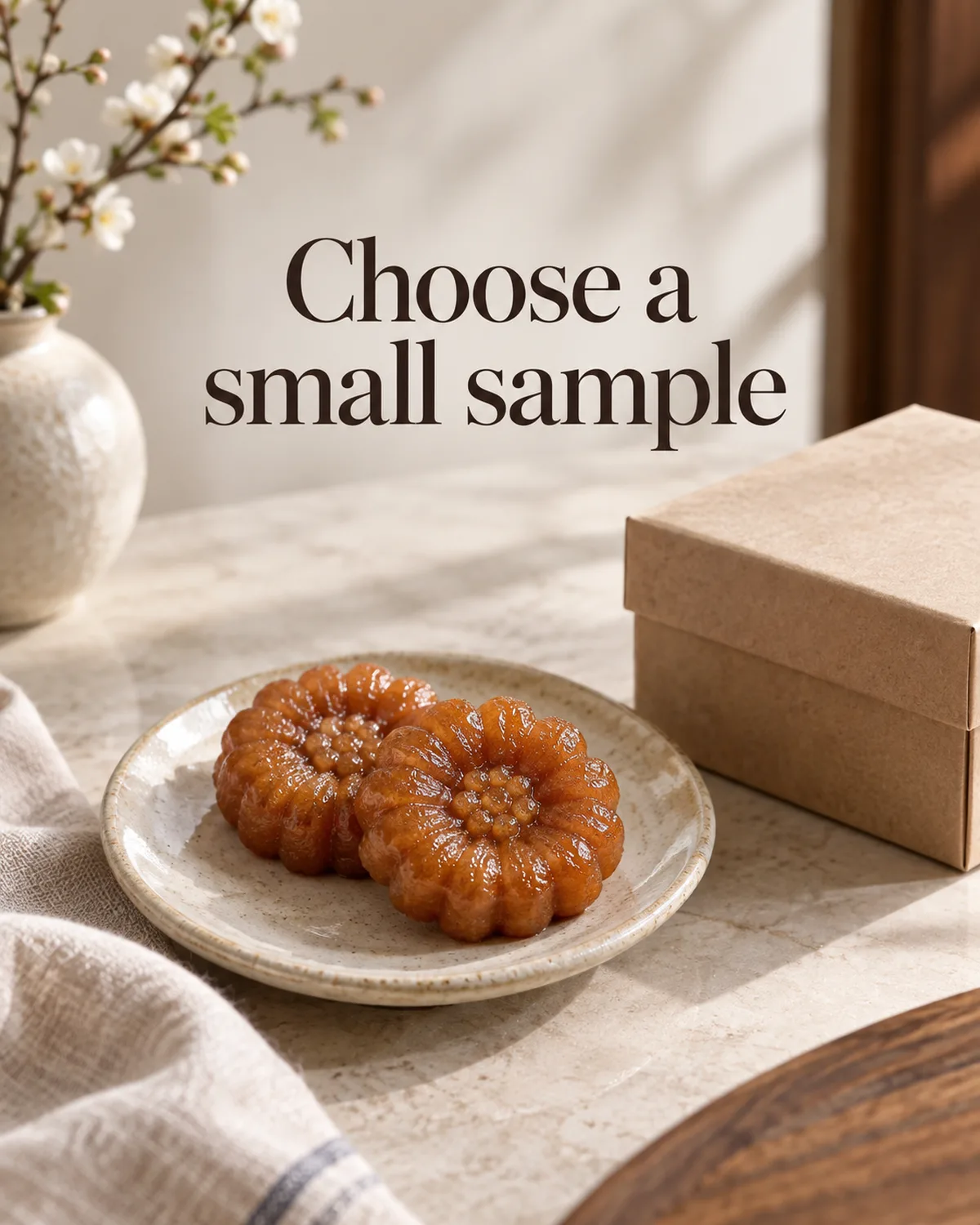
Ask the seller what the piece is like before buying a large box. Is the center soft, is the surface particularly sticky, and is the portion intended as one serving or for sharing? A small sample tells you more about your preference than a glossy display.
Read the actual ingredients when they matter to you. Wheat flour, sesame oil, honey, syrup, spices and toppings need checking on the product you choose. A traditional description cannot settle substitutions, shared equipment or the composition of a cream-filled adaptation.
For taking it home, follow the maker’s packaging and storage directions. Plain yakgwa and a dessert assembled with cream or ice cream are different products. Keep the box supported and do not assume one universal shelf life from the name.
An old confection family, not a precise invention date
The encyclopedia’s yumilgwa entry explicitly says its beginning is unknown. It describes the family as flourishing in Goryeo, used at rites, banquets and weddings. Its 1296 account concerns confections brought to a royal wedding in Yuan territory.[2]
It also records restrictions in 1192 and 1353, linking extensive use to demand for grain, honey and oil. The history concerns costly ingredients and public resources as well as ceremonial prestige.[2]
These dates establish medieval documentation of the broader family. They do not identify the first baker of today’s flower-shaped yakgwa or certify that a modern shop reproduces a medieval formula.
The wider family includes molded, angular and dumpling-shaped forms with different names and uses. Reading yakgwa within that family leaves room for changes in shape, occasion and preparation.[2]

Suwon adds a local story to the royal connection
The Academy’s Suwon entry describes yakgwa as made across Joseon, with Suwon especially renowned. It discusses Yongjusa’s confections being supplied for rites at Hyeollyungwon, the tomb associated with Crown Prince Sado.[3]
The entry also retells an account from Jeong Yak-yong’s Mokminsimseo in which King Injo requests Suwon yakgwa. That is an attributed historical anecdote in a later text, rather than a surviving order that proves one original royal recipe.[3]
The royal connection is therefore richer than a label saying “food only kings could eat.” Local reputation, temple provisioning and ceremonial use offer more specific questions to ask about a regional sweet.
When a shop advertises a regional style, ask what distinguishes its actual preparation. A place name can guide curiosity, but it does not replace tasting the product or checking the maker’s explanation.
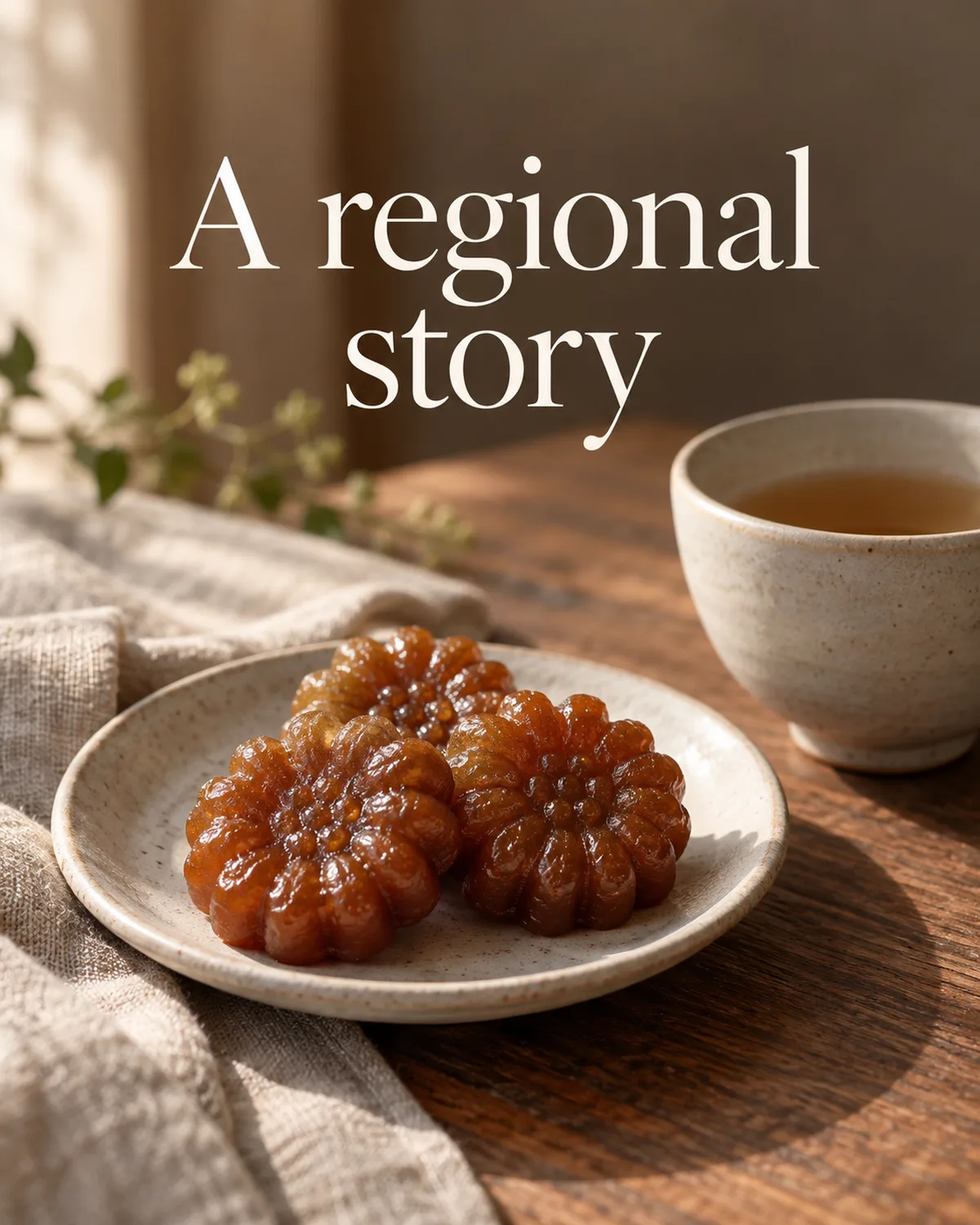
The modern revival has a date
A Korea Tourism Organization article published on February 2, 2024 described young consumers queuing for yakgwa and competing to secure sought-after products, using the term “yaketing.” It also described yakgwa cookies, financiers and ice cream.[4]
That dated account helps explain the sweet’s modern visibility. It is evidence of a reported revival, not a live ranking of Korea’s most popular dessert or a promise that a particular shop still has the same queues.
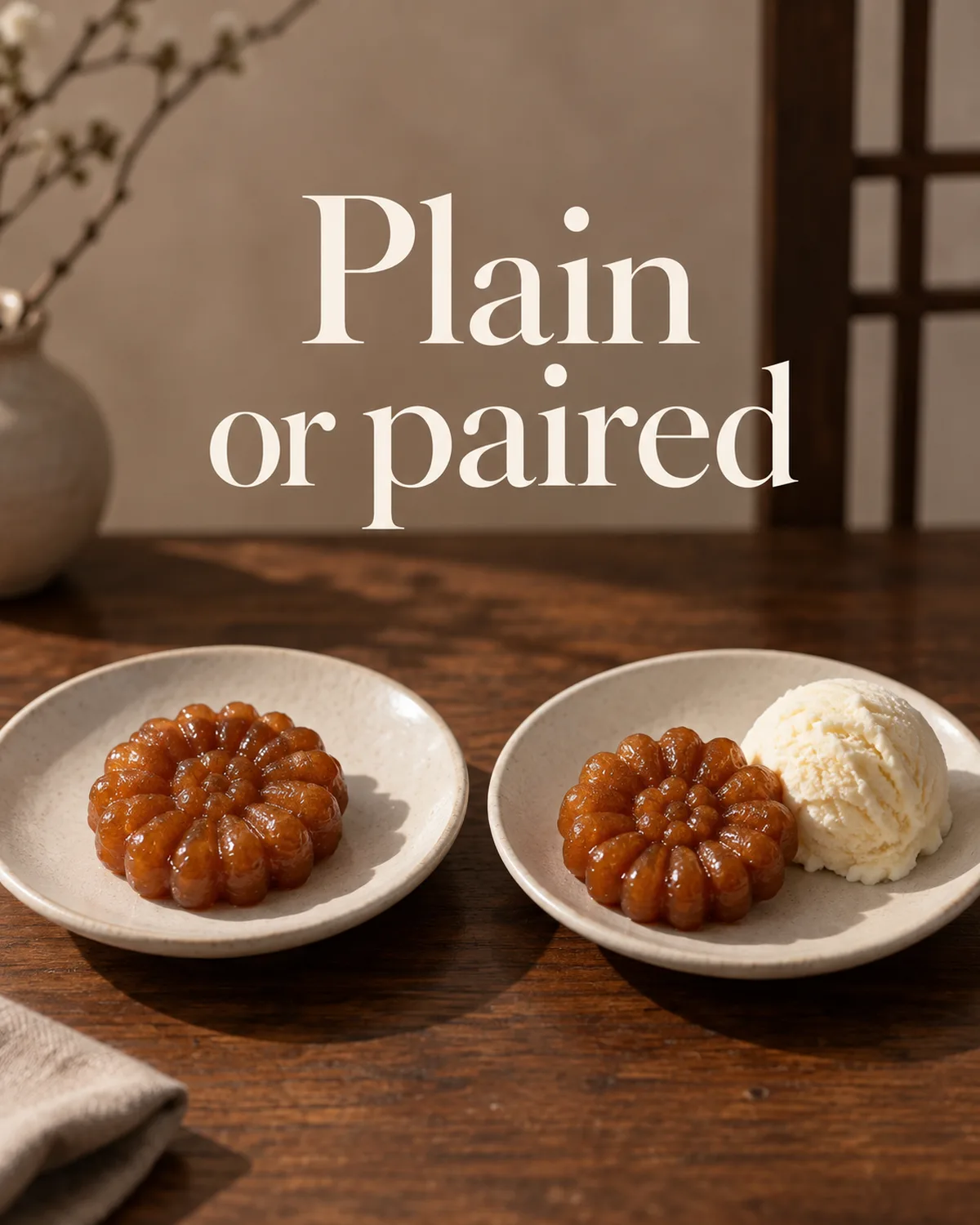
A plain piece lets you concentrate on the fried dough and syrup. In a composed dessert, ask whether yakgwa is an intact topping, broken pieces or part of the filling; cream and frozen elements change the balance and the eating method.
If comparing versions, begin with a small plain piece before a richer adaptation. You can then distinguish the sweet itself from the dessert built around it, rather than judging both by the same expectation.
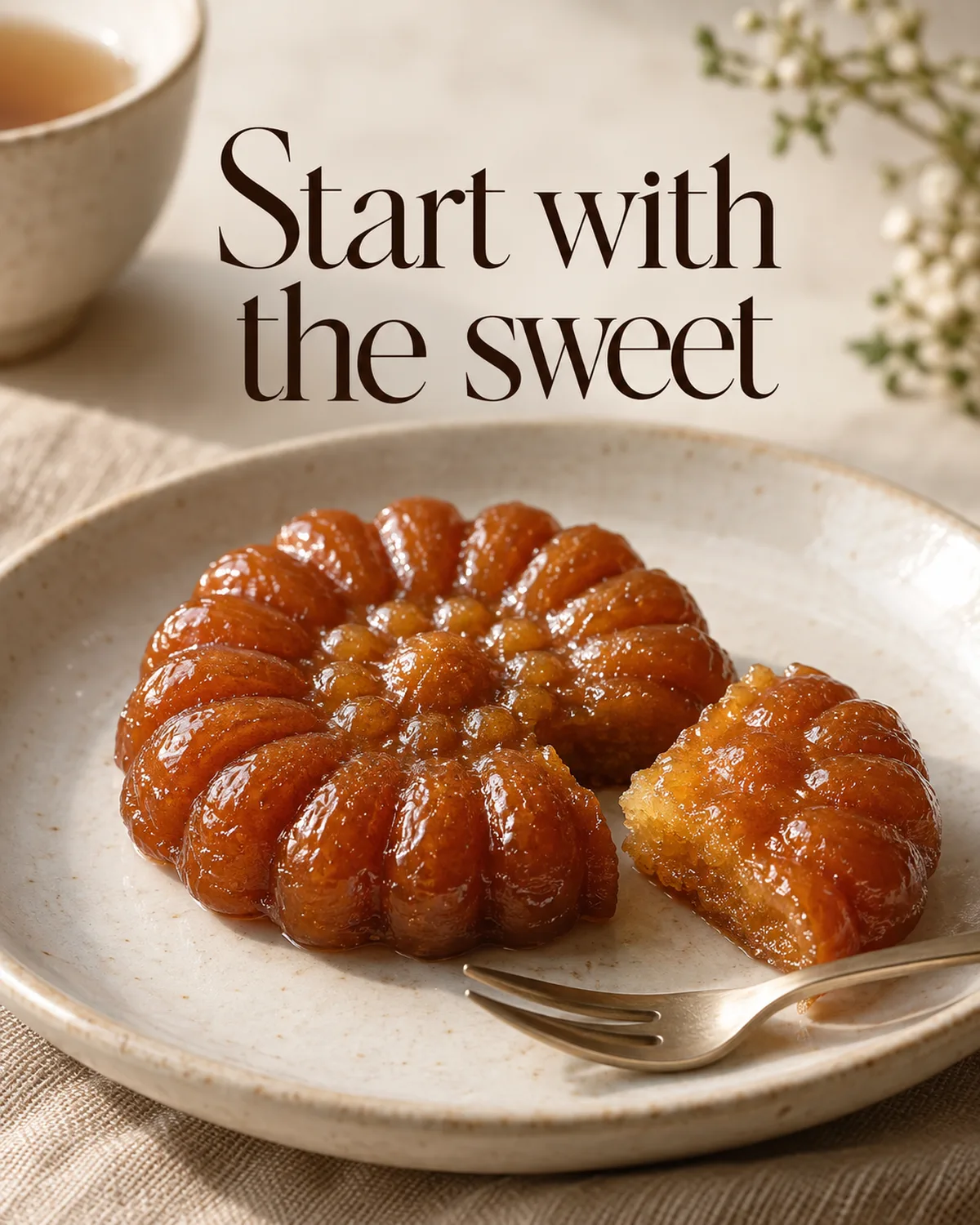
A small tasting is enough to start
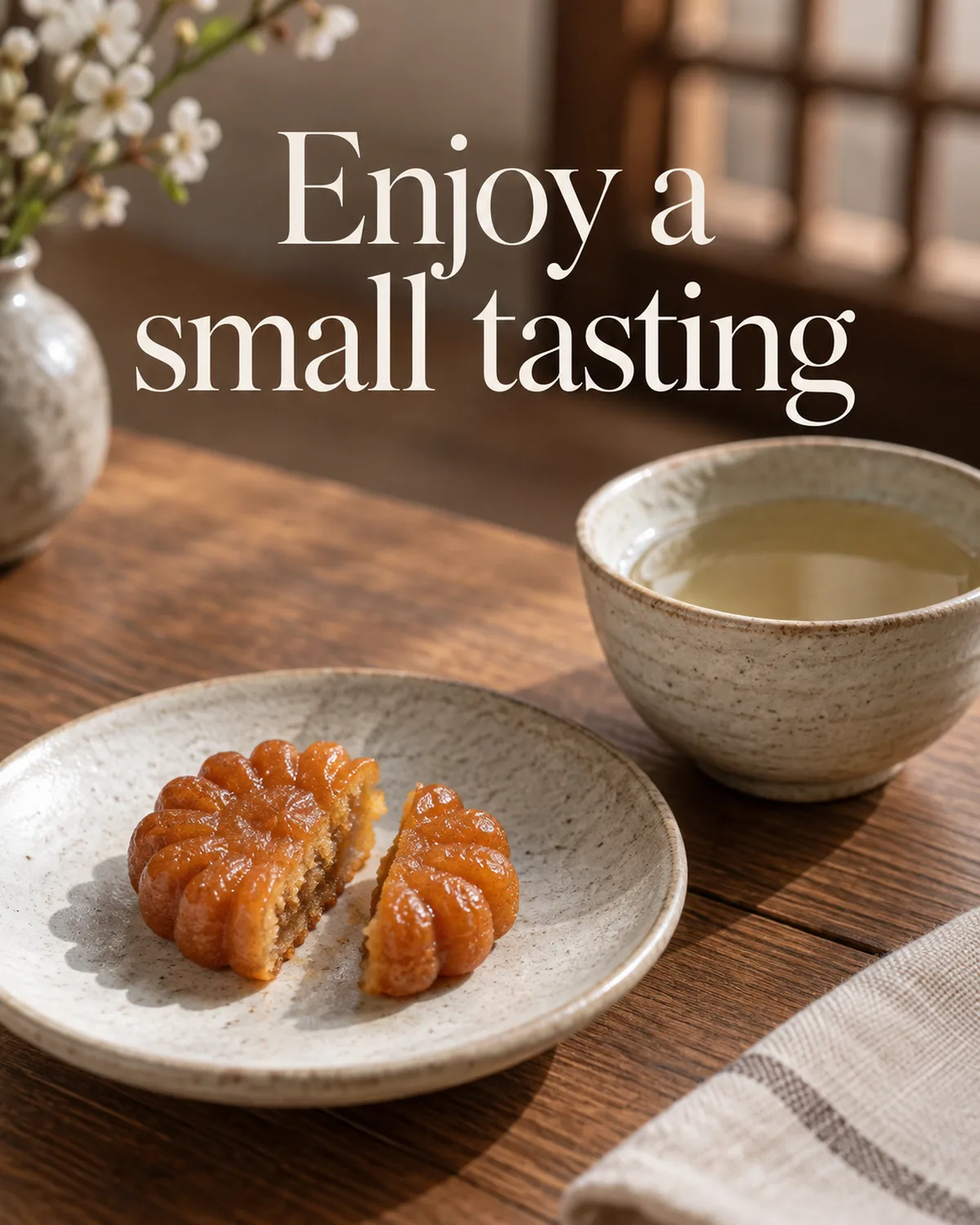
Set one piece on a plate and divide it if the portion feels substantial. Try a bite by itself, then take a sip of an unsweetened drink you enjoy. Notice whether the pairing changes how strongly you perceive the syrup, spice or toasted notes.
The name’s connection with honey belongs to its food history; it is not a reason to treat the confection as medicine. Enjoy yakgwa as a sweet whose technique, regional stories and modern variations reward attention.[1]