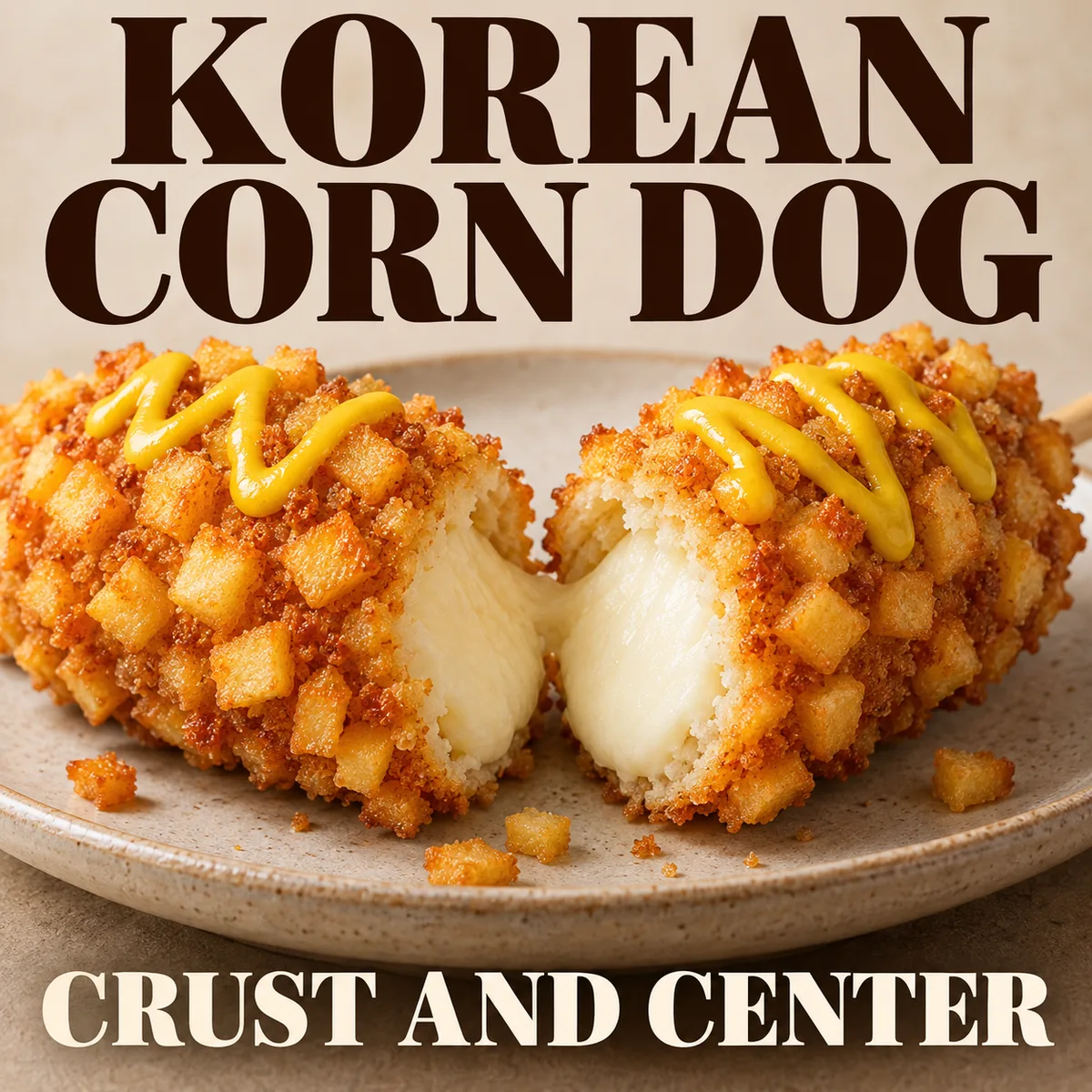
A Korean corn dog can deliver several textures in one bite: a crisp coating, a softer layer beneath it and a filling that may be sausage, cheese or a combination. The potato-covered surface tells you something about the outside, but it does not identify everything inside.
The headline’s 2016 date needs a narrower meaning. Bon Appétit’s December 2021 reporting connects the modern franchise wave to Myungrang, which began near Busan in 2016, while describing Korean street-food corn dogs before that period. A chain’s opening date is not proof that every cheese-filled or potato-coated version was invented that year.[1]
There is also a dated American business record. Two Hands says it was founded in 2019 with its first store in California. That documents one company’s history, rather than proving the first Korean corn dog in America or measuring the entire market today.[2]
An unverified celebrity snack photograph cannot answer those historical questions. This guide therefore begins with the food and the choices a menu actually gives you. Understanding the coating and filling makes a first order easier than chasing an uncertain viral anecdote.

Read the inside and outside separately
Two Hands separates coating choices from filling choices on its ordering guide. It lists potato and crispy-rice coatings, among others, and fillings including mozzarella, beef sausage and a mozzarella-and-sausage combination. These are that company’s documented options, not a compulsory menu for every Korean vendor.[3]
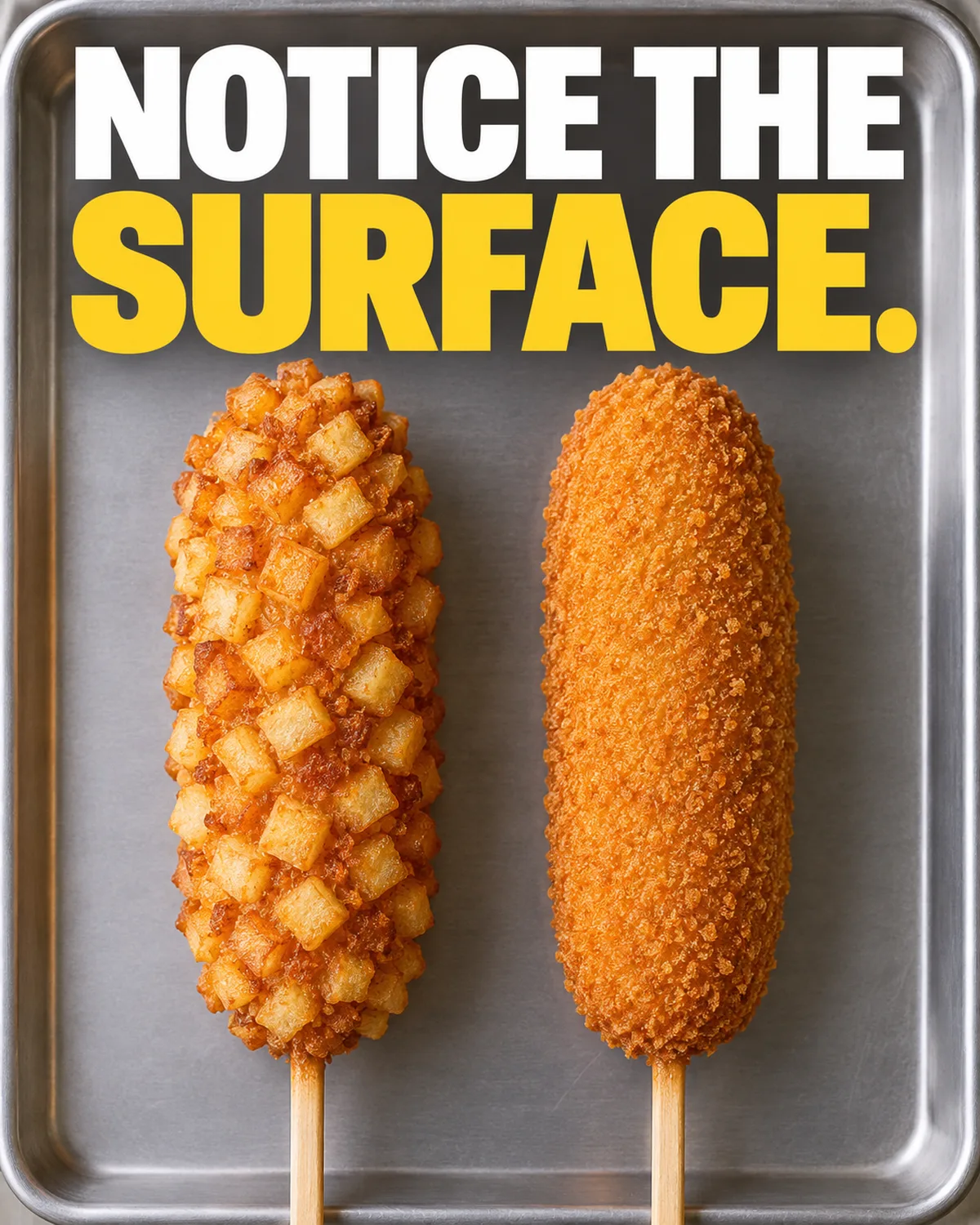
A potato coating changes the bite at the surface. A mozzarella filling changes the center. Those two decisions can coexist, but neither follows automatically from the other. When a menu photograph is dominated by potato cubes, check the filling description before ordering.
A half-and-half filling also should not be mistaken for two identical snacks joined together. Different parts of the same order can offer different centers. Ask the provider how its particular item is arranged if the distinction matters to the people sharing it.
For a useful first comparison, change one feature at a time. You might compare two available fillings under the same coating, or keep the filling and try a different surface. That lets the next bite answer a specific question instead of mixing every variation at once.

The crust carries its own texture
Look at the outer layer before the sauces cover it. A relatively even crumb surface and a surface studded with potato pieces are visibly different. The pleasure of the coating is not explained only by the melted center: the outside is a substantial part of the snack.
A sauce-covered version can make the topping the first flavor you notice. A lightly dressed version leaves more of the surface exposed. Neither is the universal original; they are different ways a vendor may finish the item and different ways a diner may choose to experience it.
The word corn in the English name is not a complete batter ingredient list. It is a familiar category name, so it should not be used to promise cornmeal, rice flour or a particular wheat-free preparation. Read the actual item description or ask the vendor about its recipe.
Removing a topping after cooking cannot establish what was mixed into the batter or handled during preparation. Ingredient questions belong before the order. A general food guide can explain the layers, but the business serving the particular snack must answer product-specific questions.
A cheese pull is one feature of the filling
Mozzarella can make the center visibly stretch, but a photograph freezes one moment in a hot food’s changing texture. A long strand does not establish the filling quantity, the whole ingredient list or the quality of the crust around it.
A sausage-centered version offers a different kind of bite. Its center stays more clearly separated from the surrounding batter, while a cheese-centered version emphasizes softness and richness. Choose the center you want rather than treating the camera’s favorite filling as the only correct one.
For a mixed filling, taste both parts before deciding what you prefer. The savory center and the richer cheese section can make one item feel like more than one experience. A sauce that suits one section may dominate another.
Let a hot item become comfortable to eat and follow the provider’s instructions. There is no need to pull at the cheese immediately for a video. A good snack can be enjoyed through ordinary bites, including the coating that a dramatic stretch leaves outside the frame.

Sweetness and seasoning are separate choices
The ordering guide’s crispy-rice entry makes sugar optional, illustrating why a visible coating and its finish should be read separately. A dusting or sauce may be another choice rather than a feature built into every version of the snack.[3]
Sweet and savory elements can appear together without cancelling one another. If you are unsure about a finish, ask whether it is included or optional for the particular item. A photograph with a heavy drizzle does not mean every order arrives that way.
For a comparison, taste an exposed part of the coating before taking a bite through the dressing. Notice which flavor arrives first and which remains afterward. That small distinction tells you more than assuming a red color always means the same seasoning.
You can also keep the rest of the order simple. A filling snack, several rich sides and a sweet drink may compete for attention. Choose what you actually want to eat; adding every photographed extra is not required to understand the main item.

Keep the history distinct from the order
A reported franchise wave and one company’s founding are dated milestones. Neither establishes the invention date of every variation.
They also do not verify current prices, every branch’s availability or a present nationwide popularity ranking. For an actual purchase, check the specific location’s current menu. A historical account is useful context, but an old store count is not a reservation or an inventory check.
Corn cheese and a Korean corn dog may both contain melted cheese, yet their structures differ. The former is spooned from a hot dish with separate kernels; the latter is a filled snack eaten through a coating. Their shared ingredient does not give them one history.
Begin the next order with three concrete questions: what is the center, what is the coating and what finish comes on it? Once those are clear, you can enjoy the contrasts in the bite without depending on an invented birthday or an unconfirmed celebrity story.