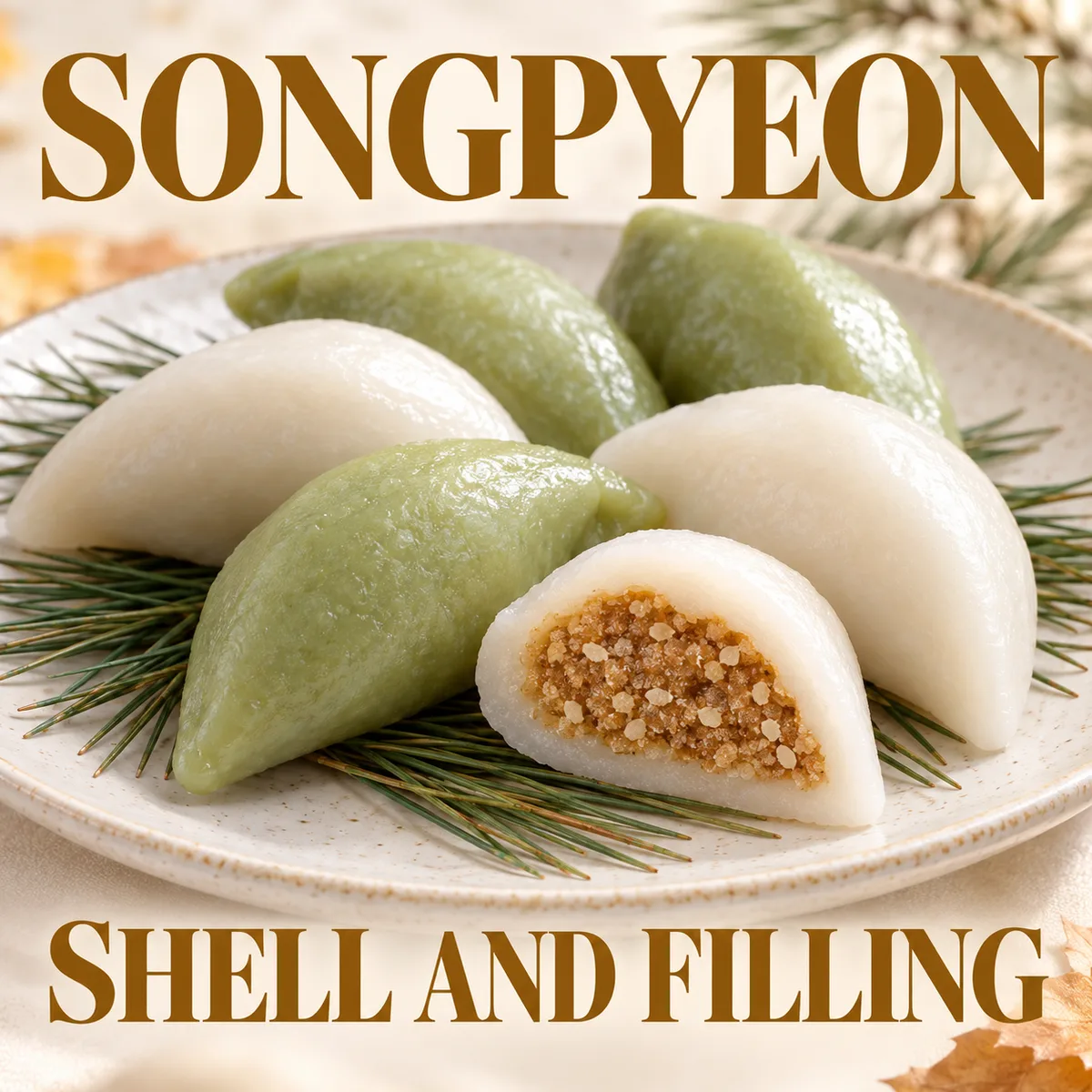
Songpyeon gives the first bite two layers: a rice-dough shell and a filling enclosed inside it. A curved edge and a pinched seam make the familiar half-moon form easy to recognize. Comparing it with mochi and mooncakes works best when you look beyond the outline to how each food is made.
Why a half moon? The practical answer begins with shaping filled dough and sealing it into a crescent. A Korean cultural feature also retells a legend that associates a crescent with growth and a full moon with decline. That is a traditional explanation of the symbolism, not evidence that the legend established the recipe or its invention date.[2]
The shape is familiar rather than universal. The same feature describes a flat, round Jeju version. A round rice cake therefore does not automatically stop being songpyeon, and a crescent alone cannot tell you the flour, filling or regional preparation.[2]
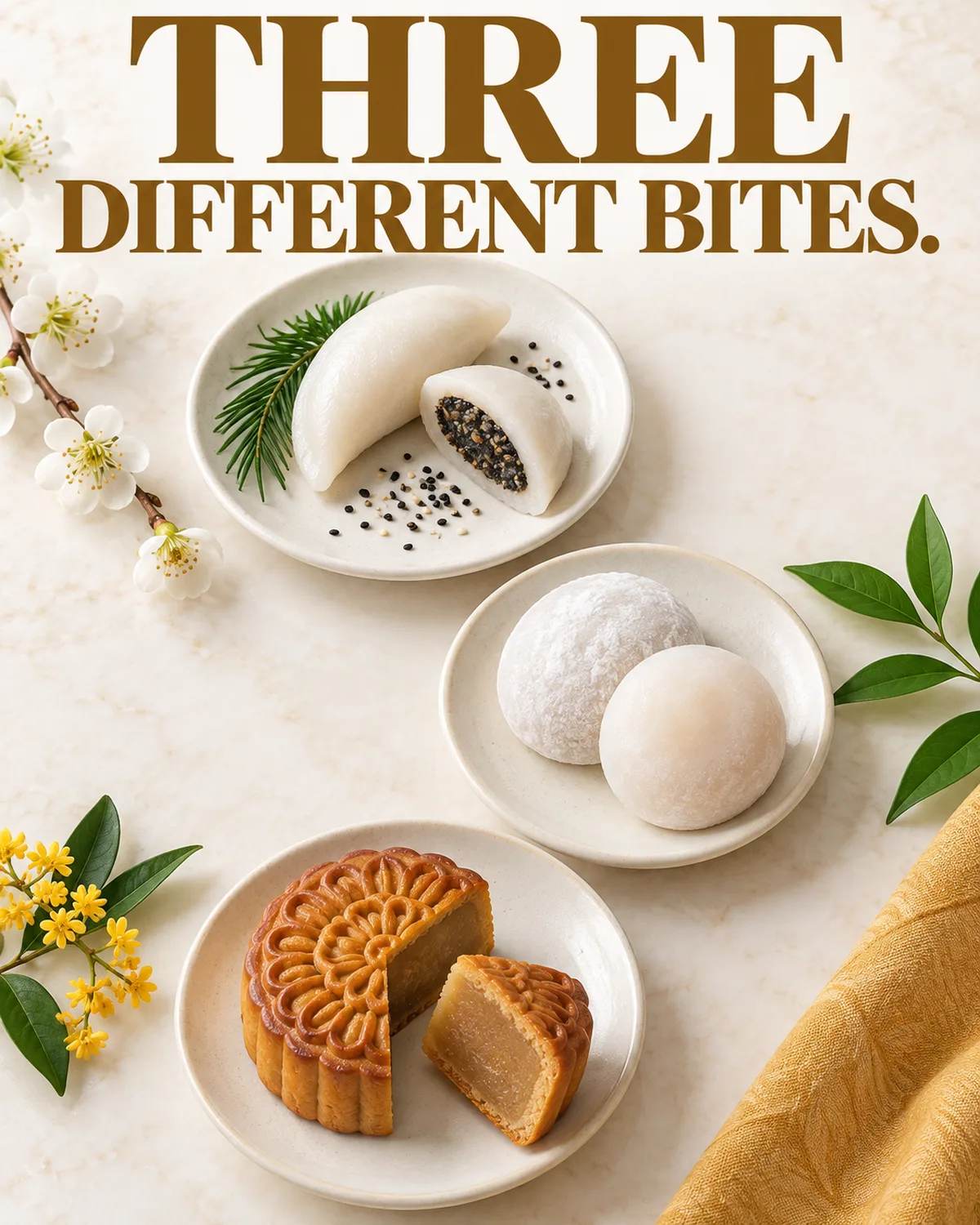
The most useful comparison has three questions: what forms the outside, how is it cooked and what is inside? Those questions keep Korea’s steamed rice cake, Japan’s many mochi preparations and the varied mooncakes of Mid-Autumn from becoming three interchangeable festival sweets.
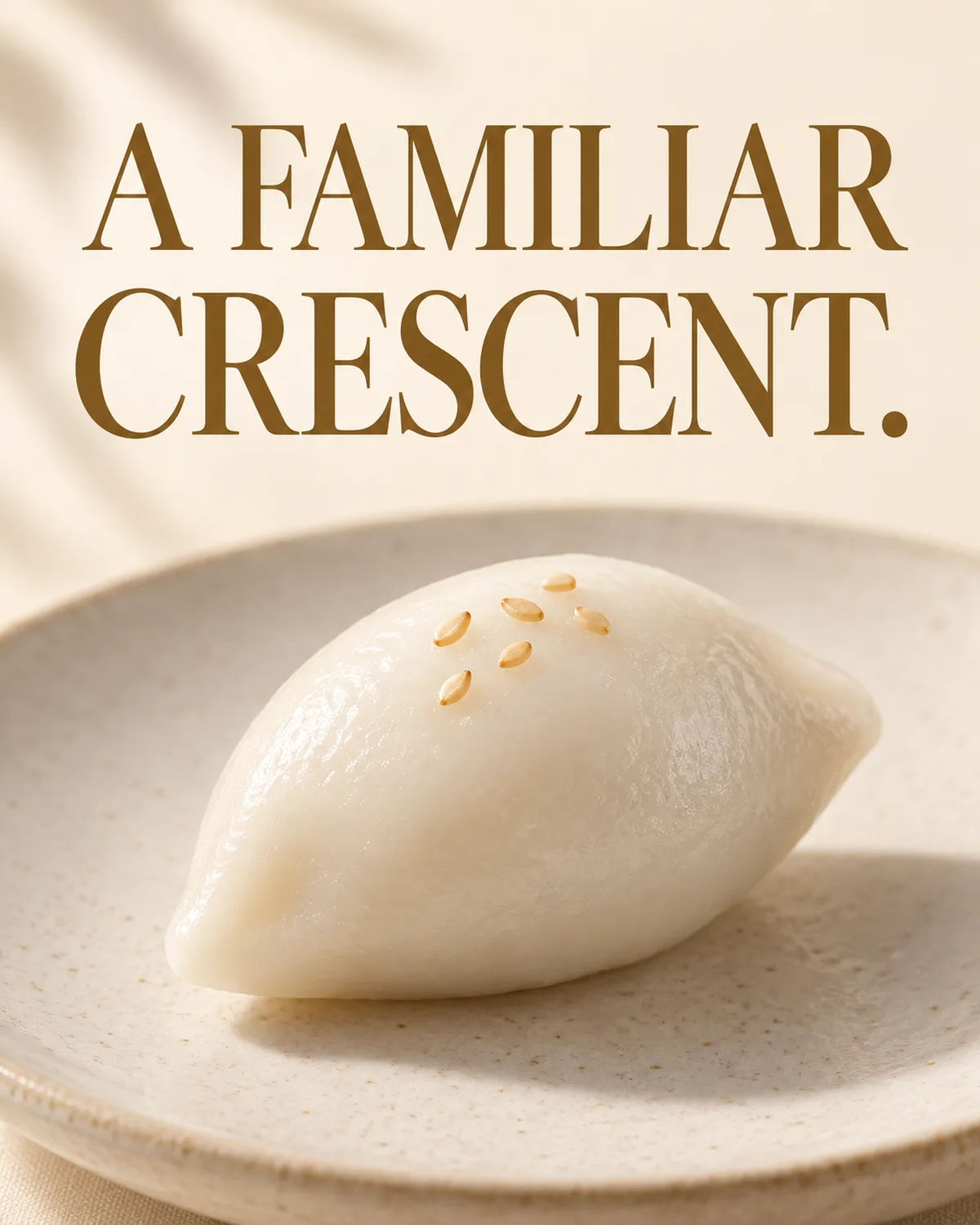
Songpyeon: a sealed rice shell
The Academy of Korean Studies describes a standard method using non-glutinous rice flour kneaded with hot water, shaped around a filling and steamed. Its account lists fillings such as beans, sesame and pine nuts. The rice shell is part of the finished bite, rather than a wrapper that disappears behind the center.[1]
To read a cut piece, look for the distinct boundary between dough and filling. A fine filling can seem more integrated with the shell than a filling with visible pieces. Color on the outside, however, is a separate clue; it does not reliably identify every ingredient in the middle.
The curve is made during shaping rather than supplied by a mold that all households must use. The seam has a concrete job: keeping the filling enclosed. A neat crescent and a more rounded piece can both invite the same question about the center, even when their silhouettes differ.
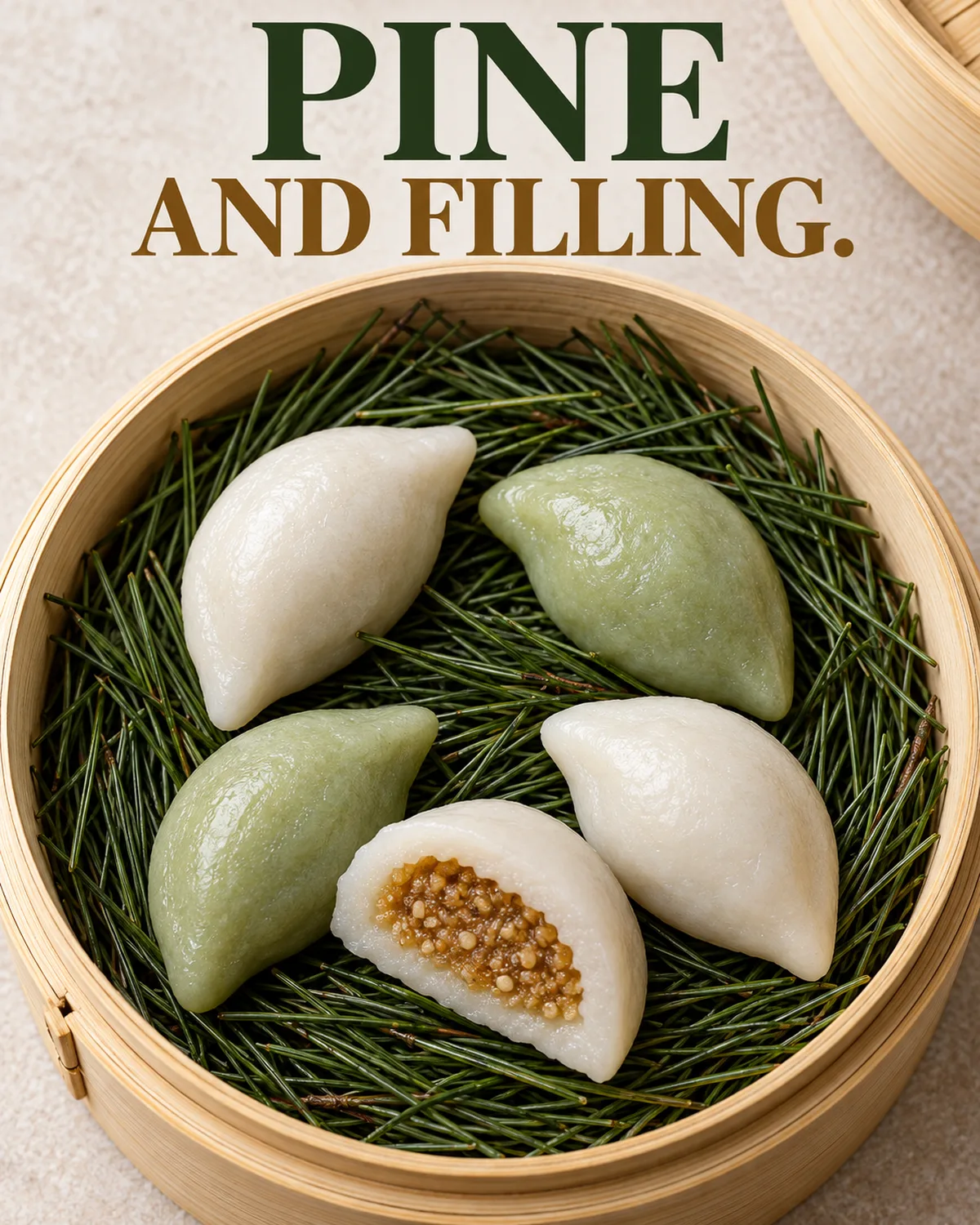
Pine needles belong to the customary steaming association and aroma described in the cultural feature. They should not be confused with pine nuts used as a possible filling. A needle beside a cake and a nut inside it have different culinary roles.[2]
Mochi: preparation matters more than the label
JNTO describes the classic mochi process as cooking glutinous rice and pounding it into a cohesive mass. That is a useful contrast with the flour dough used for the standard songpyeon method. It also discusses savory as well as sweet regional traditions, so mochi should not be reduced to a single filled dessert.[3]
Kyoto examples documented by Japan’s agriculture ministry combine glutinous rice with ingredients such as millet or other grains, then steam and pound it. Their serving methods include preparations beyond a plain sweet bite. One ingredient or topping cannot represent the entire mochi category.[4]
A plain piece makes the rice texture the main event. A filled sweet adds another layer, while a savory serving changes the surrounding flavors. When a shop uses mochi in an English product name, read the actual item rather than assuming it matches every traditional preparation.
For a tasting comparison, pay attention to how the surface and center behave together. A sealed songpyeon has a dough boundary around its filling. A mochi item may be plain, filled or served with other ingredients. Comparing those particular pieces is more informative than ranking two broad names.

Mooncakes: a varied pastry family
The Hong Kong Tourism Board presents mooncakes as part of Mid-Autumn sharing and describes both traditional fillings and modern variations. Lotus-seed paste and salted egg yolk are examples, not compulsory contents. The occasion and the many available versions matter as much as a round outline.[5]
A maker’s dated example makes that variety concrete. The Peninsula’s July 2026 announcement describes Spring Moon egg-custard mooncakes with flaky pastry and includes both round and heart-shaped offerings. The announcement documents that seasonal collection; it does not establish present stock or a universal shape rule.[6]
In a baked pastry example, cutting exposes an outer crust around a denser filling. That structure differs from a steamed rice-dough shell. A modern chilled or other variation may change the comparison again, so check which kind of mooncake is actually on the plate.
Sharing a cut mooncake also changes the tasting experience. A small wedge exposes the layers and makes the relationship between crust and filling easy to see. Compare the portion in front of you without assuming that one whole cake is the appropriate serving for every person.

The harvest connection is broader than one story
The Academy’s account connects new-rice songpyeon with the eighth lunar month, but also records a second-month custom involving cakes for servants. Songpyeon therefore has a documented seasonal life beyond a claim that Koreans eat it only on Chuseok.[1]
A festival association gives a food social meaning without prescribing every family’s plate. Different fillings, colors and regional forms can coexist within that association. A contemporary shop display is an example of what that seller offers, not a complete map of Korean household practice.
Likewise, mochi belongs to several Japanese occasions and regional settings. Mooncakes have their own Mid-Autumn sharing context. Their calendars can overlap in an autumn comparison while their techniques and meanings remain distinct.
Treat the crescent legend as a story to discuss alongside the food. It can explain why growth is associated with the shape in that telling. It cannot replace evidence about the dough, steaming method or the many forms people actually make.

Compare the pieces on the table
Start with a cut songpyeon and identify its seam, shell and filling. Then inspect the particular mochi item: is it plain, filled or dressed? Finally, look at the mooncake’s crust and center. This order makes the comparison visible before you decide which texture you prefer.
For a fair comparison, keep the pieces modest and taste them separately. A strong filling or topping can dominate the first impression. Notice what the outer layer contributes rather than treating all the flavor as a property of the rice or pastry alone.
Ingredient questions belong to the particular product. A general category name cannot establish whether nuts, sesame, dairy or another ingredient is present. Ask the maker about the item being served when those details matter.
The three foods are rewarding for different reasons: a steamed shell enclosing filling, a rice preparation that can take many forms, and a diverse pastry tradition shared around Mid-Autumn. Their familiar shapes open the conversation; the actual layers and methods make it worth continuing.
Continue the Korean rice and sweets story
Sources and reading
- Academy of Korean Studies — songpyeon
- Ministry of Culture, Sports and Tourism — songpyeon feature, September 9, 2024
- Japan National Tourism Organization — mochi and regional traditions
- Japan Ministry of Agriculture — Kyoto rice cakes
- Hong Kong Tourism Board — Mid-Autumn food traditions
- The Peninsula — Spring Moon seasonal announcement, July 28, 2026