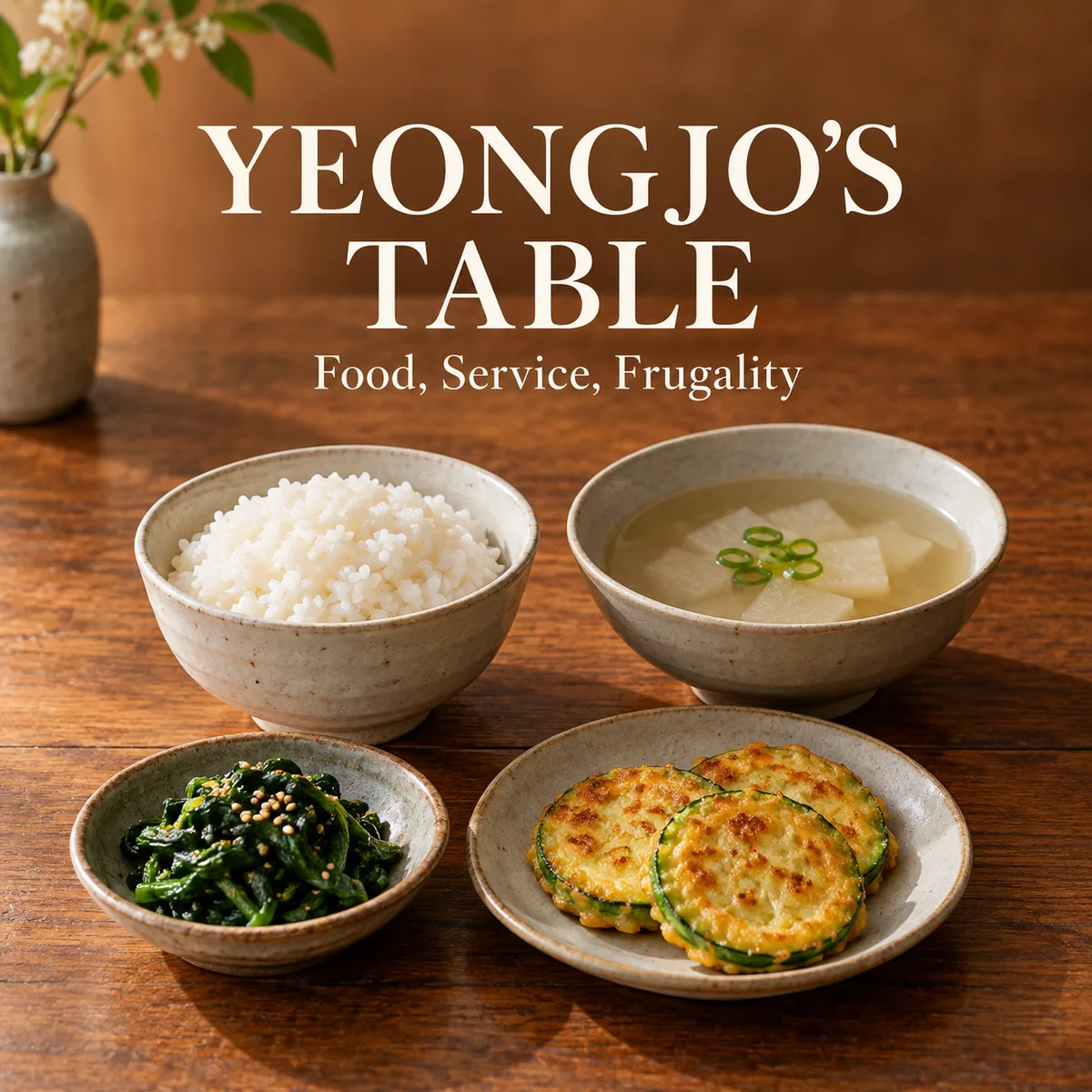
A bowl of rice, a spoonful of broth and several small dishes can make a Korean meal feel generous without turning it into a banquet. The interesting question is how those components are served and eaten—not whether they reproduce a king’s secret formula.
Yeongjo’s food story offers an unusually clear example of restraint inside an abundant institution. His reported reduction in eating occasions concerns palace service and frugality. Those records do not establish that a particular diet kept him alive.[2]
Begin with the structure of the meal
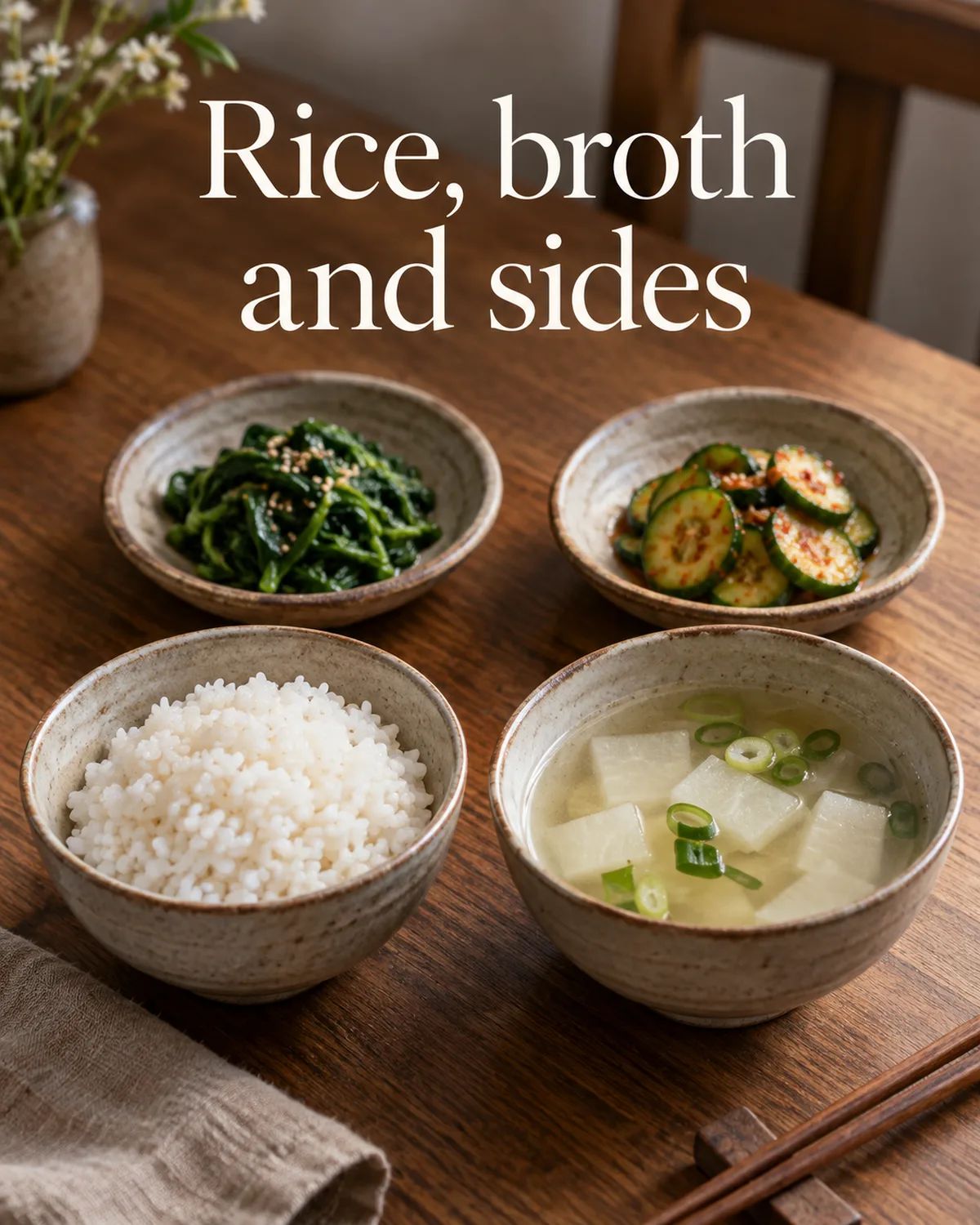
For a meal built around rice and side dishes, identify the staple, the broth and the preparations around them. A seasoned vegetable, a fermented condiment and a cooked protein contribute different tastes and textures. Their presence does not reveal one compulsory national proportion.
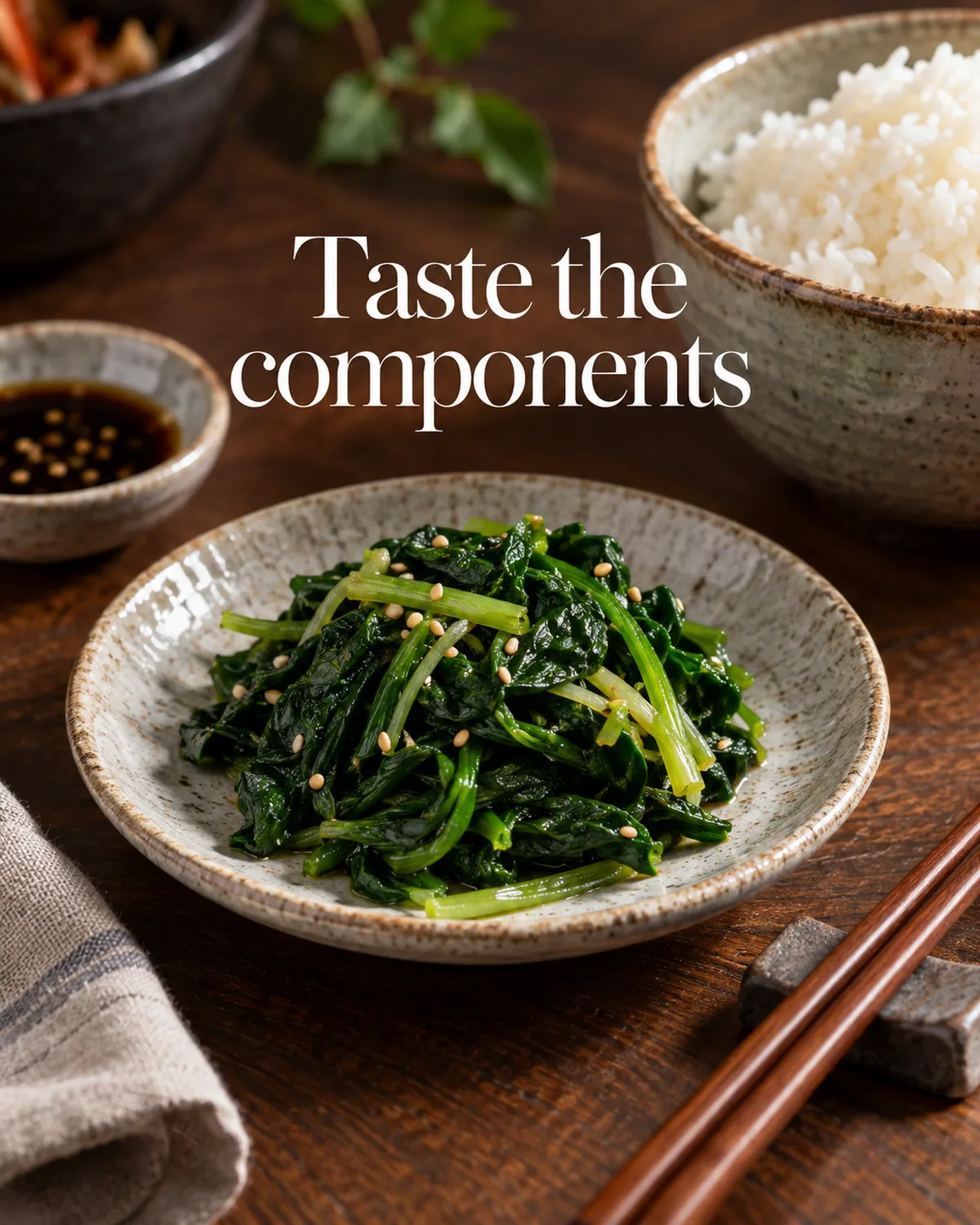
Try a side dish on its own, then with a little rice. Notice whether it is mild enough to eat as a vegetable portion or strongly seasoned enough to accompany several bites of the staple. The size of a serving bowl is not always the amount intended for one diner.
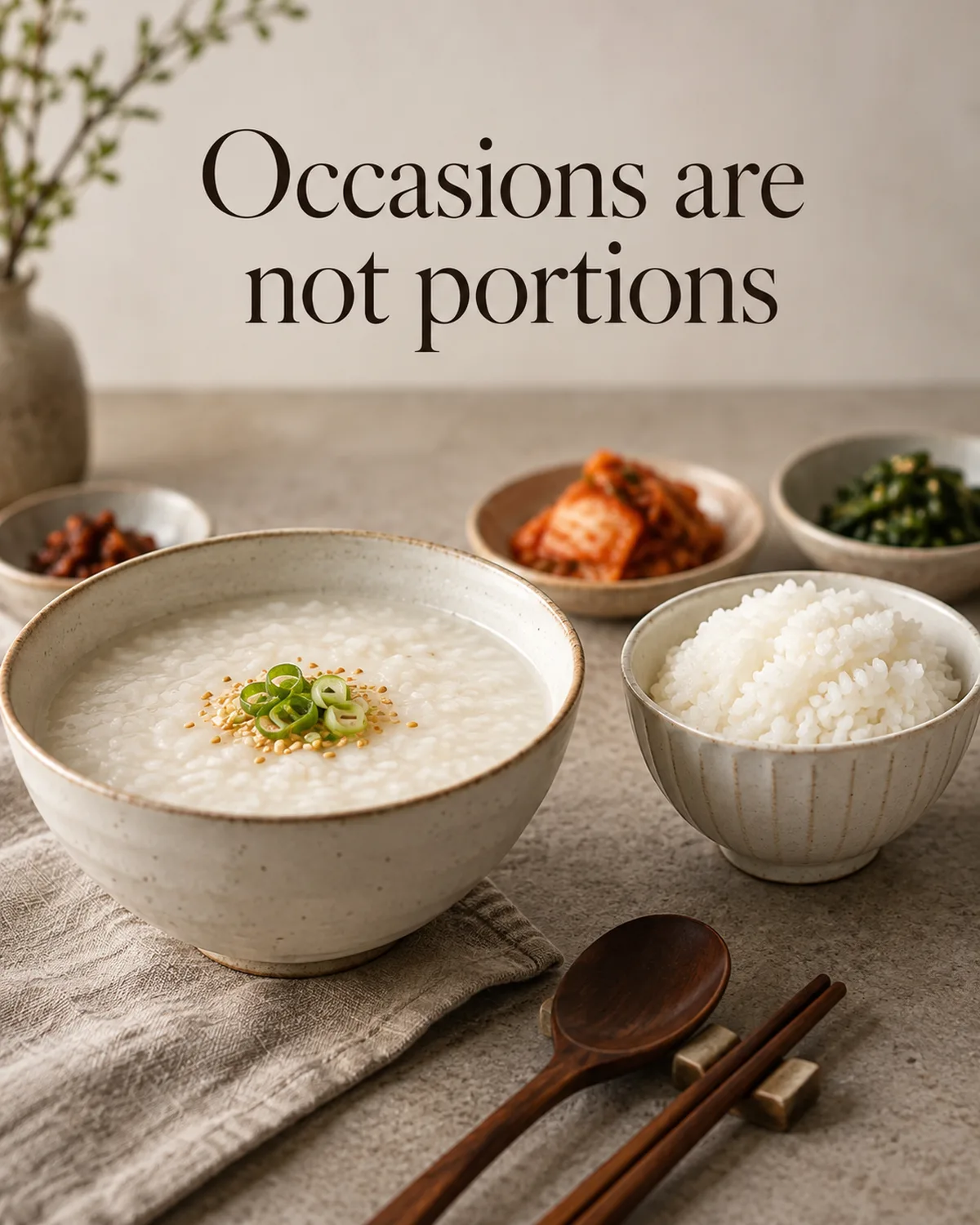
Ask what is shared and what is individual. If the meal arrives in courses, find out whether more rice, soup or a hot dish is coming before treating the opening arrangement as the entire meal.
A contemporary table can illustrate ways of organizing food. It cannot prove that Yeongjo ate those same ingredients, in those quantities, every day. Enjoy the meal as the cook presents it while keeping the historical claim separate.
The recorded change concerns eating occasions
The National Institute of Korean History describes five customary services: early light food, morning and evening meals, midday food and late food. They were not five equally elaborate banquets.[2]
Its commentary says the frugal Yeongjo omitted midday and late-night services, eating three times daily. It specifies occasions rather than a complete menu or measured portions.[2]
The distinction changes how the story is pictured. The documented comparison is between a customary service schedule and a ruler’s reported reduction. A photograph of a small rice bowl cannot fill in the missing quantities.
Nor does three occasions tell us everything about the food. Frequency, amount and composition are different questions. The account supports a change in frequency without turning it into a calorie calculation or a modern fasting program.
Royal restraint also had a public meaning
The account describes gamseon, reducing royal food during disasters, mourning and other serious circumstances; tribute could stop during drought or flood. Restoring service was bokseon.[2]
This places a king’s table inside government, ritual and provisioning. Reducing dishes could express concern for suffering subjects; the meal was more than a private choice between a rich lunch and a light lunch.
Yeongjo’s customary reduction and emergency-related gamseon are distinct statements. The latter supplies context, without explaining every omitted service.
For a visitor, this makes the explanation accompanying a royal-style meal worth hearing. Ask whether the presentation concerns daily service, a ceremonial occasion or a modern interpretation. Those are different routes into the food’s history.

What the long life establishes
The Academy of Korean Studies identifies Yeongjo as Joseon’s twenty-first king, born in 1694 and dead in 1776, reigning from 1724 to 1776. Its biography records his death at eighty-three and describes the dynasty’s longest reign.[1]
The historical age count and modern elapsed-year counting differ. Keeping the birth and death years visible avoids turning a traditional age number into an imagined modern equivalent such as “over a hundred today.”
An advanced age is an outcome in one life. A reported meal schedule is a behavior. Reading the two together does not isolate what caused the outcome, and the biography is not a nutrition experiment.
A favorite ingredient mentioned in another record would require its own evidence. Barley, millet, greens, tiny meat portions or ginseng should not be assembled into a lifelong menu simply because the resulting plate looks plausible.

A modern meal does not need a royal promise
Choose a rice-and-side-dish meal for its actual cooking. Look for contrasts you enjoy: tender greens beside a firmer vegetable, a warm broth beside something cool, a lightly seasoned component beside a concentrated sauce.
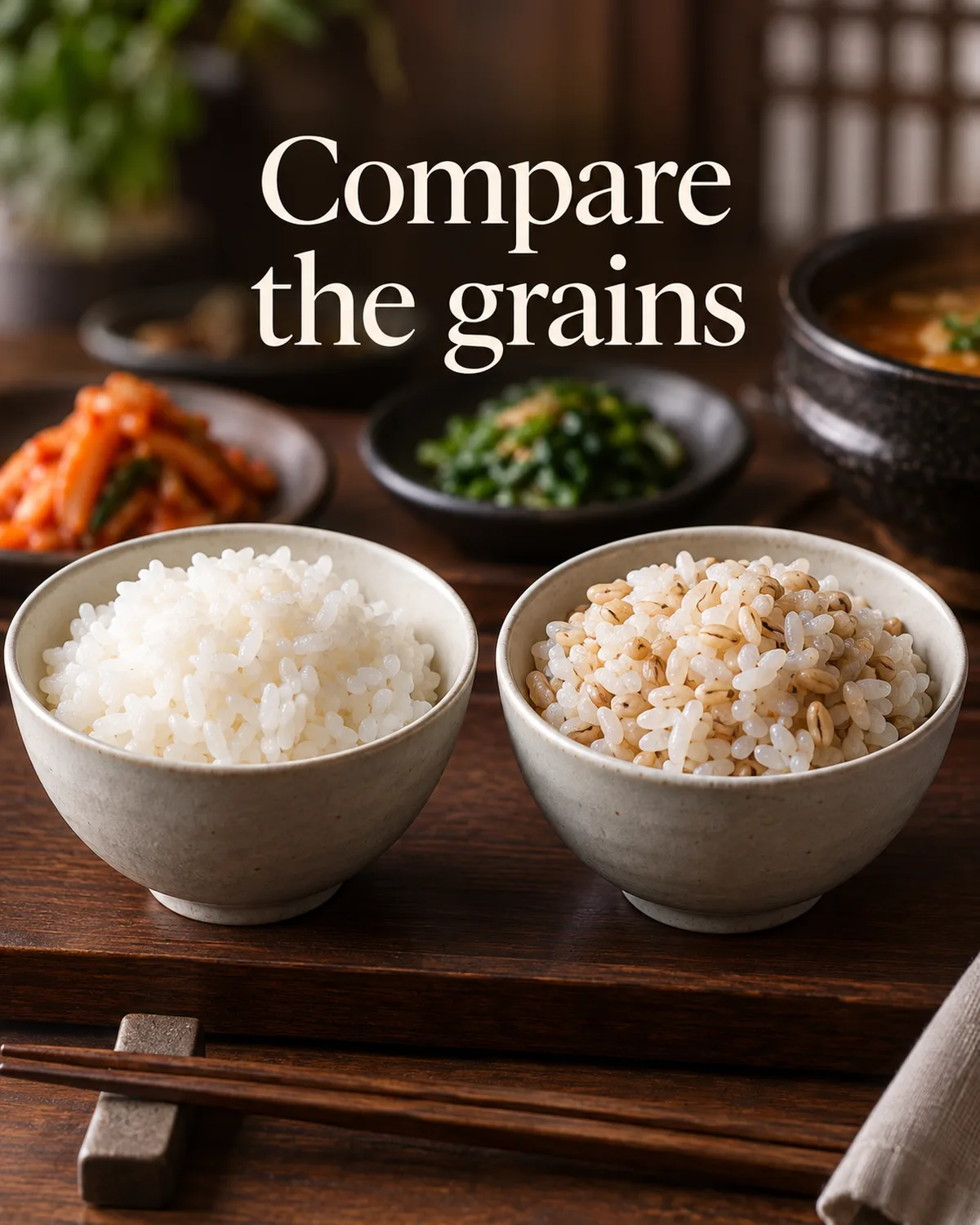
If you want to compare grains, taste a plain rice bowl and a mixed-grain preparation as two recipes. Their chew, aroma and cooking texture are tangible differences. Calling either bowl Yeongjo’s daily preference would require a source that documents that preference.
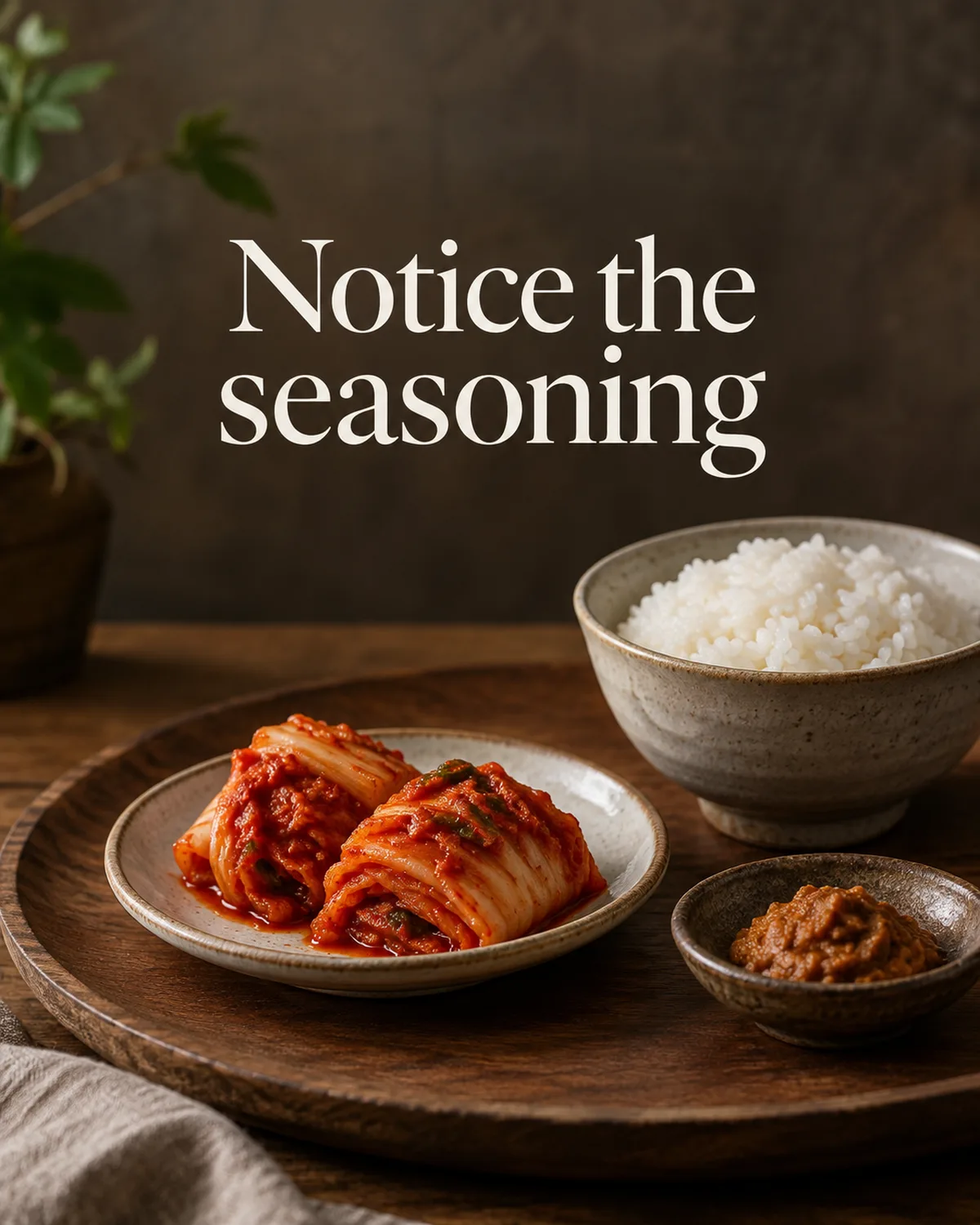
Do the same with fermented foods. A little kimchi or soybean seasoning can change a bite through acidity, salt and savory depth. Those culinary qualities are useful to notice without making the dish a promise about lifespan.
A smaller selection can be easier to understand than a maximal spread. Ask which dishes best show the kitchen’s work and how much is suitable for your party. Sharing and course size matter more than recreating an unsupported royal calorie target.
Keep the strongest part of the story
Yeongjo’s reported frugality challenges the assumption that a royal food day always meant consuming the fullest possible display.
Let that history change what you ask about the table—its occasion, service and preparation. Then judge the meal you actually receive by its taste and craftsmanship. There is plenty to discover without treating one king’s biography as a diet prescription.
