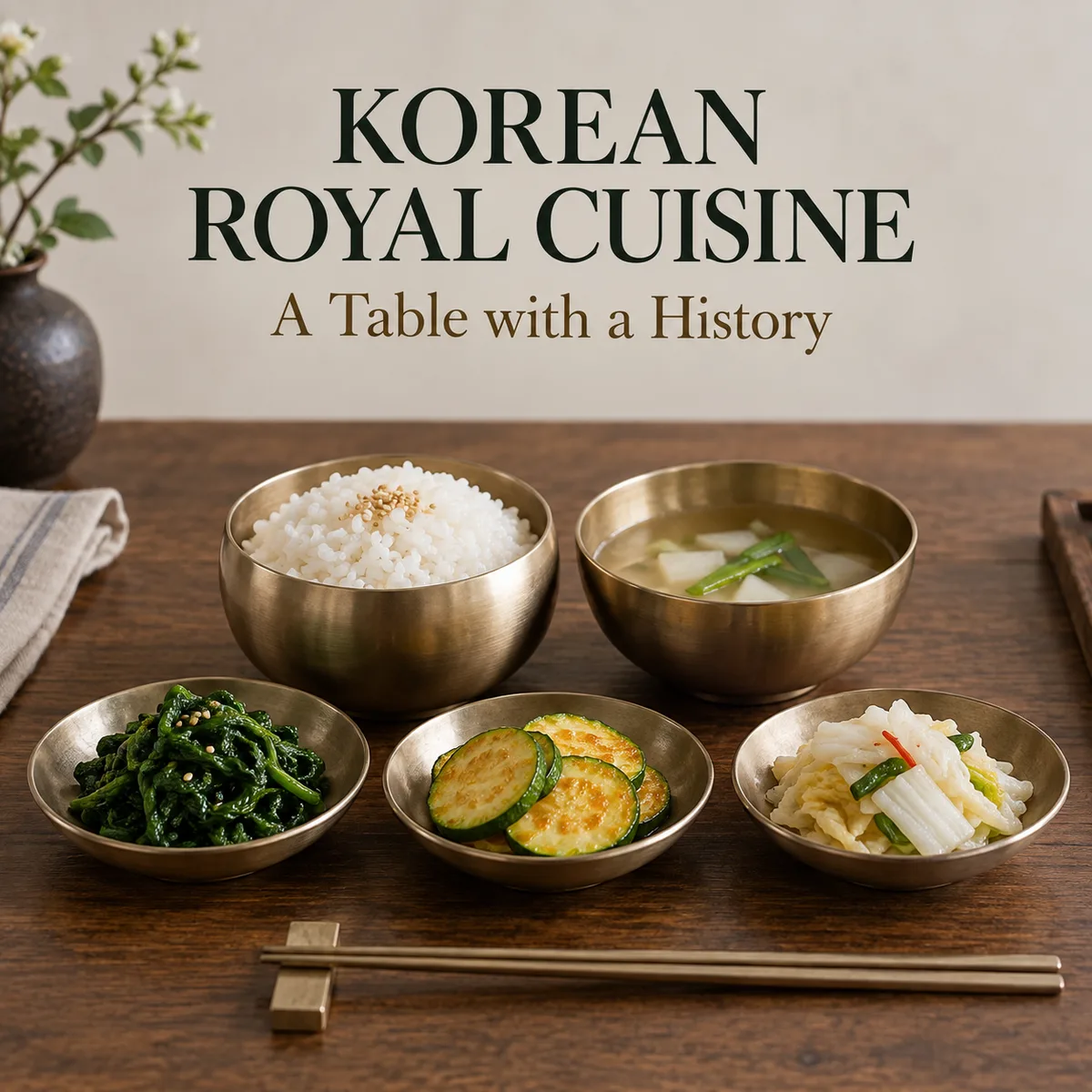
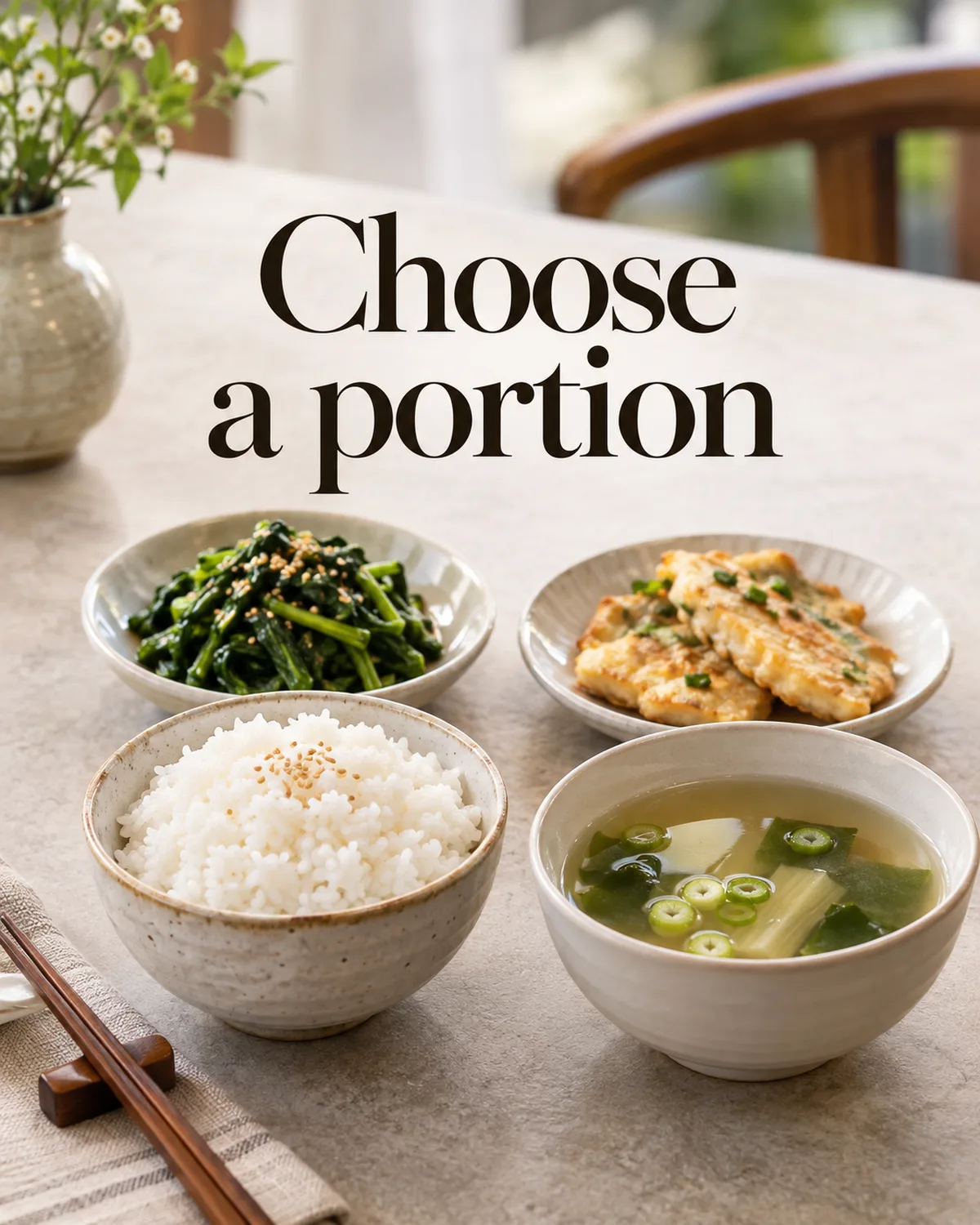
Start a royal-style meal by finding the rice, soup and dishes you will actually eat. The pleasure is in the contrasts: a warm broth beside a vegetable preparation, a delicate wrapper beside a savory filling, a small portion of something richly seasoned.
A palace banquet, a daily royal table and a modern tasting menu each organize food differently. Knowing which one you are being shown makes the meal easier to enjoy—and gives the story of Joseon court cuisine more substance than a count of polished bowls.
Read the meal before counting the dishes
Sura names the king’s meal; surasang is the royal meal table. The Korea Tourism Organization’s guide presents royal cuisine through seasonal ingredients, trained cooks and living transmission. Its examples include the wrapped fillings of gujeolpan, the heated broth of sinseollo and the soft mung-bean jelly of tangpyeongchae.[2]
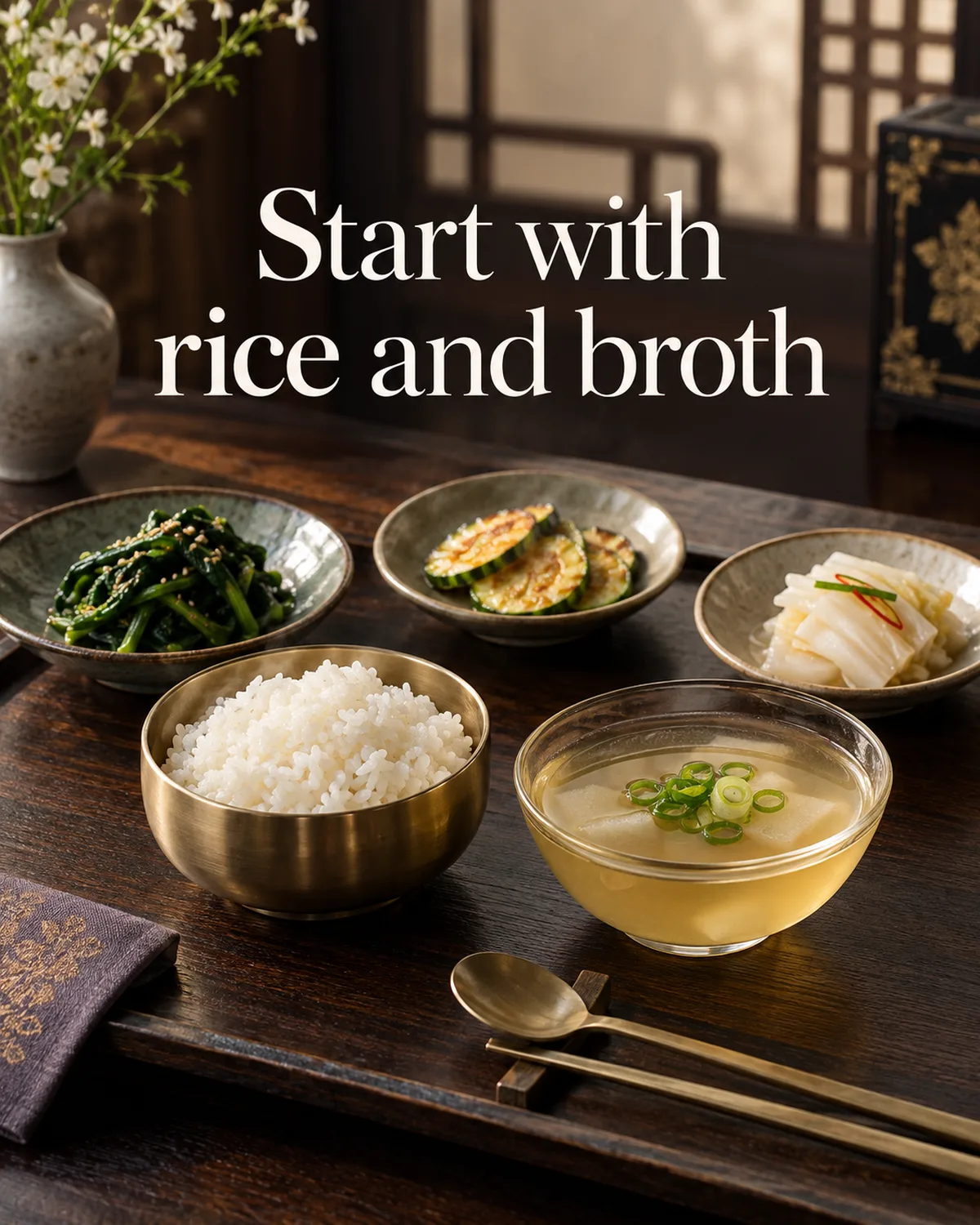
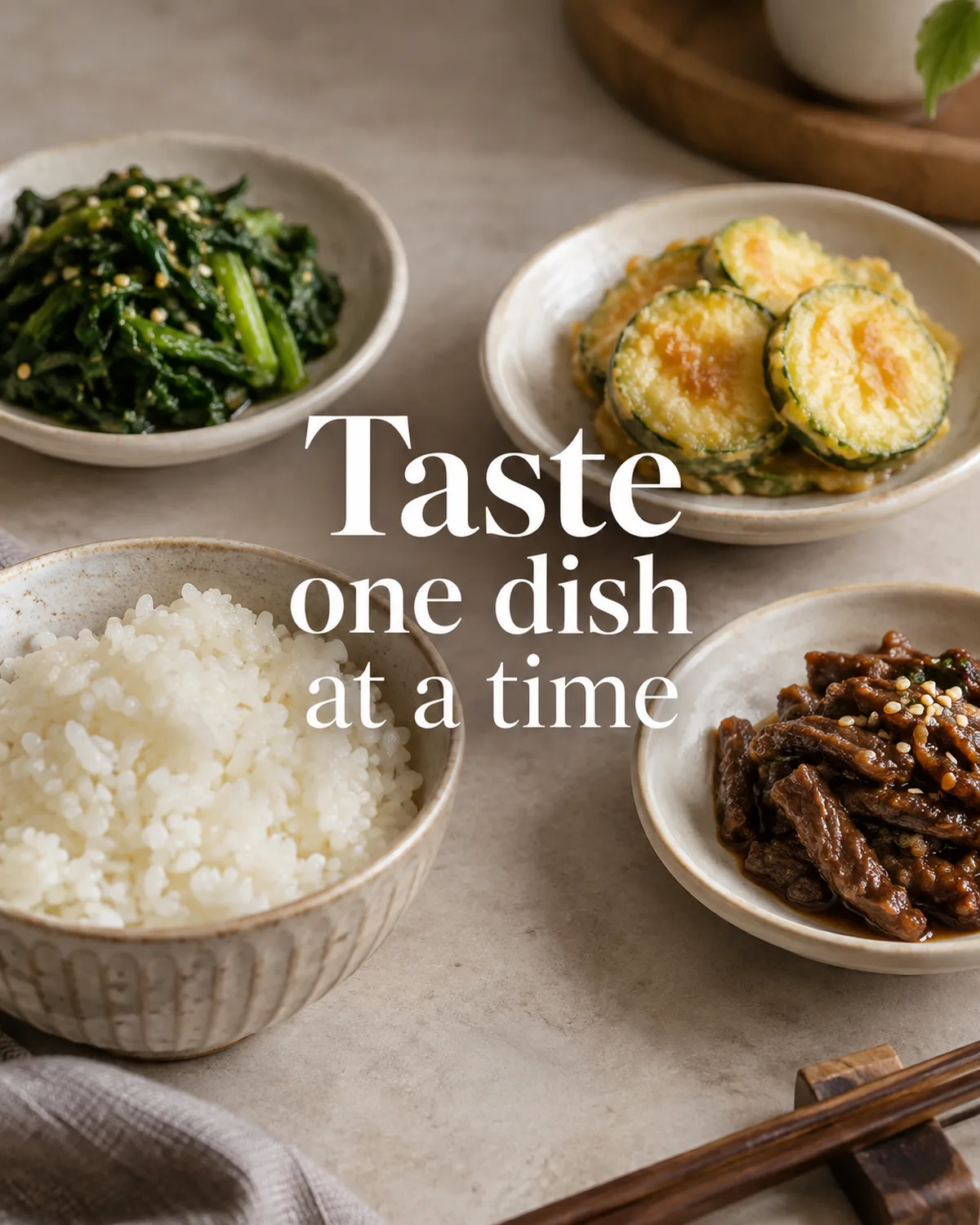
Begin with a spoonful of soup and a bite of rice. Then try one small side dish on its own before combining it with the staple. This lets you notice whether the dish is lightly seasoned, braised, grilled or pan-fried, instead of turning the whole spread into one mixed flavor.
Ask which dishes are individual servings and which are shared. A small vessel can contain a strong seasoning rather than a portion to finish at once. Let the host explain sauces and service order, especially when a hot pot or a course of wrapped fillings arrives.
A wrapper and a hot pot show two different techniques
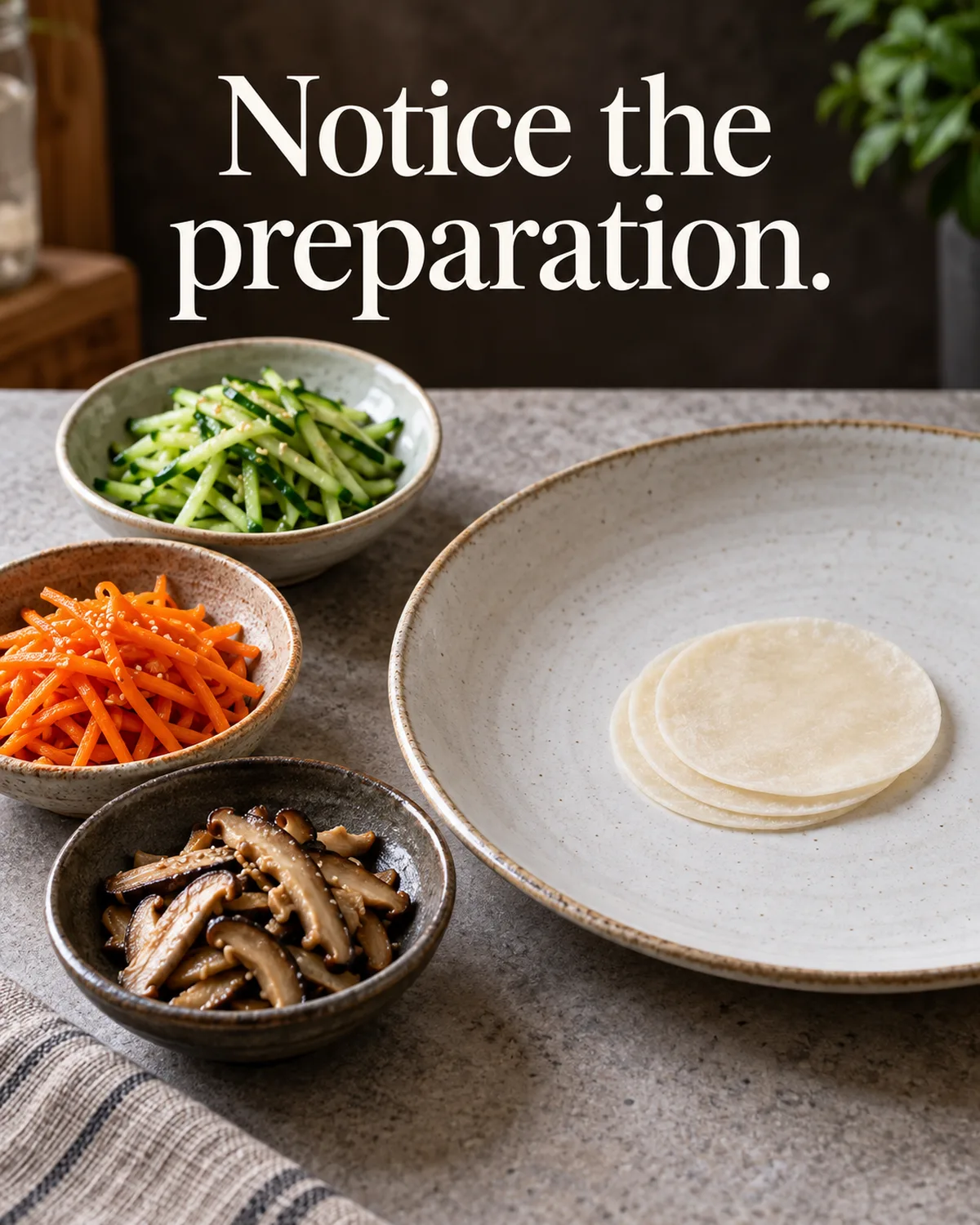
Gujeolpan places eight fillings around thin wheat crepes in the center of a divided tray. KTO describes eating the fillings wrapped in those crepes. The tray separates the components until you assemble a bite.[2]
For a first wrap, use modest amounts of just a few fillings so the crepe can close comfortably. Taste that combination before adding sauce or building a fuller wrap. The neat arrangement becomes a practical way to compare textures, rather than decoration you are afraid to disturb.

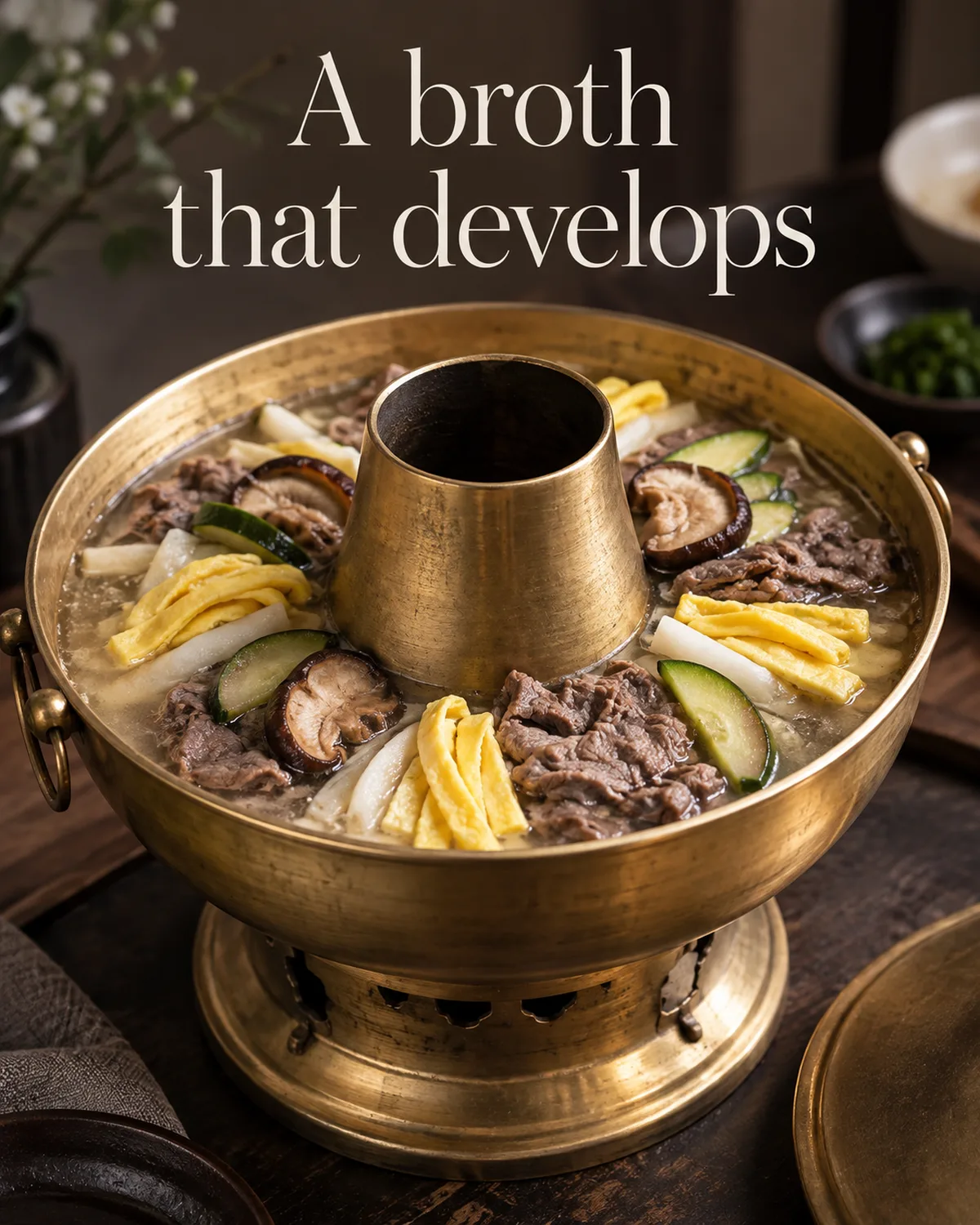
Sinseollo uses a distinctive pot with heat through its central opening. KTO’s dish guide describes meat, fish, vegetables and other possible ingredients cooking in broth around it; the broth develops as those ingredients contribute their flavors.[3]
Treat the hot pot as an evolving course. Ask the server how the particular meal is served and which components are ready to eat. Taste a little broth, then one ingredient, and compare the next spoonful rather than assuming every sinseollo contains the same selection.
A modern menu can combine these foods in many ways. Check the actual fillings, stock and dipping sauce when ingredients matter. An elegant vegetable arrangement can still include beef, egg or seafood, and a wheat crepe needs to be considered separately from the filling.
The transmitted royal table is not every king’s daily menu
The National Palace Museum’s 2024–2025 exhibition explains that the familiar twelve-cheop model comes from testimony of court women serving the last Gojong and Sunjong courts. It notes that earlier royal meals often had seven side dishes. Dish counts and daily service varied.[1]
This makes the date and occasion useful parts of the food story. A later transmitted table can preserve a serious culinary tradition without being the exact meal of every Joseon ruler. Ask which period or teaching tradition a reconstruction follows.
The museum describes an average of five eating occasions, with two main meals and lighter services. It also stresses variation with taste, health and circumstances. Five occasions should not be pictured as five identical elaborate feasts.[1]
At a restaurant, decide what amount of food suits your visit. A full course and a smaller tasting of one court-associated dish provide different experiences. Ask about course size and sharing before ordering; a photograph of many bowls is a poor guide to how much one person will eat.
A banquet record captures a particular journey
The museum identifies Wonhaeng Eulmyo Jeongni Uigwe as a protocol published in 1796 recording the 1795 royal journey. Korea.net’s 2026 museum feature describes its banquet and daily-meal records for Jeongjo, his mother and the entourage during the eight-day visit.[1], [4]
That record is valuable because it places food inside an occasion: a journey, a birthday celebration and service for many participants. It is a stronger basis for discussing that event than for declaring one unchanged daily menu across five centuries.
Ceremonial presentation also had its own purpose. The palace museum distinguishes tall food displays from foods served for eating and explains that banquet food was shared with participants beyond the royal family. Display and consumption belonged to a larger system of hospitality.[1]

The palace kitchen relied on many kinds of work
The museum describes Saongwon’s specialist male cooks, including teams preparing rice, grilled foods, tofu and rice cakes. Court women also handled plating and some cooking; medical staff and eunuchs had roles in royal food service.[1]
KTO likewise identifies both court ladies and professional male cooks in the tradition, and records the designation of Royal Culinary Art of the Joseon Dynasty as national intangible heritage in 1971. The skill survives through practitioners and teaching.[2]
Look for that labor in the meal: evenly cut fillings, a thin crepe, carefully cooked components and a broth served at the right moment. Those details tell you more about culinary refinement than assuming expensive ingredients alone make a dish royal.
The real Jang-geum appears in medical records
The Annals identify Jang-geum as a medical woman in an entry dated to 1515, lunar third month, day 22, discussing criticism after royal childbirth. In 1544, lunar second month, day 9, a reward order names Dae Jang-geum among medical personnel and grants her rice and beans.[5], [6]
A further entry from 1544, lunar tenth month, day 25, records Jang-geum reporting the king’s sleep and bodily symptoms. These are specific surviving references to royal medical service.[7]
Those entries support a real woman named Jang-geum at court. They do not document the television storyline in which she learns palace cooking through competitions before becoming a physician. Enjoy the drama’s food scenes while keeping its invented biography separate from the records.
A court’s concern with a ruler’s health belongs to history. It does not show that a modern royal-style dish treats disease. For this meal, concentrate on flavor, preparation and the ingredients actually served.
Choose a royal-style meal you can understand and enjoy
Ask whether the menu follows a transmitted surasang model, draws on a particular banquet record or offers a modern interpretation. Then ask about its signature dishes: a broth course, wrapped fillings, a jelly salad or another preparation. A clear explanation helps you choose what interests you.
Taste the work in each course and give unfamiliar dishes a small first bite. Rice, broth, seasoning and texture make the spread intelligible. The history becomes richer when you can connect it to the food in front of you, while leaving each king’s table in its own time.

Sources and reading
- National Palace Museum of Korea — Royal Cuisine exhibition record (2024–2025)
- Korea Tourism Organization — Royal Cuisine
- Korea Tourism Organization — Sinseollo
- Korea.net — Royal journey meals and the 1795 protocol (2026)
- Joseon Annals — Jang-geum, 1515 lunar third month, day 22
- Joseon Annals — Dae Jang-geum reward, 1544 lunar second month, day 9
- Joseon Annals — Jang-geum and the king’s condition, 1544 lunar tenth month, day 25