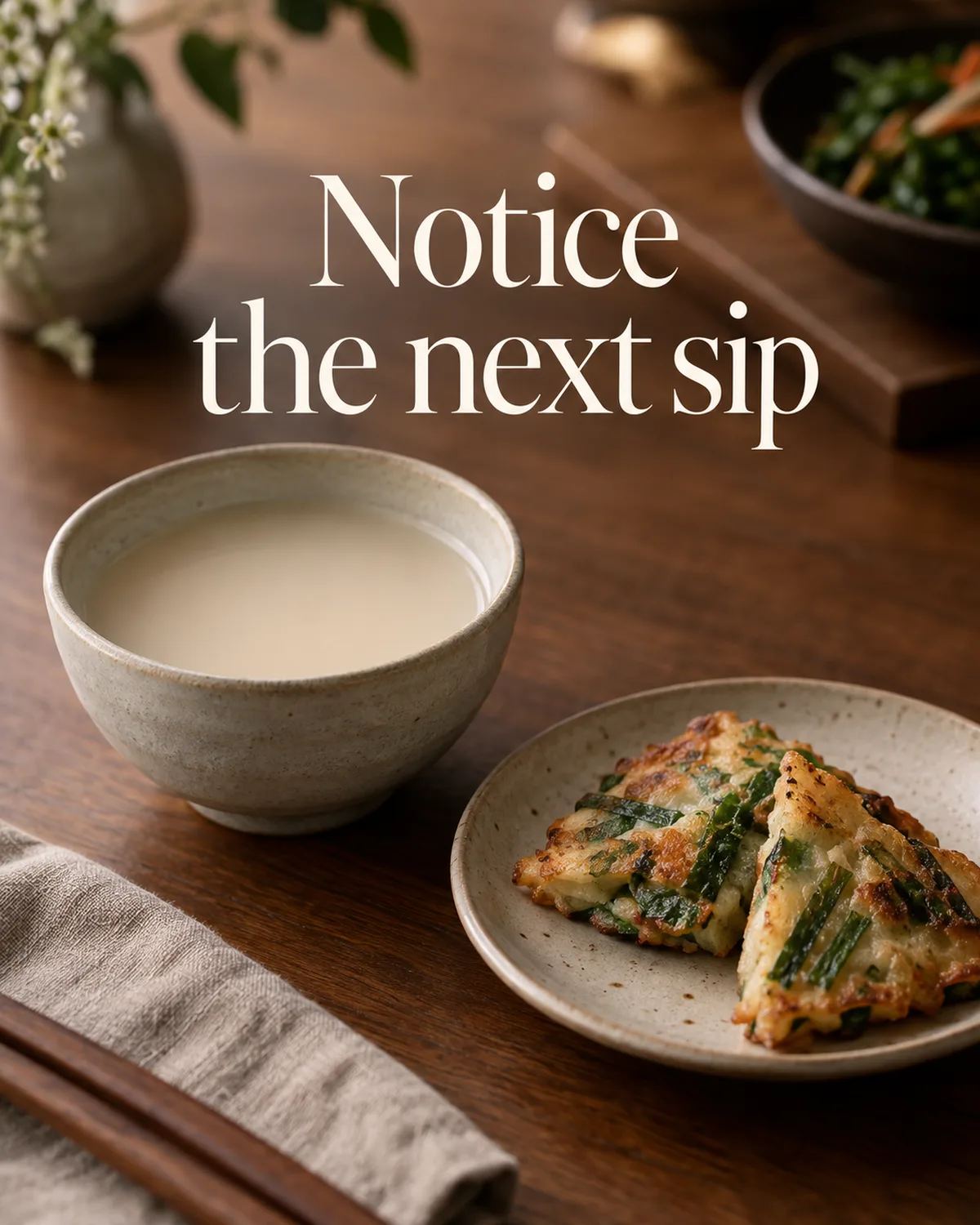
Choose makgeolli by the bottle you will drink, not just by its milky appearance. Sweetness, tartness, body, bubbles and alcohol strength are separate qualities. Two cloudy pours can offer very different experiences alongside the same food.
The revival has a history: Korea.net reported international attention in 2022, and KTO’s 2025 guide describes regional breweries and new styles. Those dated accounts explain renewed interest; “hottest” is not a verified ranking of the current market.[2], [3]
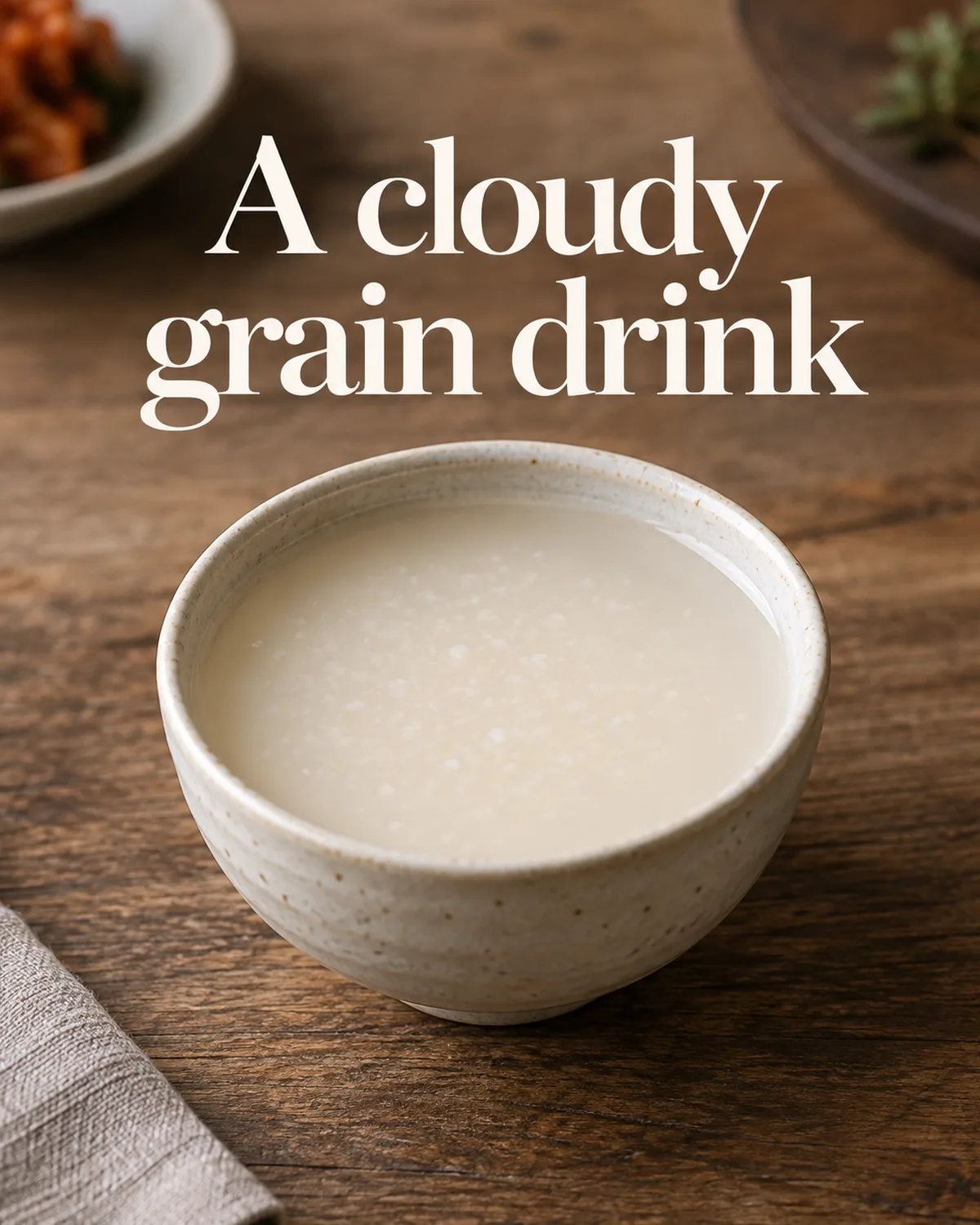
Cloudiness belongs to the brewing process
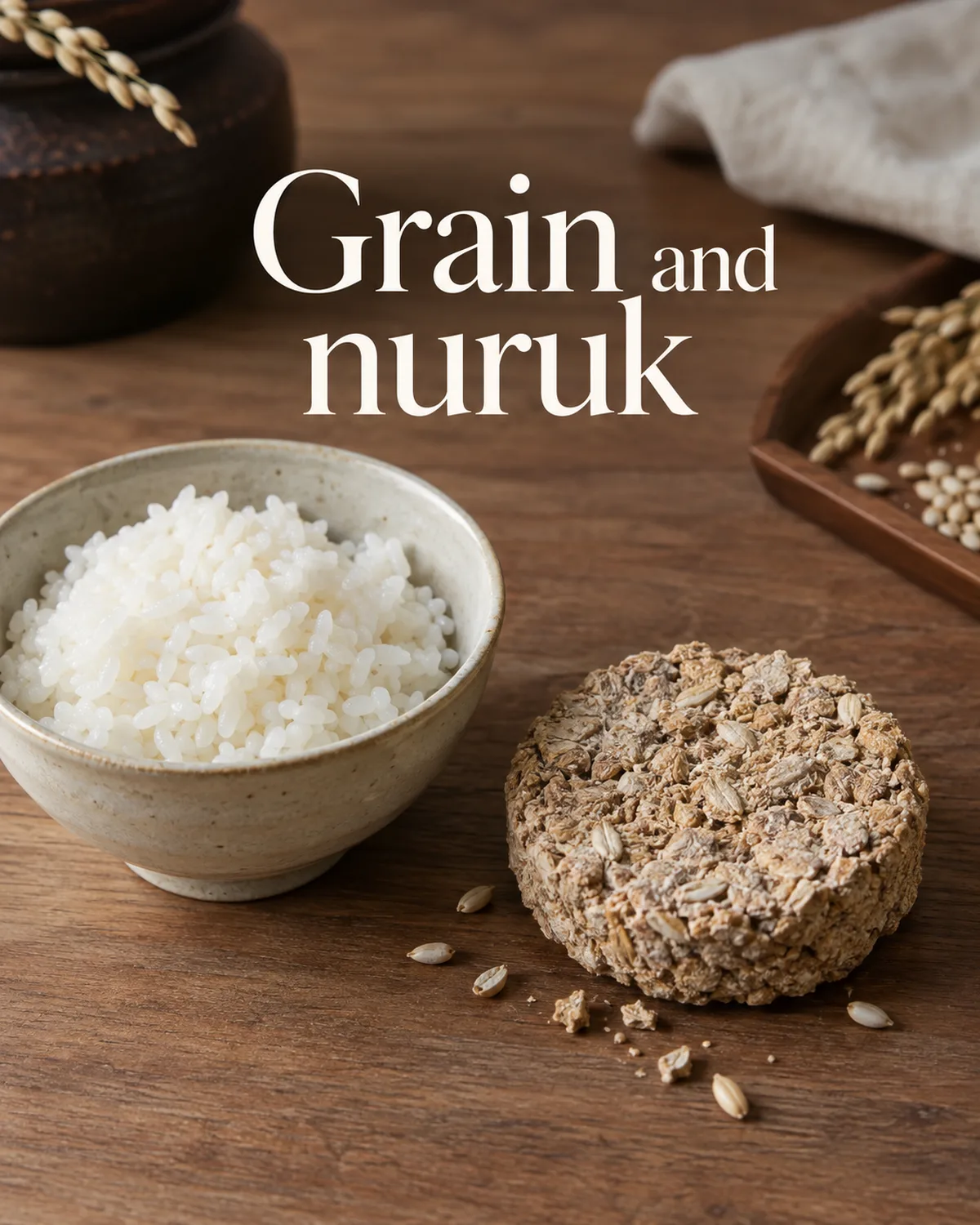
The Cultural Heritage Administration’s 2021 designation notice describes a conventional process: cooked rice, water and nuruk ferment together, then the mash passes through a sieve. It identifies nuruk as a fermentation starter containing enzymes and natural yeast.[1]
Rough filtration helps explain the cloudy character and the sediment you may see in a bottle. That visible separation is a useful reason to read the handling instructions. It does not by itself tell you how sweet, strong or fresh the product is.
KTO’s regional guide describes rice or wheat in the drink’s grain base and explains that ingredients and brewing choices can change flavor. The name identifies a category with variation, rather than one national recipe.[2]
When ordering, ask what the producer highlights: the grain, the starter, a regional tradition or a particular flavor. Choose the information that helps you compare the drink, instead of treating an old-looking package as proof of one unchanged ancient method.
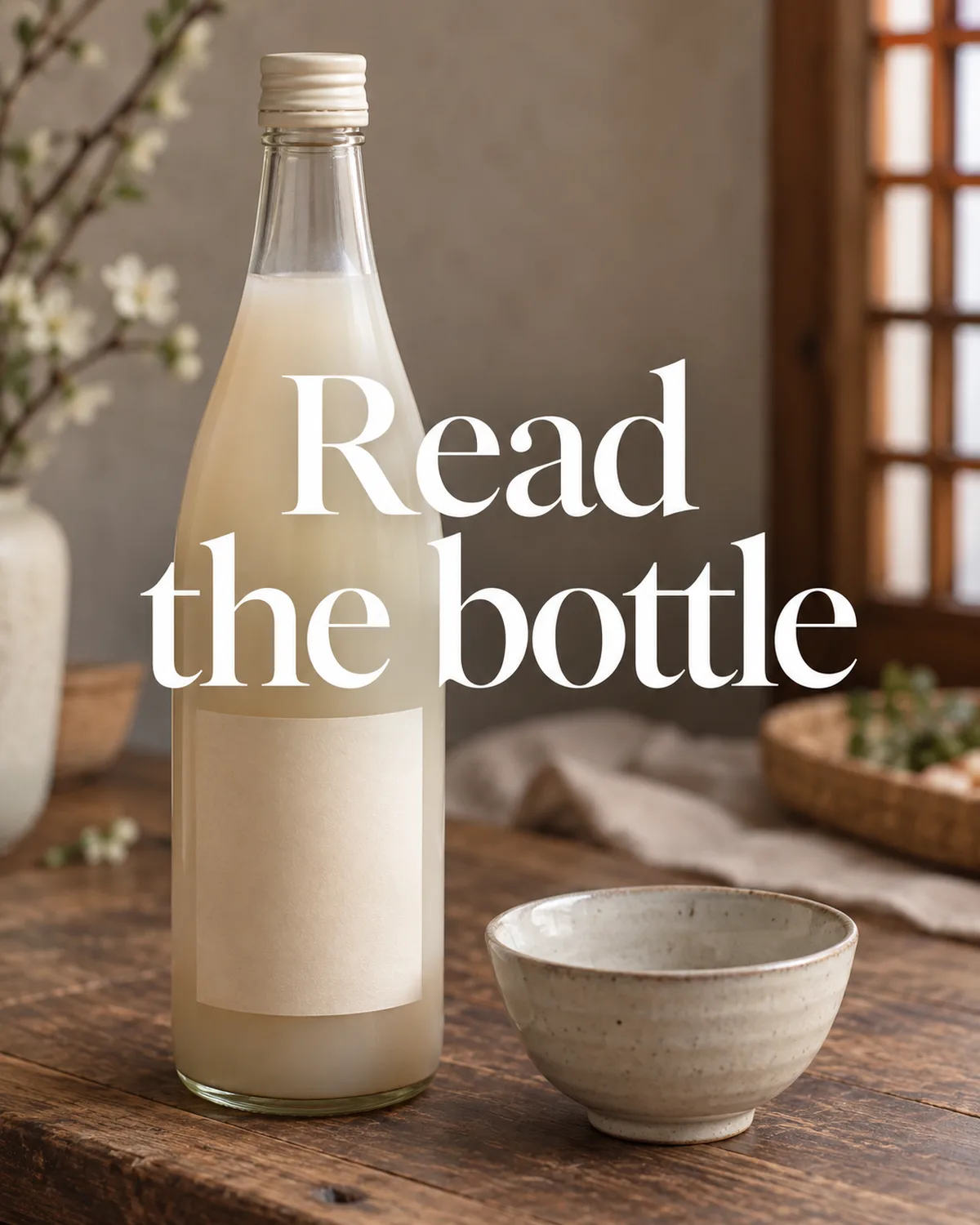
Read the label before opening
Find the alcohol strength, ingredients, storage instruction and date information. Ask how sweet and sparkling the drink is expected to be. A category name cannot answer those questions for a particular bottle.
KTO explains that draft makgeolli retains brewing microorganisms, which can contribute to its flavor but complicate transport and long storage. Follow the particular producer’s refrigeration and handling guidance.[2]
Keep a bottle that requires refrigeration cold, and follow its instructions for opening and redistributing sediment. Avoid vigorous shaking when the drink is carbonated. Open carefully over a surface that can catch foam; ask the seller if the package’s instructions are unclear.
Pasteurization is useful information about processing, not a taste verdict. Compare the actual product rather than deciding that every pasteurized bottle is inferior or every draft bottle must taste the same.
Read the listed strength instead of assuming a fixed percentage. KTO’s guide includes both conventional styles and stronger products. The amount poured matters as well as the number on the label.[2]
Compare sweetness, acidity and texture separately
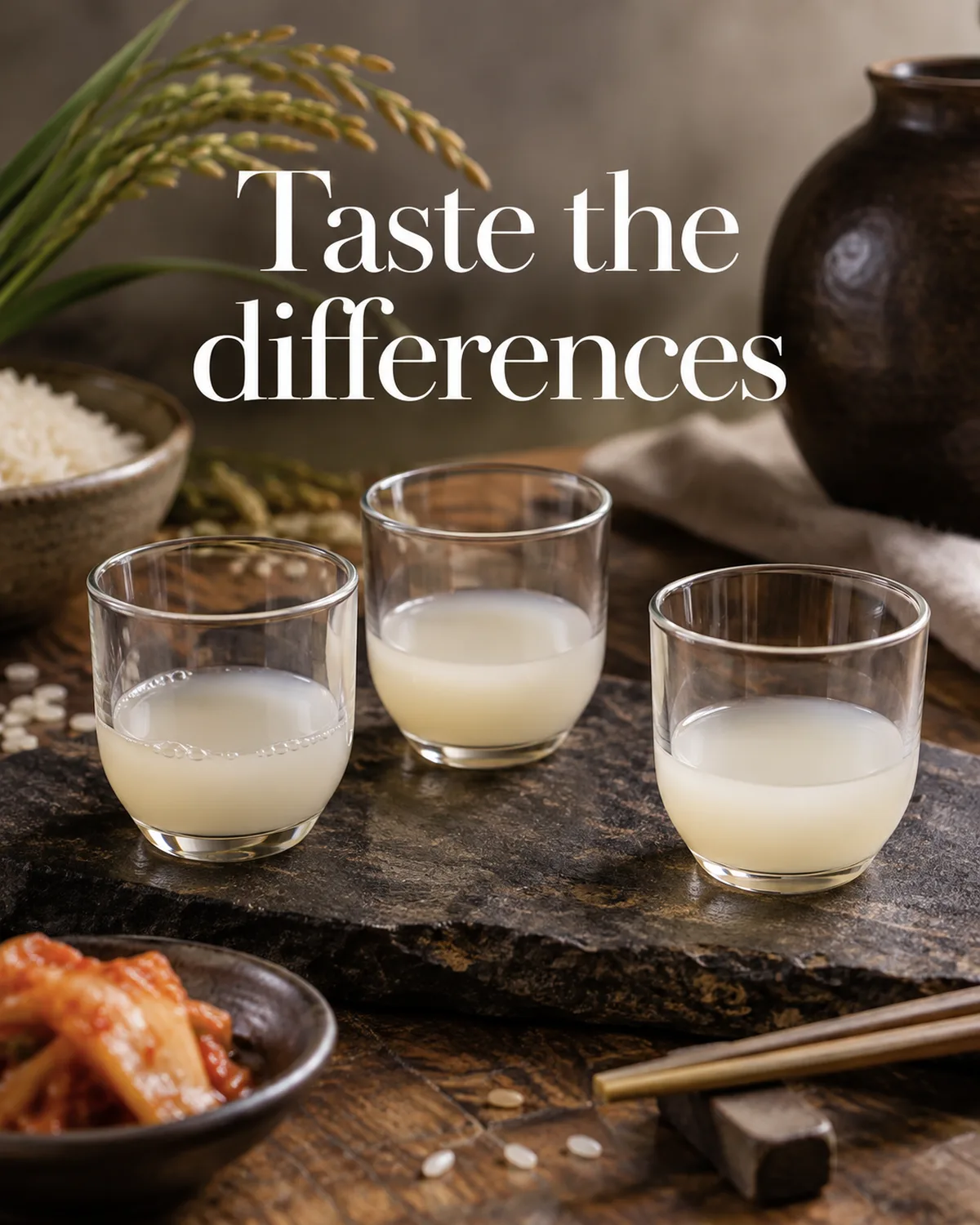
For a small first pour, notice the aroma before taking a sip. Then ask three different questions: how sweet is it, how tart is it, and how much body does it have? A creamy texture can coexist with acidity, while a light texture does not guarantee a low alcohol strength.
Notice the bubbles separately too. A sparkling sensation can make a drink feel different from a nearly still pour even when both are cloudy. Describe that sensation without assuming one is automatically fresher or more traditional.
If you are comparing two products, use similar small portions and follow each bottle’s serving directions. Taste them before introducing a strongly flavored food, then return to a sip after a bite. That keeps the drink and the pairing from becoming one undifferentiated judgment.
A useful tasting note is specific: “more tart,” “thicker,” “less sweet” or “more sparkling.” It gives you something to ask for next time. A label such as premium tells you much less about whether the flavor fits your preference.
Making and sharing is the recognized heritage
On June 15, 2021, the Cultural Heritage Administration designated Makgeolli Making and Sharing as national intangible cultural heritage. Its notice emphasizes historical documentation, regional character and continued practice by breweries, research groups and families; it does not designate one exclusive holder.[1]
The notice also describes a twentieth-century shift toward commercial brewing and notes that home production for personal consumption was legalized in 1995. This is a historical account of changing practice, not instructions for current licensing or commercial production.[1]
The shared practice is a better way to understand the heritage than hunting for a single original flavor. A region, a family and a brewery can have different knowledge and methods. Ask whose version you are tasting and how the maker explains it.

Korea.net’s 2022 report on international coverage presents the revival as a renewed interest in traditional brewing. That particular report belongs to its date. It does not establish today’s sales growth or prove that every new bottle revives a lost household recipe.[3]
Jeon is a familiar pairing, not a requirement
Korea.net’s 2022 feature describes the familiar pairing of jeon and makgeolli, including its rainy-day association. The custom provides a starting point for a meal; it is not a rule that a rainy afternoon calls for alcohol.[3]
If you choose a pancake pairing, try a bite of the crisp edge and then a little of the soft center. Compare the next sip with each texture. Keep dipping sauce modest at first so its salt and acidity do not dominate everything you taste.
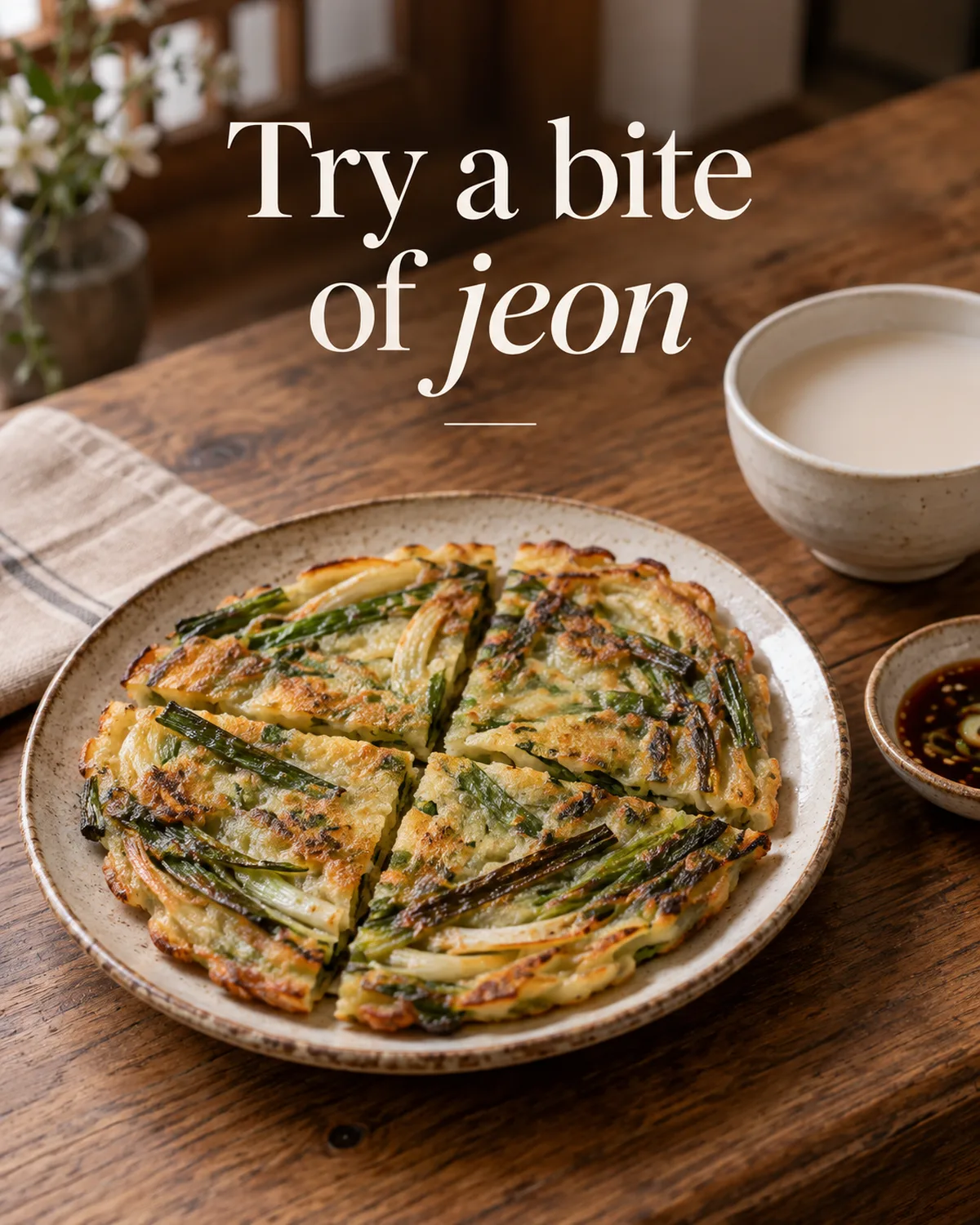
A shared pancake can make more sense than several large dishes when the aim is a small tasting. Ask about the pancake’s ingredients and portion as carefully as the drink’s. Seafood, wheat and egg can matter independently of the bottle you selected.
You can also ask the producer or restaurant which foods they serve with that particular style. A suggested pairing is more informative when it explains the drink’s sweetness, acidity or texture, rather than claiming one food fits every makgeolli.
Plan storage as carefully as the tasting
For a purchase to take away, check how the bottle must travel and how soon it should be consumed. If you cannot maintain its required storage conditions, choose a product suitable for your plans or leave the purchase for another visit. Brewery programs and opening hours need a current check before travel.

Makgeolli remains an alcoholic drink. WHO describes health risks from alcohol consumption; a fermentation story does not turn it into a health supplement. Its culinary interest is in grain, brewing, flavor and shared food, and that history can be explored without drinking.[4]
For a first tasting, start with the actual label and a small pour. Notice sweetness, tartness, body and bubbles, then compare them with the food. Those details make a regional drink easier to understand than a national popularity slogan.