
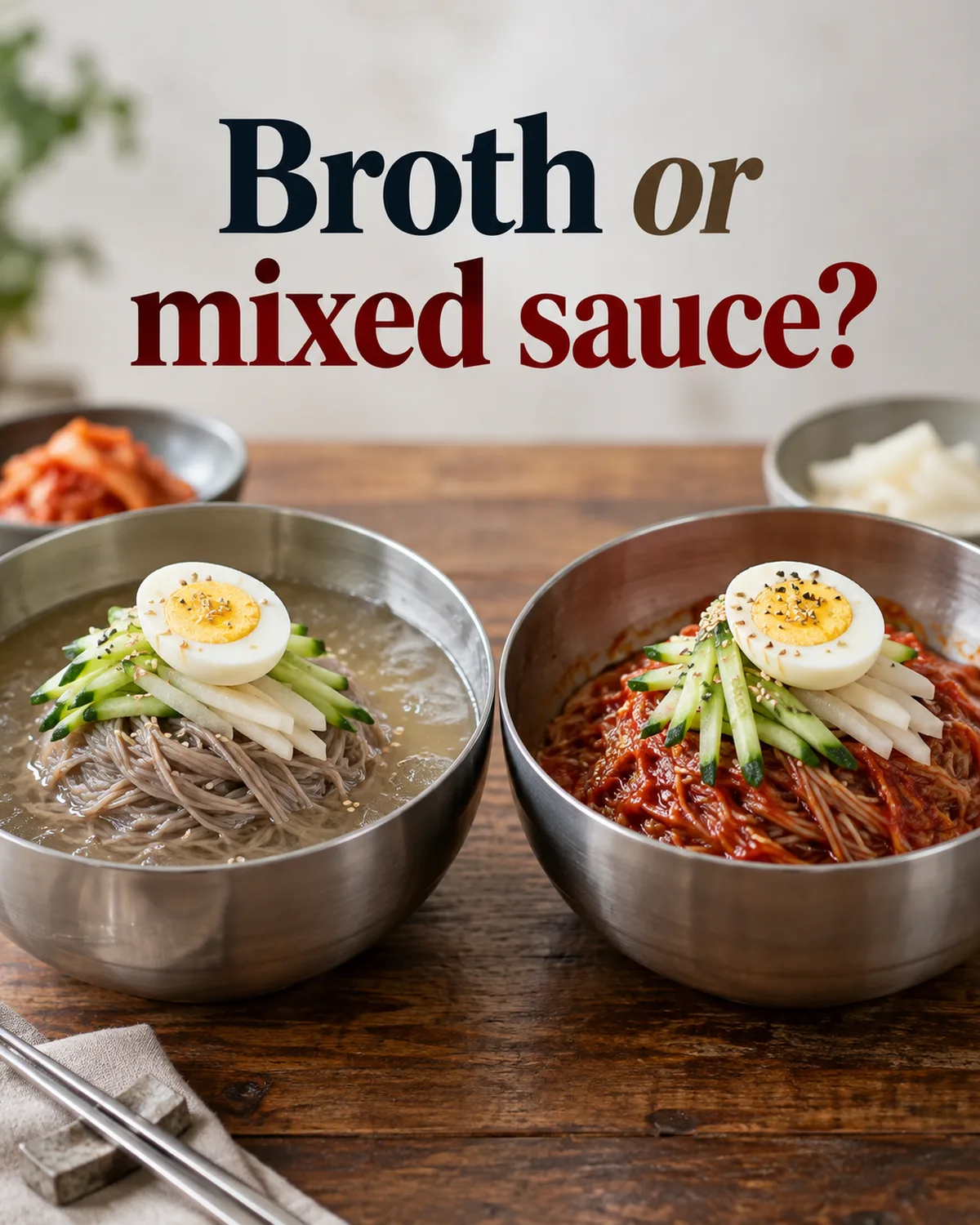
Choose the liquid before choosing the regional label. A bowl of cold broth makes temperature and the first spoonful central; spicy mixed noodles put sauce directly around the strands. Both are naengmyeon, but they ask you to taste different things.
The winter history makes the chilled bowl more interesting. Radish brine and northern noodle traditions belong to the story, while the modern ordering decision is still practical: broth or mixed sauce, a gentler bite or a springier chew, a main meal or a smaller finish after barbecue.
A winter history behind a cold bowl
The Academy of Korean Studies describes naengmyeon as noodles in chilled liquid and discusses Pyongyang, Hamhung and Jinju regional forms. Its entry records buckwheat-and-starch noodles, several meat or kimchi-based broth options and garnishes that can include meat, vegetables and egg.[1]
Mul naengmyeon means the broth format; bibim naengmyeon means the mixed-sauce format. Pyongyang and Hamhung refer to regional associations. These are two different ways to describe a bowl: a menu offering mul and bibim does not automatically promise two exact historical city recipes.
The same encyclopedia identifies naengmyeon as a historical winter specialty and cites Dongguk Sesigi among the records. Korea.net’s 2017 recipe feature connects the winter custom with dongchimi radish brine and the winter-solstice period. These accounts support winter associations, not an exact date when cold noodles were invented.[1], [3]
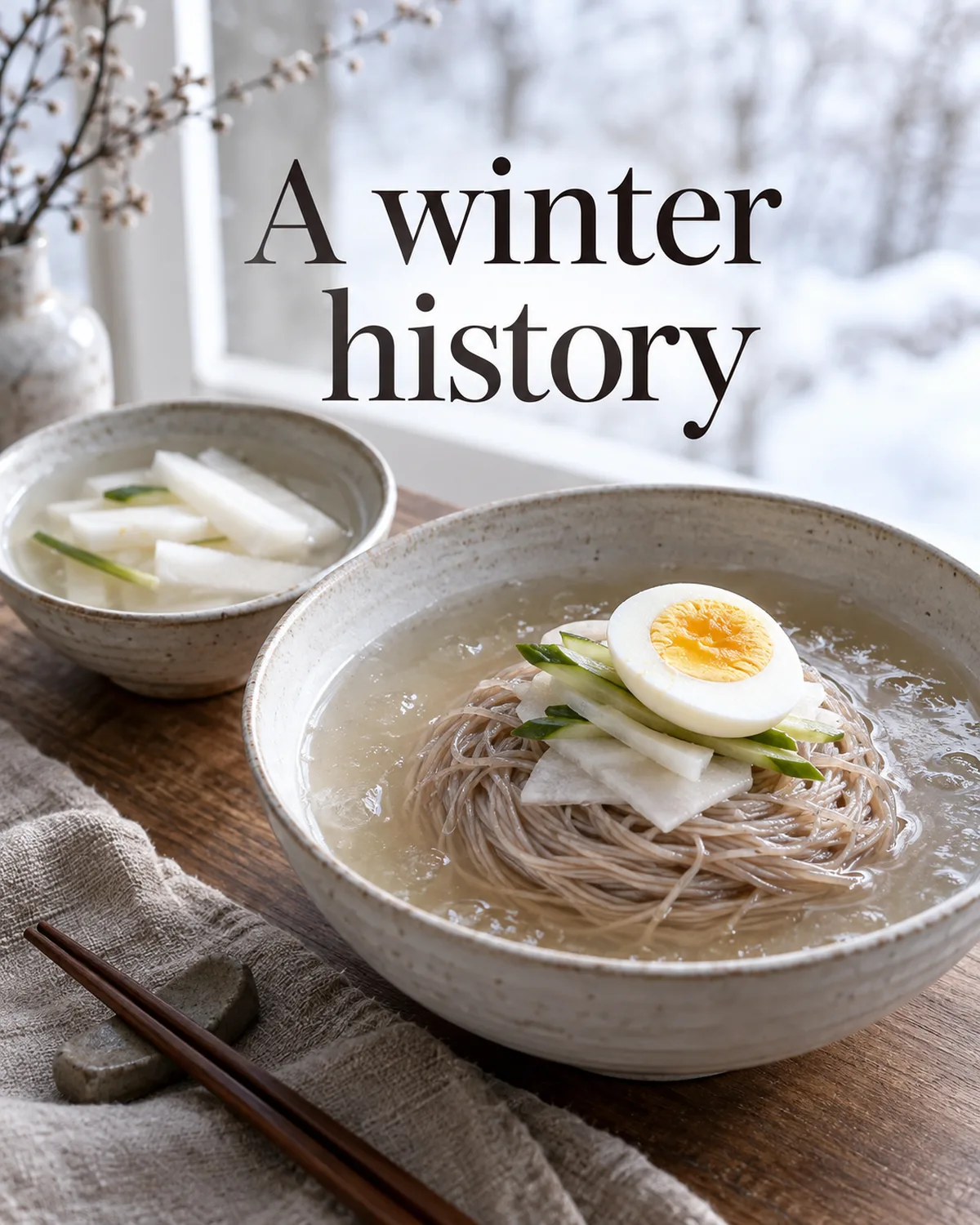
The encyclopedia’s Pyongyang entry describes a relatively mild food tradition, buckwheat noodles mixed with starch, and a broth blending meat stock and dongchimi. It mentions older pheasant stock and later beef and bone stock. Its recipe is one documented preparation, not a universal ratio every restaurant must use.[2]
Taste a spoonful before reaching for condiments. A restrained broth lets you compare grain aroma, the savory stock and the radish-brine note. If you expect every cold bowl to be sharply sweet and sour, that quieter starting point may be the most useful discovery.

Ask about the noodle as well as the city
Noodle composition changes the bite. Ask how the shop describes its buckwheat and starch mixture rather than guessing from the city name. A softer strand and a very elastic strand can require different amounts of chewing and different handling with chopsticks.
There is no single buckwheat percentage for this guide to prescribe. If grain flavor matters to you, ask about the noodles; if ease of eating matters, ask about their texture and whether scissors are available.
The encyclopedia associates Hamhung noodles with potato starch, pronounced chew, spicy mixing and a fish garnish such as flatfish or skate. That is a useful regional description; a particular South Korean restaurant may offer different toppings or both broth and mixed versions.[1]
Read the fish topping separately from the sauce choice. A red bowl may contain fish, beef, egg or another garnish, and its color cannot tell you whether the fish is raw, seasoned or otherwise prepared. Ask the restaurant about the actual order rather than assuming every bibim bowl contains the same thing.

Migration and a changing season
The Pyongyang encyclopedia entry says people moving south after the Korean War helped spread the dish nationwide. Migration belongs to the history of where these noodles were served; it does not require every later restaurant to have the same stock, noodle ratio or garnish.[2]
Winter history and summer appetite can coexist. The cold serving temperature is appealing in warm weather, but the bowl’s ingredients and regional memories have a longer story. You do not need an invented year when a winter food officially became a summer food.
Mul and bibim are useful first decisions
- Noodles: ask about buckwheat and starch, rather than assuming a fixed ratio.
- Texture: compare a softer bite with a more elastic chew.
- Liquid: check meat stock, kimchi brine and seasoning.
- Topping: read the actual garnish and its preparation.
Treat these comparisons as starting questions. Ask whether the noodles are buckwheat-forward or starch-forward, whether the broth is meat-based or mixed with kimchi brine, and what garnish the menu includes. A regional label alone does not answer all three.
- Cold broth: start with mul naengmyeon.
- Sauce around the strands: choose bibim naengmyeon.
- Grain aroma: ask about buckwheat-forward noodles.
- After barbecue: check finishing portions and whether to share.
A restaurant may use the same noodles for its mul and bibim orders, or different recipes. The broth-versus-sauce decision is the quickest first choice; noodle composition is the next question when you want to compare texture.

After barbecue, cold noodles create a distinct change from the hot grilled meat. Decide whether you want a shared contrast or another full meal. Check whether the restaurant offers a smaller finishing portion instead of assuming every bowl is designed to be eaten after a meat order.
At a specialist noodle restaurant, the bowl can be the main event. In that setting, give the broth and strands your attention before adding other food or condiments. The same dish can play a different role in another restaurant.

Broth, vinegar, mustard and scissors
Try a spoonful of broth, then a manageable portion of noodles. Add a small amount of vinegar or mustard if you want it, and taste again. This keeps the house’s starting flavor available for comparison while leaving the final seasoning to your preference.
For bibim noodles, mix the sauce through the strands as the restaurant recommends. Taste before adding more condiments: the bowl may already have a strong balance of sweetness, acidity and heat. A little extra seasoning can change that balance quickly.
If the long strands are difficult to manage, ask for scissors or help cutting them. Take a short portion with the chopsticks instead of lifting a large tangle. The goal is to enjoy the noodle texture comfortably.
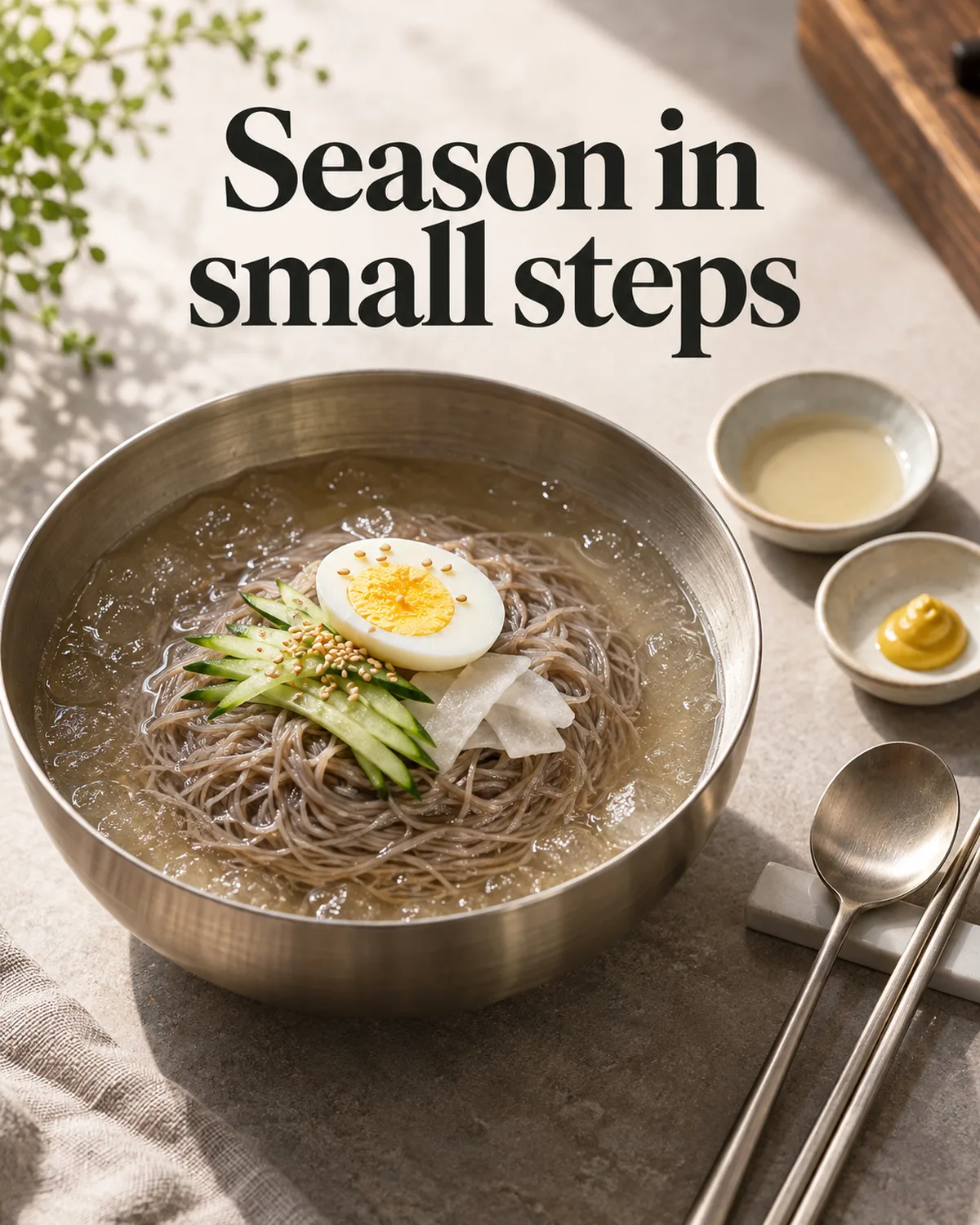
If warm broth arrives separately, ask how the house serves it. It may be intended for sipping alongside the meal. Do not pour it into the cold bowl without checking, especially if you want to preserve the original broth concentration and temperature.
Check the actual noodle, broth, sauce and toppings when ingredients matter. A bowl with vegetables on top can still contain meat stock, seafood seasoning, egg, buckwheat or wheat. The menu name and the clear appearance of the broth are not a full ingredient list.
Check ingredients, then choose a portion
For a vegetarian order or a particular allergy requirement, ask about the liquid as carefully as the noodles. Request the restaurant’s ingredient information and explain the requirement before ordering; removing a visible meat garnish does not change what is already in the broth or sauce.
For the first tasting, choose mul if you want to notice the cold broth, and bibim if you want a sauce-coated bowl. Within either format, ask about the noodles and topping. That gives you a clearer comparison than choosing a city label without knowing the serving style.
Winter associations, migration and modern summer demand all help explain naengmyeon. In the bowl, the enduring choices are more immediate: grain aroma, chew, broth, sauce and the way you season the next bite.
Start with the house’s serving, taste before adjusting it and choose a portion that fits the meal. The cold bowl becomes easier to understand once the noodles and liquid have each had a chance to speak.
