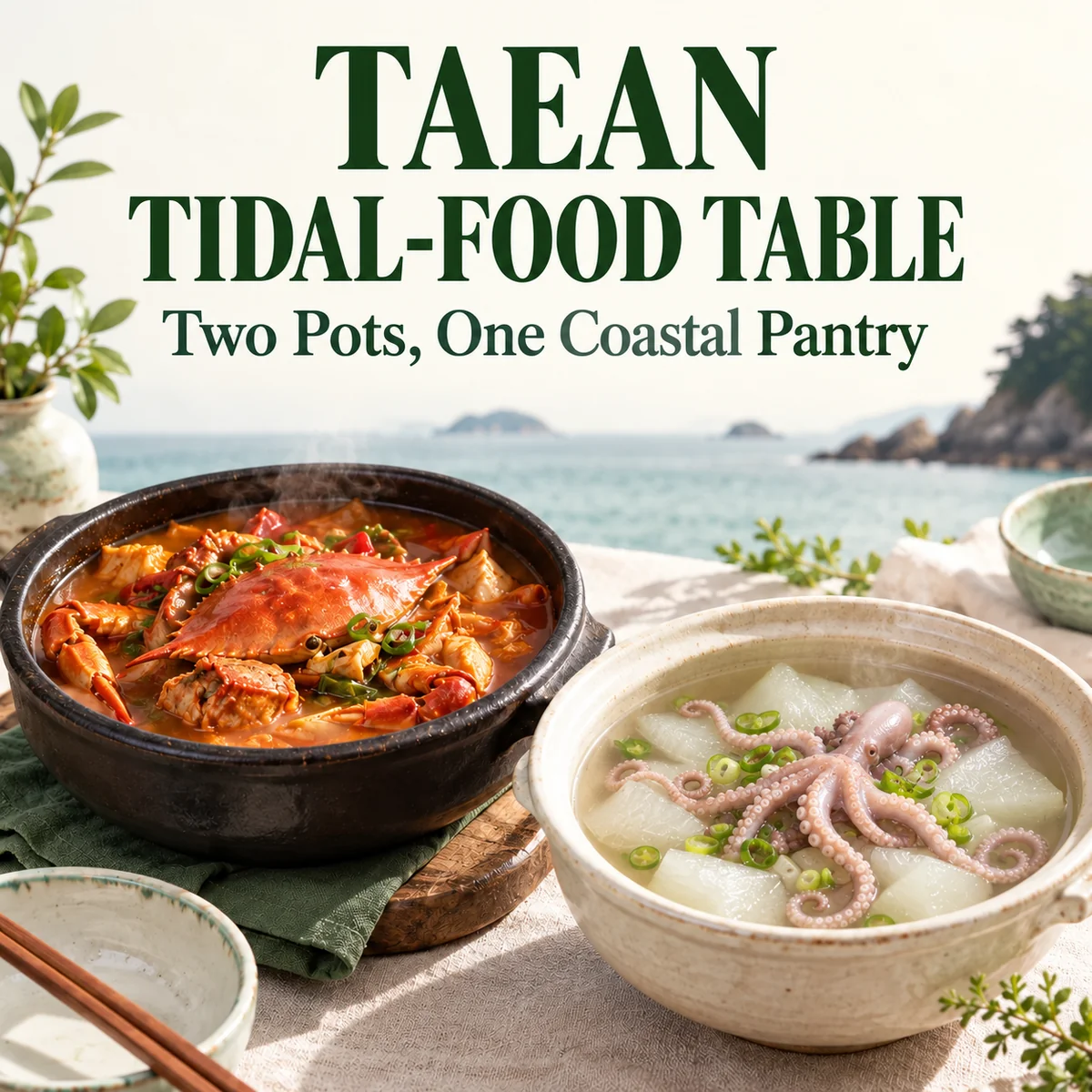
A coast does not have one flavor. In Taean, gaegukji points toward vegetables, seafood seasoning and a history of preservation, while baksok nakji-tang makes a different meal around octopus, bottle-gourd flesh and broth.
Looking only for the largest crab or the most dramatic octopus photograph misses the ingredients that explain the names. These dishes are more interesting when allowed to remain different.

Gaegukji starts with a preservation story
Modern restaurant photos often show a bubbling pot with large pieces of blue crab, red broth and kimchi. That version is real as contemporary regional restaurant food, but it can obscure the older logic behind the name.
Reporting based on Chungcheongnam-do material describes gaegukji as a Seosan–Taean local food made by cooking crab with fresh or lightly seasoned kimchi. Other regional descriptions preserve a more frugal household story: liquid left from gejang or other strongly flavored seafood brine could be used with cabbage, radish, radish greens and other vegetables, then fermented or later simmered. The important historical idea is not “put a whole crab into kimchi stew” but “do not waste a salty, flavorful marine liquid.”
That distinction helps explain why older household versions and modern restaurant versions may look quite different without one automatically being “fake.” Regional foods change when they move from the home kitchen to a tourism menu. A dish built from leftovers, vegetable trimmings and preserved liquid is difficult to sell as a visually generous restaurant centerpiece, so restaurants may foreground whole crab and a richer stew presentation.
Regional explanations connect the name to ge-guk or get-guk, a crab- or sea-derived liquid used to season vegetables. The exact folk etymology is described somewhat differently across local accounts, so it is safer not to force one spelling story into absolute certainty. What remains consistent is the role of a salty seafood liquid as the flavor base.
This matters because it changes how the dish is read. If “gaegukji” is interpreted only through the modern restaurant pot, the crab becomes the main object and the kimchi looks like a secondary ingredient. In the preservation logic, the relationship is reversed: vegetables and kimchi are the vehicle, while the concentrated sea flavor seasons and preserves them.
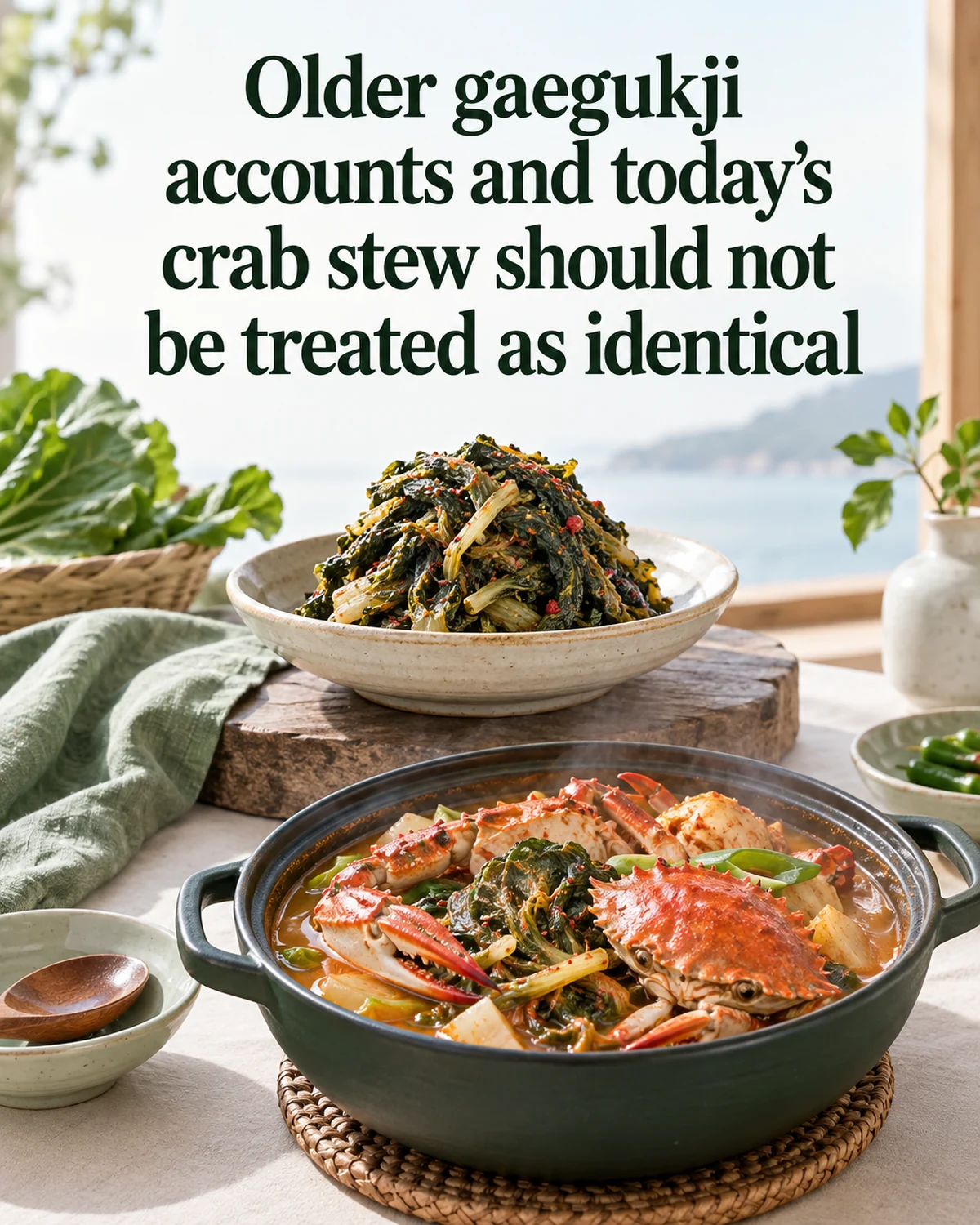
The result sits at the border between kimchi history and seafood cooking. That border is exactly why gaegukji is difficult to translate with a single English label. “Crab kimchi stew” is convenient, but it does not fully capture the older process.
Travel food writing often praises seafood by saying “the fresher, the better.” Gaegukji complicates that idea. Its traditional appeal depends partly on transformation over time. Vegetables soften, lactic fermentation produces acidity, salt penetrates the plant tissue and seafood-derived compounds build a deeper savory profile.
That does not mean age is automatically good. Fermentation must happen under appropriate salinity, temperature and handling conditions. The point is cultural: a coastal household did not need every marine flavor to be eaten immediately after catch. Salt and fermentation allowed intense flavors to move into a different season and a different meal.
When the fermented vegetables are later simmered, heat softens them further and the liquid becomes a broth. A contemporary whole crab may add sweetness and body, but the fermented vegetable base still gives the pot a character that is different from ordinary fresh blue-crab soup.
Baksok nakji-tang starts with a clear broth
Baksok nakji-tang does not need fermented kimchi to create identity. Its core contrast is between tender small octopus and the soft white interior of a bottle gourd. The broth is usually described as clear and clean-tasting rather than thick and red.
The name is unusually literal once it is broken apart. Bak is bottle gourd; sok means the inside or flesh; nakji is the small octopus commonly eaten in Korea; and tang is soup or broth. A related name, baksok-milguk-nakji-tang, also points to wheat dough or noodles added to the pot.
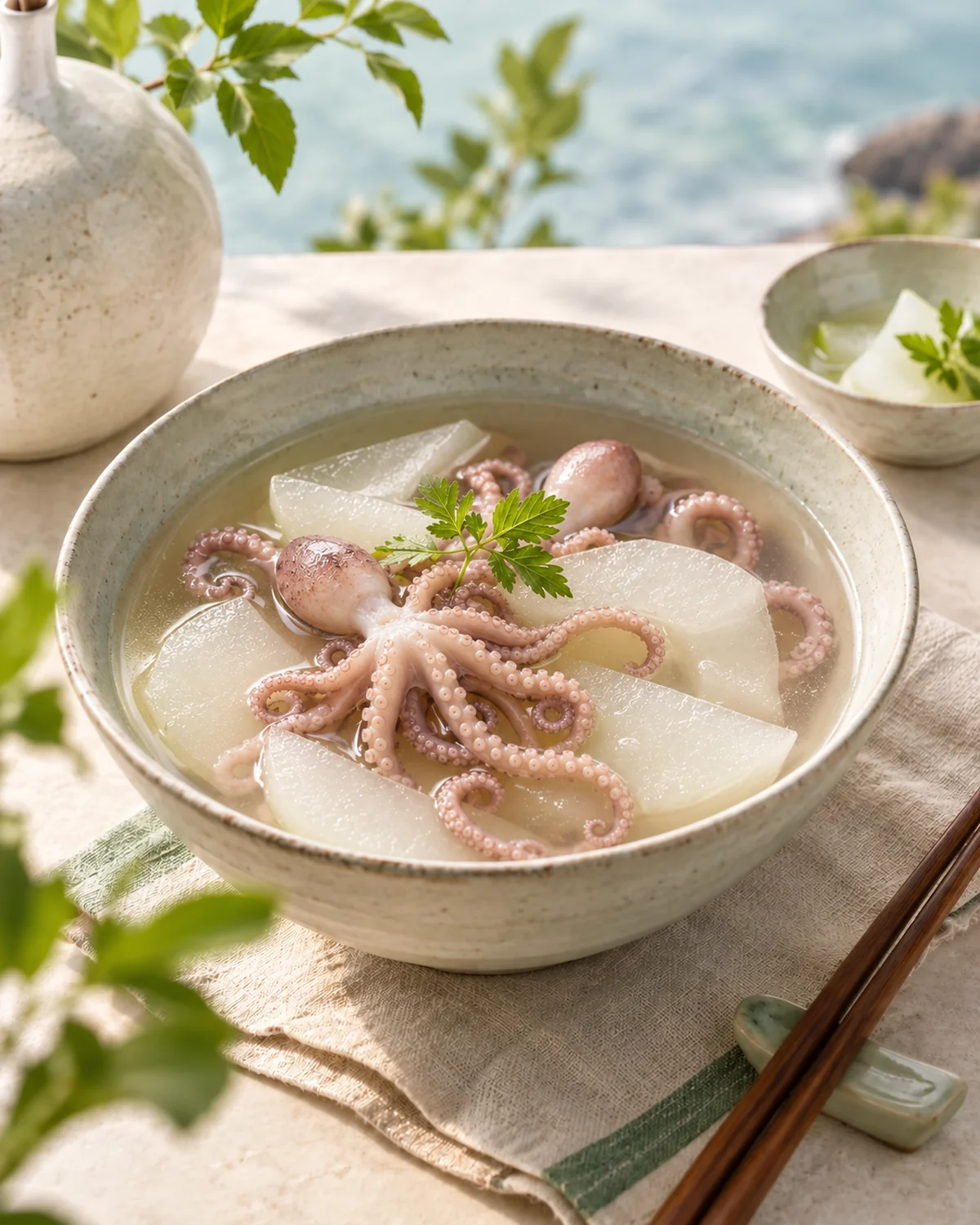
A Nongmin Shinmun regional-food feature describes the dish as a Taean specialty in which slices of the white inner gourd are boiled and whole cleaned octopus is added, with wheat noodles or hand-torn dough often used to finish the meal. That gives the pot a completely different rhythm from gaegukji: cook the gourd, briefly cook the octopus so it stays tender, eat the seafood, then use the broth for starch.
Bottle gourd has a mild flavor and high water content. When simmered, it softens and releases liquid without dominating the broth. That makes it a useful partner for octopus, whose flavor can be sweet, saline and delicate when it is not overcooked.
The gourd therefore acts less like a strongly flavored vegetable and more like a broth-building ingredient. Its soft texture also contrasts with the springy muscle of the octopus. The combination is subtle: one ingredient gives up water and softness; the other requires careful timing to avoid toughness.
That timing is central. Octopus muscle tightens with heat. In a restaurant pot, the goal is generally to cook it long enough to be safe and tender but not leave it boiling unnecessarily while every other ingredient finishes. Diners may be told when to remove and eat the octopus before noodles or dough are added later.
The tidal flat and the seasonal pantry
The Seosan–Taean coast is strongly shaped by broad intertidal zones. At low tide, areas of mud and sand that were underwater become accessible. These environments support shellfish, crustaceans and other organisms used in local foodways. Ports and fisheries add another layer of marine supply.
It is tempting to write “the tidal flats created gaegukji” or “the mudflat invented baksok nakji-tang.” That wording is too deterministic. Similar marine ingredients exist across Korea’s west and south coasts, yet the recipes are not identical everywhere.
A better causal chain is environment → ingredient availability → household preservation/cooking choices → repeated local practice → regional identity. The environment makes certain foods likely; culture decides how those foods become dishes.
The dish depends on two ingredients that have their own seasonal and supply patterns: bottle gourd and small octopus. Traditional food descriptions often connect the pairing to periods when the gourd was available and octopus was especially valued locally. Restaurant supply chains can extend availability, but that does not erase the seasonal logic of the older dish.
Visitors should therefore be cautious with absolute statements such as “this is always the best month” unless checking current local supply. Weather, fishing conditions, seafood prices and farming all change year to year. An evergreen article can explain the seasonal tradition without freezing one month into a permanent rule.
How a household preparation became a restaurant name
A household preservation food and a destination restaurant dish have different incentives. At home, using leftover brine and vegetable parts can be economically rational even if the result is visually plain. A restaurant serving travelers needs a menu item that can be portioned, repeated and recognized in photographs.
That shift can produce a more standardized red stew with visible crab. Recent travel reporting on Seosan and Taean notes that the modern restaurant version often looks more generous than older home forms and that locals themselves sometimes recognize a gap between the two.
Rather than treating this as corruption of an “authentic” recipe, it is more useful to document both layers. The older layer explains why the dish existed. The restaurant layer explains why visitors can order it today and why it became a regional tourism symbol.
Two soups, two ways to organize a meal
Gaegukji is salty, fermented, vegetable-centered and often robust. Baksok nakji-tang is usually clearer, lighter and built around the immediate texture of seafood. Both can be described as west-coast food, yet their techniques point in opposite directions.
That is useful for understanding regional cuisine. Geography does not mechanically dictate “spicy seafood.” The same coast can produce fermented vegetables, clear soups, raw seafood, salted seafood, grilled fish and noodle dishes. The ecological pantry provides ingredients; households and restaurants decide what cooking problem to solve with them.
In Seosan and Taean, tidal flats matter because they support a culture in which small marine animals, crabs, shellfish and coastal vegetables are familiar ingredients. But the food history is made by what people do with those ingredients after they come home.
Baksok nakji-tang is often eaten in stages. The octopus is the premium texture, so it may be eaten soon after it reaches the proper doneness. The gourd and broth continue cooking. After the seafood is mostly gone, wheat noodles or hand-torn dough can turn the remaining liquid into a more filling final course.
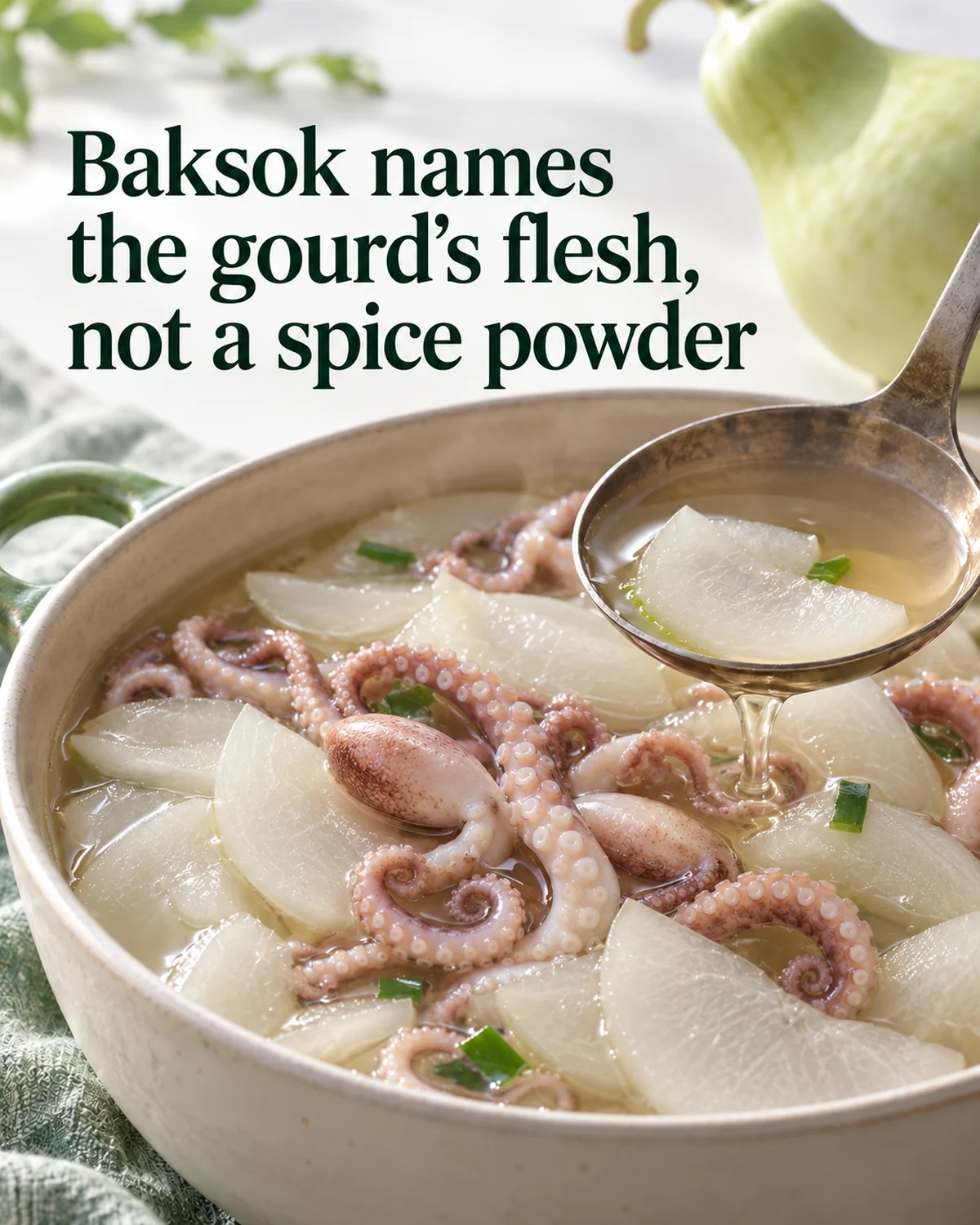
This sequence is efficient. The most delicate ingredient is not sacrificed to the cooking time of the starch. At the same time, the broth becomes more valuable after it has absorbed octopus flavor. The finish uses that accumulated broth rather than starting a second dish from zero.
That structure has a distant parallel with pan foods such as dakgalbi, where fried rice uses the remaining sauce, but the sensory result is entirely different. Korean shared-pot dining often makes the final starch a form of flavor recovery.
What to ask before ordering either soup
Gaegukji is unsuitable for people with crab or crustacean allergy when crab or crab-derived liquid is used, even if no large crab piece is visible. Fermented or leftover brine can hide the allergen from someone judging only by appearance.
Baksok nakji-tang contains molluscan seafood. Some diners who react to crustaceans can tolerate mollusks and others cannot, so a serious allergy requires individual medical guidance and clear restaurant communication. Added noodles introduce wheat, and dipping sauces can introduce soy or other ingredients.
Neither dish should be assumed vegetarian or vegan. Even vegetable-heavy gaegukji is defined by seafood-derived seasoning in its traditional logic.
For a first-time visitor, appearance can be confusing because modern gaegukji may contain a whole crab and resemble spicy crab stew. The best clue is the fermented vegetable base. Ask whether the dish uses gaegukji-style kimchi or crab-brine-seasoned vegetables rather than simply fresh vegetables in a seafood broth.

There is no need to police restaurants with one rigid definition; regional food changes. But the question helps recover the dish’s historical identity. A pot that contains crab and kimchi can be delicious without necessarily representing the older preservation logic in the same way.
Seosan and Taean cover a wide area, and restaurants specialize differently. Some are primarily crab restaurants, some are octopus specialists and some offer a broad seafood menu. Current prices, fishing supply, closing days and whether a particular dish is available can change.
If gaegukji is the priority, check that it is a regular menu item and ask what style the restaurant serves. If baksok nakji-tang is the priority, confirm current octopus availability and whether the meal includes the noodle or dough finish you expect. Avoid using an old travel article’s hard-coded hours as if they were permanent.
For regional context, official Seosan and Taean government sites are useful starting points, while restaurant-specific details should be rechecked near the visit date.
Let the octopus stay tender
If the octopus is added at the table, follow the restaurant’s guidance for timing. When it is ready, eating it before the final noodle stage can protect its texture. Leaving a delicate octopus boiling throughout a long conversation can make it progressively firmer.
The gourd can stay in the broth longer. Its job is to soften. Once the octopus is eaten, noodles or dough can be added if offered. That order makes the meal easier to understand: broth and gourd first, octopus at its best texture, starch last.
Comfort food is not a medical promise
Octopus dishes are frequently described in Korean food culture with words associated with stamina, strength or recovery. Seafood soups are also often framed as restorative. Those descriptions are culturally meaningful because they tell us when and why people value a dish.
They should not be rewritten as clinical claims. Eating baksok nakji-tang does not have a proven medical effect merely because tourism copy calls octopus nourishing. The same rule applies to fermented foods: gaegukji can be discussed as a fermentation tradition without promising gut-health or disease-prevention outcomes.
Food history is stronger when it explains belief and practice without turning culinary reputation into medicine.
Gaegukji’s flavor is built partly from salted and fermented components, so sodium can be substantial depending on recipe and serving size. Baksok nakji-tang may look visually light, but broth seasoning also varies. “Clear” does not automatically mean low-sodium, just as “fermented” does not automatically mean healthy for every diner.
For someone managing sodium intake, the practical questions are portion size, how much broth is consumed, and how salty the restaurant prepares the dish. Those are more useful than broad health labels.
For gaegukji, ask what vegetables and seafood seasoning distinguish the house version from an ordinary crab stew. Modern restaurant presentations can foreground fresh crab, while the older preservation logic explains another layer of the dish. A large crustacean in the photograph is therefore not a complete definition.
For baksok nakji-tang, ask about the bottle gourd and the sequence in which octopus, broth and any noodle finish are eaten. Baksok refers to the gourd’s flesh, not a particular octopus size. Follow the restaurant’s guidance rather than leaving tender pieces to simmer indefinitely while waiting for the final starch.
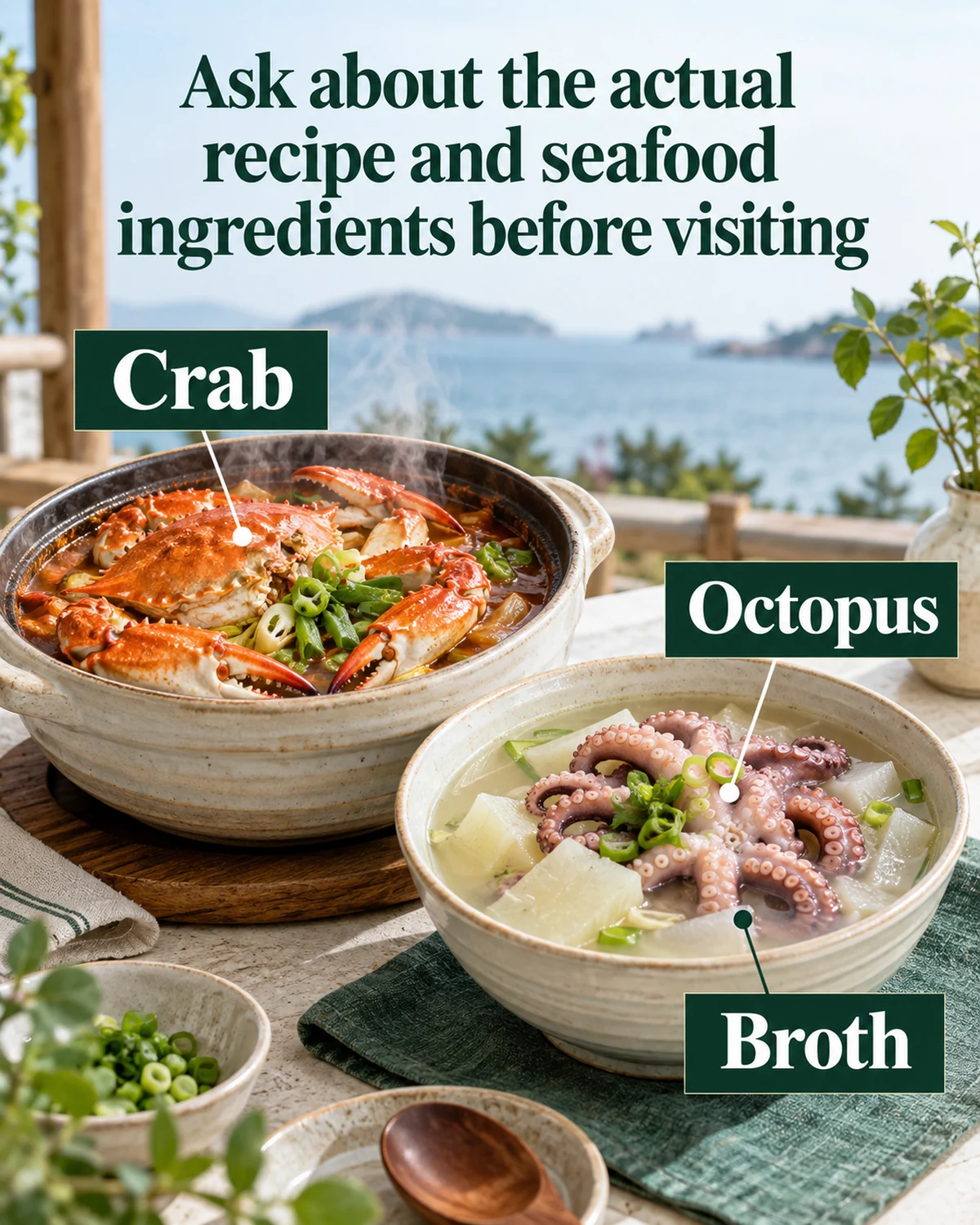
The two bowls also need different ingredient questions. A clear-looking broth does not prove it lacks strong seasoning or animal ingredients, and “restorative” describes a cultural expectation rather than a guaranteed health effect. Choose the meal whose texture, seasoning and quantity suit the table. Combining both into a single category of healthy seafood soup hides the very distinctions that make a regional food trip worthwhile.
Sources and reading
- Yonhap News Agency, citing Chungcheongnam-do — Gaegukji as a Seosan–Taean local food and recognition of gaegukji and baksok nakji-tang as Chungcheong regional dishes
- Yonhap News Agency, citing Chungcheongnam-do — provincial traditional-food recipe project describing gaegukji and baksok nakji-tang among regional soup/stew foods
- The Korea Times, May 28, 2026 — current Seosan–Taean food reporting distinguishing older crab-brine gaegukji logic from modern restaurant presentation and describing baksok nakji-tang
- Nongmin Shinmun — regional-food feature on Taean baksok-milguk-nakji-tang, bottle-gourd flesh, octopus timing and the wheat-noodle/dough finish
- Taean County — official local-government portal for current regional and travel information
- Seosan City — official local-government portal for current regional and travel information
- CDC — Safer food choices