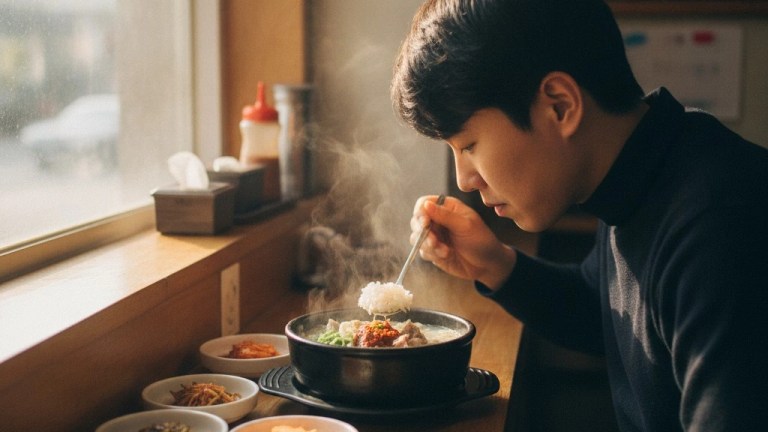
Worried that eating alone in Korea will get you strange looks? Here’s the honest answer: not anymore. Honbap (혼밥) — from honja (혼자, “alone”) and bap (밥, “a meal”) — has gone from mild social taboo to one of the most ordinary things you can do in Seoul. And there’s a whole cultural story behind that shift, plus one dish that fits solo dining better than any other.
The short version
Eating alone in Korea used to feel awkward because Korean cuisine, and Korean life, was built around eating together. That changed fast. Today, a huge share of diners at lunch are solo, and there’s even a food practically designed for a table of one: gukbap (국밥), a single earthenware bowl of rice in hot soup. Below: why the culture flipped, why gukbap is the perfect honbap dish, and where to try it.
Wait — was eating alone really once frowned upon?
Yes, and more than most visitors realize. For decades, sharing food was the heart of Korean culture. A pot of jjigae in the middle of the table, side dishes (banchan, 반찬) everyone reached into, the after-work group dinner (hoesik, 회식) — meals were social glue, not fuel. To eat alone could read as lonely, even a little sad.
In my experience, this is the single thing that surprises foreign visitors most: they expect Korea to be effortlessly solo-friendly like Japan, and are caught off guard to learn that, until fairly recently, a lone diner might have felt genuinely self-conscious here.
How honbap became normal — a real cultural shift
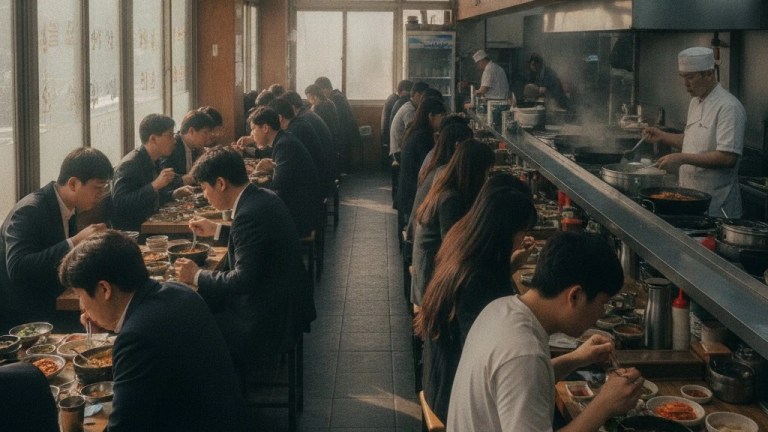
The turn happened quickly, roughly around 2015 to 2017. A younger generation began to prize efficiency and personal freedom over social obligation, and the word honbap — which barely existed a decade ago — entered everyday speech.
The numbers explain a lot. Single-person households made up about 35.5% of all Korean households in 2023 — the highest share since the government started tracking it in 2015 — and Statistics Korea’s own household projections put that share at roughly 38% by 2040, a steady climb rather than a sudden jump. When “alone” is already the single most common household type in the country, eating alone stops being a deviation and simply becomes lunch.
Pop culture pushed it along, too. The K-drama Let’s Eat (식샤를 합시다) ran for three seasons making solo dining look genuinely appealing rather than lonely — its lead lovingly narrating single portions of Korean cuisine. It’s a small but telling sign of how far the idea traveled: something once quietly avoided became the subject of a hit show. Even Naver Map now has a filter to find restaurants that are comfortable for one.
The perfect dish for a table of one: gukbap

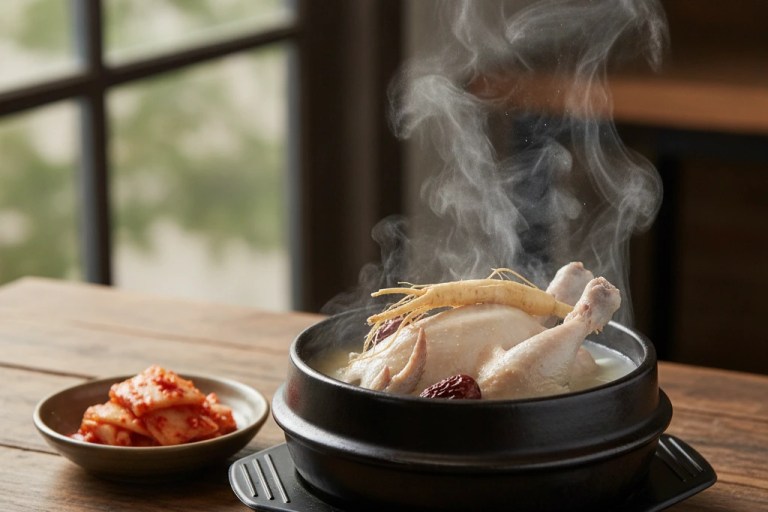
If any dish was made for honbap, it’s gukbap (국밥) — literally “soup (guk) rice (bap).” It arrives as a single steaming earthenware pot (ttukbaegi, 뚝배기), the rice either already in the broth or served alongside to tip in yourself. One person, one bowl, no sharing required.
That structure is the whole point. Unlike K-BBQ or a communal stew, gukbap doesn’t assume a group. Locals often eat it at a counter seat, get a hot bowl set down in front of them, and are finished in about fifteen minutes — perfect for a one-hour lunch break. Nobody reads it as strange, because half the room is doing exactly the same thing. This is honbap when it’s just called lunch.
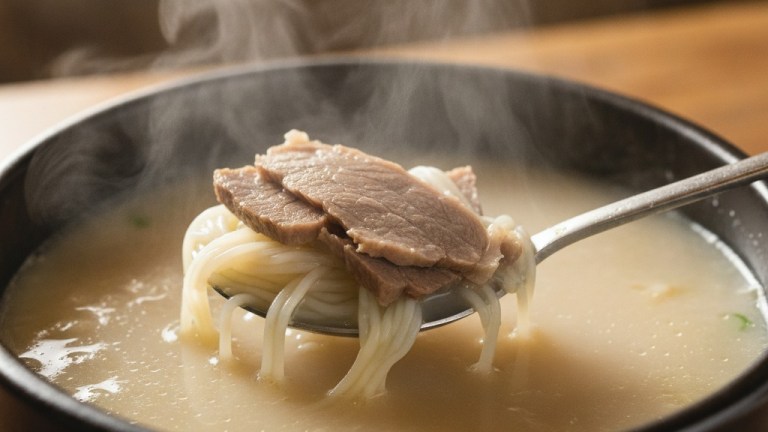
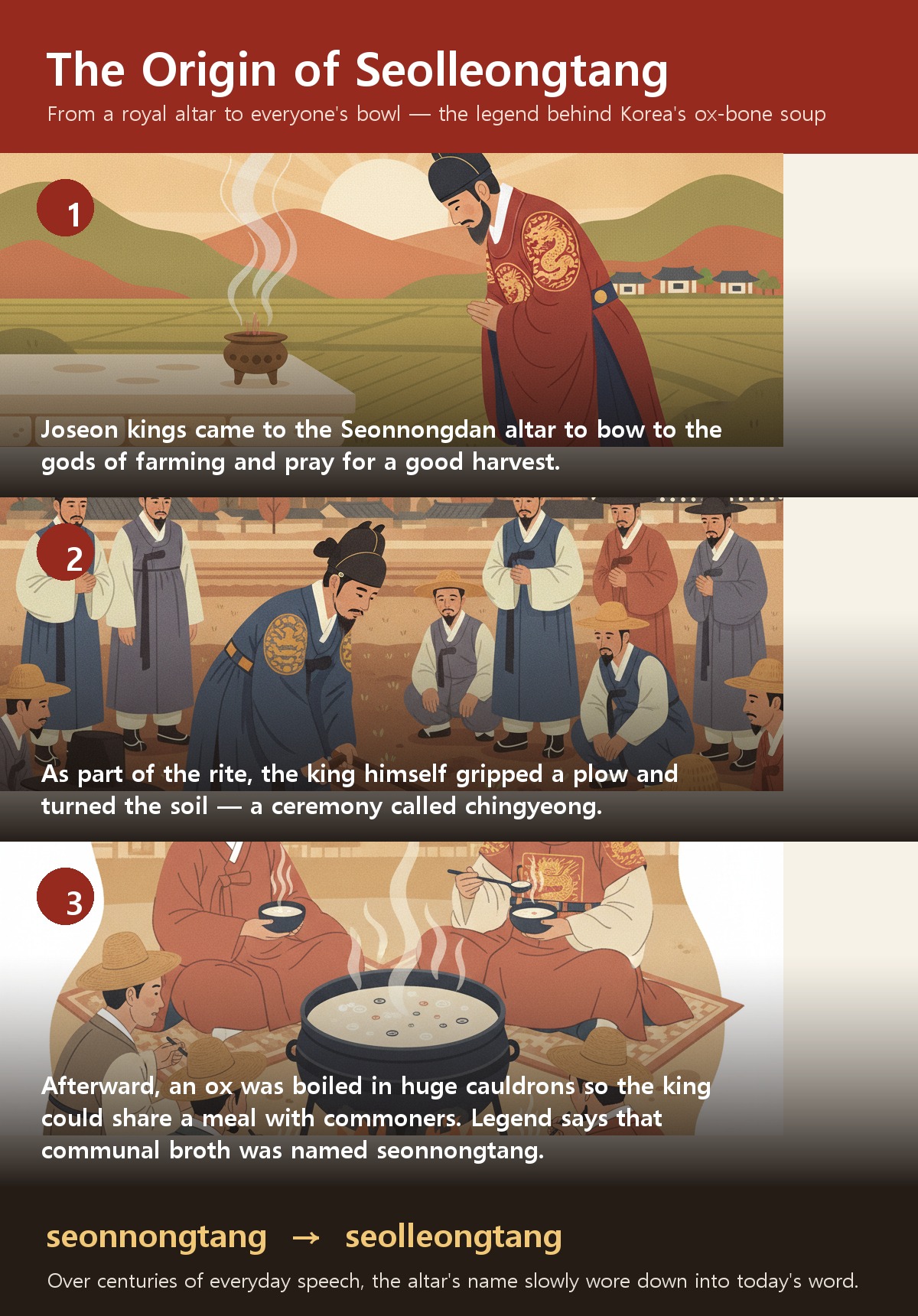
Gukbap is also comfort food in the deepest sense. There are many kinds: dwaeji-gukbap (돼지국밥), a pork-bone broth with sliced pork that’s a Busan (부산) specialty now common in Seoul; galbitang (갈비탕), a clear beef short-rib soup; and the milky, long-simmered ox-bone seolleongtang (설렁탕). If you want the full story of that last one, see our guide to seolleongtang, Korea’s milky ox-bone soup — another classic solo bowl.
How to order gukbap on your own (it’s easy)
Walk in, and you’ll often be waved to a small table or counter seat without ceremony. Many gukbap spots have a single hero dish, so ordering can be as simple as holding up one finger. The bowl comes with rice and a few banchan — usually kimchi and pickled radish. Season the broth to taste with the salt, pepper, or salted shrimp (saeu-jeot, 새우젓) on the table, tip in your rice, and dig in.
A quick tip: gukbap is meant to be eaten hot and fast, so don’t overthink it. This is exactly the kind of low-pressure, no-eyes-on-you meal that makes solo dining in Korea genuinely relaxing once you try it.
Where to eat gukbap in Seoul
You’re never far from a good bowl, but two long-running spots make an easy, honbap-friendly start. Both are historic institutions where a lone diner is completely unremarkable. Hours and prices can change, so it’s worth a quick check before you go.
Imun Seolnongtang (이문설농탕) — Jongno
Widely regarded as the oldest restaurant in Korea, Imun Seolnongtang has been serving its milky ox-bone soup since around 1904, and it’s even listed as a Seoul Future Heritage site and in the Michelin Guide. The broth is barely seasoned and made without artificial flavoring, so you salt it yourself at the table — a purist’s bowl. It’s fast, unfussy, and full of solo diners.
Address: 38-13 Ujeongguk-ro, Jongno-gu, Seoul (종로구 우정국로 38-13) · Hours: Mon–Sat 08:00–21:00 (break 15:00–16:30), Sun 08:00–20:00 · Search 이문설농탕 on Naver Map or Google Maps.
Jaembaeok (잼배옥) — City Hall
Near City Hall Station, Jaembaeok has been ladling out seolleongtang since 1933. It’s the kind of well-worn neighborhood spot where office workers slip in for a quick, quiet bowl — exactly the low-key honbap setting first-timers find reassuring.
Address: 68-9 Sejong-daero 9-gil, Jung-gu, Seoul (중구 세종대로9길 68-9) · Hours: Mon–Fri 10:00–21:30, Sat 11:00–15:00, closed Sun · Search 잼배옥 on Naver Map or Google Maps.
Frequently asked questions
Is it really okay to eat alone at a restaurant in Korea?
Yes. Solo dining, especially at lunch, is completely ordinary now — office workers, students, and delivery riders all do it. At casual spots like gukbap restaurants, no one gives it a second thought.
What’s the easiest Korean food to eat alone as a foreigner?
Gukbap (국밥) is ideal: it’s a single bowl, quick, comforting, and served at counter-friendly restaurants where solo diners are the norm. Noodle shops and kimbap places are also easy.
Why was eating alone once considered awkward in Korea?
Because Korean cuisine and social life centered on sharing — communal stews, shared side dishes, group dinners. Meals were about togetherness, so a lone diner could feel conspicuous. That norm faded as single-person households rose.
Are there restaurants specifically for solo diners?
Increasingly, yes. Seoul has seen a wave of honbap-friendly places with counter seats and single-portion menus, and Naver Map even offers a filter to find them.
What does “honbap” mean?
It combines honja (혼자, “alone”) and bap (밥, “meal”), so honbap literally means “eating alone.” A related word, honsul (혼술), means drinking alone.
A table for one, and no apologies
Eating alone in Korea isn’t weird — it’s a window into how fast the country’s food culture has changed. What was once a communal ritual has made room for the solo diner, and there’s no friendlier place to start than a steaming bowl of gukbap. For more one-bowl ideas, browse our full guide to what to eat in Korea and the equally solo-friendly Jeonju kongnamul-gukbap If you want the practical, on-the-ground side of it — where to sit, what to order, how it actually works — our travel guide to eating alone in Korea covers that part.. Pull up a counter seat — you’ve earned it.
Restaurant details such as hours and prices are current as of 2026; please double-check before visiting.