Why Koreans Eat That

Tag: k drama food

  • The Man Who Sold 500 Dalgona a Day: What Squid Game Did to Seoul’s Street Vendors

    The Man Who Sold 500 Dalgona a Day: What Squid Game Did to Seoul’s Street Vendors

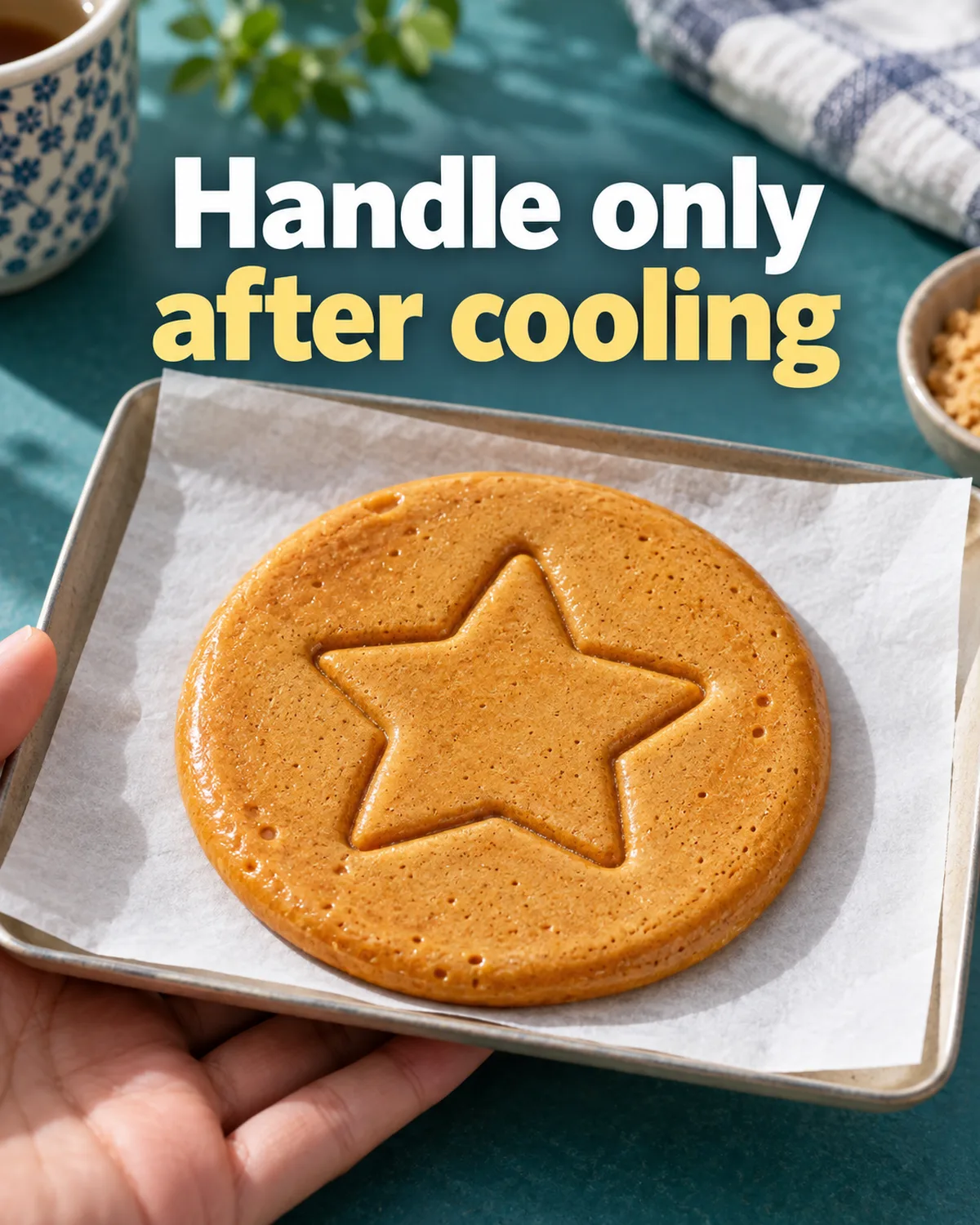
    A finished dalgona disc carries two kinds of work: the candy has been made, and a shape has been pressed into it. The stamped star or circle is what a viewer recognizes first. At a stall, the surface has to be ready before anyone can try the game.

    The headline’s number belongs to October 2021. Reuters reported that Seoul seller An Yong-hui was selling more than 500 pieces a day, up from fewer than 200 before Squid Game premiered. It was a report about that seller during that surge, not a current sales figure.[1]

    The same report described him remaining at work without going home for a week to meet demand. That gives the surge a human scale. It does not establish his present location, later income or the experience of every vendor in Seoul.[1]

    The enduring food question is what happens between one customer and the next. A candy disc begins as a hot mixture and ends as a fragile stamped object. A larger audience can arrive quickly; that physical transformation still needs the maker’s attention.

    The sales figures describe a vendor during the reported 2021 surge.
    The sales figures describe a vendor during the reported 2021 surge.

    The sales number has a limited job

    The Reuters account documents attention reaching a particular small business. It also distinguishes the person making candy from customers trying a game. Those are useful observations without treating one day’s output as a complete financial account.

    Pieces sold are not the same measure as profit. To calculate earnings, you would also need costs and other business details. A visible line or a large sales number alone cannot supply them.

    Likewise, the phrase street vendor covers people working with different spaces, equipment and customers. One reported case can illuminate the work, but it cannot represent every person selling a similar sweet.

    For a visitor today, use current information from the seller you actually find. Ask what is being offered and whether a game is included. A dated news photograph cannot promise today’s stall location, price or opening time.

    A piece count alone cannot establish a vendor’s profit.
    A piece count alone cannot establish a vendor’s profit.

    Watch how the surface is formed

    Maangchi’s ppopgi recipe begins with sugar and baking soda. She describes heating and stirring the sugar, expanding the mixture with baking soda, then pressing and stamping it. Her account connects a short ingredient list with technique and timing.[2]

    Watching the sequence is different from seeing only the finished shape. Stirring, placing the mixture and pressing it each change the object in front of you. Leave the work area clear so the maker can continue without someone reaching across it.

    The foamed interior helps explain the candy’s light, brittle texture. Maangchi describes it as sweet with smoky, nutty and bitter notes. A bite is therefore a different experience from chewing a dense, sticky sweet.[2]

    This is a description of skilled work rather than a complete home recipe. If you want to cook it, use a reliable method and suitable supervision for hot sugar. Watching the stall does not require handling the burner or the hot mixture.
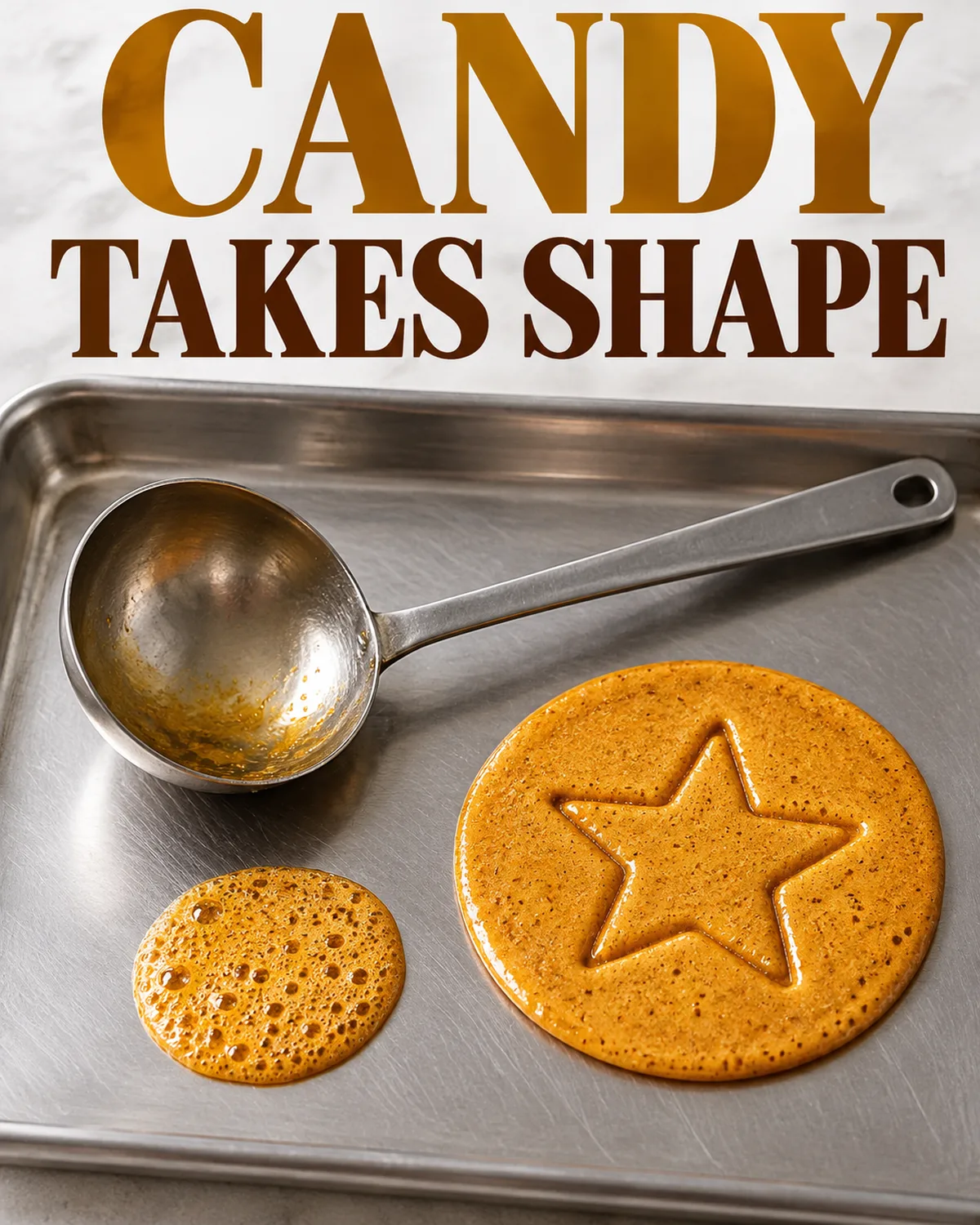
    The foamed candy is pressed into a disc before the outline becomes a game.
    The foamed candy is pressed into a disc before the outline becomes a game.

    The stamp makes an edible game boundary

    A stamped line marks where the central shape meets the surrounding candy. It has to be an impression in the disc, rather than a separate decoration placed on top. That small difference is essential to understanding the challenge.

    The maker’s pressure affects the impression. Maangchi explains that a stronger or lighter stamp can change how easily a shape comes out. This makes the line part of the food’s making process, as well as the later game.[2]

    Look at the line and the thickness of the piece before deciding whether to try. A handmade candy is an actual object with edges and small irregularities. Its shape may be familiar from television while its brittleness is still surprising in the hand.

    Ask the seller what rules apply. A prize, tool or handling arrangement shown elsewhere may not be offered at this stall. You can also choose to eat the sweet without turning it into a test.

    The stamp leaves a line within the same candy disc.
    The stamp leaves a line within the same candy disc.

    A queue includes more than cooking

    Serving the next person also involves explaining choices, receiving payment and handing over something that can break. Those small actions compete for attention around the same work surface. Watching them makes the trade easier to understand.

    Choose your order before stepping into the maker’s working space. If you want a photograph or close video, ask first and follow the answer. A clear surface and an uninterrupted moment can matter more than another angle of the candy.

    Keep your hands away from active tools and let the seller pass the finished piece to you. The stamped surface can be admired after the handover. Reaching toward a piece while it is being shaped interrupts the very process you came to see.

    If the wait does not fit your day, choose another stop or return when suitable. A recognizable food is still sold by a business with its own pace. Enjoying Korean street food does not depend on joining every visible line.
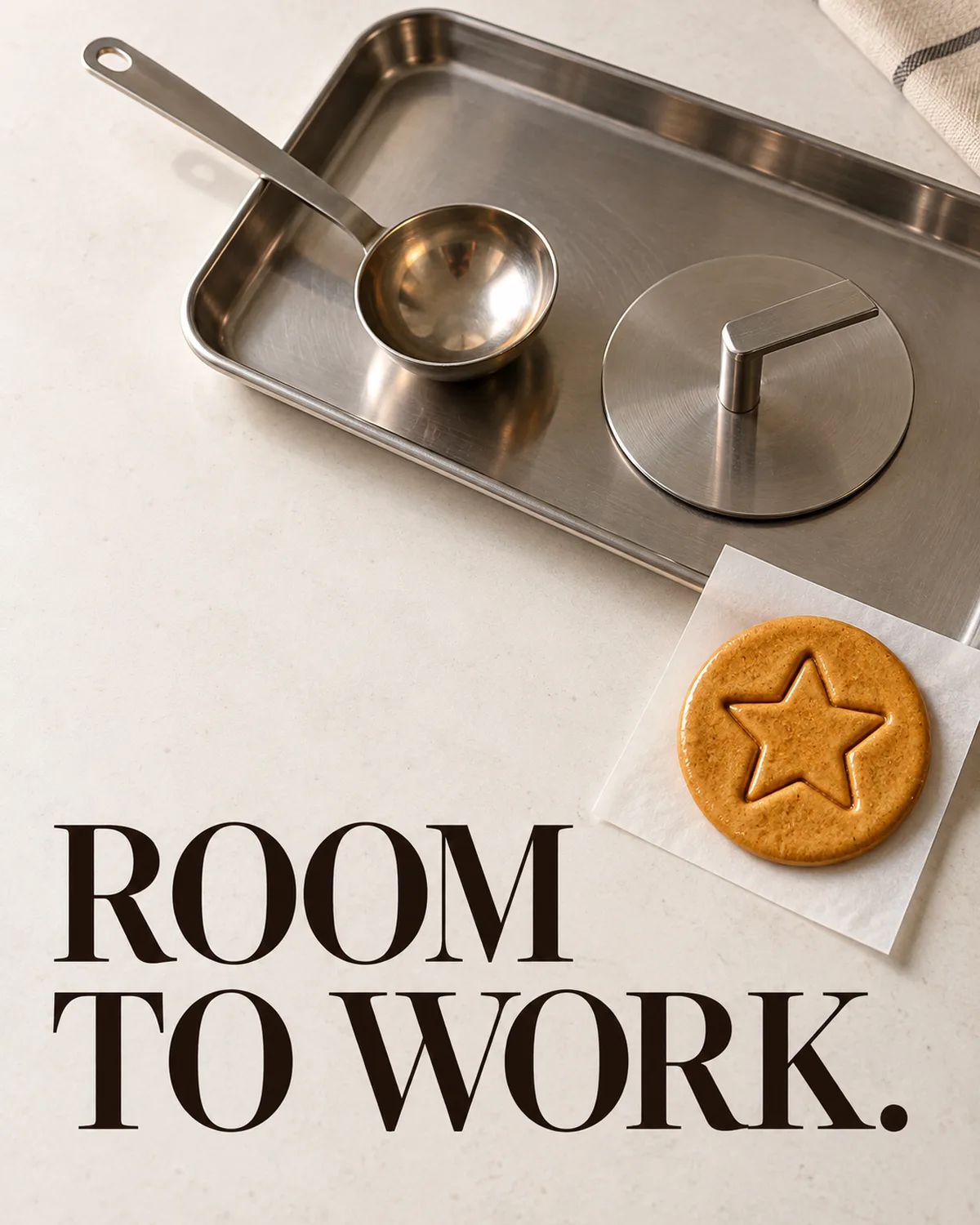
    A clear work surface helps the maker finish and hand over the candy.
    A clear work surface helps the maker finish and hand over the candy.

    Carry the candy as food, not just an image

    Support the finished disc rather than squeezing its rim. If it comes in packaging, follow the seller’s handling advice and keep it from being crushed against heavier purchases. A clean photograph is easier after the candy has reached a stable surface.

    Confirm ingredients in the actual version when needed. A familiar basic recipe cannot identify every modern variation or what other foods are handled nearby. The seller’s own preparation details are the relevant information for your purchase.

    The 2021 report and the recipe answer different questions: one records a surge in demand, while the other explains how a stamped candy takes shape. Together they let you see both the public image and the small repeated actions behind it.

    Start by looking at the disc, its bubbles and the pressed outline. Then watch the maker begin the next piece, if the stall permits it. The most useful memory may be how much attention a small candy requires before it reaches your hand.

    The brittle candy needs support when it is carried.
    The brittle candy needs support when it is carried.

    The candy and the wider street-food table

    Sources and reading

    1. Reuters — October 1, 2021 vendor report, reproduced by Our Today
    2. Maangchi — Ppopgi, published November 26, 2013; updated September 14, 2026
  • The East Palace and Joseon Food Storage: Salt, Jang and the Royal Pantry

    The East Palace and Joseon Food Storage: Salt, Jang and the Royal Pantry

    A salt storehouse is a surprisingly useful doorway into Korean food history. The royal meal needed seasonings long before a finished tray appeared. A jar, a storage room and the work of receiving supplies can explain more about everyday cooking than a spectacular banquet alone.

    The East Palace offers a fictional doorway to that subject: Netflix’s description of its second episode mentions a salt-storehouse ghost. Its official page lists a 2026 horror limited series starring Nam Joo-hyuk, Roh Yoon-seo and Cho Seung-woo, with Choi Jung-kyu, Kwon So-ra and Seo Jea-won credited as creators.[1]

    Read the horror premise before the popularity claim

    Netflix’s synopsis pairs a man who can enter the spirit world with a court lady who hears the dead, summoned into the palace by the king. That combination gives the story a supernatural mystery within a royal setting. The official page lists eight episodes.[1]

    Those descriptions help a reader decide whether the premise appeals to them. A claim that the series is trending globally needs something else: a named chart, reporting week and measure. The series page establishes the program and premise, rather than a dated worldwide popularity ranking.

    The fictional salt-storehouse episode opens a separate question about palace food storage.
    The fictional salt-storehouse episode opens a separate question about palace food storage.

    The historical storehouse has a food job

    The National Palace Museum’s 2024–2025 royal-cuisine exhibition identifies jang-go and yeom-go among palace storage spaces for jang, salt and jeotgal. It places these seasonings within a wider system of kitchens, tools and service.[2]

    The exhibition describes Saongwon as the office receiving and supplying royal-food ingredients. Cooking had specialized workers, including people making rice, grilling fish and meat, producing tofu and preparing rice cakes.[2]

    Its kitchen account distinguishes sojubang cooking spaces, suragan preparation and arrangement, and saenggwabang lighter foods and refreshments. This vocabulary identifies work, rather than a single room in which every palace meal was made.[2]

    The exhibition also explains that seafood could be dried or made into jeotgal for transport, and that ice was sometimes used. Arriving ingredients underwent inspection. The record does not identify one universal preservation method for every food.[2]

    The museum identifies storage for jang, salt and jeotgal within palace food work.
    The museum identifies storage for jang, salt and jeotgal within palace food work.

    Follow the seasoning rather than the ghost

    A fictional storage room can carry suspense because it is removed from the visible ceremonial table. For a food reader, its historical interest lies in what had to be ready before cooking began: ingredients, containers, tools and people who could connect them.

    Ask three questions about a finished dish. Which ingredient supplies its main flavor? At what stage is it added? What work had to happen before it was ready to use? These questions move attention from the decorative table to the preparation.

    A soup seasoned with soy sauce offers an accessible example. The liquid seasoning can disappear into the broth, leaving no visible portion to count on the plate. Its absence from the photograph does not make its contribution small.

    This is a way of reading food, not a reconstruction of a palace recipe. A storehouse label alone cannot identify the quantities, aging times or sequence used for an undocumented royal dish.

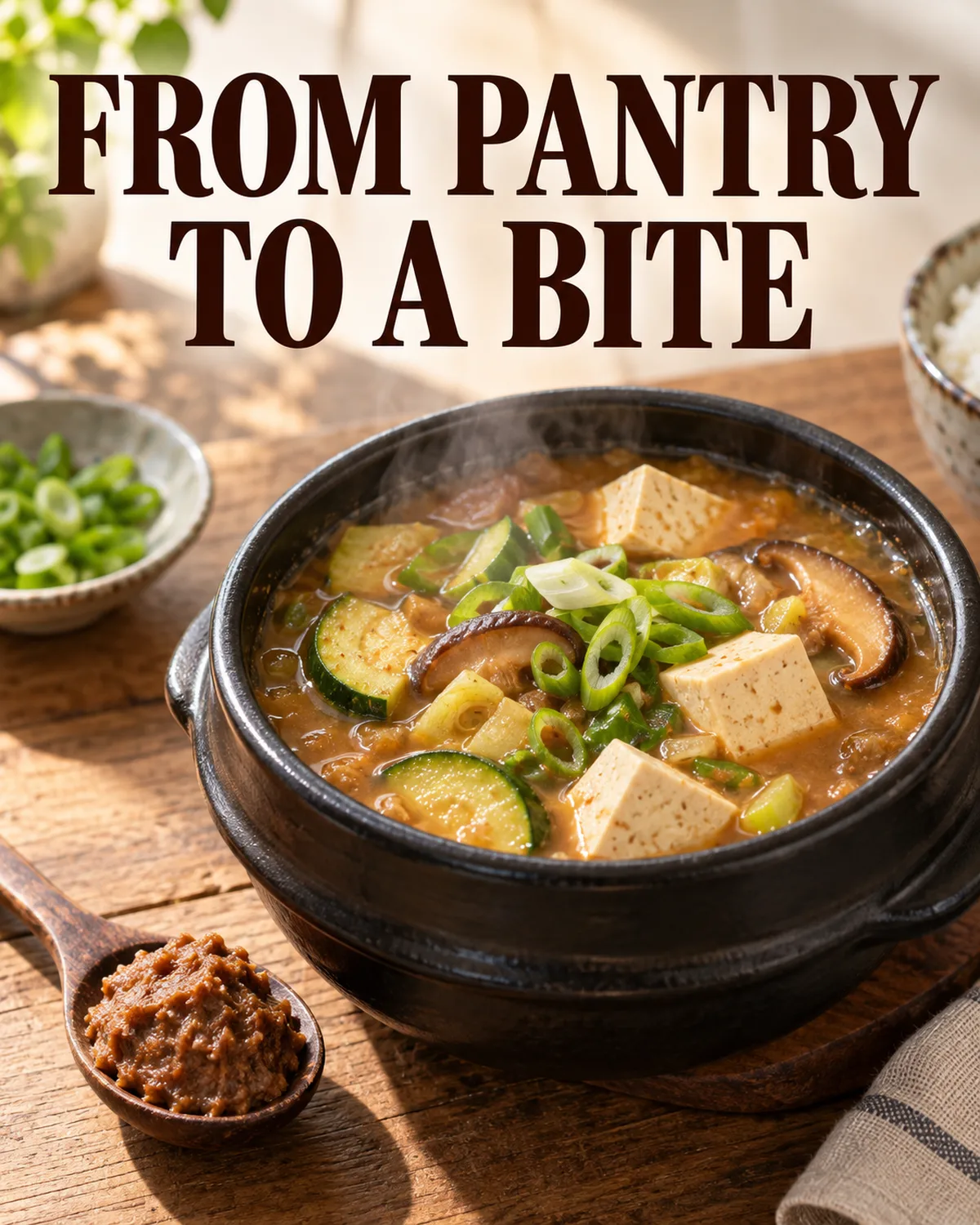
    A seasoning can shape a soup while remaining hard to see in a photograph.
    A seasoning can shape a soup while remaining hard to see in a photograph.

    Jang is a practice before it is a condiment

    UNESCO’s 2024 jang-making inscription describes a process encompassing ingredient preparation, fermentation, aging, storage and consumption. It includes soybean paste, soy sauce and red-chili paste, and notes that household sauces can differ.[3]

    The same description connects transmission with families and community teaching. This living practice adds a useful perspective to storage: keeping a sauce is part of maintaining a taste and a body of knowledge. It does not establish an unchanged palace recipe stretching into the present.[3]

    At a modern meal, notice what a sauce does. Doenjang can supply depth to a soup, while soy sauce can season vegetables or form part of a dip. The dish, recipe and product determine how each is used.

    Do not assume that two products with the same broad name will taste identical. Read the ingredient list, follow the storage instructions and use the quantity required by the recipe you are cooking. Historical interest is a reason to pay closer attention to those differences.

    Making, fermenting, aging and storing belong to the jang-making tradition.
    Making, fermenting, aging and storing belong to the jang-making tradition.

    Try the pantry question at an ordinary table

    Start with one dish rather than assembling an imagined royal spread. With a vegetable jeon, for example, compare a small bite on its own with a bite lightly dipped in the sauce served beside it. The crisp edge and the seasoning become separate things to notice.

    For a soup, taste the broth before adjusting it. If the recipe already contains a salty paste or sauce, that ingredient belongs to the seasoning decision even when you cannot see it. Additional salt should respond to the actual dish.

    When ordering, ask what goes into the broth or dip if an ingredient matters to you. A soy-based seasoning may also contain wheat, and a sauce can contain other additions. The name of a dish cannot replace information about its preparation.

    These are contemporary eating suggestions. They offer a small experience of how stored seasonings become part of a meal without pretending to reproduce the food eaten by a particular king.

    Taste the food and its seasoning as separate parts of the bite.
    Taste the food and its seasoning as separate parts of the bite.

    Keep the exhibition and the episode in their own time

    The museum page records an exhibition held from November 20, 2024 to February 2, 2025; it is an archive to read, rather than a promise that the same display is open today. Netflix’s episode description belongs to the series. Neither can stand in for the other’s evidence.[2]

    The food detail survives that separation. Fiction makes the storehouse a place to fear; food history makes it a place to investigate. Follow the seasoning from storage to preparation to a bite at the table, and the quieter palace story comes into view.

    The quieter food story runs from storage through preparation to the meal.
    The quieter food story runs from storage through preparation to the meal.

    Continue from pantry to plate

    Sources and reading

    1. Netflix — The East Palace official series and episode descriptions
    2. National Palace Museum — Joseon’s Royal Cuisine, 2024–2025 exhibition record
    3. UNESCO — Decision 19.COM 7.b.3, jang-making inscription, 2024
  • Yeonsangun: The Real Tyrant King Behind So Many Korean Historical Dramas

    Yeonsangun: The Real Tyrant King Behind So Many Korean Historical Dramas

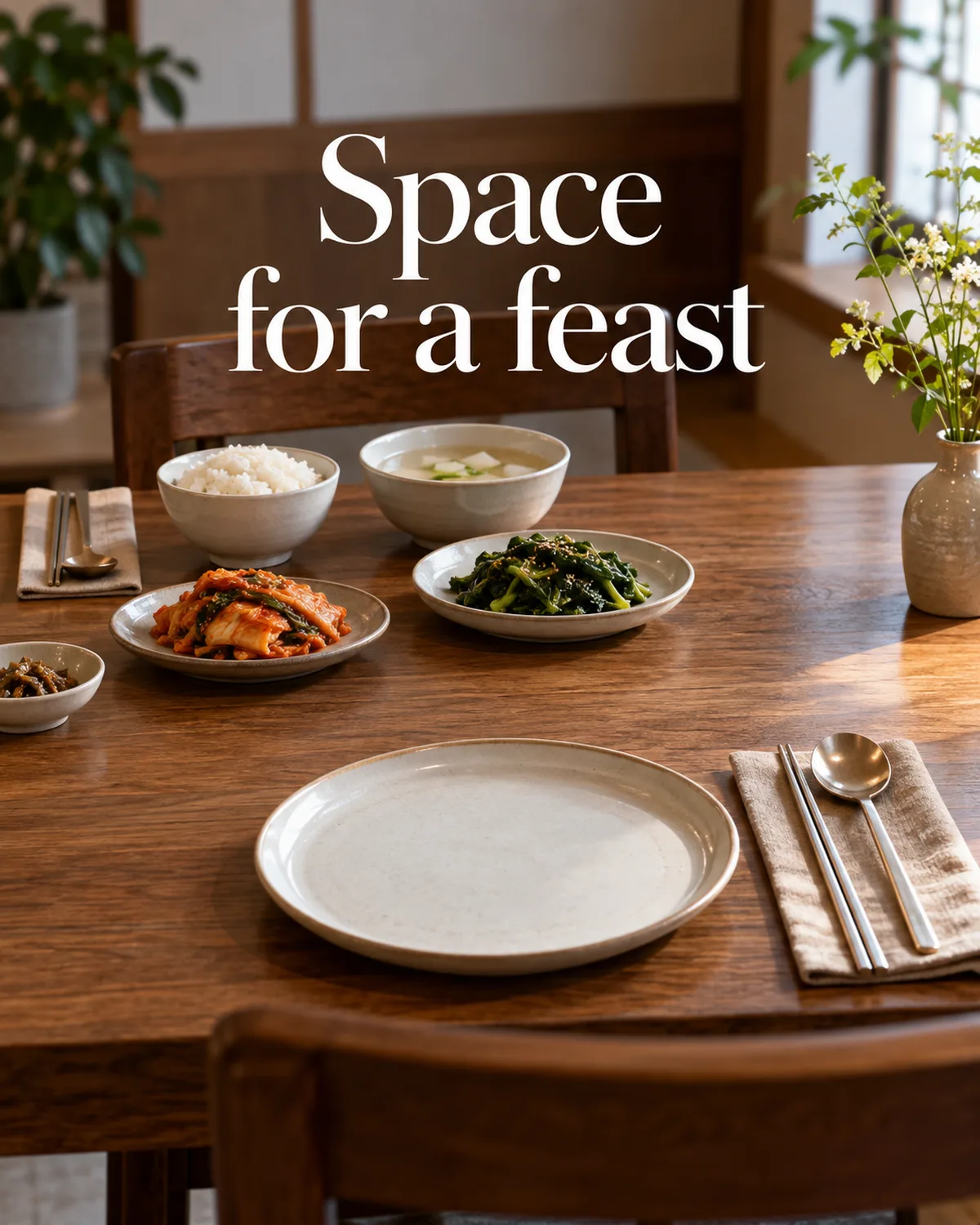
    A banquet begins long before a platter reaches the table. Ingredients must arrive, cooks must prepare them, dishes need somewhere to wait, and servers must know who receives what. That work is easy to overlook when a historical drama concentrates on the king taking a bite.

    For Yeonsangun, Joseon’s tenth ruler, the surviving chronicle offers a more specific food story than an imagined nightly feast. Its dated entries show supplies, temporary structures, performers and gifts being organized through royal authority.[6]

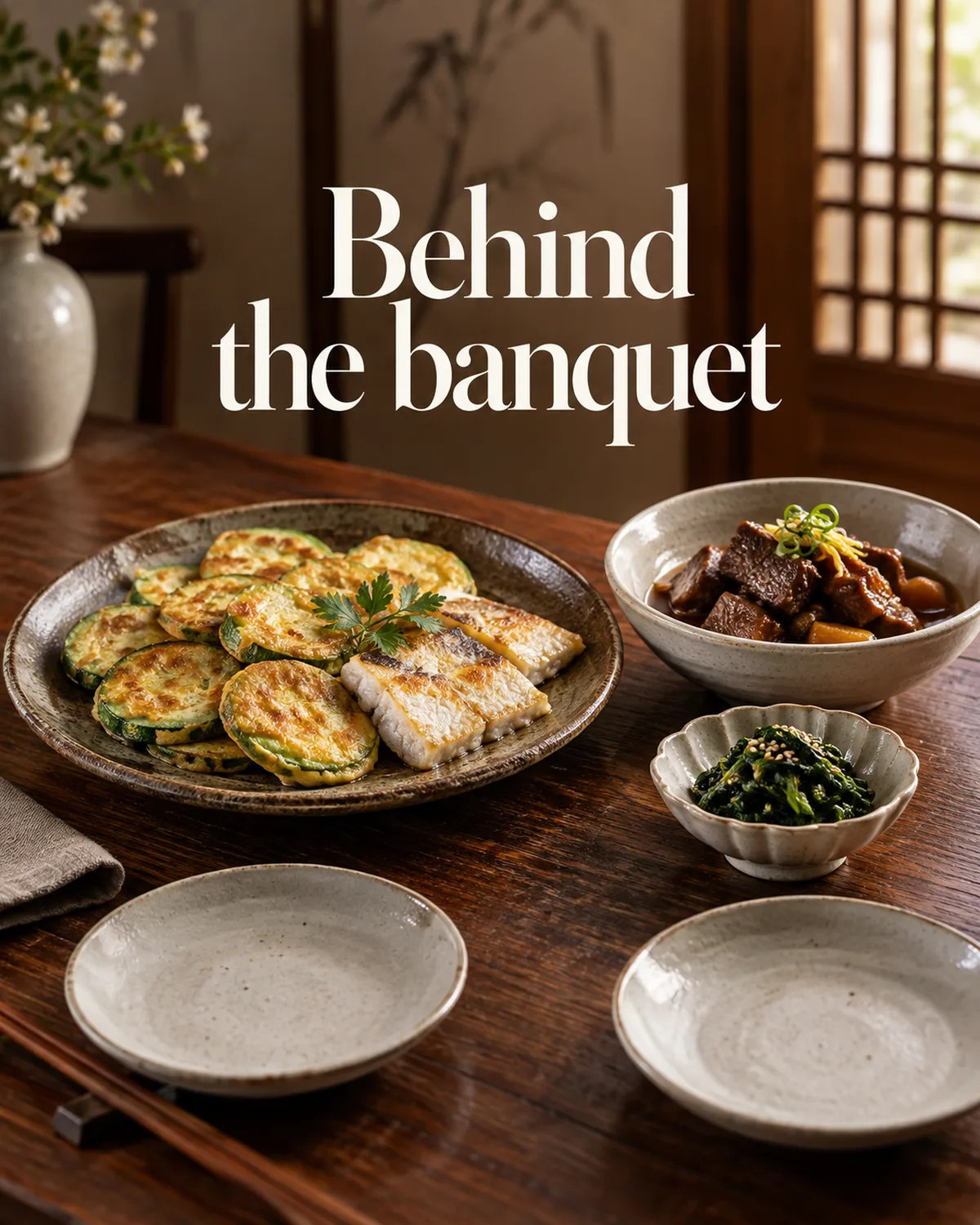
    A feast depends on preparation and service.
    A feast depends on preparation and service.

    Look behind the modern celebration table

    At a Korean celebratory meal today, try noticing service as well as abundance. A plate of jeon asks for timely cooking; a braised dish can be portioned differently; a small sweet arrives with another set of utensils. These contemporary examples help you see the work without claiming to reproduce Yeonsangun’s menu.

    Ask which dishes are shared and which are individually served. A centerpiece may be intended for several people, while a rice bowl or cup belongs to one guest. Understanding that distinction makes a large arrangement easier to eat comfortably.

    If dishes arrive in stages, notice what changes: temperature, serving vessels, portion size or the need for a fresh plate. Those are features of the meal you are actually receiving, not evidence that a sixteenth-century banquet followed the same sequence.

    A restaurant’s royal-style presentation can be enjoyable on its own terms. Ask what period or occasion informs it, then judge the food by its cooking. A familiar hot pot or decorative platter should not automatically become proof of one king’s exact supper.

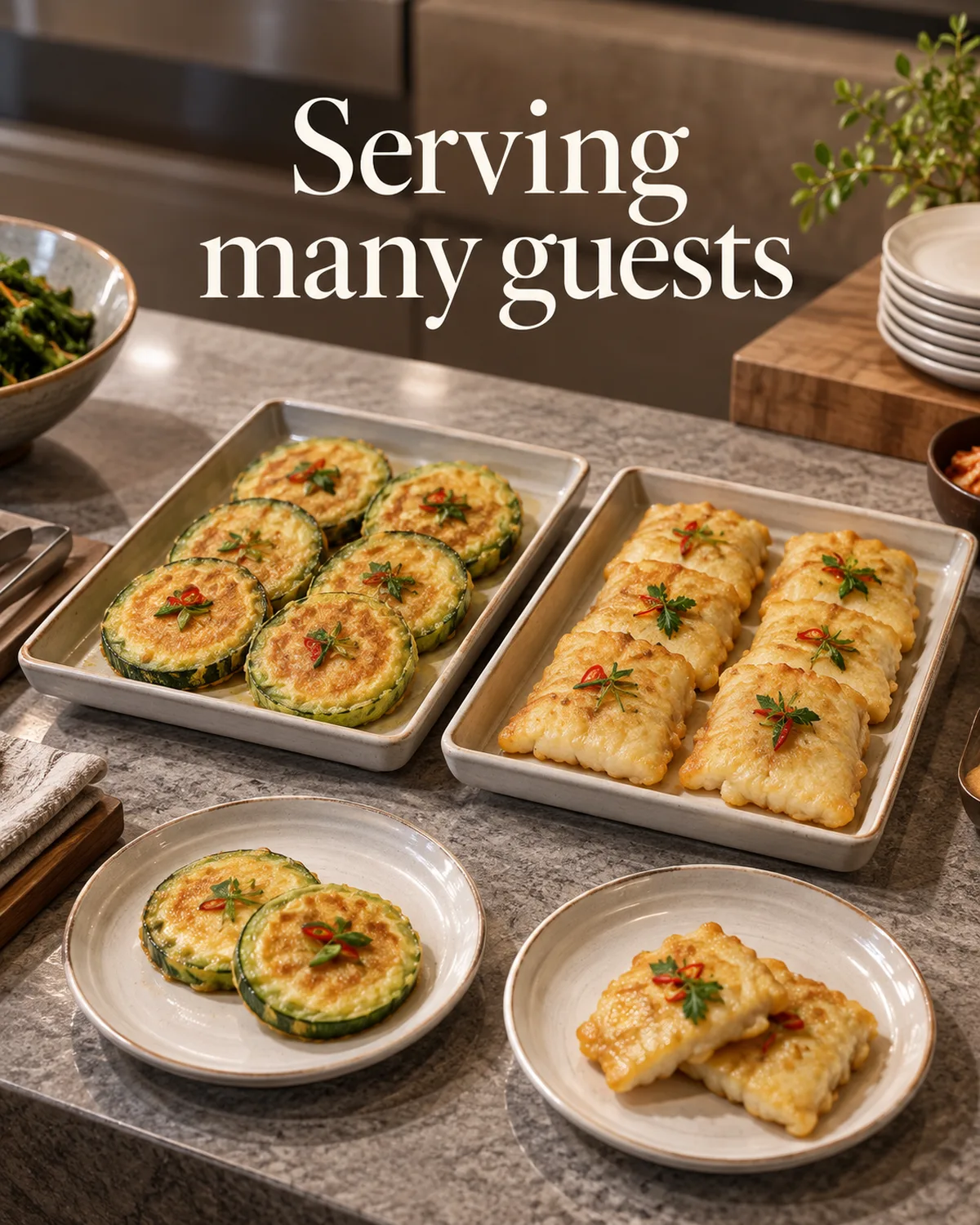
    Shared platters and individual servings do different work.
    Shared platters and individual servings do different work.

    A birthday banquet activated a supply network

    On day 25 of the sixth lunar month in 1504, the chronicle records a birthday banquet for the queen dowager at Changgyeong Palace. Relatives and officials were fed, and gifts were distributed.[1]

    It describes temporary covered structures erected with work hurried day and night, then dismantled after the banquet. Supplies were pressed in from the provinces and arrived within about ten days. Large copper-alloy ice trays were cast for the summer heat.[1]

    The same entry describes people rushing provisions because they feared the king’s severity. Its account makes the burden of preparation visible alongside the celebration.[1]

    The dishes are only one part of that event. Transport, shelter, metalwork and cooling had to converge on a deadline. The record gives unusually concrete preparation details while leaving the complete menu unstated.

    Supplies, shelter and cooling were part of the recorded event.
    Supplies, shelter and cooling were part of the recorded event.

    Music and feeding belonged to the same event

    A 1505 order, dated day 27 of the first lunar month, called for one thousand Gwanghuiak performers to be assembled for a forthcoming banquet. If Unpyeongak had not reached one thousand, five hundred were to be supplied in time.[3]

    Those figures are targets in an order. They should not be converted into a count of people simultaneously dancing around the king’s dinner table, or a total for every event in his reign.

    A separate entry for day 5 of the ninth lunar month in 1505 describes a banquet at Injeongjeon involving government offices and royal relatives. It also records an elders’ banquet and cloth granted to 260 Unpyeongak and Gwanghuiak performers.[4]

    Read together, the entries show how hospitality, rank and performance met in court events. The cloth is a recorded distribution, not an ingredient cost or a modern restaurant wage. Keeping the categories distinct makes the scale easier to understand.

    Food and performance met in court celebrations.
    Food and performance met in court celebrations.

    The venue was part of the expenditure

    On day 14 of the fourth lunar month in 1505, Yeonsangun ordered a coming Dano banquet held at the old Myeongnyundang. The instructions included removing east and west walls, repainting, applying paper dragons to columns and altering adjoining structures.[2]

    This is more precise than describing an academy as a generic palace playground. The entry names a venue and specific changes for an approaching event. The rebuilding itself consumed effort before any food could be served.

    A banquet therefore occupied space as well as a kitchen. Seating, shelter and performance areas were part of its material requirements. The visual impression of abundance depended on work happening outside the finished table.

    For a visitor at a historic site, distinguish the surviving building, later restoration and the dated event being explained. An atmospheric room can help you imagine scale; it cannot supply the missing menu or verify a television set.

    The venue required work before the meal.
    The venue required work before the meal.

    Food also traveled outward as a royal gift

    An entry for day 24 of the fifth lunar month in 1506 records Yeonsangun holding a banquet for the queen dowager at Gyeongbok Palace. He ordered food sent to named officials and court personnel, with drink and music bestowed as well.[5]

    Here the useful action is distribution. The celebration extended beyond the king’s own place setting, reaching recipients identified in the record. Food formed part of a relationship between the throne and the people it recognized.

    The records also describe food sent to recipients.
    The records also describe food sent to recipients.

    That changes how the banquet can be pictured. A single overcrowded table is a poor substitute for several documented actions: hosting, feeding other groups, granting cloth and sending food. They belong to related events, but they are not one interchangeable scene.

    At a modern gathering, the distinction remains useful in a much smaller way. Notice what is served at the table and what is packed to take away. These are different ways food reaches guests; neither needs a royal origin claim to be worth observing.

    Read the chronicle with its history in view

    The Academy of Korean Studies says compilation of Yeonsangun Ilgi began in November 1506, after the ruler’s death and deposition, and was completed in September 1509. Despite its “ilgi” title, its content and format belong to the wider annals tradition.[6]

    The entry discusses difficulties preserving records under Yeonsangun and the political conditions surrounding compilation. That context calls for careful reading, not dismissal of every dated order or uncritical repetition of every dramatic summary.[6]

    Keep the event and its interpretation distinct.
    Keep the event and its interpretation distinct.

    Keep an order, its reported implementation and a later interpretation distinct. The lunar dates used here identify separate entries; they have not been silently treated as equivalent Gregorian month-and-day dates.

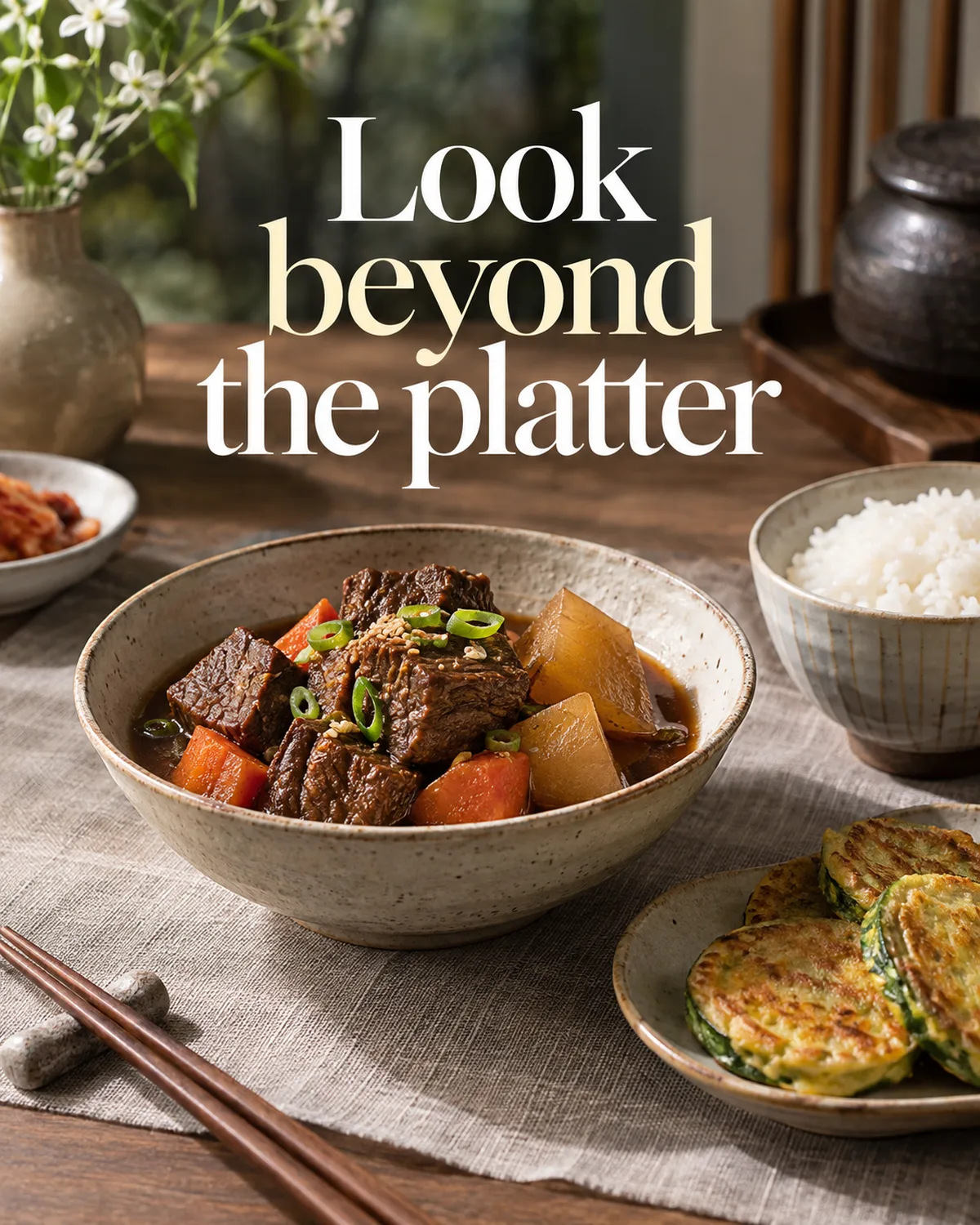
    The strongest food history is in the work those records reveal. Enjoy the cooking at a present-day feast, then look beyond the platter: who supplied it, who served it, who received it and what occasion brought them together? Those questions make a banquet more interesting than a list of imagined royal favorites.

    Notice the people and work a meal requires.
    Notice the people and work a meal requires.

    Other scales of royal food history

    Sources and reading

    1. National Institute of Korean History — Yeonsangun 10, lunar sixth month, day 25 (1504)
    2. National Institute of Korean History — Yeonsangun 11, lunar fourth month, day 14 (1505)
    3. National Institute of Korean History — Yeonsangun 11, lunar first month, day 27 (1505)
    4. National Institute of Korean History — Yeonsangun 11, lunar ninth month, day 5 (1505)
    5. National Institute of Korean History — Yeonsangun 12, lunar fifth month, day 24 (1506)
    6. 한국민족문화대백과사전 — 연산군일기 (Yeonsangun Ilgi)
  • Squid Game Dalgona: The Candy Korean Kids Were Cheating At for Decades

    Squid Game Dalgona: The Candy Korean Kids Were Cheating At for Decades

    The stamped shape makes dalgona more than a piece of caramelized sugar. It tells the eater where to look, where the brittle candy might break and what counts as succeeding at the game.

    That is why Squid Game could make an old street snack instantly legible to viewers who had never tasted it. The drama amplified an existing object and activity; it did not invent either one.

    Sugar becomes a fragile, foamed disc

    The basic modern street-candy version is remarkably simple. Sugar is melted until liquid, a very small amount of baking soda is stirred in, and the mixture foams. It is then flattened and stamped with a shape before it fully hardens.

    Baking soda helps produce carbon dioxide bubbles in hot sugar. As the candy cools, its sugar structure sets around the bubbles, giving the finished piece a light, porous bite. The American Chemical Society’s explanation of honeycomb candy describes this aeration mechanism; its honey-and-water recipe is a different preparation, not a dalgona formula.6

    The vendor therefore works with seconds, not with a forgiving cake batter. Sugar can burn, foam can collapse, the press can stick and the stamp can cut too deeply. The visual simplicity hides a skilled repetitive motion.

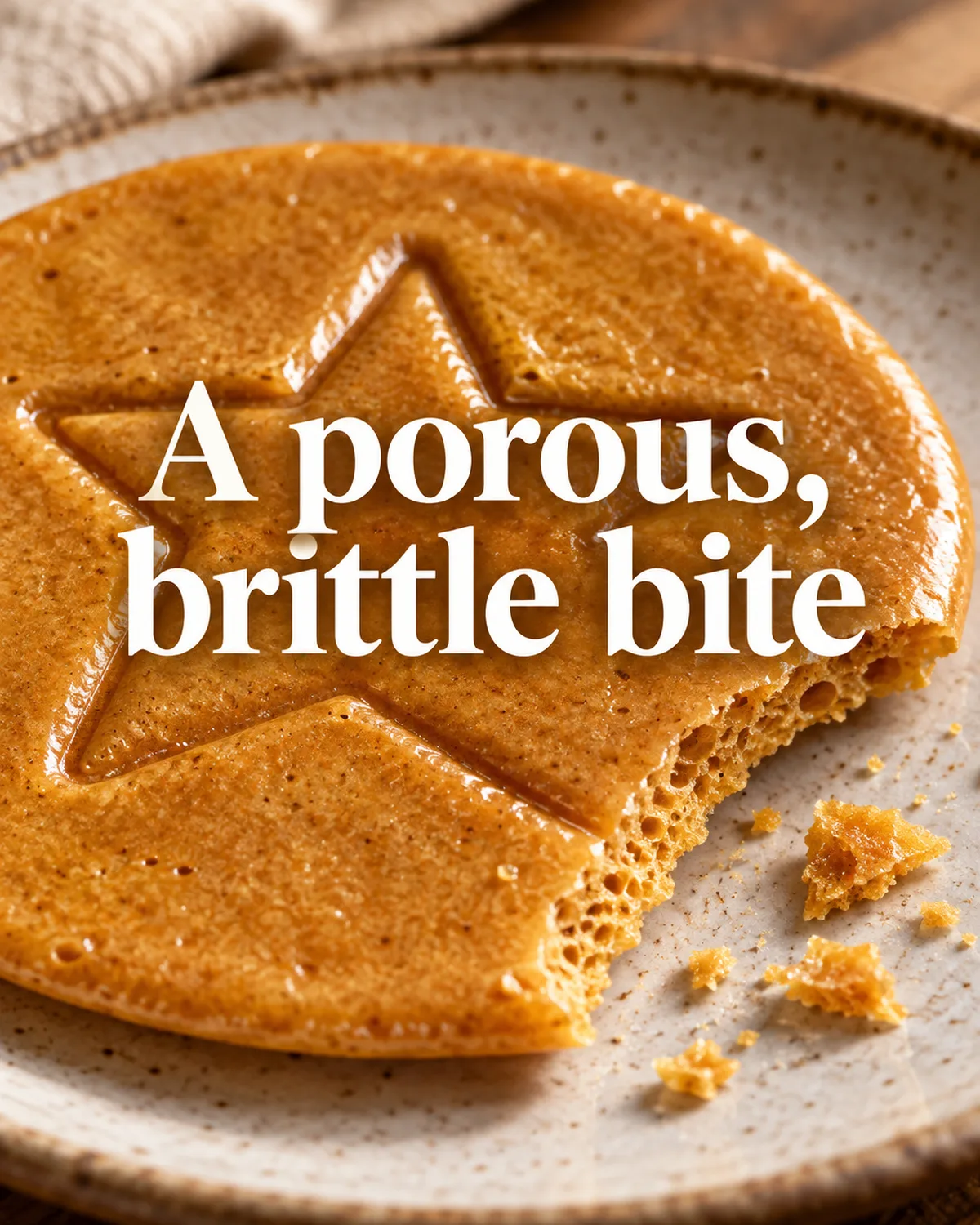
    Break off a small corner of a cooled piece and look at its edge. Fine pores distinguish it from a solid boiled sweet. The first bite snaps; the thin sugar walls then dissolve, leaving a caramel-like sweetness. A badly scorched piece can taste bitter rather than pleasantly toasted.

    A broken edge reveals the fine pores inside cooled dalgona.
    A broken edge reveals the fine pores inside cooled dalgona.

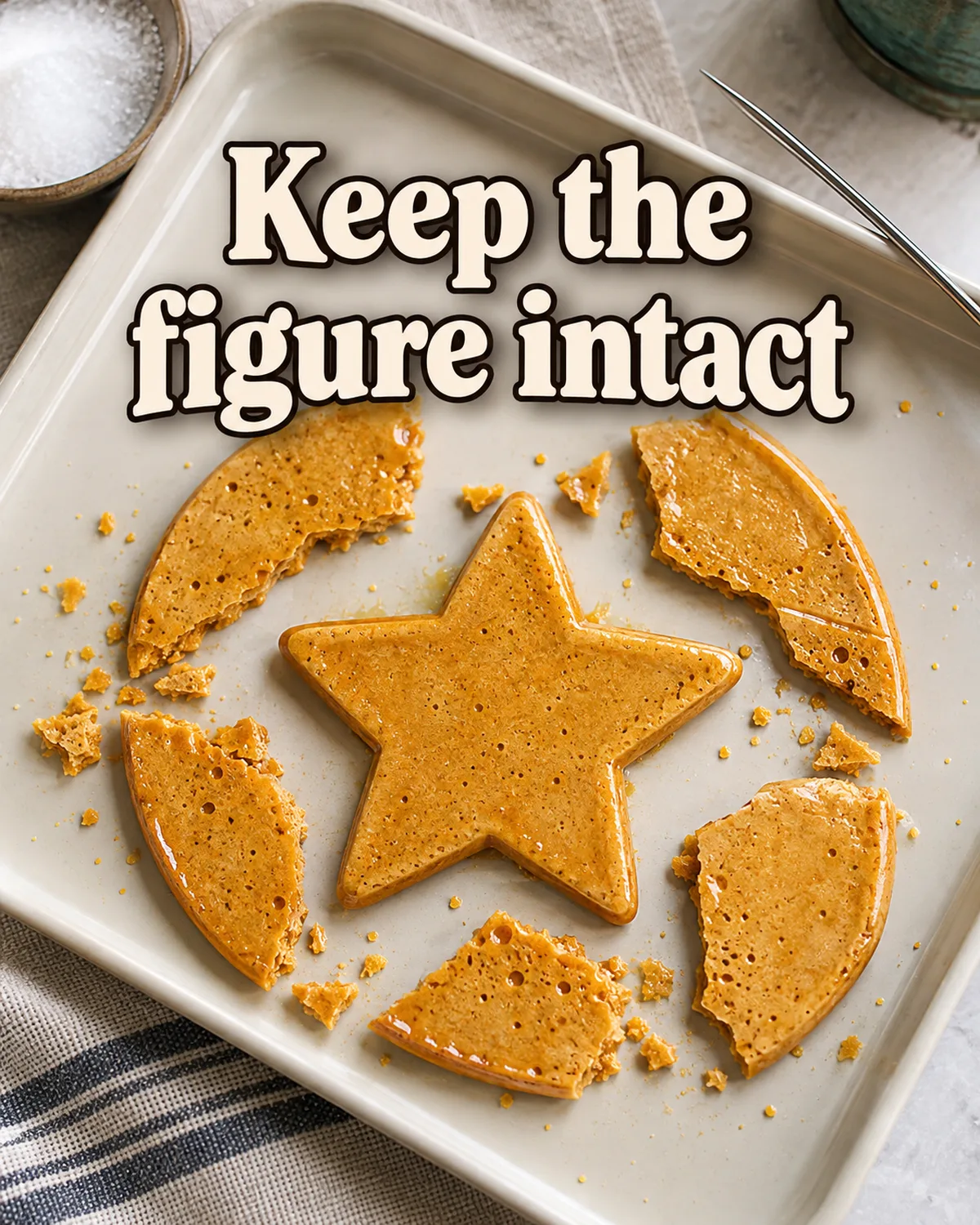
    Pressing makes the foam into a disc, while stamping gives it a guide line. Neither stage should remove the whole figure: the challenge depends on leaving the shape connected to the surrounding candy.

    The stamped challenge is half the object

    The player tries to remove the surrounding candy while keeping the stamped figure intact. The outer scraps can break; a crack across the intended figure ends the attempt. Ask the seller what counts as success before assuming a free second candy is offered.

    The outer candy can break; the stamped center should stay whole.
    The outer candy can break; the stamped center should stay whole.

    This changes the value of the snack. The buyer is paying for sugar and for suspense. A circle with a broad edge is usually easier than a shape with thin projections and tight curves. An umbrella, especially one with a narrow handle, can be harder because it creates more places where stress concentrates.

    That is why the game travels so well visually. No translation is necessary to understand the problem. A viewer sees a brittle disc, a needle and a fragile line. The stakes in real childhood play were tiny; the mechanics were instantly legible.

    The game works because hard sugar is brittle. It tolerates limited deformation before cracking. When a player pushes a needle against the candy, force concentrates around the tip. Corners, narrow necks and thin sections create more vulnerable places where a crack can jump across the intended line.

    A broad triangle can therefore be easier than a detailed umbrella even if both contain the same amount of sugar. Difficulty comes from geometry, thickness, stamping depth, bubble distribution and how evenly the candy cooled.

    There is no universal scientific ranking for every vendor’s molds. The famous Squid Game shapes created a memorable hierarchy, but a poorly stamped circle can be harder than a thick, forgiving star from another batch.

    Narrow points, thickness and stamp depth affect the attempt.
    Narrow points, thickness and stamp depth affect the attempt.

    The 2021 Reuters report identifies the series’ four shapes as a triangle, circle, star and umbrella. It also notes that vendors sell other designs. Those four motifs are familiar screen references, rather than the complete range of dalgona stamps.1

    Dalgona, ppopgi and the school-front stall

    The names dalgona (달고나) and ppopgi (뽑기) are often used for the same sugar candy today, especially after global media standardized “dalgona.” Older regional and generational usage can be less tidy.

    When ordering, the object matters more than a rigid naming rule: look for a flat, foamed sugar disc with an impressed outline. The museum’s 2017 festival notice uses both names in its nostalgic snack programming, without establishing one universal historical definition.4

    The useful distinction is functional: the candy is one thing; the shape-extraction challenge is a way of playing with it. In modern conversation, the terms can overlap.

    Many short articles assign dalgona one clean origin year or claim it was invented during one specific crisis. The available mainstream documentation is stronger on its status as a long-established street and school-front snack than on a patent-like moment of invention.

    A Reuters report published in October 2021 describes dalgona sellers outside Korean schools until the early 2000s. Separately, the National Folk Museum’s April 2017 Children’s Day notice lists dalgona and ppopgi among nostalgic snacks—four years before the television series. These are dated records of familiarity, not an exact invention date.1,4

    The museum documented nostalgic dalgona programming in 2017.
    The museum documented nostalgic dalgona programming in 2017.

    A simple workstation makes the transformation easy to watch: sugar in a ladle, a heat source, a stirring tool, a flat pressing surface and a small shape stamp. Watch how the foamed mixture becomes a thin disc; the shape is pressed into the surface rather than drawn on afterward.

    The shape is impressed while the candy is still workable.
    The shape is impressed while the candy is still workable.

    If a stall offers a challenge, check its own rules. A reward, time limit or provided tool belongs to that seller’s arrangement. Buying the candy does not require playing, and an attractive stamped piece is still food if you choose to eat it immediately.

    What Squid Game changed in 2021

    Netflix lists Season 1 Episode 3 as “The Man with the Umbrella.” The episode puts the shape-removal challenge inside its lethal competition. Netflix’s September 2021 production account explains that Hwang Dong-hyuk deliberately selected childhood games that were simple to understand.2,3

    For international viewers, the candy could function immediately even without cultural memory. For Korean viewers who remembered similar snacks or games, it carried another layer: an ordinary childhood object made frightening.

    The Korea Times reported in January 2025 that the Oxford English Dictionary’s December 2024 update added both dalgona and dalgona coffee. The report describes the candy as melted sugar with baking soda, flattened and marked with a shape.5

    The separate entries are a useful naming distinction. Recognizing the word does not tell a reader which preparation is being served: a brittle candy disc and a foamy coffee drink require different ingredients and techniques.

    Candy and dalgona coffee are different recipes

    Dalgona coffee is whipped instant coffee, sugar and water served over milk. Liberty Mendez’s Good Food recipe uses that method. The candy instead relies on heated sugar and baking soda; the coffee foam is not made by melting the candy.7

    The two foods share a tawny appearance, but their textures are opposite: the candy snaps, while whipped coffee forms a soft topping. A picture of beige foam alone can be misleading, so check whether the subject is a stamped disc or a glass of milk and coffee.

    Brittle sugar candy and whipped coffee are different preparations.
    Brittle sugar candy and whipped coffee are different preparations.

    That distinction is worth preserving because global search often merges the two. One is a pre-existing street candy and game; the other is a modern whipped-coffee trend whose name references the candy.

    The snack becomes something visitors can take part in

    Choose whether you want a snack or a challenge before opening the packaging. For eating, a small broken corner is useful. For play, keep the disc supported on a flat surface and inspect the stamped line before attempting it.

    Look at the narrowest part of the design. A star point or umbrella handle can be much thinner than the surrounding disc. A clear outline helps you see the intended boundary; it cannot guarantee that the sugar will break along it.

    A dramatic prop or costume does not improve the candy. Focus on the cooled disc, the impression and the texture rather than judging a stall by how closely its decorations resemble the series.

    A useful stall visit starts with the food: is the candy fully cooled, is the stamp visible, and can it be carried without snapping? Check actual opening information for a planned visit rather than treating a dated news report as a current directory.

    If carrying it, support the disc flat and follow the seller’s packaging advice. A delicate handle or star point can break before the game even starts. For ingredient restrictions, confirm the actual recipe and preparation; a short traditional ingredient list does not describe every variation.

    Respect the heat, then taste the texture

    Dalgona recipes look childlike because the finished candy is associated with children. The cooking stage is not child-safe. Molten sugar is extremely hot, sticky and capable of causing serious burns because it adheres to skin.

    For a first encounter, buy a cooled piece or watch a maker from outside the work area. Keep children away from hot sugar. If making it at home, use a reliable recipe and let an experienced adult perform the heating and pouring; an online clip is not a complete cooking guide.6

    Wait until the candy and its tools have cooled before handling them. The cooled shape game and the hot caramel work are separate activities.

    The cooled candy game is separate from hot sugar work.
    The cooled candy game is separate from hot sugar work.

    Dalgona is inexpensive street candy, not a pastry competition. Still, several details separate a pleasant piece from a frustrating one:

    • Color: deep enough for caramel flavor but not burned and acrid.
    • Foam: enough aeration to lighten the candy without making it collapse into giant holes.
    • Thickness: thin enough to break cleanly but not so thin that ordinary handling destroys it.
    • Stamp depth: visible enough to guide the game without cutting the figure out before play begins.
    • Freshness and humidity: dry sugar candy is crisp; humidity makes the surface sticky and changes fracture behavior.

    The best piece for eating and the best piece for a difficult challenge may not be identical.

    Eat it, play with it, or simply watch

    You can eat the outer scraps and save the stamped center, or skip the challenge entirely. Try the edge first to notice the thin, porous crunch. The shape gives the snack a game, but its caramel flavor and fragile texture explain why it remains worth tasting.

    A small corner shows the caramel flavor and airy crunch.
    A small corner shows the caramel flavor and airy crunch.

    Sources and reading

    1. Reuters via The Korea Times — October 2, 2021 dalgona report
    2. Netflix — Squid Game episode listing
    3. Netflix — Production background, September 30, 2021
    4. National Folk Museum of Korea — 2017 Children’s Day festival
    5. The Korea Times — Dictionary update report, January 2025
    6. American Chemical Society, Chicago Section — Honeycomb Candy: Cooking with CO2, May 2014, page 3
    7. Liberty Mendez, Good Food — Dalgona coffee recipe