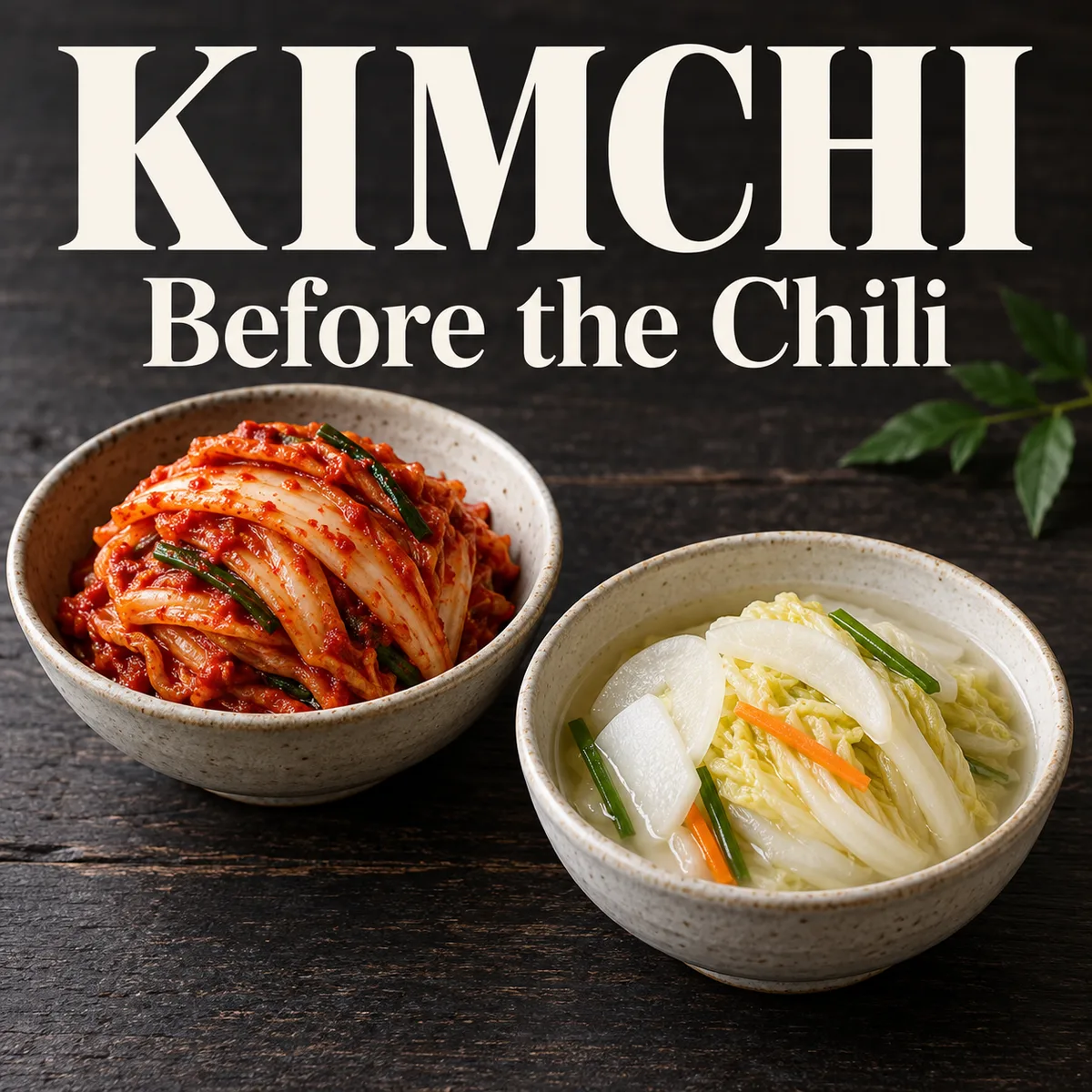
A bowl of red cabbage kimchi and a bowl of white kimchi belong to the same broad food tradition. Redness is a seasoning choice within that tradition, rather than the feature that made preserved vegetables become kimchi in the first place.
The health headline raises a separate question. This article does not establish a Europe-wide market share or a current ranking of wellness trends. Nor does it treat every jar of kimchi as a clinically tested probiotic product. A market forecast, a laboratory result and a finished food are different kinds of evidence.
NCCIH explains that probiotic products can contain different organisms and have different effects, including variation between people. It also says strong evidence for most proposed uses is lacking despite promising research in some formulations. That is a reason to ask what was actually studied before turning a broad fermentation claim into a promise about dinner.[1]
The historical answer is clearer: chili pepper was a later addition to an older vegetable-preserving tradition. The Academy of Korean Studies places the pepper’s arrival in Korea in the early seventeenth century. Its entry also records differing accounts of transmission between Korea and Japan, so a single dramatic arrival story is too precise.[2]
A food’s history and a health claim require different evidence.
The older category was wider than red cabbage
The Academy’s kimchi-making entry describes salted-turnip preservation in Yi Gyu-bo’s Goryeo-period poem. It also lists several kimchi preparations in Sangayorok, compiled around 1450, including cucumber, eggplant, radish and scallion. These references precede the pepper’s Korean chronology.[3]
The comparison changes what the word original can reasonably mean. An old record can show that a preservation practice existed without giving us a complete recipe for the first-ever kimchi. The absence of chili from the older chronology does not identify one single bowl as the ancestor of all others.
Vegetables matter as much as color. A salted radish preparation, a cucumber kimchi and a modern layered cabbage kimchi have different shapes and methods. Calling all of them kimchi does not make them interchangeable when a reader tries to picture an old meal.
It is more useful to see a family of preparations that changed over time. A contemporary white kimchi can illustrate a chili-free branch without being described as an unchanged replica of a medieval recipe. Historical continuity and an exact reconstruction are different claims.
Kimchi includes different vegetables and seasoning systems.
An ingredient’s arrival is not a recipe’s birthday
Three dates can answer three different questions: when a crop was present, when a recipe used it and when a form became widespread. A record of chili in Korea supplies the first kind of evidence. It cannot by itself tell us that every household immediately made red kimchi.
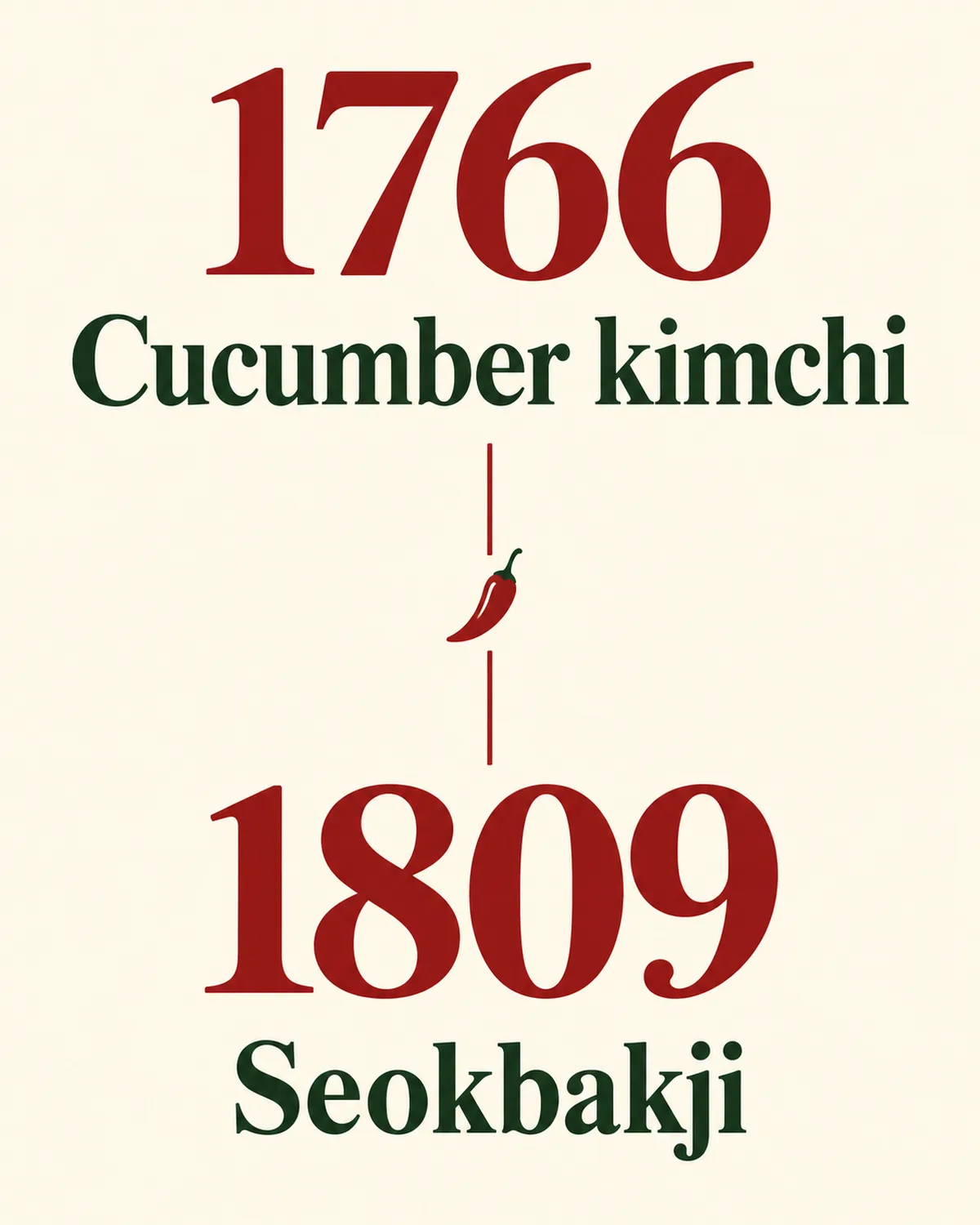
The kimchi-making entry identifies a cucumber recipe in the 1766 Jeungbo Sallim Gyeongje that uses chili powder and garlic as stuffing. It then describes the 1809 Gyuhap Chongseo’s seokbakji as combining chili powder with salted seafood. Those are recipe records, rather than one nationwide switch date.[3]
That evidence also corrects a tempting shortcut: saying chili was first added only in the nineteenth century overlooks the documented eighteenth-century preparation. Saying red kimchi appeared instantly when the pepper arrived makes the opposite mistake. The records support a gradual development.
A modern red cabbage kimchi combines a vegetable, a cut or leaf arrangement, seasonings and fermentation. Each component has its own history. Identifying one new ingredient is important, but it is not the same as dating the completed combination on every Korean table.
Documented chili-bearing recipes include 1766 cucumber kimchi and 1809 seokbakji.
Scallion kimchi makes the change tangible
The Academy’s scallion-kimchi entry contrasts a brined preparation in Sasichanyocho with the later version seasoned using chili powder and fermented seafood liquid. It places the development of today’s style in the nineteenth century or later. That is a qualified chronology for this dish, not for every kimchi.[4]
For a diner, the scallion remains recognizable while the surrounding flavor changes. Thin green stems, a seasoned surface and the amount of liquid create a different bite from a thick cabbage rib. One can notice those structural differences without calling one preparation more authentic.
If you compare a red cabbage kimchi and pa-kimchi, begin with the vegetable itself. The cabbage presents layered leaves and a firmer rib; the scallion offers a much thinner strand. That changes how a portion is lifted, bitten and combined with rice.
The practical historical lesson is to avoid reading a familiar name as a complete ingredient list. A record called scallion kimchi does not automatically describe the red version now pictured in a restaurant menu. Read the method as well as the name.
The vegetable’s form changes how a kimchi portion is lifted and eaten.
The story branches beyond red and white
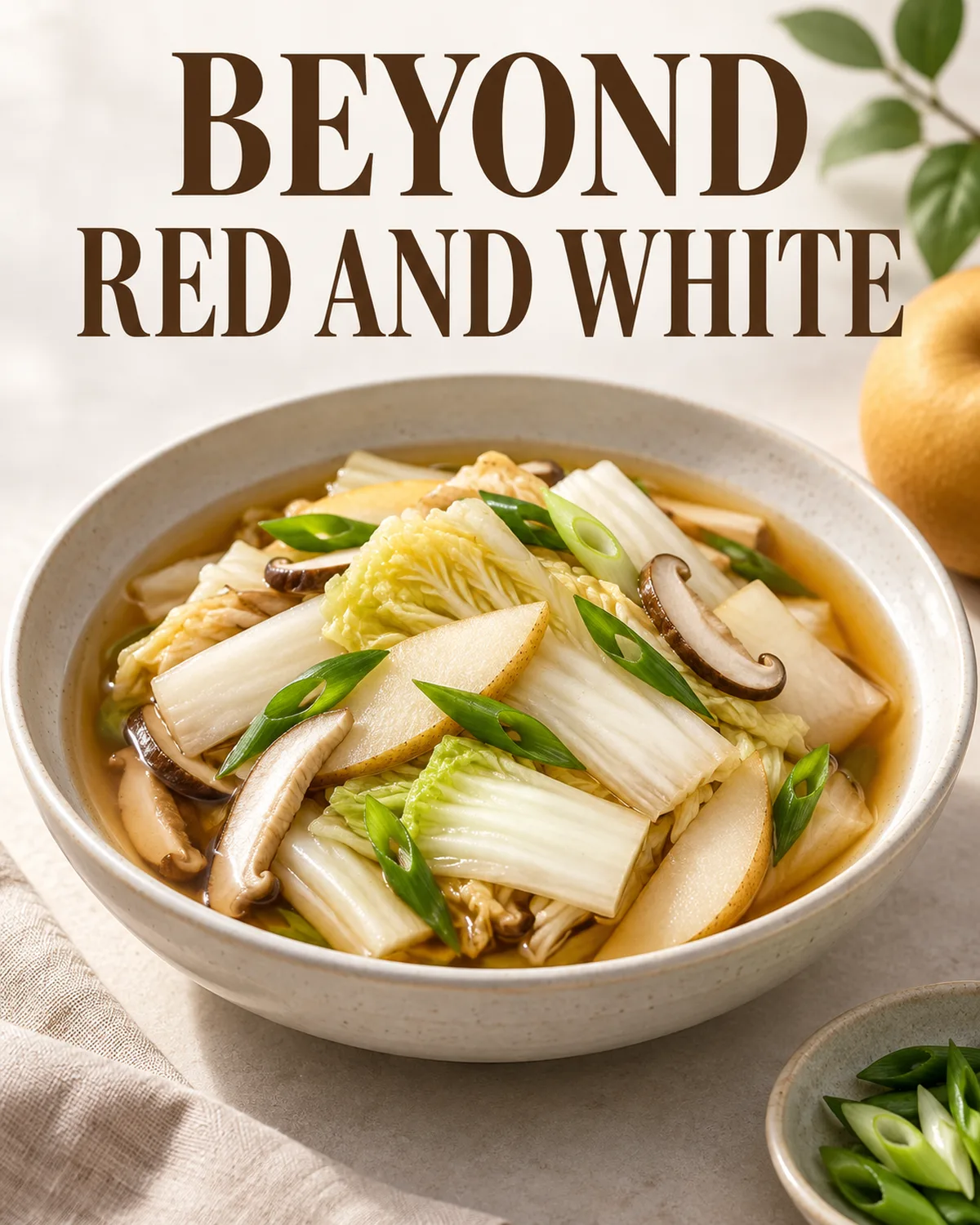
Soy-sauce kimchi offers another branch. The Academy describes jang-kimchi as a liquid kimchi based on cabbage and radish seasoned with soy sauce. Its entry lists historical references and a preparation including other vegetables, fruit and mushrooms. That makes a red-versus-white binary too narrow.[5]
Color still helps a visitor ask a question, but it cannot answer every ingredient question. A pale preparation can have a complex broth; a red one can vary in its seasonings. Ask about the particular recipe when stock, fermented seafood or other ingredients matter to the order.
At a meal, taste kimchi with the rice or main food alongside it. Notice the vegetable’s firmness, the liquid and the aroma before reducing the experience to heat. A small side can contribute acidity, texture and seasoning in different proportions.
There is no requirement to prefer one branch. Somebody may enjoy a crisp pale preparation with a mild dish and a more assertive red kimchi with another meal. The history explains why several forms coexist; it does not rank personal taste.
Seasoning liquids and ingredients vary across kimchi preparations.
Read the particular food, not only the headline
For a packaged product, read the named vegetables, seasonings and storage instructions. The photograph on the front is only one part of the information. Different recipes and processing methods should not be collapsed into a single imagined jar.
Health evidence deserves the same specificity. Ask which preparation or organism was studied, in whom and for what outcome. An interesting result does not automatically transfer to a different food, portion or person. Enjoying kimchi does not require treating it as a treatment.
For history, ask whether a date concerns a crop, a recipe or adoption. For dinner, ask what is in the preparation and how it fits the meal. Keeping those questions separate makes the article more useful than calling kimchi either a brand-new superfood or an unchanged ancient recipe.
Try the comparison with two small portions: one red cabbage kimchi and one chili-free preparation available to you. Look at the cut, smell the seasoning and notice the texture beside rice. The food itself makes the broad historical category easier to understand.
Notice the vegetable, seasoning and texture beside rice.
An ordinary Korean lunch can contain rice, tofu or egg, vegetables and fruit. That is a more useful starting point for a discussion of idol diet culture than a viral list of the few foods somebody supposedly ate before a performance.
There is a documented change in the standards against which harmful demands can be judged. Korea’s youth artist and trainee supplementary agreement, effective January 2026, includes health protections. It does not establish that all trainees are rejecting weight-loss rules or that every agency has changed its daily practice.[2]
What the 2026 documents actually say
Article 6 of the youth supplementary agreement addresses health checks and mental-health support. Its third paragraph says an agency must not compel entertainment services despite health or safety risks. Article 7 addresses efforts to secure appropriate rest and sleep.[2]
Article 21 of the Popular Culture and Arts Industry Development Act separately requires contractual measures protecting young artists’ basic rights. Its prohibited conduct includes forcing excessive appearance management and compelling services despite health or safety risks.[3]
The general trainee standard contract and the youth supplementary agreement are different documents. The January 2026 trainee form addresses training, contractual duties and possible support for depression symptoms with the trainee’s consent; its Article 13 directs use of the supplementary agreement for young trainees.[4]
These texts provide a concrete basis for scrutinizing a demand. They are not a survey of agency meals, a count of trainees refusing instructions, or proof that appearance pressure has disappeared. Evaluating implementation requires evidence from the particular situation.
The 2026 youth supplementary agreement addresses health, rest and sleep.
Why a famous food list is a poor meal plan
A food clip can show a snack, a meal or a recollection of a difficult period. None of those formats necessarily gives a complete account of somebody’s intake, training schedule, medical care or changing needs.
Nor can an appearance establish the cause of a health condition. Assigning a celebrity’s symptoms to a remembered food list goes beyond what a clip or an unsourced anecdote can demonstrate.
WHO describes healthy diets through adequacy, balance, moderation and diversity. Needs vary with age, activity and other personal circumstances. A highly restrictive celebrity list does not become suitable for another person because it circulates widely.[1]
Keep two questions separate when reading an idol food story: what did the person actually say, and what evidence supports turning it into advice? A dated quotation can answer the first while leaving the second unanswered.
A food clip does not show a person’s complete daily routine.
Bring the discussion back to an actual lunch
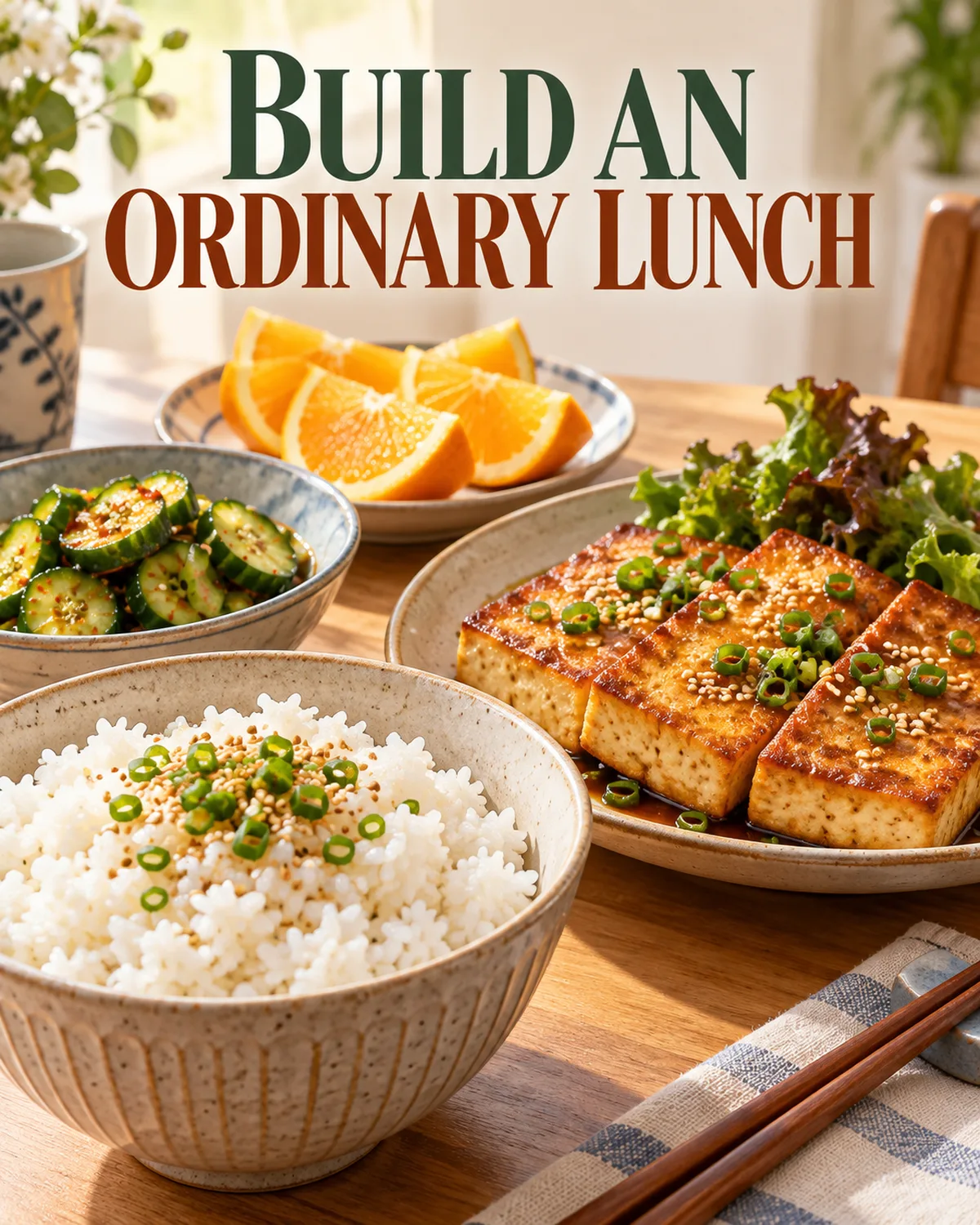
At a Korean table, look at the food that is available before assigning it a celebrity label. A bowl of rice, a tofu dish and a vegetable side each bring a different texture and a different cooking decision to the meal.
WHO encourages a variety of foods, including vegetables, fruit, pulses, whole grains and protein sources. Applying that broad guidance to familiar ingredients offers a better direction than treating one tiny combination as an ideal daily menu.[1]
For a practical lunch idea, pair rice with a main dish you enjoy, add a vegetable preparation, and keep fruit or another suitable food available. This is a way to organize a meal, rather than a prescribed quantity or a promise about body size.
Tofu can be pan-cooked and served with a sauce on the side; egg can be prepared as a rolled omelet. A cucumber side feels crisp beside either. Choose according to taste, access and dietary needs rather than assuming a particular performer eats this arrangement.
Rice, a chosen main dish and vegetables offer different textures.
A rice bowl gives you choices, not a magic formula
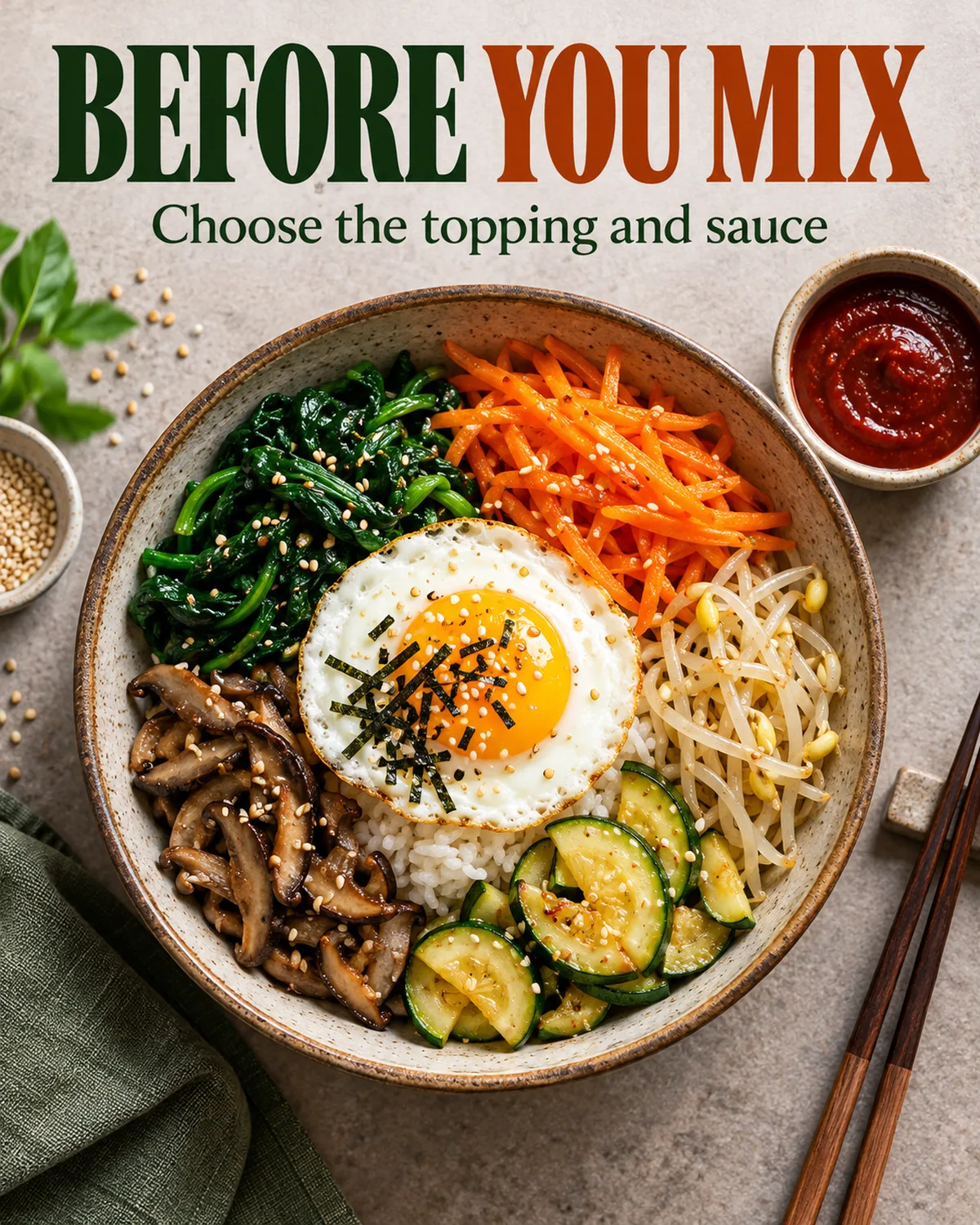
Bibimbap makes the components visible before they are mixed: rice, differently prepared vegetables, a chosen main topping and seasoning. Looking at the bowl this way helps you ask what is included and what you would like changed.
Ask the restaurant about the topping and sauce rather than relying on the dish’s name. The same menu category can lead to different combinations, and a bowl with several colors still needs enough food for the person eating it.
Serve seasoning separately when that suits the meal. You can taste the ingredients before adding more. WHO’s general guidance includes limiting high-sodium condiments; a sauce’s flavor and amount matter alongside the photograph of the finished bowl.[1]
At home, the useful preparation is simple: have the rice, vegetables and chosen topping ready before assembling. The goal is an enjoyable lunch you can actually make, not a recreation of an unverified trainee routine.
Look at the rice, toppings and seasoning before mixing.
Food access matters as much as a better slogan
Changing the language around food is only part of changing a routine. For somebody with lessons, travel or rehearsals, a meal also needs a place in the schedule and a practical way to obtain it.
Think concretely about an ordinary busy day: where can lunch come from, when is there time to eat it, and which foods are available afterward? Those questions reveal something that a before-and-after body photograph cannot.
A takeaway rice bowl and separate fruit can be convenient; a shared restaurant meal offers different choices. Judge the actual ingredients and the amount you need, rather than treating convenience food or a traditional table as automatically good or bad.
For young performers, food belongs in a wider discussion of health, rest and a safe training environment. The official protections make those concerns legitimate topics for the young person and their guardian, rather than mere distractions from appearance.[2]
An ordinary meal needs time and practical access to food.
What a meaningful shift would look like
A credible account of change would identify a dated policy, the people it covers and evidence of how it works. A trainee’s own account can add another perspective, but it should retain its original context instead of becoming a statement about the entire industry.
For readers, the useful change is already available: stop using a celebrity’s restrictive recollection as an instruction. Explore Korean food through dishes, ingredients and ordinary meals that fit your circumstances.
Enjoy the crisp edge of pan-cooked tofu, the contrast of rice and vegetables, or the convenience of a well-chosen lunch bowl. Those are reasons to learn about food that do not require guessing anybody’s private diet.
The 2026 documents give the conversation a firmer foundation. What happens at each agency still needs scrutiny; what goes on your own table deserves more care than an idol diet headline can supply.
Learn about the dish without copying a celebrity’s private routine.
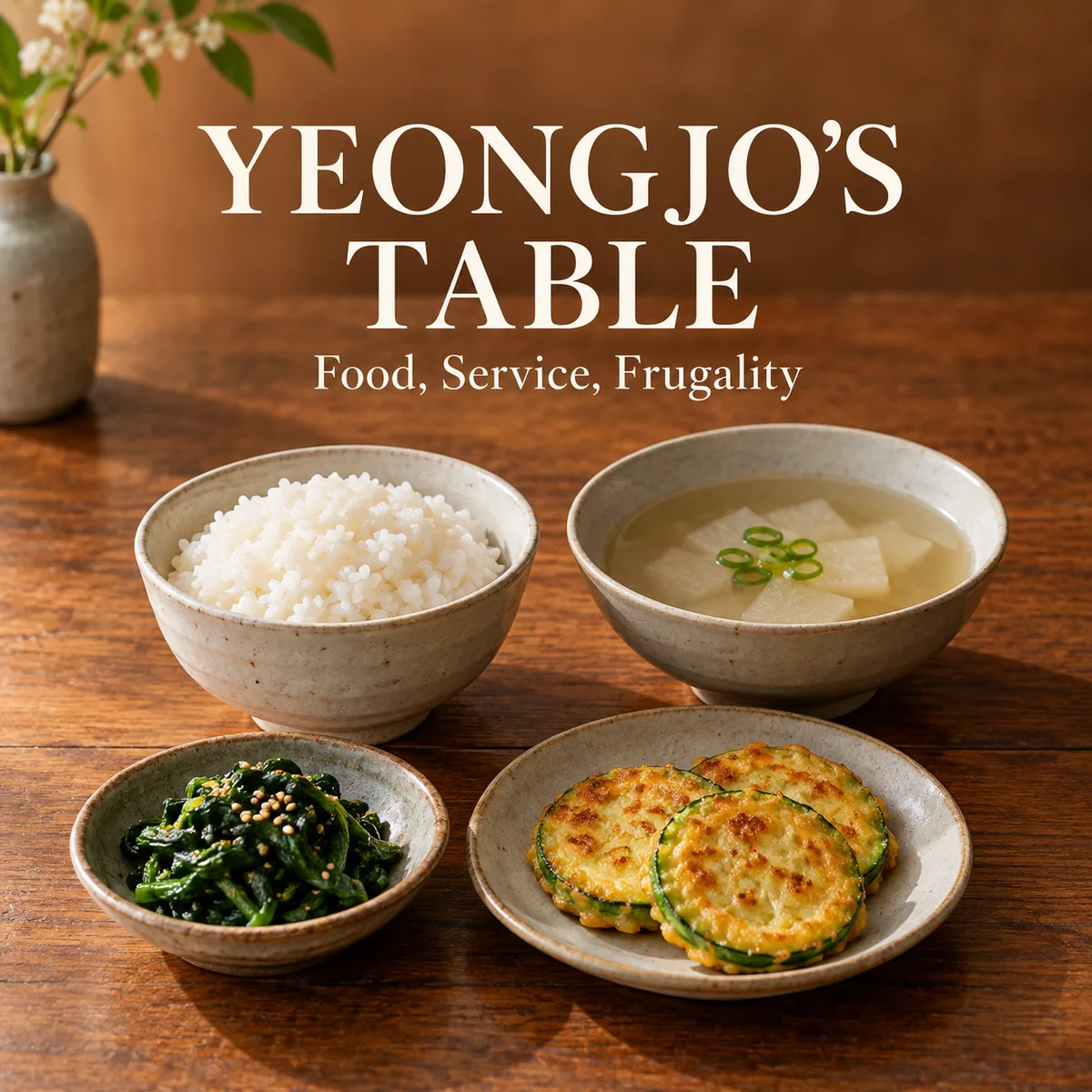
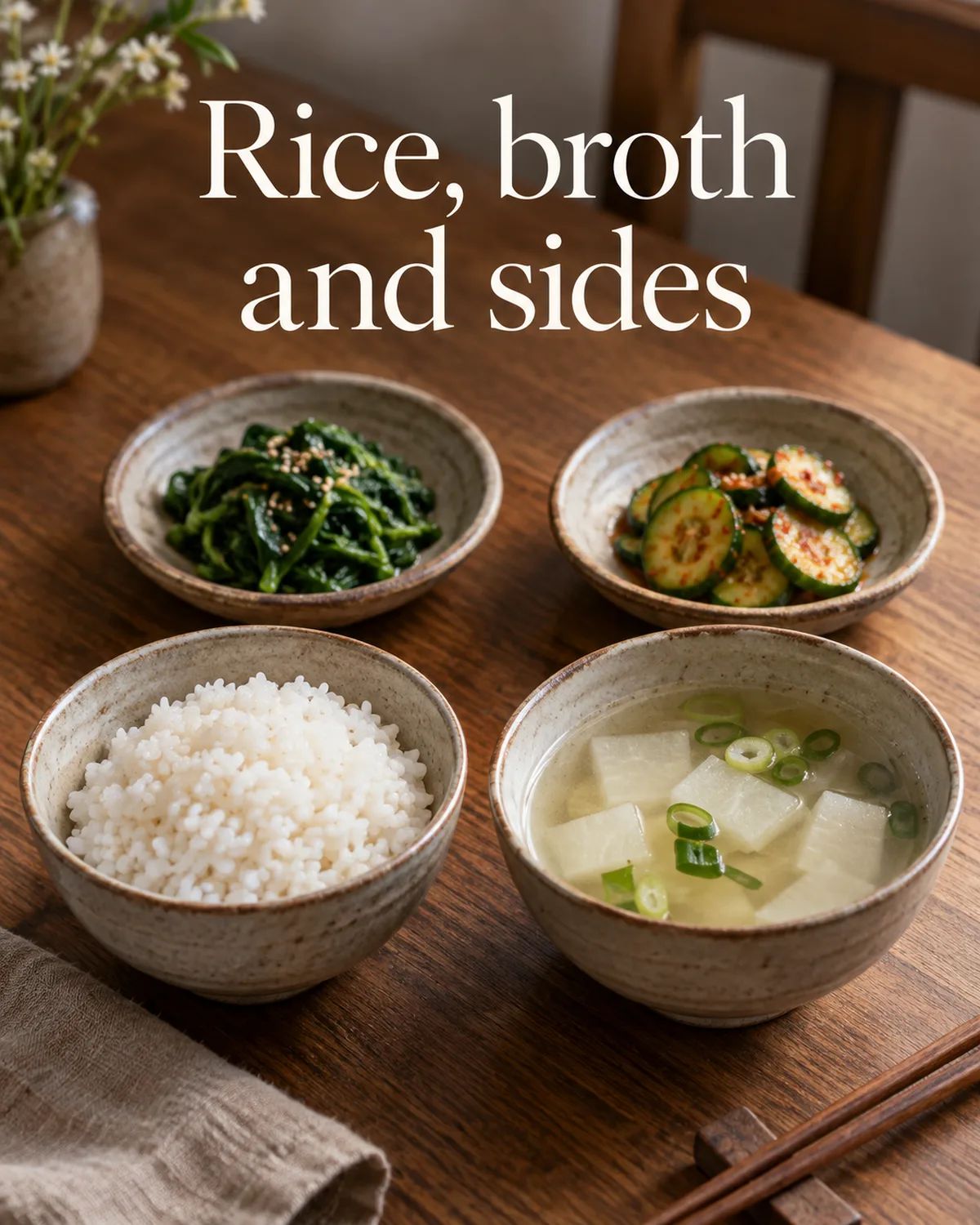
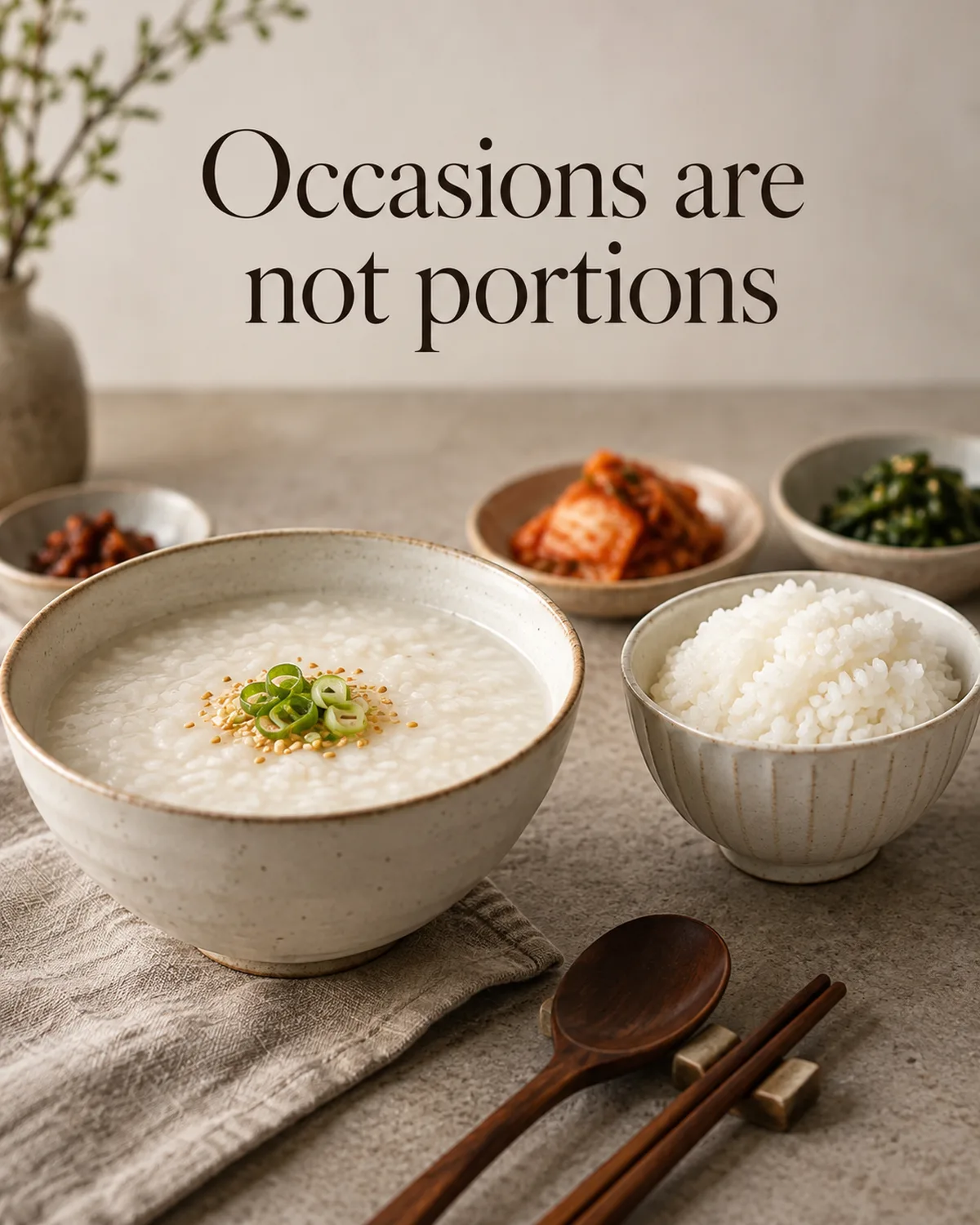
A bowl of rice, a spoonful of broth and several small dishes can make a Korean meal feel generous without turning it into a banquet. The interesting question is how those components are served and eaten—not whether they reproduce a king’s secret formula.
Yeongjo’s food story offers an unusually clear example of restraint inside an abundant institution. His reported reduction in eating occasions concerns palace service and frugality. Those records do not establish that a particular diet kept him alive.[2]
Read the meal through its components.
Begin with the structure of the meal
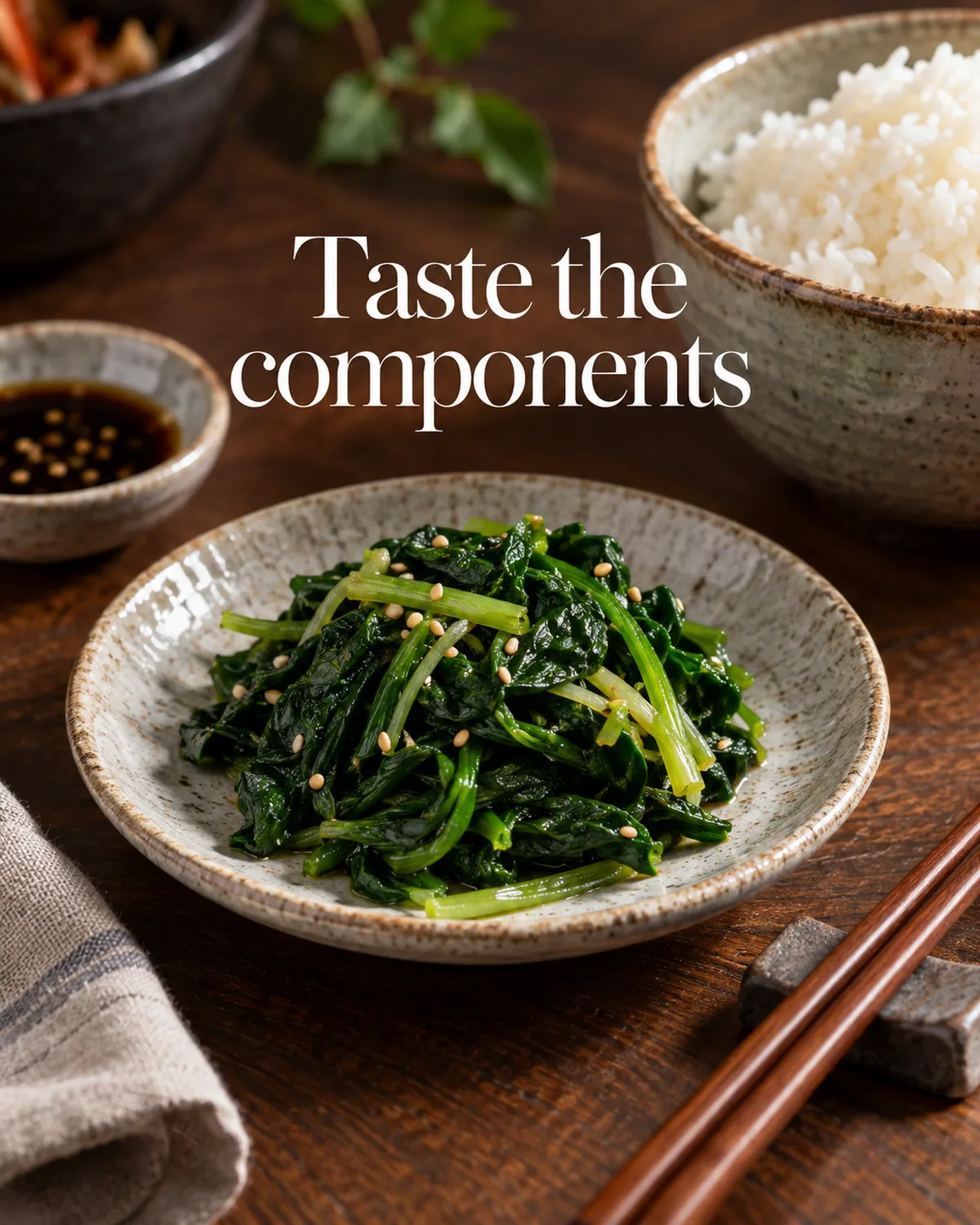
For a meal built around rice and side dishes, identify the staple, the broth and the preparations around them. A seasoned vegetable, a fermented condiment and a cooked protein contribute different tastes and textures. Their presence does not reveal one compulsory national proportion.
Try a side dish on its own, then with a little rice. Notice whether it is mild enough to eat as a vegetable portion or strongly seasoned enough to accompany several bites of the staple. The size of a serving bowl is not always the amount intended for one diner.
Ask what is shared and what is individual. If the meal arrives in courses, find out whether more rice, soup or a hot dish is coming before treating the opening arrangement as the entire meal.
A contemporary table can illustrate ways of organizing food. It cannot prove that Yeongjo ate those same ingredients, in those quantities, every day. Enjoy the meal as the cook presents it while keeping the historical claim separate.
Seasoning and portion are separate questions.
The recorded change concerns eating occasions
The National Institute of Korean History describes five customary services: early light food, morning and evening meals, midday food and late food. They were not five equally elaborate banquets.[2]
Its commentary says the frugal Yeongjo omitted midday and late-night services, eating three times daily. It specifies occasions rather than a complete menu or measured portions.[2]
The distinction changes how the story is pictured. The documented comparison is between a customary service schedule and a ruler’s reported reduction. A photograph of a small rice bowl cannot fill in the missing quantities.
Nor does three occasions tell us everything about the food. Frequency, amount and composition are different questions. The account supports a change in frequency without turning it into a calorie calculation or a modern fasting program.
Meal frequency does not measure the amount eaten.
Royal restraint also had a public meaning
The account describes gamseon, reducing royal food during disasters, mourning and other serious circumstances; tribute could stop during drought or flood. Restoring service was bokseon.[2]
This places a king’s table inside government, ritual and provisioning. Reducing dishes could express concern for suffering subjects; the meal was more than a private choice between a rich lunch and a light lunch.
Yeongjo’s customary reduction and emergency-related gamseon are distinct statements. The latter supplies context, without explaining every omitted service.
For a visitor, this makes the explanation accompanying a royal-style meal worth hearing. Ask whether the presentation concerns daily service, a ceremonial occasion or a modern interpretation. Those are different routes into the food’s history.
Daily meals and ceremonial service have different occasions.
What the long life establishes
The Academy of Korean Studies identifies Yeongjo as Joseon’s twenty-first king, born in 1694 and dead in 1776, reigning from 1724 to 1776. Its biography records his death at eighty-three and describes the dynasty’s longest reign.[1]
The historical age count and modern elapsed-year counting differ. Keeping the birth and death years visible avoids turning a traditional age number into an imagined modern equivalent such as “over a hundred today.”
An advanced age is an outcome in one life. A reported meal schedule is a behavior. Reading the two together does not isolate what caused the outcome, and the biography is not a nutrition experiment.
A favorite ingredient mentioned in another record would require its own evidence. Barley, millet, greens, tiny meat portions or ginseng should not be assembled into a lifelong menu simply because the resulting plate looks plausible.
A modern meal cannot document a king’s lifelong menu.
A modern meal does not need a royal promise
Choose a rice-and-side-dish meal for its actual cooking. Look for contrasts you enjoy: tender greens beside a firmer vegetable, a warm broth beside something cool, a lightly seasoned component beside a concentrated sauce.
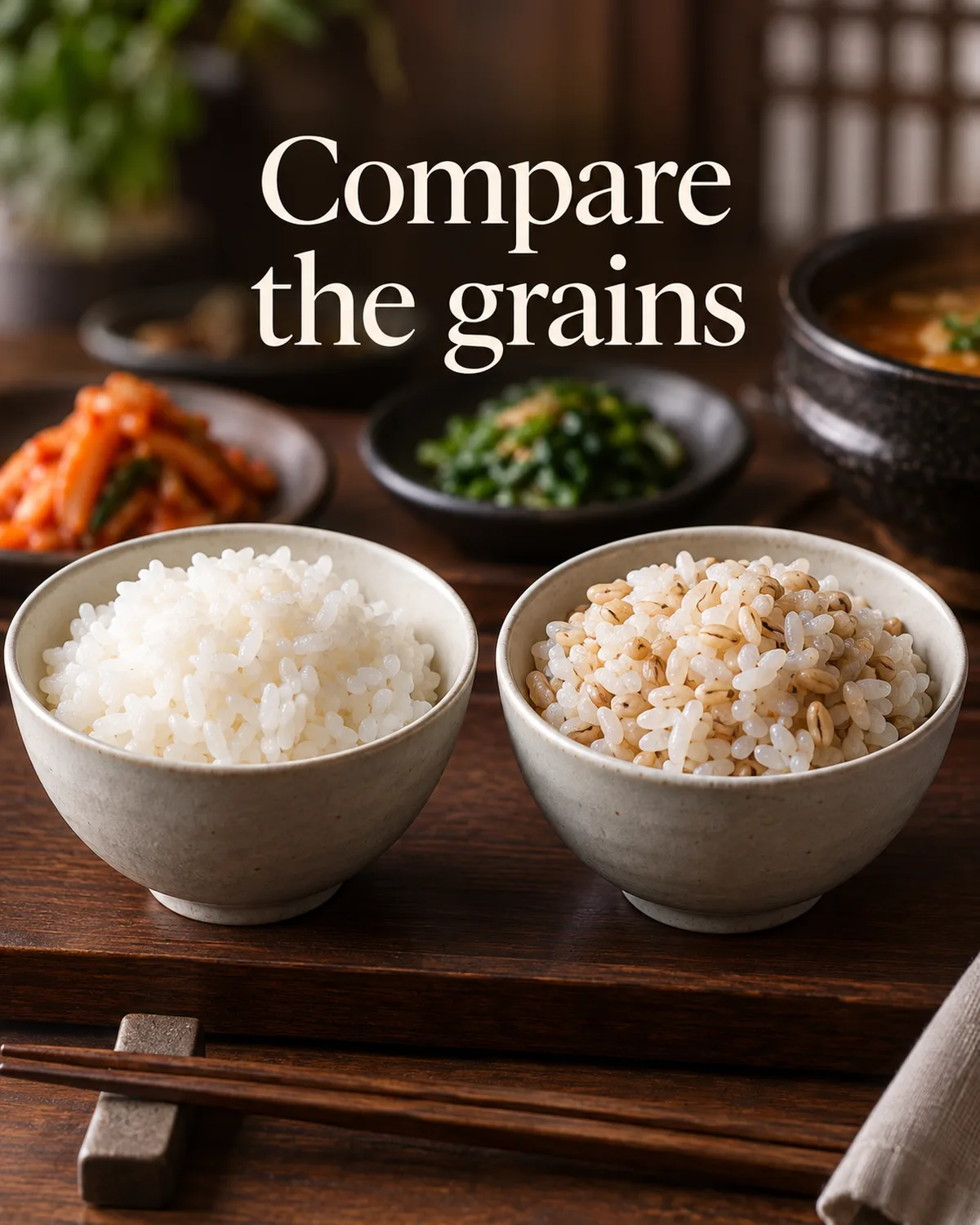
If you want to compare grains, taste a plain rice bowl and a mixed-grain preparation as two recipes. Their chew, aroma and cooking texture are tangible differences. Calling either bowl Yeongjo’s daily preference would require a source that documents that preference.
Taste different preparations as actual recipes.
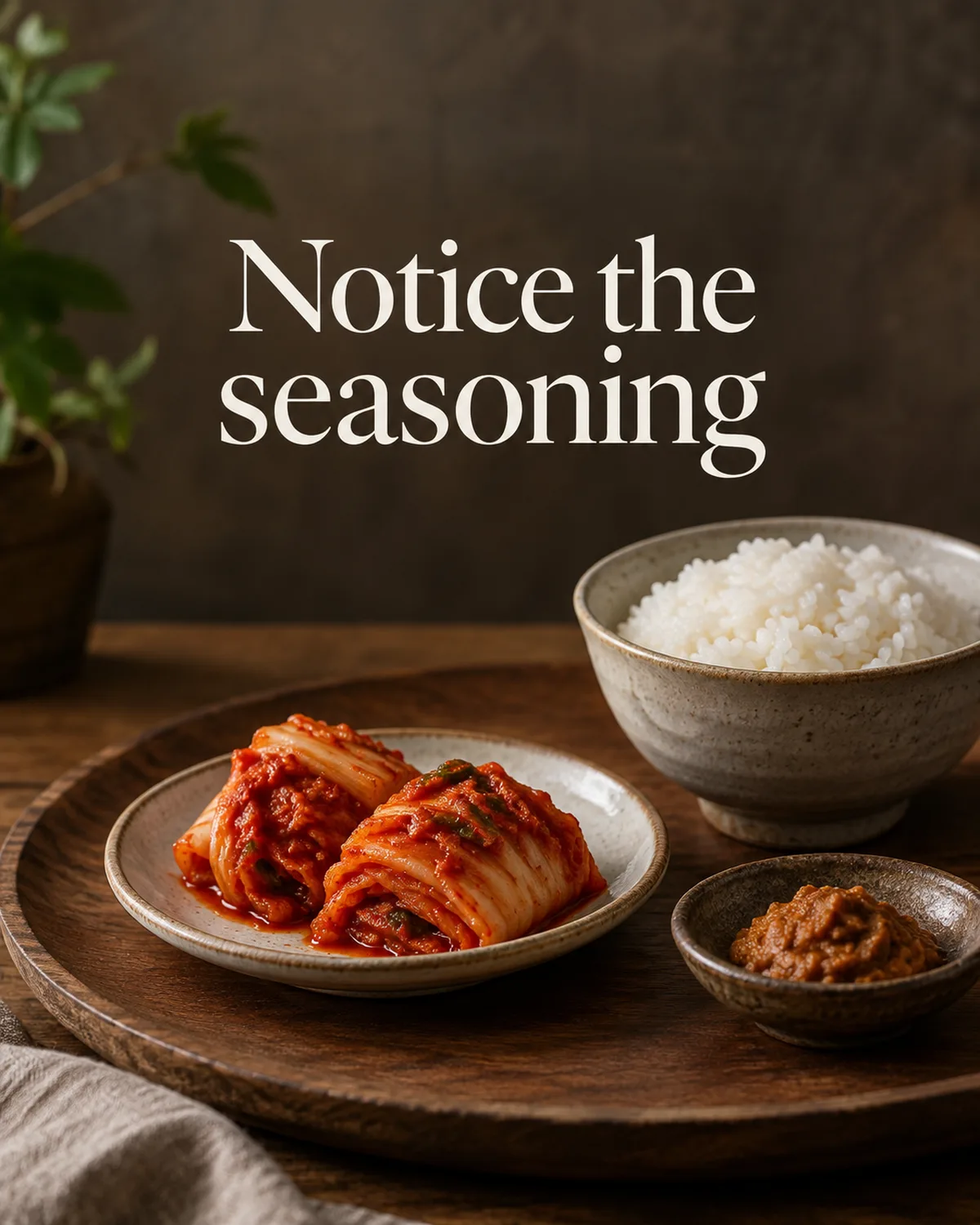
Do the same with fermented foods. A little kimchi or soybean seasoning can change a bite through acidity, salt and savory depth. Those culinary qualities are useful to notice without making the dish a promise about lifespan.
A smaller selection can be easier to understand than a maximal spread. Ask which dishes best show the kitchen’s work and how much is suitable for your party. Sharing and course size matter more than recreating an unsupported royal calorie target.
Acidity, salt and savory depth change a bite.
Keep the strongest part of the story
Yeongjo’s reported frugality challenges the assumption that a royal food day always meant consuming the fullest possible display.
Let that history change what you ask about the table—its occasion, service and preparation. Then judge the meal you actually receive by its taste and craftsmanship. There is plenty to discover without treating one king’s biography as a diet prescription.
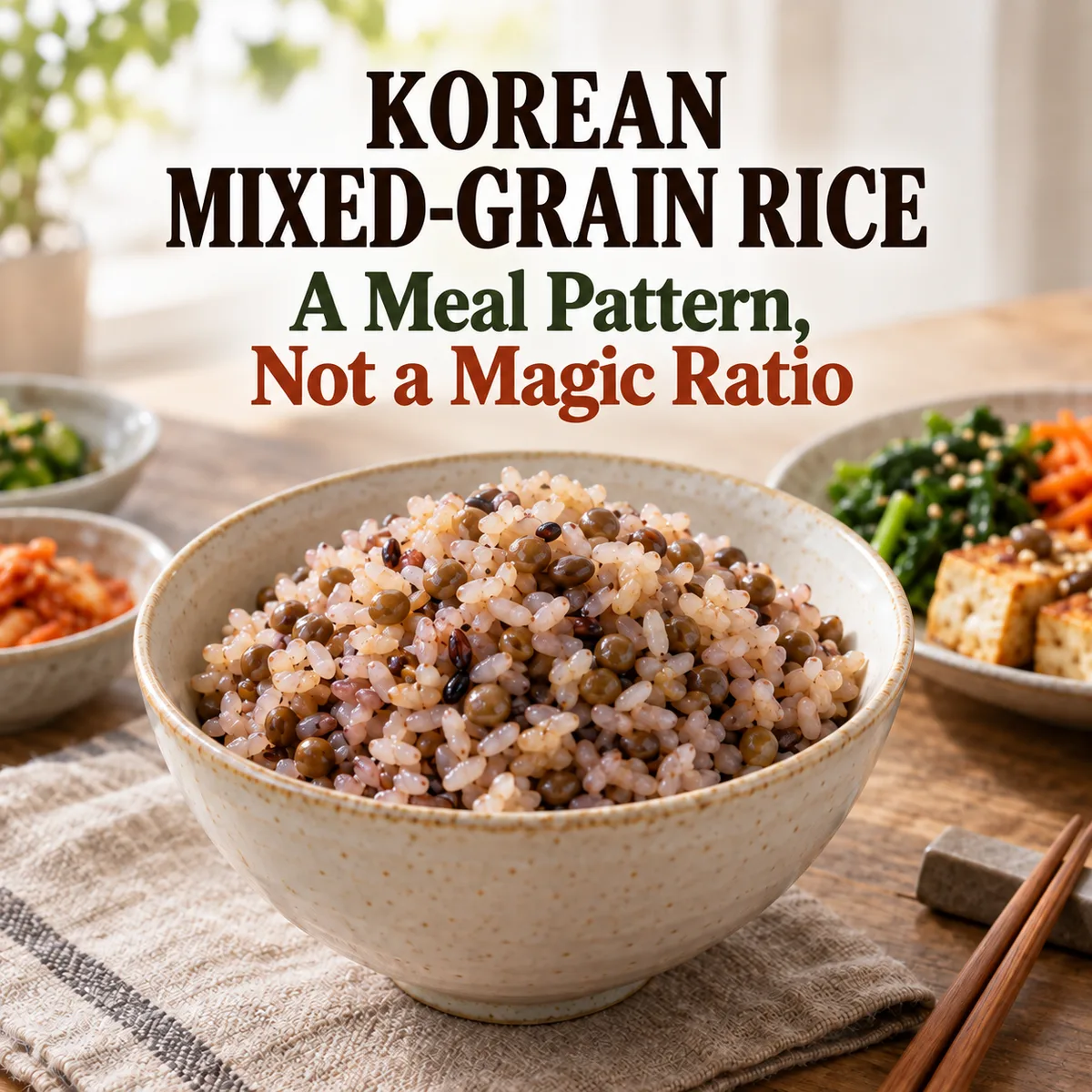
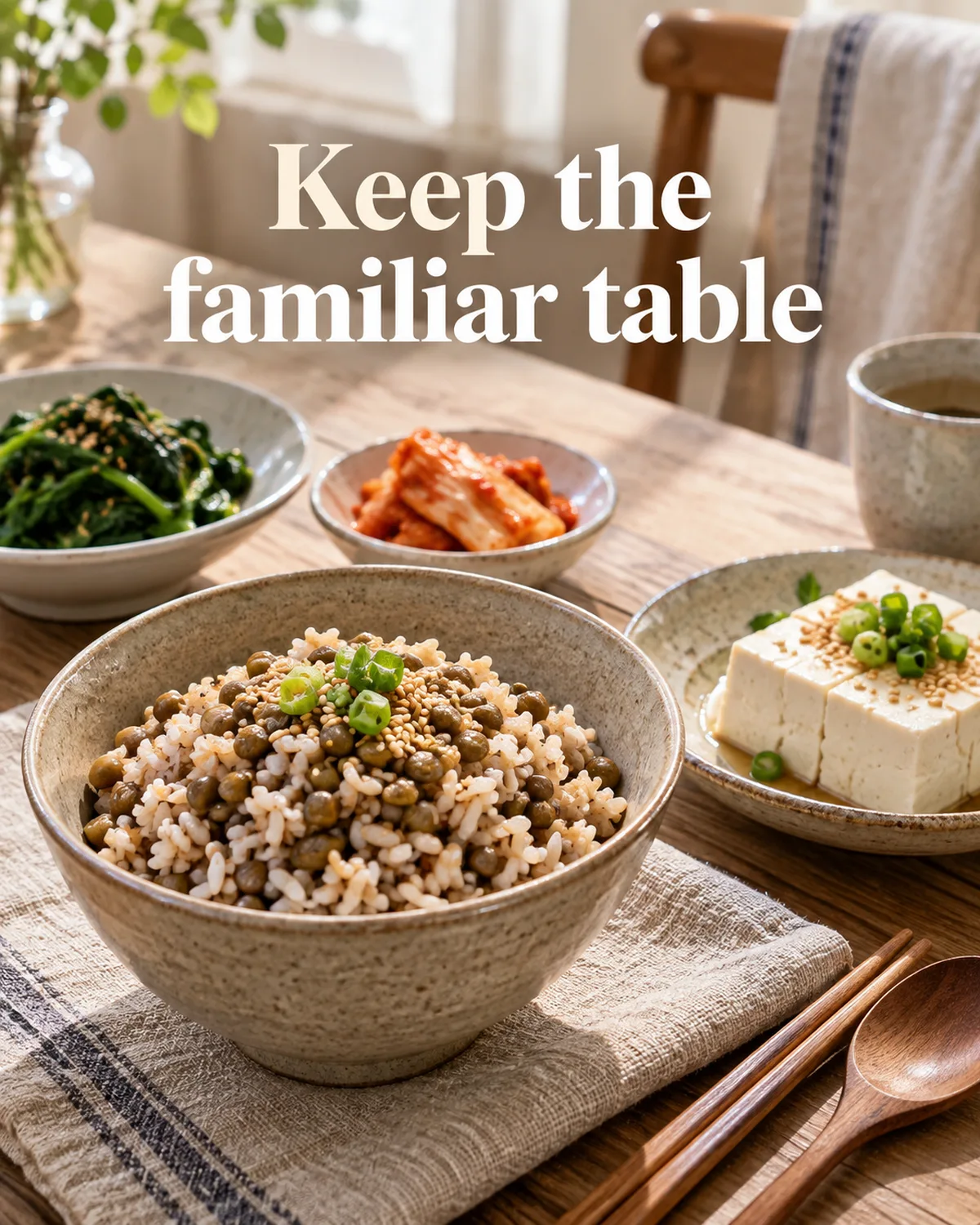
Replacing some white rice with grains or beans can change a meal without making it unrecognizable. Soup, kimchi and side dishes may remain around the same bowl. That compatibility helps explain the appeal of Korea’s jeosok-nohwa, or slow-aging, food discussion.
The label still cannot prove that one bowl, one ratio or one commercial product slows aging. The useful task is to look at what changes in the meal and what the research actually measured.
What jeosok-nohwa means in this food trend
Physician Jung Hee-won helped popularize jeosok-nohwa in Korea while working in geriatric medicine at Seoul Asan Medical Center. A March 2024 Korean health report described the growing discussion and his proposed mixed-grain recipe. That dated account documents the trend; it does not establish the recipe’s medical effects.6
The framework draws on ideas already familiar in nutrition research rather than claiming a newly discovered Korean nutrient. Jung has discussed the MIND dietary pattern, a hybrid of Mediterranean and DASH approaches that emphasizes plant foods and limits foods high in saturated fat and added sugar. In Korean everyday cooking, one obvious place to translate that principle is the rice bowl.
This is why the trend should be described as adaptation, not rediscovery. Korea has long eaten barley, beans, millet, mixed grains, tofu and vegetables. But historical existence is not the same as a single continuous “slow-aging diet.” Today’s movement selects some older ingredients and meal habits, combines them with modern nutrition language, and packages them as a contemporary behavior-change system.
A Western diet plan often asks a Korean eater to redesign the entire plate. The slow-aging approach can be much less disruptive. Rice remains in the center, soup can remain beside it, kimchi and namul can stay on the table, and familiar proteins can still appear. The most visible change is that polished white rice no longer has to be the only grain.
That is culturally important. A staple is not just a nutrient source; it is the organizing center of a meal. Change the staple and you alter texture, satiety, cooking time, side-dish balance and the amount of refined carbohydrate in every spoonful without asking the eater to abandon the architecture of a Korean meal built around rice and banchan.
A mixed-grain rice bowl keeps familiar tofu, vegetable and kimchi sides around it.
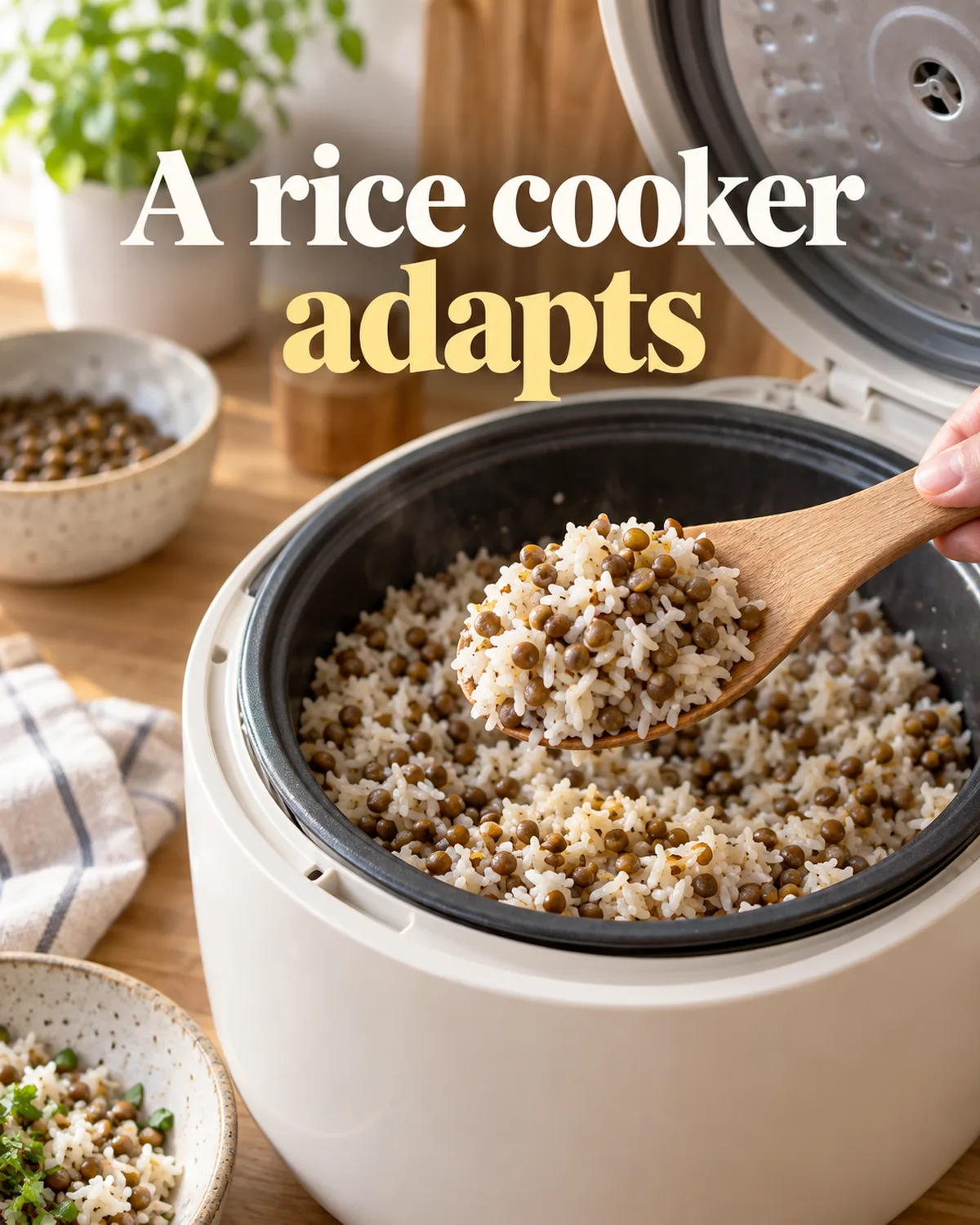
The same principle helps explain why the trend traveled beyond specialist clinics. It is easier to repeat a framework that can be cooked in a normal rice cooker than one that requires a separate health-food cuisine. The innovation is partly nutritional and partly logistical.
A mixed-grain bowl is not one compulsory formula
The March 2024 report described a lentil, oat, brown-rice and white-rice mix of 4:2:2:2, equivalent to 2:1:1:1. That ratio may be useful when it is attributed to a particular recipe or author. It should not be described as the one formula “Koreans actually cook.”
There are several reasons. First, household rice mixtures vary by taste, digestion, price and what is available. Second, grains absorb water differently. Third, the rest of the meal matters: a bowl with more whole grain does not automatically compensate for an otherwise unbalanced diet. Fourth, health conditions can make a generic high-fiber or high-potassium pattern inappropriate for some people.1
The durable principle is simpler:
Replace part of refined grain with less-refined grains or legumes.
Increase plant variety rather than worship one “superfood.”
Keep protein adequate and spread through the day.
Reduce dependence on highly processed foods, sugary drinks and sweets.
Build a pattern that can be repeated, not a recipe that is endured for a week.
A lentil-heavy bowl, a barley-and-brown-rice mix, or another whole-grain combination can all fit the same logic. The exact ratio is a recipe decision. The dietary pattern is the bigger idea.
Lentil-rice and barley-brown-rice mixtures can look and feel different.
The difference is not mystical. Refining grain removes much of the bran and germ. Less-refined grains therefore retain more fiber and a broader mix of micronutrients. Legumes add fiber and plant protein, and their starch is packaged inside a different cellular structure from polished white rice.
Those differences affect cooking as much as nutrition. Brown rice usually needs more time and water than polished rice because the bran layer slows hydration. Oats soften quickly and can change the mixture’s creaminess. Lentils vary by type: split red lentils break down readily, while brown or green lentils tend to hold their shape longer. A rice-cooker mixture that works for one combination can become dry, mushy or uneven if the ingredients are swapped without changing water and soaking time.
Whole green lentils hold their shape more readily; split red lentils soften and break down.
This is one place where practical food science is more useful than a viral ratio. Start with a moderate proportion of unfamiliar grains, use the rice cooker’s mixed-grain setting if available, and adjust water after observing the texture. If a particular legume causes digestive discomfort, increasing the amount gradually can be easier than forcing the full social-media recipe from day one.
A dietary pattern is different from an anti-aging claim
MIND stands for Mediterranean–DASH Intervention for Neurodegenerative Delay. It combines features of the Mediterranean and DASH dietary patterns while emphasizing foods that observational studies had associated with brain health. The name made it a natural reference point for a Korean doctor trying to explain long-term diet quality in an aging society.
But a crucial piece of evidence keeps the discussion honest. In a three-year randomized controlled trial published in the New England Journal of Medicine in 2023, 604 older adults without cognitive impairment but with a family history of dementia were assigned either a MIND diet with mild calorie restriction or a control diet with the same mild calorie restriction. Both groups improved on cognitive scores, and the difference between them was not statistically significant. Brain MRI outcomes also did not differ significantly.2
That trial does not prove that healthy dietary patterns are useless. It shows why “this diet prevents cognitive aging” is too strong. Observational evidence, cardiovascular evidence, metabolic effects and long-term eating quality can all be relevant while a specific anti-aging claim remains unproven.
This distinction is the most important part of the article: a diet can be sensible without being a medical time machine.
Large prospective-study meta-analyses have associated higher whole-grain intake with lower risks of cardiovascular disease and all-cause mortality. Similar bodies of evidence support eating more vegetables, fruit, nuts and other minimally processed plant foods as part of a healthy dietary pattern.4
Brown rice retains outer layers that polished white rice largely loses.
Association is not the same as a guarantee for an individual person. People who eat more whole grains may also differ in exercise, smoking, income, healthcare access and other behaviors. High-quality studies adjust for many of these factors, but no single observational association can prove that one food directly extends life.
The scientifically safer formulation is therefore: replacing some refined grains with whole grains and legumes can align a Korean meal with well-supported healthy-eating principles. Whether a specific “slow-aging” recipe measurably changes biological age, dementia risk or lifespan in an individual is a different question requiring direct evidence.
Whole grains and legumes change a bowl’s fiber, protein and texture. But those ingredient differences do not make every mixed-grain meal equivalent, nor do they establish an anti-aging effect.
Total carbohydrate amount, portion size, cooking time, ingredient form and what else is eaten in the meal all matter. A very large bowl of mixed grains is still a large bowl. Grinding grains, cooking them very soft, or pairing them with sugary foods changes the metabolic context. Likewise, a zero-sugar label on one condiment does not make the whole meal nutritionally superior.
Mixed grains still have a serving size; the name does not make a large portion disappear.
The slow-aging idea works best when the grain substitution is one part of a broader pattern rather than a permission slip to ignore the rest of the table.
A Korean table can be adjusted without being replaced
One attractive story says Korea merely rediscovered how grandparents ate: grains, beans, vegetables, fermented foods and little meat. There is some historical truth inside that image, but it becomes misleading when poverty, seasonality and regional variation disappear.
Past Korean households ate differently by class, location, season and food availability. Refined white rice could be prestigious precisely because it was not always accessible. Meat intake changed with income and supply. Preservation created extraordinary fermented foods but also meant salt was structurally important. A traditional table can contain vegetables and beans while also containing salty broth, refined starch, sweetened condiments or fried foods.
No national cuisine has one health profile. “Traditional” is a historical category, not a nutrition score. The modern slow-aging movement is better understood as selective editing: keep useful meal structures, increase whole plant foods, reduce refined or highly processed foods, and pay attention to portions and protein.
Lentils are not historically central to Korean cuisine. Their success in this trend is interesting precisely because they were inserted into a strongly Korean meal system without requiring the meal to stop feeling Korean.
The rice cooker acts as a cultural adapter. Cooked together with rice and grains, lentils become part of the staple rather than a separate foreign side dish. Kimchi, tofu, fish, egg, seaweed, soup and seasoned vegetables can still surround the bowl. The diner experiences continuity even though the ingredient mix has changed.
Cooked lentils can join rice in an ordinary meal without replacing all the side dishes.
This mechanism appears repeatedly in Korean food history. New ingredients survive when they find a place inside an established eating structure. The question is not simply whether Koreans accept a foreign ingredient; it is whether the ingredient can be made to behave like part of a familiar meal.
Instead of memorizing a celebrity recipe, use a decision framework that survives ingredient changes:
What is the staple? Is all of it highly refined, or can part be replaced with whole grain or legumes?
Where is the protein? Tofu, beans, fish, eggs, poultry, dairy or meat can all fit; the point is adequacy and balance rather than one mandatory source.
How many plant foods are actually present? A decorative lettuce leaf is not the same as a meal structured around vegetables, mushrooms, seaweed and legumes.
Where is the hidden excess? Sweet drinks, highly processed snacks, salty broth, large sauces and frequent processed meat can change the meal’s overall profile.
This four-question method is more transferable than a single 2:1:1:1 formula. It works in a Korean home, a cafeteria, a convenience store or a restaurant.
The staple, protein, vegetables and seasoning each contribute to the meal.
The same questions work outside the home
The slow-aging trend is often shown as an ideal home table, but a large share of Korean meals are eaten alone or purchased ready-made. That makes the connection to honbap, Korea’s modern solo-dining culture important.
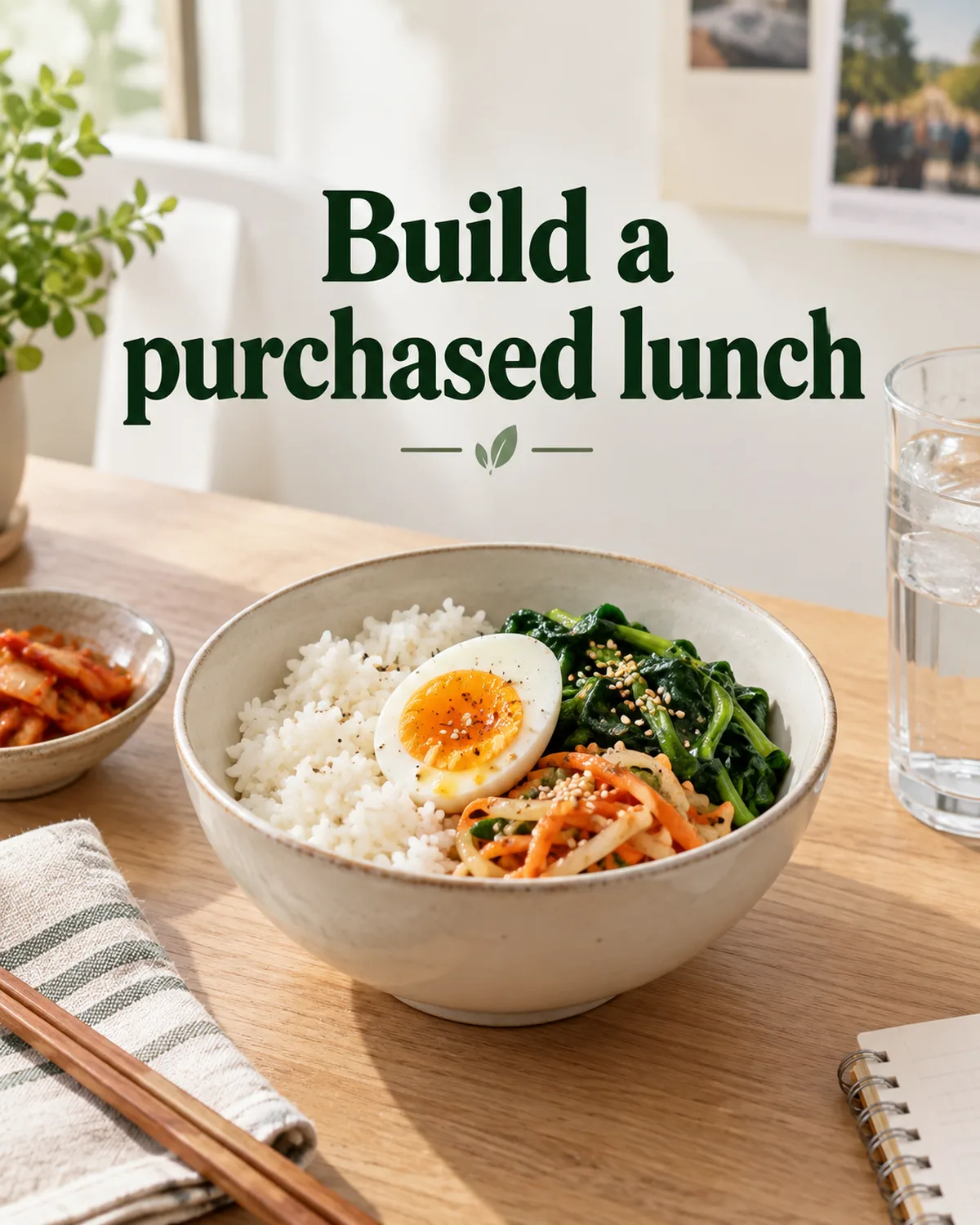
A convenience-store meal can be improved without pretending it becomes clinical nutrition. Pair a grain-based item with eggs, tofu, unsweetened dairy or another protein; add a vegetable side or fruit; choose water or an unsweetened drink; and watch whether the meal duplicates processed meat, salty soup and refined starch all at once.
A purchased lunch can be considered by its food components rather than a trend label.
The decision is architectural. You are not searching for a magical product labeled “slow aging.” You are assembling a meal whose components collectively resemble the intended pattern.
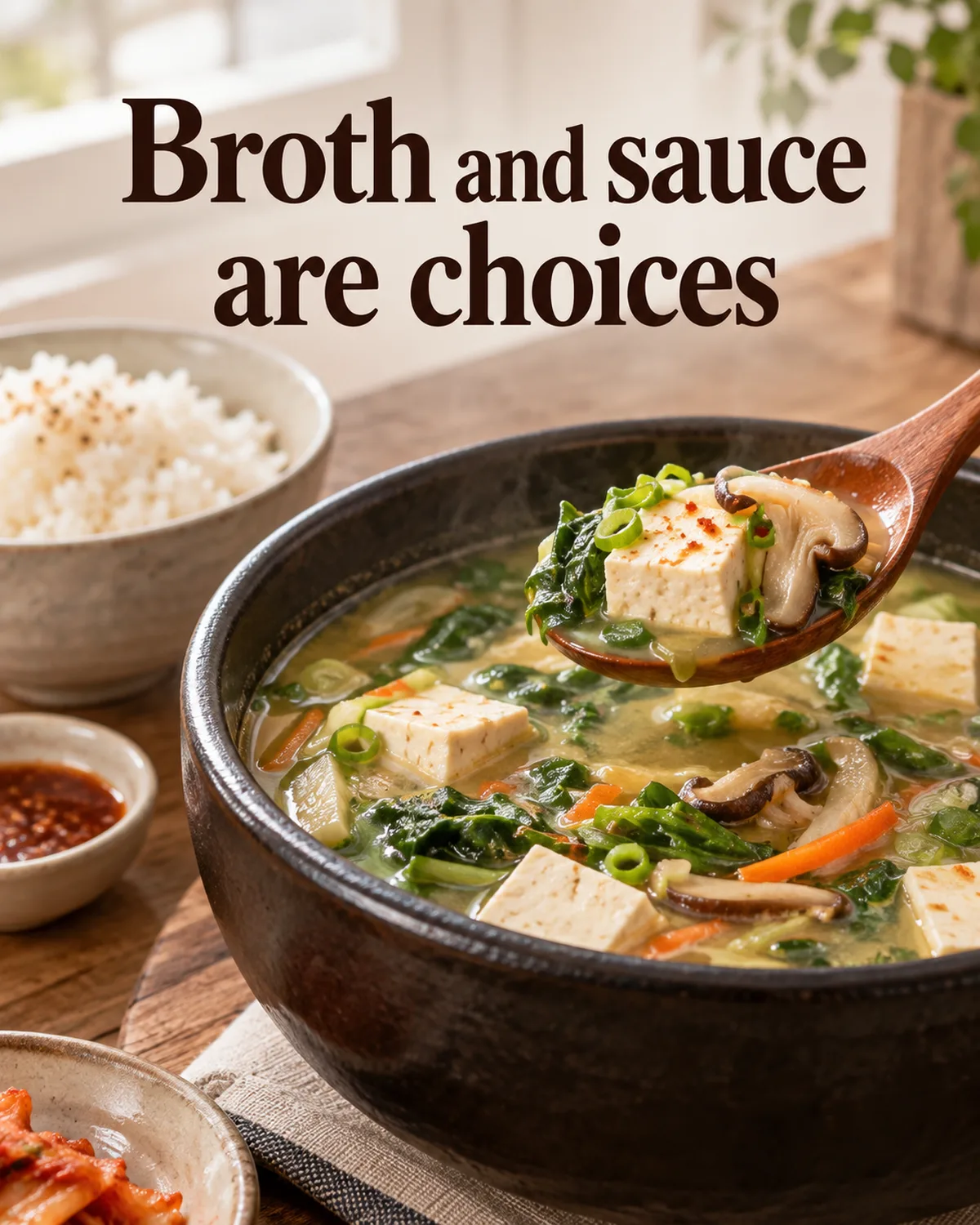
When eating out, exact grain ratios and sodium levels are often unknown. It is more useful to choose formats that let you control the table. A rice bowl with multiple vegetables, a tofu-based meal, grilled fish with side dishes, or a soup-and-rice meal can all be adjusted by how much broth, rice, sauce and processed side dish you consume.
Do not assume that a dish is automatically “slow aging” because it is Korean, vegetarian-looking or traditional. Bibimbap can be vegetable-rich, but sauce quantity and rice portion vary. Soup can contain excellent ingredients while delivering a large sodium load if all the broth is consumed. Tofu can be minimally processed or arrive fried and heavily sauced.
Soup ingredients and the amount of broth or sauce consumed are separate choices.
The framework is therefore about choices inside a meal, not labels attached to dishes.
Try a manageable change rather than a perfect plate
One possible misreading of a plant-forward diet is to remove protein foods indiscriminately. A meal pattern dominated by grains and vegetables but consistently short on the eater’s nutritional needs is not automatically an improvement.
This is why legumes are useful: they contribute both carbohydrate and protein. Tofu, fish, eggs and other protein foods can also sit naturally in a Korean table. The goal is not to eliminate animal foods at any cost. It is to build a pattern that emphasizes minimally processed foods while still meeting the eater’s nutritional needs.
People with kidney disease, diabetes requiring medication adjustment, digestive disease, swallowing problems or other medical conditions may need individualized advice. A generic article cannot safely turn a trend into a prescription.
For a household used to plain white rice, replacing everything at once can create a texture problem and a compliance problem. A practical approach is to change one variable at a time.
A small ingredient change is easier to evaluate than replacing the whole mixture at once.
Begin by mixing a smaller amount of brown rice, barley, oats or lentils into white rice.
Adjust soaking and water based on the specific grain rather than following one universal instruction.
Keep two or three familiar side dishes so the meal still feels normal.
Add a clear protein source.
Increase the proportion of vegetables gradually if the current diet is low in fiber.
Use flavor strategically: sesame, vinegar, garlic, scallion, doenjang or a modest amount of kimchi can make whole grains easier to repeat without relying on sugar-heavy sauces.
The measure of success is not whether the bowl resembles a social-media photo. It is whether the pattern can survive busy weekdays, travel, eating out and family preferences.
Ask about the grain component, the protein source, vegetables, and seasoning or portion size. Those questions translate an appealing label into food that can be identified. They can also be used with a purchased lunch or restaurant meal without pretending the diner controls every gram.
Look at familiar rice and tofu dishes as adjustable meals rather than health labels.