Why Koreans Eat That

Tag: Korean summer food

  • Korean Cold Noodles (Naengmyeon): Why Korea’s Icy Summer Dish Was Once a Winter Food

    Korean Cold Noodles (Naengmyeon): Why Korea’s Icy Summer Dish Was Once a Winter Food

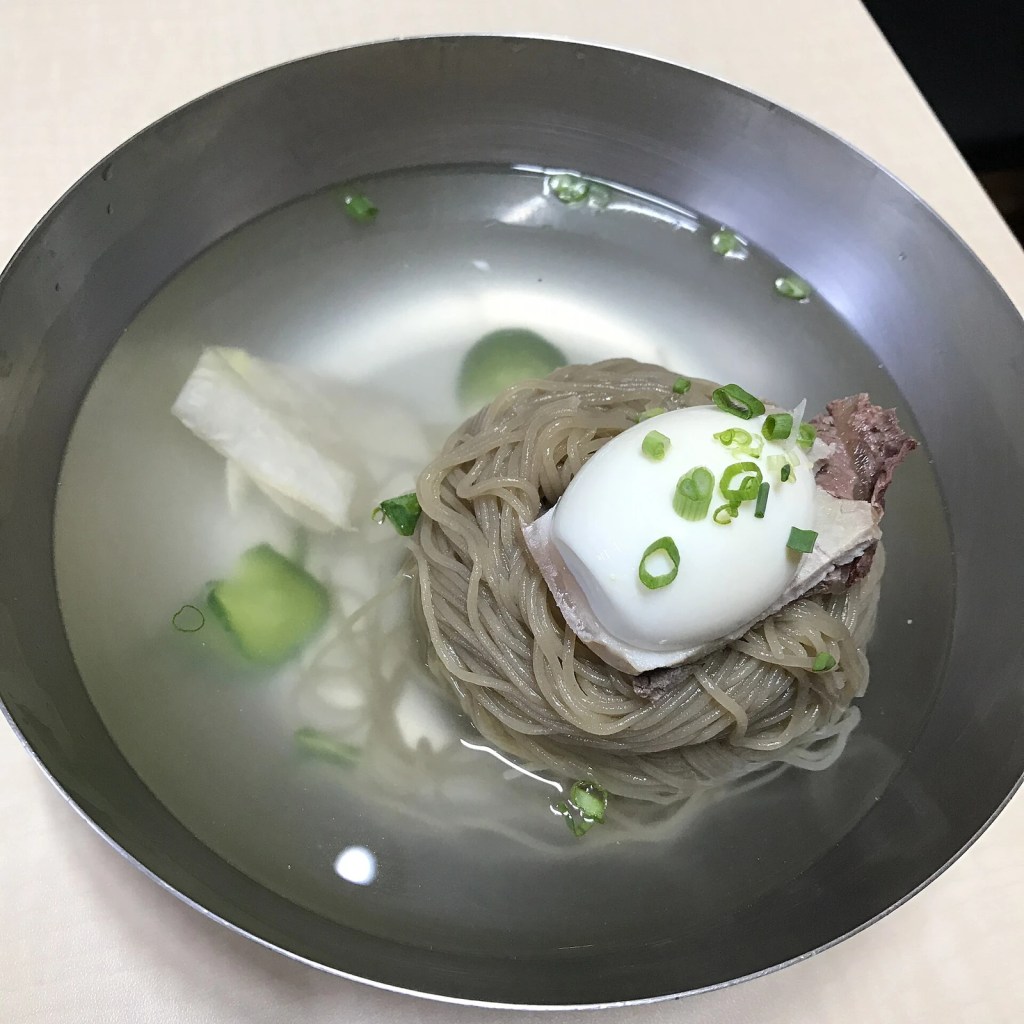
    A bowl of mul naengmyeon, Korean cold buckwheat noodles in icy broth — naengmyeon winter origin

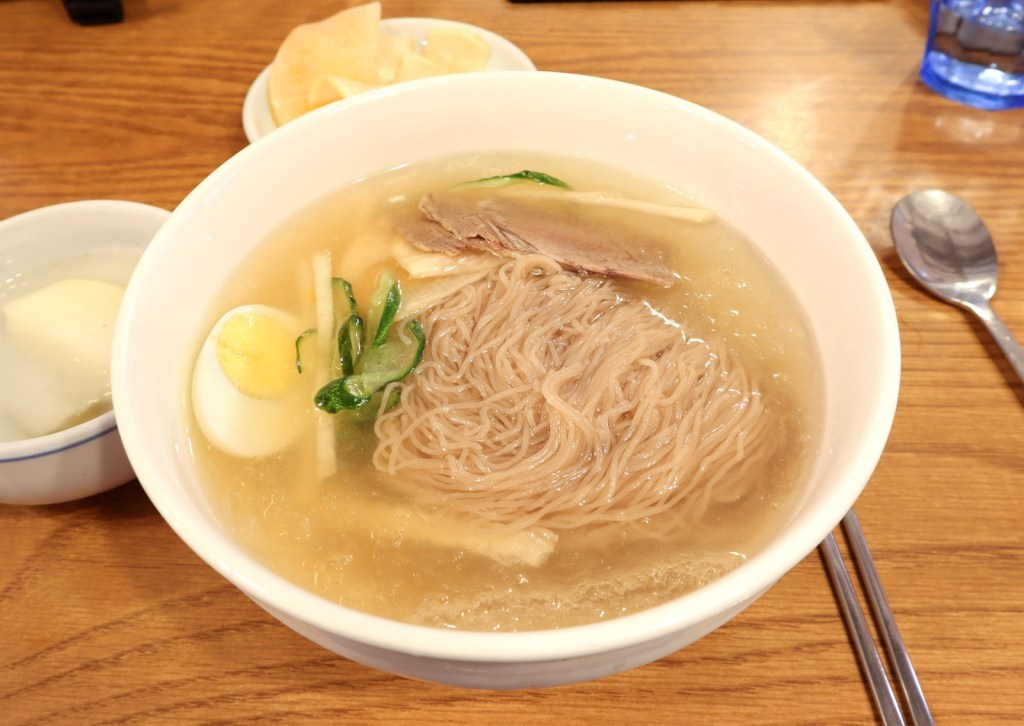
    Mul naengmyeon — chewy noodles in an icy, tangy broth, Korea’s answer to summer. Photo: Jinho Jung, CC BY 2.0, via Wikimedia Commons.

    When a Korean summer turns brutal, the whole country reaches for one thing: a freezing metal bowl of naengmyeon (냉면), Korea’s famous cold noodles. Nutty buckwheat noodles with a toothsome, easy-snap bite, a tart icy broth sometimes topped with actual slush, a boiled egg, a few slices of pear — it’s the sound of ice cubes clinking that says “we survived another heat wave.” There’s even a national summer debate about it, serious enough that Netflix made a documentary. But here’s the twist nobody expects.

    Naengmyeon wasn’t invented for summer at all. For most of its history, it was a winter food — eaten on heated floors while snow piled up outside, and beloved by Joseon kings, one of whom reached for it precisely because he couldn’t handle spicy food. To understand Korea’s coldest noodle, you have to picture it in the dead of winter.

    “Korea’s ultimate summer dish was born in the middle of winter.”

    The summer noodle Koreans argue about every year
    Bibim naengmyeon, spicy Korean cold noodles mixed with red gochujang sauce — naengmyeon winter origin

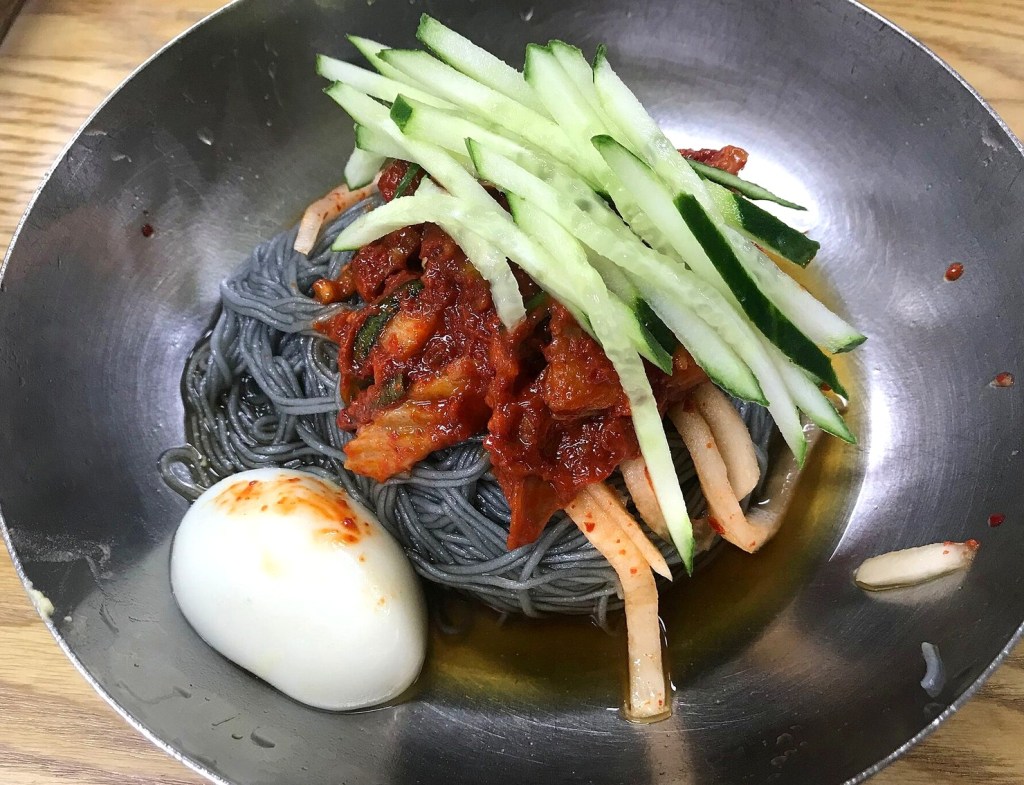
    Bibim naengmyeon — the spicy, sauced sibling. Mul or bibim? Koreans pick sides. Photo: lazy fri13th, CC BY 2.0, via Wikimedia Commons.

    Today, naengmyeon is peak-summer comfort, and Koreans take it seriously enough to split into camps. First question: mul (물) or bibim (비빔)? Mul naengmyeon is the cold-broth version, clean and refreshing; bibim naengmyeon ditches the broth for a fiery gochujang sauce you mix yourself. Second question: Pyongyang or Hamhung style? Both cities are in what is now North Korea, and the dish came south with refugees. Pyongyang naengmyeon uses buckwheat for a mild, almost austere broth that first-timers sometimes find “too plain” — until they’re hooked. Hamhung naengmyeon uses chewy sweet-potato or potato starch noodles, usually served bibim-style with raw skate. The debate is so woven into Korean summer that Netflix released Korean Cold Noodle Rhapsody, a whole documentary chasing the dish across the country. All of this, for a bowl that started out as a way to survive winter.

    A winter dish, eaten on a heated floor
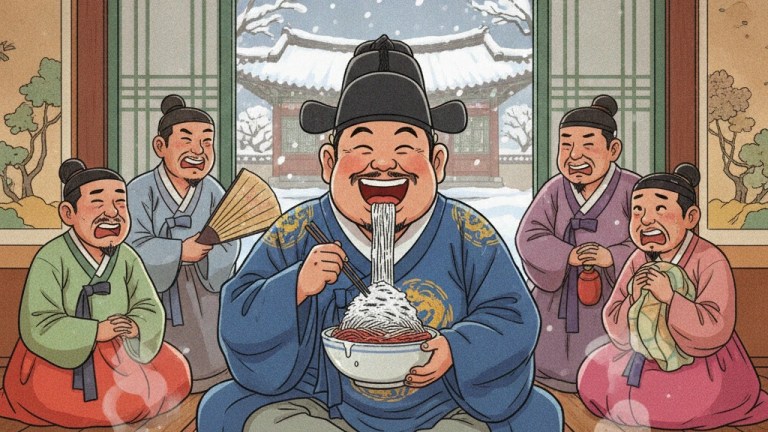
    Joseon king winter naengmyeon on ondol floor — cold noodles history playful illustration — naengmyeon winter origin

    Icy noodles on a hot floor in midwinter — the original Joseon indulgence (playful illustration).
    Dongchimi, Korean radish water kimchi used for cold noodle broth — naengmyeon winter origin

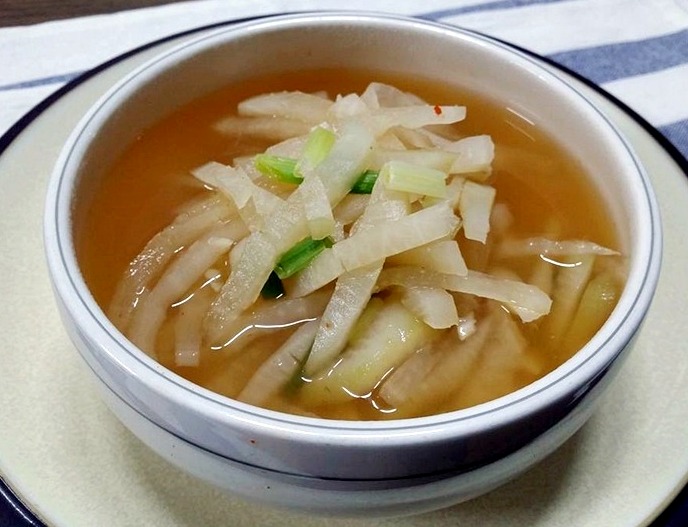
    Dongchimi — the winter radish-water kimchi whose icy brine once made the broth. Photo: 경빈마마, CC BY 4.0, via Wikimedia Commons.

    Go back a few centuries and the whole picture flips. Naengmyeon began in the cold northern regions of the peninsula, where deep winter did the refrigerating for free. People made the broth from dongchimi — a radish-water kimchi fermenting in a jar half-buried in the frozen ground — and ate the icy noodles while sitting on a warm ondol floor, blankets over their laps. The logic sounds backwards until you feel it: a cold shock in a warm room, the body responding with its own heat. The Joseon scholar Dasan Jeong Yak-yong even wrote of hand-pulled cold noodles with crisp cabbage kimchi when the October snow lay a foot deep.

    It was also, for a long time, a luxury and a celebration food. The earliest naengmyeon mention shows up in a 1643 collection of writings, and by the 1700s Seoul nobles were already ordering it in — some of the first food delivery in Korean history. On New Year’s, the long noodles stood for a long life. So why do we now eat it in July? Because only the wealthy once had ice in summer, kept in private ice caves; when ice became available to everyone, this cold winter delicacy slid naturally into the hottest months. The dish didn’t change. The season did.

    The kings who couldn’t get enough of it
    A Joseon-era Korean royal palace, home to kings who loved naengmyeon — naengmyeon winter origin

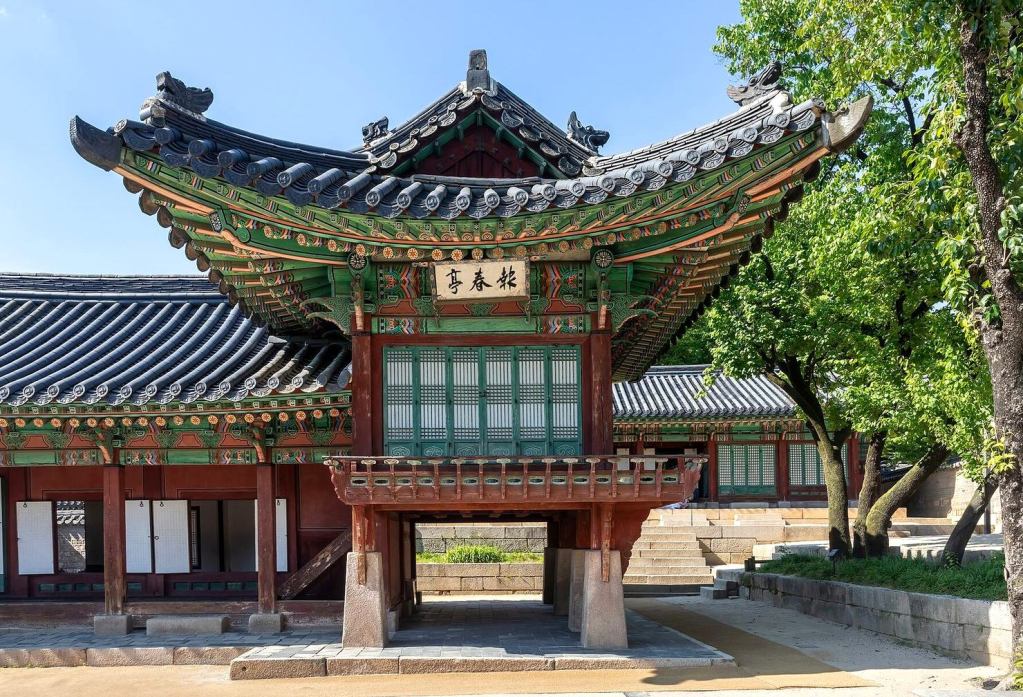
    Several Joseon kings were devoted naengmyeon fans. Photo: Basile Morin, CC BY-SA 4.0, via Wikimedia Commons.

    Naengmyeon didn’t just feed northern villagers — it reached the throne. Several Joseon kings, including Sunjo, Heonjong, and Cheoljong, were known to love cold noodles. But the most famous royal fan was Emperor Gojong, and there’s a very human reason: Gojong reportedly couldn’t handle spicy food. In a cuisine that leans hard on chili, the mild, clean, faintly sweet broth of Pyongyang-style naengmyeon was his kind of comfort. Picture the emperor of Korea, skipping the fiery stuff, quietly happy over a bowl of cold buckwheat noodles. Sometimes the most powerful person in the country just wants the gentle option.

    The main types of naengmyeon
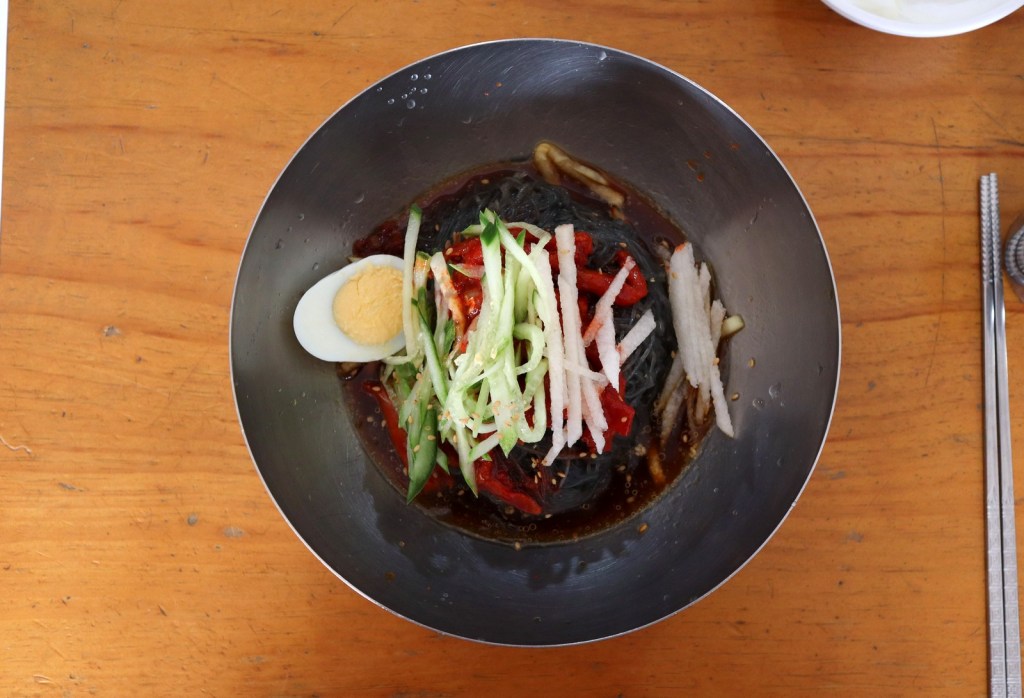
    Pyongyang naengmyeon, buckwheat cold noodles in a clear mild broth — naengmyeon winter origin

    Pyongyang naengmyeon — buckwheat noodles in a pale, clean broth. Deceptively plain, quietly addictive. Photo: Mobius6, CC BY-SA, via Openverse.

    Before you order, here’s the cheat sheet:

    • Mul naengmyeon (물냉면) — noodles in a cold, tangy broth. Refreshing and mild; the classic summer cooldown.
    • Bibim naengmyeon (비빔냉면) — no broth, tossed in a spicy-sweet gochujang sauce. Bold and addictive.
    • Pyongyang naengmyeon (평양냉면) — buckwheat noodles, subtle clear broth. An acquired taste that becomes an obsession.
    • Hamhung naengmyeon (함흥냉면) — chewy starch noodles, usually bibim-style, often with raw skate. Springy and fierce.
    Hamhung naengmyeon, spicy Korean cold noodles with chewy starch noodles and vegetables — naengmyeon winter origin

    Hamhung-style naengmyeon — springy starch noodles under a fiery sauce, the bold counterpart to Pyongyang’s calm. Photo: Mobius6, CC BY-SA, via Openverse.

    How to eat naengmyeon like a local
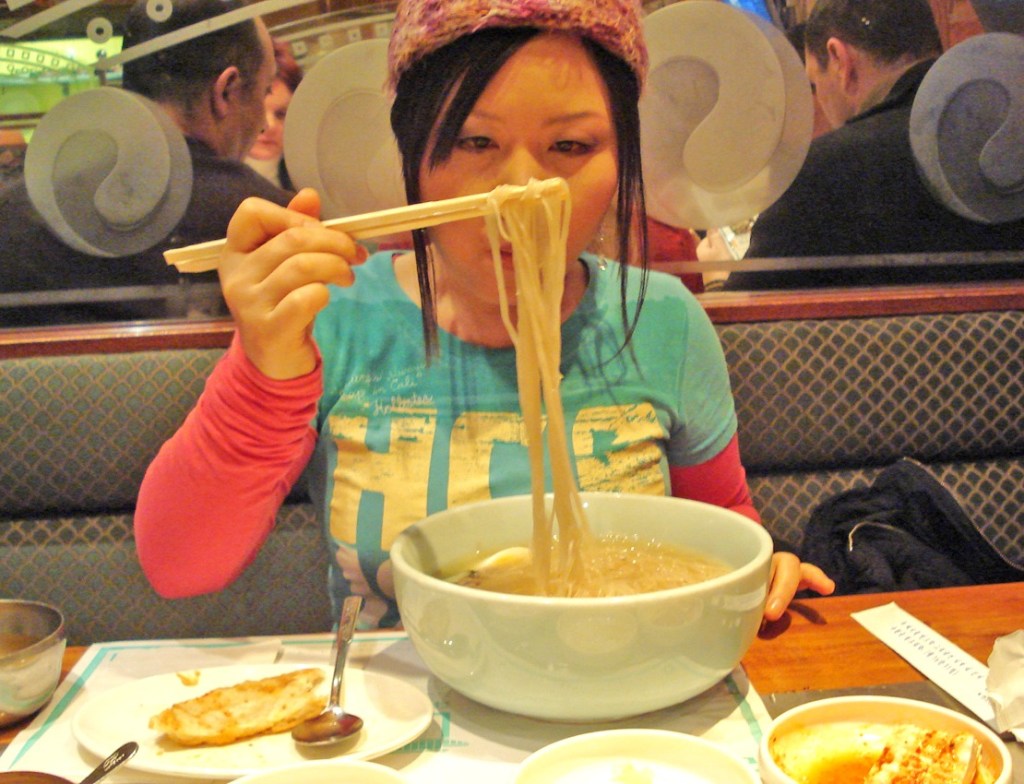
    A person eating Korean cold noodles (naengmyeon) with chopsticks at a restaurant — naengmyeon winter origin

    Long noodles, big bowl — there’s a small ritual to a proper bowl of naengmyeon. Photo: Hard Seat Sleeper, CC BY 2.0, via Wikimedia Commons.

    Your first bowl of Korean cold noodles comes with a few local rules:

    • To cut, or not to cut? Traditionalists say the long noodles symbolize long life and shouldn’t be cut. But the server will always offer scissors — one snip (a single cross-cut) is perfectly acceptable if those slippery, chewy noodles are hard to manage.
    • Season it yourself. Taste the broth first — Pyongyang-style is meant to be subtle. If you want more punch, add vinegar to the broth and a dab of mustard (gyeoja) to the noodles, not the other way around.
    • Sip the warm broth first. Many Hamhung-style spots bring a small pot of hot beef broth (yuksu) before the cold noodles arrive — sip it to settle your stomach before the icy hit.

    Questions people ask about naengmyeon

    What is naengmyeon? Korean cold noodles — long, chewy noodles (buckwheat or starch) served either in an icy broth (mul) or tossed in spicy sauce (bibim). It’s a beloved summer dish, though it began as a winter one.

    What does naengmyeon taste like? Mul naengmyeon is cold, clean, and tart-refreshing, with nutty, chewy buckwheat noodles and a lightly sweet-sour broth. Bibim naengmyeon is spicy-sweet and bold from its gochujang sauce. Both are famous for that springy, almost bouncy noodle texture.

    Why is naengmyeon eaten cold? Originally, northern Koreans ate cold noodles in winter, using naturally frozen broths, over heated ondol floors — the cold bowl felt refreshing in a warm room. Once summer ice became widely available, the dish drifted into the hot season, where it’s now a staple.

    What’s the difference between mul and bibim naengmyeon? Mul naengmyeon comes in cold broth and is mild and refreshing; bibim naengmyeon has no broth and is mixed with a spicy gochujang sauce. Many restaurants serve both.

    Did Korean kings really eat naengmyeon? Yes. Several Joseon kings loved it, and Emperor Gojong was famously fond of mild Pyongyang-style cold noodles — partly because he couldn’t tolerate spicy food.

    One cold bowl, four seasons of history

    So the next time you’re wiping sweat off your face over an icy bowl of naengmyeon, know that you’re eating a winter dish in disguise — one that warmed northern villagers on frozen nights, traveled by delivery to noble homes, and soothed an emperor who couldn’t take the heat. Korea just moved it to summer and never looked back.

    Craving more of Korea’s summer survival menu? Fight fire with fire in our samgyetang guide, build a cool vegetable bowl with Jeonju bibimbap, or slurp your way through Gwangjang Market.

    Naengmyeon’s winter origins, dongchimi broth, ondol-floor tradition, and northern (Pyongyang and Hamhung) roots are drawn from Korean culinary histories and reporting (The Korea Herald, The Korea Times, NamuWiki). Early records include the 1643 Gyegokjip and the writings of Dasan Jeong Yak-yong (1762–1836). The royal fondness of kings Sunjo, Heonjong, Cheoljong, and Emperor Gojong for cold noodles is noted in Korean historical accounts.

  • What BTS Eats to Survive Korea’s Hottest Days: Boknal and the Stamina Foods

    What BTS Eats to Survive Korea’s Hottest Days: Boknal and the Stamina Foods


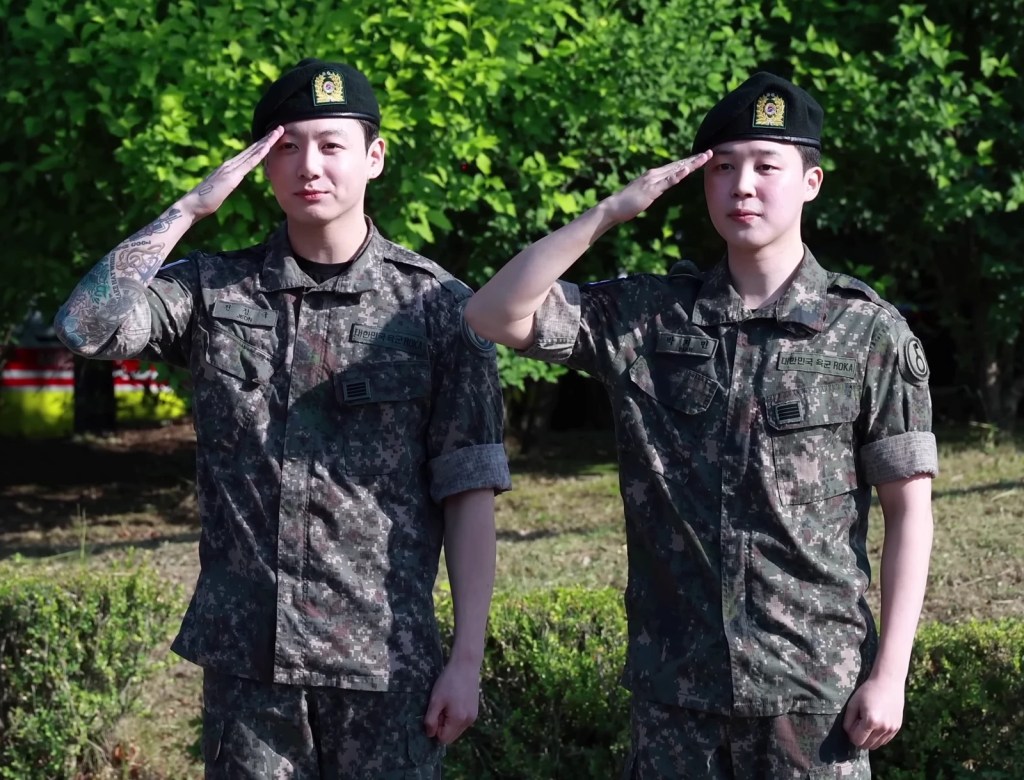
    BTS Jimin and Jungkook in uniform at their military discharge in 2025, before the group's 2026 reunion — bts boknal summer

    Jimin and Jungkook at their military discharge, June 2025. By summer 2026, all seven are back. Photo: K-POPIT TV10, CC BY 3.0, via Wikimedia Commons

    By the summer of 2026, all seven members of BTS are finally out of the military, back together, and working on their first full-group album since 2022. And their reunion lands right in the middle of the strangest food season in Korea: boknal, the three hottest days of the year, when the entire country lines up to eat boiling hot soup on purpose.

    Here’s the short version: on boknal, Koreans fight the heat by eating hot, protein-heavy “stamina food” to recharge, and the most famous is samgyetang, ginseng chicken soup. What’s fun is that the dishes BTS members have talked about loving are, almost one for one, the exact foods Koreans reach for on these days. One of them was even photographed at a samgyetang restaurant on the hottest day of the year. But before we get to who eats what, let’s talk about why the group’s timing is so good.

    “On the hottest day of the year, Korea eats boiling soup. On purpose.”

    BTS in 2026: back from the military, back together

    BTS, all seven members, the group reuniting in 2026 after finishing military service — bts boknal summer

    All seven, together again. Photo: The White House (public domain), via Wikimedia Commons

    If you lost track of BTS during the hiatus, here’s where things stand. The members served their mandatory military service in waves, and by June 2025 the last of them were discharged: RM and V on 10 June, Jimin and Jungkook the day after, and Suga finishing his alternative service on 21 June. Then they did the thing fans had waited years for. They got back in a room together.

    In a reunion video, the seven confirmed a 2026 comeback: a new album, built from each member’s own ideas, plus a world tour. It’s their first full-group release since the 2022 anthology Proof. They said they’d start writing over the summer, which means this boknal season is the first one in years with all of BTS home, off-duty, and eating like regular Koreans again. And that’s the fun angle here, because “eating like a regular Korean” in July means something very specific.

    Wait, what is boknal? (Korea’s “fight heat with heat” days)

    Boknal (복날) is Korea’s name for the three hottest days of summer: chobok (the first), jungbok (the middle), and malbok (the last), together called sambok. They fall between roughly mid-July and mid-August. The tradition: eat hot, nourishing “stamina food” to recover the energy the heat drains out of you.

    Samgyetang, Korean ginseng chicken soup served in stone bowls, the classic boknal stamina food — bts boknal summer

    Samgyetang on a summer day. Yes, it’s boiling. That’s the point. Photo: KOREA.NET, CC BY-SA, via Wikimedia Commons

    Now, the part that confuses every first-time visitor. On the single hottest day of the Korean year, restaurants fill up with people ordering a soup so hot it’s still bubbling when it hits the table. Why would anyone do that?

    The logic is called iyeol-chiyeol (이열치열), “fight heat with heat.” Eating something piping hot makes you sweat, and sweating cools you down. More importantly, summer heat drains your body, and a bowl of samgyetang loads you back up with protein and energy: a whole young chicken, stuffed with rice, simmered with ginseng and herbs. So boknal isn’t really about the temperature of the food. It’s about recovery. Koreans treat these three days like scheduled maintenance for the body.

    Once you know that, a lot of “weird” Korean summer behavior suddenly makes sense, including why a global pop star would be spotted ducking into a chicken-soup restaurant on the hottest afternoon of the year. Which brings us to BTS.

    What each BTS member reaches for in summer

    Here’s the quick version before we dig in. These are the summer and stamina foods BTS members have actually mentioned or been seen with, and how neatly they map onto Korea’s boknal classics:

    • Jimin — samgyetang (삼계탕), the ginseng chicken soup
    • Jungkook — eel (장어), a classic summer stamina food
    • Jin — naengmyeon (냉면), cold noodles for the heat
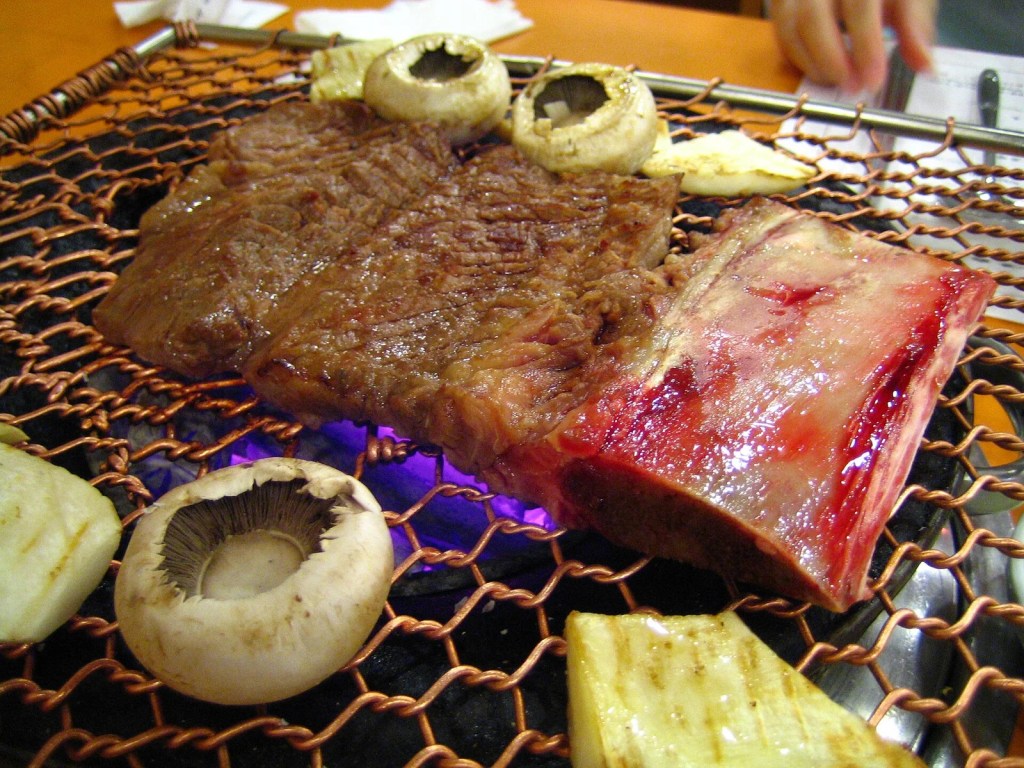
    • Suga — galbi (갈비), grilled ribs
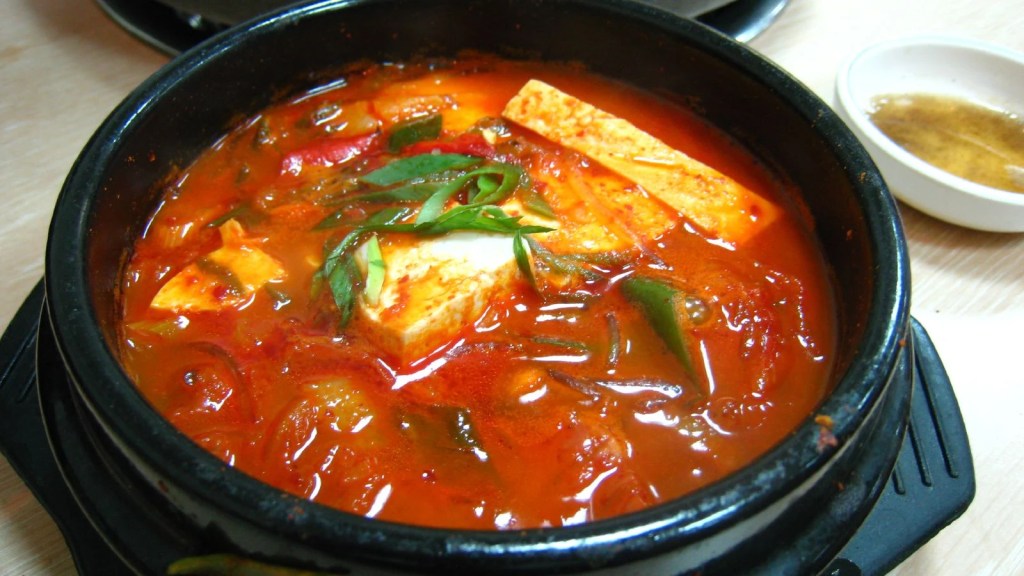
    • V — kimchi jjigae (김치찌개), kimchi stew

    Jimin: caught eating boknal exactly right

    This is the one that started this whole article. On 11 July 2023, which was chobok that year, Jimin was spotted at a samgyetang restaurant, cheerfully signing an autograph for the staff. Think about the timing: the single first day of Korea’s hottest stretch, and there’s Jimin at a ginseng-chicken-soup place. You genuinely could not script a more perfectly Korean summer moment. Samgyetang is the boknal dish, and he went for it on the boknal day.

    Samgyetang bowls lined up at a Korean restaurant during the hot summer boknal season — bts boknal summer

    On chobok, samgyetang places fill up like this. Photo: KOREA.NET, CC BY-SA, via Wikimedia Commons

    Jungkook: eel, the other stamina classic

    Korean grilled eel (jangeo gui), a traditional summer stamina food that BTS Jungkook enjoys — bts boknal summer

    Grilled eel: the boknal food people forget, but Koreans swear by. Photo: Mar del Este, CC BY-SA, via Wikimedia Commons

    Jungkook has said he likes eel, and if samgyetang is the famous boknal food, grilled eel (jangeo) is the insider one. Ask older Koreans about summer stamina food and eel comes up almost as fast as chicken soup. It’s rich in protein and healthy fats, exactly the “recharge your battery” profile boknal is built around. So Jungkook’s taste isn’t a random preference; it’s textbook Korean summer eating.

    Jin: the cold-noodle counterpoint

    Naengmyeon, Korean cold buckwheat noodles in icy broth, a summer favorite of BTS Jin — bts boknal summer

    Naengmyeon: the other half of Korean summer, cold and sharp. Photo: chomjong, CC BY 2.0, via Wikimedia Commons

    Not every member fights heat with heat. Jin once said naengmyeon, cold buckwheat noodles in an icy, tangy broth, was a food he could happily eat every single day. And honestly, that’s the other, equally Korean way to survive summer: while half the country is sweating over samgyetang, the other half is slurping ice-cold noodles. Jin represents team cold-noodle, and no Korean would argue with him about it.

    Suga & V: meat and stew, the everyday comfort

    Korean galbi grilled ribs on a barbecue, a favorite of BTS Suga — bts boknal summer

    Galbi on the grill: Suga’s kind of dinner. Photo: ayustety, CC BY-SA 2.0, via Wikimedia Commons

    Then there are the members who just want the good stuff year-round. Suga is a well-known lover of galbi, grilled short ribs, which is its own form of protein-loading if you think about it. V has talked plenty about kimchi jjigae, the humble kimchi stew that’s the ultimate Korean comfort food. Neither is strictly a boknal dish, but both fit the same instinct that drives the whole season: when you’re worn out, eat something hearty and Korean and feel human again.

    Kimchi jjigae, a bubbling Korean kimchi stew, the comfort food BTS V loves — bts boknal summer

    Kimchi jjigae: V’s comfort bowl, and half of Korea’s. Photo: miyagawa, CC BY-SA 2.0, via Wikimedia Commons

    Why this all fits together

    Step back and the pattern is kind of lovely. The most famous group on the planet, freshly reunited, and when it comes to food they reach for the same things a Korean grandmother would push on you in July: chicken soup, eel, cold noodles, grilled meat, kimchi stew. No superfood powders, no influencer diets. Just the food of a Korean summer.

    That’s the quiet reason K-pop fans keep tripping over Korean food culture. You come for the group, and you leave knowing what boknal is, and why a bubbling pot of samgyetang is basically a national love language. The next hot day you’re in Seoul, do the very Korean thing. Find a samgyetang place, order the soup that’s far too hot for the weather, and sweat it out like an idol on chobok.

    A few things people keep asking about BTS and boknal

    What is boknal?
    Boknal (sambok) is the three hottest days of the Korean summer: chobok, jungbok and malbok, from roughly mid-July to mid-August. Koreans eat hot stamina food, above all samgyetang, to recover energy lost to the heat.

    Did Jimin really eat samgyetang on boknal?
    He was photographed at a samgyetang restaurant on 11 July 2023, which was chobok that year, signing an autograph for staff. It’s about as on-theme as a summer sighting gets.

    Why eat hot soup in hot weather?
    It’s the “fight heat with heat” idea (iyeol-chiyeol). Hot soup makes you sweat and cool down, while the chicken, ginseng and rice restore protein and energy. Recovery over temperature.

    Is BTS really back in 2026?
    Yes. All seven finished military service by June 2025 and announced a 2026 full-group comeback with a new album and world tour, their first full release since 2022.

    Keep going down the rabbit hole

    If the boknal thing grabbed you, we wrote a whole guide to what boknal is and why Koreans eat the way they do on the hottest days, and a deep dive on samgyetang, the ginseng chicken soup at the center of it all. And if you want the full BTS menu beyond summer, here’s what BTS actually eats in real life, member by member.

    Come for the group. Stay for the soup.

  • Korea’s Hottest Food Tradition in Summer: What Is Boknal(복날)?

    Korea’s Hottest Food Tradition in Summer: What Is Boknal(복날)?

    Koreans lining up to eat a steaming bowl of hot soup on Boknal, the hottest day of Korean summer — boknal korean summer

    Imagine visiting Korea in the middle of July. The temperature is above 35°C (95°F), the air feels heavy, and people are lining up — not for ice cream or cold noodles, but for a bowl of boiling hot soup. It sounds completely backwards. But that’s exactly what Boknal (복날) is.

    The short answer

    On the three hottest days of Korean summer, collectively called Boknal, Koreans deliberately eat hot, nourishing soup instead of cooling down. The logic is a centuries-old principle called iyeol chiyeol (이열치열), “fight heat with heat.” They’re not trying to cool down. They’re trying to recharge. Below is what Boknal means, where it comes from, and exactly what to eat (and where) if you’re in Korea right now.

    So what exactly is Boknal?

    A calendar marking the three Boknal days of Korean summer, Chobok Jungbok and Malbok — boknal korean summer

    Boknal refers to the three hottest days of summer, spread across roughly a month based on the traditional East Asian lunar calendar. Each has its own name: Chobok (초복), the first; Jungbok (중복), the middle; and Malbok (말복), the last. Together they’re known as Sambok (삼복), meaning “three boks.”

    The dates shift a little each year. In 2026, Chobok falls on July 15, Jungbok on July 25, and Malbok on August 14 — so the whole stretch of peak heat runs from mid-July into mid-August. If you’re in Korea during those weeks and notice restaurants suddenly packed at lunch, this is why.

    The Chinese character for bok (伏) means “to lie low” or “to crouch.” The idea is poetic: in the face of overwhelming summer heat, everything — even the strongest among us — bows down for a moment. Boknal is the day you acknowledge the heat, and then quietly prepare your body to outlast it.

    Where the tradition comes from

    This isn’t a modern marketing invention. The custom is recorded in the Dongguk Sesigi, a book on seasonal customs written during the Joseon Dynasty, and its roots reach back much further into East Asian agricultural life.

    For most of Korean history, summer was the hardest season for the body. Farmers worked long hours under punishing sun, sweating out energy and salts with no air conditioning to retreat to. People genuinely believed the intense heat drained the body’s core strength. So rather than cooling the body from the outside, the wisdom of the time said to restore it from within, with a warm and deeply nourishing meal on the very hottest days. Boknal became the calendar’s built-in reminder to do exactly that.

    Fight heat with heat: the iyeol chiyeol philosophy

    A steaming hot Korean soup served on a sweltering summer day, illustrating the iyeol chiyeol fight heat with heat principle — boknal korean summer

    The philosophy behind Boknal is called iyeol chiyeol (이열치열) — literally, “fight heat with heat.” It sounds like a contradiction, but the reasoning is surprisingly practical.

    When your body is exhausted from extreme weather, a hot, protein-rich meal helps replenish lost energy and get your circulation moving. There’s also a comfort logic. Eating something hot raises your body temperature slightly, which narrows the gap between you and the sweltering air, so afterward the heat outside feels a little less shocking. Whether or not modern science fully signs off on every claim, generations of Koreans have kept the tradition because it stands for something real: resilience, self-care, and bracing the body to endure the rest of a brutal summer.

    Samgyetang: the star of Boknal

    The dish most closely tied to Boknal is samgyetang (삼계탕) — a whole young chicken stuffed with glutinous rice, garlic, jujubes, and ginseng, then slowly simmered into a milky, restorative soup. Every ingredient earns its place: ginseng for vitality, garlic for stamina, jujube for warmth, and the chicken itself for clean, easy protein. On Boknal, samgyetang restaurants fill up so fast that regulars know to arrive before noon.

    There’s a lot more to this one bowl than a single paragraph can hold — its history, the different regional versions, and how to order and eat it like a local. If it’s the dish that brought you here, read our full guide to samgyetang, Korea’s ginseng chicken soup.

    Beyond samgyetang: other summer stamina foods

    An assortment of Korean summer stamina foods including grilled eel and loach soup for Boknal — boknal korean summer

    Samgyetang gets the spotlight, but Boknal is really about a whole family of boyangsik (보양식) — restorative, energy-building foods rooted in the old Korean idea that “food and medicine share the same origin.” The official Korea Tourism Organization guide to Korean stamina foods covers the same tradition. If you want to eat your way through the season, here’s what locals reach for:

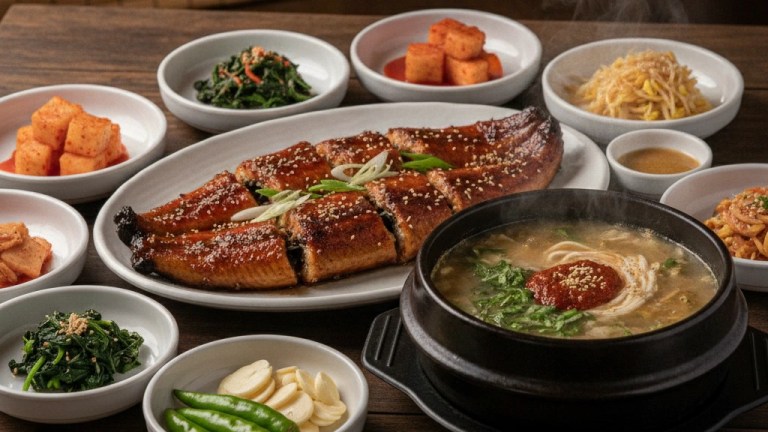
    Jangeo (장어), grilled eel. One of the classic summer stamina foods, freshwater or sea eel is grilled over charcoal until the skin crisps and the flesh turns rich and buttery. It’s prized for being dense with protein and healthy fats — exactly what the tradition says a heat-drained body needs.

    Chueotang (추어탕), loach soup. A hearty, earthy soup made from ground or whole loach (a small freshwater fish), thickened and seasoned into something deeply savory. It’s an old-school tonic dish, the kind of bowl grandparents swear by, and a favorite among Koreans who find samgyetang too plain.

    Ori-baeksuk (오리백숙), boiled duck, and abalone (전복) versions of samgyetang are richer variations on the same idea. Some ginseng chicken soups are even upgraded with abalone, octopus, or medicinal herbs for an extra restorative punch.

    And if the thought of hot soup in 35-degree heat is simply too much? Koreans have a cool-side answer too. Kongguksu (콩국수), chilled noodles in a creamy soybean broth, is the refreshing counterpart. The season has options whether you follow “fight heat with heat” or not.

    Where to try boyangsik in Seoul

    You’ll find restorative soup all over the city during Boknal, but these two long-running institutions are a great, low-stress place to start — and both are the kind of historic spot where a curious visitor is very welcome. Hours and prices can change, so it’s worth a quick check before you go.

    Yonggeumok (용금옥) — loach soup, Jung-gu

    Opened in 1932, Yonggeumok is often cited as one of the oldest restaurants in Seoul, and it’s earned a spot in the Michelin Guide’s Bib Gourmand list. It has served its signature chueotang (loach soup) for generations — a warming, deeply savory bowl that’s the definition of an old-Seoul stamina meal.

    Address: 24-2 Da-dong-gil, Jung-gu, Seoul (중구 다동길 24-2) · Hours: Daily 11:00–22:00 (closed 2nd, 4th & 5th Sundays).

    Bangujeong Minmul Jangeo (반구정 민물장어) — grilled eel, Jongno-gu

    For the eel side of Boknal, this spot sits on the 19th floor near Dongmyo Station, pairing charcoal-grilled freshwater eel with a city view. Grilled eel is one of summer’s canonical stamina foods, and eating it up high with Seoul spread out below makes for a memorable, only-in-Korea meal.

    Address: 19F, 29 Jibong-ro, Jongno-gu, Seoul (종로구 지봉로 29, 금호팔레스빌딩 19층) · Hours: Daily 10:00–22:00 · 1 min from Dongmyo Station Exit 7.

    Frequently asked questions

    When is Boknal in 2026?
    The three days are Chobok on July 15, Jungbok on July 25, and Malbok on August 14, 2026. The dates follow the traditional lunar calendar, so they shift slightly each year.

    Why do Koreans eat hot soup in summer instead of cold food?
    It comes from iyeol chiyeol, meaning “fight heat with heat.” The belief is that a hot, nourishing meal restores energy drained by the heat and helps the body cope with it, rather than shocking it with cold food.

    Do I have to eat samgyetang on Boknal?
    Not at all. Samgyetang is the most iconic choice, but grilled eel (jangeo), loach soup (chueotang), and boiled duck are all popular. There are even cold options like kongguksu for those who’d rather not eat hot soup in the heat.

    Is Boknal a public holiday?
    No. It’s a seasonal food custom, not an official holiday, so shops and offices run as normal — but restaurants serving stamina food get very busy, especially at lunch.

    Can vegetarians take part in Boknal?
    The classic dishes are meat- or fish-based, but the spirit of Boknal is simply eating something warm and nourishing. Hearty vegetable or bean-based soups fit the idea, and kongguksu (soybean noodles) is a naturally plant-forward summer option.

    What does the word “Boknal” actually mean?
    “Bok” (伏) means to crouch or lie low, the image of everything bowing before the summer heat, and “nal” means day. So Boknal is, literally, the “day of lying low” against the heat.

    They’re not trying to cool down — they’re trying to recharge

    So if you ever see Koreans happily spooning up steaming soup on the hottest day of the year, don’t assume they’ve forgotten how hot it is. Boknal is a small, delicious act of resilience — a centuries-old habit of meeting the heat head-on and refueling for whatever summer throws next. For more one-bowl ideas to try while you’re here, browse our full guide to what to eat in Korea. Pull up a seat, order the soup, and recharge like a local.

    Restaurant details such as hours and prices are current as of 2026; please double-check before visiting.

  • Samgyetang (삼계탕): Why Koreans Eat Boiling Chicken Soup on the Hottest Day of Summer

    Samgyetang (삼계탕): Why Koreans Eat Boiling Chicken Soup on the Hottest Day of Summer

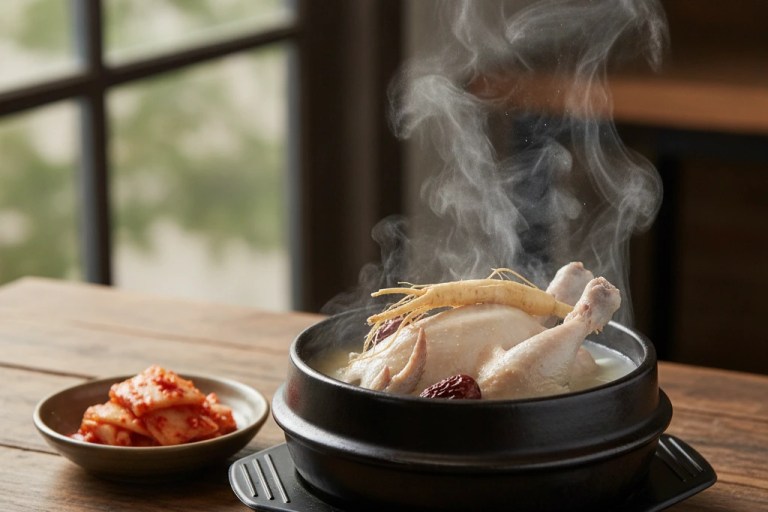
    Steaming stone bowl of Korean samgyetang ginseng chicken soup on a summer day in Seoul

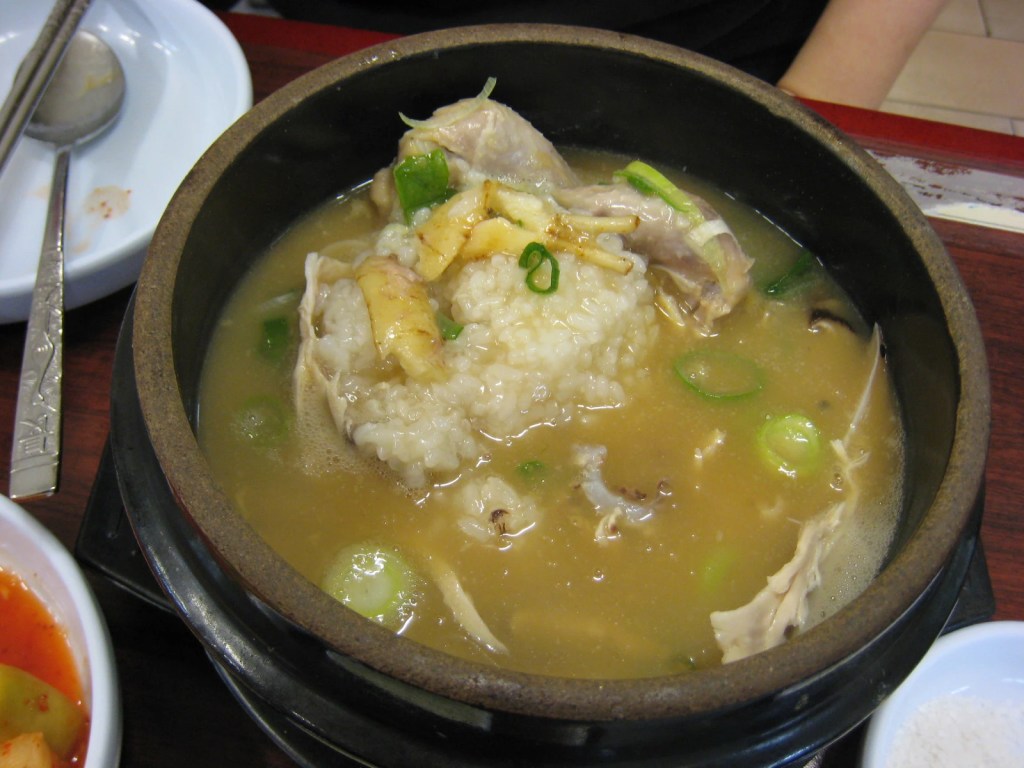
    Here’s something that confuses almost every visitor: on the hottest days of the Korean summer, Koreans line up — in the sun, sometimes for an hour — to eat boiling hot chicken soup. Not cold noodles. Not shaved ice. Scalding broth, served in a stone bowl that keeps bubbling after it hits your table.

    This is samgyetang (삼계탕), and the logic behind it is older than the dish itself.

    The short version

    Samgyetang is a whole young chicken stuffed with glutinous rice, garlic, jujube and ginseng, simmered until the meat slides off the bone.
    Koreans eat it on bok-nal (복날) — the three hottest days of summer — to fight heat with heat.
    In 2026 those days are July 15, July 25, and August 14.
    It started in the royal court, not the street. Commoners couldn’t afford ginseng.
    The name used to be gyesam-tang (chicken-ginseng). Someone flipped it — and that flip tells you everything.

    Why Koreans eat hot soup in hot weather

    The idea is called iyeolchiyeol (이열치열), which translates roughly to “control heat with heat.” The reasoning goes like this: in extreme summer heat, your body pushes warmth outward to the skin, leaving your core cold and your digestion weak. Cold food makes that worse. Hot food restores the center, you sweat, and the sweat cools you down.

    Is that physiologically airtight? I’ll leave that to doctors. But stand in a Seoul alley in August with a stone bowl of ginseng broth in front of you, sweat through your shirt, then walk out into the heat — and you’ll notice the outside air suddenly feels manageable. Whether it’s thermodynamics or ritual, it works on people.

    Bok-nal: the three days that matter

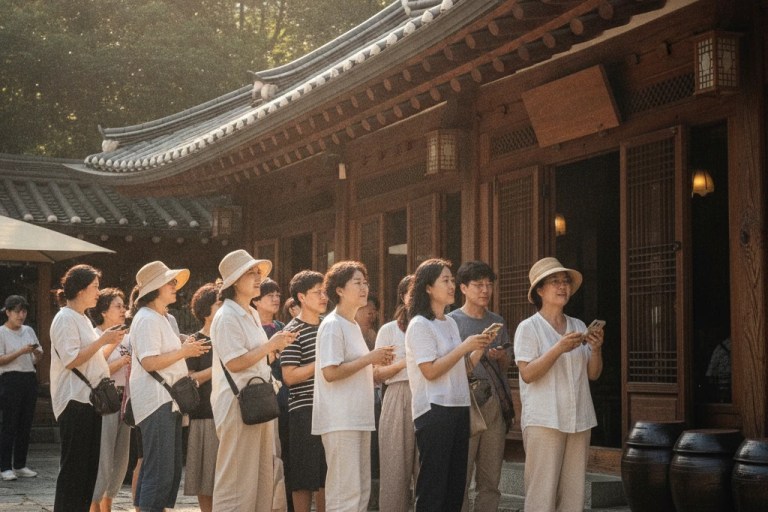
    Koreans queuing outside a samgyetang restaurant in Seoul on a hot bok-nal summer day — samgyetang ginseng chicken

    Koreans don’t eat samgyetang randomly. There are three specific days, collectively called sambok (삼복):

    • Chobok (초복) — first bok day, July 15 in 2026
    • Jungbok (중복) — middle bok day, July 25 in 2026
    • Malbok (말복) — last bok day, August 14 in 2026

    The dates move every year because they’re set by the old lunar-solar calendar, counted from the summer solstice. And the character bok (伏) literally means “to lie prostrate” — the image is autumn’s cool energy crouching down, pinned under the summer heat, waiting.

    One detail for 2026: there are 20 days between jungbok and malbok instead of the usual 10. Koreans call this wolbok (월복), and the folk reading is simple — the heat is going to drag on longer this year.

    Traveler’s note: If you’re in Seoul on a bok day, expect queues at any well-known samgyetang restaurant — often 30 to 60 minutes at lunch. Locals take the tradition seriously. Come at 11am or after 2pm, or pick a different day entirely.

    This soup was never peasant food

    Joseon dynasty royal court kitchen preparing ginseng chicken soup illustration — samgyetang ginseng chicken

    Here’s where most food blogs get it backwards. Samgyetang looks humble — a small chicken, some rice, a root. It reads like something a farmer would make.

    It wasn’t. Ginseng was luxury. During the Joseon Dynasty (1392–1897), chicken soups were part of gungjung yori (궁중요리), the royal court cuisine, precisely because the ingredients were out of reach for ordinary households. Records from King Injo’s reign describe chicken boiled with milkvetch root being served to the ailing queen. This was medicine for royalty, not lunch for the village.

    The soup had other names first

    Joseon-era Koreans ate several chicken soups that circle around what we now call samgyetang — yeonggye-tang (영계탕), chonggye-tang, hwanggye-tang. Serving young chicken soup to elders during summer was already customary. The dish existed. The name didn’t.

    The name flip that explains everything

    Samgyetang only became a restaurant dish around the 1940s, and in the 1950s it was sold as gyesam-tang (계삼탕) — literally chicken-ginseng-soup. Chicken first. Ginseng second.

    Then two things happened. From the 1960s, cooks started stuffing the bird with a whole ginseng root instead of sprinkling in powder. And sellers, wanting to foreground the medicinal value that people were actually paying for, flipped the name to samgye-tang (삼계탕)ginseng-chicken-soup.

    Same soup. Reversed name. That reversal is a small piece of economic history: it’s the moment the ginseng became the selling point and the chicken became the vehicle. During the Japanese colonial period (1910–1945) this was still a wealthy person’s indulgence. Only after the 1960s did it reach ordinary tables — which is to say, samgyetang has been a “common” food for about sixty years, and a royal one for five hundred.

    What’s actually in the bowl

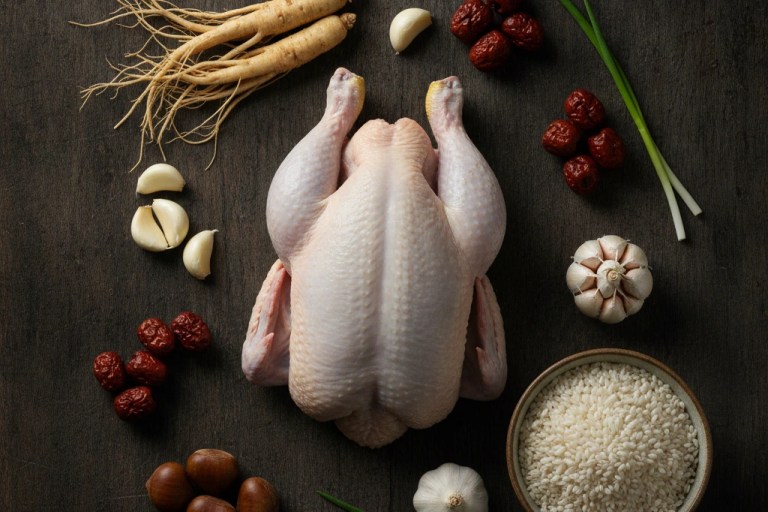
    Samgyetang ingredients whole young chicken ginseng root jujube garlic and glutinous rice — samgyetang ginseng chicken

    A proper samgyetang is a whole young chicken, cavity packed with glutinous rice (찹쌀), whole garlic cloves, a jujube (대추), sometimes chestnut, and a ginseng root (인삼). It simmers for hours until the meat gives up.

    The broth is where people get surprised. There’s no soy sauce, no gochujang, no chili — nothing to hide behind. It’s chicken, ginseng, garlic and time. That’s it. If you’ve built your idea of Korean food around red and spicy, this will reset it.

    How to eat it without looking lost

    1. Season it yourself. There’s salt and pepper on the table for a reason — the broth arrives deliberately unsalted. Take a spoonful plain first, then salt to taste. Many people mix salt and pepper into a small dish and dip the meat instead.
    2. Pull the chicken apart with your spoon and chopsticks. No knife. It should surrender easily.
    3. The rice inside is the point. Once you’ve eaten some meat, break the stuffed rice into the broth. It thickens into something like porridge. This is the part regulars come for.
    4. Eat the ginseng. It’s bitter and woody and that’s correct. Chew it slowly. Some leave it; you shouldn’t.
    5. The jujube is optional. Nobody will judge either way.

    You’ll often be offered a small cup of insamju (인삼주), ginseng liquor, at the start. It’s traditional to pour a little into the broth or drink it alongside. It’s strong. Pace yourself.

    Where to eat it in Seoul

    Traditional hanok style samgyetang restaurant interior near Gyeongbokgung Palace Seoul — samgyetang ginseng chicken

    If you’re doing Gyeongbokgung Palace anyway — and most visitors do — the timing works out neatly.

    Tosokchon Samgyetang (토속촌 삼계탕)
    Seoul’s most famous samgyetang house, a short walk from Gyeongbokgung Palace.

    📍 Address — 5, Jahamun-ro 5-gil, Jongno-gu, Seoul (서울 종로구 자하문로5길 5)
    🕙 Hours — 10:00–22:00 daily (last order 21:00)
    💰 Price — Standard samgyetang around ₩20,000; the black-silkie version costs more
    🚇 Getting there — Gyeongbokgung Station (Line 3), Exit 2, then a few minutes on foot
    🚗 Parking — Available, first hour free
    📞 02-737-7444

    It sits in a converted hanok complex of low rooms and wooden beams, and it’s known as a favorite of the late President Roh Moo-hyun. Expect a line at lunch, especially on bok days. It moves faster than it looks.

    Prices and hours change. Please confirm before you go.

    Plan your visit

    • When — Samgyetang is served year-round, but the atmosphere peaks on the three bok days. Come then if you want the cultural moment; come any other day if you want a seat.
    • Pairing it — Gyeongbokgung in the morning, samgyetang at 11am before the rush, then Bukchon Hanok Village or Tongin Market in the afternoon. It’s a natural half-day.
    • If you don’t eat chicken — there isn’t really a substitute here. Consider seolleongtang, Korea’s other great white-broth soup, made from ox bone instead.

    Samgyetang came down from the palace; budae jjigae came up from a US army base after the war. Two soups, opposite directions — that contrast is most of Korean food history in miniature. For the wider picture, our Korea food guide by region maps them out. And if you’re staying in the city, the Seoul neighborhood food guide covers what to eat where.

    FAQ

    Why do Koreans eat hot soup on the hottest day of the year?

    It’s a principle called iyeolchiyeol (이열치열), “fight heat with heat.” The traditional reasoning is that summer heat drives warmth to the body’s surface and leaves the core weak, so warming food restores balance and the resulting sweat cools you. It’s as much ritual as physiology, and it’s taken seriously.

    When is bok-nal in 2026?

    Chobok falls on July 15, jungbok on July 25, and malbok on August 14, 2026. The dates shift each year because they follow the lunar-solar calendar from the summer solstice. 2026 is a wolbok year — 20 days between jungbok and malbok instead of 10 — which folk wisdom reads as a longer heat.

    Is samgyetang spicy?

    No. There’s no chili at all. The broth is chicken, ginseng, garlic and jujube — clean and mild, and it arrives unsalted so you season it yourself. It’s one of the easiest Korean dishes for someone who doesn’t handle heat.

    Do you eat the whole chicken, bones and all?

    The meat only. The chicken is young and small, so the flesh separates easily with a spoon — no knife needed. Leave the bones in the bowl. Do eat the rice stuffed inside and the ginseng root.

    Was samgyetang always a common dish?

    The opposite. Ginseng was expensive enough that chicken-and-ginseng soups belonged to royal court cuisine during the Joseon Dynasty, and records from King Injo’s reign describe a version served to the ailing queen. It only reached restaurants around the 1940s and ordinary tables after the 1960s.

    Why is it called samgyetang and not gyesamtang?

    It was gyesam-tang (chicken-ginseng-soup) when it was first sold commercially in the 1950s. From the 1960s, cooks began stuffing whole ginseng roots into the bird rather than using powder, and the name was flipped to samgye-tang — ginseng first — to emphasize the medicinal value people were paying for.