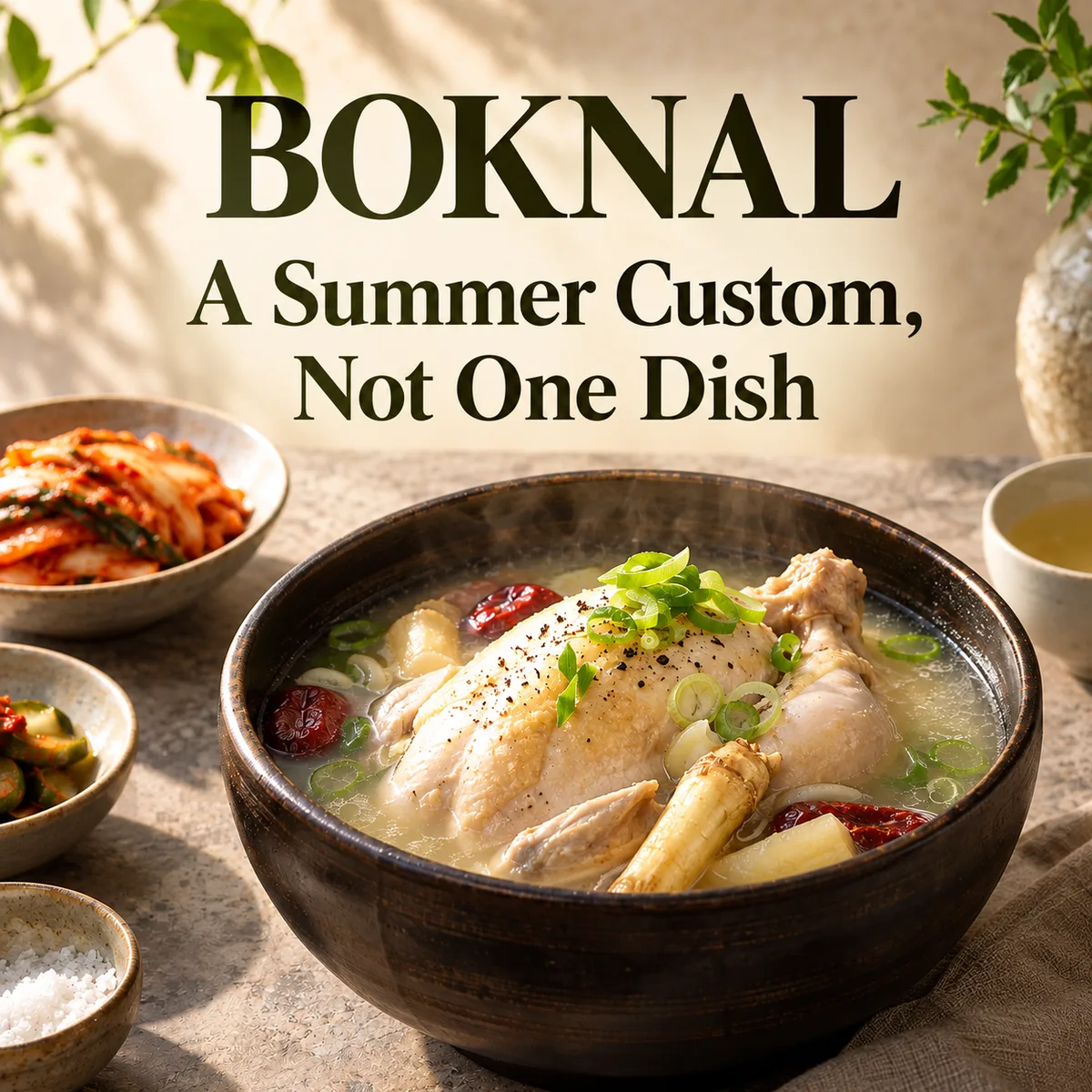
A restaurant queue on Boknal tells you something about a calendar and a custom, not necessarily the thermometer. The three summer days belong to a traditional timing system; they are not guaranteed to be the three highest-temperature readings of the year.
That distinction leaves room for a better question: why did an older seasonal meal custom become so closely associated with a comparatively modern samgyetang restaurant bowl?
Three calendar days, not three weather predictions
The first Boknal is Chobok, the second is Jungbok, and the third is Malbok. The Chinese character bok (伏) carries meanings such as lying down, crouching or hiding. That literal meaning has encouraged many poetic explanations about people or nature bowing before the heat. The safe historical point is simpler: the character is part of the long-established name of this seasonal period, while later storytelling often adds imagery around it.
Boknal uses gyeong days in the traditional sexagenary cycle. Chobok is the third gyeong day after the summer solstice, Jungbok the fourth, and Malbok the first after Ipchu, the beginning-of-autumn solar term. They usually fall ten days apart; in some years Jungbok and Malbok are twenty days apart, an interval called wolbok (월복/越伏).1

This is why an evergreen guide should not permanently bake one year’s three dates into the main explanation. The useful information is the rule. If you are actually traveling during July or August, check the current year’s dates shortly before the trip.
Korean and tourism sources commonly describe Sambok as the hottest part of summer, and the phrase sambok-deowi (삼복더위) itself evokes oppressive peak heat. But a modern weather station can easily record the year’s highest temperature on some other date. Climate does not obey a ritual calendar.
That does not make the phrase wrong. Seasonal calendars work by marking a period when a community expects certain conditions and organizes behavior around them. Boknal says, in effect, “we are in the hardest stretch of summer now.” The precise daily maximum temperature is secondary to that cultural function.
This distinction is useful for visitors because it prevents a strange question: “What if Chobok is cloudy—does Boknal get canceled?” No. The date is calendrical, not chosen after the weather report.
Summer work and the older idea of replenishment
The 2026 National Folk Museum of Korea essay on samgyetang history connects Sambok to the demanding agricultural calendar. Before mechanized farming and air-conditioned work, the period around Sambok coincided with some of the most exhausting summer field labor. The article describes farmers completing repeated rounds of weeding before the mid-summer seasonal cycle and using animal foods to rebuild strength after heavy work.2
This context matters because modern articles often reverse the history. They begin with samgyetang, then assume Boknal must have been invented to celebrate that soup. The chronology works the other way around: the seasonal need and the custom are older than samgyetang’s modern named form.
The Academy of Korean Studies’ Boknal entry also records a broader world of older summer customs: special foods, resting in mountain valleys, eating fruit, folk beliefs about bathing, and agricultural sayings tied to rice and jujube crops. Boknal was part of a seasonal system, not merely a menu promotion.
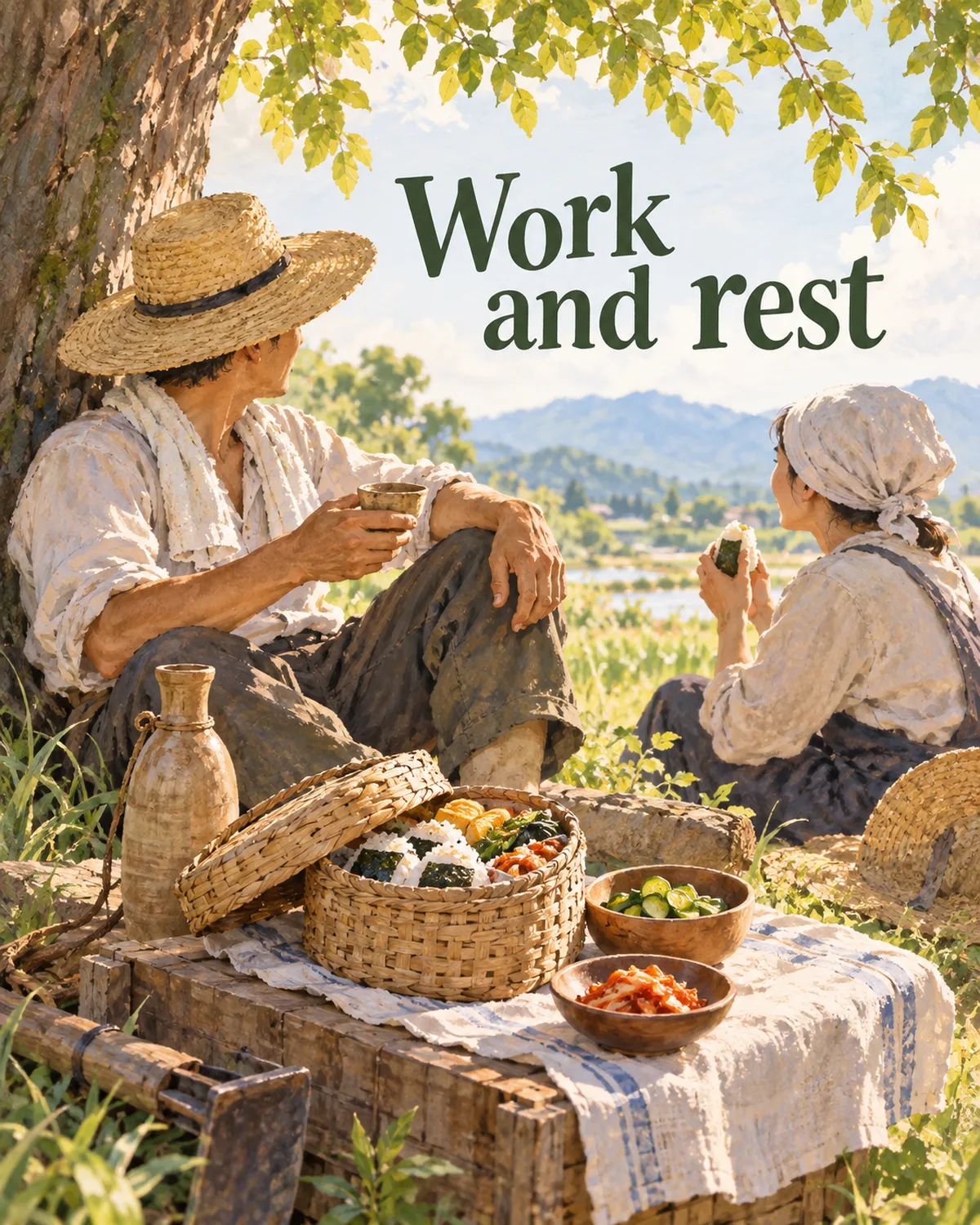
This is one of the most important corrections to the modern image. Today, a television camera filming Boknal will almost inevitably find a line outside a samgyetang restaurant. Yet the National Folk Museum notes that before the 1970s, other animal foods—most notably dog meat in historical Boknal custom—held a much more prominent place.
The Academy of Korean Studies documents older gaejang-guk meals and other foods believed to support the body through summer. Those descriptions record past practices and beliefs; the menu a diner chooses today can be quite different.
Boknal’s continuity lies in the seasonal slot, not in one permanently fixed dish. A seasonal slot can remain stable while the representative food changes. Boknal survives because people continue to mark peak summer through eating; the food chosen to perform that ritual can shift with agriculture, ethics, supply chains, public taste and restaurant culture.
Samgyetang became a modern seasonal icon
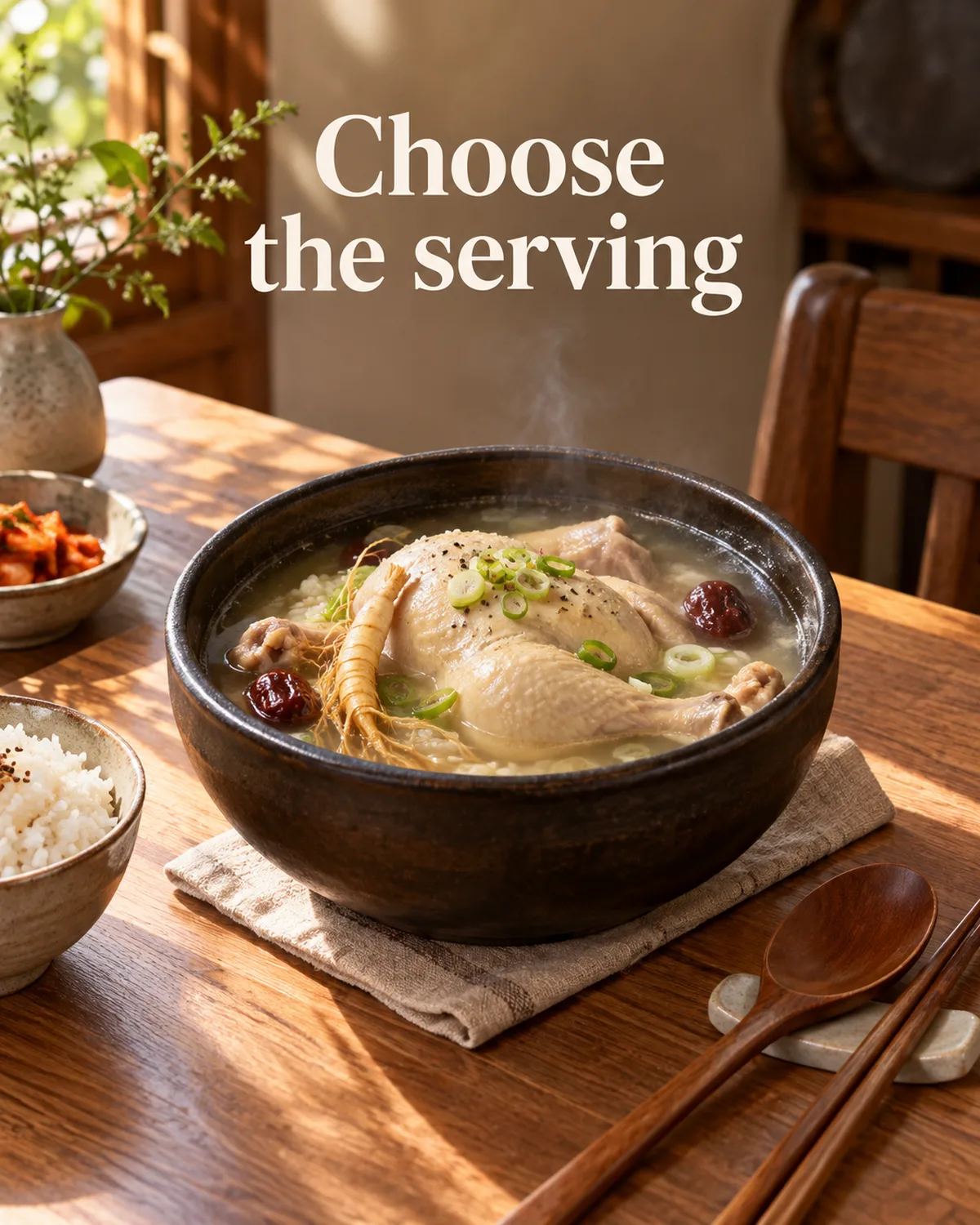
Samgyetang now looks inseparable from Boknal: a small whole chicken stuffed with glutinous rice, garlic, jujube and ginseng, simmered in broth and served steaming. But the dish’s modern name is not an ancient Joseon label.
The National Folk Museum traces the modern samgyetang name and restaurant bowl through 20th-century cooking and supply changes. The samgyetang article follows those developments in detail. For Boknal, the crucial point is the order: the seasonal occasion came first, and its best-known modern menu came later.
That makes samgyetang an ideal modern Boknal food, but not proof that today’s exact bowl was eaten for centuries. Old ingredients, an older seasonal need and a newer restaurant format converged. The result became traditional through repetition.
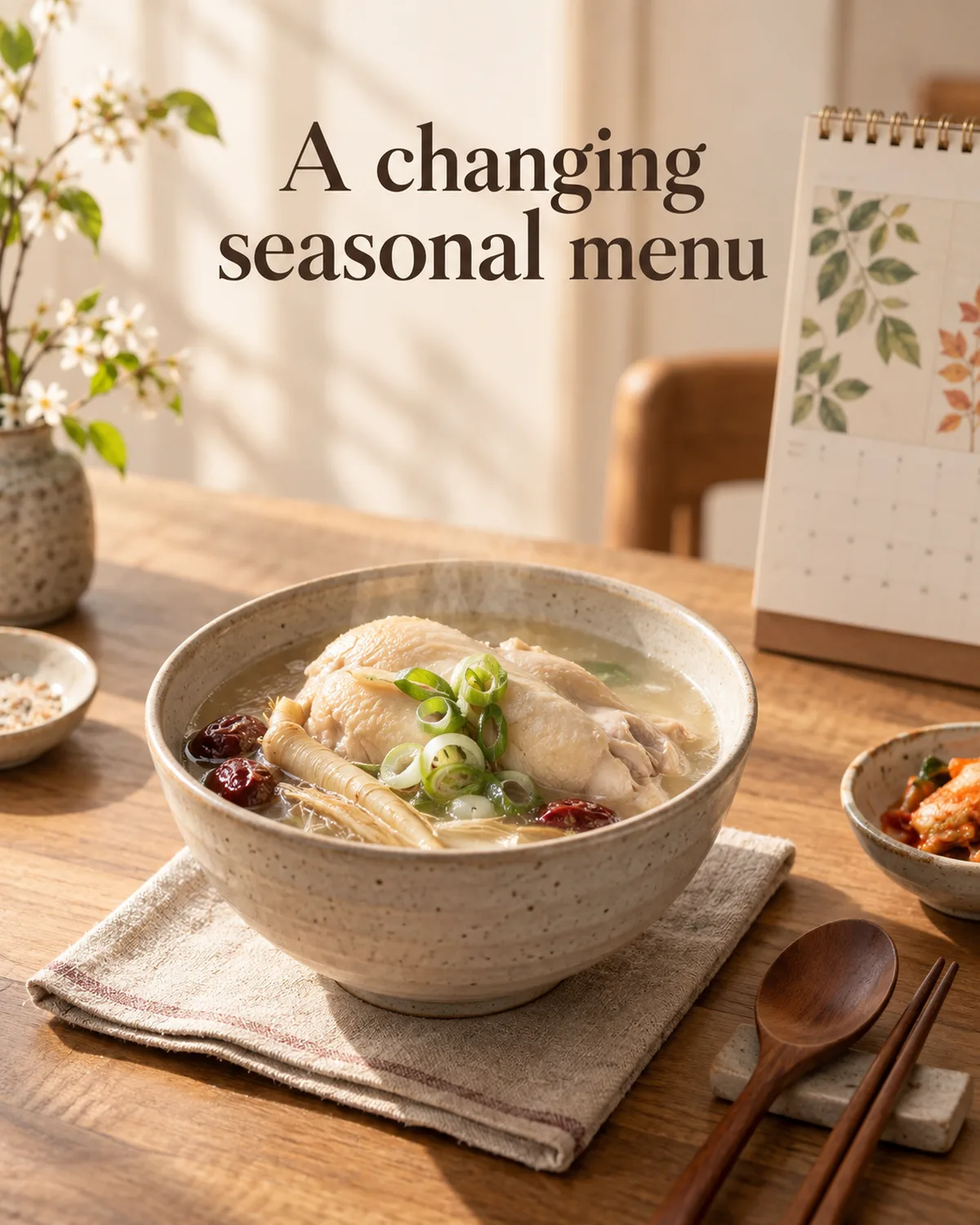
A tradition is not a museum label assigned once. It is a behavior repeated by communities and passed on with meaning. Samgyetang became powerful precisely because it fit an existing summer category: substantial animal food eaten when heat and labor were thought to drain strength. Poultry production and cold-chain distribution made the bowl scalable; restaurant culture made it visible; families and media repeated the association until it became expected.
What “fight heat with heat” means—and does not mean
The phrase most associated with Boknal is iyeol-chiyeol (이열치열), usually translated as “fight heat with heat” or “treat heat with heat.” It makes the visual paradox memorable: people eat a bubbling chicken soup while the outdoor air is already oppressive.
Official tourism writing uses this phrase to explain the summer custom. It does not establish that every hot restaurant meal lowers body temperature or makes dangerous heat exposure safe.
Korean writing often groups Boknal dishes under terms such as boyangsik (보양식), meaning nourishing or restorative food. The category makes sense historically: a high-effort work season encouraged people to value calorie-dense animal foods, protein-rich soups and ingredients associated with strength.
So this guide keeps two statements separate. “Koreans historically regarded these foods as restorative” is a cultural fact. “This dish will cure fatigue, prevent heat illness or boost immunity” is a medical claim that requires evidence far beyond tradition.
More than one food can mark the season
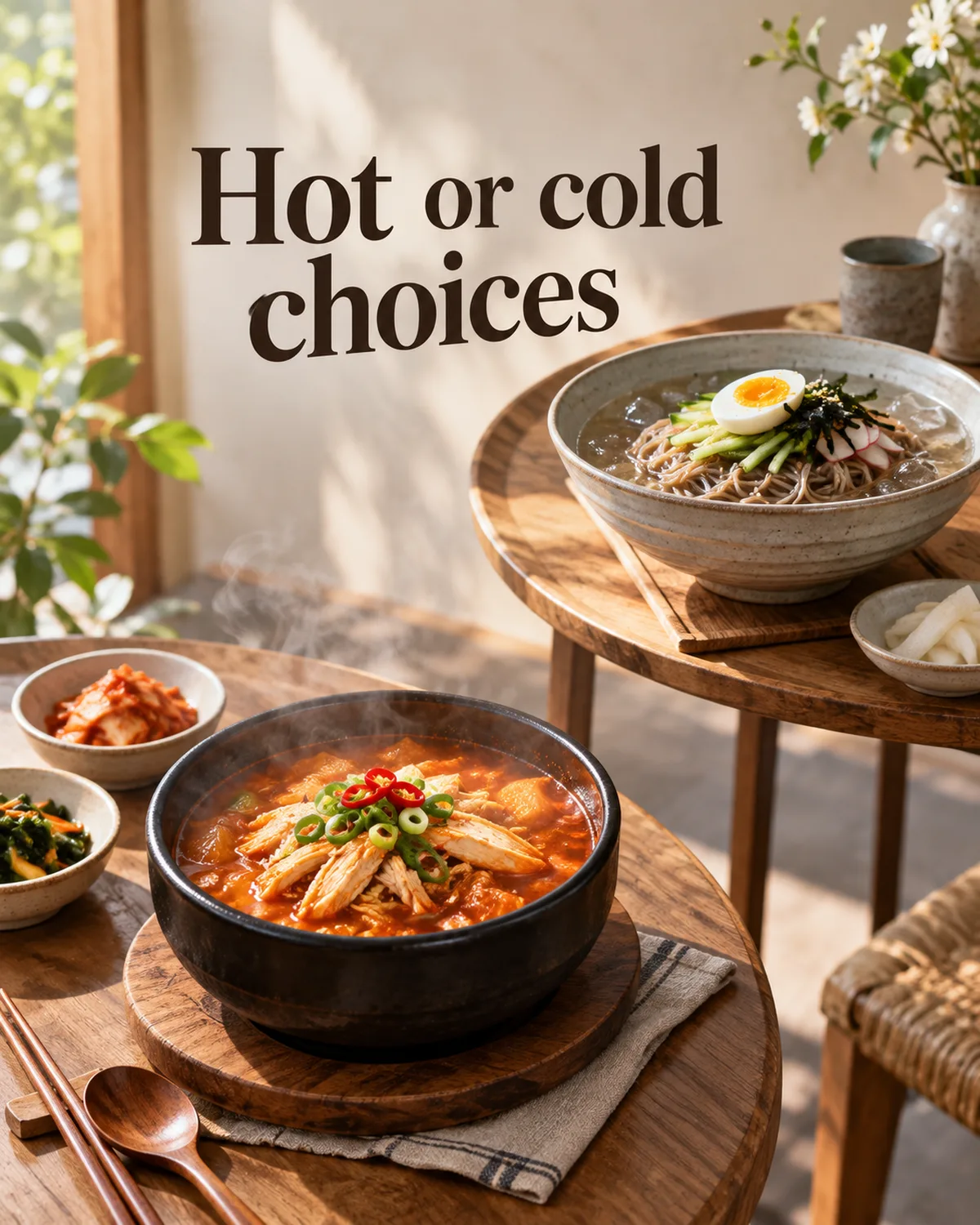
Modern tourism guides list several substantial summer foods alongside samgyetang. Grilled eel appears frequently because it is rich and energy-dense. Chueotang, a loach soup, represents another long-standing nourishing-food tradition. Duck baeksuk and richer chicken soups can fill the same cultural role. Households and regions make different choices.
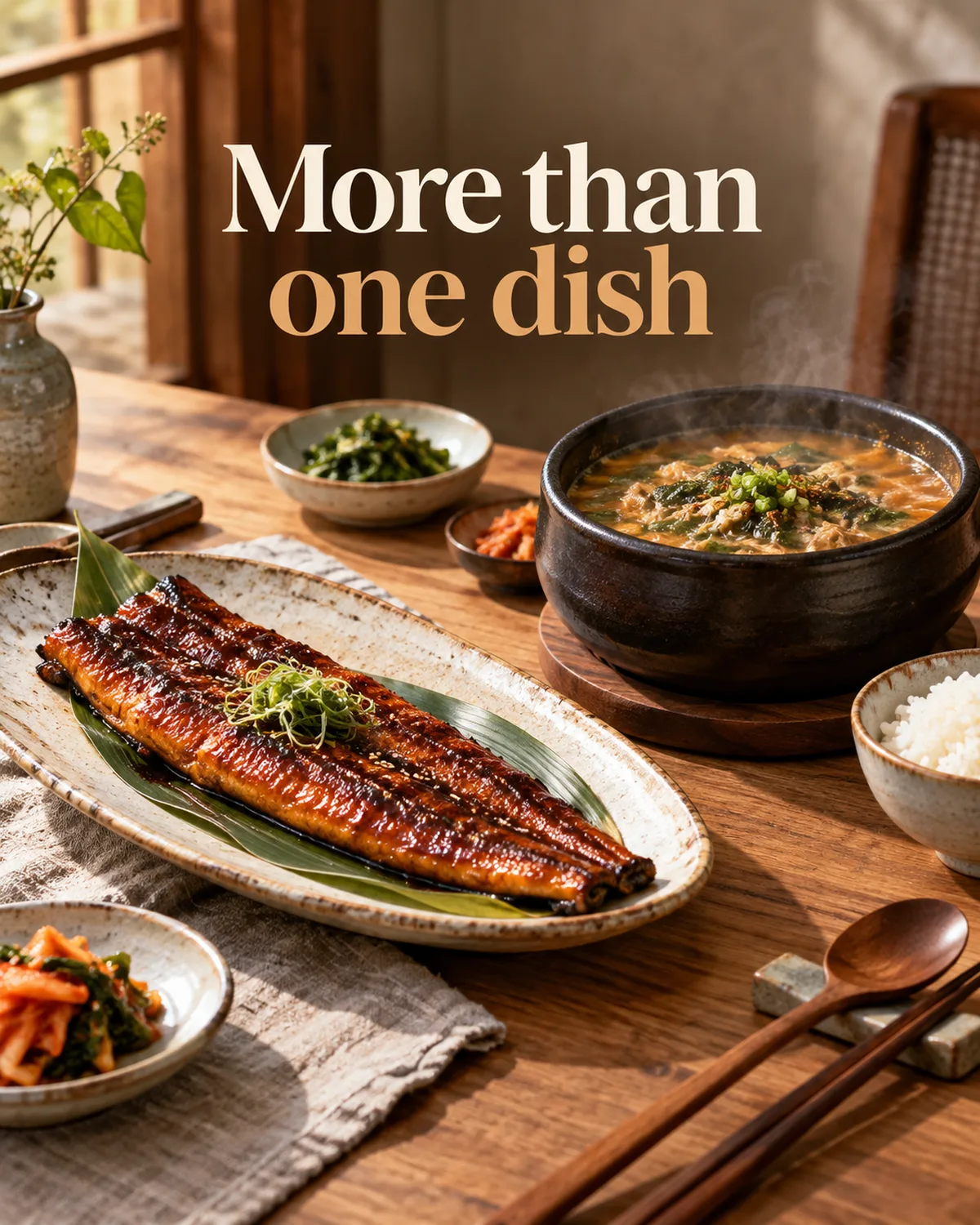
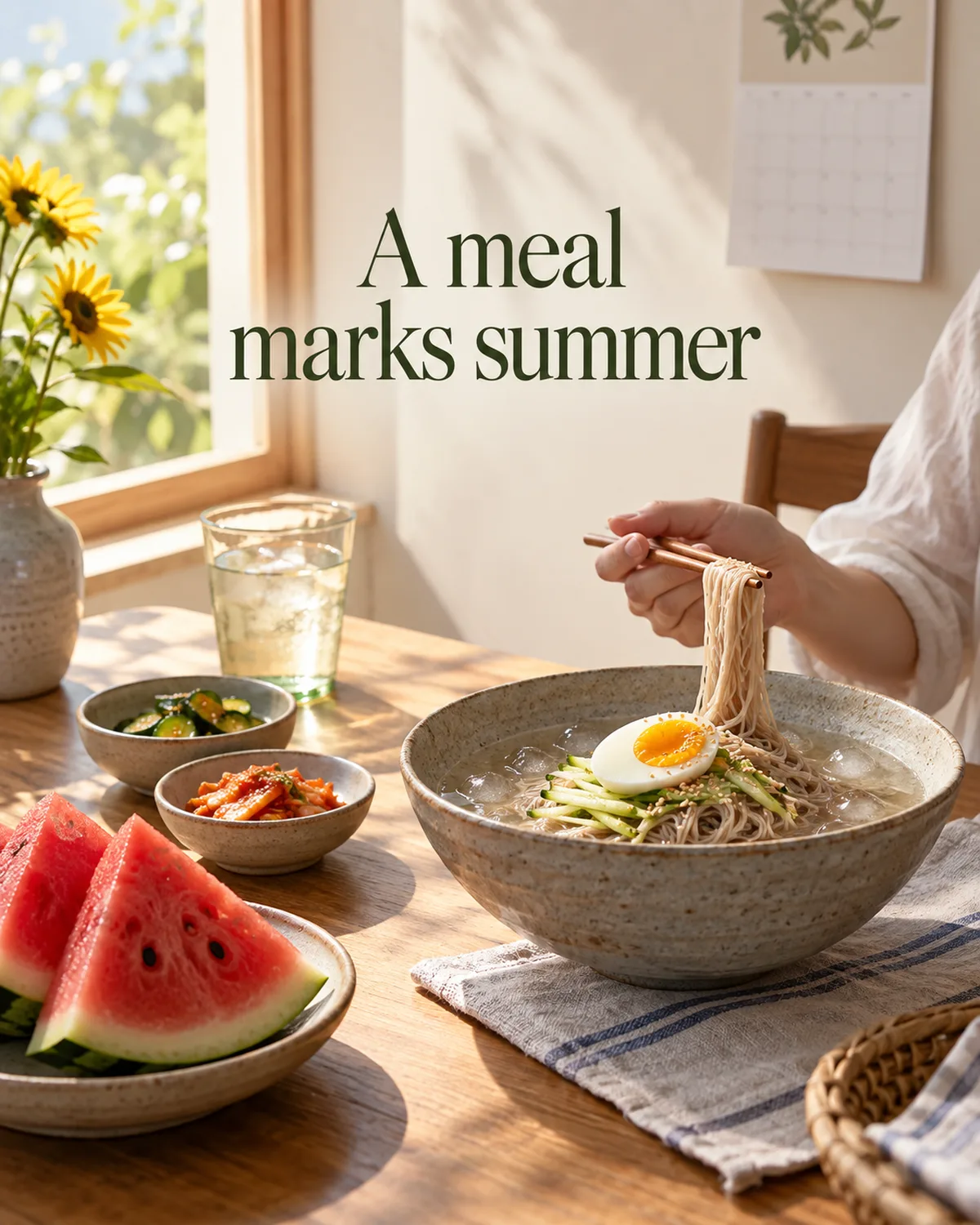
Cold foods also remain part of Korean summer. Kongguksu, naengmyeon, chilled fruit, bingsu and cold drinks do not disappear because iyeol-chiyeol exists. Real food culture is not a philosophical purity test. People can eat samgyetang on Chobok and cold noodles the next day.
This is why the best definition of Boknal is not “the day Koreans eat hot soup.” It is a peak-summer marker around which nourishing-food customs become especially visible.
If you happen to be in Korea on a Boknal date, there is no single required meal. A simple way to experience the custom is to choose one food with a clear summer-nourishing connection, understand why it belongs to the season, and notice how other diners and media are marking the date.
Samgyetang is the most legible option because the seasonal association is so strong. But grilled eel, chueotang, baeksuk or another substantial local dish can make sense too. If hot soup sounds miserable in humid weather, there is no cultural penalty for choosing a cold summer meal instead.
The tradition is not an exam in Korean authenticity. It is an invitation to notice how the calendar, weather and food economy interact.
A custom also changes the restaurant day
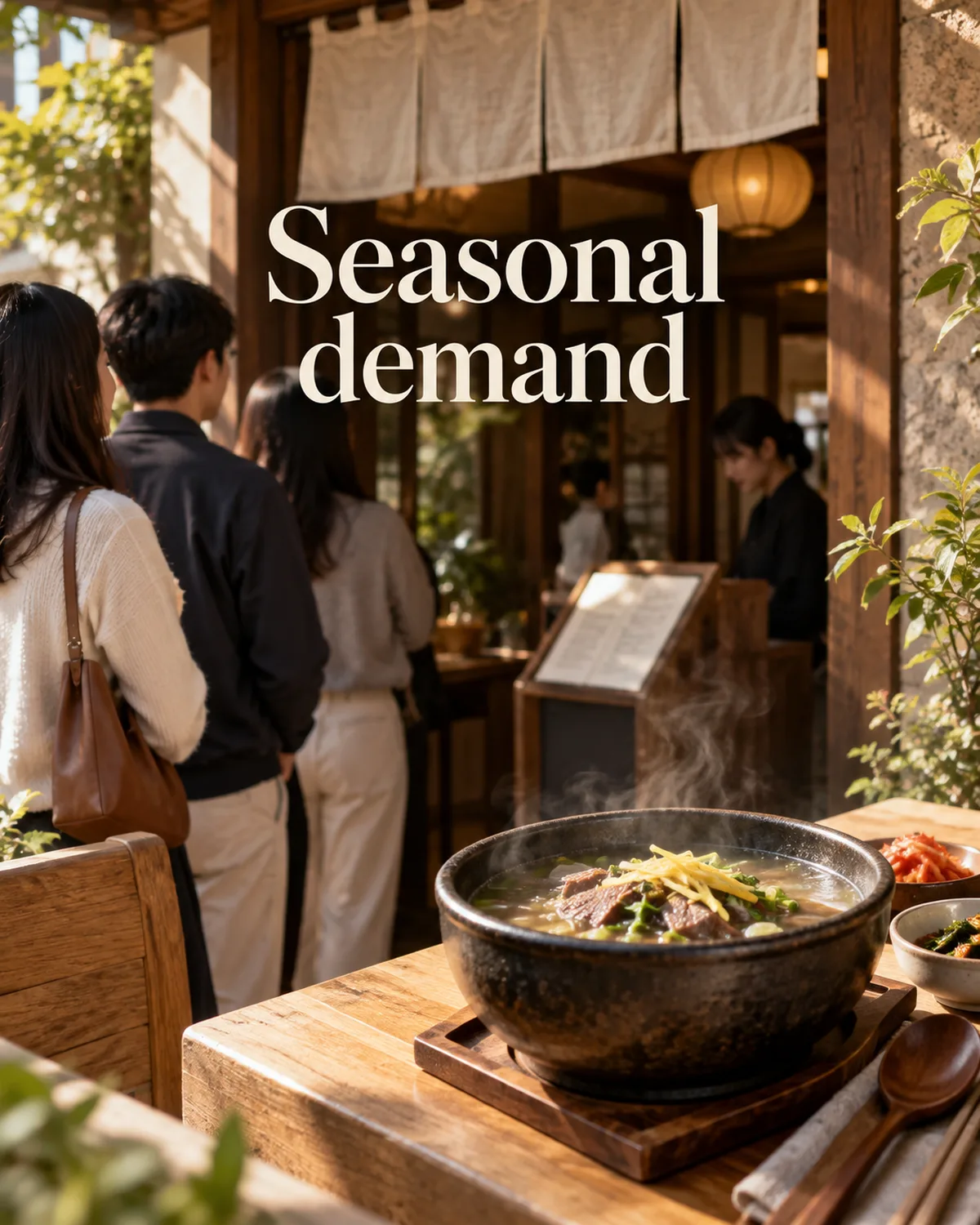
Seasonal rituals become easiest to see when they change ordinary consumer behavior. On Boknal, famous samgyetang restaurants can attract substantial queues, lunch demand rises, news coverage returns to summer foods, supermarkets promote chicken and ginseng ingredients, and ready-meal brands foreground packaged versions.
The food has not changed because the calendar arrived, but the concentration of demand has. That makes Boknal a useful case study in how culture affects restaurant economics. One seasonal expectation can push thousands of customers toward the same category at nearly the same time.
For a traveler, this creates a choice. Eating at a famous shop on Chobok offers the social atmosphere of the ritual—crowds included. Eating the same category of food a day earlier or later may offer a calmer meal. Neither is more historically “authentic.” They are different experiences of the same tradition.
If Boknal existed only as a practical response to outdoor agricultural labor, modern cooling should have weakened it dramatically. Instead, the ritual persists. That tells us what seasonal food does beyond nutrition.
Seasonal foods mark time. Songpyeon can signal Chuseok; tteokguk can mark the New Year; samgyetang can signal that the deepest part of summer has arrived. Once a dish becomes a calendar cue, its social value no longer depends on reproducing the exact conditions that created the custom.
This is also why Songpyeon at Chuseok is a useful comparison. Both foods help make an abstract point in the calendar tangible. You can taste the season.
Choose the meal without treating it as a health ritual
A standard samgyetang is usually an individual whole chicken with rice and aromatics. Broth styles vary from clear and mild to rich and cloudy. Some restaurants leave much of the final seasoning to the diner with salt and pepper; others season more aggressively in the kitchen.
Premium bowls may add abalone, black chicken, extra ginseng or herb packages. Those additions can change flavor and price, but “more medicinal-looking ingredients” does not automatically mean more historically authentic or medically effective.
On a peak Boknal day, the most practical questions are ordinary ones: how long is the wait, is one bowl enough for your appetite, do you have dietary restrictions, and is the restaurant’s current service format convenient for your group?
Traditional Boknal foods are often meat- or fish-centered, and standard samgyetang is based on chicken. A bowl with visible vegetables is not vegetarian if the broth is poultry-based. Chueotang contains fish; eel is fish; many baeksuk dishes use chicken or duck.
Plant-based diners can still participate in the seasonal idea without pretending that the traditional meat dishes are vegetarian. A substantial bean dish, kongguksu or another summer meal can mark the day personally.
For allergies, ask about complete preparation rather than only the headline ingredient. Herbal packs can contain multiple roots. Premium samgyetang may include shellfish such as abalone. Prepared sauces and shared kitchens create additional variables.
Begin with the occasion and the food, not a promised effect. A chicken soup, another substantial cooked dish or a cold noodle meal can occupy different places in a Korean summer. They do not need to be ranked as the one correct response to the season.
Iyeol-chiyeol, often rendered as fighting heat with heat, is useful cultural language. It should not become advice to ignore cooling, hydration or signs of heat illness. Likewise, a celebrity eating a seasonal dish can introduce the custom to new viewers without explaining its origin or proving a medical outcome. Keeping those claims apart makes the food story clearer, not less enjoyable.