Why Koreans Eat That

Tag: seasonal korean food

  • Songpyeon vs Mochi vs Mooncake: Why Korea’s Chuseok Rice Cake Is a Half Moon

    Songpyeon vs Mochi vs Mooncake: Why Korea’s Chuseok Rice Cake Is a Half Moon

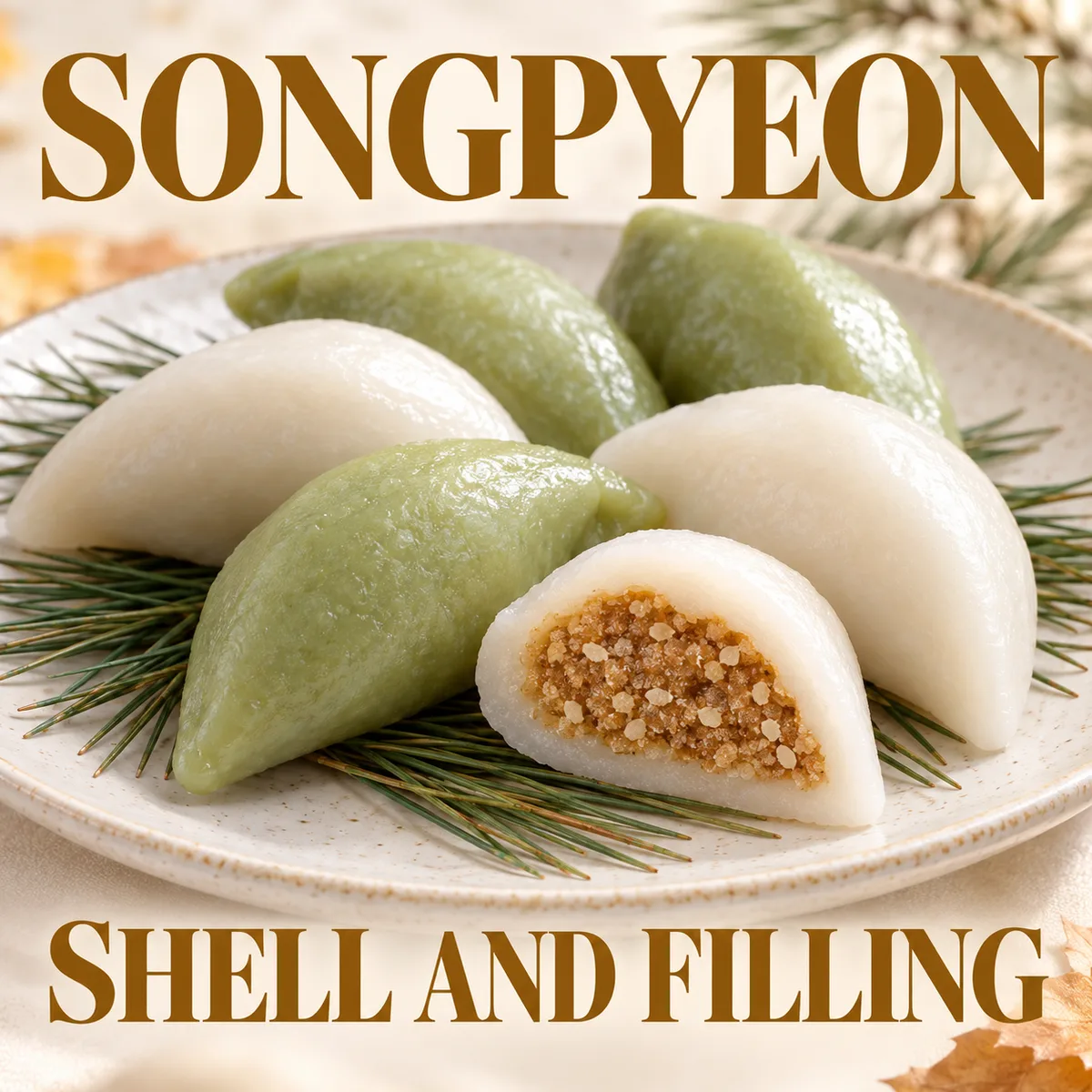
    Songpyeon gives the first bite two layers: a rice-dough shell and a filling enclosed inside it. A curved edge and a pinched seam make the familiar half-moon form easy to recognize. Comparing it with mochi and mooncakes works best when you look beyond the outline to how each food is made.

    Why a half moon? The practical answer begins with shaping filled dough and sealing it into a crescent. A Korean cultural feature also retells a legend that associates a crescent with growth and a full moon with decline. That is a traditional explanation of the symbolism, not evidence that the legend established the recipe or its invention date.[2]

    The shape is familiar rather than universal. The same feature describes a flat, round Jeju version. A round rice cake therefore does not automatically stop being songpyeon, and a crescent alone cannot tell you the flour, filling or regional preparation.[2]

    The most useful comparison has three questions: what forms the outside, how is it cooked and what is inside? Those questions keep Korea’s steamed rice cake, Japan’s many mochi preparations and the varied mooncakes of Mid-Autumn from becoming three interchangeable festival sweets.
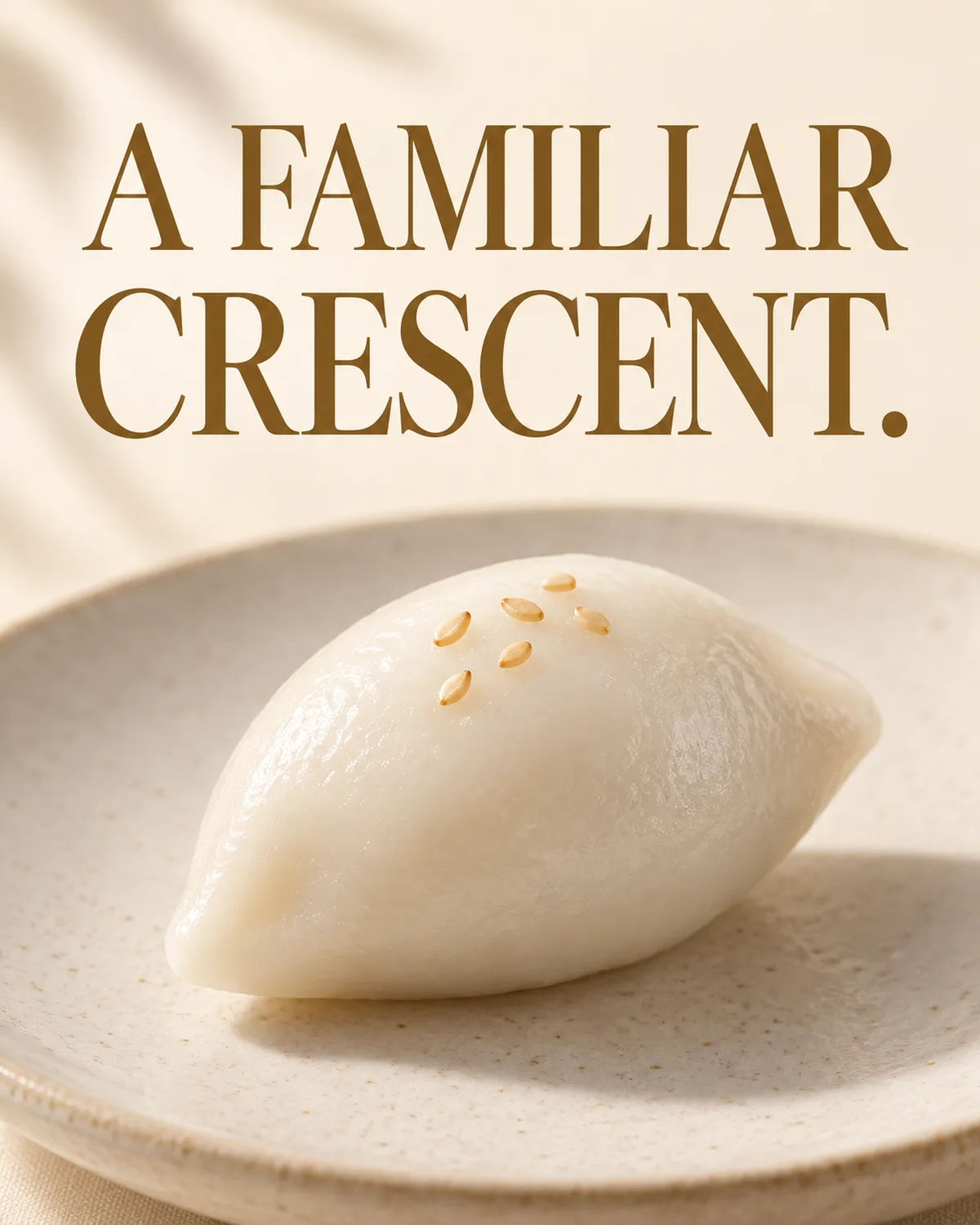
    The crescent is familiar, while regional forms can differ.
    The crescent is familiar, while regional forms can differ.

    Songpyeon: a sealed rice shell

    The Academy of Korean Studies describes a standard method using non-glutinous rice flour kneaded with hot water, shaped around a filling and steamed. Its account lists fillings such as beans, sesame and pine nuts. The rice shell is part of the finished bite, rather than a wrapper that disappears behind the center.[1]

    To read a cut piece, look for the distinct boundary between dough and filling. A fine filling can seem more integrated with the shell than a filling with visible pieces. Color on the outside, however, is a separate clue; it does not reliably identify every ingredient in the middle.

    The curve is made during shaping rather than supplied by a mold that all households must use. The seam has a concrete job: keeping the filling enclosed. A neat crescent and a more rounded piece can both invite the same question about the center, even when their silhouettes differ.

    Pine needles belong to the customary steaming association and aroma described in the cultural feature. They should not be confused with pine nuts used as a possible filling. A needle beside a cake and a nut inside it have different culinary roles.[2]
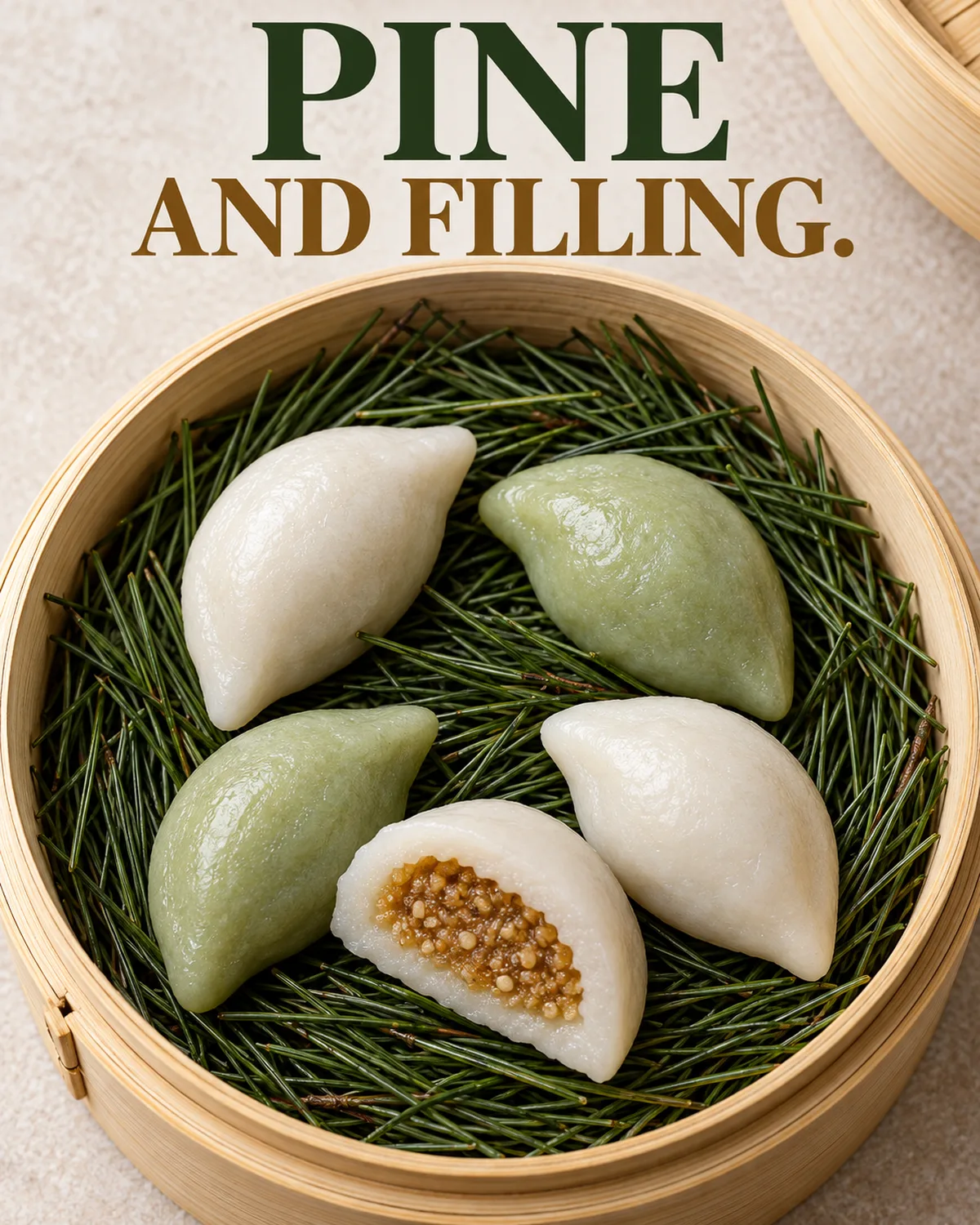
    Pine needles used in steaming and a filling inside the cake have different roles.
    Pine needles used in steaming and a filling inside the cake have different roles.

    Mochi: preparation matters more than the label

    JNTO describes the classic mochi process as cooking glutinous rice and pounding it into a cohesive mass. That is a useful contrast with the flour dough used for the standard songpyeon method. It also discusses savory as well as sweet regional traditions, so mochi should not be reduced to a single filled dessert.[3]

    Kyoto examples documented by Japan’s agriculture ministry combine glutinous rice with ingredients such as millet or other grains, then steam and pound it. Their serving methods include preparations beyond a plain sweet bite. One ingredient or topping cannot represent the entire mochi category.[4]

    A plain piece makes the rice texture the main event. A filled sweet adds another layer, while a savory serving changes the surrounding flavors. When a shop uses mochi in an English product name, read the actual item rather than assuming it matches every traditional preparation.

    For a tasting comparison, pay attention to how the surface and center behave together. A sealed songpyeon has a dough boundary around its filling. A mochi item may be plain, filled or served with other ingredients. Comparing those particular pieces is more informative than ranking two broad names.

    Classic pounded mochi and a filled songpyeon illustrate different rice preparations.
    Classic pounded mochi and a filled songpyeon illustrate different rice preparations.

    Mooncakes: a varied pastry family

    The Hong Kong Tourism Board presents mooncakes as part of Mid-Autumn sharing and describes both traditional fillings and modern variations. Lotus-seed paste and salted egg yolk are examples, not compulsory contents. The occasion and the many available versions matter as much as a round outline.[5]

    A maker’s dated example makes that variety concrete. The Peninsula’s July 2026 announcement describes Spring Moon egg-custard mooncakes with flaky pastry and includes both round and heart-shaped offerings. The announcement documents that seasonal collection; it does not establish present stock or a universal shape rule.[6]

    In a baked pastry example, cutting exposes an outer crust around a denser filling. That structure differs from a steamed rice-dough shell. A modern chilled or other variation may change the comparison again, so check which kind of mooncake is actually on the plate.

    Sharing a cut mooncake also changes the tasting experience. A small wedge exposes the layers and makes the relationship between crust and filling easy to see. Compare the portion in front of you without assuming that one whole cake is the appropriate serving for every person.

    A baked mooncake example has a crust surrounding its filling.
    A baked mooncake example has a crust surrounding its filling.

    The harvest connection is broader than one story

    The Academy’s account connects new-rice songpyeon with the eighth lunar month, but also records a second-month custom involving cakes for servants. Songpyeon therefore has a documented seasonal life beyond a claim that Koreans eat it only on Chuseok.[1]

    A festival association gives a food social meaning without prescribing every family’s plate. Different fillings, colors and regional forms can coexist within that association. A contemporary shop display is an example of what that seller offers, not a complete map of Korean household practice.

    Likewise, mochi belongs to several Japanese occasions and regional settings. Mooncakes have their own Mid-Autumn sharing context. Their calendars can overlap in an autumn comparison while their techniques and meanings remain distinct.

    Treat the crescent legend as a story to discuss alongside the food. It can explain why growth is associated with the shape in that telling. It cannot replace evidence about the dough, steaming method or the many forms people actually make.

    The crescent legend explains symbolism rather than establishing a recipe’s invention.
    The crescent legend explains symbolism rather than establishing a recipe’s invention.

    Compare the pieces on the table

    Start with a cut songpyeon and identify its seam, shell and filling. Then inspect the particular mochi item: is it plain, filled or dressed? Finally, look at the mooncake’s crust and center. This order makes the comparison visible before you decide which texture you prefer.

    For a fair comparison, keep the pieces modest and taste them separately. A strong filling or topping can dominate the first impression. Notice what the outer layer contributes rather than treating all the flavor as a property of the rice or pastry alone.

    Ingredient questions belong to the particular product. A general category name cannot establish whether nuts, sesame, dairy or another ingredient is present. Ask the maker about the item being served when those details matter.

    The three foods are rewarding for different reasons: a steamed shell enclosing filling, a rice preparation that can take many forms, and a diverse pastry tradition shared around Mid-Autumn. Their familiar shapes open the conversation; the actual layers and methods make it worth continuing.
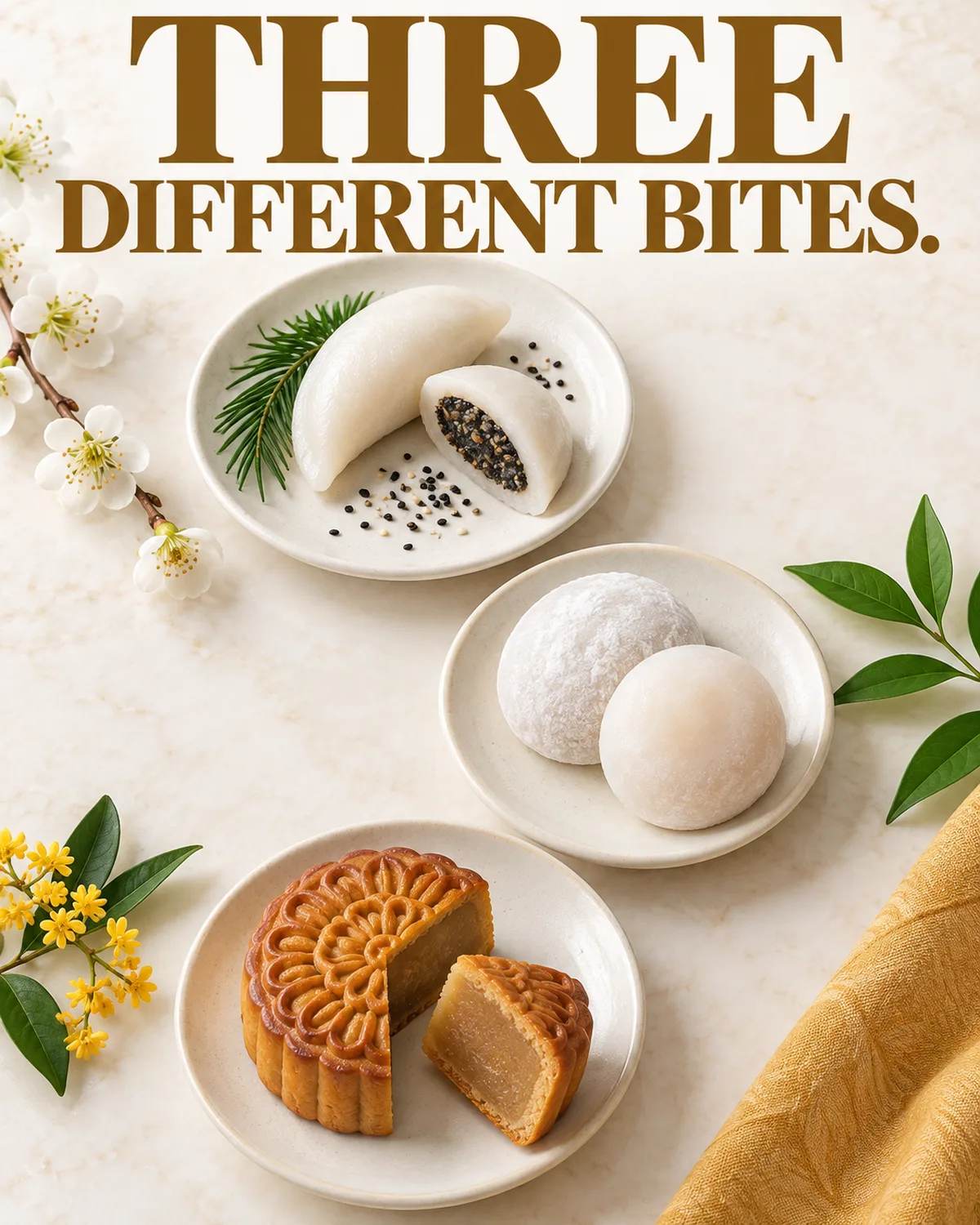
    The shell, preparation and filling make the comparison concrete.
    The shell, preparation and filling make the comparison concrete.

    Continue the Korean rice and sweets story

    Sources and reading

    1. Academy of Korean Studies — songpyeon
    2. Ministry of Culture, Sports and Tourism — songpyeon feature, September 9, 2024
    3. Japan National Tourism Organization — mochi and regional traditions
    4. Japan Ministry of Agriculture — Kyoto rice cakes
    5. Hong Kong Tourism Board — Mid-Autumn food traditions
    6. The Peninsula — Spring Moon seasonal announcement, July 28, 2026
  • Korean Cold Noodles (Naengmyeon): Why Korea’s Icy Summer Dish Was Once a Winter Food

    Korean Cold Noodles (Naengmyeon): Why Korea’s Icy Summer Dish Was Once a Winter Food

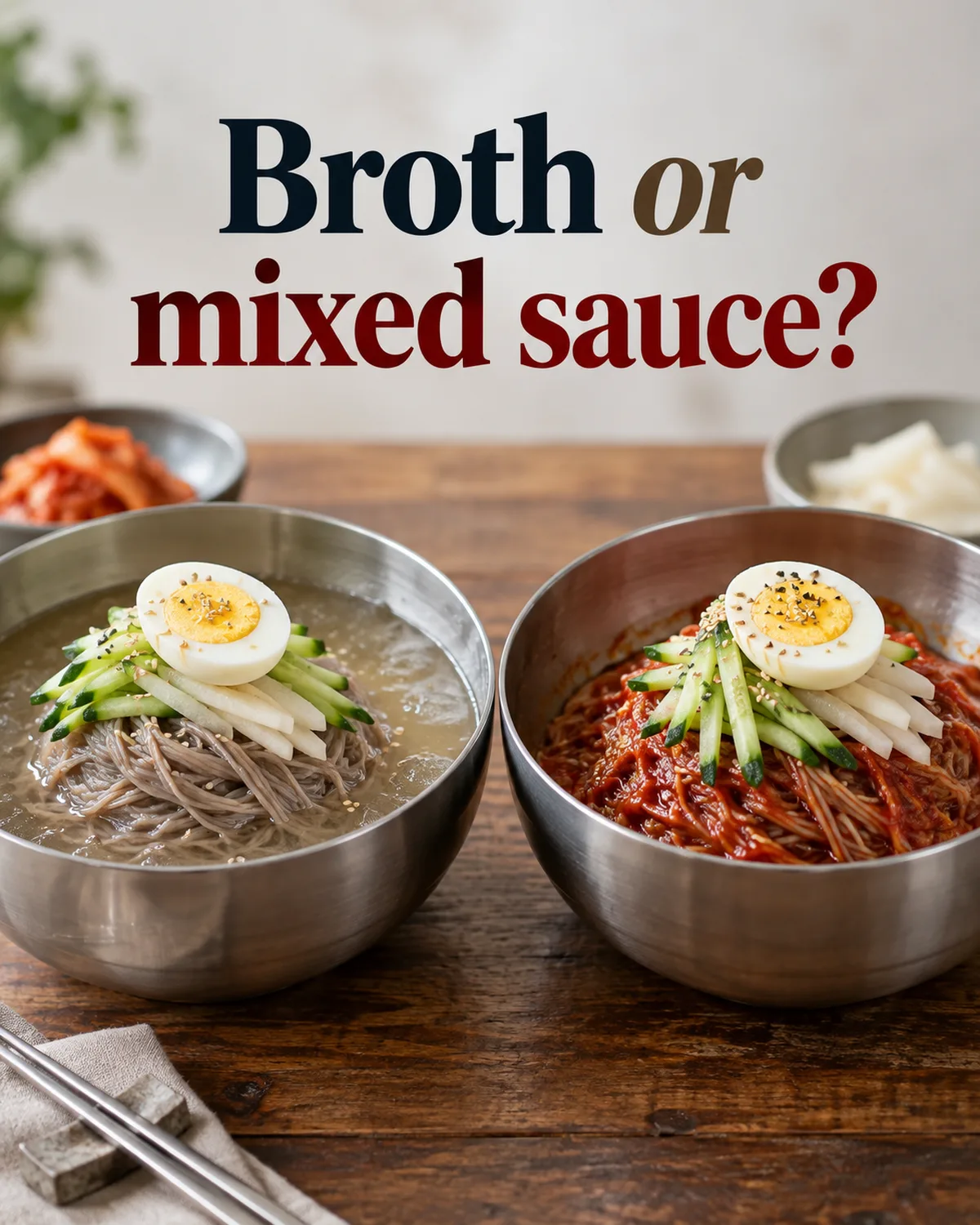
    Choose the liquid before choosing the regional label. A bowl of cold broth makes temperature and the first spoonful central; spicy mixed noodles put sauce directly around the strands. Both are naengmyeon, but they ask you to taste different things.

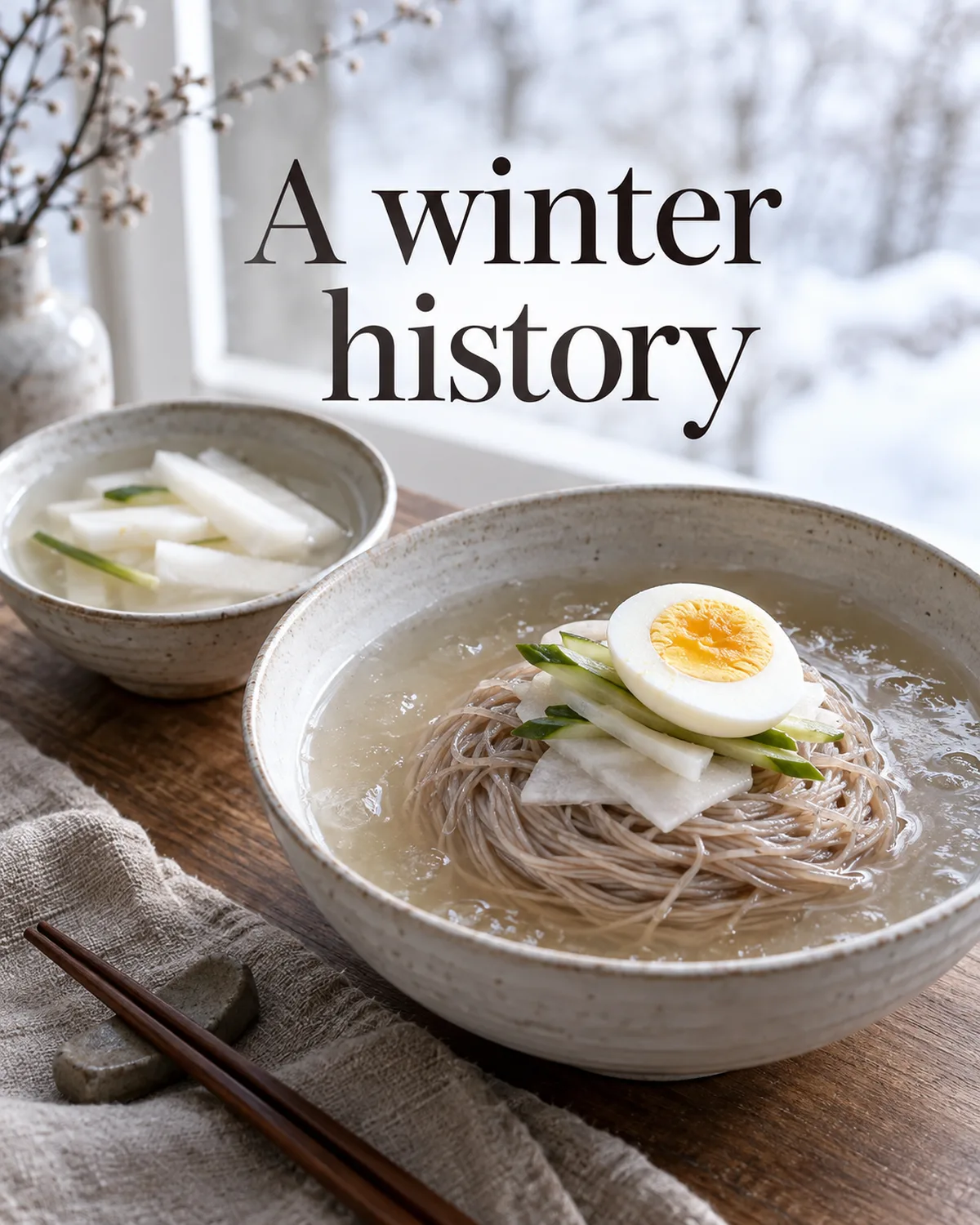
    The winter history makes the chilled bowl more interesting. Radish brine and northern noodle traditions belong to the story, while the modern ordering decision is still practical: broth or mixed sauce, a gentler bite or a springier chew, a main meal or a smaller finish after barbecue.

    Mul and bibim describe different serving formats.
    Mul and bibim describe different serving formats.

    A winter history behind a cold bowl

    The Academy of Korean Studies describes naengmyeon as noodles in chilled liquid and discusses Pyongyang, Hamhung and Jinju regional forms. Its entry records buckwheat-and-starch noodles, several meat or kimchi-based broth options and garnishes that can include meat, vegetables and egg.[1]

    Mul naengmyeon means the broth format; bibim naengmyeon means the mixed-sauce format. Pyongyang and Hamhung refer to regional associations. These are two different ways to describe a bowl: a menu offering mul and bibim does not automatically promise two exact historical city recipes.

    The same encyclopedia identifies naengmyeon as a historical winter specialty and cites Dongguk Sesigi among the records. Korea.net’s 2017 recipe feature connects the winter custom with dongchimi radish brine and the winter-solstice period. These accounts support winter associations, not an exact date when cold noodles were invented.[1], [3]

    Winter radish brine belongs to the documented story.
    Winter radish brine belongs to the documented story.

    The encyclopedia’s Pyongyang entry describes a relatively mild food tradition, buckwheat noodles mixed with starch, and a broth blending meat stock and dongchimi. It mentions older pheasant stock and later beef and bone stock. Its recipe is one documented preparation, not a universal ratio every restaurant must use.[2]

    Taste a spoonful before reaching for condiments. A restrained broth lets you compare grain aroma, the savory stock and the radish-brine note. If you expect every cold bowl to be sharply sweet and sour, that quieter starting point may be the most useful discovery.

    Notice the stock and radish-brine note before adding condiments.
    Notice the stock and radish-brine note before adding condiments.

    Ask about the noodle as well as the city

    Noodle composition changes the bite. Ask how the shop describes its buckwheat and starch mixture rather than guessing from the city name. A softer strand and a very elastic strand can require different amounts of chewing and different handling with chopsticks.

    There is no single buckwheat percentage for this guide to prescribe. If grain flavor matters to you, ask about the noodles; if ease of eating matters, ask about their texture and whether scissors are available.

    The encyclopedia associates Hamhung noodles with potato starch, pronounced chew, spicy mixing and a fish garnish such as flatfish or skate. That is a useful regional description; a particular South Korean restaurant may offer different toppings or both broth and mixed versions.[1]

    Read the fish topping separately from the sauce choice. A red bowl may contain fish, beef, egg or another garnish, and its color cannot tell you whether the fish is raw, seasoned or otherwise prepared. Ask the restaurant about the actual order rather than assuming every bibim bowl contains the same thing.

    The menu should explain the actual topping.
    The menu should explain the actual topping.

    Migration and a changing season

    The Pyongyang encyclopedia entry says people moving south after the Korean War helped spread the dish nationwide. Migration belongs to the history of where these noodles were served; it does not require every later restaurant to have the same stock, noodle ratio or garnish.[2]

    Winter history and summer appetite can coexist. The cold serving temperature is appealing in warm weather, but the bowl’s ingredients and regional memories have a longer story. You do not need an invented year when a winter food officially became a summer food.

    Mul and bibim are useful first decisions

    • Noodles: ask about buckwheat and starch, rather than assuming a fixed ratio.
    • Texture: compare a softer bite with a more elastic chew.
    • Liquid: check meat stock, kimchi brine and seasoning.
    • Topping: read the actual garnish and its preparation.

    Treat these comparisons as starting questions. Ask whether the noodles are buckwheat-forward or starch-forward, whether the broth is meat-based or mixed with kimchi brine, and what garnish the menu includes. A regional label alone does not answer all three.

    • Cold broth: start with mul naengmyeon.
    • Sauce around the strands: choose bibim naengmyeon.
    • Grain aroma: ask about buckwheat-forward noodles.
    • After barbecue: check finishing portions and whether to share.

    A restaurant may use the same noodles for its mul and bibim orders, or different recipes. The broth-versus-sauce decision is the quickest first choice; noodle composition is the next question when you want to compare texture.

    Ask about grain and starch as well as the serving style.
    Ask about grain and starch as well as the serving style.

    After barbecue, cold noodles create a distinct change from the hot grilled meat. Decide whether you want a shared contrast or another full meal. Check whether the restaurant offers a smaller finishing portion instead of assuming every bowl is designed to be eaten after a meat order.

    At a specialist noodle restaurant, the bowl can be the main event. In that setting, give the broth and strands your attention before adding other food or condiments. The same dish can play a different role in another restaurant.

    Choose a portion that fits the meal.
    Choose a portion that fits the meal.

    Broth, vinegar, mustard and scissors

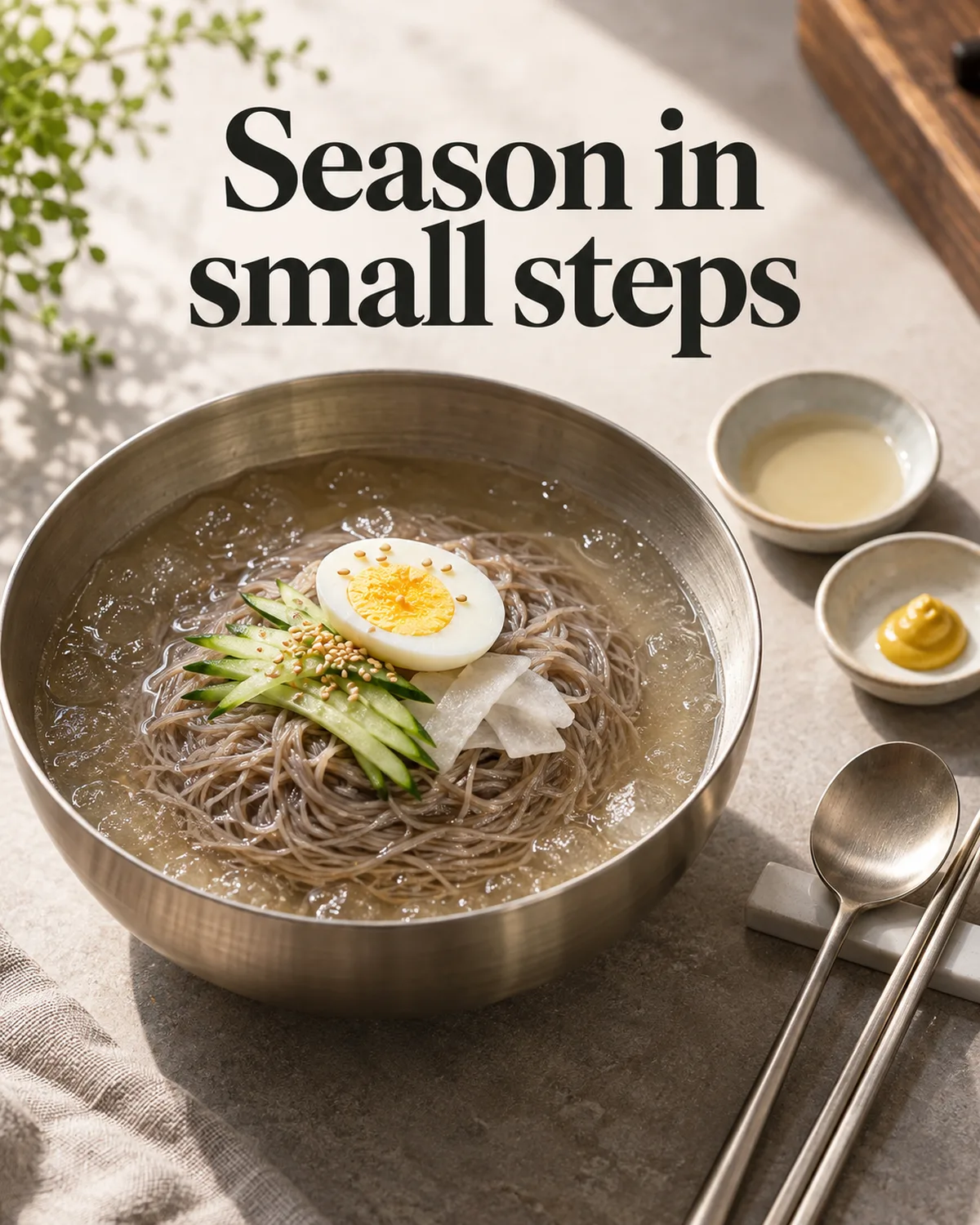
    Try a spoonful of broth, then a manageable portion of noodles. Add a small amount of vinegar or mustard if you want it, and taste again. This keeps the house’s starting flavor available for comparison while leaving the final seasoning to your preference.

    For bibim noodles, mix the sauce through the strands as the restaurant recommends. Taste before adding more condiments: the bowl may already have a strong balance of sweetness, acidity and heat. A little extra seasoning can change that balance quickly.

    If the long strands are difficult to manage, ask for scissors or help cutting them. Take a short portion with the chopsticks instead of lifting a large tangle. The goal is to enjoy the noodle texture comfortably.

    Taste first, then adjust vinegar or mustard if you want it.
    Taste first, then adjust vinegar or mustard if you want it.

    If warm broth arrives separately, ask how the house serves it. It may be intended for sipping alongside the meal. Do not pour it into the cold bowl without checking, especially if you want to preserve the original broth concentration and temperature.

    Check the actual noodle, broth, sauce and toppings when ingredients matter. A bowl with vegetables on top can still contain meat stock, seafood seasoning, egg, buckwheat or wheat. The menu name and the clear appearance of the broth are not a full ingredient list.

    Check ingredients, then choose a portion

    For a vegetarian order or a particular allergy requirement, ask about the liquid as carefully as the noodles. Request the restaurant’s ingredient information and explain the requirement before ordering; removing a visible meat garnish does not change what is already in the broth or sauce.

    For the first tasting, choose mul if you want to notice the cold broth, and bibim if you want a sauce-coated bowl. Within either format, ask about the noodles and topping. That gives you a clearer comparison than choosing a city label without knowing the serving style.

    Winter associations, migration and modern summer demand all help explain naengmyeon. In the bowl, the enduring choices are more immediate: grain aroma, chew, broth, sauce and the way you season the next bite.

    Start with the house’s serving, taste before adjusting it and choose a portion that fits the meal. The cold bowl becomes easier to understand once the noodles and liquid have each had a chance to speak.

    Compare broth, sauce, noodle texture and portion.
    Compare broth, sauce, noodle texture and portion.

    Sources and reading

    1. Academy of Korean Studies — Naengmyeon
    2. Academy of Korean Studies — Pyongyang Naengmyeon
    3. Korea.net — Naengmyeon recipe and winter history (2017)
  • Boknal Foods: Samgyetang, Cold Noodles and Korea’s Summer Meal Choices

    Boknal Foods: Samgyetang, Cold Noodles and Korea’s Summer Meal Choices

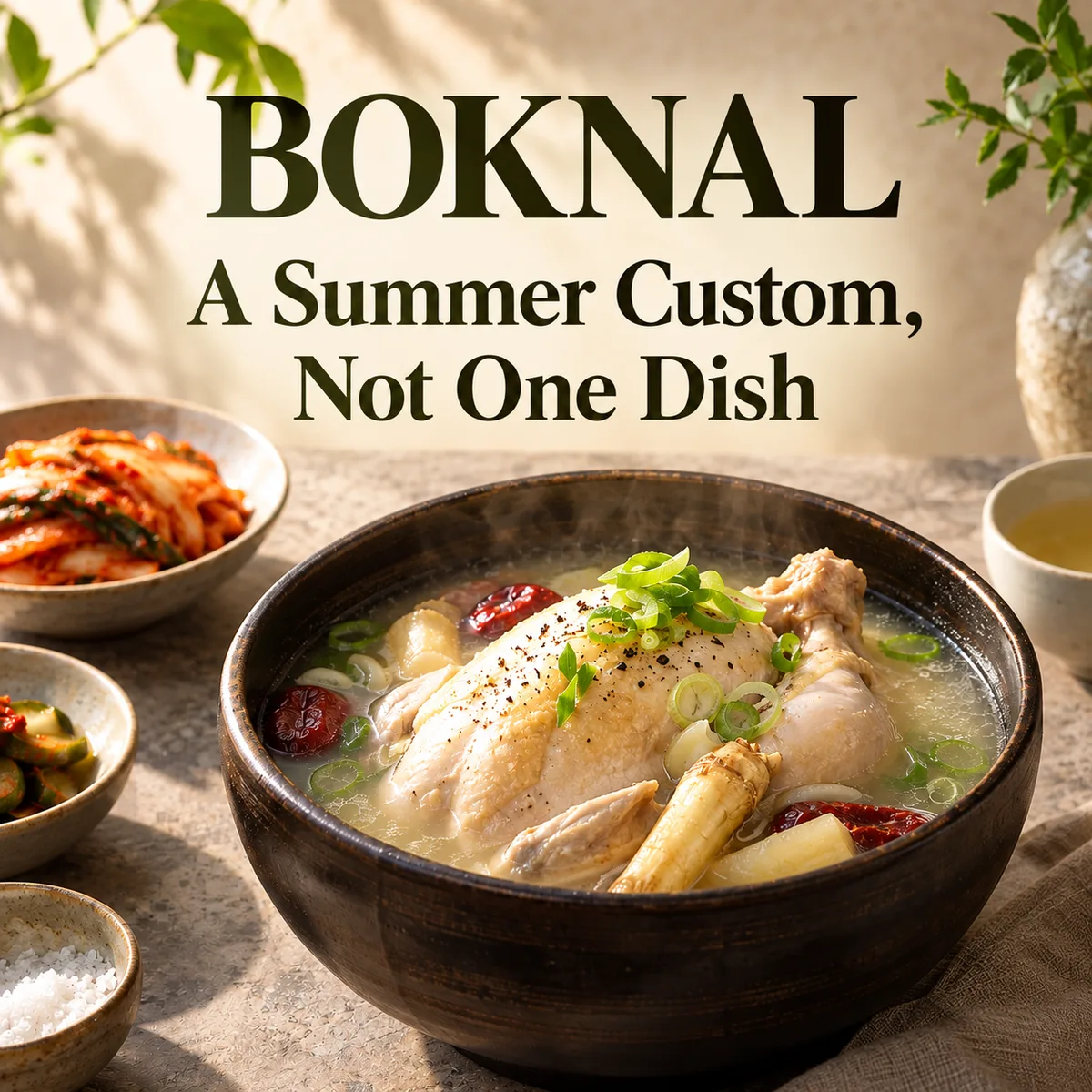
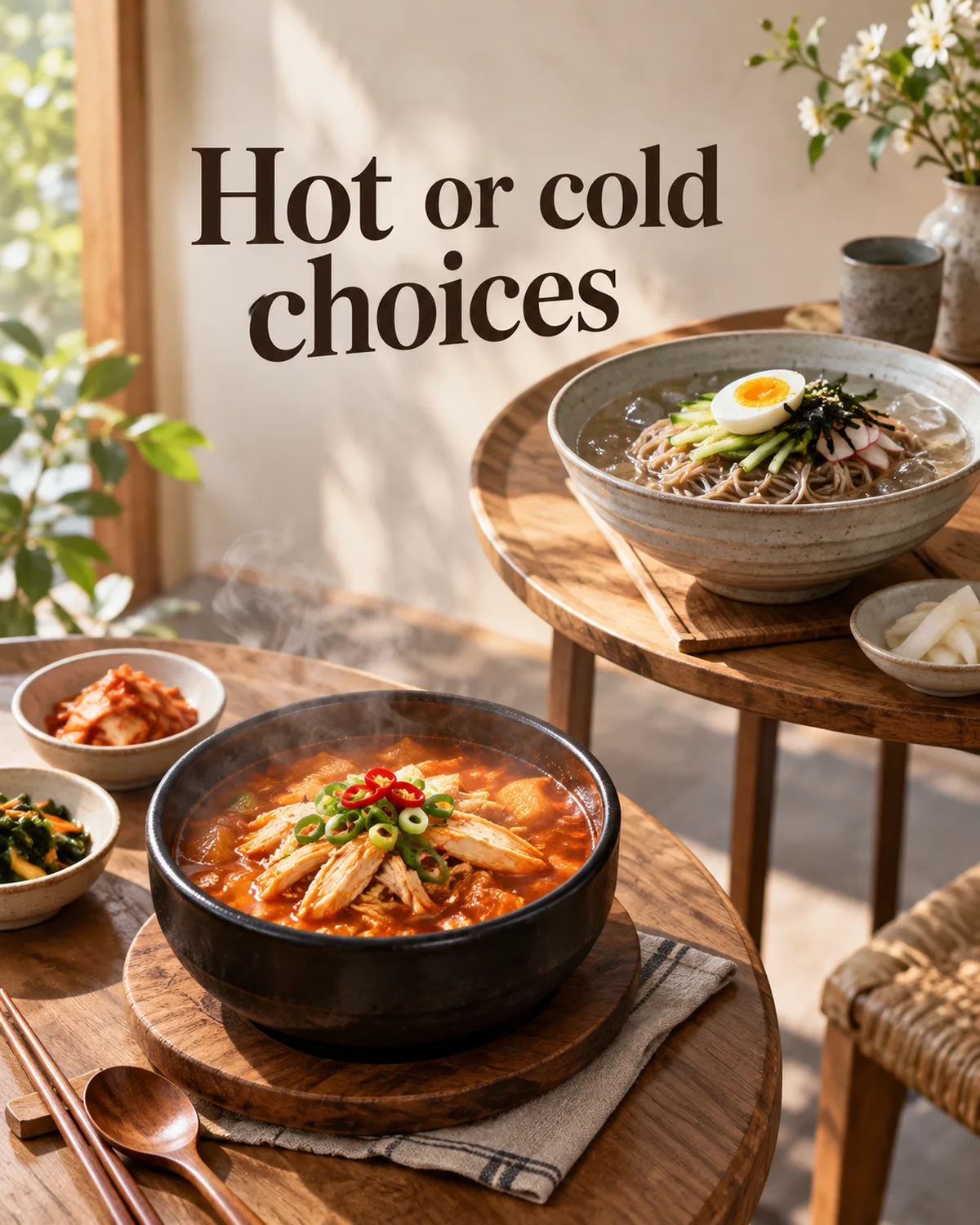
    A whole small chicken in hot broth and a bowl of chilled noodles can both make sense on a Korean summer menu. The choice begins with the kind of meal you want: chicken and rice in one bowl, a pot to share, or noodles whose temperature and chew lead the experience.

    Boknal names three traditional summer observances: chobok, jungbok and malbok. The Academy of Korean Studies explains their calculation through the seasonal calendar. They mark the hot season; they are not selected afterward by finding the three highest readings on a thermometer.[1]

    The BTS framing in the headline is an invitation to learn about the foods, rather than a verified menu for the members. The food sources here describe the seasonal custom and dishes. They do not establish a current member-by-member boknal routine, so those private eating claims should not guide your order.

    For a concrete date reference, the tourism organization’s July 2026 guide lists July 15, July 25 and August 14 as that year’s three sambok dates. Those dates are now past. The dishes still provide useful choices beyond a single calendar occasion.[3]

    Chobok, jungbok and malbok belong to the seasonal calendar.
    Chobok, jungbok and malbok belong to the seasonal calendar.

    Open the chicken to find the rice

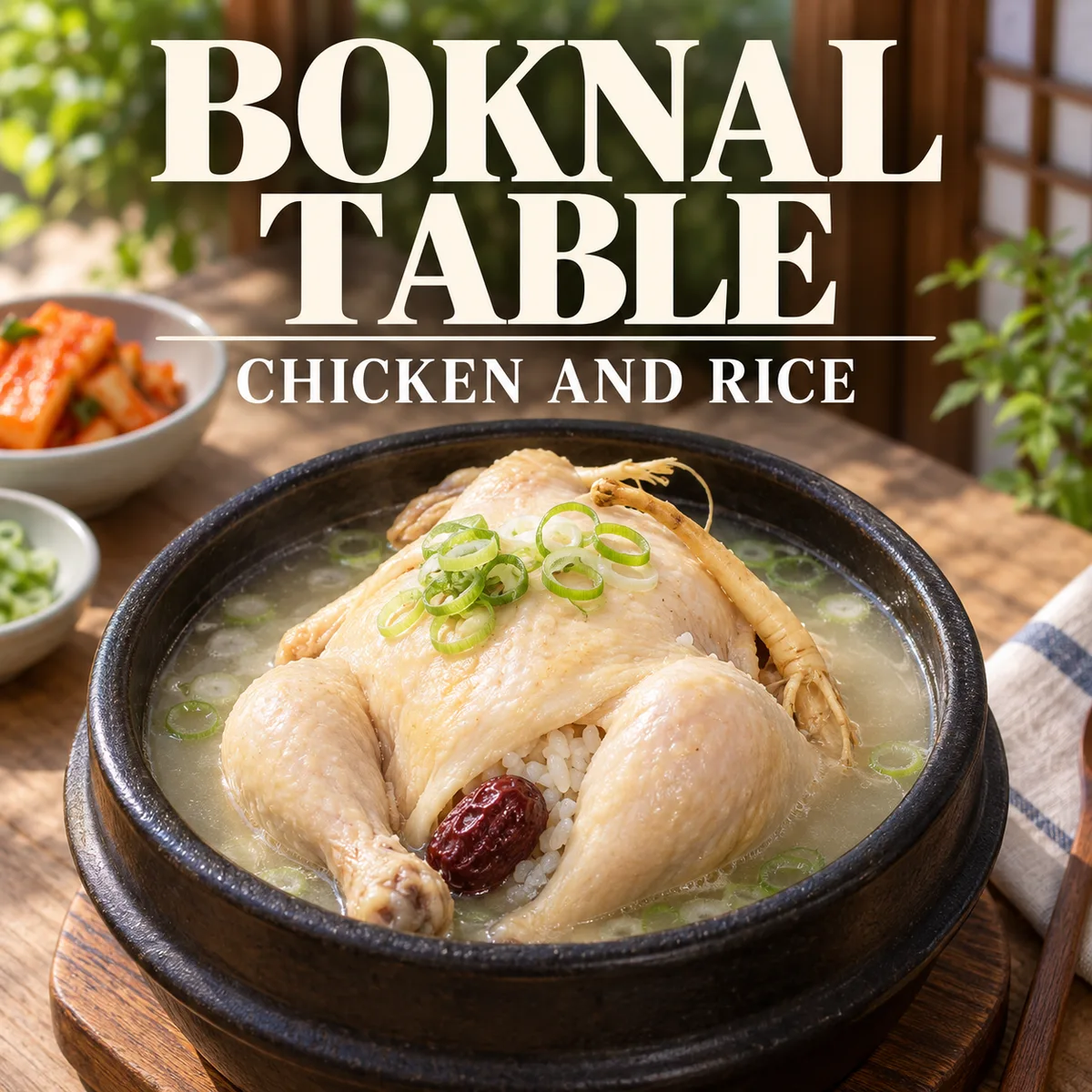
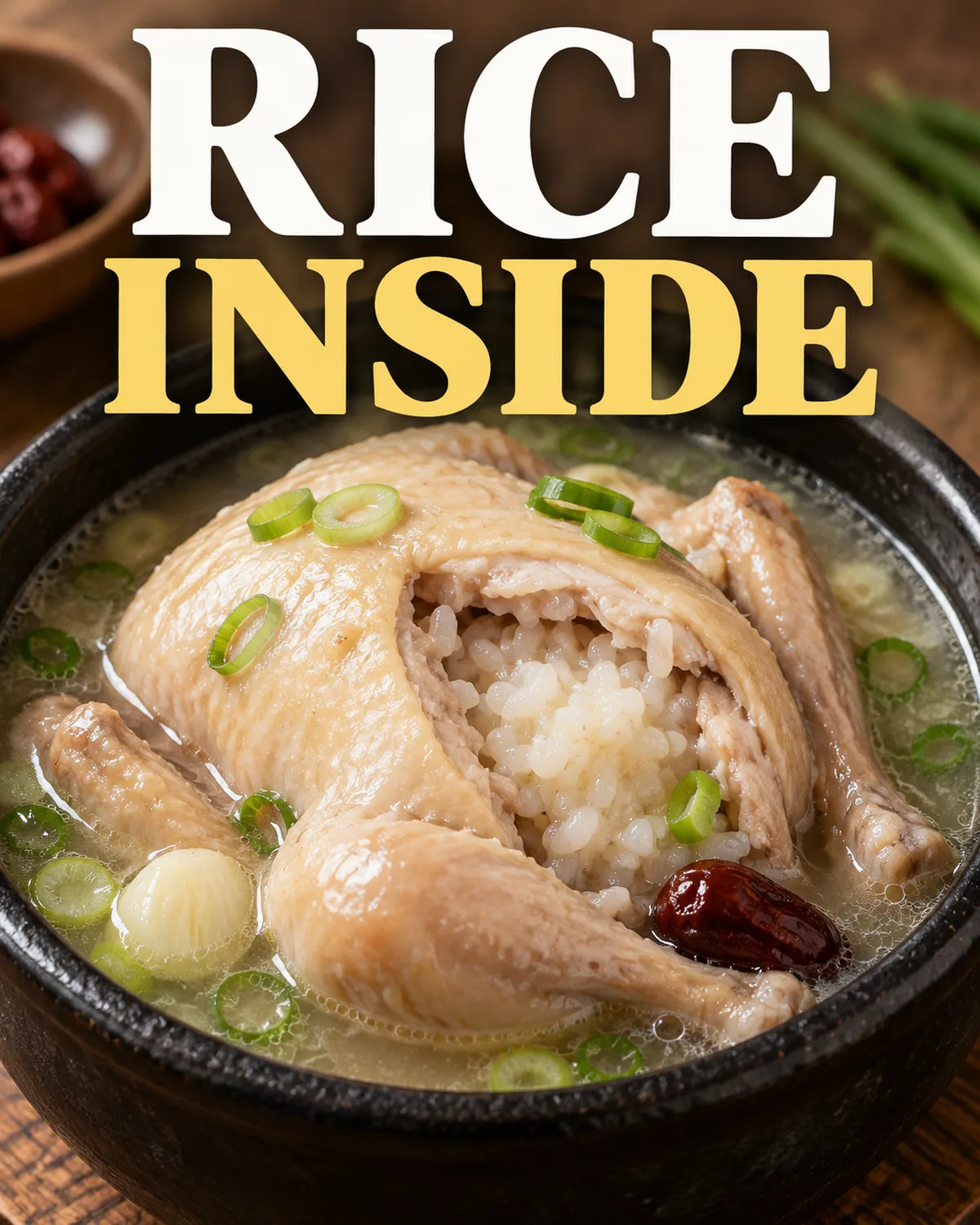
    VISITKOREA describes samgyetang as a young chicken stuffed with sweet rice, garlic, jujube and ginseng, then simmered. This gives the bowl more structure than a plain cup of broth: a bird sits in the liquid, and part of the meal is inside it.[2]

    Before you pull the chicken apart, notice where the cavity opens. Separating a little meat makes the rice easier to see. Move a manageable portion toward the edge of your bowl instead of trying to lift the entire bird at once.

    Try broth, meat and filling separately for the first few bites. The rice is softer than a separate bowl of steamed rice, and a piece of chicken brings a different texture. Keeping them distinct briefly helps you understand what the bowl contains.

    Table salt or other condiments may be offered for adjustment. Begin by tasting what is served, then add a little if you want it. The presence of a condiment dish does not mean the whole amount belongs in the soup.

    Opening the small chicken reveals the rice filling.
    Opening the small chicken reveals the rice filling.

    A shared chicken pot changes the occasion

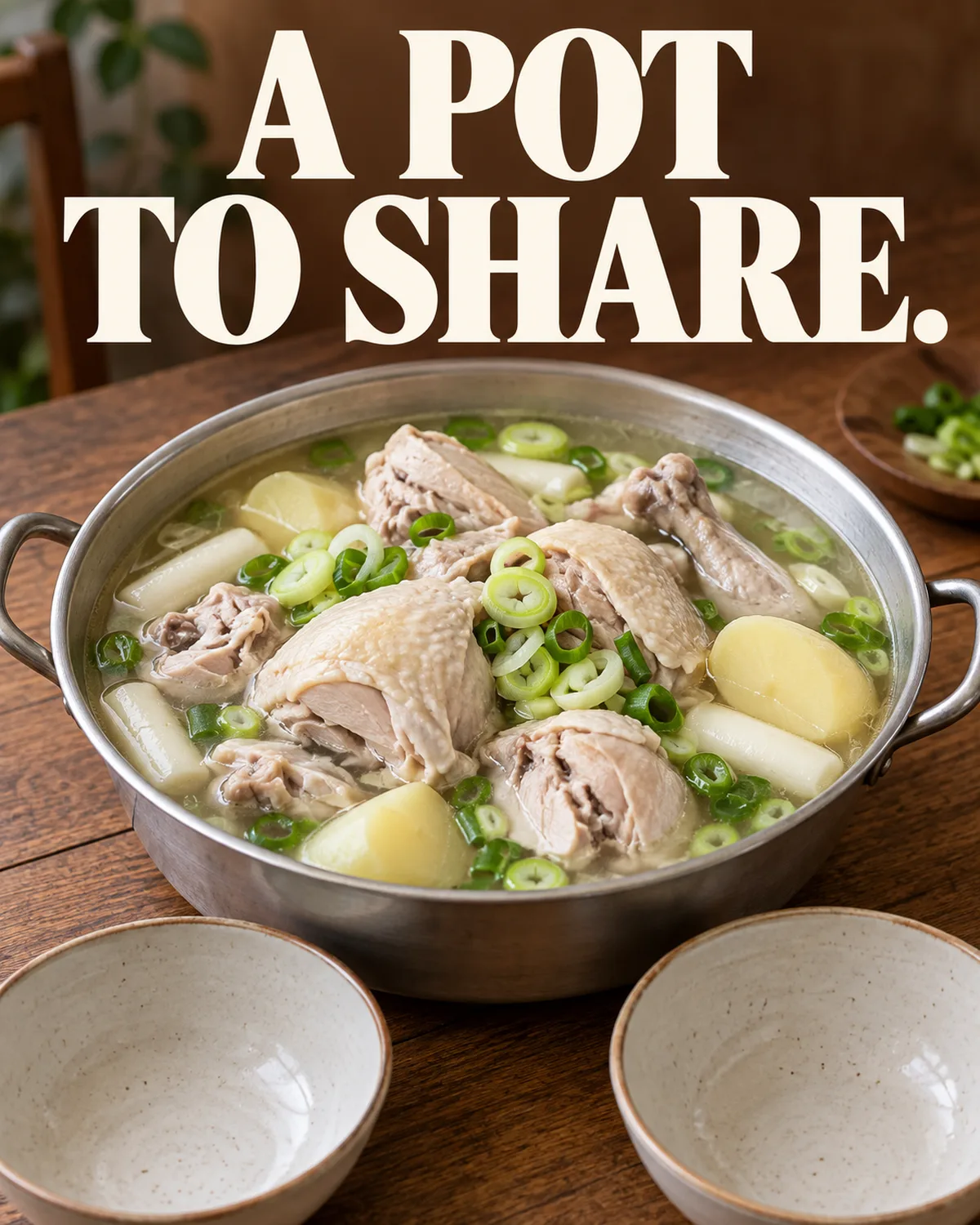
    The tourism guide describes dakhanmari as a whole-chicken hot pot with ingredients such as green onion, potato and rice cakes. Its dipping sauce and later noodle or rice additions create a different format from an individual stuffed-chicken bowl.[3]

    Start the order by asking how many people the listed pot serves. A whole bird can appear in both preparations, but the size, accompaniments and way the restaurant serves it matter. The name alone cannot settle the portion for your table.

    With a shared pot, take pieces into a personal bowl and use the serving utensils provided. This gives everyone access to the broth and chicken without each diner working on the same piece. Ask the staff about the sequence if the pot arrives in stages.

    Discuss additions before the liquid has nearly disappeared. If the restaurant offers a later finish, ask when it should be ordered and what it includes. A noodle or rice stage is part of a particular menu, rather than an automatic entitlement everywhere.

    A shared chicken pot creates a different meal format from an individual bowl.
    A shared chicken pot creates a different meal format from an individual bowl.

    Cold noodles offer a different texture

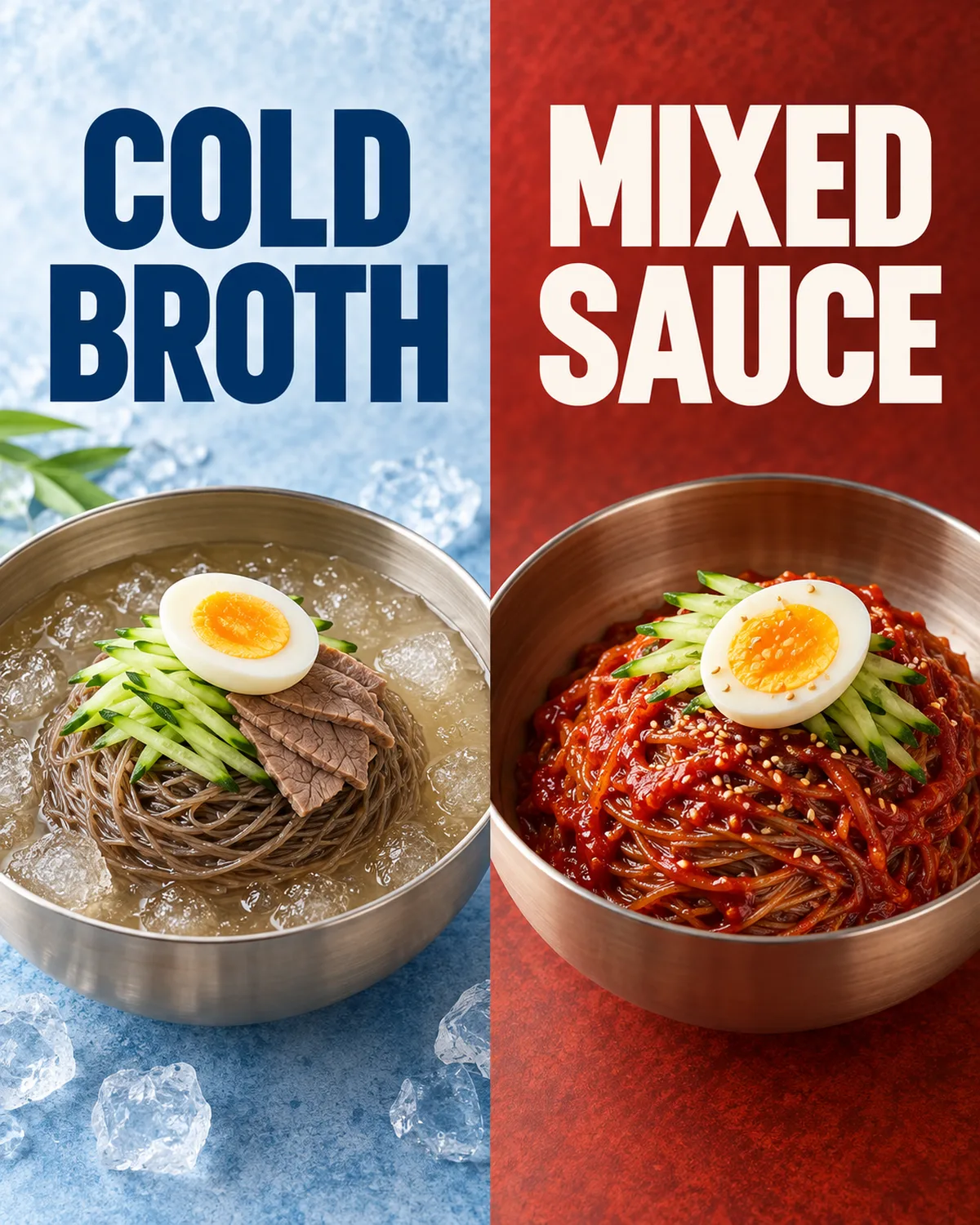
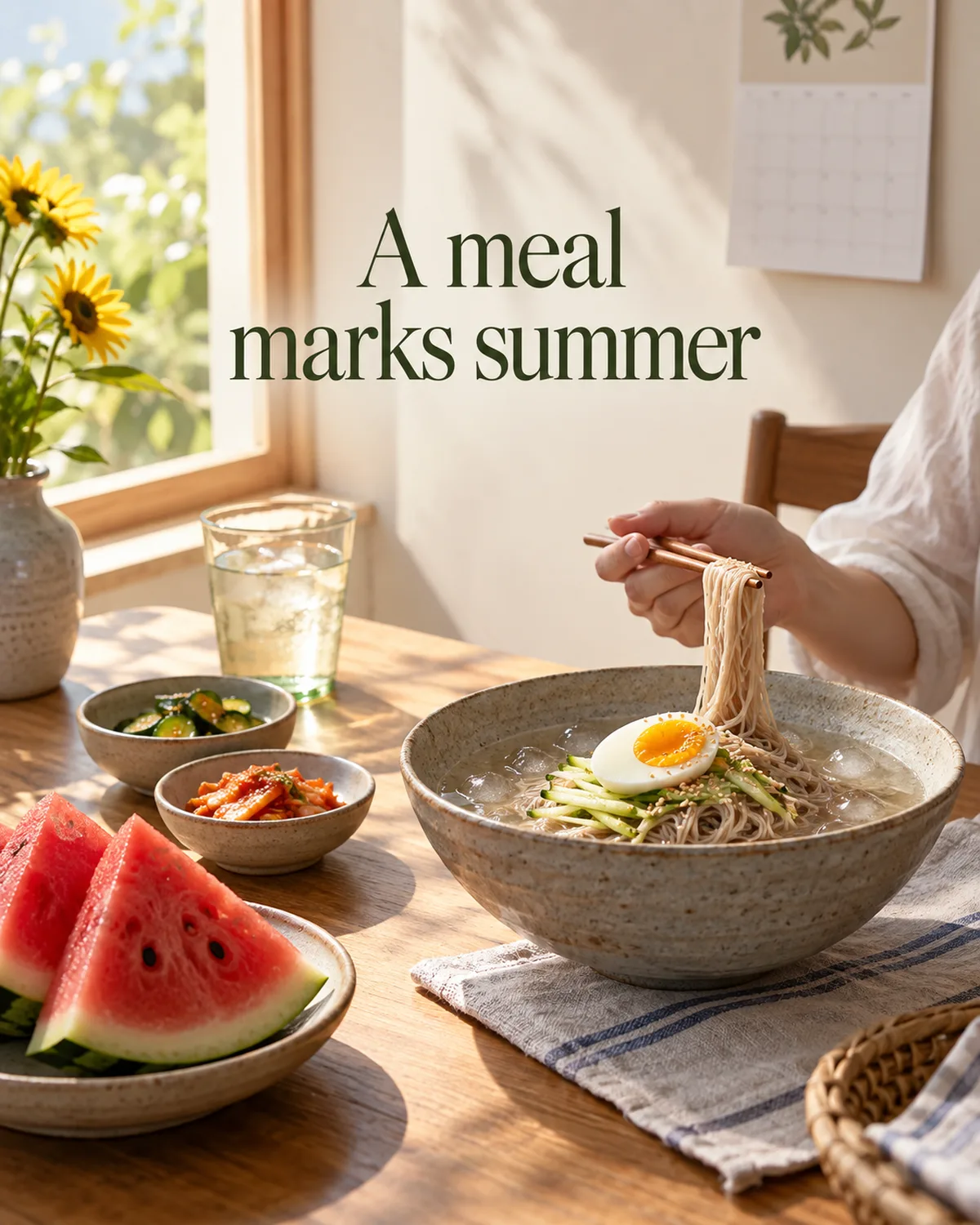
    Naengmyeon is another summer choice in the tourism guide, with broth-based and spicy-sauce styles. The useful distinction is between a chilled liquid surrounding the noodles and a sauce mixed through them. Read which version the menu actually offers.[3]

    For a broth bowl, taste the liquid before adding anything from the table. Lift a small portion of noodles and notice how the chew contrasts with the cold broth. A bowl can be chilled without all of its ingredients tasting mild.

    For a sauce version, mix enough to coat the noodles evenly before deciding whether you want more seasoning. The top of an unmixed mound is a poor sample of the whole bowl. Garnishes can offer a separate bite before they are folded through.

    Choose manageable mouthfuls. If you want the noodles cut, ask the restaurant for help or the utensils it uses. Enjoying the texture does not require struggling with an oversized tangle.

    Cold broth and mixed sauce lead to different naengmyeon mouthfuls.
    Cold broth and mixed sauce lead to different naengmyeon mouthfuls.

    The seasonal story holds more than one dish

    The Academy’s account includes chicken preparations, red-bean porridge and seasonal fruit in the wider custom. That variety matters: boknal is a seasonal occasion with a history, rather than a rule that every Korean eats an identical modern restaurant bowl.[1]

    The expression iyeol-chiyeol, often rendered as fighting heat with heat, belongs to the cultural explanation of hot summer food. Treat it as a food custom, not as evidence that a bowl has a measurable stamina score or guarantees recovery.

    Temperature is one part of preference. Some diners want a substantial hot soup; others want the chill and chew of noodles. A group can share the occasion without every person choosing the same food.

    The food can also be the reason to visit on a quieter day. You do not have to reproduce a particular calendar date or a performer’s presumed routine to understand a chicken bowl. The meal’s ingredients and serving format remain available to notice.

    Hot chicken soup and chilled noodles can suit different appetites.
    Hot chicken soup and chilled noodles can suit different appetites.

    Choose a meal that fits the table

    For one person, an individual chicken-and-rice bowl makes the portion easy to discuss. For friends who want to linger, a shared pot may make more sense. For someone seeking chilled noodles, the broth or sauce choice becomes the first question.

    Ask what comes with the main order before adding another starch. Rice inside a chicken, noodles after a shared pot and dumplings beside cold noodles produce different amounts of food. Count the people and their appetites instead of ordering by the photograph alone.

    Check the actual broth, noodle ingredients and garnishes when restrictions matter. A cold bowl can contain meat stock, and a chicken preparation can include additions beyond the familiar short description. The kitchen’s information is more useful than removing one visible topping.

    Choose the restaurant for the format you want, then check its current menu and ordering arrangements. Once the food arrives, start with a small taste, find the rice or separate the noodles, and let the bowl explain the season through its temperature, texture and portion.

    An individual bowl and a shared pot call for different ordering decisions.
    An individual bowl and a shared pot call for different ordering decisions.

    Explore the seasonal dishes

    Sources and reading

    1. 한국민족문화대백과사전 — 복날 (Boknal), Academy of Korean Studies
    2. VISITKOREA — Ginseng Chicken Soup, October 19, 2023
    3. VISITKOREA — Seven Korean summer foods, July 15, 2026
  • What Is Boknal? Korea’s Summer Calendar and Changing Food Traditions

    What Is Boknal? Korea’s Summer Calendar and Changing Food Traditions

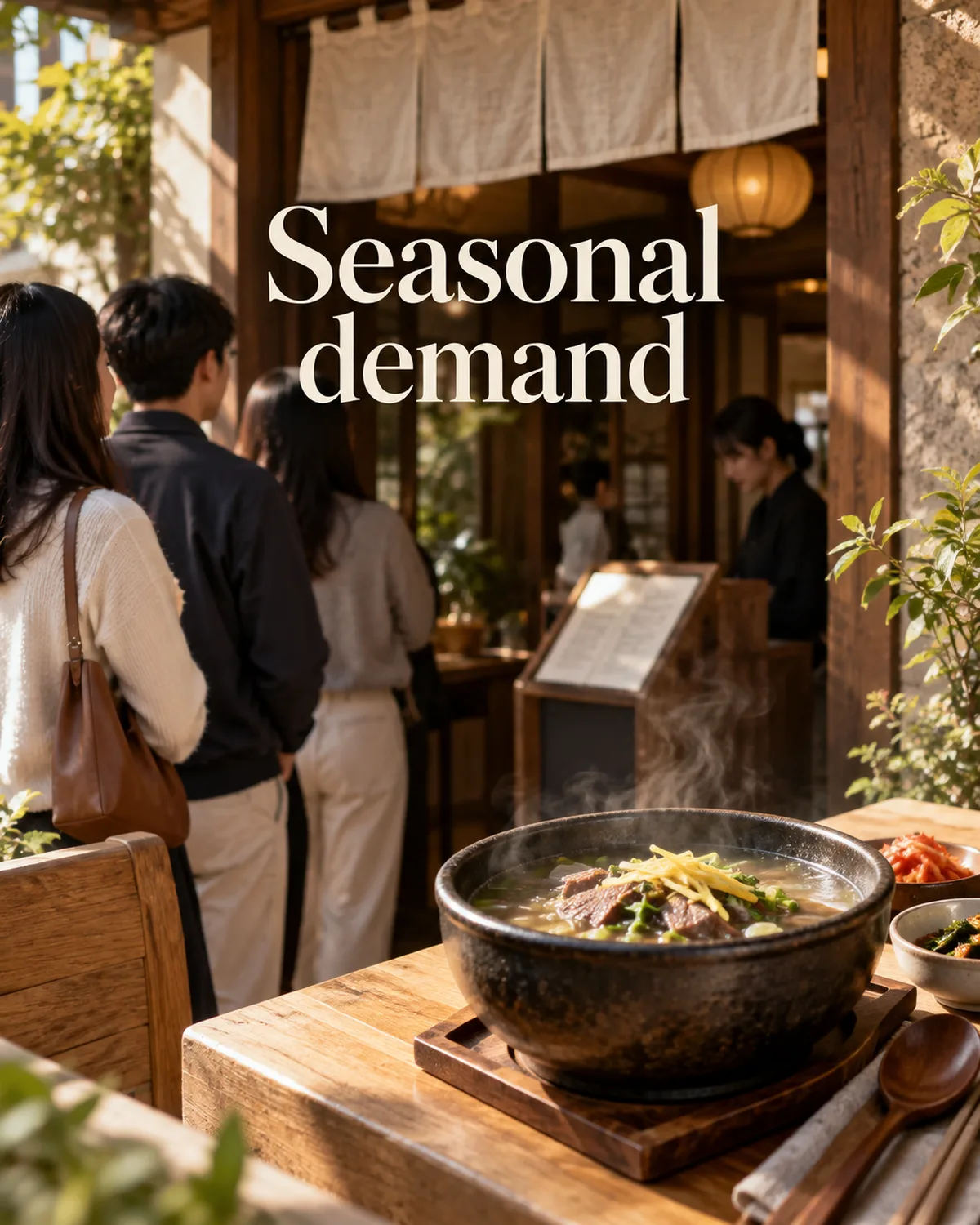
    A restaurant queue on Boknal tells you something about a calendar and a custom, not necessarily the thermometer. The three summer days belong to a traditional timing system; they are not guaranteed to be the three highest-temperature readings of the year.

    That distinction leaves room for a better question: why did an older seasonal meal custom become so closely associated with a comparatively modern samgyetang restaurant bowl?

    Three calendar days, not three weather predictions

    The first Boknal is Chobok, the second is Jungbok, and the third is Malbok. The Chinese character bok (伏) carries meanings such as lying down, crouching or hiding. That literal meaning has encouraged many poetic explanations about people or nature bowing before the heat. The safe historical point is simpler: the character is part of the long-established name of this seasonal period, while later storytelling often adds imagery around it.

    Boknal uses gyeong days in the traditional sexagenary cycle. Chobok is the third gyeong day after the summer solstice, Jungbok the fourth, and Malbok the first after Ipchu, the beginning-of-autumn solar term. They usually fall ten days apart; in some years Jungbok and Malbok are twenty days apart, an interval called wolbok (월복/越伏).1

    Chobok, Jungbok and Malbok label calendar stages. The pictured dishes are alternatives, not one prescribed food for each date.
    Chobok, Jungbok and Malbok label calendar stages. The pictured dishes are alternatives, not one prescribed food for each date.

    This is why an evergreen guide should not permanently bake one year’s three dates into the main explanation. The useful information is the rule. If you are actually traveling during July or August, check the current year’s dates shortly before the trip.

    Korean and tourism sources commonly describe Sambok as the hottest part of summer, and the phrase sambok-deowi (삼복더위) itself evokes oppressive peak heat. But a modern weather station can easily record the year’s highest temperature on some other date. Climate does not obey a ritual calendar.

    That does not make the phrase wrong. Seasonal calendars work by marking a period when a community expects certain conditions and organizes behavior around them. Boknal says, in effect, “we are in the hardest stretch of summer now.” The precise daily maximum temperature is secondary to that cultural function.

    This distinction is useful for visitors because it prevents a strange question: “What if Chobok is cloudy—does Boknal get canceled?” No. The date is calendrical, not chosen after the weather report.

    Summer work and the older idea of replenishment

    The 2026 National Folk Museum of Korea essay on samgyetang history connects Sambok to the demanding agricultural calendar. Before mechanized farming and air-conditioned work, the period around Sambok coincided with some of the most exhausting summer field labor. The article describes farmers completing repeated rounds of weeding before the mid-summer seasonal cycle and using animal foods to rebuild strength after heavy work.2

    This context matters because modern articles often reverse the history. They begin with samgyetang, then assume Boknal must have been invented to celebrate that soup. The chronology works the other way around: the seasonal need and the custom are older than samgyetang’s modern named form.

    The Academy of Korean Studies’ Boknal entry also records a broader world of older summer customs: special foods, resting in mountain valleys, eating fruit, folk beliefs about bathing, and agricultural sayings tied to rice and jujube crops. Boknal was part of a seasonal system, not merely a menu promotion.

    Summer agricultural work and seasonal rest help explain the background of Boknal.
    Summer agricultural work and seasonal rest help explain the background of Boknal.

    This is one of the most important corrections to the modern image. Today, a television camera filming Boknal will almost inevitably find a line outside a samgyetang restaurant. Yet the National Folk Museum notes that before the 1970s, other animal foods—most notably dog meat in historical Boknal custom—held a much more prominent place.

    The Academy of Korean Studies documents older gaejang-guk meals and other foods believed to support the body through summer. Those descriptions record past practices and beliefs; the menu a diner chooses today can be quite different.

    Boknal’s continuity lies in the seasonal slot, not in one permanently fixed dish. A seasonal slot can remain stable while the representative food changes. Boknal survives because people continue to mark peak summer through eating; the food chosen to perform that ritual can shift with agriculture, ethics, supply chains, public taste and restaurant culture.

    Samgyetang became a modern seasonal icon

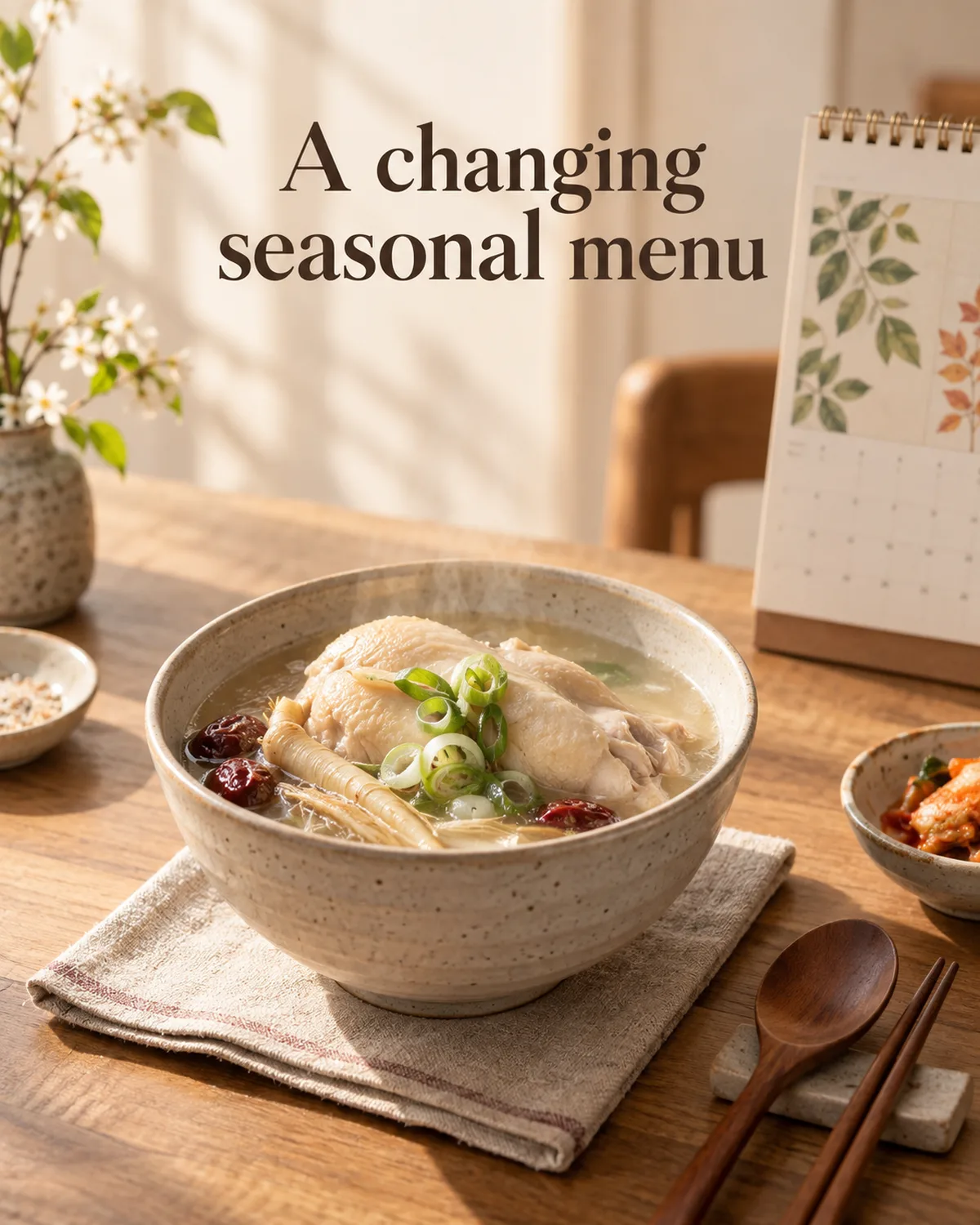
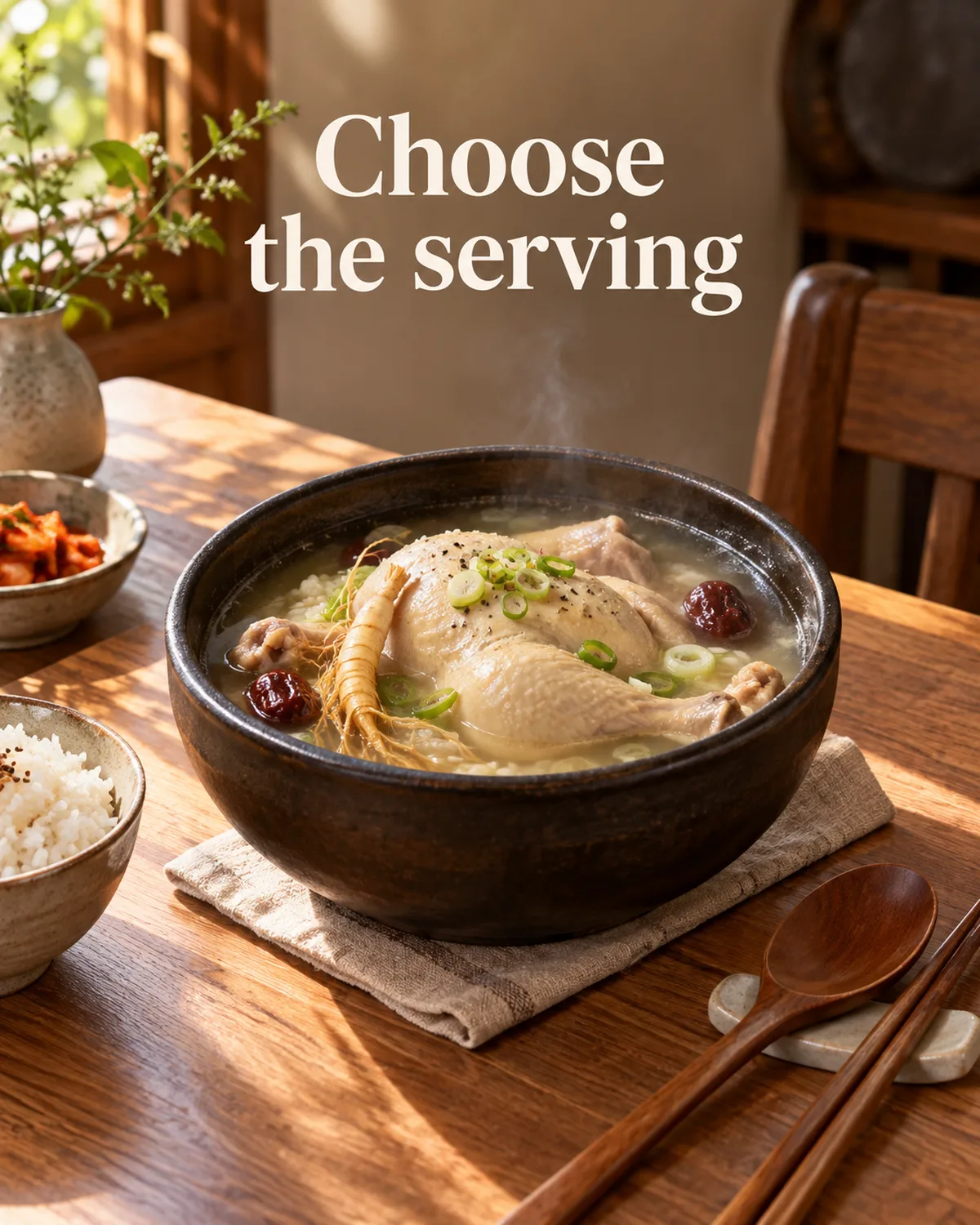
    Samgyetang now looks inseparable from Boknal: a small whole chicken stuffed with glutinous rice, garlic, jujube and ginseng, simmered in broth and served steaming. But the dish’s modern name is not an ancient Joseon label.

    The National Folk Museum traces the modern samgyetang name and restaurant bowl through 20th-century cooking and supply changes. The samgyetang article follows those developments in detail. For Boknal, the crucial point is the order: the seasonal occasion came first, and its best-known modern menu came later.

    That makes samgyetang an ideal modern Boknal food, but not proof that today’s exact bowl was eaten for centuries. Old ingredients, an older seasonal need and a newer restaurant format converged. The result became traditional through repetition.

    A modern chicken-soup serving illustrates one form of a seasonal menu that has changed over time.
    A modern chicken-soup serving illustrates one form of a seasonal menu that has changed over time.

    A tradition is not a museum label assigned once. It is a behavior repeated by communities and passed on with meaning. Samgyetang became powerful precisely because it fit an existing summer category: substantial animal food eaten when heat and labor were thought to drain strength. Poultry production and cold-chain distribution made the bowl scalable; restaurant culture made it visible; families and media repeated the association until it became expected.

    What “fight heat with heat” means—and does not mean

    The phrase most associated with Boknal is iyeol-chiyeol (이열치열), usually translated as “fight heat with heat” or “treat heat with heat.” It makes the visual paradox memorable: people eat a bubbling chicken soup while the outdoor air is already oppressive.

    Official tourism writing uses this phrase to explain the summer custom. It does not establish that every hot restaurant meal lowers body temperature or makes dangerous heat exposure safe.

    Korean writing often groups Boknal dishes under terms such as boyangsik (보양식), meaning nourishing or restorative food. The category makes sense historically: a high-effort work season encouraged people to value calorie-dense animal foods, protein-rich soups and ingredients associated with strength.

    So this guide keeps two statements separate. “Koreans historically regarded these foods as restorative” is a cultural fact. “This dish will cure fatigue, prevent heat illness or boost immunity” is a medical claim that requires evidence far beyond tradition.

    Hot chicken soup and cold noodles are different summer meal choices; neither is a promised medical treatment.
    Hot chicken soup and cold noodles are different summer meal choices; neither is a promised medical treatment.

    More than one food can mark the season

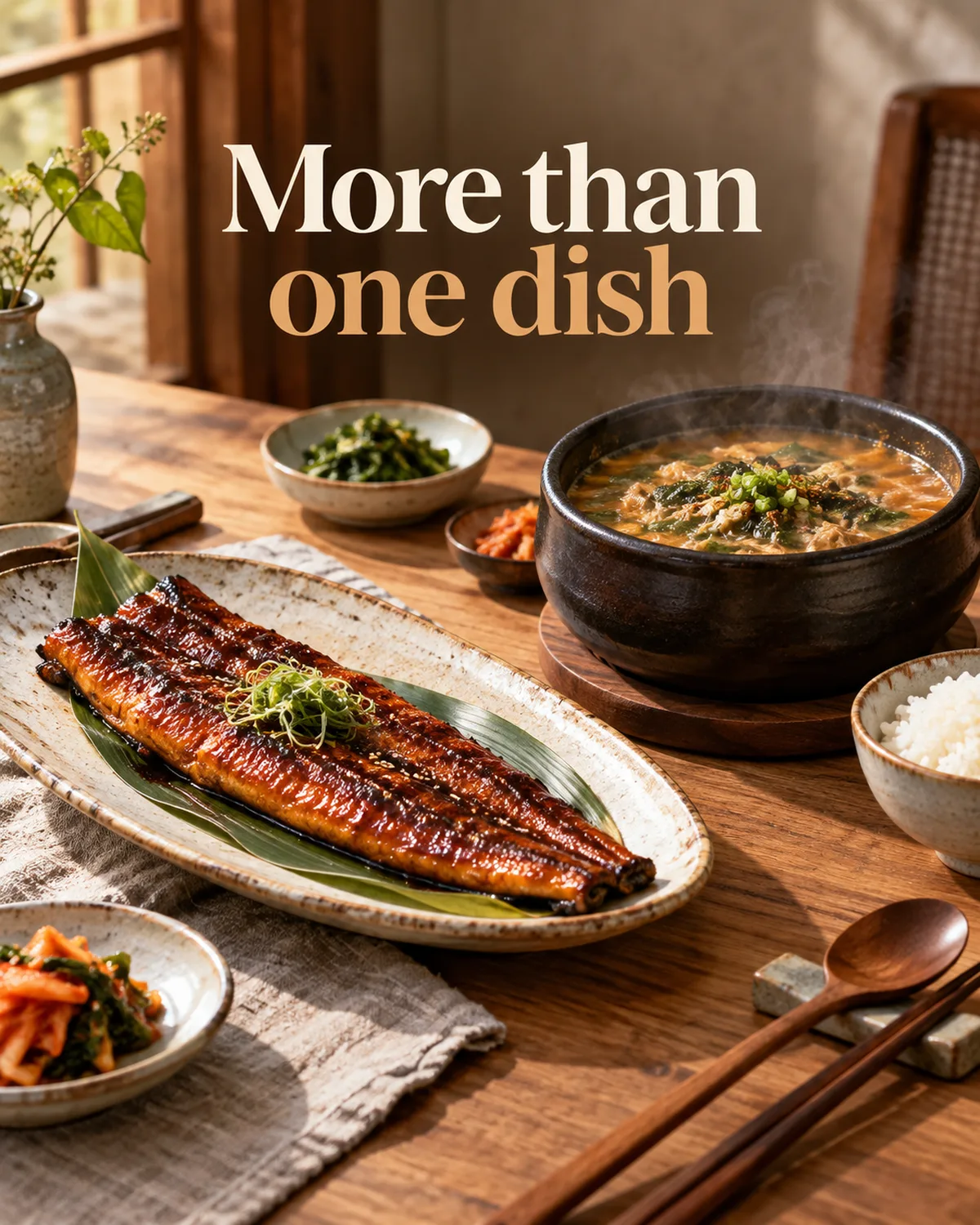
    Modern tourism guides list several substantial summer foods alongside samgyetang. Grilled eel appears frequently because it is rich and energy-dense. Chueotang, a loach soup, represents another long-standing nourishing-food tradition. Duck baeksuk and richer chicken soups can fill the same cultural role. Households and regions make different choices.

    Eel and chueotang illustrate alternative dishes within a broader seasonal food repertoire.
    Eel and chueotang illustrate alternative dishes within a broader seasonal food repertoire.

    Cold foods also remain part of Korean summer. Kongguksu, naengmyeon, chilled fruit, bingsu and cold drinks do not disappear because iyeol-chiyeol exists. Real food culture is not a philosophical purity test. People can eat samgyetang on Chobok and cold noodles the next day.

    This is why the best definition of Boknal is not “the day Koreans eat hot soup.” It is a peak-summer marker around which nourishing-food customs become especially visible.

    If you happen to be in Korea on a Boknal date, there is no single required meal. A simple way to experience the custom is to choose one food with a clear summer-nourishing connection, understand why it belongs to the season, and notice how other diners and media are marking the date.

    Samgyetang is the most legible option because the seasonal association is so strong. But grilled eel, chueotang, baeksuk or another substantial local dish can make sense too. If hot soup sounds miserable in humid weather, there is no cultural penalty for choosing a cold summer meal instead.

    The tradition is not an exam in Korean authenticity. It is an invitation to notice how the calendar, weather and food economy interact.

    A custom also changes the restaurant day

    Seasonal rituals become easiest to see when they change ordinary consumer behavior. On Boknal, famous samgyetang restaurants can attract substantial queues, lunch demand rises, news coverage returns to summer foods, supermarkets promote chicken and ginseng ingredients, and ready-meal brands foreground packaged versions.

    The food has not changed because the calendar arrived, but the concentration of demand has. That makes Boknal a useful case study in how culture affects restaurant economics. One seasonal expectation can push thousands of customers toward the same category at nearly the same time.

    For a traveler, this creates a choice. Eating at a famous shop on Chobok offers the social atmosphere of the ritual—crowds included. Eating the same category of food a day earlier or later may offer a calmer meal. Neither is more historically “authentic.” They are different experiences of the same tradition.

    Summer demand can make restaurants serving Boknal meals busy.
    Summer demand can make restaurants serving Boknal meals busy.

    If Boknal existed only as a practical response to outdoor agricultural labor, modern cooling should have weakened it dramatically. Instead, the ritual persists. That tells us what seasonal food does beyond nutrition.

    Seasonal foods mark time. Songpyeon can signal Chuseok; tteokguk can mark the New Year; samgyetang can signal that the deepest part of summer has arrived. Once a dish becomes a calendar cue, its social value no longer depends on reproducing the exact conditions that created the custom.

    This is also why Songpyeon at Chuseok is a useful comparison. Both foods help make an abstract point in the calendar tangible. You can taste the season.

    A meal can mark the season without being treated as a remedy.
    A meal can mark the season without being treated as a remedy.

    Choose the meal without treating it as a health ritual

    A standard samgyetang is usually an individual whole chicken with rice and aromatics. Broth styles vary from clear and mild to rich and cloudy. Some restaurants leave much of the final seasoning to the diner with salt and pepper; others season more aggressively in the kitchen.

    Premium bowls may add abalone, black chicken, extra ginseng or herb packages. Those additions can change flavor and price, but “more medicinal-looking ingredients” does not automatically mean more historically authentic or medically effective.

    On a peak Boknal day, the most practical questions are ordinary ones: how long is the wait, is one bowl enough for your appetite, do you have dietary restrictions, and is the restaurant’s current service format convenient for your group?

    Check the ingredients, portion and serving format of the bowl you order.
    Check the ingredients, portion and serving format of the bowl you order.

    Traditional Boknal foods are often meat- or fish-centered, and standard samgyetang is based on chicken. A bowl with visible vegetables is not vegetarian if the broth is poultry-based. Chueotang contains fish; eel is fish; many baeksuk dishes use chicken or duck.

    Plant-based diners can still participate in the seasonal idea without pretending that the traditional meat dishes are vegetarian. A substantial bean dish, kongguksu or another summer meal can mark the day personally.

    For allergies, ask about complete preparation rather than only the headline ingredient. Herbal packs can contain multiple roots. Premium samgyetang may include shellfish such as abalone. Prepared sauces and shared kitchens create additional variables.

    Begin with the occasion and the food, not a promised effect. A chicken soup, another substantial cooked dish or a cold noodle meal can occupy different places in a Korean summer. They do not need to be ranked as the one correct response to the season.

    Iyeol-chiyeol, often rendered as fighting heat with heat, is useful cultural language. It should not become advice to ignore cooling, hydration or signs of heat illness. Likewise, a celebrity eating a seasonal dish can introduce the custom to new viewers without explaining its origin or proving a medical outcome. Keeping those claims apart makes the food story clearer, not less enjoyable.

    Sources and reading

    1. AKS: Boknal—calendar and older customs
    2. National Folk Museum: summer work and changing dishes
    3. VISITKOREA: seasonal food customs in popular culture
    4. VISITKOREA: summer nourishing-food categories