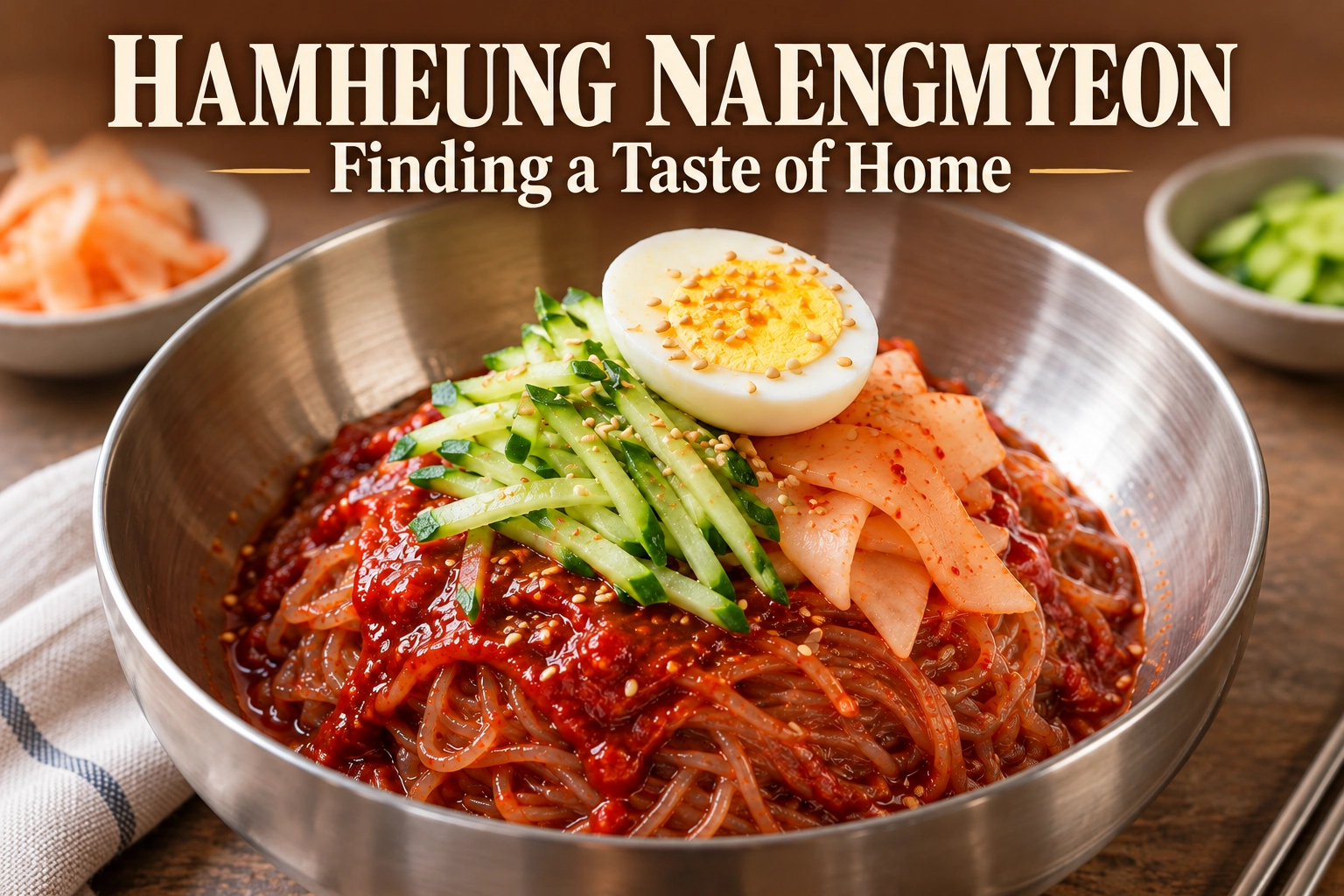
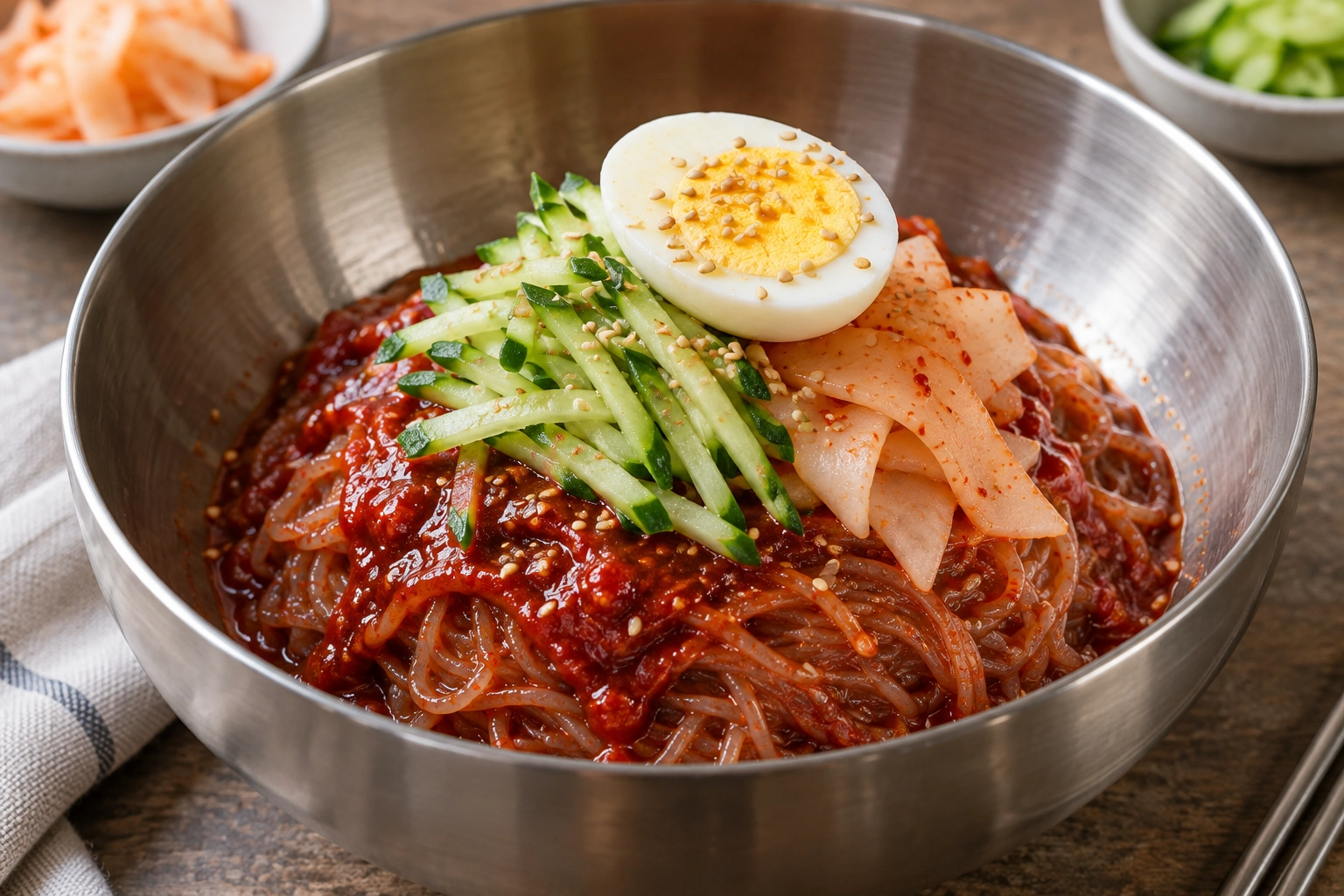
Before a cold noodle bowl became a destination, it could be a way to find someone. In chef Park Chan-il’s account of Ojang-dong’s Heungnamjip, Kwon Gi-sun recalled people from the same northern region meeting at the restaurant. They came through the nearby markets, ate familiar food and asked after one another. The restaurant offered something a recipe alone could not supply: other people who remembered home.
Kwon was describing a business founded by her mother-in-law, identified in the report as No Yong-eon. The founder had lived in Heungnam before moving south. Kwon remembered working with a baby on her back and a neighborhood where many people from Hamgyeong traded and settled. These are one family’s recollections, not a portrait of every refugee’s life.
They nevertheless change what a visitor can recognize in Ojang-dong. The bowl did not only transport a flavor from one place to another. It helped make a meeting place amid unfamiliar surroundings. The question “Where can I eat Hamheung naengmyeon in Seoul?” has a historical answer as well as a dining answer: here, restaurants became places where displaced people could locate a community. Park Chan-il’s interview with Heungnamjip’s Kwon Gi-sun
A northern name takes root in Seoul
Heungnamjip is not the same establishment as the nearby restaurant named Ojang-dong Hamheung Naengmyeon. Seoul’s Future Heritage description identifies Han Hye-seon as the latter’s founder, opening the business after moving south during the Korean War. Its account dates the shop to the 1950s and explains the name through customers describing a good Hamheung noodle place in Ojang-dong.

The same description connects Han’s food with nongma guksu, starch noodles associated with Hamheung. This makes the regional label more interesting than a claim that a restaurant copied an entire city’s cuisine unchanged. A remembered preparation gained an identity among customers in Seoul. The name referred back to the north while also acquiring a southern restaurant history.
It is safer to understand that process than to repeat the heritage page’s sweeping statement that the food does not exist in Hamheung. That wording concerns the identity of a particular South Korean dish; it should not erase northern starch-noodle traditions. Nor should Han’s account absorb every neighboring founder into one family. Two nearby signs can share a food style and a history of displacement while representing different people, businesses and lines of succession. Seoul Future Heritage’s description of Ojang-dong Hamheung Naengmyeon
Ines Cho’s 2005 Korea JoongAng Daily report shows the next layer of that restaurant history. At Ojang-dong Hamheung Naengmyeon, Cho shared a table with an elderly couple. The man said that he had visited after church on Sundays since before he married; later he and his wife came together.
This memory is quieter than a dramatic escape or a founder’s opening day. Its significance is repetition. The restaurant had become a place that fitted into the couple’s life, carrying a connection through changing circumstances. A bowl could belong both to a displaced family’s livelihood and to another family’s weekly routine.
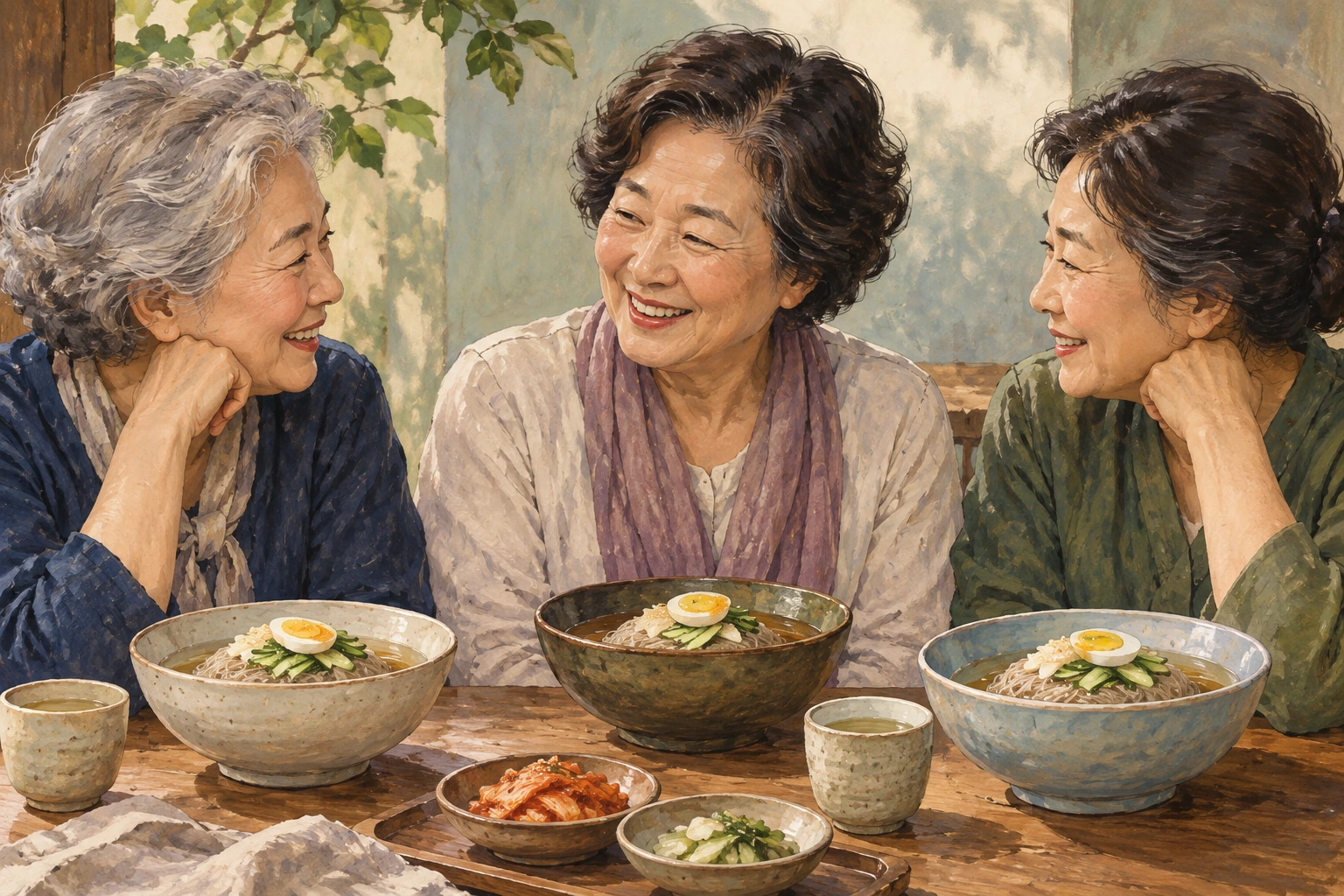
The report also visited a Pyongyang-style restaurant and interviewed its owner about her own northern family background. Those are distinct establishments and regional associations, not interchangeable examples of one “North Korean recipe.” The shared point is that restaurant histories can preserve personal connections to places diners cannot easily revisit. Cho’s Sunday customer gives that larger history an ordinary scale: one person returned, a marriage changed the party at the table, and the meal remained part of their week. The interview records what he remembered in 2005, rather than describing the restaurant’s customers today. Ines Cho’s dated restaurant visits and interviews
Remembering home does not mean freezing a recipe
The movement of northern food traditions was not limited to Seoul. In the abstract of their 2023 study of fishing-village food culture, Song Ju-eun and Lee Jeong-sil describe displaced people in northern Gangwon adapting foods from Hamgyeong to the circumstances of their new homes. Hamheung naengmyeon and squid sundae are among their examples.
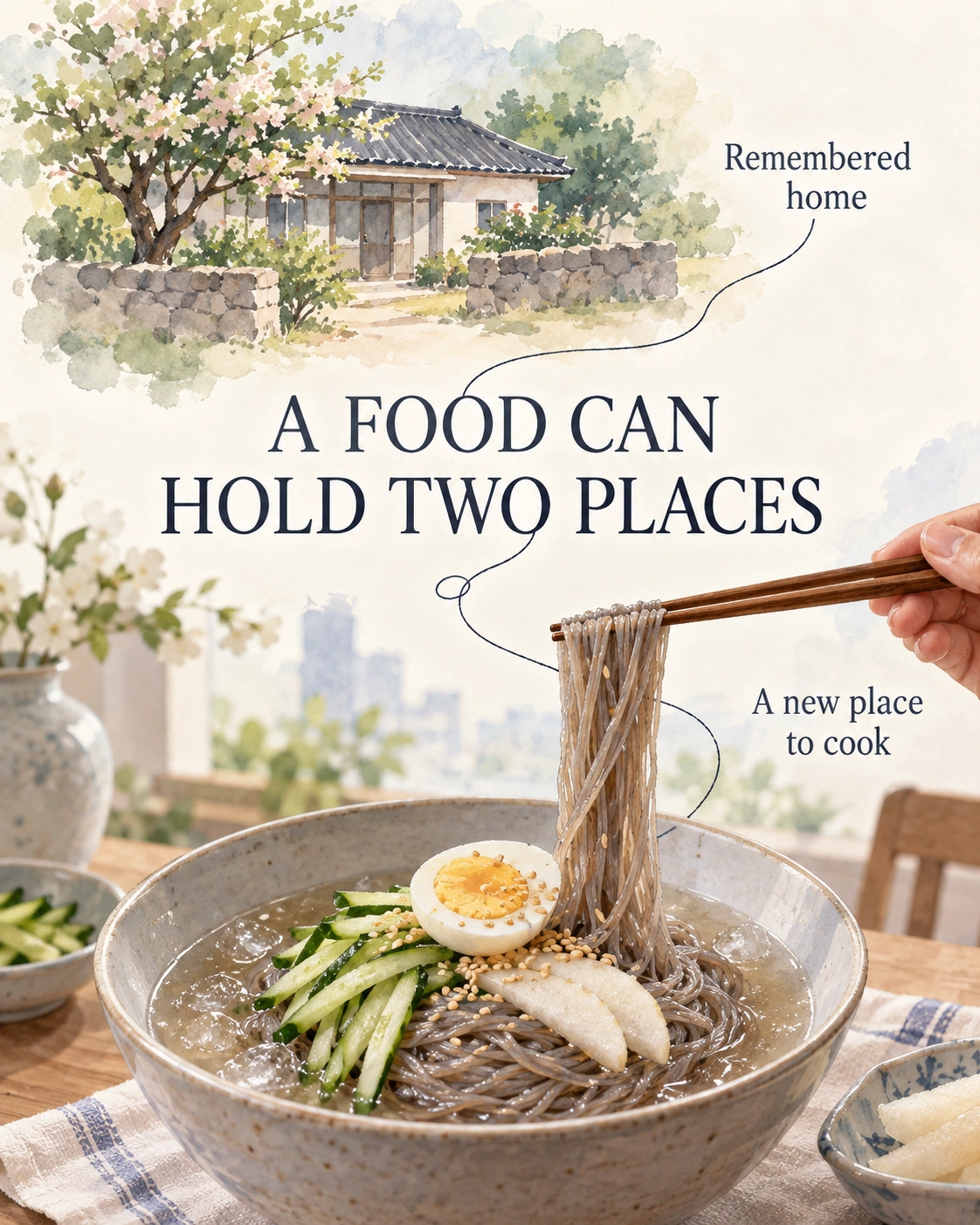
The abstract’s geographic distinction is useful: the remembered region and the place of preparation are not necessarily the same. A dish can maintain a connection to home precisely through being made again somewhere else. Adapting to available conditions is part of that continuation, rather than automatic evidence that the connection has become meaningless.
This is the authors’ framing of the coastal communities they studied. It cannot settle the opening year of an Ojang-dong restaurant, establish every historical noodle mixture or prove that all families adjusted their cooking alike. It provides a comparison for reading the Seoul testimonies: displaced cooks were creating livelihoods and meals in new circumstances. A regional name can therefore carry two places at once. One supplies memory and association; the other supplies the actual setting in which someone prepares, sells and shares the food. Song and Lee’s published research abstract
There is also a northern comparison that remains distinct from Ojang-dong. UNESCO’s record of the Pyongyang Raengmyon custom, inscribed in 2022, describes buckwheat-forward cold noodles and social practices around them. Its account includes family and neighbor gatherings, birthday and wedding blessings, and transmission through households, restaurants and education.
That recognition concerns the Pyongyang custom nominated by the Democratic People’s Republic of Korea. It is not an inscription for all Korean cold noodles, a certification of Ojang-dong’s restaurants or a declaration that Pyongyang and Hamheung styles are the same. The scope is part of understanding the story accurately.
The comparison illuminates a shared question without merging the dishes: what do people pass along when they pass along a food? In the UNESCO account, the meal includes occasions, hospitality and ways of teaching. In the Ojang-dong family testimony, a restaurant allowed people from home to meet and exchange news. Different circumstances give the noodles different work to do. Food continuity can depend on a gathering and the people who sustain it as much as on the materials in the bowl. Remembering that makes the regional names more informative, rather than using them as competing authenticity badges. UNESCO’s Pyongyang Raengmyon custom record
A useful distinction for today’s reader
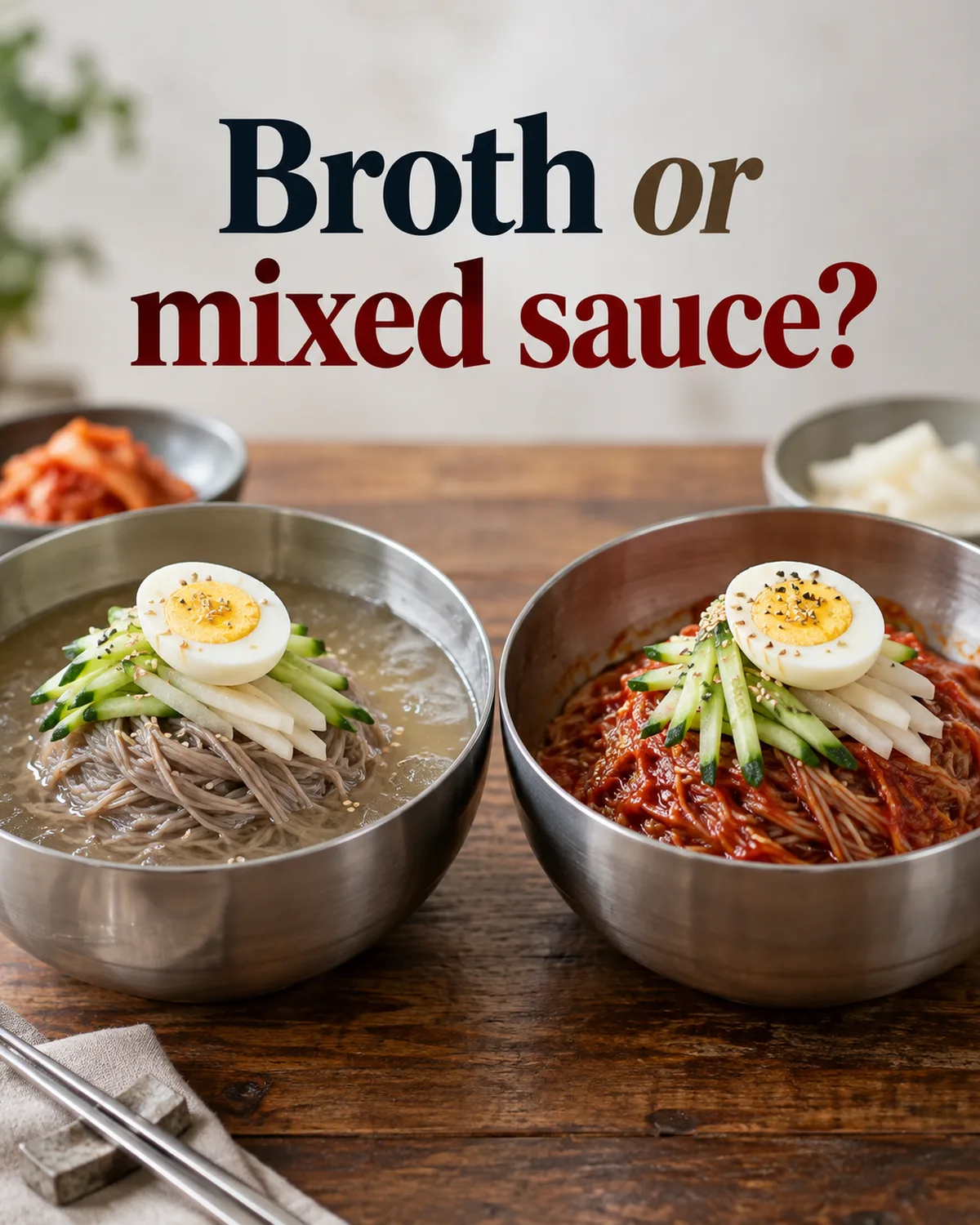
The names on menus describe more than one thing. Hyo Sun’s Korean Bapsang guide distinguishes mul naengmyeon, served in broth, from bibim naengmyeon, mixed with sauce. It also explains the broad South Korean association of Pyongyang with the former and Hamheung with the latter, alongside differences in buckwheat and starch proportions.
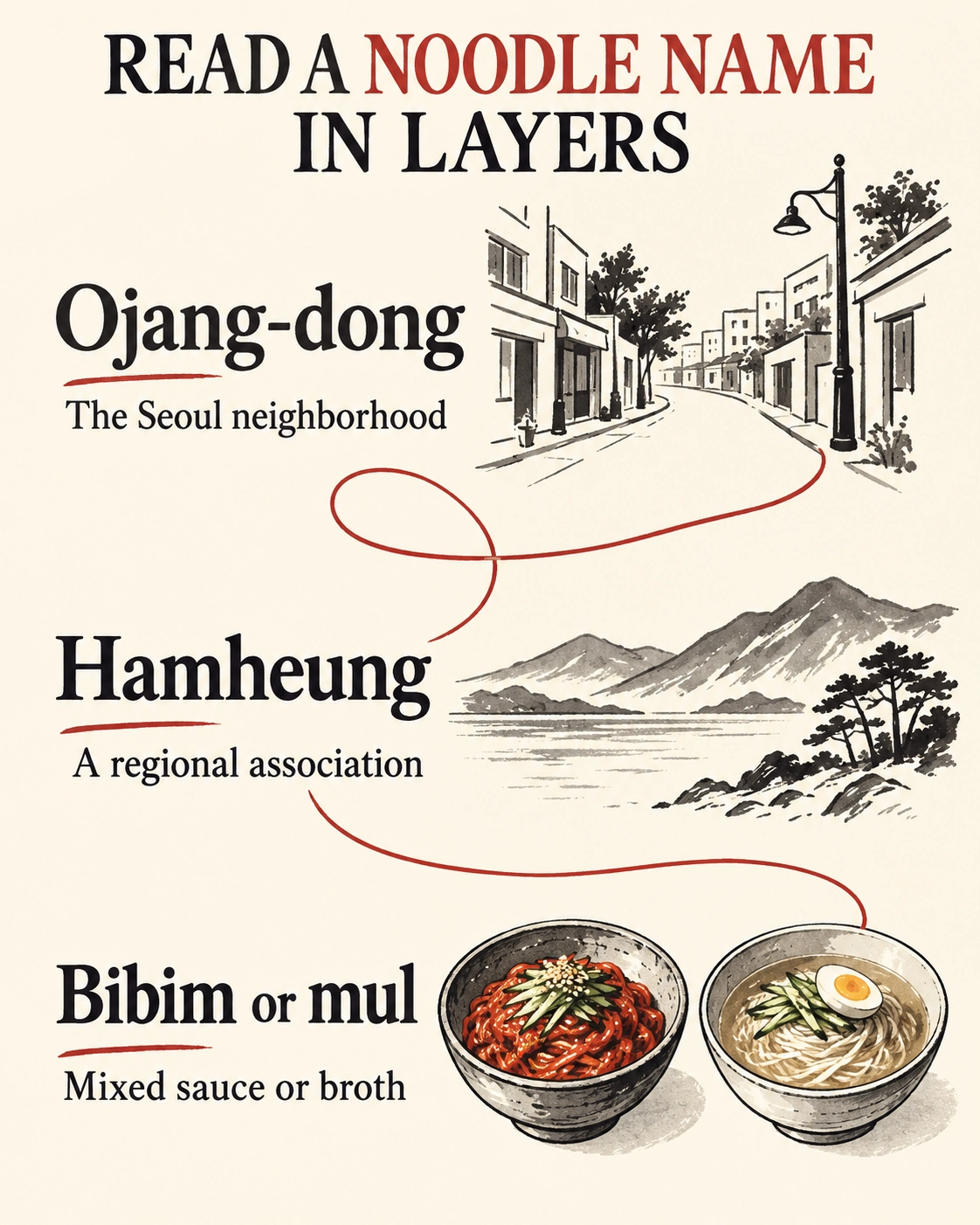
Those associations are starting points, not two rigid boxes. Hyo’s own home preparations include choices about broth, radish garnish and commercially available noodles. Her bibim version can also receive a little broth. A serving word describes what happens to the noodles, while a place-name can carry a regional association and a restaurant history. Neither word tells you every ingredient a specific cook has used.
For a visitor interested in the story, the useful task is to keep these descriptions separate. Notice the establishment’s name, the regional style it claims and the actual format ordered. Ojang-dong is a neighborhood; Hamheung is a northern association; broth and mixed sauce describe the bowl. This leaves room for the independent histories of neighboring restaurants and for the choices a home cook makes, instead of forcing every preparation to reproduce one imagined ancestral meal. Hyo Sun’s explanation and home versions of naengmyeon
Explaining the food across languages brings another adjustment. On her bibim-naengmyeon page, Maangchi recalls her editor asking for sensory descriptions she had never needed when cooking and eating the food herself. Her co-writer compared the noodles’ texture to thin licorice laces. The analogy was a way to help an unfamiliar reader anticipate the chew, not a claim that the noodles contain candy or taste like it.
The same page describes Maangchi refining her own version over time. It offers an everyday reminder that a known food can still require explanation and revision when it reaches a different audience. Knowing a name and recognizing a bite are separate stages of learning.
Ojang-dong’s story asks for that kind of careful attention. A visitor may begin with a spicy noodle bowl and later discover the women who ran the shops, the markets through which customers arrived and the people who came looking for news of home. The historical value lies in those connections. A meal remembered only as “northern noodles” loses the very individuals who made it possible for a regional tradition to become part of another city’s ordinary life. Maangchi’s account of describing and developing bibim-naengmyeon