Why Koreans Eat That

Tag: Korea travel

  • Korean Street Food Guide: What to Eat and Where to Find It

    Korean Street Food Guide: What to Eat and Where to Find It

    The fastest way into Korean food isn’t a restaurant — it’s a market alley at dusk, steam rising off a dozen griddles. Korean street food is cheap, social, and gloriously varied: chewy rice cakes, molten-sugar pancakes, crispy mung-bean fritters, whole markets built around eating on your feet. This guide covers what to try and, just as important, where to find it — with links to full guides for the dishes and markets worth a special trip.
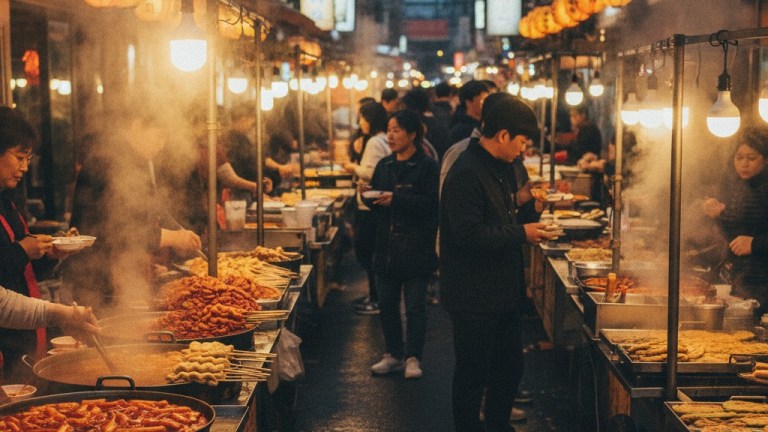
    A Korean street food market alley at night with stalls and steam, a guide to Korean street food
    A market alley at dusk is the beating heart of Korean street food.

    ⭐ Korean street food at a glance

    💸 Cheap eats ★★★★★
    🌶️ Spice range ★★★☆☆
    🧭 First-timer friendly ★★★★★

    A personal take from eating our way through Korea’s markets — how cheap it runs, the spice range, and how easy it is to dive in. Yours may differ.

    New to the country? This is one chapter of our bigger guide to what to eat in Korea — start there for the full picture, then come back here to graze.

    The must-try Korean street foods

    Korean tteokbokki spicy rice cakes — korean street food
    Tteokbokki — spicy rice cakes — is the king of Korean street food.

    🌶️ Tteokbokki (떡볶이) — the king of Korean street food: chewy rice cakes simmered in a sweet-and-spicy gochujang sauce, ladled hot into a cup. Around ₩3,000–5,000 and everywhere. Seoul’s Sindang-dong is its birthplace.

    🥞 Hotteok (호떡) — a griddled sweet pancake with a molten filling of brown sugar, cinnamon and crushed nuts. Let it cool a second — that syrup is lava. Winter’s best snack.

    🫓 Bindaetteok (빈대떡) — thick, crispy mung-bean pancakes fried to order, served with soy-vinegar dip and raw onion. A Gwangjang Market signature.

    🍙 Gimbap — seaweed-rice rolls filled with vegetables, egg and ham; the tiny, garlicky mayak gimbap (“addictive gimbap”) at Gwangjang is legendary.

    🌭 Korean corn dog — the viral one: a hot-dog or cheese skewer in a crunchy, sometimes potato-cubed coating, rolled in sugar. Made for a photo and a walk.

    🍢 Odeng / eomuk (오덱/어묵) — fish-cake skewers bobbing in warm broth, the broth free and bottomless. The ultimate cold-weather ₩1,000 pick-me-up.

    🥟 Mandu & more — steamed or fried dumplings, plus sundae (Korean blood sausage) by the plate — see our guide to byeongcheon sundae for the real thing.

    Where to eat Korean street food
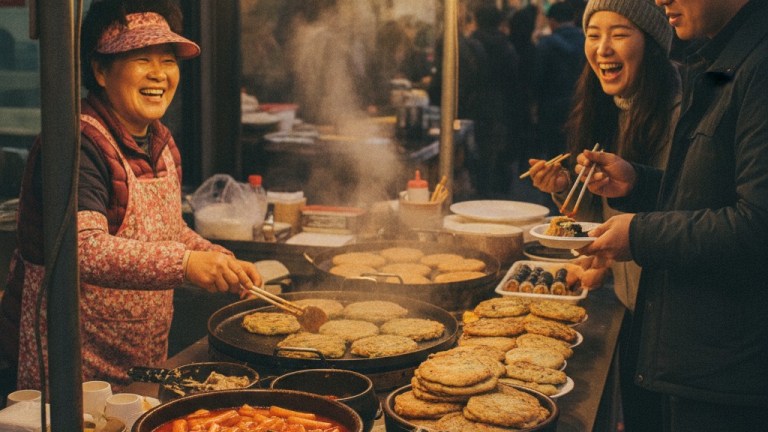
    Diners eating at a Korean traditional market food stall, where to find Korean street food
    The rule at any market: eat where the local office workers line up, not where the tourists do.

    🏮 Gwangjang Market — Korea’s oldest street-food market and the single best place to start. Do one loop for bindaetteok, mayak gimbap and raw beef, and you’ve had the crash course.

    🌃 Myeongdong — Seoul’s most famous street-food street, best around 6–7 pm when the stalls are set up and fresh: corn dogs, tteokbokki, grilled cheese lobster, and every trending snack of the moment.

    🌶️ Sindang-dong — the home of tteokbokki, where a whole alley specializes in the dish, cooked table-side.

    🐷 Jangchung-dong — not a market, but the go-to alley for soy-braised jokbal (pig’s trotters) — street-food spirit, sit-down comfort.

    Tips for eating at the market
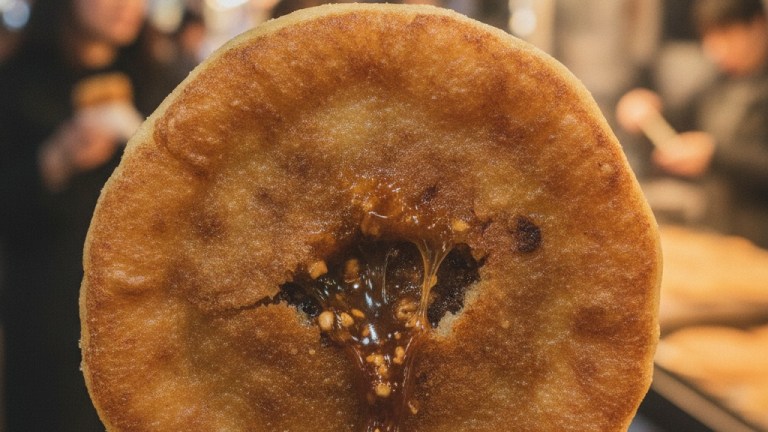
    Korean hotteok sweet pancake — korean street food
    Save room for a hotteok — the molten-sugar pancake is winter’s best snack.

    When: markets come alive from late afternoon; 6–7 pm is the sweet spot — stalls stocked, crowds still bearable. How to pay: carry small cash; many stalls are cash-only, though card and mobile pay are spreading. How to pick: follow the locals — a stall with a line of Korean office workers beats an empty one with an English menu every time. Spice: plenty is mild (hotteok, gimbap, odeng), so there’s always something for a tender palate.

    A few quick questions

    What is the most popular Korean street food?
    Tteokbokki — spicy rice cakes — is the icon, followed by hotteok, gimbap and the viral Korean corn dog. Start with tteokbokki and a hotteok for dessert.

    Where is the best Korean street food in Seoul?
    Gwangjang Market for the classic, traditional experience and Myeongdong for trendy snacks. For a single dish done to perfection, head to Sindang-dong for tteokbokki.

    Is Korean street food safe and cheap?
    Yes on both. Stalls turn over food fast and busy ones are freshest, and most snacks run ₩1,000–5,000. Carry small cash and eat where it’s crowded. My own rule of thumb: if there’s no line of local office workers, keep walking.

    🔗 Keep exploring: see the full guide to what to eat in Korea, or dive into Gwangjang Market Want the simplest option of all? Our guide to 10 must-try Korean convenience store foods covers the no-restaurant-needed route.. · More on Korean street food (Wikipedia)

  • What to Eat in Korea: A Traveler’s Food Guide by Region

    What to Eat in Korea: A Traveler’s Food Guide by Region

    Ask ten Koreans for the best thing to eat and you’ll get ten different answers — and half of them will name a dish from their hometown, not Seoul. That’s the secret to eating well here: Korean food is fiercely regional. This guide is a map of what to eat in Korea, from the dishes every first-timer should try to the local specialties worth a day trip, each linked to a deeper guide on where to find it and the story behind it.

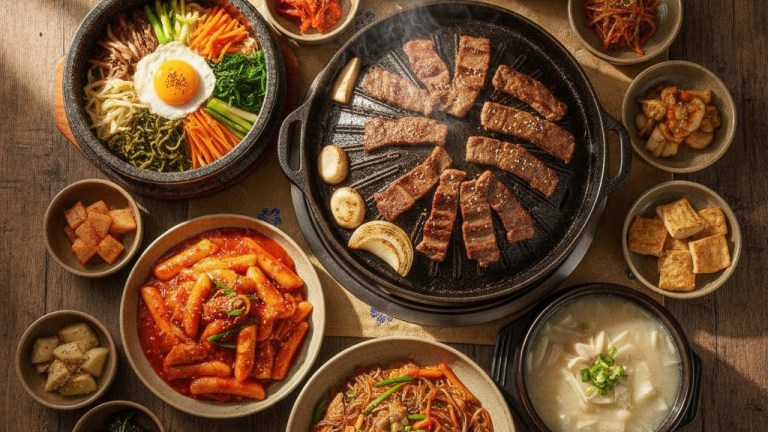
    A spread of must-try Korean food dishes on a table — what to eat in Korea guide — korean food guide
    Korean food is regional — the best meals are often a specialty of one particular town.

    🧭 How to use this guide

    Start with The essentials if it’s your first trip. Then jump to Eat across Korea to plan day trips around a regional dish, or browse by soups & noodles and street food. Every dish links to a full guide — history, how to eat it, and exactly where.

    The essentials: what to eat first

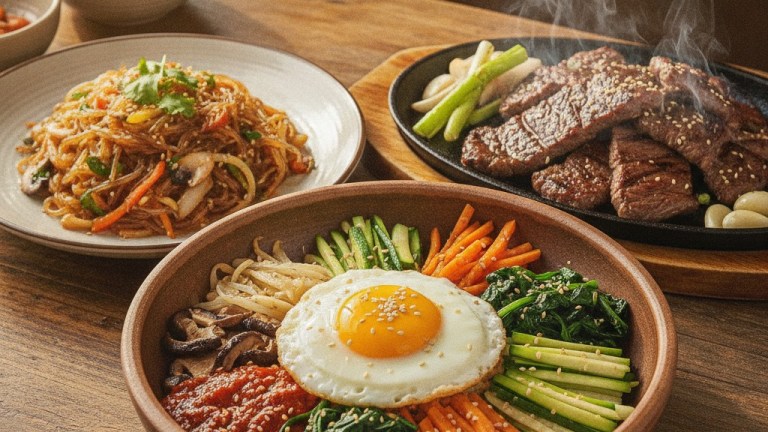
    Korean essential dishes: bibimbap, Korean BBQ and japchae — korean food guide
    Start here: bibimbap, Korean BBQ and japchae are the friendliest first bites.

    If you only have a few meals, start here. These are the dishes that show up on every “must-try Korean food” list for a reason — approachable, iconic, and easy to find in any city.

    🍚 Bibimbap — the friendliest first meal in Korea: a bowl of rice topped with seasoned vegetables, egg and chili paste, mixed at the table. The city of Jeonju is famous for the best version.

    🥩 Korean BBQ (galbi) — grilling marinated beef or pork at your own table is the classic Korean night out. Sweet, soy-marinated galbi short ribs are the crowd-pleaser.

    🌶️ Tteokbokki — chewy rice cakes in a sweet-and-spicy gochujang sauce, Korea’s most beloved street snack. Seoul’s Sindang-dong is its spiritual home.

    🍜 Japchae — glossy, barely-spicy glass noodles tossed with beef and vegetables. It began as a royal-court dish and is the gentlest introduction to Korean flavors.

    Eat your way across Korea (day trips from Seoul)

    Map-style illustration of Korean regional food specialties by city — day trips from Seoul — korean food guide
    Many of Korea’s best dishes belong to one town — and most are an easy trip from Seoul.

    This is where Korea gets fun for a traveling eater. Pick a dish, and you’ve got a reason to see a new town. Here’s a quick map of regional specialties, roughly clockwise from Seoul:

    🏔️ Gangwon (the northeast mountains & coast): Grill smoky dakgalbi (spicy stir-fried chicken) in Chuncheon; slurp seawater-set chodang sundubu tofu in Gangneung; try refugee-born ojingeo sundae (stuffed squid) in Sokcho; and mountain-herb gondeure namul bap in Jeongseon.

    🍚 The Jeolla & central regions: Jeonju is Korea’s food capital — home of the definitive bibimbap. In Chungcheong, Daejeon pairs Korea’s most famous bakery with spicy tofu in our Sungsimdang & dubu-duruchigi guide; Cheonan has beloved byeongcheon sundae soup; Okcheon has spicy river-fish noodle soup; and the Seosan–Taean tidal flats give us gaegukji & nakji-tang.

    🥩 Just outside Seoul: Pocheon is the home of sweet marinated Idong galbi short ribs — an easy BBQ day trip.

    🌊 Jeju Island: The volcanic south serves silver cutlassfish two ways in our Jeju galchi guide — spicy braised and in a clear soup.

    Soups, stews & noodles

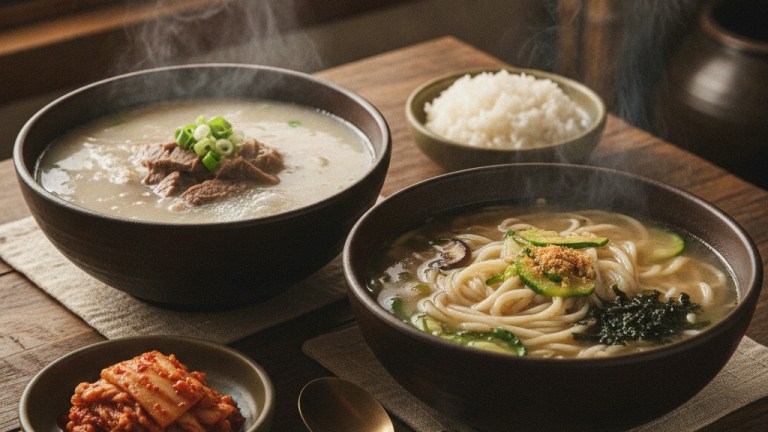
    Bowls of Korean soup, comfort food — korean food guide
    Korea builds a meal around a warm bowl — its soups are top comfort food.

    Koreans build a meal around a warm bowl, and the country’s soups are some of its greatest comfort food.

    🥣 Seolleongtang — a milky ox-bone soup simmered for hours, seasoned at the table with salt and scallions; a classic Seoul breakfast. 🍜 Kalguksu — comforting hand-cut wheat noodles in broth, famous in Seoul’s Myeongdong. 🐟 Saengseon-guksu — a spicy river-fish noodle soup from Okcheon. 🥔 Byeongcheon sundae — a hearty blood-sausage soup from Cheonan.

    Street food & markets

    Korean market street food stalls — korean food guide
    The fastest way in is a market at dinnertime.

    The fastest way into Korean food is a market at dinnertime. Start at Gwangjang Market in Seoul — Korea’s oldest street-food market, where you can graze on mung-bean pancakes, mayak gimbap and raw beef in one loop. From there, hunt down tteokbokki in Sindang-dong, and tender soy-braised jokbal (pig’s trotters) in Jangchung-dong.

    A few practical tips

    Is Korean food all spicy? No. It has a reputation for heat, but plenty of staples are mild — japchae, seolleongtang, sundubu and Korean BBQ are all gentle starting points.

    What are all those little dishes? Those free side dishes are banchan (반찬) — kimchi, pickles, seasoned vegetables — refilled at no charge. They’re part of the meal, not extras.

    Vegetarian? It takes some care (many broths use meat or anchovy), but bibimbap without meat, japchae, and temple-style dishes are all doable — just ask.

    A few quick questions

    What is the one must-try Korean food?
    If you try only one dish, make it Korean BBQ or bibimbap — both are iconic, widely available, and easy for first-timers. For a gentle, no-spice option, japchae is a safe bet.

    What should I eat in Korea besides the famous dishes?
    Chase the regional specialties. Chuncheon’s dakgalbi, Jeonju’s bibimbap, and Sokcho’s ojingeo sundae are worth planning a trip around, and each makes an easy escape from Seoul.

    What Korean food is good for people who don’t like spicy?
    Plenty. Seolleongtang ox-bone soup, sundubu tofu, japchae glass noodles, kalguksu noodle soup and Korean BBQ are all mild — you control the heat with the side sauces.

    🔗 New to the site? Two great places to start eating: Seoul’s milky seolleongtang and the stalls of Gwangjang Market. · More on Korean cuisine (Wikipedia)