Why Koreans Eat That

Author: JWOO2016 Ch.

  • Are Stray Kids Disbanding in 2026? What JYP Has Actually Confirmed — and What Those ‘Final Era’ Tour Posts Get Wrong

    Are Stray Kids Disbanding in 2026? What JYP Has Actually Confirmed — and What Those ‘Final Era’ Tour Posts Get Wrong

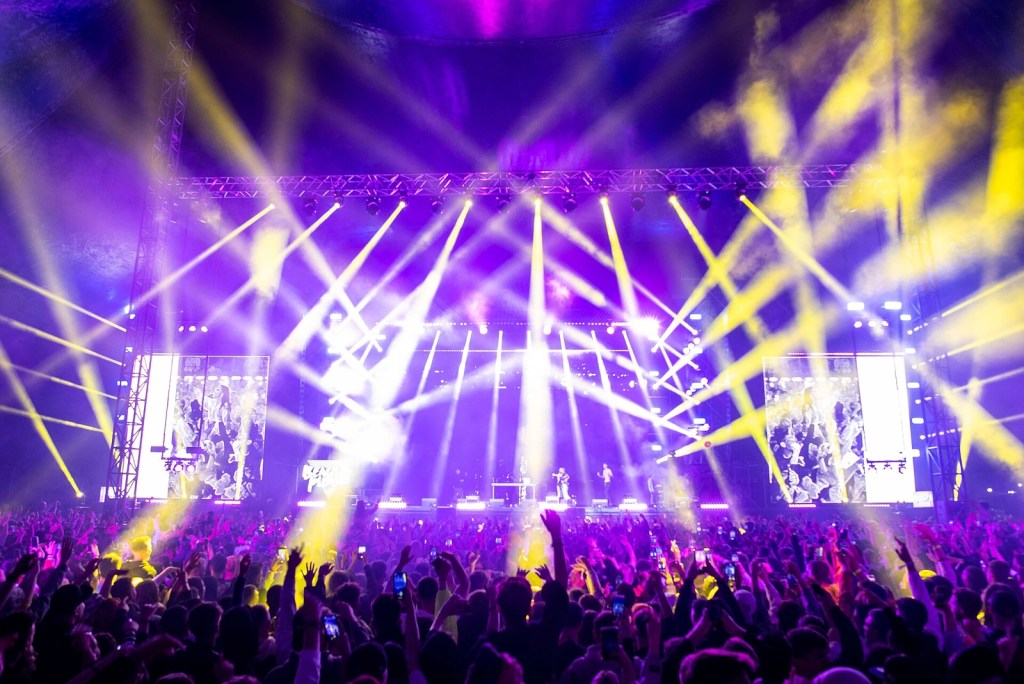
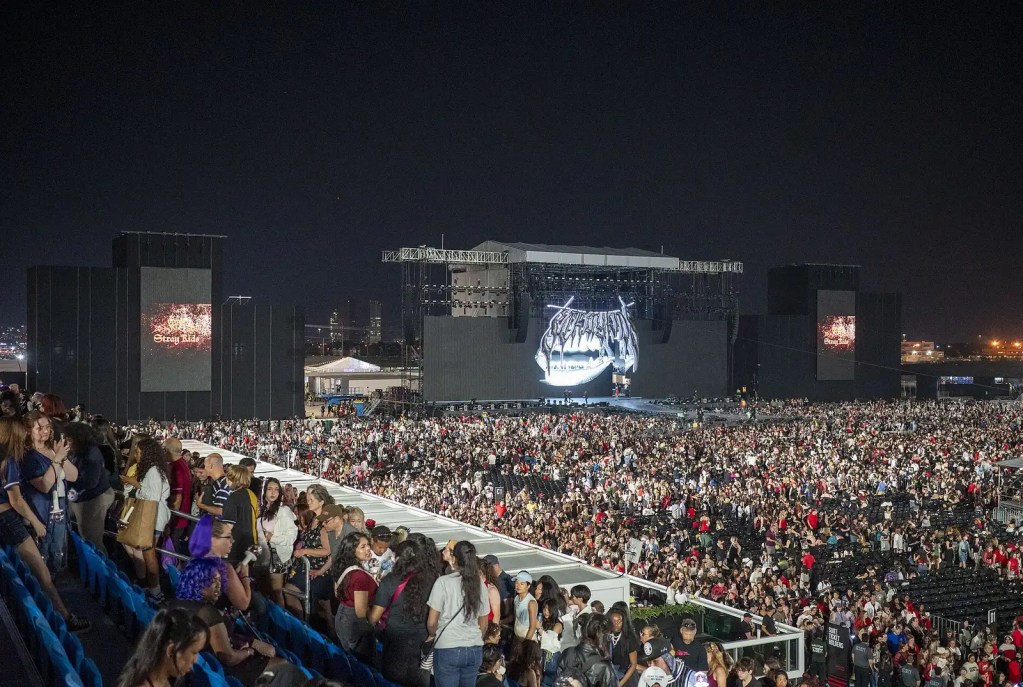
    Stray Kids RUN IT world tour 2026 concert crowd at KSPO Dome in Seoul — stray kids disband

    Eight members, one rumor that will not die. Photo: M.Öcalan (public domain)

    You open your feed and there it is again. “Stray Kids announce The Final Era farewell tour.” “One Last Ride.” A countdown graphic. A caption about military service. Someone in the replies is already saying goodbye. And somewhere between the third and fourth post, you start to wonder whether you missed something official.

    You didn’t. Here is the short answer to the are Stray Kids disbanding question: no announcement of a disbandment exists, and JYP Entertainment has never announced a tour called “The Final Era.” What JYP did announce, in June 2026, is a world tour — and its actual name is RUN IT.

    That’s the part that makes the rumor collapse. The tour is real. The sold-out shows are real. It’s the ending that was invented. And the giveaway isn’t hidden in some fan forum — it’s sitting in the tour schedule itself, in plain sight, where anybody can check it. Oh, and the opening night in Seoul happens to land on a date Koreans circle on the calendar for a completely unrelated reason. We’ll get to that.

    “Fans are counting down to a farewell. The calendar is counting down to soup.”

    What JYP actually announced in 2026
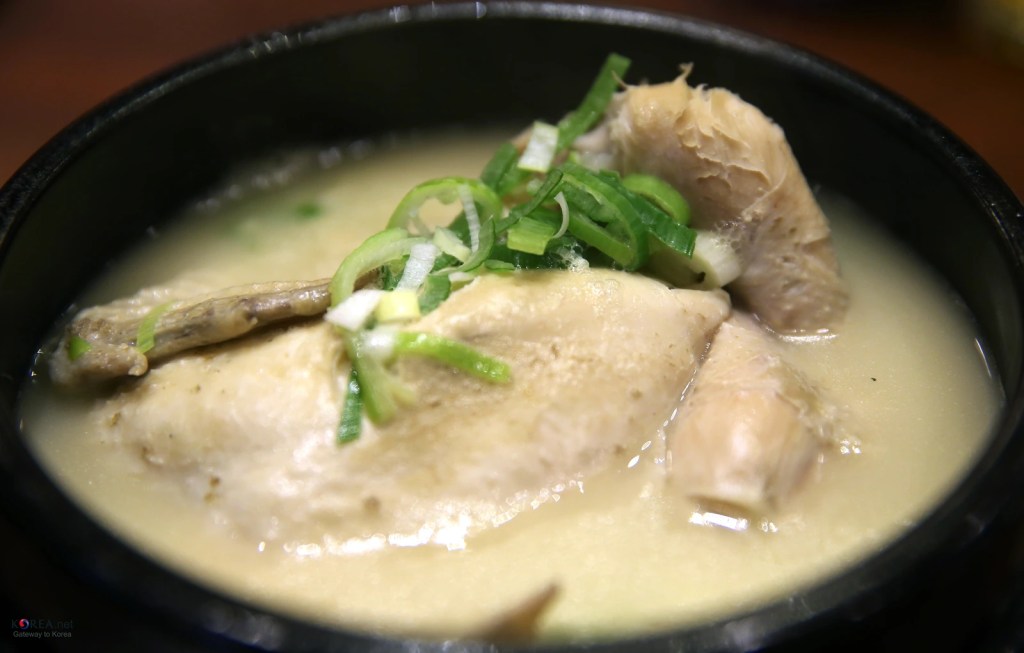
    Samgyetang, Korean ginseng chicken soup eaten on boknal, the hottest days of summer — stray kids disband

    Opening night in Seoul lands on boknal. This is what the country eats that day. Photo: Korea.net / Korean Culture and Information Service (Jeon Han), CC BY-SA

    In late June 2026, Stray Kids announced a comeback and a world tour at the same time, built around a pre-release single. Both share a name, and the name is not subtle: RUN IT. Not “The Final Era.” Not “One Last Ride.” Those two titles, incidentally, are floating around attached to the same supposed tour — which is your first clue that nobody writing them has seen an announcement.

    The confirmed part looks like this:

    • Seoul — five shows at KSPO Dome (July 25, 26, 29 and August 1, 2). All five sold out.
    • Tokyo — August 29 and 30 at Tokyo’s national stadium, making them the first foreign male act to headline the venue on their own.
    • Japan, continued — Nagoya, Osaka and Fukuoka, running through late October.
    • Asia — Hong Kong and Taipei in December.
    • And then 2027 — Bangkok in January, Singapore in March.

    Read that last line again, because it does all the work.

    The dates are what break the “farewell” story
    Stadium crowd at a sold-out K-pop concert — stray kids disband

    Photo: Kyy0602, CC0

    Concert crowd at night - Stray Kids disbandment rumor explained

    Photo: Gwyrosydd, CC BY

    A farewell tour ends. That’s the entire premise of one. This one has confirmed dates in January and March of 2027, which means that on the day the “final era” is supposedly closing, the group is scheduled to be on stage in Bangkok. You cannot say goodbye in 2026 and also be booked into next spring.

    The other tell is the naming. When a group genuinely announces a farewell, the wording is fixed and everyone repeats it exactly, because it came from one press release. Here you get “The Final Era” on one site and “One Last Ride” on another, describing the same shows. One post even placed a European leg in “early spring 2026” — a date that had already passed when the post went up. That’s not reporting. That’s a template with the names swapped in.

    It’s worth saying plainly: the sites carrying these claims are aggregators. They exist to catch searches like yours. Nothing they published traces back to an agency statement, which is why this article doesn’t link to any of them.

    But what about the contracts?
    Korean Summer Street — Are Stray Kids Disbanding in 2026? What JYP Has Actually Con

    Photo: myself (User:Piotrus), CC BY-SA 3.0

    This is usually where K-pop disbandment rumors get their fuel. A group’s exclusive contract runs seven years, the seventh year arrives, and the speculation writes itself.

    Except Stray Kids already went through that, and it was uneventful. On July 18, 2024, JYP announced that all eight members — Bang Chan, Lee Know, Changbin, Hyunjin, Han, Felix, Seungmin and I.N — had renewed. The original contracts weren’t due to expire until March 2025, so they signed early. The announcement landed the day before a comeback, which is not how agencies behave when something is falling apart.

    So the standard trigger for a disbandment rumor — an expiring contract — was defused two years ago. The rumor arrived anyway, which tells you it was never built on the contract in the first place.

    And the military service angle?

    A stadium light-stick ocean at a BTS Love Yourself Speak Yourself date — stray kids disband

    Photo: Sian Lilly, CC BY 3.0

    This is the part the rumor leans on hardest, and it’s the part that deserves the most care, because enlistment is a real obligation for Korean men and not a plot device.

    Here is what can actually be said: no enlistment date has been announced for any Stray Kids member. Not one. Every “before military service” headline you’ve seen is a projection someone made from the members’ birth years, then published as though it came from an agency.

    There’s also a detail the rumor posts tend to skip. Leader Bang Chan holds Australian citizenship, so Korea’s conscription requirement doesn’t apply to him the way it does to the group’s Korean nationals. A “farewell before enlistment” story that includes the leader isn’t just unconfirmed — it’s built on a premise that doesn’t hold.

    Beyond that, this article won’t speculate about who serves when. When there’s an announcement, there will be an announcement.

    How to check any K-pop rumor in about ninety seconds

    You don’t need to be a fan-account detective. Three habits catch almost everything:

    • Find the agency notice. Korean agencies post announcements on their own artist sites first. If a tour or an enlistment is real, it’s there, dated, before it’s anywhere else.
    • Check whether the name is stable. One event should have one name. Two names for one tour means neither is official.
    • Look for a date that contradicts the story. A “final” tour with shows booked after the ending isn’t final. This is the fastest tell there is.

    So — are they disbanding?

    No announcement says so. The contracts were renewed early, back in 2024. The tour has a different name than the rumor claims, and it runs into 2027. No enlistment date exists for anyone in the group, and the leader isn’t subject to Korean conscription in the first place.

    What’s actually happening is a lot less dramatic than a farewell: a group playing five sold-out nights at home before getting on a plane, with fifteen months of dates already printed. If that changes, it’ll change in a notice with a date on it — not in a graphic with two different tour names.

    One practical footnote for anyone flying in for the Seoul run: the boiling ginseng chicken soup pictured earlier is samgyetang — eaten on Korea’s hottest days on the logic that you fight heat with heat. The tradition has centuries behind it, and we traced them separately.

    ONE MORE THING
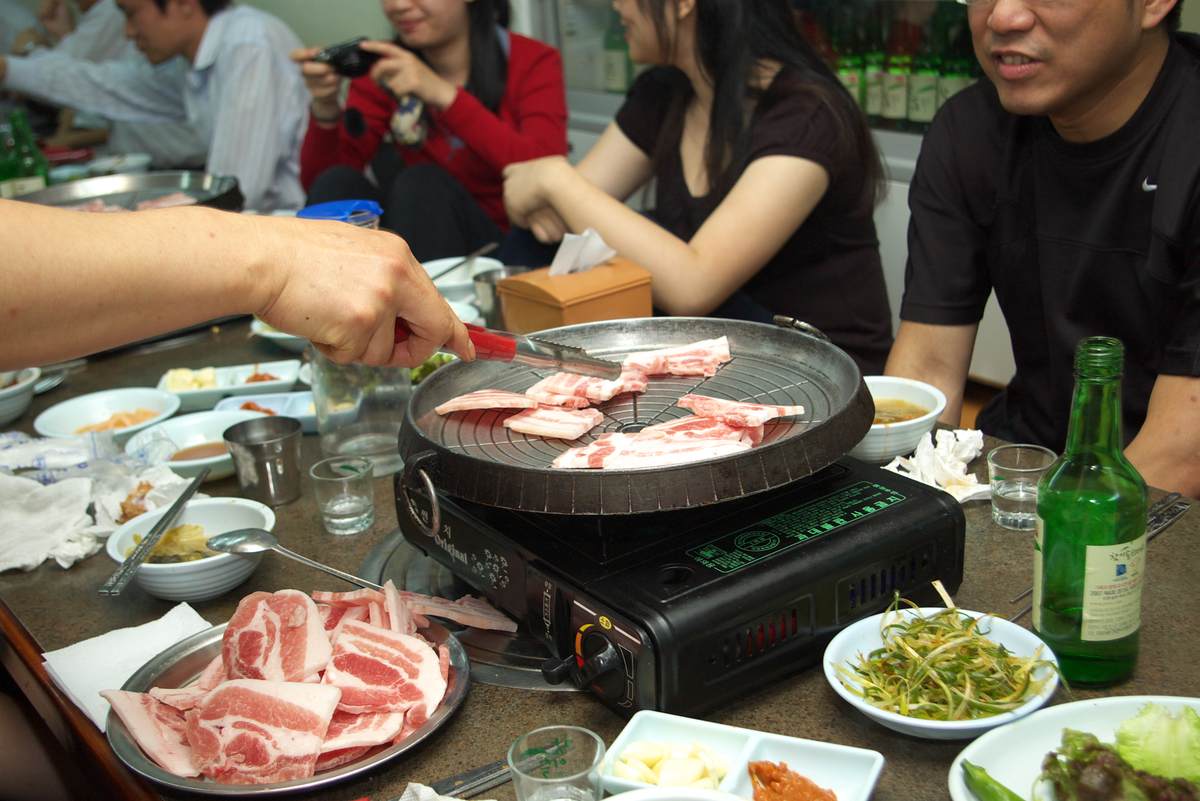
    Samgyeopsal, Korean grilled pork belly, cooking on a barbecue grill — stray kids disband

    Samgyeopsal on the grill — the kind of spread the group worked through on camera. Photo: 南宮博士, CC BY-SA 2.0

    While the rumor mill was busy inventing a farewell tour, the group’s actual, verifiable food reputation kept building in the background. Lee Know is the group’s known cook — he and Felix compared what’s stocked in their dorm fridges on JTBC’s “Chef & My Fridge,” and he’s been filmed making full dishes like beef Wellington for other members’ birthdays. And in August 2024, all eight members sat down with chef Esther Choi for First We Feast’s “Heat Eaters” at a Koreatown barbecue spot in New York, working through an increasingly spicy lineup of Korean dishes on camera — Lee Know lasted the longest, Bang Chan tapped out first, and Seungmin summed up the group’s whole vibe in two words: “spicy-sweet.” None of that needed a rumor to be worth reading about. It’s already on video.

  • Why Nam Joo Hyuk’s Netflix K-Drama ‘The East Palace’ Is Trending Globally (Joseon Horror Review)

    Why Nam Joo Hyuk’s Netflix K-Drama ‘The East Palace’ Is Trending Globally (Joseon Horror Review)

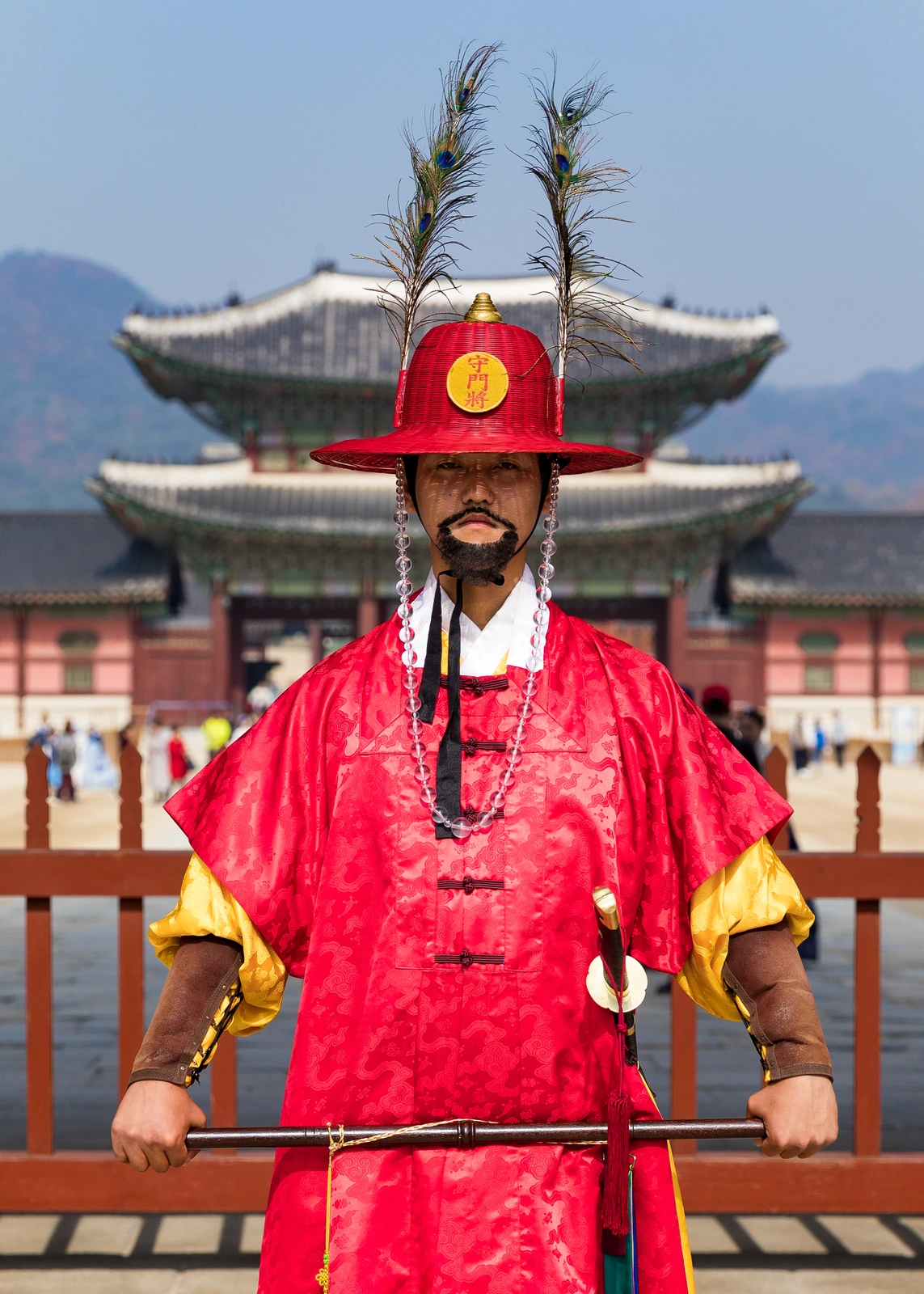
    A traditional Korean palace gate at dusk, setting for the Netflix series The East Palace — east palace netflix

    A palace after dark. The show’s entire premise lives here. Photo: Frank Schulenburg, CC BY-SA

    A crown prince is found dead in a pond. Not stabbed, not poisoned — drowned, inside the most guarded compound in the kingdom. And the rumor that moves through the palace before the body is even cold is that this was never a murder at all. Thirty years ago, something in that water cursed the royal bloodline and promised to finish it.

    That’s the opening situation of The East Palace, the eight-part Netflix series that landed on July 17, 2026 and immediately took the No. 1 spot in Korea’s buzzworthy drama rankings, with Nam Joo-hyuk topping the actor list alongside it.

    If you’ve watched the trailer and assumed it’s another handsome-swordsman-in-hanbok show, you’re going to be wrong in a specific way. This one isn’t really a period drama with ghosts added. It’s a horror story that happens to be wearing Joseon. Watching it with that framing in mind changes which scenes actually unsettle you.

    “Most palace dramas are about who takes the throne. This one is about what’s already living in the walls.”

    Who’s in it, and who they’re playing

    • Nam Joo-hyuk as Gu-cheon — a hired killer of gwi (귀), the dead that won’t stay dead. He moves between the world of the living and the world of the dead, and he carries a blade that cuts spirits.
    • Roh Yoon-seo as Saeng-gang — a lady of the court who is guarding a secret of her own.
    • Cho Seung-woo — the third point of the triangle, and the reason the palace scenes have weight.

    The king calls the two of them in to explain what’s happening inside his own walls. What they find is a knot of power, buried history and restless dead, all tied together by one curse.

    The East Palace | Official Trailer | Netflix K-Content [ENG SUB] — east palace netflix

    ▶ The East Palace | Official Trailer | Netflix [ENG SUB] — watch on YouTube

    The names behind it explain the tone

    Changdeokgung Palace — Why Nam Joo Hyuk's Netflix K-Drama 'The East Palace' Is Tren — east palace netflix

    Photo: KOREA.NET – Official page of the Republic of Korea, CC BY-SA

    Korean Palace Pond — Why Nam Joo Hyuk's Netflix K-Drama 'The East Palace' Is Tren — east palace netflix

    Photo: KOREA.NET – Official page of the Republic of Korea, CC BY-SA

    Joseon Hanbok — Why Nam Joo Hyuk's Netflix K-Drama 'The East Palace' Is Tren — east palace netflix

    Eight episodes, one compound, and a lot of doors nobody should open. Photo: KOREA.NET – Official page of the Republic of Korea, CC BY-SA

    Here’s the detail that tells you what you’re actually getting. The writers are Kwon So-ra and Seo Jea-won — the pair behind Bulgasal: Immortal Souls and The Guest. Both of those shows built their horror out of Korean occult belief rather than imported jump-scare grammar.

    Directing is Choi Jung-kyu, who made The Devil Judge and Children of Nobody — neither of which is a supernatural show, and both of which are about institutions rotting from inside.

    Put those two instincts together and you get the actual shape of The East Palace: an occult story where the horror and the politics are the same problem. The curse isn’t interrupting the power struggle. It is the power struggle, thirty years older.

    Why it’s travelling so well outside Korea

    Korean Lantern Night — Why Nam Joo Hyuk's Netflix K-Drama 'The East Palace' Is Tren — east palace netflix

    Photo: KOREA.NET – Official page of the Republic of Korea, CC BY-SA

    Three things, and none of them are the cast.

    It’s eight episodes. Not sixteen, not twenty. A Joseon-set drama used to be a commitment. This one is a weekend.

    The horror is unfamiliar. The gwi aren’t Western ghosts with Korean costumes on. They come out of a belief system with its own rules about what the dead are owed and what happens when they don’t get it — which means international viewers can’t predict the next beat, and that’s the whole engine of dread.

    It’s a bet, and Netflix made it deliberately. Korean shamanism as a mainstream global streaming genre wasn’t a given. This is the platform testing whether that world can carry a flagship series on its own, rather than as texture inside a romance.

    Is it worth eight hours?

    Injeongjeon Hall at Changdeokgung Palace — east palace netflix

    Photo: kallerna, CC BY-SA 4.0

    One thing the show gets right without saying it: a Joseon palace ran on food as much as ritual. The real royal table — surasang, the king’s twelve-dish service — is its own story, and a far less haunted one.

    Before you press play

    What is The East Palace about?

    A crown prince is found drowned inside the palace, and the investigation runs into a thirty-year-old curse. Eight episodes, released July 17, 2026, and immediately No. 1 in Korea’s buzzworthy drama rankings.

    Who stars in it?

    Nam Joo-hyuk as the spirit-hunter Gu-cheon, Roh Yoon-seo as the court lady Saeng-gang, and Cho Seung-woo — with Nam topping the buzzworthy actor list the week it landed.

    Is it horror or a period drama?

    Horror first. The writers built Bulgasal and The Guest, the director made The Devil Judge — the Joseon setting is the skin, Korean occult belief is the engine.

    The real palace behind the fiction is still standing. What Korean sources call the “East Palace” (동궐) historically referred to the Changdeokgung—Changgyeonggung complex — and you can walk it. Our travel guide to Changdeokgung Palace and its Secret Garden covers visiting in person.

  • BTS Skipped the Grammys and Sang Arirang in Boston Instead

    BTS Skipped the Grammys and Sang Arirang in Boston Instead

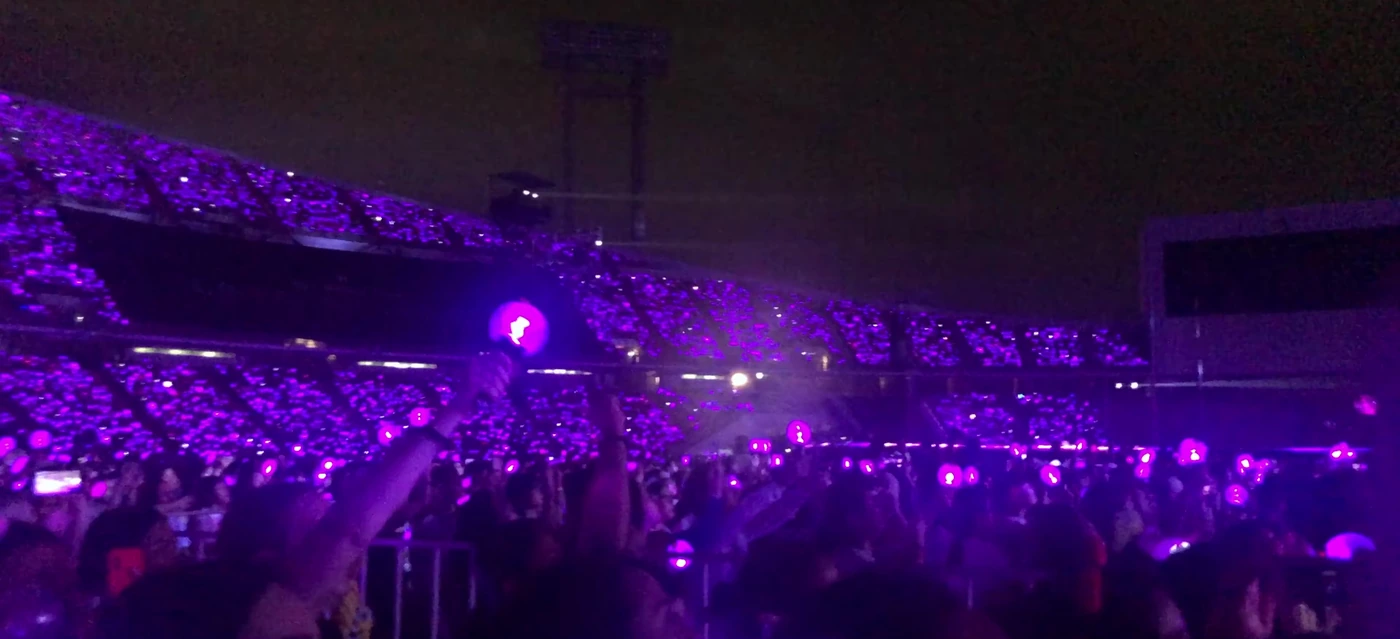
    ARMY purple ocean lightsticks filling a stadium at a BTS concert — bts grammy arirang

    A stadium turning purple is the easy part. The loud part is in a language most of the crowd doesn't speak. Photo: Chris Belison, CC BY 3.0

    On July 29, BTS said they would not submit their music for this year’s Grammys. A week later they were standing on a round stage in Foxborough, Massachusetts, in front of a stadium that had sold out twice over, listening to Americans sing a Korean folk song back at them in Korean.

    Those two things are related, and not in the way most headlines have framed it. This isn’t a story about an award being refused. It’s a story about what BTS decided their music is — and a stadium full of people agreeing with them out loud.

    Why BTS walked away from the Grammys

    The Recording Academy created a new category: Best Asian Pop Music Performance. On paper, that reads like recognition. A whole category, carved out, for music that had spent years being treated as a novelty on American award shows.

    BTS read it differently. In posts on their individual accounts, the members said they hoped their music would be heard and loved for what it is, rather than divided by region or language. They did not attack the Academy. They did not hold a press conference. They just declined to enter.

    BTS speaking at a White House press briefing in 2022 — bts grammy arirang

    Institutions have wanted BTS in the room before. The White House, May 2022. Photo: The White House (public domain)

    The logic is worth sitting with, because it’s the opposite of what an ambitious group usually does. A dedicated category is the easiest trophy in the building. Fewer competitors, guaranteed visibility, an almost certain win. Turning it down costs something real.

    But a category built around a continent tells you where the Academy thinks the music belongs. Best Pop Duo/Group Performance is a room. Best Asian Pop Music Performance is a hallway outside that room with a nice sign on the door. BTS have spent a decade getting into the room.

    Recording Academy CEO Harvey Mason Jr. said he was saddened that BTS had chosen not to take part this year, and added that as a music creator he understood and respected the decision.

    What actually happened in Boston

    Gillette Stadium in Foxborough Massachusetts, venue of the BTS Boston concerts — bts grammy arirang

    Gillette Stadium, Foxborough. Special MBTA event trains outhere sold out in under fifteen minutes, and the booking app went down. Photo: Max P, CC BY

    BTS played Gillette Stadium on August 5 and 6. It was the first headlining K-pop show the venue had ever hosted, and the biggest one by a wide margin. Both nights sold out.

    The transport story tells you as much as the ticket story. Massachusetts ran special event trains out to Foxborough, and they were gone in under fifteen minutes — fast enough that the booking app fell over. Fans then spent the following week publicly asking the transit authority to add more.

    BTS performing on stage during a stadium concert — bts grammy arirang

    A 360-degree stage means there is no back of the room. Photo: I DARE U JK, CC BY 3.0

    The stage was built in the round, a 360-degree setup that no K-pop act had attempted at stadium scale before. There is no back of the room. Every seat gets a front, at least some of the time.

    The ARIRANG tour, by the numbers

    Started April 9, 2026, Goyang, South Korea
    Scale 34 regions, 80+ shows
    Boston dates Aug 5–6, Gillette Stadium, both sold out
    New Jersey, days earlier 157,000 people over two nights at MetLife
    Why it matters First full-group tour since all seven finished military service

    The Arirang moment, explained

    The tour is called ARIRANG, and the name isn’t decoration. Partway through the song “Body to Body” the arrangement opens up into Arirang (아리랑), the Korean folk melody the tour is named for — and the crowd sings it. In Korean. This has become the signature scene of the tour, night after night, city after city.

    At the Stanford show it went further. Fans raised Korean flags together during that passage, and nobody had organised it. It simply happened, the way things happen in a stadium when tens of thousands of people arrive at the same feeling at the same second. Clips of that specific moment are the ones fans keep sending each other when they try to explain why this tour feels different from the others.

    Jeongseon Arirang train in Gangwon Province, Korea — bts grammy arirang

    Jeongseon, in Gangwon Province, keeps its own Arirang. So do Jindo and Miryang. Photo: Republic of Korea, CC BY-SA 2.0

    Here is why that lands harder than it looks. Arirang isn’t a pop song, and it isn’t old-fashioned patriotism either. It’s a lyrical folk song that Koreans have carried for generations — different regions kept different melodies, so there is a Jeongseon Arirang, a Jindo Arirang, a Miryang Arirang, and the tune most people know is only one branch of a much older tree. UNESCO added it to the Intangible Cultural Heritage list in 2012.

    It is also the song Koreans reach for when there is nothing else to say — including at the Olympics, when North and South have needed one melody they could both stand under. It carries grief and stubbornness in the same breath. The lyric everyone knows is about someone leaving, and the singer wishing them sore feet before they get very far.

    So when a stadium outside Boston sings it, in a language most of them are learning phonetically, that is not a language barrier being politely tolerated. That is the exact thing BTS said they wanted: music heard for what it is, not sorted by where it came from. They made the argument in a statement, and then let a sold-out stadium prove it at volume.

    What it costs the Grammys

    Billboard and others have flagged the obvious risk: ratings and commercial pull. An award show without the biggest group in the world is a smaller television event, and advertisers price it accordingly.

    You will see specific damage figures circulating online — very large ones, quoted with great confidence. Those numbers are not objectively confirmed. No outlet has published a verified accounting, and the loudest versions trace back to social video rather than reporting. The honest version is narrower and still significant: the Academy has lost its most bankable global act from this year’s ceremony, and it lost them over a decision the Academy made itself.

    There’s a smaller footnote that fans noticed quickly. BTS’s 2021 and 2022 Grammy stages for “Dynamite” and “Butter” are no longer findable on the Grammys’ own site. Some read it as retaliation; others point out that award shows rotate old performance footage as routine housekeeping. Neither reading has been confirmed, and it is worth saying so plainly rather than picking the more dramatic one.

    And what do you eat before a stadium sings for three hours?

    Samgyetang, Korean ginseng chicken soup served hot — bts grammy arirang

    Samgyetang. Hot soup in hot weather is not a mistake here, it is the whole idea. Photo: karendotcom127, CC BY 2.0

    Let’s be straight about one thing first: nobody has reported what BTS ate in Boston. If you see a listicle telling you which Massachusetts restaurant Jungkook ordered from, treat it the way you’d treat any other unsourced claim.

    What we do know is the habit. Jin has been the group’s food voice for years — his Eat Jin broadcasts were essentially a running argument that eating well in front of people is a normal thing for an idol to do, made at a time when that was not the industry position.

    And that position has been shifting. Korean idol food culture has moved away from the extreme pre-comeback diets of the 2010s toward something closer to eat properly, train harder — which is the only approach that survives 80 stadium shows across 34 regions. We wrote about that shift in more detail in our piece on what BTS eats to get through a schedule like this.

    Samgyeopsal pork belly going on a Korean barbecue grill — bts grammy arirang

    Samgyeopsal on the grill. Korean stamina eating is built around heat and protein rather than restriction. Photo: idkjm123 (public domain)

    If you want the food that Koreans themselves associate with getting through brutal heat and long days, it’s the stamina tradition — hot broth in hot weather, grilled protein, and the conviction that you fight summer with warmth rather than ice. That’s not a stage myth. It’s what the country actually does in August.

    The short version

    • BTS declined to submit music to this year’s Grammys after the Academy created a Best Asian Pop Music Performance category.
    • Their stated reason: music should be heard for itself, not sorted by region or language.
    • They played two sold-out nights at Gillette Stadium near Boston on August 5–6, the venue’s first headlining K-pop shows.
    • The tour’s signature moment is the crowd singing Arirang — a UNESCO-listed Korean folk song — in Korean, inside “Body to Body.”
    • Reported damage figures for the Grammys are not confirmed; the confirmed concern is ratings and commercial reach.

    A few questions people keep asking

    Is BTS boycotting the Grammys forever?
    No. What they announced is that they are not submitting music for this year’s process. Nothing in their statement rules out future participation.

    What does Arirang actually mean?
    It’s a Korean lyrical folk song rather than a single fixed piece — regions kept their own melodies, and the best-known lyric is about watching someone leave. UNESCO inscribed it in 2012.

    Do fans need to know Korean to join the Arirang singalong?
    Apparently not. Crowds have been learning the passage phonetically and singing it together, which is a large part of why the moment travels.

    Why does a stadium show matter more than an award?
    Awards are decided by a voting body. A sold-out stadium is decided by the people who bought the tickets, and this one sold out twice in a city with no prior K-pop stadium history. We’ve looked at what that pull does to a neighbourhood before.

    If you’re following the ARIRANG era more closely, the album’s chart behaviour has been strange in its own right — “NORMAL” peaked months after release, which almost never happens.

    Sources: CNN (Jul 29, 2026) · NPR (Jul 30, 2026) · Rolling Stone · Billboard via Hankyung (Jul 30, 2026) · Boston 25 News · GBH · Gillette Stadium · Boston Korea · UNESCO Intangible Cultural Heritage.

  • What Happens to a Seoul Neighborhood When BTS Shows Up

    What Happens to a Seoul Neighborhood When BTS Shows Up

    Myeongdong at night — the neighborhood crowds that follow a K-pop wave — bts neighborhood effect

    Gwanghwamun on an ordinary day. It did not stay ordinary. Photo: Tristan Surtel, CC BY-SA 4.0

    Daehwa-dong is not a place anyone flies to Korea for. It’s an administrative district in Goyang, north-west of Seoul, and its main feature is that a sports complex happens to sit in it. On a normal three-day stretch, the number of foreign visitors recorded there is about 1,397.

    BTS played three nights there in April. Across those three days, the figure was 48,581.

    That’s not a busy weekend. That’s a district receiving thirty-five times its usual foreign population, in seventy-two hours, and then handing it all back. And the money moved even harder than the people did — which is the part that actually explains what happens to a neighborhood.

    “Fans think they’re going to a concert. The district experiences a weather event.”

    The numbers, straight

    Two events, both in 2026: a Gwanghwamun concert on March 21 in central Seoul, and three nights in Goyang on April 9, 11 and 12.

    • Foreign visitors to Daehwa-dong: 1,397 → 48,581 across the concert days.
    • Foreign card spending there: 8.9 million won → 337.8 million won.
    • Across Goyang as a whole: foreign visitors up roughly 35-fold, card spending up about 38-fold.

    Spending outran attendance. More people came, and each of them spent more than the visitors who normally pass through.

    These weren’t day trips

    Myeongdong Street Seoul — What Happens to a Seoul Neighborhood When BTS Shows Up — bts neighborhood effect

    Photo: Dwxn, CC BY-SA 4.0

    Myeongdong subway station — first stop for most visitors — bts neighborhood effect

    Photo: LERK, CC BY-SA 4.0

    Seoul Hotel District — What Happens to a Seoul Neighborhood When BTS Shows Up — bts neighborhood effect

    Ninedays on average, for a show that lasts two hours. Photo: Jérôme Banal (Eden2004), CC BY-SA

    This is where the picture stops looking like a concert and starts looking like a tourism season compressed into a week.

    International attendees at the Gwanghwamun show spent an average of 3.53 million won — about $2,400 — per person, over an average stay of 8.7 days. The Goyang crowd averaged 2.91 million won over 7.4 days.

    Nobody flies to Korea for a two-hour show and leaves the next morning. They build a trip around it. And the largest single spending category wasn’t tickets or merchandise — it was lodging, at roughly 1.35 million won per person for the Gwanghwamun group.

    Which means the neighborhoods absorbing the impact aren’t only the ones with the stadium in them. They’re Yongsan, Myeong-dong, Dongdaemun — wherever those people slept, ate and shopped for the other eight days.

    Who was actually in the room

    Dongdaemun Design Plaza — What Happens to a Seoul Neighborhood When BTS Shows Up — bts neighborhood effect

    Photo: Dwxn, CC BY-SA 4.0

    The composition is the detail that surprised people.

    • Gwanghwamun: 44.7% of attendees were international.
    • Goyang: 59.8% — more foreign attendees than Korean ones.
    • 73.6% of Gwanghwamun’s international visitors named BTS as the main reason for the trip.
    • 95.4% of Goyang’s foreign visitors were there for the concert.

    A domestic concert where the majority of the audience flew in is a different economic object from a concert. It’s closer to a convention — except conventions announce themselves years ahead and cities plan around them.

    What it looks like on the ground

    Hongdae shopping street, another neighborhood K-pop fans flock to — bts neighborhood effect

    Photo: U0894629, CC BY-SA 4.0

    Scale it down to one street and the abstraction disappears. A district built for its own residents suddenly has tens of thousands of people who don’t read the signs, don’t know the bus routes, need to eat within walking distance of a venue, and are all trying to do it in the same three-hour window before doors.

    Then it ends. The crowd leaves, the district goes back to 1,397, and whoever raised their prices for the weekend has to decide whether to put them back.

    Cities have started treating it as something to be planned rather than survived — the Busan shows in June came with an official “Welcome Week” running June 1 to 15, wrapping the concerts in a two-week frame instead of letting them land cold.

    If you’re the one flying in

    Plan the way the survey says people actually behave. The average stay ran past a week, and lodging — not tickets — was the biggest single expense. Book the bed early and pick a base like Yongsan or Myeong-dong, where most concert stays landed.

    Gimbap, Korean seaweed rice rolls, sliced and arranged on a plate — bts neighborhood effect

    Gimbap — the kind of takeoutorder a kimbap shop near the venue sells out of on a concert night. Photo: Kwangmo, CC0

    The food numbers around the April 2026 Goyang shows are their own kind of proof. One kimbap shop owner near the stadium reported sales up more than 50% on concert days, almost entirely from takeout orders. A fried chicken restaurant that normally has no wait on weekends started seeing lines of 10 to 15 groups. Convenience stores in the area saw rice-ball, drink and bottled-water sales climb over 50%, and food delivery orders in Goyang spiked more than 320% during the concert window. Zoom out to card-transaction data for the venue area as a whole and the number gets even starker: overall spending jumped 807%, with cafes up 1,109%, convenience stores up 1,069%, and restaurants up 600%. None of that is guesswork — it’s what businesses and delivery platforms actually reported after the fact. If you’re planning to be one of those takeout orders, we mapped what to eat and where to find it separately.

    Three questions people keep asking

    How big was the BTS effect in Goyang?

    Foreign visitors to Daehwa-dong went from about 1,397 to 48,581 across the three concert days — roughly thirty-five times the usual number — and foreign card spending rose about thirty-eight-fold.

    How long do concert travelers actually stay?

    8.7 days on average for the Gwanghwamun show and 7.4 days for Goyang, with lodging the single biggest expense at roughly 1.35 million won per person.

    Were most attendees really from abroad?

    At Goyang, yes — 59.8% of the audience was international, and 95.4% of those visitors said the concert was the reason for the trip. Gwanghwamun drew 44.7% international.

  • Six Months After BLACKPINK’s Last Show: What Jennie, Jisoo, Rosé and Lisa Each Did Next

    Six Months After BLACKPINK’s Last Show: What Jennie, Jisoo, Rosé and Lisa Each Did Next

    BLACKPINK members at a public event, each pursuing solo projects after the 2026 tour — blackpink tour

    Eighty-one shows. Three continents. Then thelights went up. Photo: Korea.net / Korean Culture and Information Service, CC BY-SA 2.0

    On January 26, 2026, in a stadium in Hong Kong, BLACKPINK finished a tour and then just… stopped. No farewell speech that meant anything final. No announcement. The four of them said goodnight and walked off, and the biggest tour any female K-pop group has ever run was over.

    If you’ve been waiting for the “what’s next” answer ever since — it already came, and most of it happened while nobody was framing it as news. Here’s the short version: BLACKPINK came back as a group in February, and then all four went straight back to solo work. The group isn’t in limbo. It’s just running on two tracks at once, which is the thing that keeps confusing people.

    The part that’s more interesting than any of it is what one member quietly put out in July, and the single line she attached to it. It reads like a breakup note. It isn’t.

    “Fans read the silence as an ending. It was a schedule.”

    What the DEADLINE tour actually was

    Numbers first, because they explain the silence that followed.

    Behind the scenes at the Hong Kong finale — the last night of the DEADLINE world tour. Video: official BLACKPINK YouTube channel.
    • 81 shows across three continents.
    • Over two million people in the seats.
    • Seven months, ending at Kai Tak Stadium in Hong Kong on January 26.
    • The highest-grossing tour any female K-pop act has run.

    You don’t come off that and immediately announce the next thing. The quiet after January wasn’t a group going dormant — it was four people who had been on a stage every few days for over half a year.

    The comeback already happened — in February

    Concert Stage Lights — BLACKPINK Ended Their Biggest Tour Ever in January. Six Mont — blackpink tour

    Photo: PinkBeachPlanet, CC BY-SA 4.0

    Hong Kong Stadium — BLACKPINK Ended Their Biggest Tour Ever in January. Six Mont — blackpink tour

    Photo: Waka77 (public domain)

    This is the part that gets missed constantly, so plainly: BLACKPINK released their third mini album, DEADLINE, on February 27, 2026. It was their first release as a full group in about three years and five months.

    So if you’re searching for what’s next after the tour, you’re standing behind the answer. The tour and the album share a name for a reason — they were one cycle, not two separate events with a gap in the middle. The group closed the loop and then split back into four directions, which is exactly what they did before.

    Where each member actually is now

    Music Award Trophy — BLACKPINK Ended Their Biggest Tour Ever in January. Six Mont — blackpink tour

    Photo: Simon O’Kelly, CC BY-SA

    Seoul Night Street — BLACKPINK Ended Their Biggest Tour Ever in January. Six Mont — blackpink tour

    Four careers that keep braiding together and coming apart again. Photo: 서울연구원, CC BY 4.0

    Jennie. In July she posted the first poster for Less Than A Lover — a project she directed, wrote and scored herself. The tagline she attached to it: “The summer I chose to pause the love story.” Fans immediately read it as being about a person. Hold that thought.

    Jisoo. She said her first full-length solo album would come after the group comeback — and she’s been working through a drama, Boyfriend On Demand, in the meantime. The sequencing was deliberate and she said so out loud, which is rare.

    Rosé. “APT.”, the Bruno Mars collaboration, spent 37 weeks on the Billboard Hot 100. That’s not a K-pop crossover stat. That’s a pop-radio-career stat, and it reset what a solo BLACKPINK release is expected to do.

    Lisa. Acting debut in the third season of The White Lotus, and a performance at the Academy Awards. Two things that have nothing to do with the K-pop machine and both of which happened anyway.

    Look at that list again. Four people, four completely different industries, no two doing the same thing. That’s not a group falling apart. It’s a group that stopped needing to move as one object.

    So why does it keep feeling like an ending?

    BLACKPINK performing on their world tour (Amsterdam, 2019) — blackpink tour

    Photo: Robbie Klinkenberg, CC BY-SA 4.0

    Because K-pop trained everyone to read gaps as danger. Seven-year contracts, sudden agency statements, groups that go quiet and never come back. When a group takes six months off, the internet fills it in with the worst available story.

    BLACKPINK has now done the long-gap-then-return move twice. The three-year-and-five-month silence before February should have settled it. It didn’t, and it won’t, because the anxiety isn’t really about evidence.

    The short answer

    Is BLACKPINK over? No — and the proof is already out. A group album arrived in February, four solo careers have been running since, and nothing about the line-up has changed. The gap you might be reading as an ending is the same gap they took before, and it ended the same way: with an album.

    And if the solo era has you planning a Seoul trip instead of a tour date — the city splits by neighborhood the same way the group now splits by member. We mapped what to eat in each Seoul neighborhood for exactly that kind of visit.

    ONE MORE THING

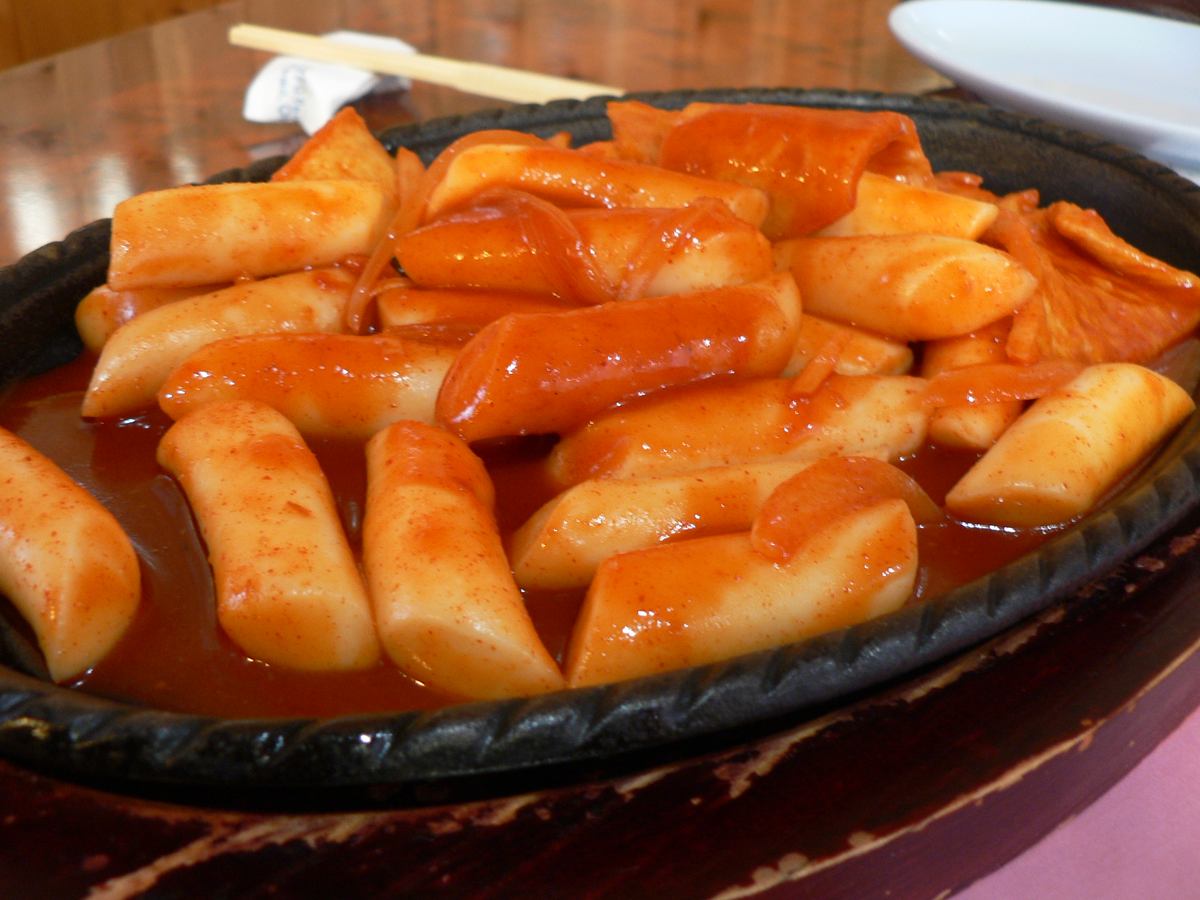
    Tteokbokki, Korean spicy stir-fried rice cakes, in a red gochujang sauce — blackpink tour

    Tteokbokki — the spicy rice cakes Jisoo named as one of her go-tos. Photo: Sung Sook, CC BY 2.0

    In one of the more candid interviews to come out of this solo stretch, Jisoo sat down on the YouTube talk show “Dex’s Fridge Interview” in January 2025 and, between questions about her debut and her ideal type, admitted she’s genuinely into spicy food — hot pot when she’s traveling abroad, spicy dumplings, and tteokbokki. None of that is the kind of thing an agency plants for a headline. It’s the sort of detail that only comes out when someone’s actually talking, fridge open, off script.

    Quick answers before you go

    Is BLACKPINK disbanding?

    No. The group released the DEADLINE mini album on February 27, 2026 — their first full-group release in about three and a half years — and then went back to solo work, the same two-track pattern they ran before.

    When did the DEADLINE tour end?

    January 26, 2026, at Kai Tak Stadium in Hong Kong — the 81st show of a run that put over two million people in seats and became the highest-grossing tour by a female K-pop act.

    What is each member doing now?

    Jennie put out her self-directed project Less Than A Lover in July; Jisoo is holding her full solo album until after the group cycle while working on Boyfriend On Demand; Rosé’s “APT.” spent 37 weeks on the Hot 100; Lisa acted in The White Lotus and performed at the Academy Awards.

  • Kimchi Wasn’t Always Red: The History of Baek-Kimchi (White Kimchi) Korea’s Kings Ate

    Kimchi Wasn’t Always Red: The History of Baek-Kimchi (White Kimchi) Korea’s Kings Ate

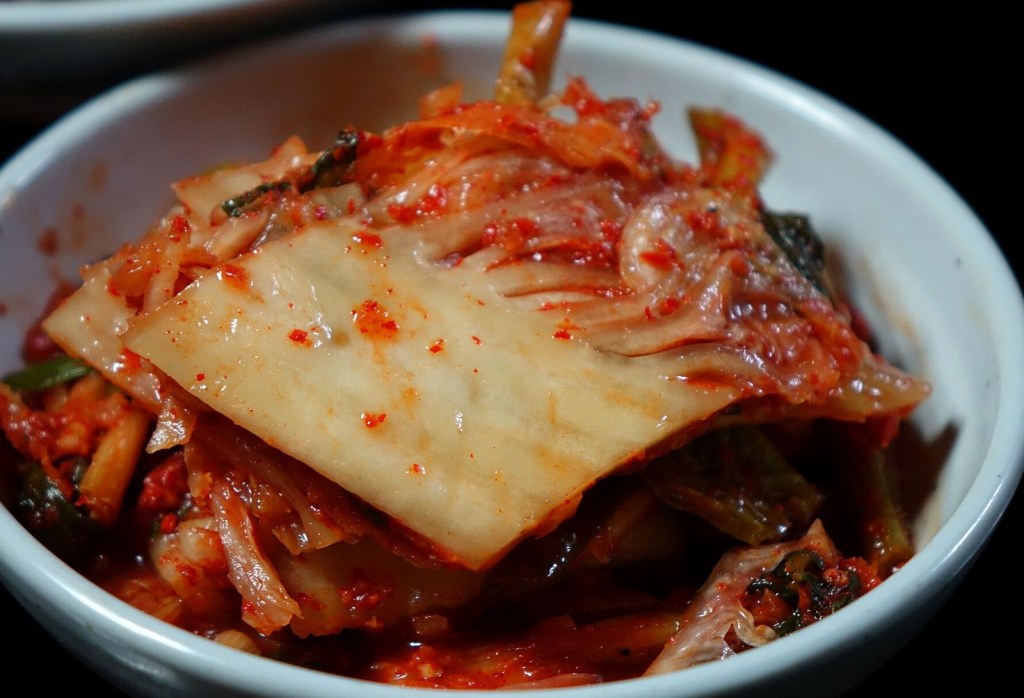
    Red napa cabbage kimchi, Korea's iconic fermented dish — kimchi white chili

    The kimchi the world knows — red, spicy, and surprisingly modern. Photo: 최광모, CC BY-SA 4.0

    Ask anyone to picture kimchi and they’ll see the same thing: fiery red cabbage, glowing with chili. It’s Korea’s national dish, a global health-food icon, and the star of a thousand mukbang videos — so iconic that UNESCO recognized the tradition of making it. So here’s a fact that stops most people cold: for most of Korean history, kimchi wasn’t red at all. The kimchi that Korea’s kings actually ate was white.

    The blazing red version everyone thinks of is only two or three centuries old. Before that, there were no chili peppers in Korea — and the story of how they got here runs straight through a war. But first, let’s talk about how kimchi conquered the world.

    “The most Korean thing on the table was, for centuries, not even red.”

    Kimchi conquered the world

    Kimjang, the Korean tradition of making kimchi together, people preparing cabbage — kimchi white chili

    Kimjang— making kimchi together — is a UNESCO-recognized tradition. Photo: KOREA.NET, CC BY-SA

    Kimchi isn’t just food in Korea; it’s identity. It appears at nearly every meal, it’s tangled up in family and community, and it has gone spectacularly global as a fermented health food. It’s official, too: there’s an international standard for kimchi set by the Codex Alimentarius in 2001, and in 2013 kimjang — the communal autumn ritual of making enough kimchi to last the winter — was inscribed as a UNESCO Intangible Cultural Heritage of Humanity. I’d always assumed, like most people, that the red version was simply how kimchi had always looked.

    To a foreign viewer, all that red screams “ancient and unchanging.” To a food historian, it screams “recent.” Because the deeper you dig into kimchi’s past, the less red you find. Strip away the chili, and you’re left with the real, older Korea on a plate.

    The white kimchi Korea’s kings actually ate

    Joseon king white kimchi royal table — kimchi before chili history playful illustration — kimchi white chili

    White kimchi on the king’s table — the chili hadn’t even arrived yet (playful illustration).

    Baek-kimchi, Korean white kimchi made without chili peppers — kimchi white chili

    Baek-kimchi — white kimchi,no chili. This is closer to what a Joseon king was served. Photo: 굿바이 조미료, CC BY 2.0 KR

    A colorful Joseon-era Korean folk painting — kimchi white chili

    Joseon folk art — a glimpse of the era when kimchi was still white. Painting: public domain

    Koreans have been fermenting vegetables for well over a thousand years, but for most of that time, there was one thing missing: heat. Before the 17th century, kimchi contained no chili at all — for the simple reason that chili peppers didn’t exist in Korea yet. Early Joseon kimchi was made by fermenting leafy vegetables and radish in salt brine, sometimes with other seasonings, and it stayed pale.

    That pale version still exists, and it has a name: baek-kimchi, “white kimchi,” a term that shows up in Joseon-era cookbooks like the 1670 Eumsikdimibang. This is the original non-spicy Korean kimchi: crisp, cool, gently tangy, and a little sweet, with a clean savory depth from salted seafood (jeotgal) and, in the water-based styles, a lightly fizzy, naturally carbonated brine. It’s a completely different creature from the fiery cabbage in your fridge. When you eat baek-kimchi today, you’re tasting something very close to what graced a royal Joseon table centuries ago. The king’s kimchi was elegant and white. The red came later — and it came from far away.

    How the chili arrived — through a war

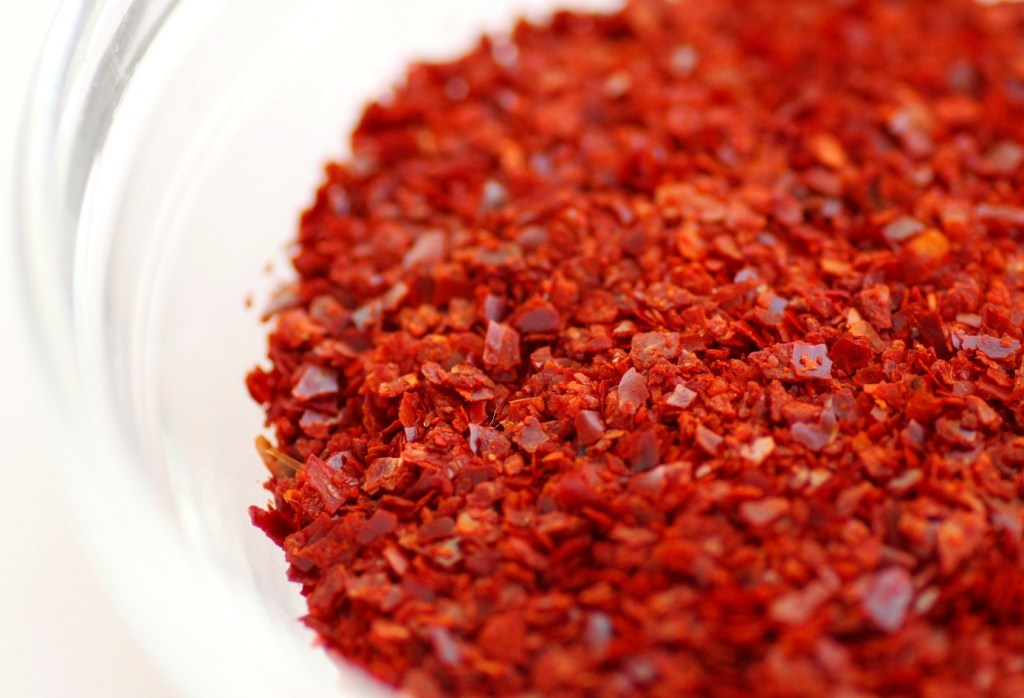
    Dried red chili peppers and gochugaru, Korean chili powder — kimchi white chili

    The ingredient that repainted Korean food — red chili, a relative newcomer. Photo: Stacy Spensley, CC BY

    Chili peppers aren’t native to Asia at all — they come from the Americas. They spread across the globe after Europeans reached the New World, reaching Japan by the mid-1500s, and then crossing into Korea around the time of the Imjin War (1592–1598), the massive Japanese invasion of Korea. It’s one of history’s strange ironies: one of the most defining ingredients in Korean food arrived on the heels of one of Korea’s most devastating wars.

    Even then, the change was slow. Koreans didn’t start seriously adding chili to kimchi until the late 17th and 18th centuries. The now-classic red, spicy kimchi made with napa cabbage — the one on every restaurant table and every Korean flag of food pride — is really only about 200 to 300 years old. In other words, the dish the whole world treats as timelessly, essentially Korean is, historically speaking, a remix. And that might be the most Korean thing about it: taking something from the outside and making it unmistakably its own.

    The main types of kimchi to know

    Kkakdugi, cubed Korean radish kimchi — kimchi white chili

    Kkakdugi — cubed radish kimchi, one of kimchi’s hundreds of varieties. Photo: Junho Jung, CC BY-SA 3.0

    There are hundreds of kimchi varieties. Start with these:

    • Baechu-kimchi (배추김치) — the famous red napa cabbage kimchi. The global icon, and the “new” one at 200–300 years.
    • Baek-kimchi (백김치) — white kimchi with no chili. Crisp, mild, and the closest to the old royal style.
    • Kkakdugi (깍두기) — cubed radish kimchi, crunchy and refreshing, a soup-house staple.
    • Mul-kimchi (물김치) — “water kimchi,” fermented in a light, chilled brine. Practically a cold drink-soup.

    Why white kimchi still matters at a modern Korean table

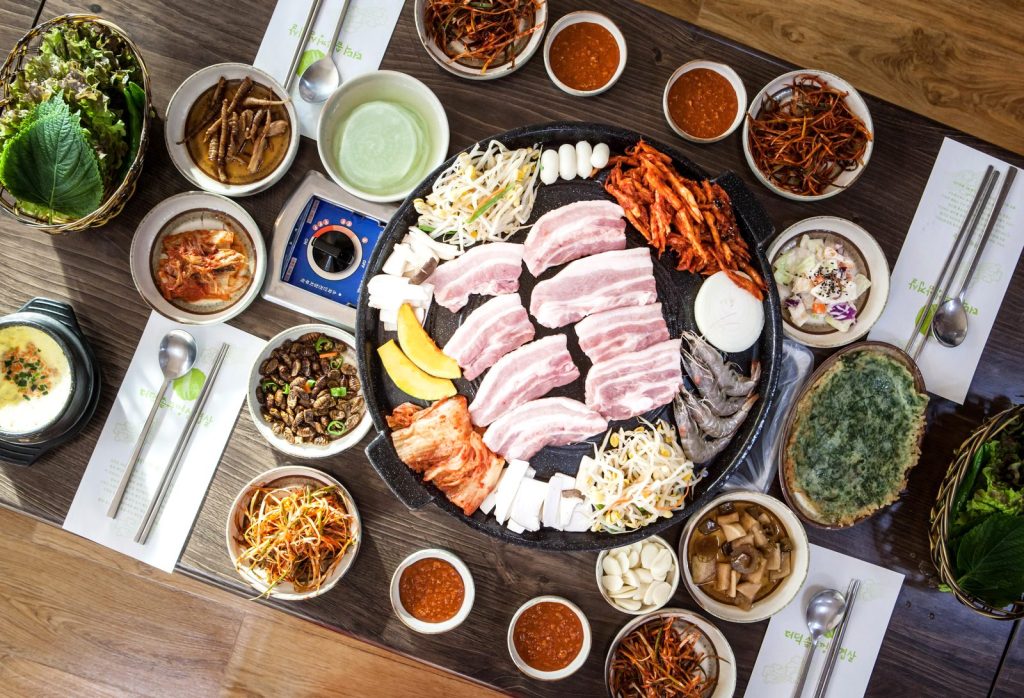
    A Korean BBQ table with grilled pork belly, kimchi, and side dishes — kimchi white chili

    Red or white, kimchi earns its place beside rich grilled meat. Photo: 이동원 (public domain)

    Baek-kimchi isn’t a museum piece — it’s a working part of how Koreans eat today. Its clean, cool, faintly fizzy bite makes it one of the best palate cleansers on the table. Good Korean BBQ spots keep chilled white kimchi on hand because its mild brine cuts straight through fatty pork belly (samgyeopsal) or marbled beef without setting your mouth on fire. And when you’re deep into something blazing — spicy braised ribs (galbijjim), tteokbokki — a few pieces of non-spicy white kimchi reset your palate in an instant, letting the next bite taste like the first. The red kimchi gets the fame; the white one quietly makes the whole meal work.

    Questions people ask about kimchi

    Was kimchi always red and spicy? No. For most of its history, kimchi was made without chili peppers, which only arrived in Korea around the Imjin War in the late 1500s. The red, spicy napa-cabbage kimchi we know is only about 200–300 years old.

    What is white kimchi? Baek-kimchi is kimchi made without chili — crisp, mild, and gently tangy. It reflects the older, pre-chili style of kimchi and appears in Joseon-era cookbooks.

    When did chili peppers come to Korea? Chili peppers originated in the Americas and reached Korea around the time of the Imjin War (1592–1598), likely via Japan. Koreans began adding chili to kimchi in earnest over the following century or two.

    Why is kimchi so culturally important? Kimchi is a symbol of Korean identity and everyday life, and kimjang — making kimchi together for winter — was recognized as UNESCO Intangible Cultural Heritage in 2013.

    The dish that keeps reinventing itself

    The next time someone calls kimchi “ancient and unchanging,” you’ll know better. Its red color is a plot twist barely three centuries old — proof that even a country’s most sacred dish is a living, evolving thing. The kings ate it white. We eat it red. And somewhere out there, someone is inventing the next kimchi right now.

    Hungry for the rest of the Korean table? Watch kimchi work its magic across the stalls of Gwangjang Market, pile it into a bowl at Jeonju’s bibimbap table, or cool it down beside a bowl of samgyetang.

    Kimchi’s pre-chili history, baek-kimchi (documented in the 1670 Eumsikdimibang), the arrival of chili peppers from the Americas via Japan around the Imjin War (1592–1598), and the roughly 200–300-year age of red napa-cabbage kimchi are drawn from Korean culinary histories and the Journal of Ethnic Foods. Kimjang was inscribed as UNESCO Intangible Cultural Heritage in 2013; a kimchi standard was set by the Codex Alimentarius in 2001.

  • Yeonsangun: The Real Tyrant King Behind So Many Korean Historical Dramas

    Yeonsangun: The Real Tyrant King Behind So Many Korean Historical Dramas

    A lavish Korean royal banquet spread of many colorful dishes — kdrama villain king

    A Joseon-style royal banquet, richly recreated — the kind of table a tyrant king demanded, night after night.

    Every great Korean historical drama needs a villain, and Korea keeps casting the same man. In the 2025 hit foodie sageuk Bon Appétit, Your Majesty, a modern chef time-slips into the palace and has to cook for a terrifying tyrant king. In the 2005 blockbuster film The King and the Clown — over 12 million tickets sold — a pair of street clowns mock a paranoid, murderous ruler. Both are inspired by the same real king. And both, in their way, are about food and power.

    His name was Yeonsangun, the most notorious tyrant king of Korea’s Joseon dynasty, and he wasn’t a screenwriter’s exaggeration. The real one was worse — and his banquets, the kind you see recreated on screen, were the stuff of legend. Before we lift the lid, meet Korea’s favorite villain.

    “Screenwriters didn’t invent Korea’s worst king. They toned him down.”

    The villain K-dramas can’t stop casting

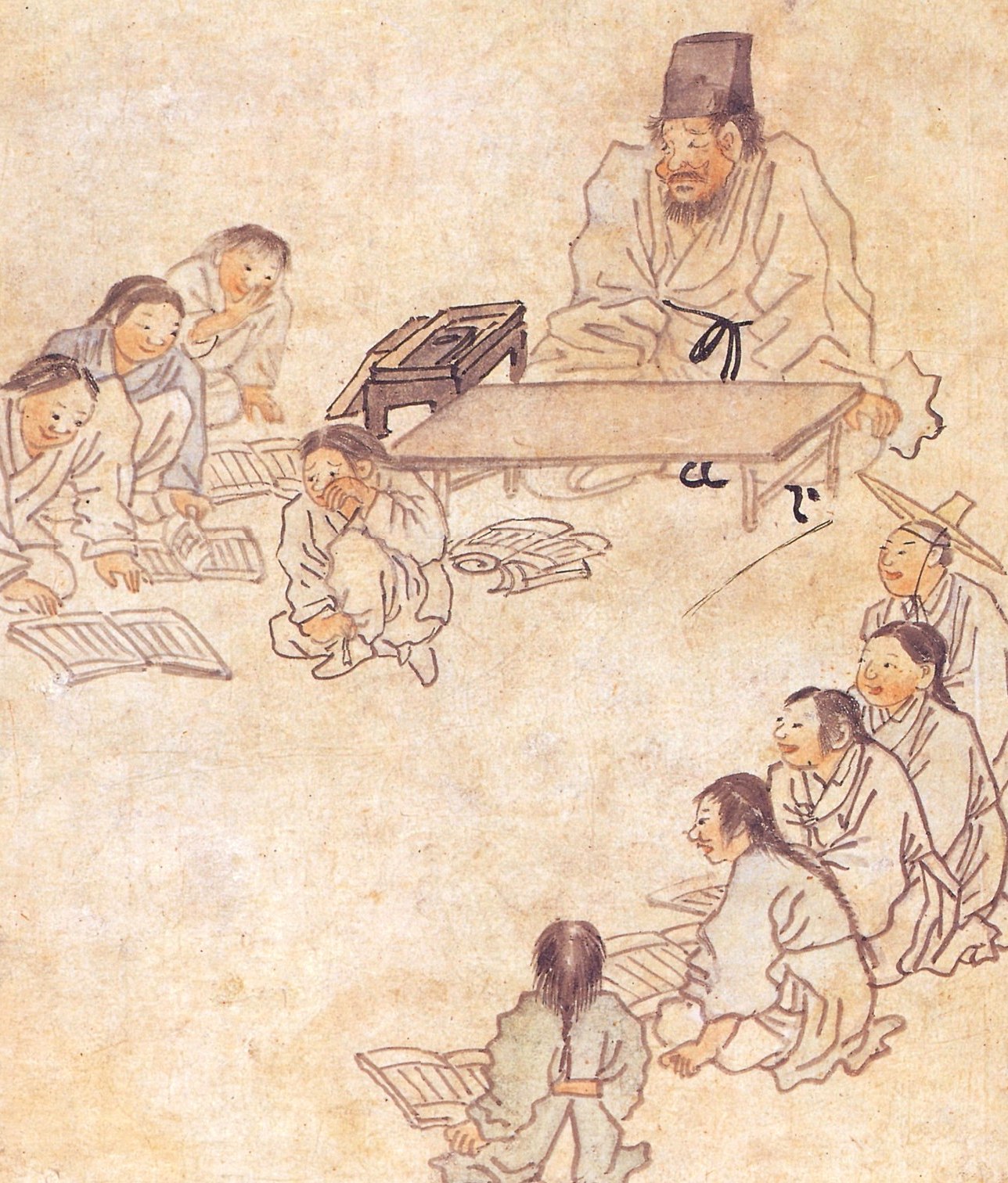
    A Joseon genre painting of a village classroom by Kim Hong-do — kdrama villain king

    A Joseon world painted by Kim Hong-do — the era every sageuk brings back to life. Painting: Kim Hong-do (public domain)

    If you’ve watched more than a couple of Korean historical dramas, you’ve met a version of Yeonsangun without knowing his name — the beautiful, unstable young king who executes anyone who displeases him. He’s an irresistible character because he was real: the tenth king of Joseon, who ruled from 1494 to 1506, and who is widely regarded as one of the most notorious rulers in Korea’s history. I hadn’t clocked how many different shows had quietly borrowed his face until I started listing them.

    The King and the Clown (2005), which launched Lee Joon-gi to stardom and earned Korea’s official Oscar submission that year, put him at the center of a story about clowns brave — or foolish — enough to satirize him. Twenty years later, Bon Appétit, Your Majesty did something cleverer: it dropped a modern chef into his palace kitchen, forcing our hero to please a king who might execute the cook over a bad dish. That premise only works because everyone in Korea already knows what this king was like at the table.

    What a tyrant’s banquet actually looked like

    Galbijjim, Korean braised short ribs, a rich banquet dish — kdrama villain king

    Braised short ribs, court-banquet richness — the opposite of the peasant famine outside. Photo: Junho Jung, CC BY-SA 3.0

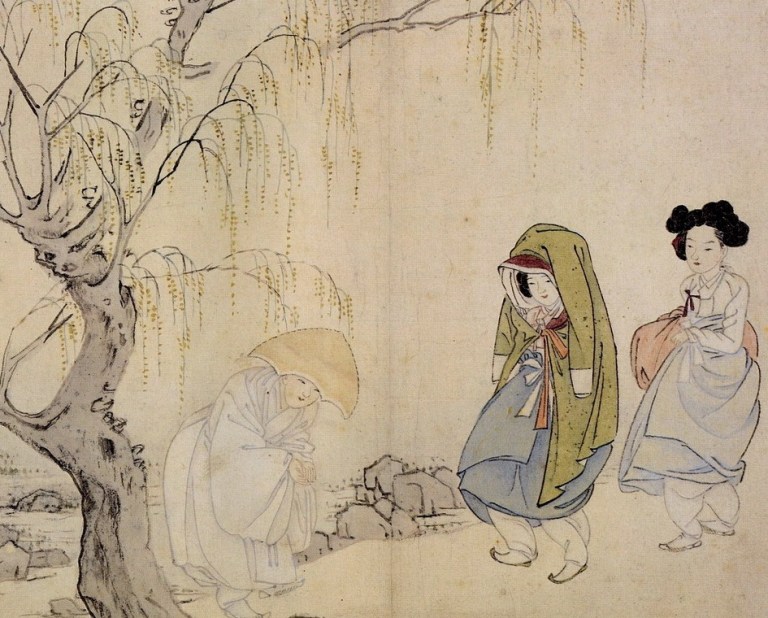
    A Joseon-era genre painting of women in hanbok by Shin Yun-bok (Hyewon) — kdrama villain king

    The world of Joseon entertainers and leisure, painted by Shin Yun-bok — the kind of court pleasure Yeonsangun took to ruinous extremes. Painting: Shin Yun-bok (Hyewon), public domain

    Here’s the part the dramas get right. Yeonsangun became infamous for extravagant banquets and hunts even as his people starved through famine. He seized homes and temples for his own pleasure, and — most shockingly to Confucian Korea — he turned the Sungkyunkwan, the nation’s most sacred academy for scholars, into a private playground. He gathered enormous numbers of female entertainers and musicians into the palace for endless revelry. Korean even keeps a word tied to that excess: heungcheong-mangcheong, meaning to squander wildly and live it up, is an expression Koreans still use today — popularly traced to the entertainers (“heungcheong”) he assembled.

    A Joseon royal feast was already spectacular in normal times — towering arrangements of grilled and braised meats, jeon (savory pan-fried delicacies), elaborate hot pots, rare seafood, honeyed sweets, all plated with obsessive care. Under a king like Yeonsangun, that machinery of luxury ran nonstop, for his pleasure, while the country buckled. The banquet you admire on screen isn’t set dressing. It’s the crime.

    Golden Korean savory pancakes (jeon), a classic celebration dish — kdrama villain king

    Jeon — the golden pan-fried delicacies that crowd any Korean feast table. Photo: 南宮博士, CC BY-SA

    How the story really ended

    A platter of hangwa, colorful Korean traditional royal sweets and confections — kdrama villain king

    Hangwa — the jewel-like honeyed sweets that closed a Joseon royal banquet. Photo: KOREA.NET, CC BY-SA

    Real life doesn’t grant villains a redemption arc. Yeonsangun’s cruelty — including bloody purges of scholars and officials — finally united his enemies against him. In 1506 he was deposed in a coup, stripped of his royal title (which is why he’s called “Yeonsan-gun,” a prince, not a king with a temple name), and exiled to Ganghwa Island, where he died within months. The most feared man in Korea ended his life powerless on a small island. The feasts stopped overnight.

    That’s why he’s such perfect drama material: beauty and terror, appetite and ruin, all in one doomed young king. When a K-drama sits him down to a groaning banquet table, it’s showing you both his power and the exact reason he lost it.

    Joseon royal feast dishes you’ll spot on screen

    Next time a sageuk cuts to the king’s table, look for these:

    • Galbijjim (갈비찜) — luxuriously braised short ribs, a centerpiece of celebration and court cooking.
    • Jeon (전) — an array of savory pan-fried fritters (fish, vegetable, meat), essential to any feast.
    • Hwayangjeok (화양적) — colorful skewers of meat and vegetables, as much art as food.
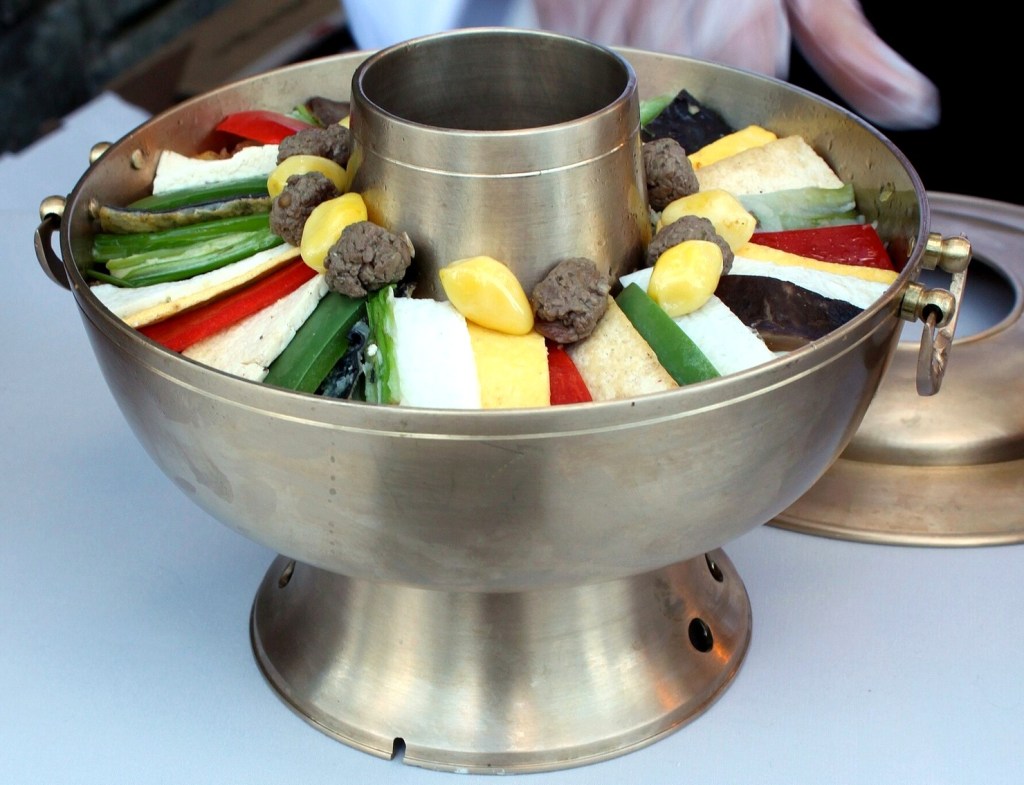
    • Sinseollo (신선로) — the ornate royal hot pot, a brass vessel of meat, seafood, and vegetables simmered at the table.
    • Gujeolpan (구절판) — a nine-section platter of colorful fillings and thin crepes, court cuisine at its most beautiful.
    • Hangwa (한과) — honeyed traditional confections and rice sweets, the court’s glittering finale.

    Hwajeon, Korean flower rice cakes decorated with edible petals — kdrama villain king

    Hwajeon — delicate flower rice cakes, court cooking treated as art. Photo: KOREA.NET, CC BY-SA

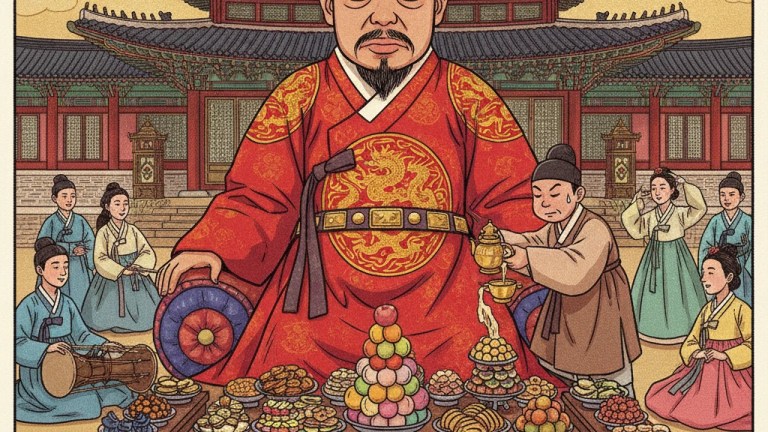
    King Yeonsangun royal banquet scene — Joseon tyrant feast playful illustration — kdrama villain king

    Yeonsangun’s legendary banquets — dramatic even by K-drama standards (playful illustration)..

    Questions people ask about Korea’s villain kings

    Who was the real tyrant king in Korean dramas? Most often it’s Yeonsangun, the tenth Joseon king (reigned 1494–1506), remembered as one of the cruelest — famous for lavish banquets, purges of scholars, and being deposed. He inspired films and dramas including The King and the Clown and Bon Appétit, Your Majesty.

    Is Bon Appétit, Your Majesty based on a true king? The tyrant king in the 2025 drama is inspired by Yeonsangun. The chef and romance are fiction, but the ruler’s fearsome, excessive reputation comes straight from history.

    What did Joseon kings eat at banquets? Court feasts featured braised and grilled meats, jeon (savory fritters), elaborate hot pots, seafood, colorful skewers, and honeyed sweets — all prepared and plated with extraordinary precision by palace cooks.

    Was Yeonsangun really that cruel? By the historical record, yes. The Annals of the Joseon Dynasty describe bloody purges of scholars and officials, seizures of homes and land, and lavish excess amid famine. Even allowing for the fact that his successors wrote the history, he’s remembered as one of Joseon’s worst rulers.

    Why is he called Yeonsan-gun and not King Yeonsan? Because he was overthrown. A Joseon monarch who was deposed lost his royal temple name and was demoted to the rank of “gun” (prince). So he’s Yeonsangun, not a king with an honored posthumous title.

    Why was Yeonsangun overthrown? His tyranny — including deadly literati purges, seizing property, and reckless excess while people suffered — turned officials against him. He was deposed in 1506 and exiled, dying soon after.

    The feast and the fall

    The reason Yeonsangun keeps coming back to your screen isn’t just the violence — it’s the banquet. A table overflowing with the finest food in the kingdom, set by a man too dangerous to refuse, in a country going hungry. Every sageuk that seats him down to feast is quietly telling the same story: power, appetite, and the fall that always follows.

    Curious what a real royal kitchen actually served, minus the tyranny? Step inside the palace with our Jeonju bibimbap and samgyetang guides, or wander the commoners’ feast at Gwangjang Market.

    Yeonsangun’s reign (1494–1506), his lavish banquets amid famine, seizure of Sungkyunkwan, literati purges, deposition, and exile to Ganghwa are drawn from the Annals of the Joseon Dynasty and Korean historical references (Wikipedia, historical summaries). The King and the Clown (2005) box-office figures and Bon Appétit, Your Majesty (2025) being inspired by Yeonsangun are matters of record; the “heungcheong-mangcheong” etymology is a widely repeated popular attribution.

  • Korean Cold Noodles (Naengmyeon): Why Korea’s Icy Summer Dish Was Once a Winter Food

    Korean Cold Noodles (Naengmyeon): Why Korea’s Icy Summer Dish Was Once a Winter Food

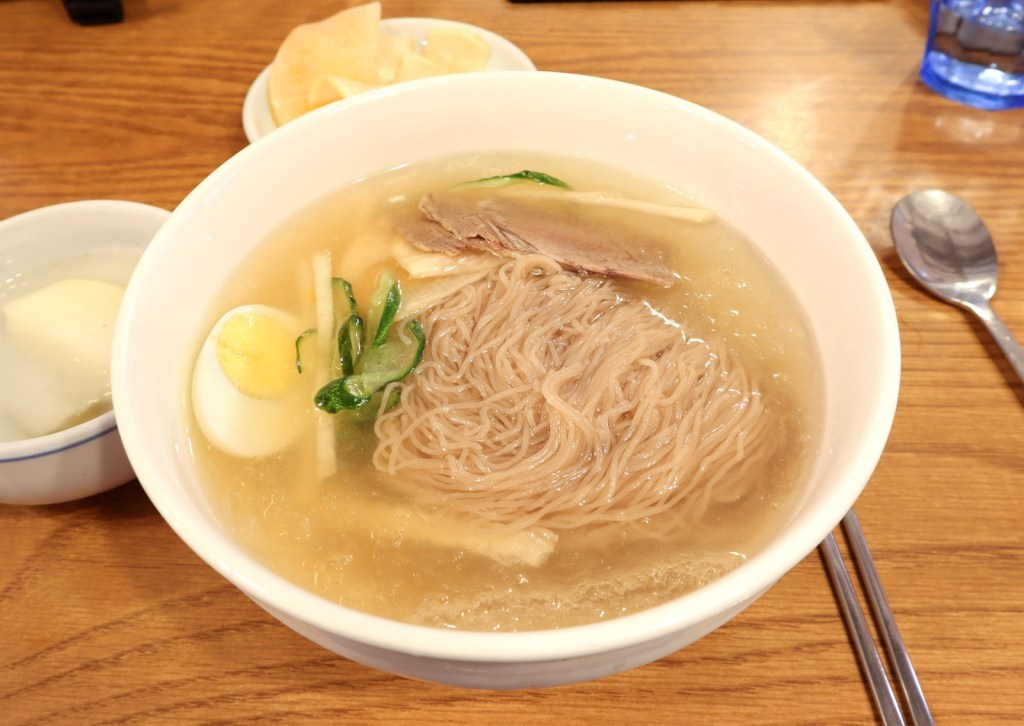
    A bowl of mul naengmyeon, Korean cold buckwheat noodles in icy broth — naengmyeon winter origin

    Mul naengmyeon — chewy noodles in an icy, tangy broth, Korea’s answer to summer. Photo: Jinho Jung, CC BY 2.0

    When a Korean summer turns brutal, the whole country reaches for one thing: a freezing metal bowl of naengmyeon (냉면), Korea’s famous cold noodles. Nutty buckwheat noodles with a toothsome, easy-snap bite, a tart icy broth sometimes topped with actual slush, a boiled egg, a few slices of pear — it’s the sound of ice cubes clinking that says “we survived another heat wave.” There’s even a national summer debate about it, serious enough that Netflix made a documentary. But here’s the twist nobody expects.

    Naengmyeon wasn’t invented for summer at all. For most of its history, it was a winter food — eaten on heated floors while snow piled up outside, and beloved by Joseon kings, one of whom reached for it precisely because he couldn’t handle spicy food. To understand Korea’s coldest noodle, you have to picture it in the dead of winter.

    “Korea’s ultimate summer dish was born in the middle of winter.”

    The summer noodle Koreans argue about every year

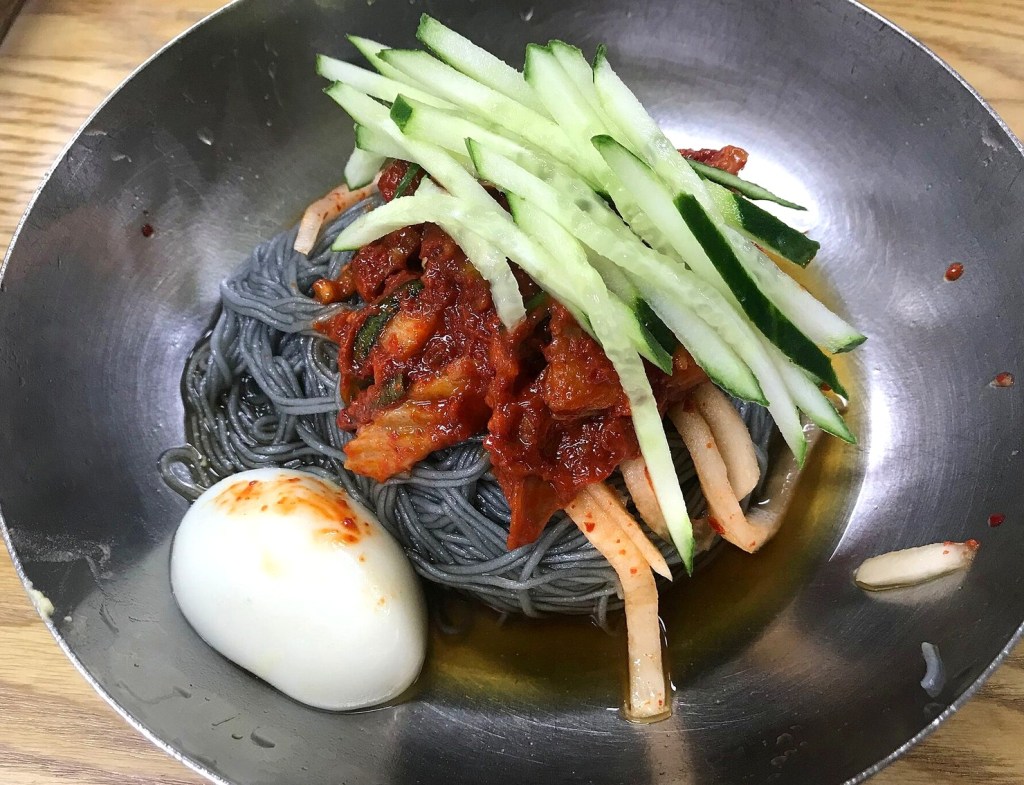
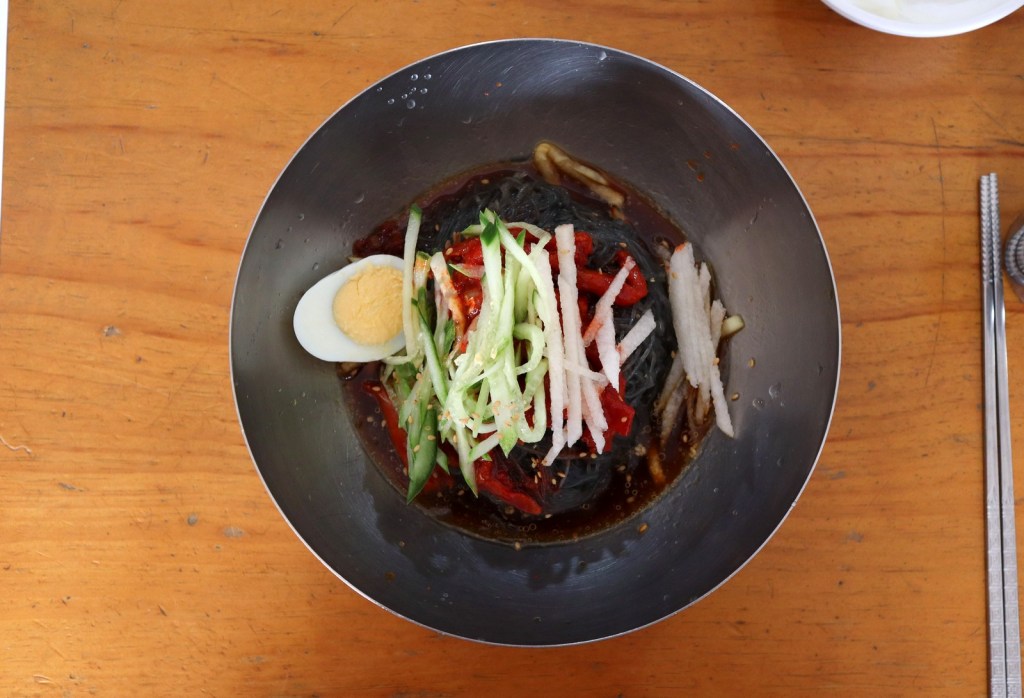
    Bibim naengmyeon, spicy Korean cold noodles mixed with red gochujang sauce — naengmyeon winter origin

    Bibim naengmyeon — thespicy, sauced sibling. Mul or bibim? Koreans pick sides. Photo: lazy fri13th, CC BY 2.0

    Today, naengmyeon is peak-summer comfort, and Koreans take it seriously enough to split into camps. First question: mul (물) or bibim (비빔)? Mul naengmyeon is the cold-broth version, clean and refreshing; bibim naengmyeon ditches the broth for a fiery gochujang sauce you mix yourself. Second question: Pyongyang or Hamhung style? Both cities are in what is now North Korea, and the dish came south with refugees. Pyongyang naengmyeon uses buckwheat for a mild, almost austere broth that first-timers sometimes find “too plain” — until they’re hooked. Hamhung naengmyeon uses chewy sweet-potato or potato starch noodles, usually served bibim-style with raw skate. The debate is so woven into Korean summer that Netflix released Korean Cold Noodle Rhapsody, a whole documentary chasing the dish across the country. All of this, for a bowl that started out as a way to survive winter.

    A winter dish, eaten on a heated floor

    Joseon king winter naengmyeon on ondol floor — cold noodles history playful illustration — naengmyeon winter origin

    Icy noodles on a hot floor in midwinter — the original Joseon indulgence (playful illustration).

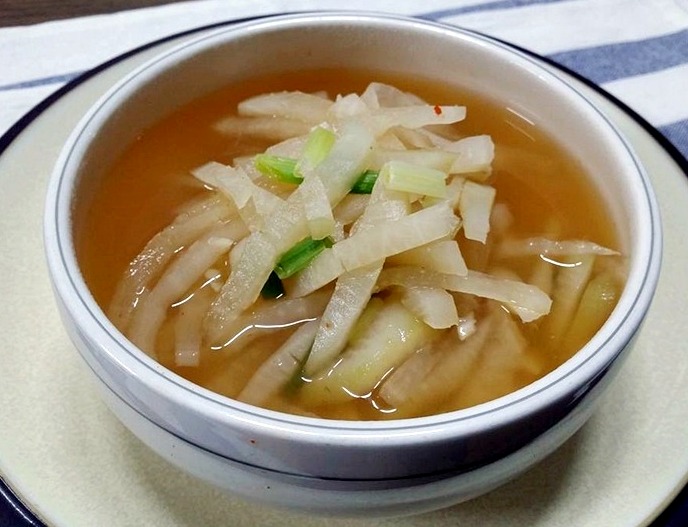
    Dongchimi, Korean radish water kimchi used for cold noodle broth — naengmyeon winter origin

    Dongchimi — the winter radish-water kimchi whose icy brine once made the broth. Photo: 경빈마마, CC BY 4.0

    Go back a few centuries and the whole picture flips. Naengmyeon began in the cold northern regions of the peninsula, where deep winter did the refrigerating for free. People made the broth from dongchimi — a radish-water kimchi fermenting in a jar half-buried in the frozen ground — and ate the icy noodles while sitting on a warm ondol floor, blankets over their laps. The logic sounds backwards until you feel it: a cold shock in a warm room, the body responding with its own heat. The Joseon scholar Dasan Jeong Yak-yong even wrote of hand-pulled cold noodles with crisp cabbage kimchi when the October snow lay a foot deep.

    It was also, for a long time, a luxury and a celebration food. The earliest naengmyeon mention shows up in a 1643 collection of writings, and by the 1700s Seoul nobles were already ordering it in — some of the first food delivery in Korean history. On New Year’s, the long noodles stood for a long life. So why do we now eat it in July? Because only the wealthy once had ice in summer, kept in private ice caves; when ice became available to everyone, this cold winter delicacy slid naturally into the hottest months. The dish didn’t change. The season did.

    The kings who couldn’t get enough of it

    A Joseon-era Korean royal palace, home to kings who loved naengmyeon — naengmyeon winter origin

    Several Joseon kings were devoted naengmyeon fans. Photo: Basile Morin, CC BY-SA 4.0

    Naengmyeon didn’t just feed northern villagers — it reached the throne. Several Joseon kings, including Sunjo, Heonjong, and Cheoljong, were known to love cold noodles. But the most famous royal fan was Emperor Gojong, and there’s a very human reason: Gojong reportedly couldn’t handle spicy food. In a cuisine that leans hard on chili, the mild, clean, faintly sweet broth of Pyongyang-style naengmyeon was his kind of comfort. Picture the emperor of Korea, skipping the fiery stuff, quietly happy over a bowl of cold buckwheat noodles. Sometimes the most powerful person in the country just wants the gentle option.

    The main types of naengmyeon

    Pyongyang naengmyeon, buckwheat cold noodles in a clear mild broth — naengmyeon winter origin

    Pyongyang naengmyeon — buckwheat noodles in a pale, clean broth. Deceptively plain, quietly addictive. Photo: Mobius6, CC BY-SA

    Before you order, here’s the cheat sheet:

    • Mul naengmyeon (물냉면) — noodles in a cold, tangy broth. Refreshing and mild; the classic summer cooldown.
    • Bibim naengmyeon (비빔냉면) — no broth, tossed in a spicy-sweet gochujang sauce. Bold and addictive.
    • Pyongyang naengmyeon (평양냉면) — buckwheat noodles, subtle clear broth. An acquired taste that becomes an obsession.
    • Hamhung naengmyeon (함흥냉면) — chewy starch noodles, usually bibim-style, often with raw skate. Springy and fierce.

    Hamhung naengmyeon, spicy Korean cold noodles with chewy starch noodles and vegetables — naengmyeon winter origin

    Hamhung-style naengmyeon — springy starch noodlesunder a fiery sauce, the bold counterpart to Pyongyang’s calm. Photo: Mobius6, CC BY-SA

    How to eat naengmyeon like a local

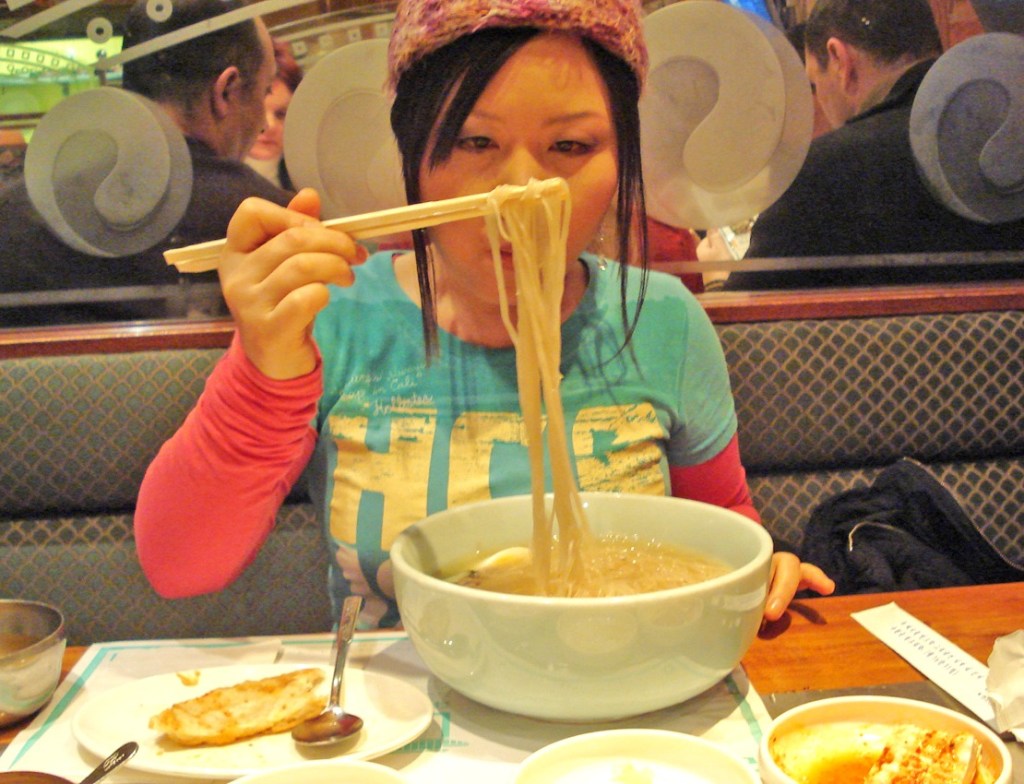
    A person eating Korean cold noodles (naengmyeon) with chopsticks at a restaurant — naengmyeon winter origin

    Long noodles, big bowl — there’s a small ritual to a proper bowl of naengmyeon. Photo: Hard Seat Sleeper, CC BY 2.0

    Your first bowl of Korean cold noodles comes with a few local rules:

    • To cut, or not to cut? Traditionalists say the long noodles symbolize long life and shouldn’t be cut. But the server will always offer scissors — one snip (a single cross-cut) is perfectly acceptable if those slippery, chewy noodles are hard to manage.
    • Season it yourself. Taste the broth first — Pyongyang-style is meant to be subtle. If you want more punch, add vinegar to the broth and a dab of mustard (gyeoja) to the noodles, not the other way around.
    • Sip the warm broth first. Many Hamhung-style spots bring a small pot of hot beef broth (yuksu) before the cold noodles arrive — sip it to settle your stomach before the icy hit.

    Questions people ask about naengmyeon

    What is naengmyeon? Korean cold noodles — long, chewy noodles (buckwheat or starch) served either in an icy broth (mul) or tossed in spicy sauce (bibim). It’s a beloved summer dish, though it began as a winter one.

    What does naengmyeon taste like? Mul naengmyeon is cold, clean, and tart-refreshing, with nutty, chewy buckwheat noodles and a lightly sweet-sour broth. Bibim naengmyeon is spicy-sweet and bold from its gochujang sauce. Both are famous for that springy, almost bouncy noodle texture.

    Why is naengmyeon eaten cold? Originally, northern Koreans ate cold noodles in winter, using naturally frozen broths, over heated ondol floors — the cold bowl felt refreshing in a warm room. Once summer ice became widely available, the dish drifted into the hot season, where it’s now a staple.

    What’s the difference between mul and bibim naengmyeon? Mul naengmyeon comes in cold broth and is mild and refreshing; bibim naengmyeon has no broth and is mixed with a spicy gochujang sauce. Many restaurants serve both.

    Did Korean kings really eat naengmyeon? Yes. Several Joseon kings loved it, and Emperor Gojong was famously fond of mild Pyongyang-style cold noodles — partly because he couldn’t tolerate spicy food.

    One cold bowl, four seasons of history

    So the next time you’re wiping sweat off your face over an icy bowl of naengmyeon, know that you’re eating a winter dish in disguise — one that warmed northern villagers on frozen nights, traveled by delivery to noble homes, and soothed an emperor who couldn’t take the heat. Korea just moved it to summer and never looked back.

    Craving more of Korea’s summer survival menu? Fight fire with fire in our samgyetang guide, build a cool vegetable bowl with Jeonju bibimbap, or slurp your way through Gwangjang Market.

    Naengmyeon’s winter origins, dongchimi broth, ondol-floor tradition, and northern (Pyongyang and Hamhung) roots are drawn from Korean culinary histories and reporting (The Korea Herald, The Korea Times, NamuWiki). Early records include the 1643 Gyegokjip and the writings of Dasan Jeong Yak-yong (1762–1836). The royal fondness of kings Sunjo, Heonjong, Cheoljong, and Emperor Gojong for cold noodles is noted in Korean historical accounts.

  • Makgeolli: The Korean Rice Wine That Became Korea’s Hottest New K-Trend

    Makgeolli: The Korean Rice Wine That Became Korea’s Hottest New K-Trend

    Makgeolli, milky Korean rice wine, poured into a brass bowl — makgeolli korean rice

    Makgeolli — cloudy, milky, lightly fizzy, and suddenly very cool again. Photo: Mar del Este, CC BY-SA 4.0

    For years, young Koreans wrote off makgeolli (막걸리) — Korea’s traditional rice wine, the cloudy, milky brew their grandfathers drank from tin bowls — as cheap and old-fashioned. Not anymore. Craft makgeolli bars with sleek interiors and tasting menus are booming across Seoul; brewers are aging small batches with heirloom rice and infusing them with chestnut, pumpkin, even espresso; sales jumped over 20% in a few short years. People are asking whether Korea’s oldest alcohol can become as globally trendy as K-pop.

    Here’s the twist behind the trend. This “new” hip drink is one of the oldest things Koreans make — poured at royal banquets, splashed across centuries of Joseon paintings, and nearly wiped out entirely. To understand why makgeolli is having a moment, you have to know how close it came to disappearing. But first, the comeback.

    “Korea’s most old-fashioned drink became its coolest — again.”

    Makgeolli is suddenly the coolest drink in Korea

    A bottle of Korean makgeolli rice wine on a table — makgeolli korean rice

    From cheap bottles to craft tasting flights — makgeolli is filling stylish new bars. Photo: ayustety, CC BY-SA

    The makgeolli of today is a different animal from the cheap stuff of a decade ago. At its best, this Korean rice wine is creamy and lightly effervescent, with a tangy, almost yogurt-like acidity balanced by a soft sweetness — closer to a living, sparkling farmhouse drink than the flat bottles of the past. A craft renaissance that started in the early 2010s put small-batch brewers to work with heirloom rice and traditional nuruk (fermentation starter), and the results landed on the menus of stylish “makgeolli bars” — hunt them down in Seoul neighborhoods like Euljiro and Seongsu-dong — alongside bar food that goes well past the old standbys. Some versions come naturally sparkling; some are flavored with fruit or nuts; one Michelin feature even asked whether this ancient brew could ride the Hallyu wave.

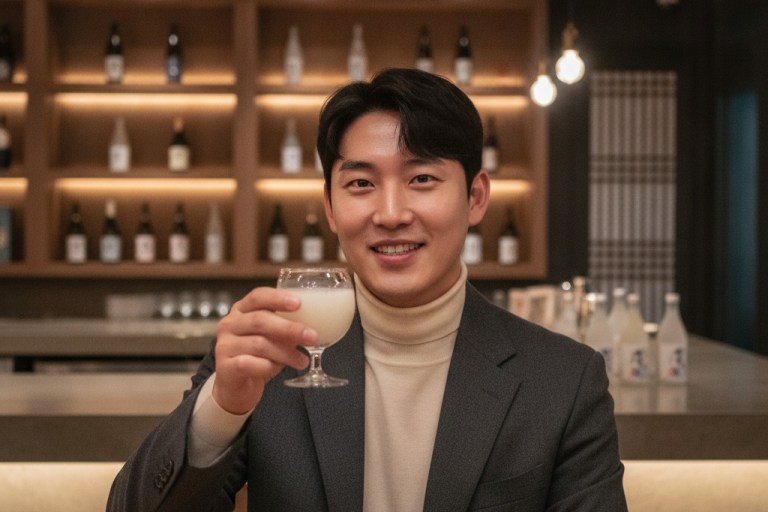
    A young Korean man toasting with a glass of makgeolli in a modern craft makgeolli bar — makgeolli korean rice

    The new face of an old drink: cloudy makgeolli, raised in a sleek modern bar. (Illustration)

    It also helps that many younger drinkers are drawn to makgeolli’s fermented character and old-fashioned, handcrafted brewing — a live, naturally fermented rice wine feels a world away from mass-market beer. Makgeolli sales in Korea rose more than 20% in just a few years, and young Koreans increasingly treat drinking it as a small act of reclaiming their own heritage. Which is fitting — because the heritage runs deep.

    A drink fit for kings, painted for centuries

    A colorful Joseon-era Korean folk painting (minhwa) — makgeolli korean rice

    Joseon folk art — the vivid visual world makgeolli belonged to. Painting: public domain

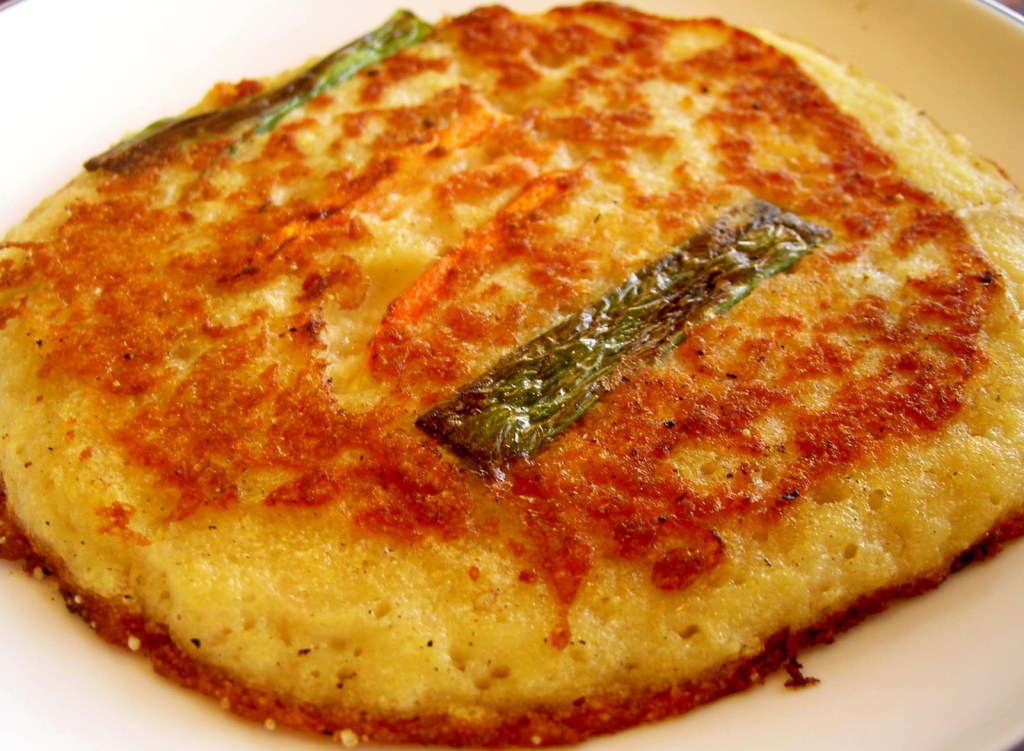
    Bindaetteok, Korean mung bean pancakes, a classic makgeolli pairing — makgeolli korean rice

    Bindaetteok — crispy mung-bean pancakes, makgeolli’s oldest partner. Photo: Tales of an LA Addict (Abby), CC BY-SA

    Koreans have been brewing rice wine since at least the Three Kingdoms period, over a thousand years ago. By the Goryeo and Joseon dynasties, rice wines like makgeolli were central to royal banquets, ancestral rites, and the rhythm of the seasons — a drink that touched every level of society, from farmers in the field to the royal court itself.

    You can literally see it in the art. Joseon-era poems and genre paintings are full of people drinking makgeolli — it was, in every real sense, Korea’s national beverage. So when a twenty-something in a Seoul craft bar swirls a glass of chestnut makgeolli, they’re not chasing a fad. They’re drinking the same thing that fueled Joseon festivals and royal tables for centuries. That connection isn’t obvious walking into one of these design-forward bars for the first time. The bar is new. The bowl is ancient.

    How makgeolli almost disappeared

    Pajeon, Korean savory green onion pancake, served with makgeolli — makgeolli korean rice

    Pajeon and makgeolli on a rainy day — a Korean reflex. Photo: 南宮博士, CC BY-SA 2.0

    The comeback is sweeter because of how close makgeolli came to vanishing. During the Japanese occupation in the early twentieth century, home brewing was heavily restricted under colonial alcohol laws, and production was pushed into a licensed, taxed system. Overnight, the family recipes passed down for generations — every household’s slightly different makgeolli — were largely outlawed. A living tradition nearly went silent.

    That’s what makes the craft revival feel like more than a trend. Young brewers digging up heirloom rice and old nuruk methods aren’t just making a drink; they’re stitching back a broken thread of Korean culture. And they’re doing it with a glass in one hand and a plate of sizzling pancakes in the other — because makgeolli has never traveled alone.

    What to eat (and how to drink) with makgeolli

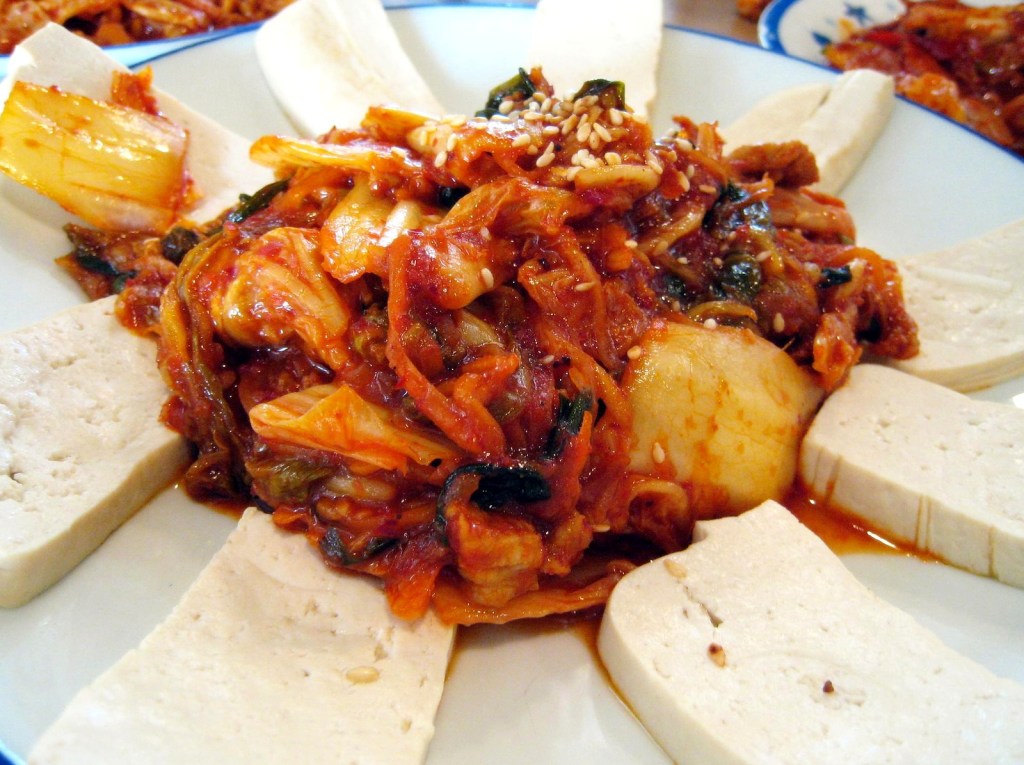
    Dubu-kimchi, Korean warm tofu with stir-fried kimchi — makgeolli korean rice

    Dubu-kimchi — warm tofu with stir-fried kimchi, another makgeolli-table staple. Photo: benghan, CC BY-SA

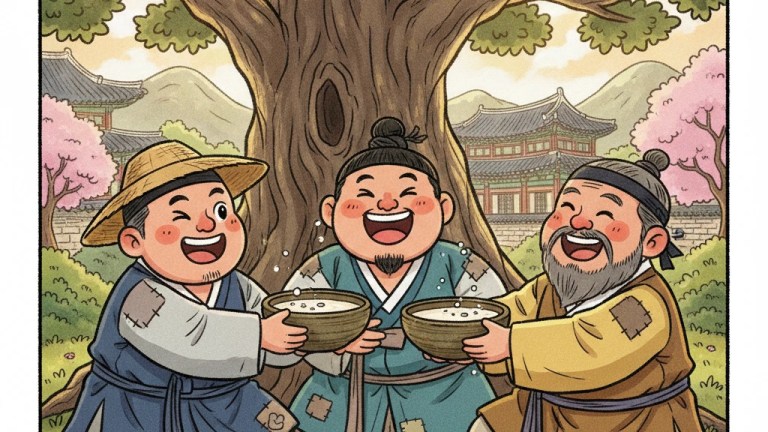
    Joseon farmers sharing makgeolli under tree — Korean rice wine history playful illustration — makgeolli korean rice

    The original after-work drink, painted for centuries (playful illustration)..

    Ready to try it like a local? Here’s the playbook:

    • Stir before you pour. The good stuff settles — gently swirl the bottle so the cloudy sediment mixes back in.
    • Drink it from a bowl. Traditionally makgeolli is served in a wide bowl, not a wine glass — pour for others, not yourself.
    • Pair it with pajeon (파전). A crispy green-onion pancake is the classic match, almost sacred on a rainy day — Koreans half-joke that the sizzle of the frying batter sounds just like falling rain, which is why the craving hits the moment it pours.
    • Or go bindaetteok and tofu kimchi. Mung-bean pancakes and warm tofu with stir-fried kimchi round out the perfect makgeolli table.

    Questions people ask about makgeolli

    What is makgeolli? A traditional Korean rice wine — cloudy, milky, slightly sweet and fizzy, and relatively low in alcohol. It’s made by fermenting rice with nuruk (a fermentation starter) and is one of Korea’s oldest drinks.

    What does makgeolli taste like? Soft and slightly sweet, with a creamy body, a light natural fizz, and a tangy, almost yogurt-like finish. It’s much gentler and less bitter than beer, which is why first-timers tend to love it.

    Is makgeolli a beer or a wine? Technically a rice wine — it’s brewed by fermenting rice rather than grapes or malted barley. Because it’s fizzy and low in alcohol, people sometimes loosely call it “Korean rice beer,” but “rice wine” is the accurate term.

    How much alcohol is in makgeolli? Usually around 6% ABV — lighter than most wines and similar to a strong beer. That easy-drinking strength is a big part of its appeal (and a reason it’s easy to overdo).

    Where can you buy makgeolli? In Korea it’s everywhere — convenience stores, supermarkets, and makgeolli bars. Abroad, look in Korean and Asian grocery stores or order it online; keep it cold and drink it fresh, since the best bottles are unpasteurized and still alive.

    Why is makgeolli popular again? A craft makgeolli boom since the 2010s brought small-batch, heirloom-rice brews and stylish makgeolli bars, and younger Koreans embraced it as both a wellness drink and a piece of reclaimed heritage. Sales have jumped over 20% in recent years.

    Is makgeolli good for you? It’s a live fermented drink containing lactic-acid bacteria, B vitamins, and amino acids. It’s still alcohol, so moderation matters, but its probiotic profile is part of its modern appeal.

    What do you eat with makgeolli? Savory pancakes are the classic pairing — pajeon (green onion) and bindaetteok (mung bean) — along with tofu kimchi. The salty, crispy food balances makgeolli’s soft sweetness.

    The oldest new drink in Korea

    Makgeolli’s story is Korea in a bowl: ancient, nearly lost, and reborn cooler than ever. Next time you see a young crowd toasting with cloudy rice wine in a candle-lit Seoul bar, know that they’re raising a glass their ancestors would recognize instantly — right down to the pancake on the side.

    Want the full spread that goes with it? Chase the pancakes and street snacks at Gwangjang Market, build a rainbow bowl at Jeonju’s bibimbap table, or warm up with a bowl of samgyetang.

    Makgeolli’s origins in the Three Kingdoms era, its role in Goryeo and Joseon royal banquets and rites, and its depiction in Joseon poetry and painting are drawn from Korean culinary histories. The early-20th-century home-brewing ban under Japanese occupation and the 2010s craft revival (makgeolli bars, heirloom-rice brews, 20%+ sales growth) reflect reporting from the Michelin Guide, Korean media, and industry sources.

  • Korean Royal Court Cuisine: What Joseon Kings Ate — and the Real ‘Dae Jang Geum’

    Korean Royal Court Cuisine: What Joseon Kings Ate — and the Real ‘Dae Jang Geum’

    A spread of Korean royal court cuisine (surasang) with many small dishes — korean royal cuisine

    The surasang — a Joseon king’s table, dish after careful dish. Photo: travelmate2021, CC BY 2.0

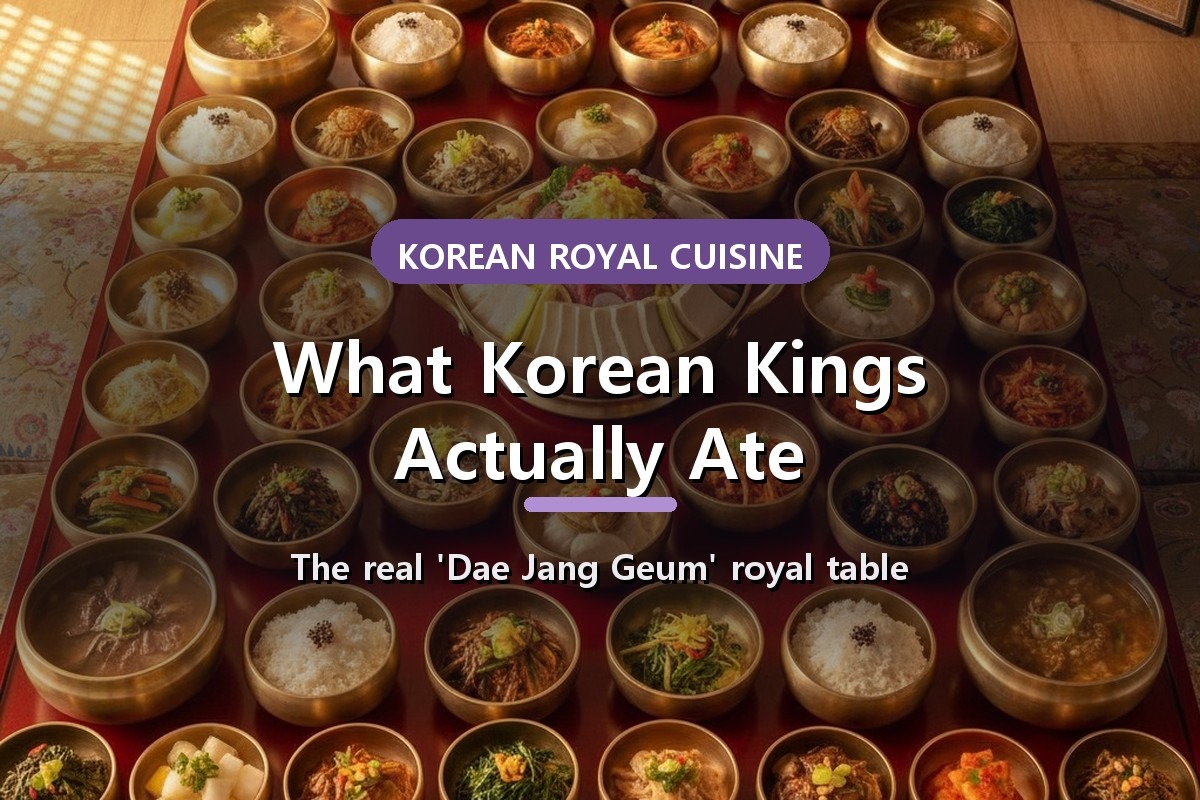
    If you’ve ever watched Dae Jang Geum — the drama that had half of Asia glued to a Joseon palace kitchen — you already have a picture of Korean royal court cuisine in your head: rows of tiny brass bowls, an anxious cook, a king waiting. That show wasn’t exaggerating the food. A real Joseon king sat down to a table called the surasang — the elaborate royal dining table, a dozen side dishes plus rice, soups, and stews — and did it several times a day.

    Here’s what the drama got most right, and what surprises people: the girl at the center of it was real. Not a legend — a woman the royal records actually mention. Before we set the king’s table, let’s talk about her.

    “A dozen dishes, several times a day — and a kitchen maid who became the king’s doctor.”

    Dae Jang Geum: the drama that opened the palace kitchen

    Sinseollo, an ornate Korean royal hot pot with colorful arranged ingredients — korean royal cuisine

    Sinseollo, the royal hot pot — court food was about precision and beauty as much as taste. Photo: World to Table, CC BY-SA 3.0

    Dae Jang Geum (Jewel in the Palace) aired on MBC in 2003–2004 and became a monster hit — averaging over 46% of Korean viewers and peaking near 58%, before going on to conquer television across Asia, the Middle East, and beyond. For millions of people, it was the first time they’d ever seen the inside of a Joseon royal kitchen: the ranks of court ladies, the strict hierarchy, the near-religious care taken over a single bowl.

    And the twist that makes it stick: Jang-geum wasn’t invented. The royal annals of King Jungjong’s reign mention a skilled woman named Jang-geum trusted with the king’s health — remarkable, because medicine and the palace’s inner rooms were almost entirely closed to women. The records are frustratingly thin, and historians debate how much we really know. But the drama’s core is true: a low-born woman rose through the royal kitchen and became a physician to the king. Real food, real palace, real (if shadowy) heroine.

    What was actually on a Joseon king’s table

    Joseon royal kitchen surasang preparation — Korean royal cuisine playful illustration

    Rush hour at the royal kitchen — a surasang in the making (playful illustration).

    A traditional Korean royal dining table set with rice, soup, and side dishes — korean royal cuisine

    The surasang was built to a formula — rice, soups, stews, and twelve side dishes. Photo: travelmate2021, CC BY 2.0

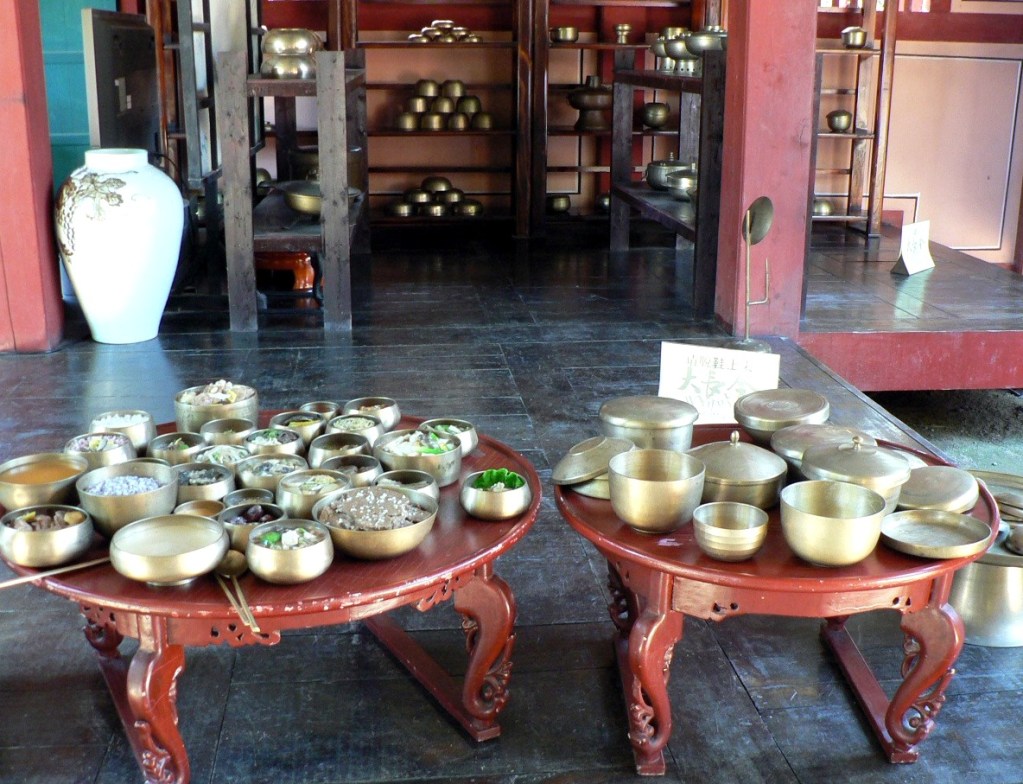
    The king’s main meal, the surasang, wasn’t just “a lot of food.” It followed a precise structure. At its heart were twelve side dishes — the famous sibicheop — surrounding the essentials: two kinds of rice, two soups, two stews, a hot pot, three kinds of kimchi, and three sauces. Every category was deliberate. The twelve side dishes were varied on purpose — grilled, steamed, raw, fermented, dried — so the king got a full spectrum of ingredients and techniques in one sitting.

    And here’s the part people miss: a surasang wasn’t meant to be devoured whole. It was a spread to sample from — a way to give the king balance and variety, not twenty dishes to finish. That balance was a philosophy, not just a menu. Court cooks worked to the old Korean idea of yaksik dongwon — “food and medicine share one root” — building each table around seasonal ingredients, the five cardinal colors (obangsaek), and the five flavors, so that beauty, nutrition, and health were designed into every meal. Even the dishware carried meaning: kings ate from brass (bangjja) bowls, prized for keeping food warm and for their clean, hygienic surface (folklore even claimed the metal would react to poison).

    None of it was thrown together. Korean royal cuisine was prepared by trained court ladies known as jubang sanggung and professional male chefs called suksu — the royal court’s culinary masters — working under strict rules. The whole tradition covers hundreds of dishes — soups, grilled meats, rice cakes, sweets, drinks — a culinary library that later became the backbone of “fine” Korean cooking and of the modern multi-course hanjeongsik banquet. When people talk about the elegant, balanced ideal of Korean food, this palace kitchen is where a lot of it was codified.

    Several meals a day — a king’s eating schedule

    A Korean palace building, evoking the royal court where kings dined — korean royal cuisine

    Inside these walls, the royal day was measured out in meals. Photo: Spike, CC BY-SA

    Being king was, among other things, a full-time eating job. According to palace protocol, a typical royal day ran on roughly five meals. It opened before dawn with a light restorative bowl of rice gruel or porridge, a gentle wake-up for the royal stomach. A full royal breakfast — a proper surasang — followed around 10 in the morning. A simpler meal came in the afternoon, then the second grand surasang around 5 p.m., and finally a light bite at night.

    Notice the rhythm: two enormous formal meals bracketed by light, easy ones. It’s oddly modern — small, gentle bookends around the big events. And every single one had to be tasted for safety, balanced for the king’s health, and presented flawlessly. No pressure, court cooks.

    Signature dishes of Korean royal cuisine

    Gujeolpan, a nine-section Korean royal platter with colorful vegetables and crepes — korean royal cuisine

    Gujeolpan — the nine-section royal platter, court cuisine as edible geometry. Photo: KOREA.NET, CC BY-SA

    Some of the most beautiful dishes in Korean cooking come straight from the court. Look for these:

    • Sinseollo (신선로) — a royal “hot pot of immortality,” a gleaming brass vessel of meat, seafood, and vegetables in broth, cooked at the table.
    • Gujeolpan (구절판) — a nine-section platter of colorful fillings and thin wheat crepes you wrap yourself. Pure edible geometry.
    • Neobiani (너비아니) — the refined royal grilled beef that is the ancestor of today’s bulgogi.
    • Japchae (잡채) — sweet-savory glass noodles, once a dish a king adored so much he promoted the cook who made it.
    • Tteok and hangwa — refined rice cakes and traditional confections, the court’s delicate answer to dessert.

    Japchae, Korean royal glass noodles with vegetables, elegantly plated — korean royal cuisine

    Japchae — glass noodles once beloved at the royal table, now a party favorite. Photo: KOREA.NET, CC BY-SA 2.0

    How to eat like a Joseon king in modern Seoul

    A Korean royal-style table setting with brass bowls, grilled fish, and namul side dishes — korean royal cuisine

    A royal-style Korean table with brass bowls — the court’s legacy, still served today. Photo: Alan Chan, CC BY-SA 2.0

    You don’t need a time machine to taste this. In Seoul, heritage restaurants such as Korea House (Hanguk-ui-jip) serve multi-course surasang-style banquets built on historical palace recipes, and upscale hanjeongsik restaurants carry the same balance-and-beauty philosophy onto a modern table. For a lighter taste of court life, the Saenggwabang at Gyeongbokgung Palace recreates the royal snack kitchen, serving traditional royal teas and delicate rice cakes inside the palace walls themselves. Even at everyday celebrations, dishes like sinseollo, gujeolpan, and japchae still appear — the court quietly living on.

    Questions people ask about Korean royal cuisine

    What is surasang? The surasang is the formal royal dining table of Joseon kings — two kinds of rice, two soups, two stews, a hot pot, three kimchis, three sauces, and twelve varied side dishes (sibicheop), all prepared by trained court cooks.

    What is Korean royal court cuisine? It’s the refined cooking of the Joseon palace — hundreds of dishes built on seasonal balance, the five colors and flavors, and the “food as medicine” ideal. Much of what’s considered elegant Korean cooking today traces back to it.

    How many meals did a Joseon king eat a day? Typically about five: an early-morning restorative porridge, a full breakfast surasang around 10 a.m., a light afternoon meal, a grand dinner surasang around 5 p.m., and a light night snack.

    Is Dae Jang Geum a true story? It’s based on one. The royal annals mention a real woman named Jang-geum connected to the king’s health, but records are sparse, so the drama fills in a largely unknown life with fiction. The palace kitchen and food, though, are faithfully rooted in history.

    Can tourists eat Korean royal cuisine today? Yes. Specialty and hanjeongsik restaurants in Seoul recreate surasang-style meals, and Gyeongbokgung’s Saenggwabang offers royal teas and rice cakes — the court’s legacy on a modern table.

    The palace on your plate

    Next time you rewatch a court drama, look past the palace intrigue to the low table in the corner. Those little dishes aren’t set dressing — they’re a real recipe book, five hundred years old, that quietly shaped how an entire country thinks about a good meal. Dae Jang Geum just gave it a face.

    Want to taste the court’s descendants? Mix your own royal-style bowl at Jeonju’s bibimbap table, restore yourself like a king with samgyetang, or see where commoners built their own feast at Gwangjang Market Curious where the kings who ate this way actually lived? Our guide to Gyeongbokgung Palace walks through Seoul’ grand palace in person..

    Details of the surasang (twelve side dishes, five daily meals, jubang sanggung and suksu court cooks, the yaksik-dongwon and five-colors philosophy, and brass bowls) are drawn from the Korea Tourism Organization, the Wikipedia entry on Korean royal court cuisine, and Joseon culinary records including the 1795 Wonhaeng Eulmyo Jeongni Uigwe. Dae Jang Geum (MBC, 2003–2004) ratings are a matter of record; the historical Jang-geum is attested in the annals of King Jungjong’s reign but remains sparsely documented.