Jokbal is as much about how a plate is shared as how a pork foot is cooked. Skin, meat and connective tissue are transformed by slow braising, sliced together and brought to the table ready to eat.

Jangchung-dong’s restaurant cluster explains one important Seoul setting for that meal. Its local history is worth knowing without turning every long-running house into the proven inventor of all jokbal.
Braising, not barbecuing: what makes jokbal
Jokbal uses the lower leg and foot of the pig, a cut that behaves very differently from pork belly or loin. It contains bone, skin, tendons and connective tissues surrounding smaller muscles. If cooked quickly, those tissues remain firm and resistant. Slow moist heat changes the structure: collagen-rich connective tissue gradually softens, while the skin becomes tender and springy rather than leathery.
The seasoning varies by house. Soy sauce is common, along with garlic, ginger and sweet aromatics. Some braises use rice wine, onion, scallion, pepper, spices or other ingredients. The point is not one secret national formula. The stable technique is prolonged braising until the meat can be sliced cleanly while the skin retains enough structure to feel pleasantly chewy.
After cooking, the trotter is commonly rested and sliced off the bone. Cooling even briefly helps the gelatin-rich exterior firm enough for cleaner slices. Rewarming or serving the slices while still warm then restores softness without turning the platter into shredded meat.
The texture that defines jokbal comes from connective tissue. Tendons and skin contain large amounts of collagen, a structural protein that is tough in raw or undercooked meat. Under sustained heat in a moist environment, collagen gradually breaks down and forms gelatin. That gelatin holds water and gives the surface of the meat its sticky, glossy, almost bouncy quality.
This is different from simply cooking fat until it melts. Jokbal certainly contains fat, but its distinctive texture depends heavily on collagen conversion. That is why the skin and tendon can feel soft yet resilient instead of behaving like the lean fibers of a pork chop.
The process also explains why aggressive high heat alone is not enough. Boiling hard can cook the outside quickly, but time is still needed for connective tissue to soften. Restaurants can vary temperature, braising strength and resting method, yet the underlying transformation is the same: a tough working cut becomes sliceable because long moist cooking changes its connective structure.
The glossy brown surface can make jokbal look similar to glazed grilled meat, but the cooking process is different. The trotter spends most of its transformation in moist heat. Soy sauce contributes salt and color; aromatics add fragrance; sugars or sweet ingredients can round the braise and deepen surface browning and gloss.
Because the meat is cooked in liquid, flavor enters the outer tissues while gelatin and rendered fat enrich the braising environment. The final slices can therefore taste deeply seasoned even without a separate glaze applied over open flame.
Some modern restaurants offer spicy jokbal or torch-seared variations. Those are legitimate variations, but they should not redefine the basic dish. Standard jokbal is generally remembered as soy-braised, savory and mildly sweet rather than chile-hot.
How Jangchung-dong became a food alley
Seoul’s own heritage material identifies Jangchung-dong Jokbal Alley as one of the city’s specialized food streets and lists its formation date as 1970. That is a much more precise and useful claim than saying the neighborhood invented every modern form of jokbal.
The distinction matters because pig’s feet were eaten in different ways before one Seoul restaurant district became famous. Regional pork traditions, northern-style food memories and individual restaurant histories all predate or overlap with the alley. A city can become the most famous center for a dish through clustering, specialization and repeated public recognition without being the place where the underlying cooking idea first appeared.
Jangchung-dong’s importance is therefore urban and commercial. A recognizable group of specialist restaurants formed in one walkable area, customers learned to associate the neighborhood name with jokbal, and that association became strong enough for the alley itself to enter Seoul’s heritage and tourism narratives.
One frequently repeated account connects the early Jangchung-dong restaurants with women from northern Korea who settled in Seoul after war and displacement. Individual long-running shops preserve family stories about northern food traditions and founders who built businesses in the neighborhood. Those memories are part of the alley’s social history.
The problem begins when one family narrative is expanded into the claim that a single woman invented modern jokbal for all of Korea. The official city sources used here do not establish that level of certainty. They support the existence and growth of the restaurant cluster; they do not provide documentary proof for one universally accepted inventor.
A careful history can therefore hold both ideas at once. Refugee and northern regional food memory may be important to particular Jangchung-dong shops, while the broader dish cannot be reduced to one heroic origin story. That is not a weaker narrative. It is a more accurate description of how restaurant districts often form: several businesses, families and customer groups reinforce one another until a place name becomes attached to a food.
Visit Seoul explicitly connects the fame of Jangchung-dong jokbal with Jangchung Arena. Before Seoul developed many large sports and concert venues, the arena drew crowds for major matches and performances. According to the city’s tourism guide, spectators would stop at nearby jokbal restaurants after events, helping the restaurant area grow into the alley recognized today.
That link makes sense at the level of eating format. Jokbal is not a fragile dish that must be consumed within seconds of coming off a grill. It can be braised in advance, sliced for a table and served in large platters. A group leaving a sports match can sit down, order one main plate, add noodles or pancakes and share drinks without each person needing a separate entrée.
The second paragraph is interpretation rather than documentary proof of a single economic cause. The official source establishes the arena-crowd connection. The food’s group-friendly service format helps explain why that customer flow could work so well for jokbal restaurants.
A platter built for sharing
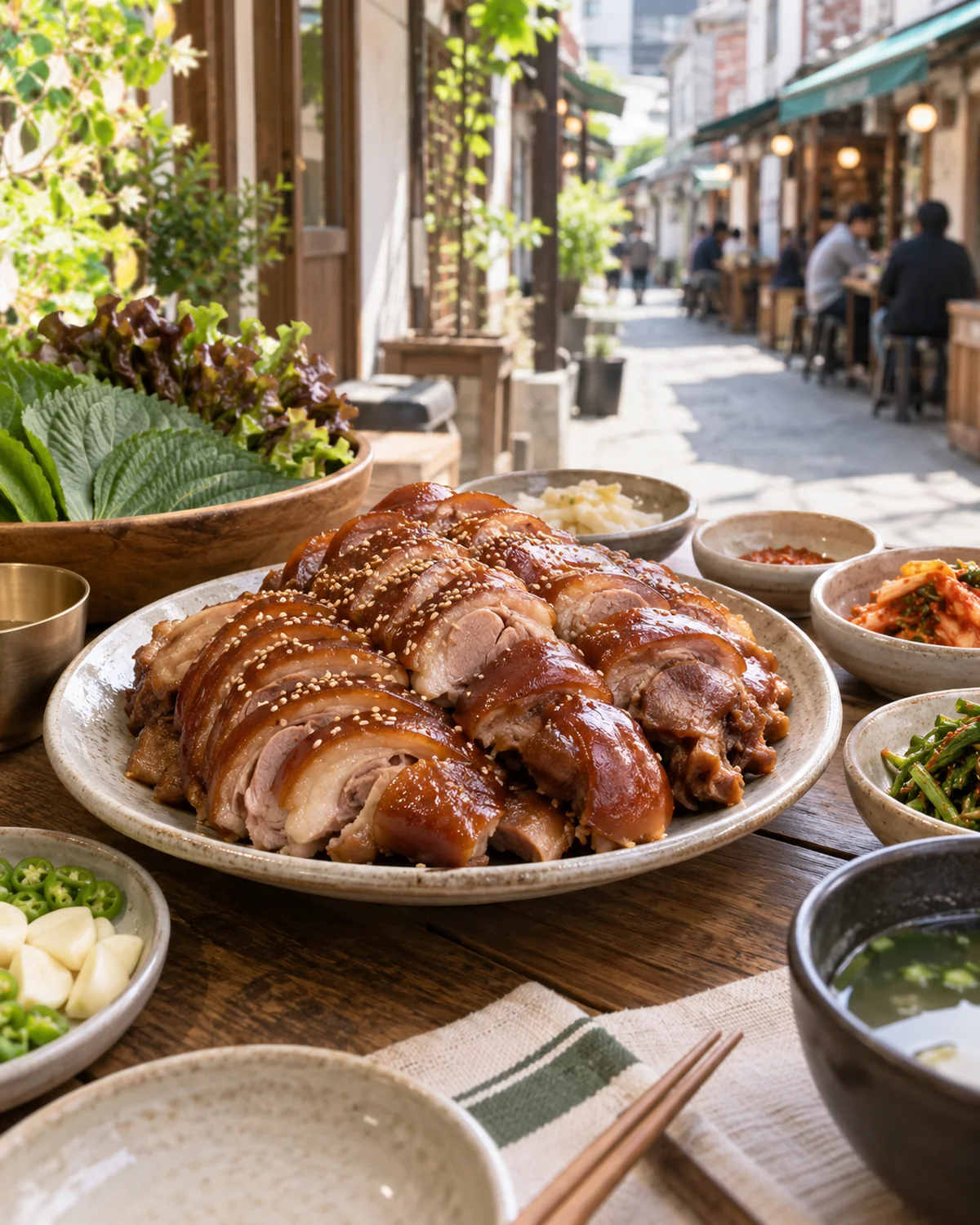
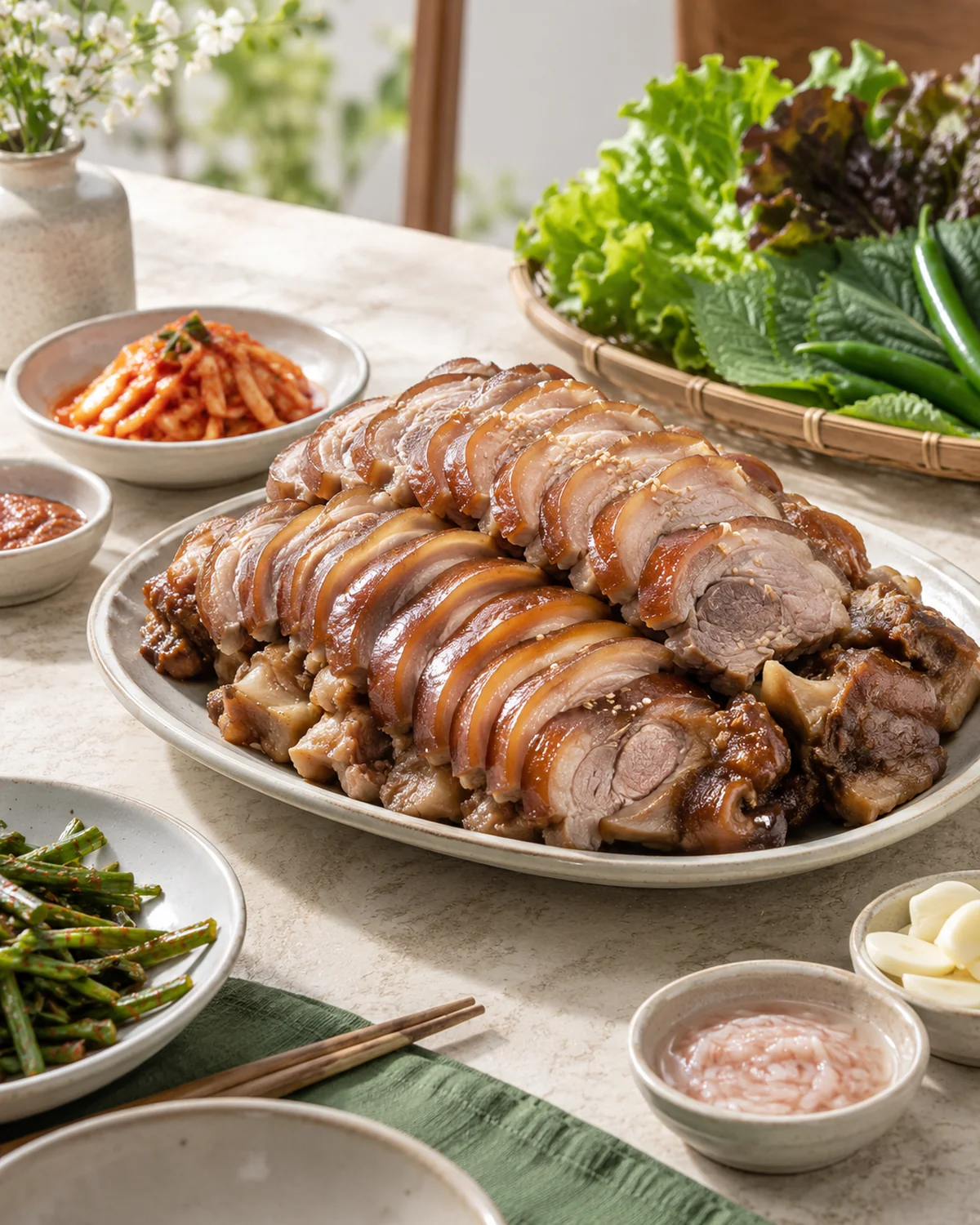
A typical order is a platter rather than a personal bowl. That serving style changes the social rhythm of the meal. Diners take individual slices, combine them with condiments or wraps, pause for side dishes, and continue over a longer conversation. The same plate can support different preferences because one person may eat the meat plain while another builds a full ssam.
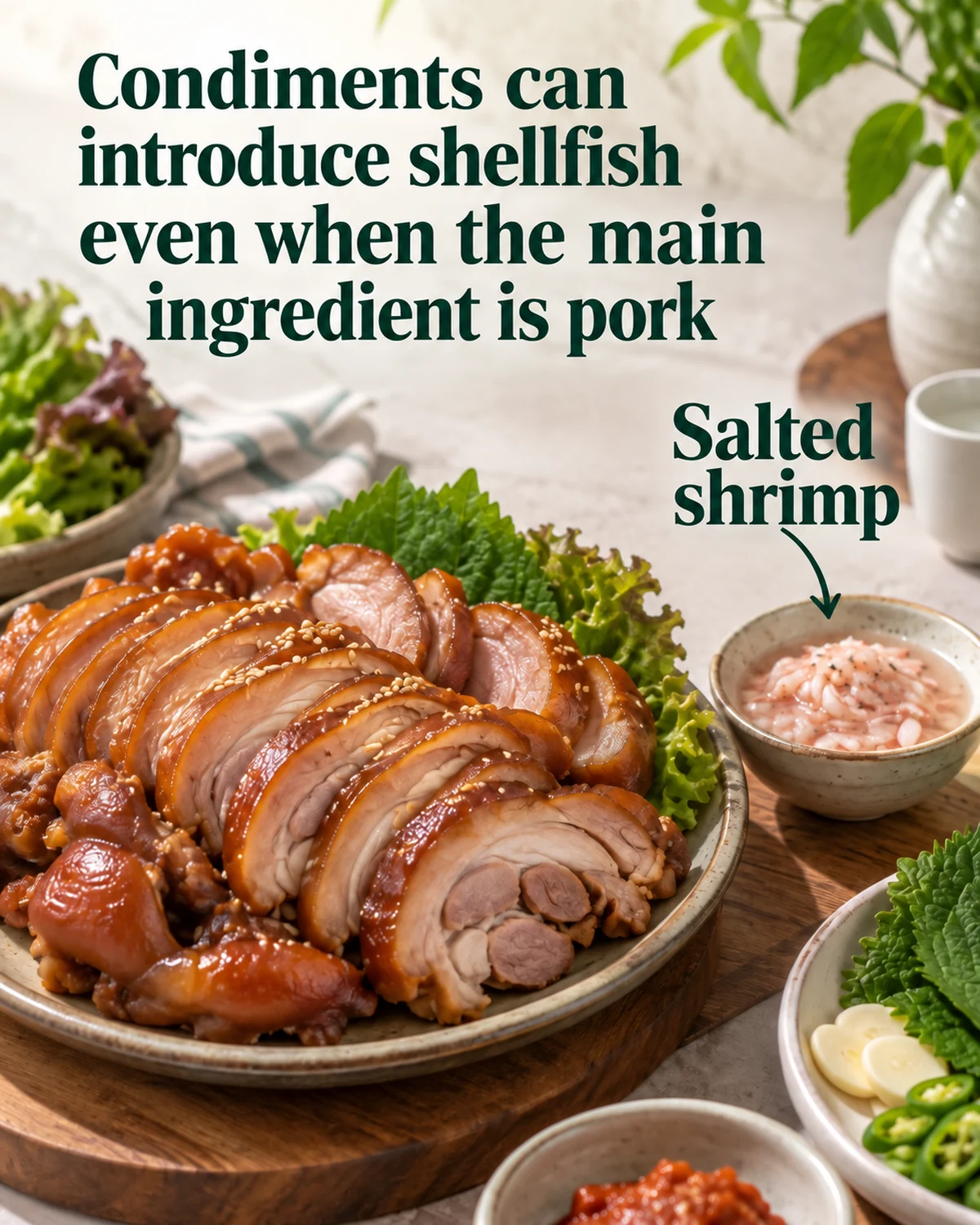
Lettuce or perilla leaves are common wrapping greens. Raw garlic, green chile, ssamjang and saeujeot—salted fermented shrimp—often appear as condiments. These are common accompaniments, not a mandatory national ritual. Restaurants vary, and diners do not need to assemble every slice in exactly the same way.
Saeujeot is particularly useful because its salty fermented flavor cuts through rich pork. Raw garlic adds heat and sharpness. A leaf adds freshness and changes the meat-to-vegetable ratio. The table therefore lets diners adjust intensity bite by bite without changing the braise itself.
Taste the pork before building the wrap
Try a small slice as it arrives, taking skin and meat together. Next, add a little condiment. Only then try a wrap with the leaves and accompaniments supplied. This separates the pork’s own texture from the salt, heat and crunch you choose to add. A large wrap containing everything at once can make those differences disappear.

Ask whether a plate’s serving estimate suits the people at the table. The size label may describe a shared platter rather than a personal portion, and bones or other components can make visual comparisons misleading. Cold noodles or a pancake can provide a contrast, but they remain additional food, not an obligatory proof that you ordered properly.
For a comparison with bossam, look at cut, skin, bones and cooking method rather than assuming all sliced pork serves the same role. Both can support a wrap, but the experience of the pork itself differs. That is also why glossy jokbal should not be described as barbecue simply because its seasoning looks sweet and dark.
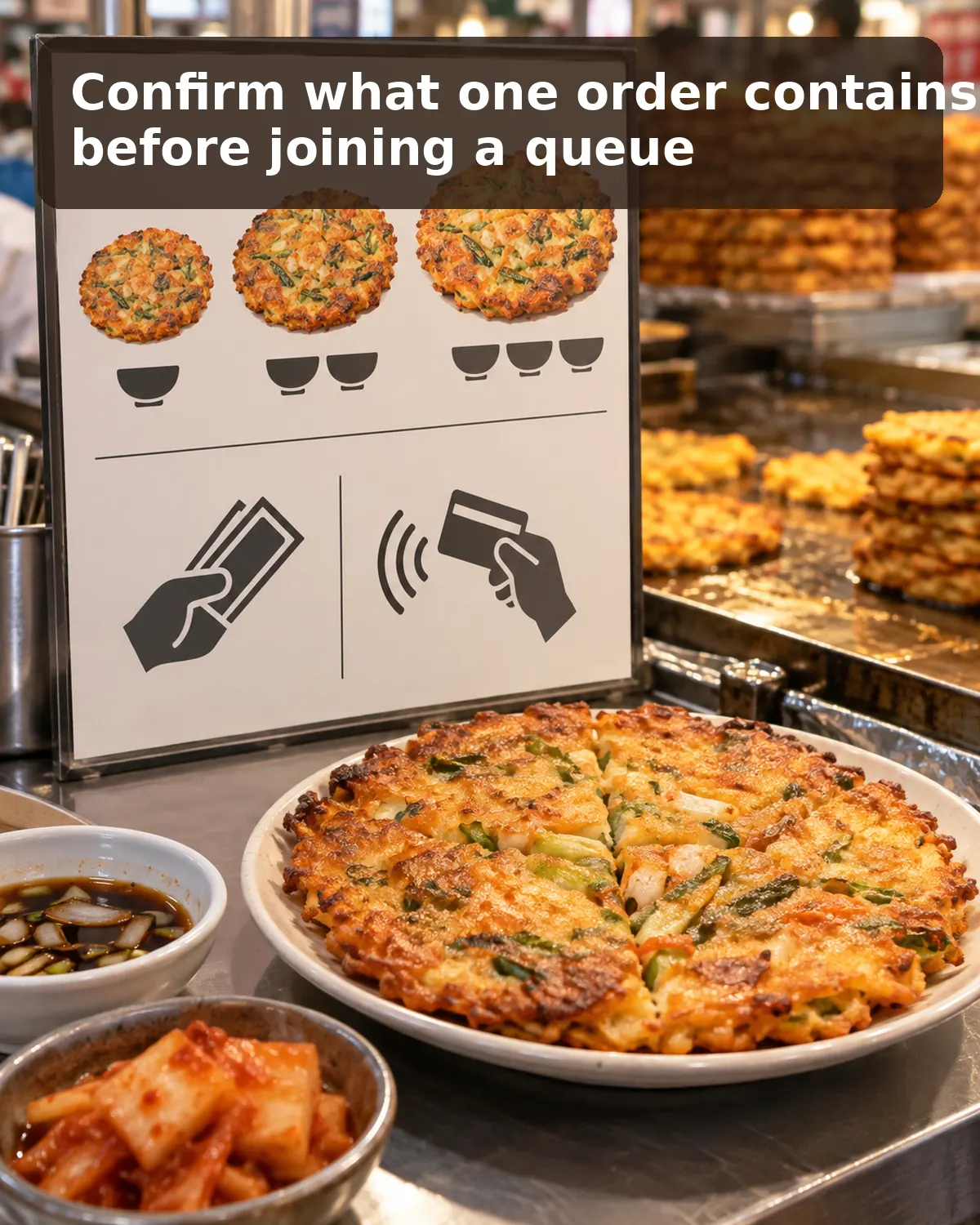
Jangchung-dong restaurant tables often include or offer side dishes such as cold mixed noodles, mung-bean pancakes or green-onion pancakes. Visit Seoul specifically notes bindaetteok and pajeon among the side menus found in the alley.
The pairing is structurally useful. Warm gelatin-rich pork is dense and savory. A cold, tangy noodle dish brings acidity, chile and temperature contrast. A crisp pancake brings browned edges and starch. The meal becomes easier to keep eating because the side dishes interrupt the repetition of rich pork.
That does not mean every local orders the same combination. It explains why these side menus thrive in a restaurant cluster centered on a large shared meat platter.
Jokbal, bossam and suyuk are not the same order
Three Korean pork terms are often collapsed in translation: jokbal, bossam and suyuk. All can arrive sliced on a shared platter, but the cut and cooking logic differ.
Jokbal is defined primarily by pig’s trotter and a seasoned braising process. The skin, tendons and connective tissue are central to its texture. Bossam usually refers to boiled pork—often belly or shoulder—served in slices and commonly wrapped with cabbage, greens and condiments. Suyuk is the broader term: meat cooked in water or broth and served sliced, and it can refer to pork or beef depending on context.
This means a plate of plain boiled pork is not automatically jokbal just because it is sliced for sharing. Conversely, jokbal does not become bossam simply because diners wrap it in lettuce. The cut and cooking method matter more than the presence of a leaf.

Finding the alley and reading the menu
Seoul also has a well-known jokbal cluster inside Gongdeok Market. Visit Seoul describes that alley as a later concentration of jokbal and sundae-guk shops. The existence of another cluster is useful because it separates the dish from one neighborhood while showing how the “food alley” model repeats across the city.
Jangchung-dong’s distinction is its older heritage identity and strong association with Jangchung Arena. Gongdeok’s cluster belongs to a market environment with its own customer flow and neighboring jeon alley. The two places show how the same dish can anchor different commercial ecosystems.
For travelers, that means the choice does not have to be framed as “authentic versus fake.” The better question is which neighborhood history and surrounding itinerary you want to experience.
Jangchung-dong Jokbal Alley remains close to Dongguk University Station and Jangchung Arena, but individual restaurant hours, closure days, prices and sell-out patterns change. Current Visit Seoul listings are useful close to a trip, yet even a page edited in 2026 can become outdated later.
Because platter sizes vary, asking how many people a size is intended for is more useful than relying on an old fixed price. The menu in front of you is the authority for that meal.
Pork, salted shrimp and other ingredients to check
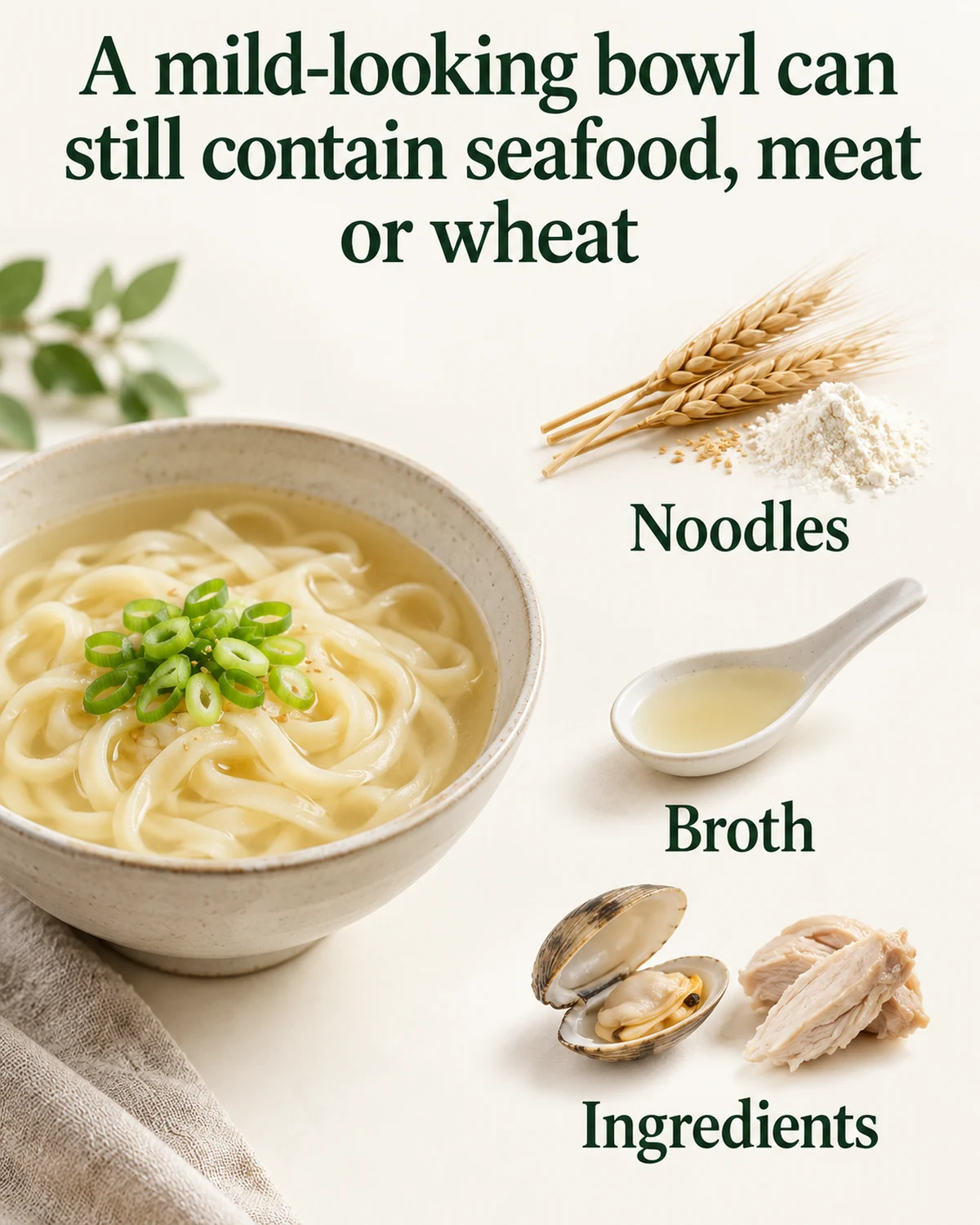
Jokbal is pork, so it is unsuitable for diners avoiding pork for religious, ethical or personal reasons. Soy sauce commonly contains soy and may contain wheat depending on the product. Ssamjang can contain soy and wheat, while saeujeot contains shellfish. Restaurant recipes vary, so people with allergies should ask about the braising liquid and condiments rather than assuming the sliced meat is the only ingredient that matters.
The dish is sometimes marketed with claims about collagen and skin health. A food-history guide should not turn the collagen content of connective tissue into a promise that eating jokbal improves skin, joints or other medical outcomes. The cooking science is interesting enough without making therapeutic claims.
Sources and reading
- Seoul Metropolitan Government, MediaHub — Seoul Future Heritage food alleys
- Visit Seoul — Jangchung-dong Jokbal Alley, edited June 3, 2026
- Seoul Metropolitan Government — 2025 Tourist Guidebook, Jangchung-dong Jokbal Alley
- Visit Seoul — Gongdeok Market Jokbal Alley, for comparison with a later Seoul cluster
- CDC — Safer food choices