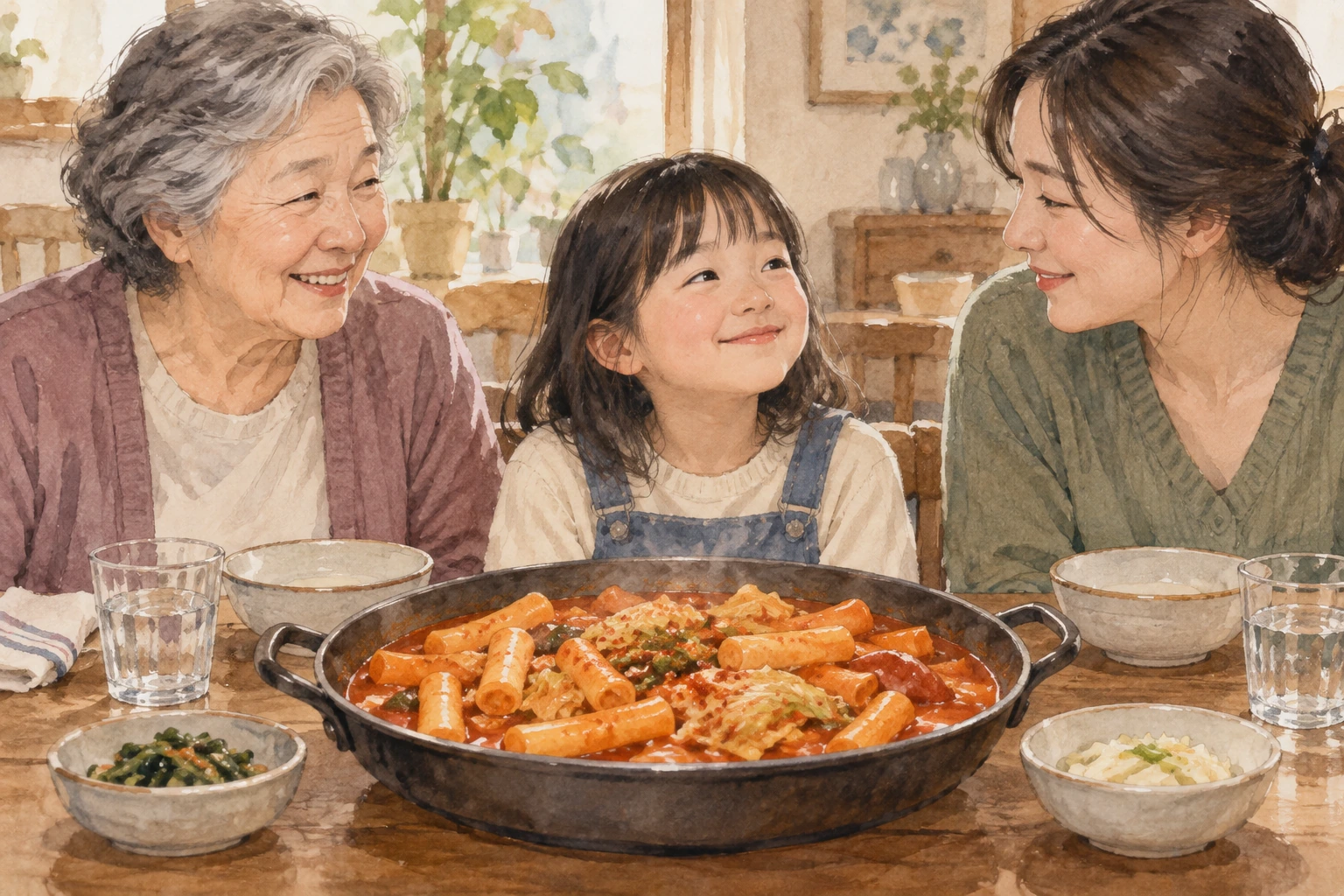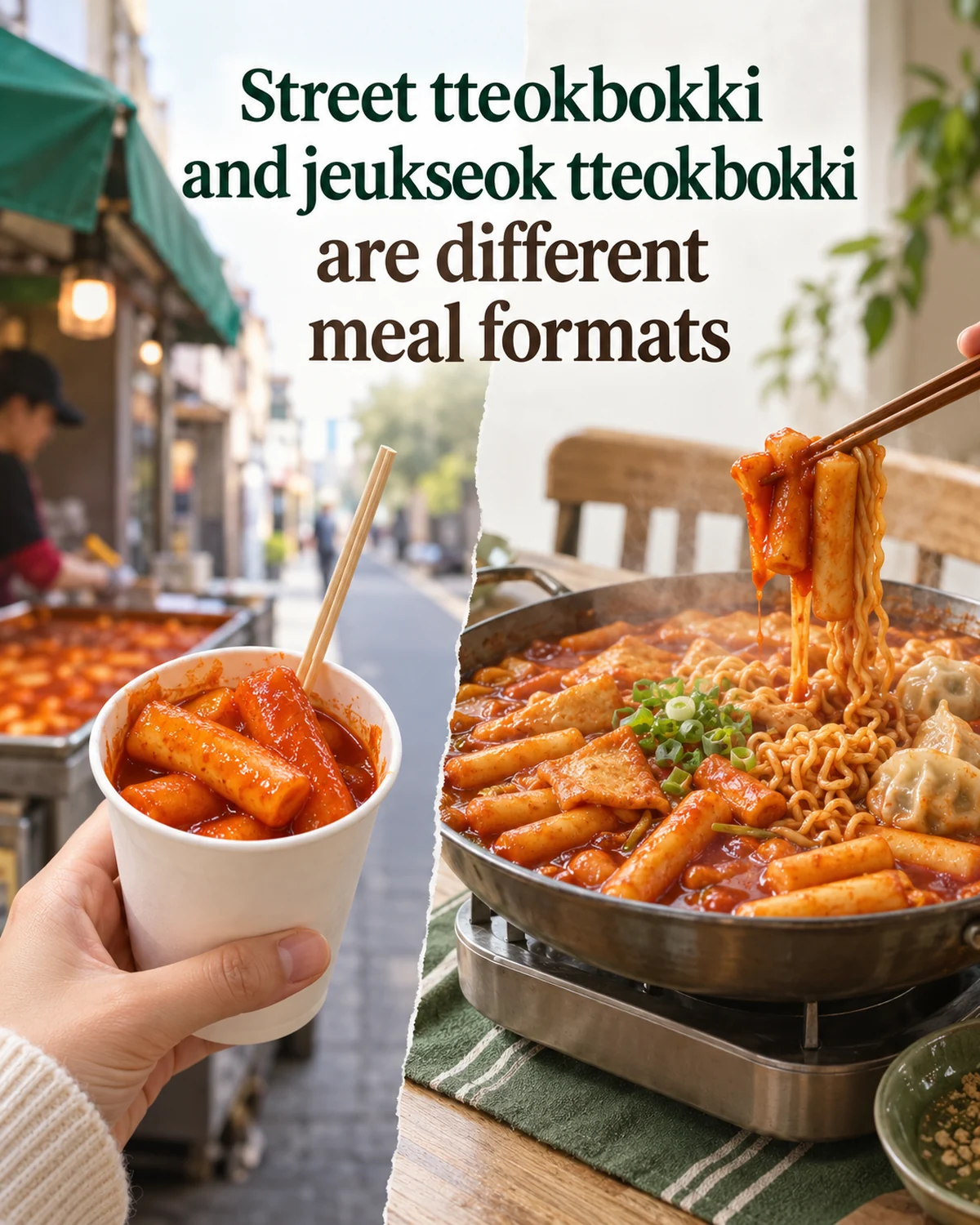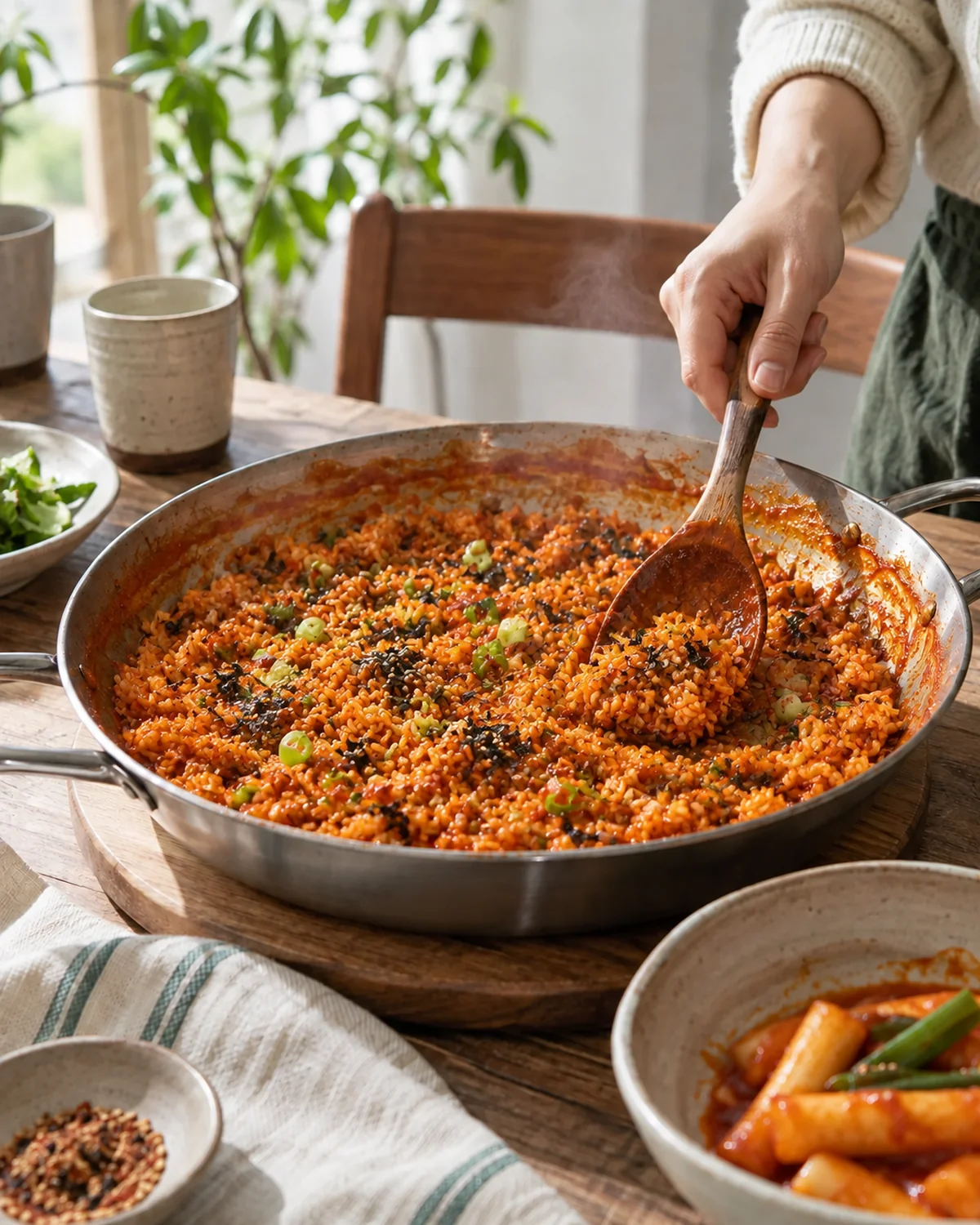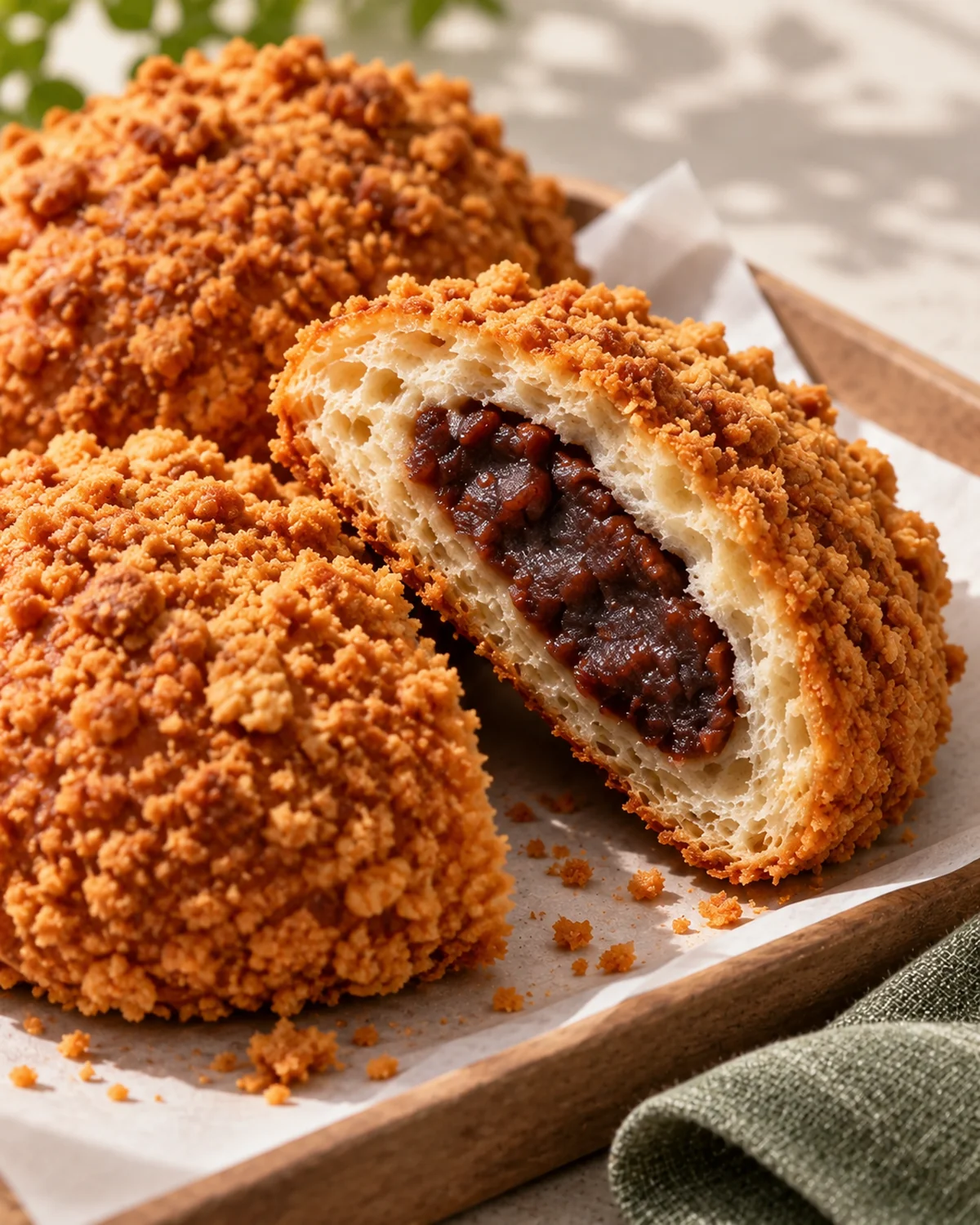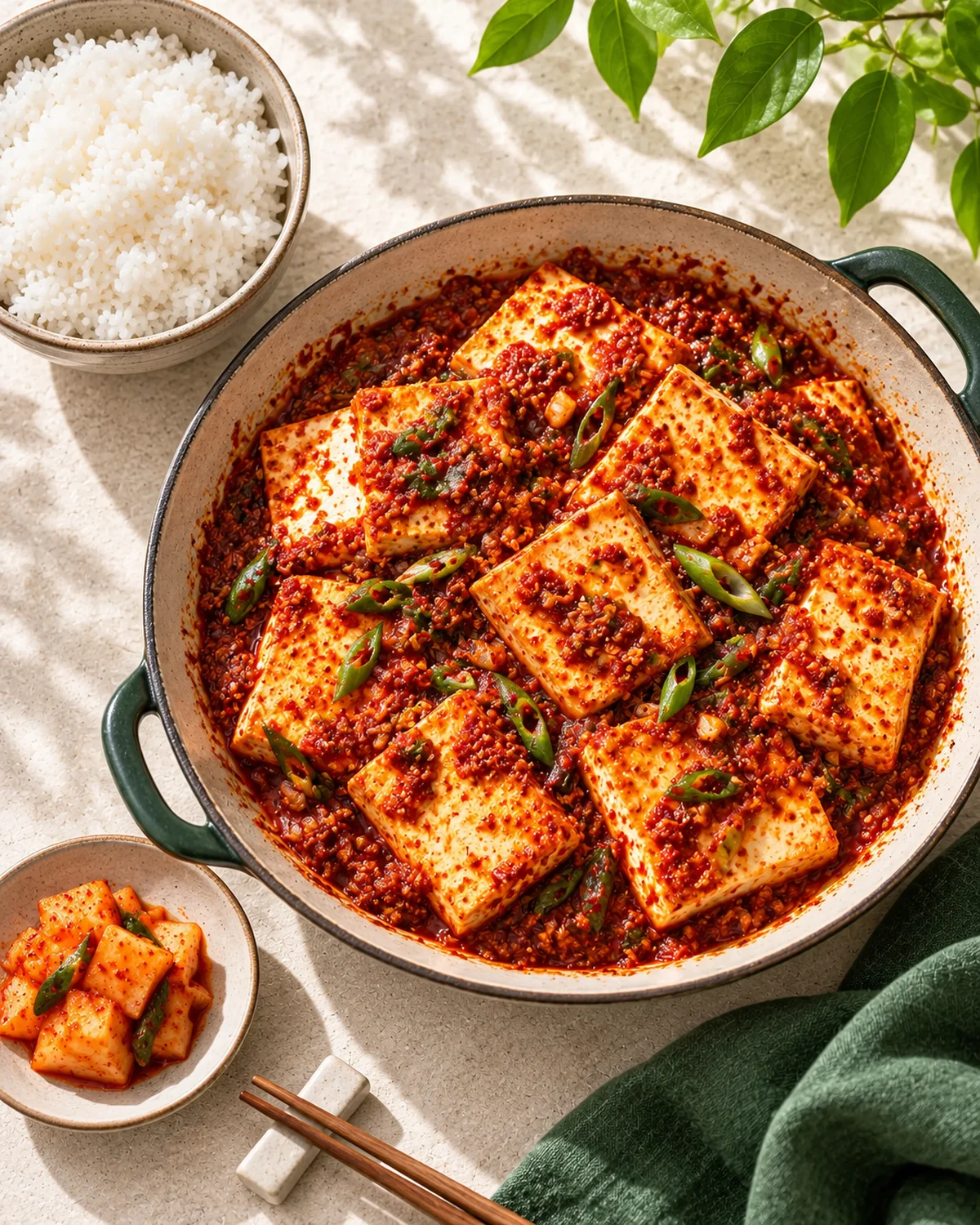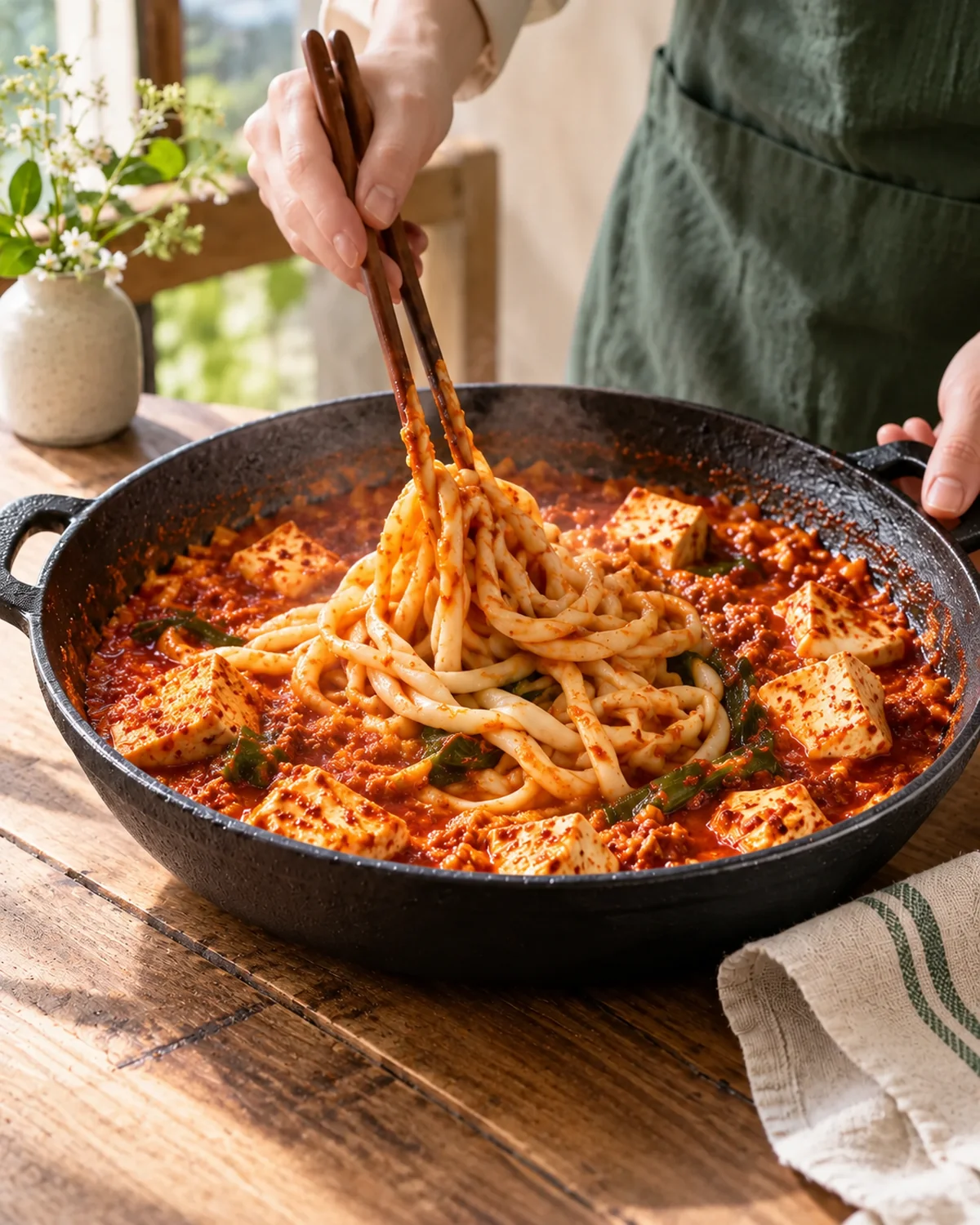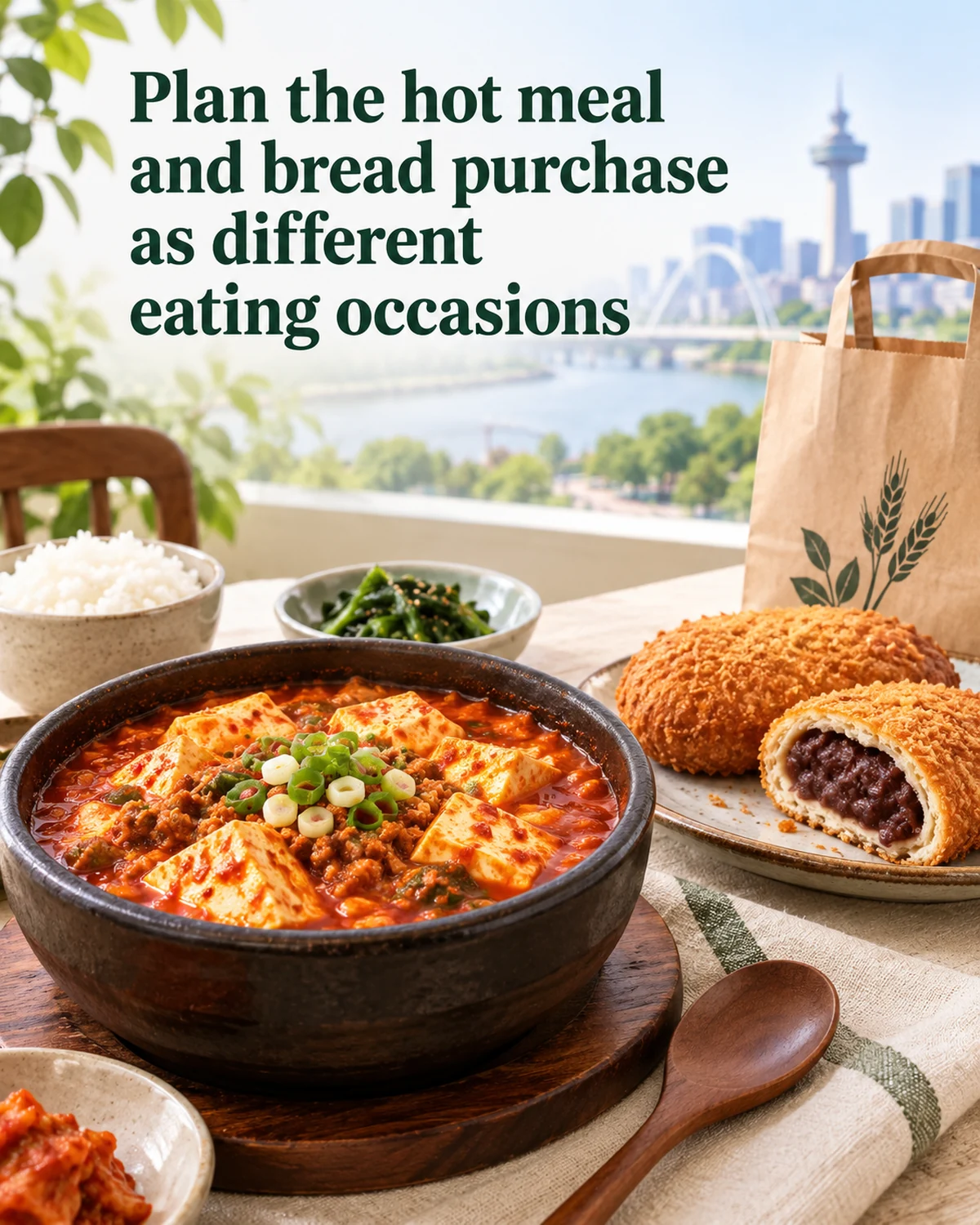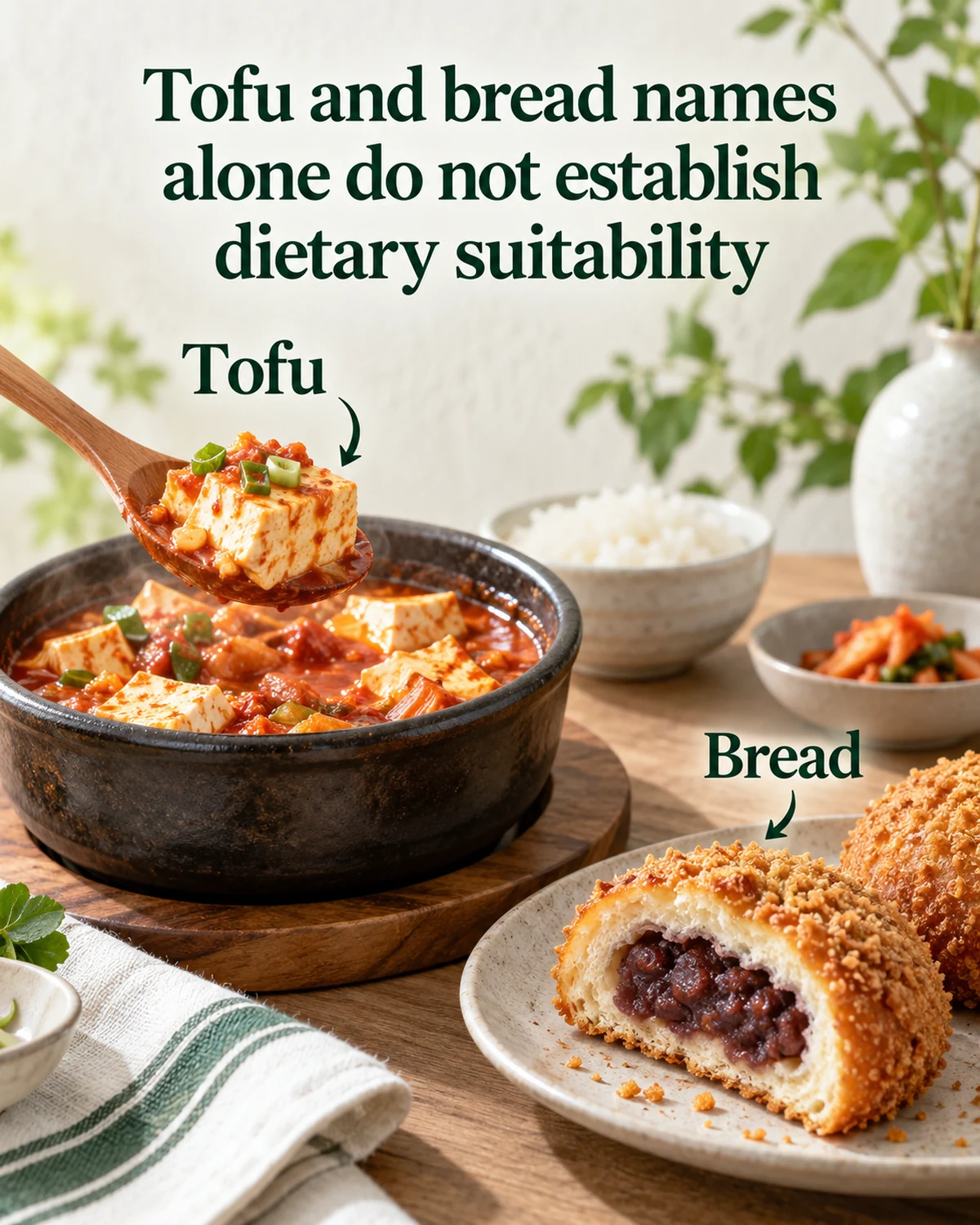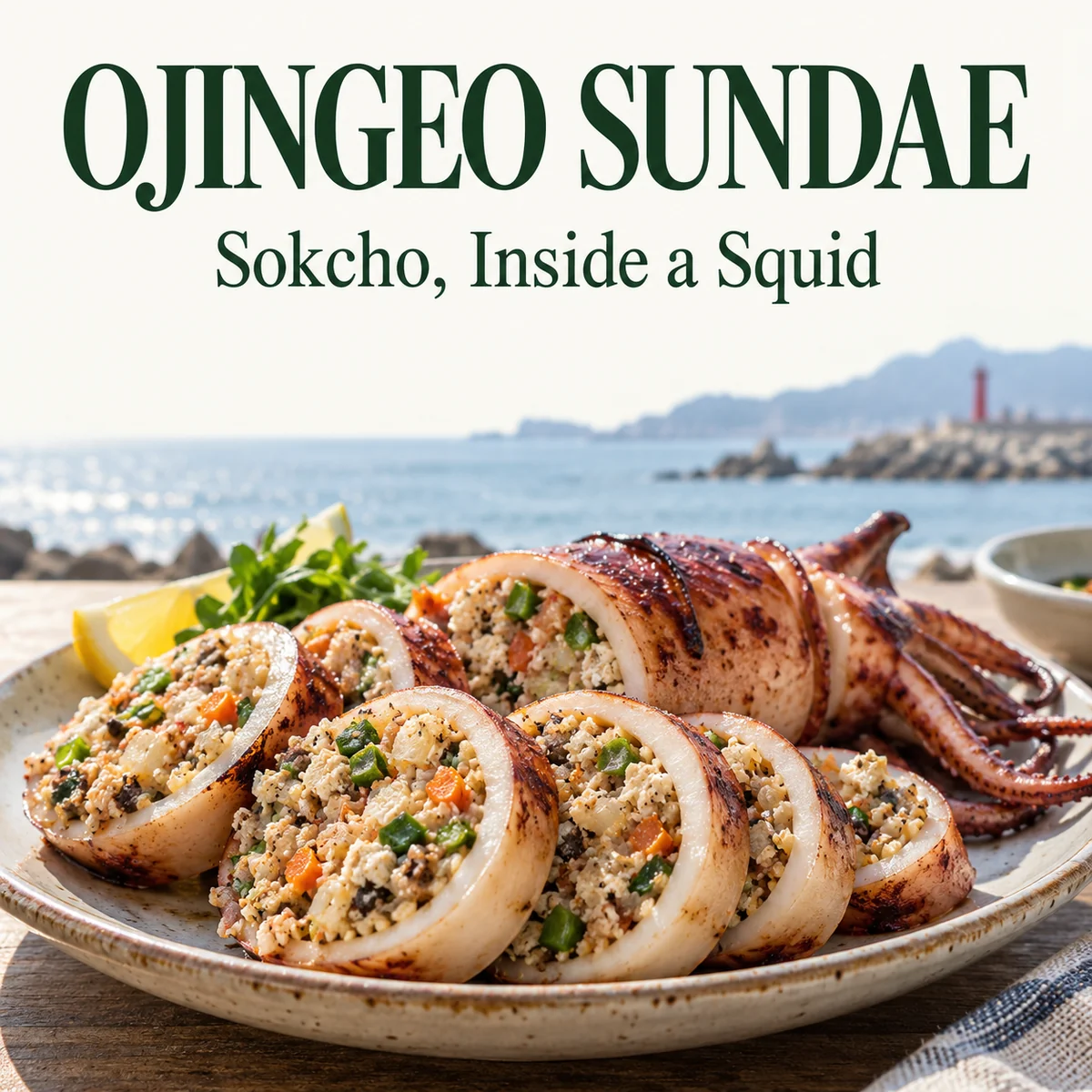

A pork-cutlet sandwich and raw-beef gimbap might seem unexpected neighbors for a word associated with humble flour foods. Yet they appeared together at Dosan Bunsik in Seoul, where brand manager Park Do-kun explained the restaurant’s approach to The Korea Herald in 2023. Its chefs drew on their memories of eating bunsik after school, then imagined a setting where adults could return to those pleasures.
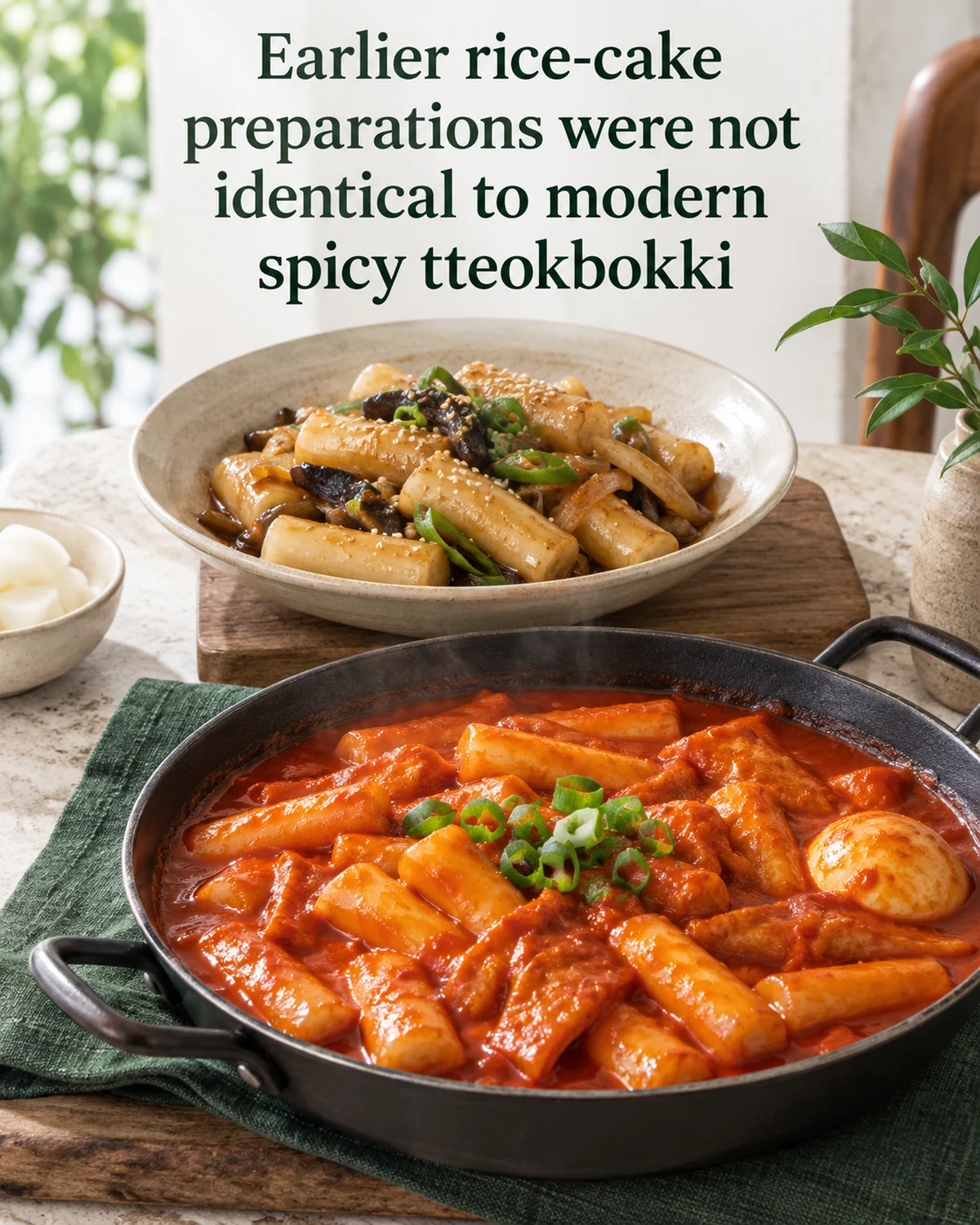
The choice of a fashionable Apgujeong neighborhood was deliberate. The restaurant put soupy wheat-cake tteokbokki beside dishes that went beyond the familiar school-day snack counter. Park discussed design as well as flavor: remembered foods could inhabit a carefully styled contemporary space.
That story gives bunsik an interesting double life. It can name a modest meal and also become material for a restaurant concept. Childhood familiarity does not automatically keep a food cheap, plain, or unchanged. For a visitor, the label is a starting point rather than a promise about price or atmosphere. A bunsik shop can sell a memory of ordinary eating, even when the experience has been deliberately redesigned. Kim Hae-yeon’s interview with Park Do-kun
Why does a flour-food category include rice rolls?
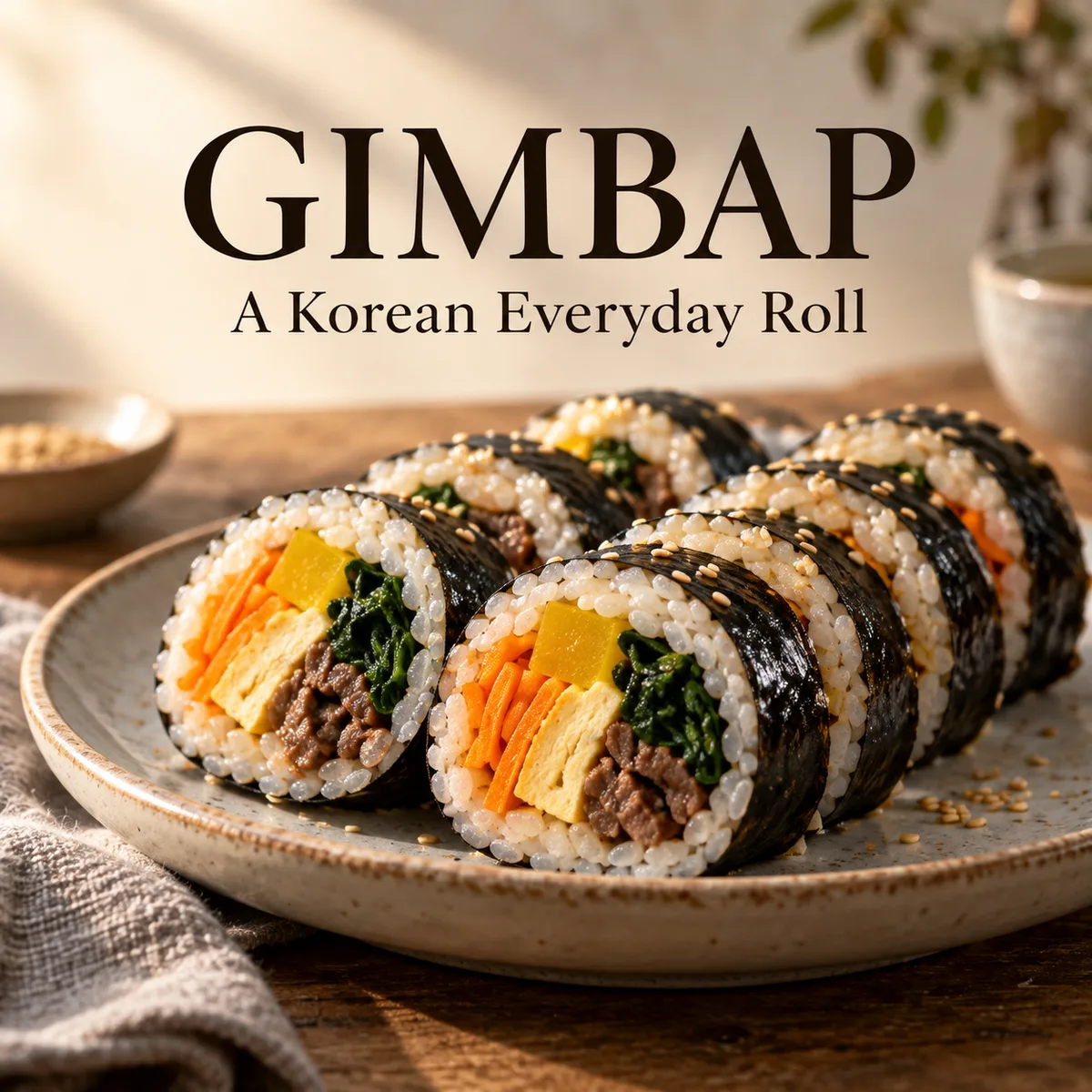
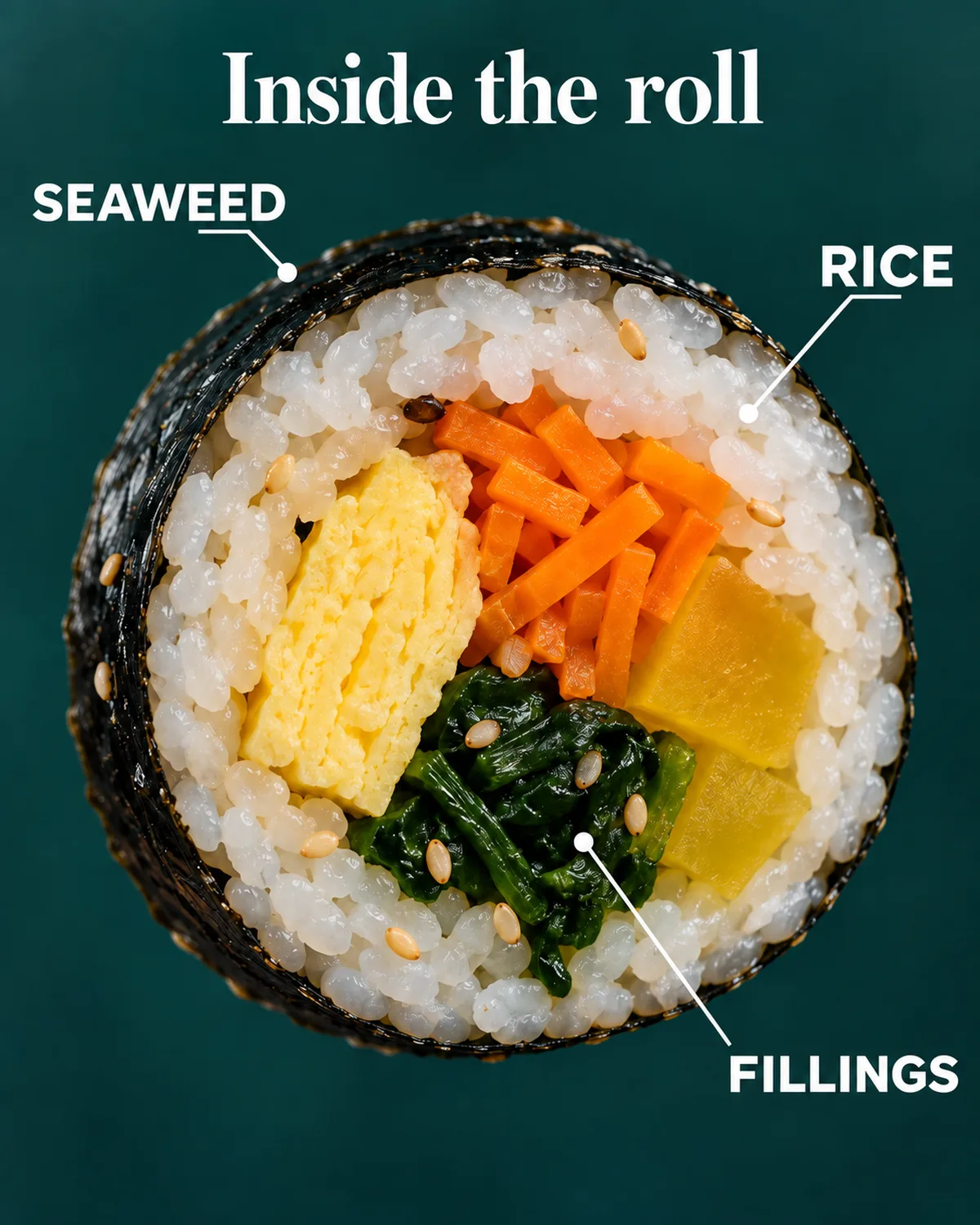
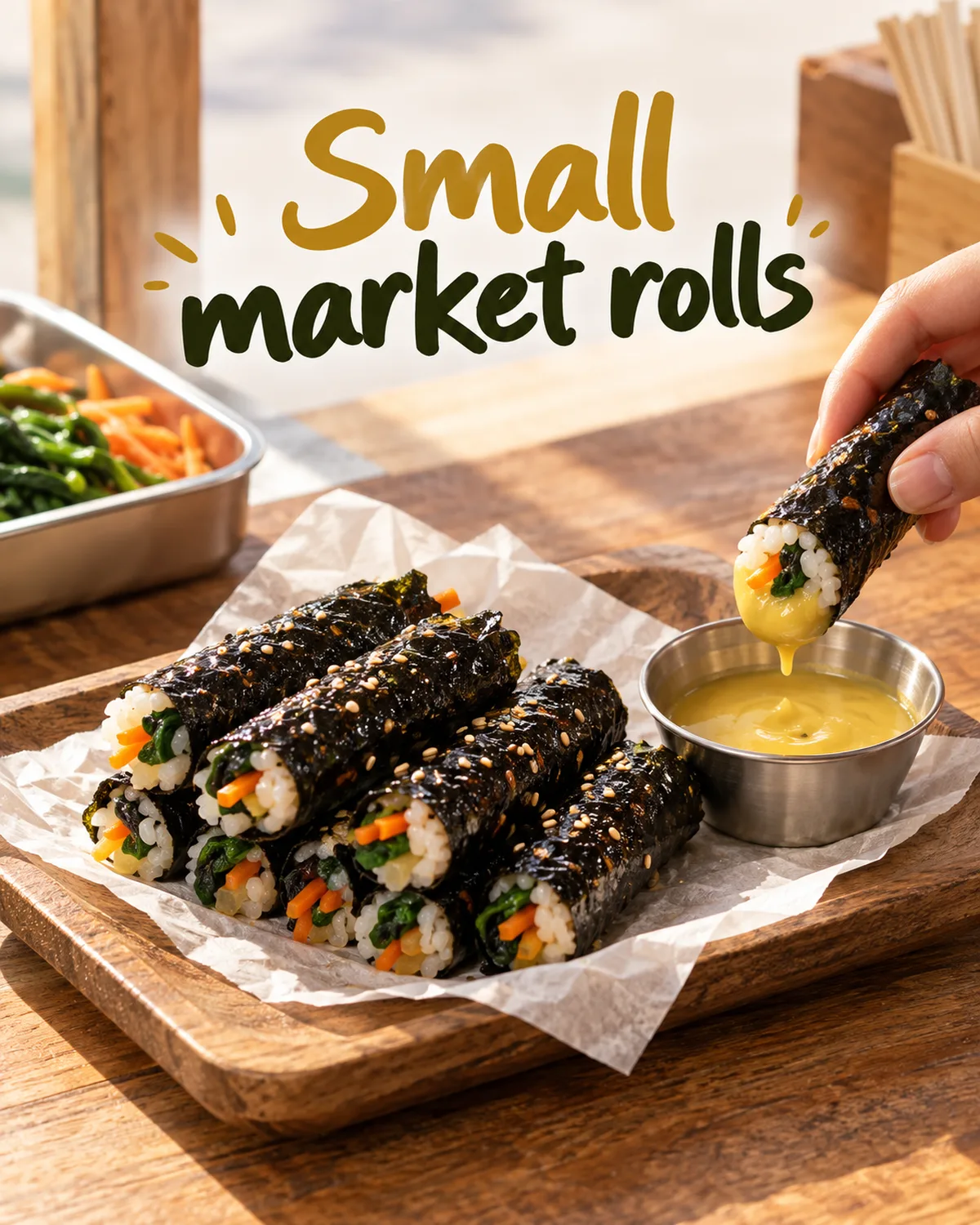
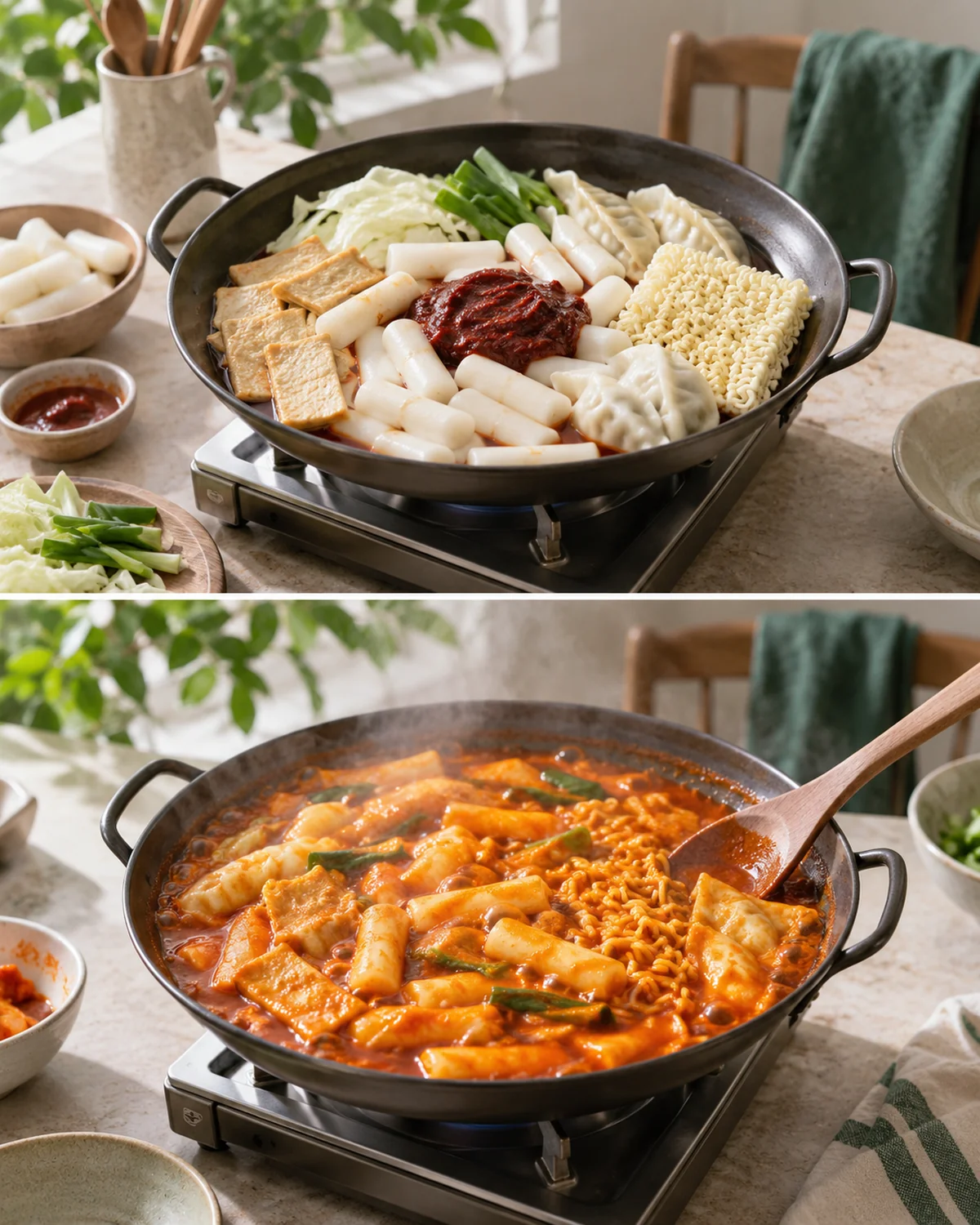
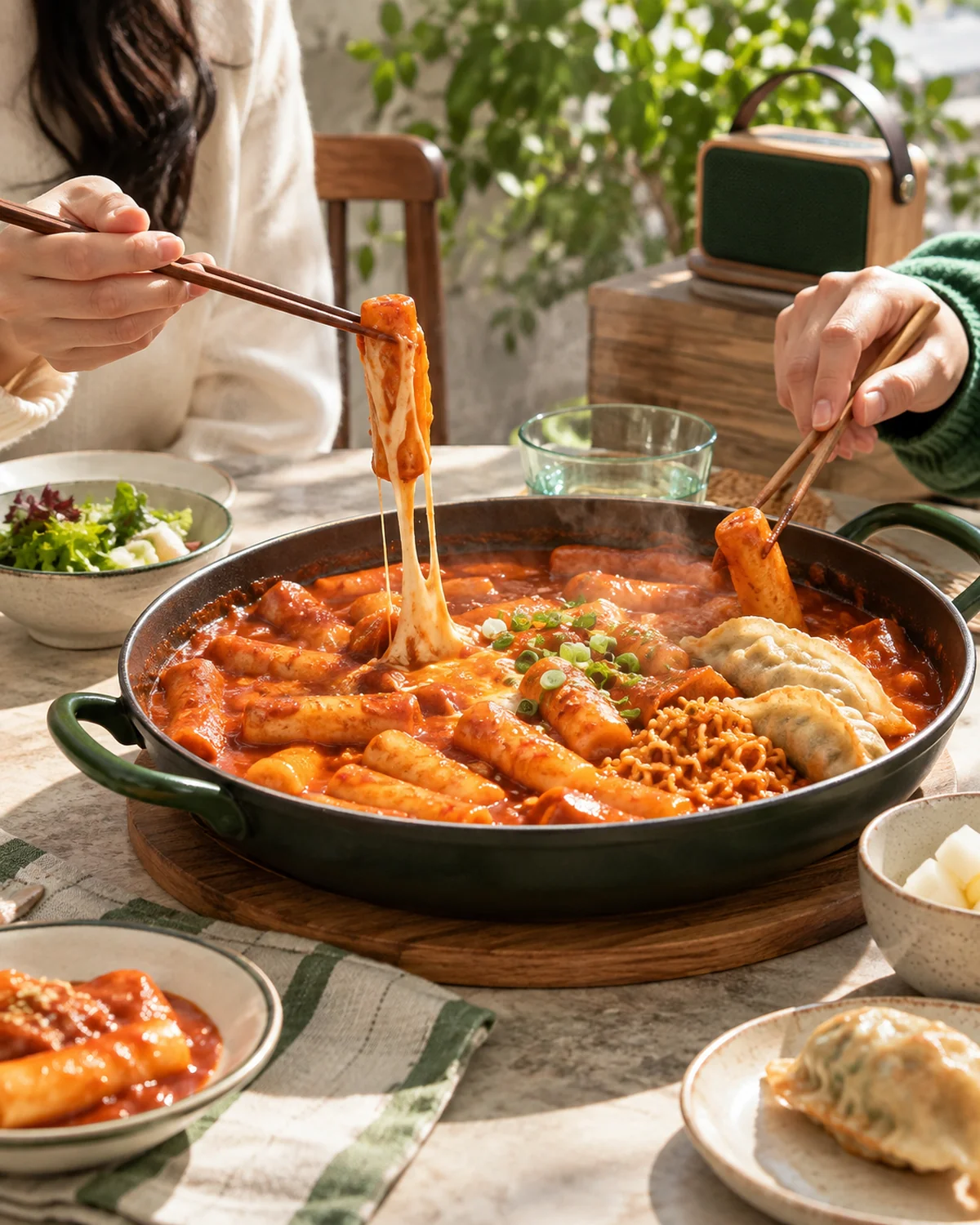
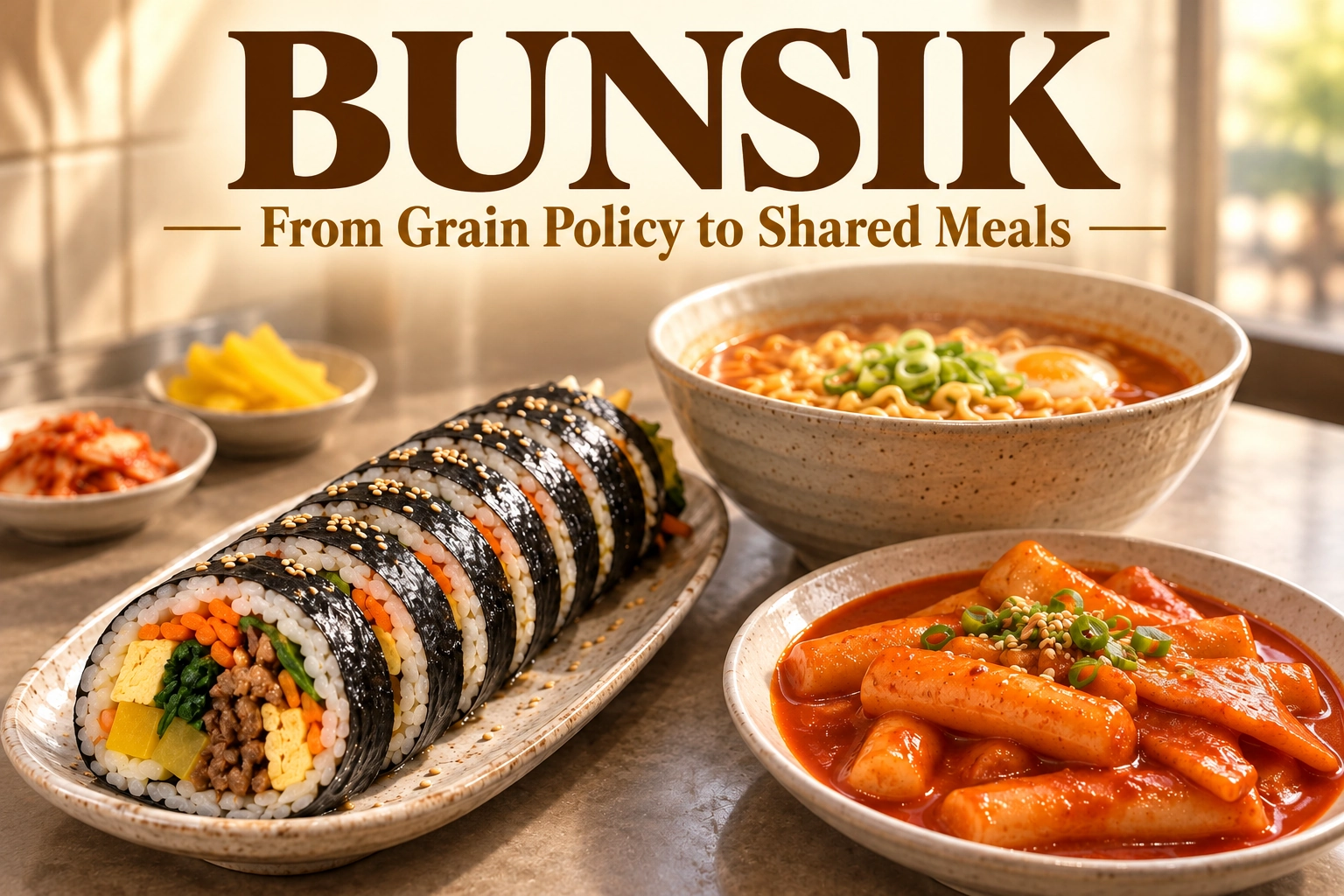
Bunsik originally refers to flour food, but its everyday dining meaning is broader. Korea.net’s account includes tteokbokki, gimbap, sundae, fried snacks, fish cakes, ramyeon, dumplings, and jjolmyeon. Rice-filled seaweed rolls therefore belong comfortably on a bunsik menu even though they are not wheat noodles or bread.

The same guide describes eateries near schools and markets, associated with accessible, quickly prepared meals for students and working people. The category groups an eating occasion and a kind of restaurant as much as a single ingredient. Something bought for a quick bite can also become your lunch.
This distinction helps when you first encounter a sign reading bunsik. Translating it only as flour cuisine makes the menu look inconsistent; treating it as a recognizable assortment of informal Korean meals makes more sense. Read the actual dishes before deciding what you want. The shop name alone will not tell you which grain a rice cake contains or whether every item shares the same ingredients. The expansion of the word is part of its history, not a mistake diners need to correct. Korea.net’s introduction to bunsik
When the government tried to change lunch
Behind that flexible restaurant category lies a much less flexible chapter of grain policy. The National Archives distinguishes honsik, mixing other grains into rice, from bunsik, eating flour-based food. Its historical account places these efforts against rice shortages and the arrival of American wheat. Changing the supply of grain did not instantly change what people preferred to eat.
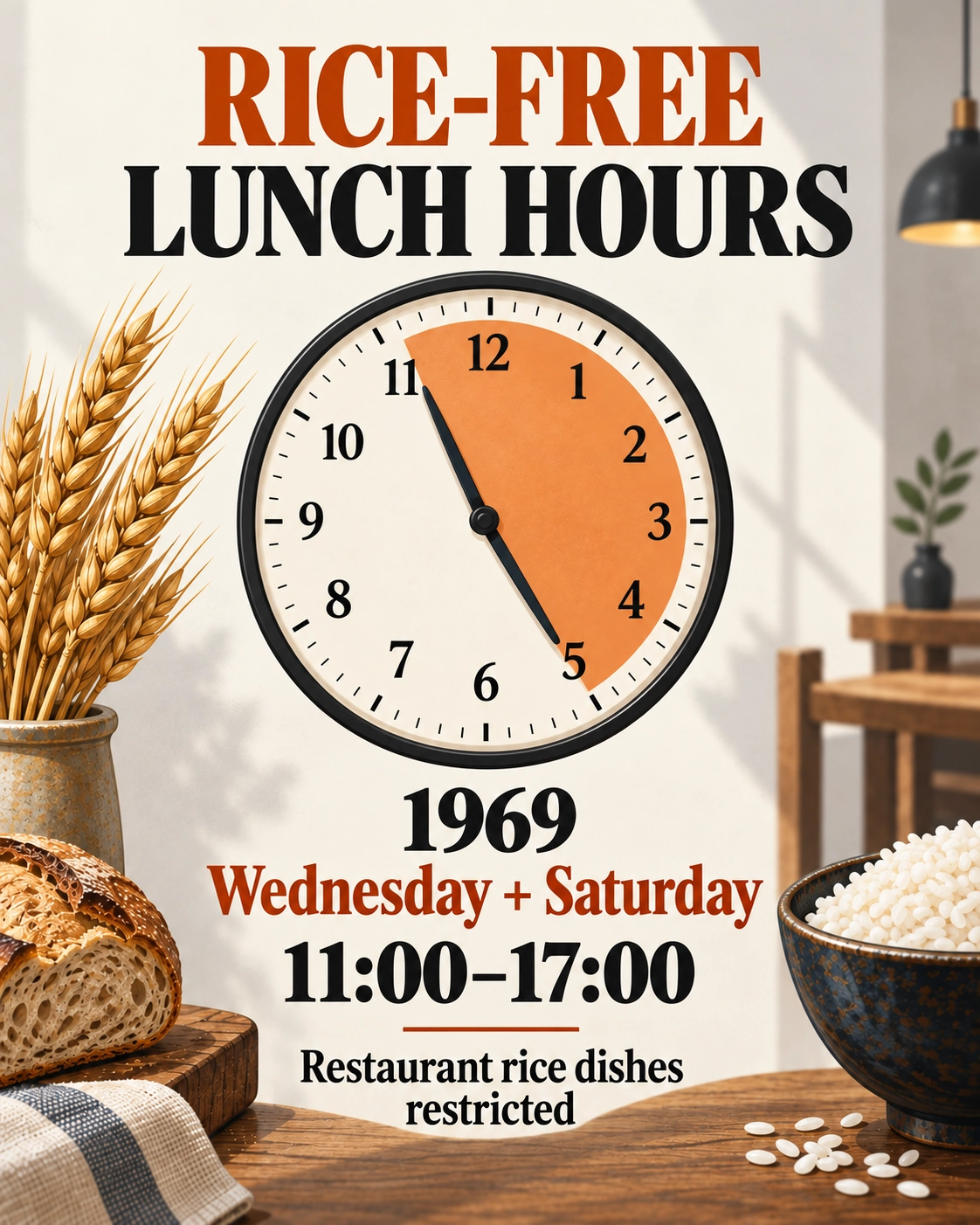
A separate Archives presentation identifies January 23, 1969, as the designation of Wednesday and Saturday as bunsik days, also called rice-free days. Restaurants could not sell rice-based dishes between eleven in the morning and five in the afternoon on those days. The policy also required grain mixing in food sold by restaurants.
The restriction makes today’s rice-filled bunsik counter especially striking. The word that now welcomes a rice roll into an informal meal was once tied to an effort to keep rice out of certain restaurant hours. That was an administrative intervention into everyday eating, not simply customers discovering a new favorite snack. Describing the campaign as encouragement without mentioning enforcement would leave out an important part of the experience. National Archives: grain policy and rice-free days
The policy needed a persuasive language as well as rules. Advertising scholar Kim Byung-hee examined that language in a 2013 essay about a government advertisement printed in Dong-A Ilbo on January 18, 1972. The advertisement connected mixed-grain and flour consumption with patriotism, economic responsibility, and claims about health. Kim analyzed how these messages turned a dietary choice into an appeal to civic duty.
He also noted the arrangement of government advertising alongside flour-milling and bakery advertisements. The public campaign and commercial food businesses appeared together on the newspaper page. A reader was being invited to regard a particular way of eating as desirable for the country while encountering products that could make it possible.
The health language belongs to the advertisement’s historical rhetoric. It is not a reason to repeat its negative judgment of rice as present-day nutritional advice. For understanding bunsik, the more revealing detail is how ordinary food acquired a moral burden. Lunch was no longer only something a person wanted to eat; the campaign presented it as evidence of whether that person was cooperating. Kim Byung-hee’s analysis of the 1972 advertisement
Nor does a simple account of government orders and foreign aid fully explain how flour reached consumers. In a 2025 study, historian Kim Dong-joo foregrounded the Korean milling industry. His published abstract describes firms burdened by earlier overinvestment, then finding opportunities amid urban population growth, an expanding food-manufacturing sector, and the droughts of 1967 and 1968.
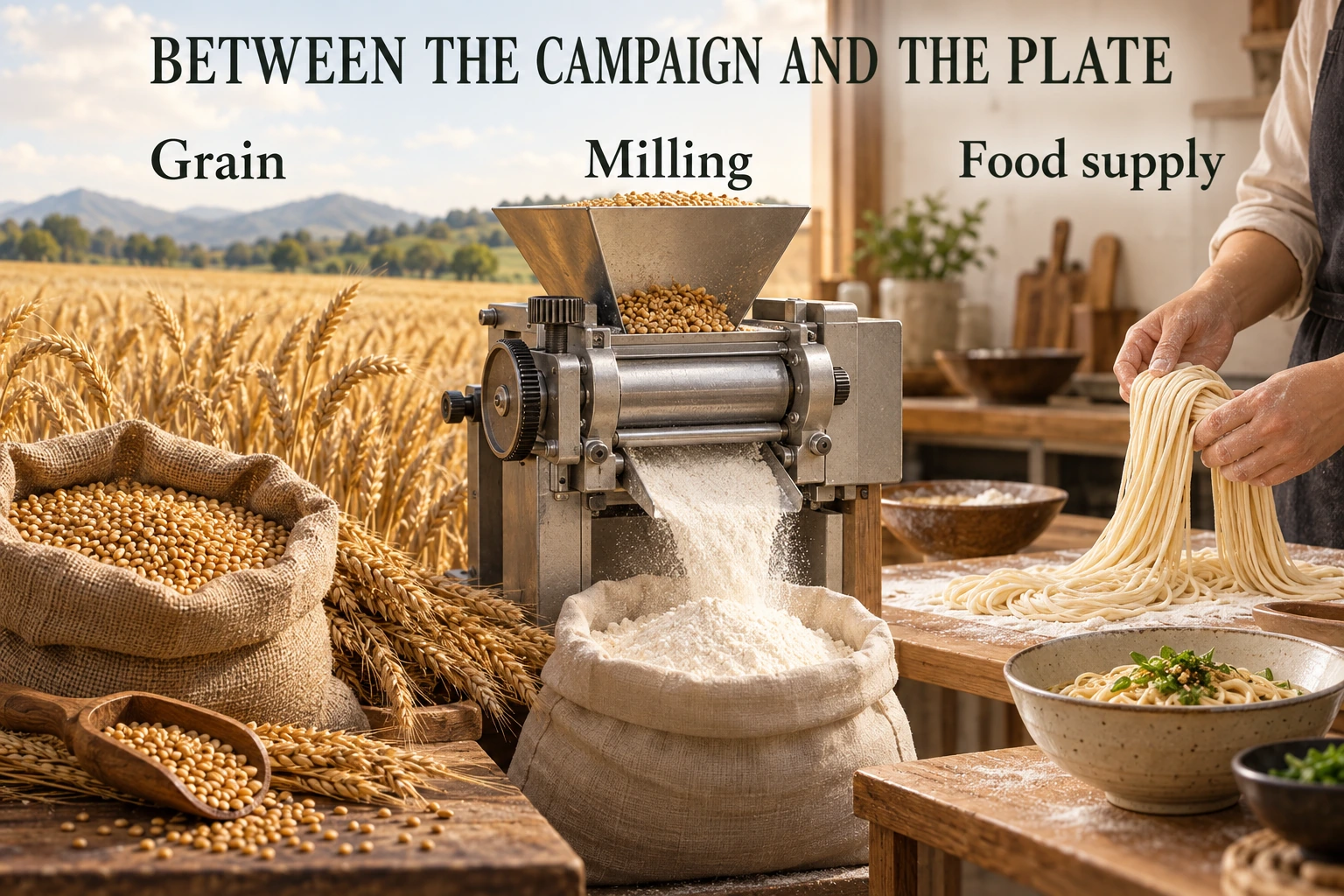
Kim argues that around 1967–1969 the industry and government formed a mutually dependent relationship. State promotion of flour foods went together with an industry role in supplying the flour, enabling imports of grain and the use of previously idle milling capacity. His interpretation places companies within the story rather than treating them as passive recipients of policy.
For the diner, this adds the missing space between a poster and a plate. Encouraging people to eat differently required ingredients to be processed and supplied at scale. A food habit can emerge through shortages, manufacturing capacity, official pressure, and consumer responses together. The argument does not make every later bunsik dish a government invention, or explain an individual restaurant’s recipe by itself. Kim Dong-joo’s study abstract
The same grain can hold an unwelcome memory and a favorite taste
The policy reached individual mouths as well as newspaper pages. Under a 2008 Channel Yes essay about barley rice, a reader using the name Blooming recalled lunchbox inspections during the grain-mixing campaign. The unfamiliar barley grains seemed difficult to chew. As a child, the reader picked them out, ate the rice, and returned home with barley still in the box, provoking a scolding from their mother.
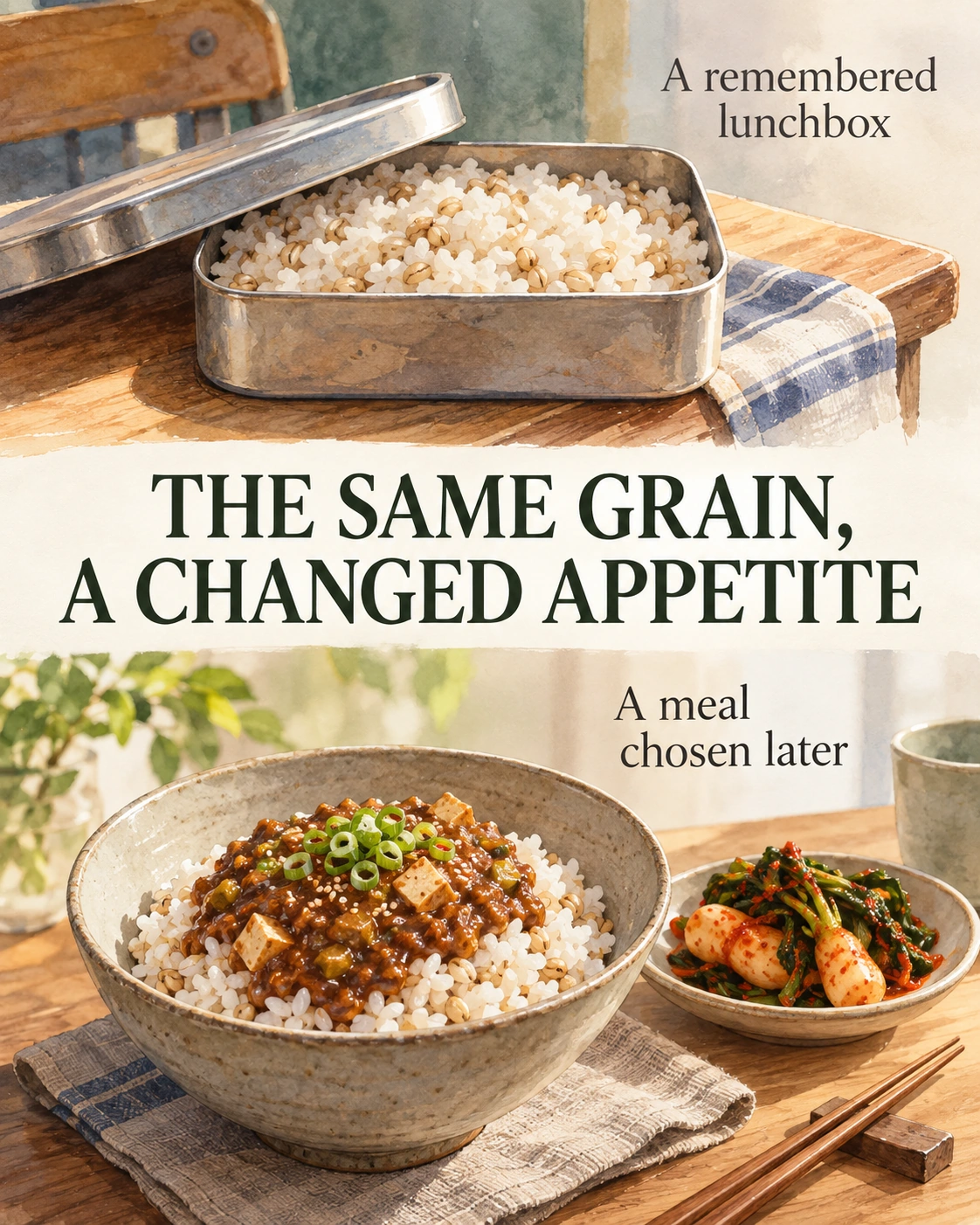
The same comment then moved forward to a changed appetite. As an adult, Blooming enjoyed barley rice mixed with thick soybean-paste sauce and young-radish kimchi, especially as a summer meal. That small autobiographical turn is more interesting than assuming dislike lasted forever, or that everyone happily welcomed the policy.
A single reader’s memory cannot stand for an entire generation. It does show how the circumstances of eating can outlive a campaign and then change again. The food once encountered through compulsory checking could later become something deliberately chosen. An ingredient’s social meaning and a person’s taste need not remain locked to their childhood experience. Blooming’s recollection beneath the Channel Yes essay
Objects can make that distance between public policy and private eating easier to imagine. Reporting on the National Agricultural Museum’s 2025–2026 Carbohydrate Chronicle exhibition, Yoon Jae-yeol described a flour sack marked in English, carrying a handshake image associated with aid. Its packaging still bore an instruction against selling or exchanging the contents. A bag of an everyday ingredient preserved the conditions under which it had arrived.
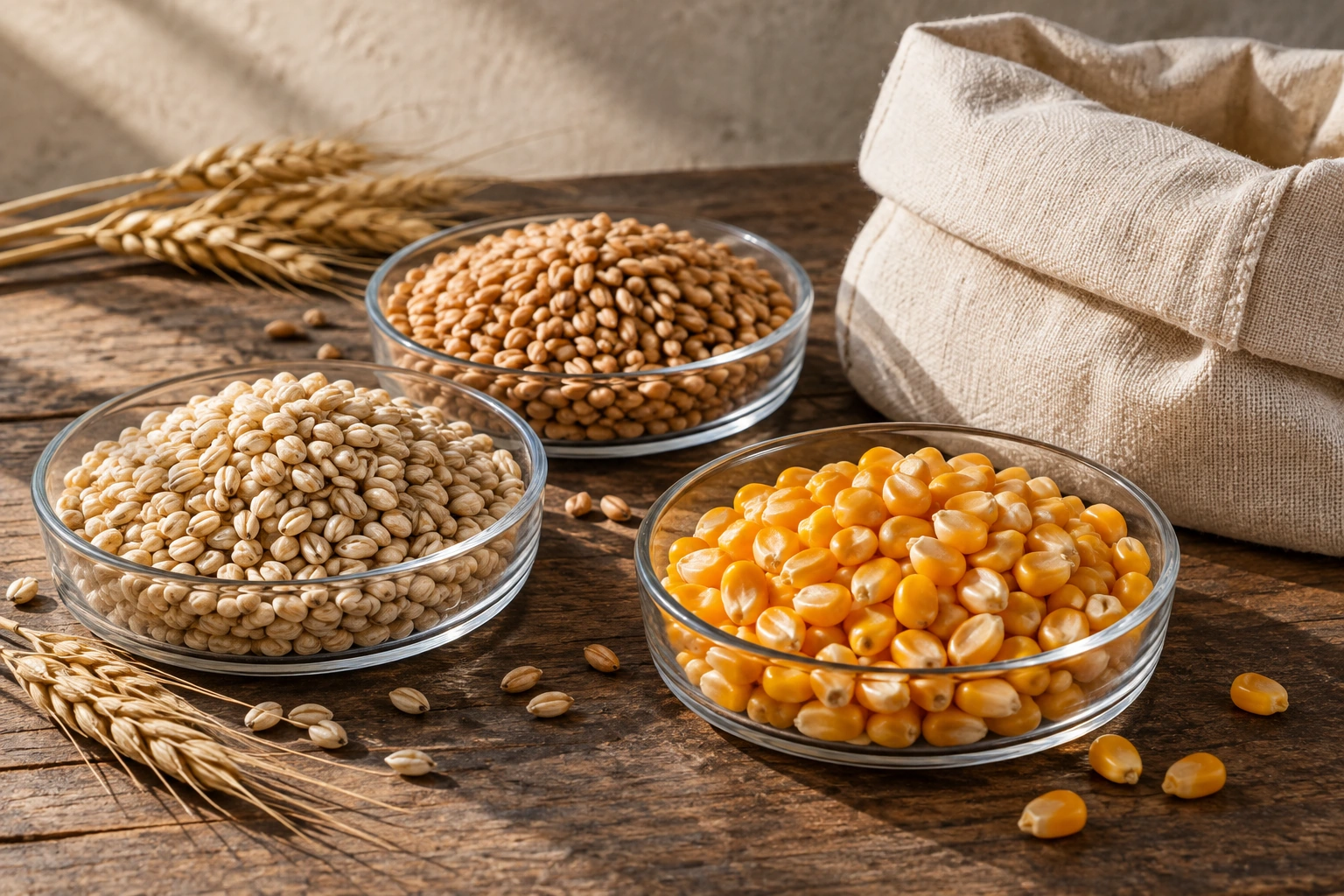
The exhibition focused on barley, wheat, and corn rather than centering rice. Curator Jang Mi-jin explained that these grains offered another way to follow changes in Korean life and food memory. The display brought a material history of meals into view alongside more familiar recollections of what people ate.
Looking at such evidence encourages a different kind of food story. A flour sack can point toward distribution, foreign relationships, and instructions to recipients before anyone shapes dough. A menu may be the final, pleasurable encounter with an ingredient whose earlier journey was much more regulated. You can enjoy the meal and still be curious about that journey. Yoon Jae-yeol’s exhibition report
At your next bunsik meal, the menu offers a useful way to hold these histories together without reducing the food to hardship. Choose the dishes that appeal to you, and notice how the restaurant groups them. The shared category may connect different grains, textures, and sizes of meal.
If you are eating with someone who grew up with these foods, let their recollection be specific: a favorite shop, an unwelcome lunch, a dish they now order differently. A memory is richer when it belongs to a person rather than being assigned to everyone. Bunsik’s story accommodates policy, commerce, resistance, pleasure, and reinvention at the same table.