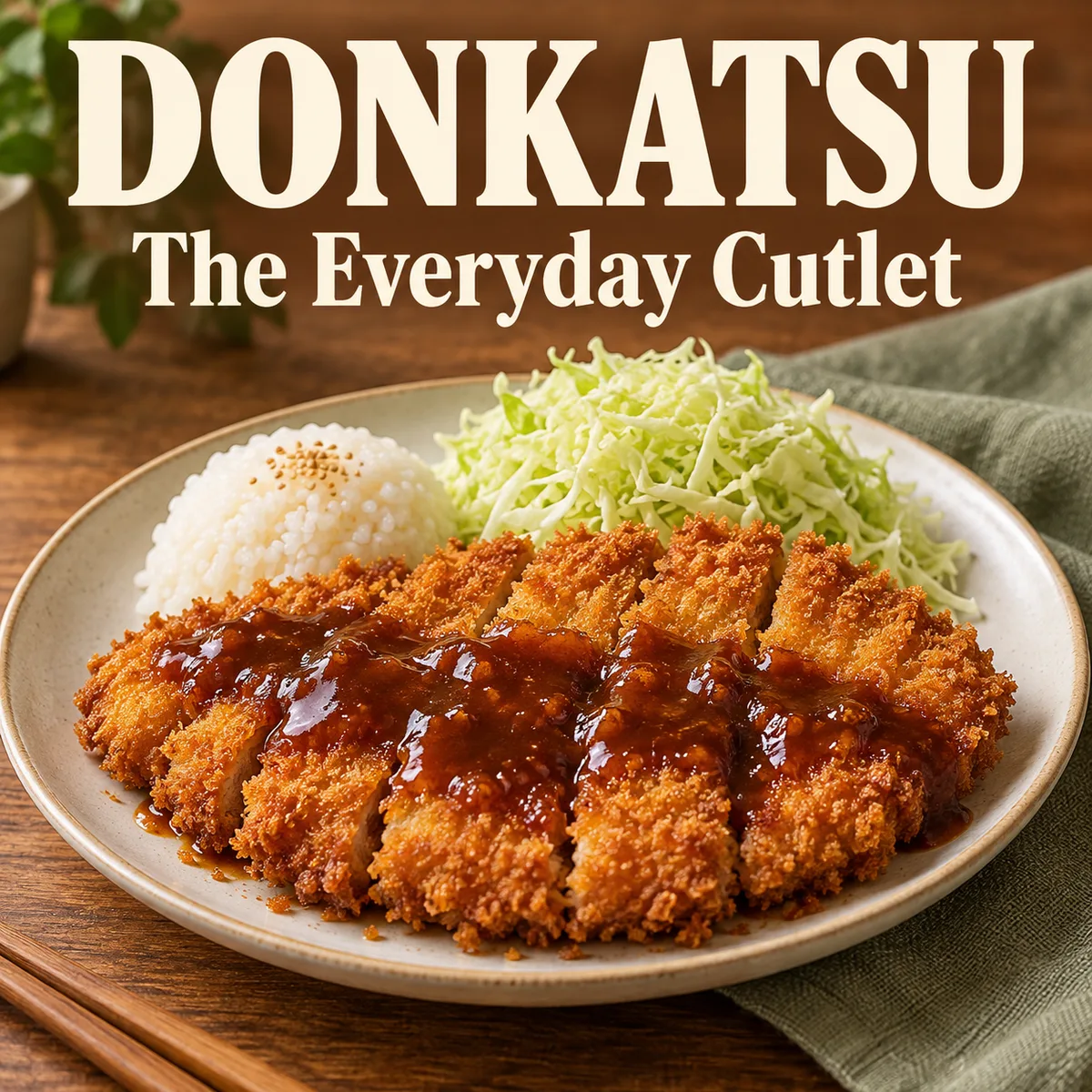
A breaded pork cutlet is an ordinary lunch with an unusually useful story. Donkatsu belongs to modern Korean everyday eating, including group catering; it also lets us explore the routines behind celebrity military-service headlines without pretending to know what an actor ate.
Song Kang’s service did not end in 2026. Sports Chosun reported his Army discharge on October 1, 2025, following his April 2024 enlistment. Read the headline’s “just ended” against that date: he is an actor, and his particular timeline is not a timetable for every K-pop singer.[1]
Why service creates a break in an entertainment career
The Military Manpower Administration explains that male citizens of the Republic of Korea have military obligations under the Constitution and Military Service Act. Its guidance also identifies statutory provisions for changed classifications and exemption. A celebrity’s popularity does not tell a reader his individual classification.[2]
For enlisted personnel, the agency’s current FAQ gives eighteen months for the Army and Marine Corps, twenty for the Navy and twenty-one for the Air Force. These are branch-specific enlisted periods, not a universal absence covering every form of service or every person.[3]
An entertainment career has its own schedule too. Enlistment, discharge, a new casting announcement and a program’s release are different events. Finishing service does not itself identify the date of a first new performance, nor does a release prove when every scene was filmed.
This is where a food story needs a careful boundary. A familiar dish can explain everyday eating in Korea; it cannot reconstruct Song Kang’s barracks menu. The cutlet below is a contemporary food example, rather than a report of his lunch.

A cutlet that became part of ordinary Korean lunch
Donkatsu means a breaded, fried pork cutlet. The Encyclopedia of Korean Culture traces its name through the character for pork and the shortened Japanese pronunciation of cutlet. It describes a dish adapted through Japan and subsequently established in Korean eating.[4]
The entry contrasts thicker Japanese-style pork with coarse breadcrumbs and Korean gyeongyangsik cutlets made by pounding the meat thin. It also identifies frozen products, bunsik restaurants and group catering as part of the food’s modern Korean setting.[4]
Those descriptions help explain why one menu word can lead to different lunches. A broad, thin cutlet and a thick cutlet cut into strips offer different proportions of crust and meat. Neither needs to be treated as an unsuccessful version of the other.
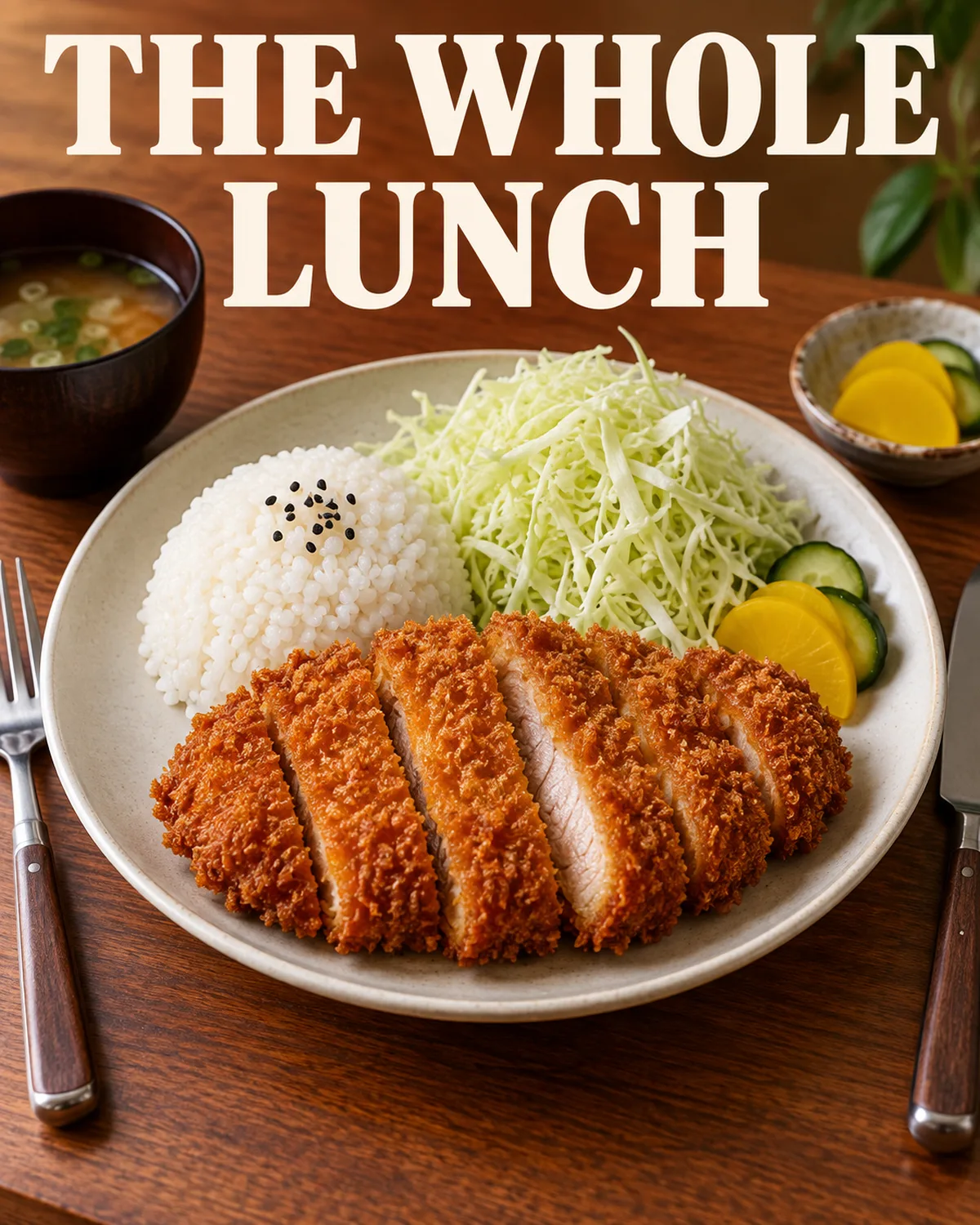
Look first at the cut edge. A thin piece puts more coating into a small mouthful; a thick piece makes the pork interior more prominent. The visible cross-section is a better guide to that distinction than the apparent size of the plate.

Sauce changes the timing of the crust
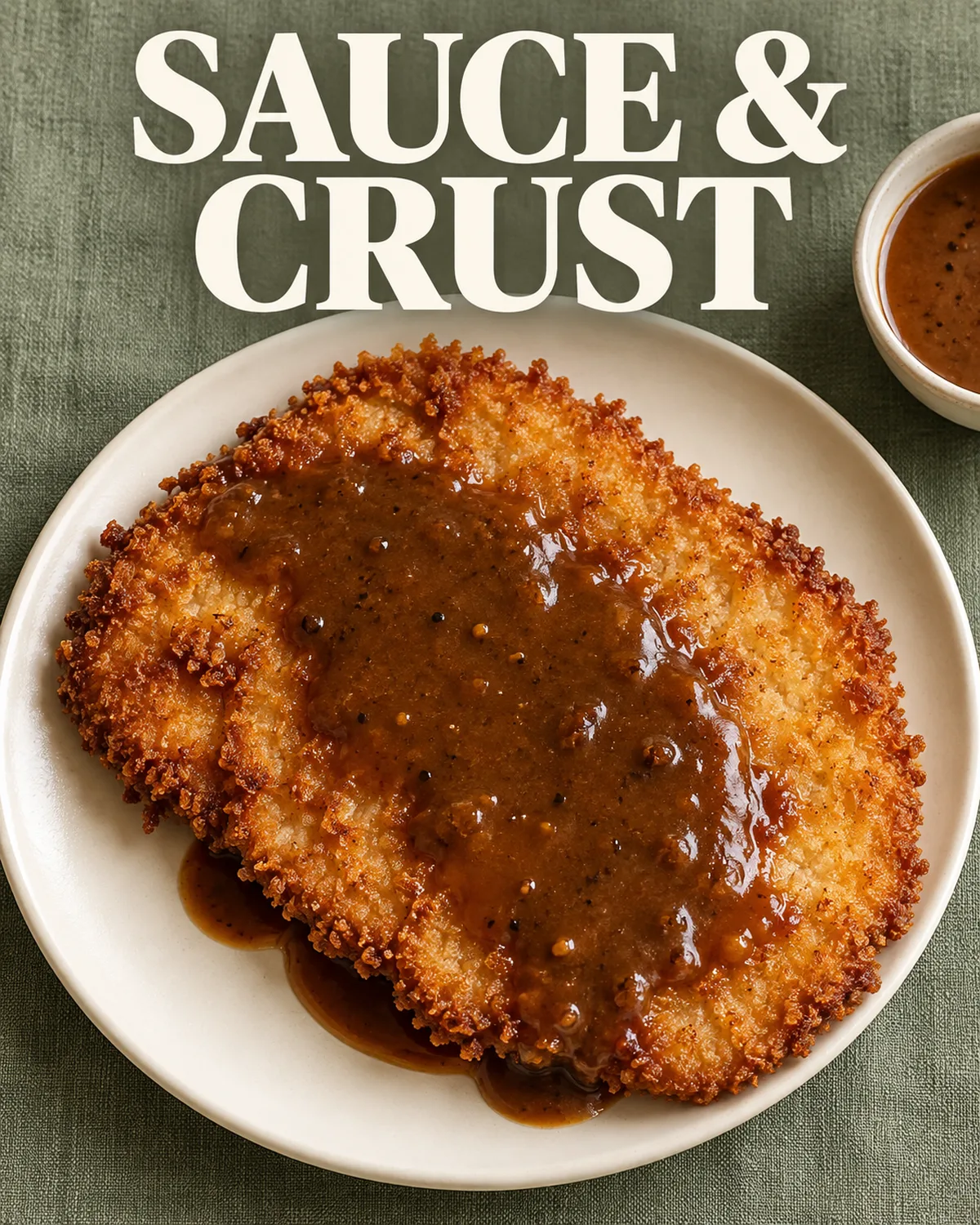
A sauce poured across a cutlet starts interacting with its coating before the first bite. A separate bowl lets the diner decide when to combine them. This changes the eating sequence even when the underlying pork and breading are similar.
On a sauced plate, compare a piece from the covered center with one from an exposed edge. The center can bring meat, softened coating and sauce together; the edge may retain a more distinct crust. That contrast is part of the serving rather than a contest with one correct winner.
With sauce on the side, the contrast can be made within a single piece. Touch one corner to the sauce and leave another uncovered. Notice how the sauce’s moisture and aroma change the coating, rather than assuming that more sauce always produces more flavor.
There is no need to identify a secret recipe to understand this difference. A restaurant may use its own sauce, a prepared product or a changing formulation. Describe the serving you receive instead of attributing every brown sauce to one universal Korean formula.
Read the whole plate, not only the pork
Rice, shredded cabbage, a pickle or another accompaniment can change the rhythm of a cutlet lunch. They are possible parts of a contemporary serving, not a compulsory national arrangement. A menu description or the actual plate tells you which ones are included.
A mouthful of plain rice separates one strongly flavored cutlet bite from the next. Cabbage brings another texture. A pickle gives a short, sharper interruption. Each does a different job, so a crowded plate is easier to understand when you taste its parts separately.
Cutlery also follows the serving. An intact cutlet may invite a knife and fork; a sliced one can be picked up a piece at a time. Choose the practical method available to you instead of treating a utensil as a test of authenticity.
When comparing meals, include the accompaniments and serving size in the comparison. A large-looking cutlet alone does not tell you how substantial the complete lunch will feel. The thickness of the meat, rice portion and vegetables all contribute to that impression.
Everyday food has a history beyond one celebrity
The encyclopedia cites a 1924 Korean cookbook’s Western-style beef cutlet, a 1951 restaurant-menu reference to donkatsu and later mid-century examples. These document an evolving cutlet vocabulary; the beef recipe is not evidence that today’s pork dish began on one exact day.[4]
That history makes the food more interesting than a military-menu anecdote. A dish can move through restaurant cooking, home meals, packaged products and larger-scale catering while retaining a recognizable form. Each setting can change what the diner encounters.
For a meal made in quantity, think about the interval between cooking and eating. A breaded coating is sensitive to contact with sauce and to the conditions in which it is held. That is a useful question to ask about a serving, without inventing the procedures of a particular military kitchen.
Frozen and freshly prepared versions need not be described with the same promises. The menu may tell you something about preparation, but a crisp-looking picture cannot establish a product’s ingredients or cooking method. Ask for the information that matters to your order.

Keep the service date and the food story clear
A dated discharge report answers the question about Song Kang. Official branch guidance explains why service can interrupt a public career. Neither source establishes a private favorite dish, a universal celebrity enlistment deadline or one menu shared by all service members.
Donkatsu offers a different, edible connection to everyday Korea: a borrowed cutlet form adapted into familiar lunches. Compare thickness, coating, sauce timing and the rest of the plate. Those details reveal more about the food than an unsupported claim that a star ate it.