Why Koreans Eat That

Category: Food Guides

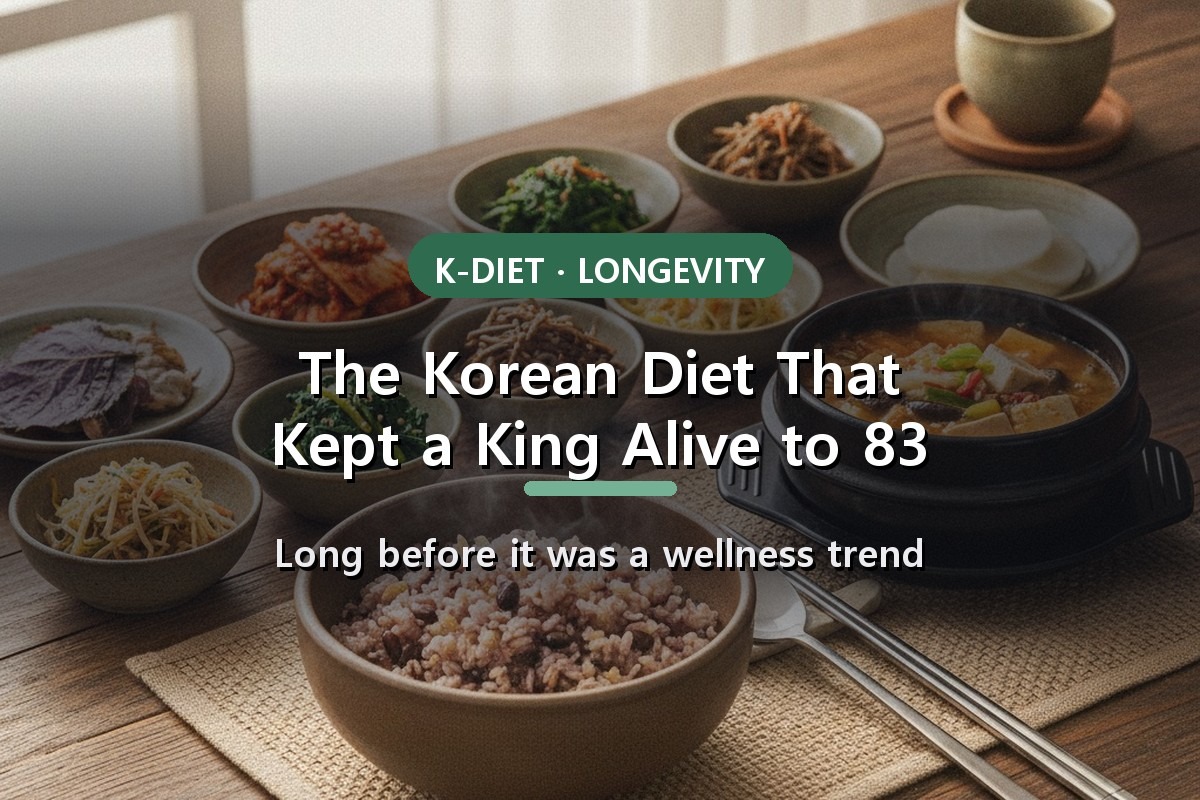
  • The Traditional Korean Diet That Kept a King Alive to 83 โ€” Long Before It Was a Wellness Trend

    The Traditional Korean Diet That Kept a King Alive to 83 โ€” Long Before It Was a Wellness Trend

    A traditional Korean diet meal of rice, soup, kimchi, and many vegetable side dishes (banchan) โ€” korean diet king

    The traditional Korean diet in one photo: a little rice, a lot of vegetables, and something fermented. Photo: Republic of Korea, CC BY-SA 2.0

    Every few months the internet rediscovers the Korean diet. K-pop idols make being slim look effortless, wellness accounts swear by kimchi and fermented soybean paste, and everyone wants to know how Koreans eat so much and stay so lean. The honest answer is boring and beautiful: the traditional Korean diet is mostly a bit of rice, a lot of vegetables, something fermented, and not much red meat. It’s one of the healthiest ways of eating in the world โ€” and researchers often point to it as one reason Koreans live so long.

    But here’s the part the wellness feeds skip. The most famous person ever to eat this way wasn’t an influencer. He was a king โ€” the longest-living king in five centuries of Korean royalty โ€” and he did it surrounded by the most lavish feast in the country, by choosing, meal after meal, to push it away. First, let’s answer what everyone actually searches for: what is this diet, and what do Koreans really eat?

    “He had the richest table in Korea. He ate like a monk on purpose.”

    What is the traditional Korean diet?
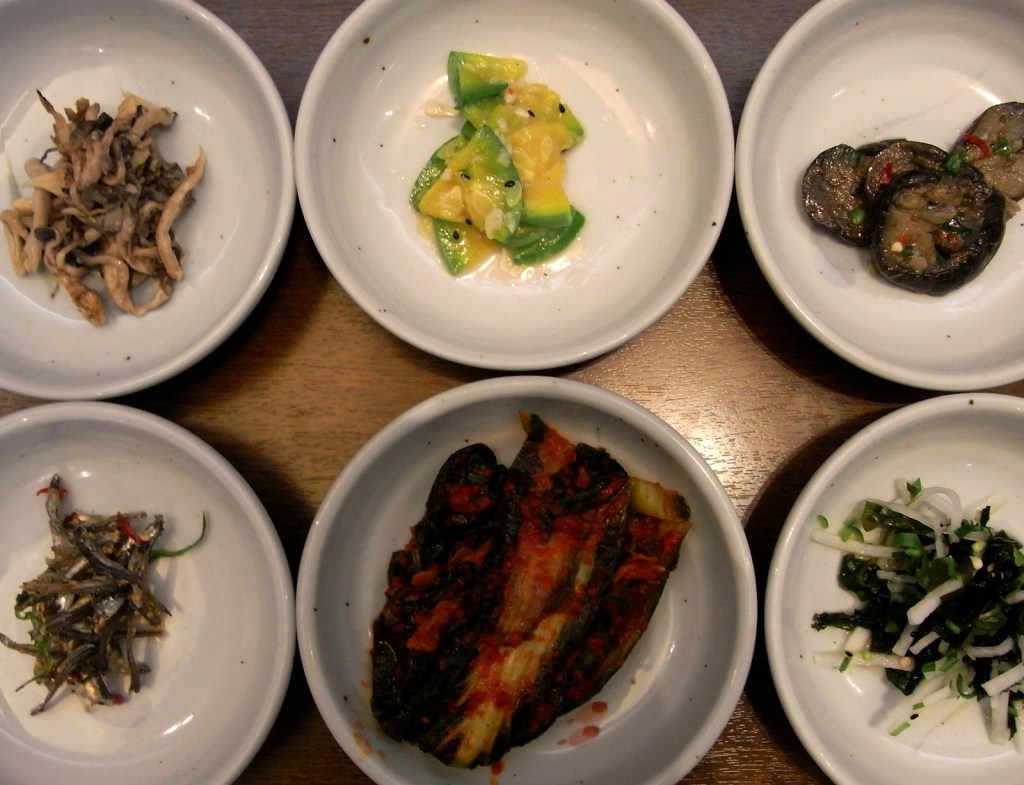
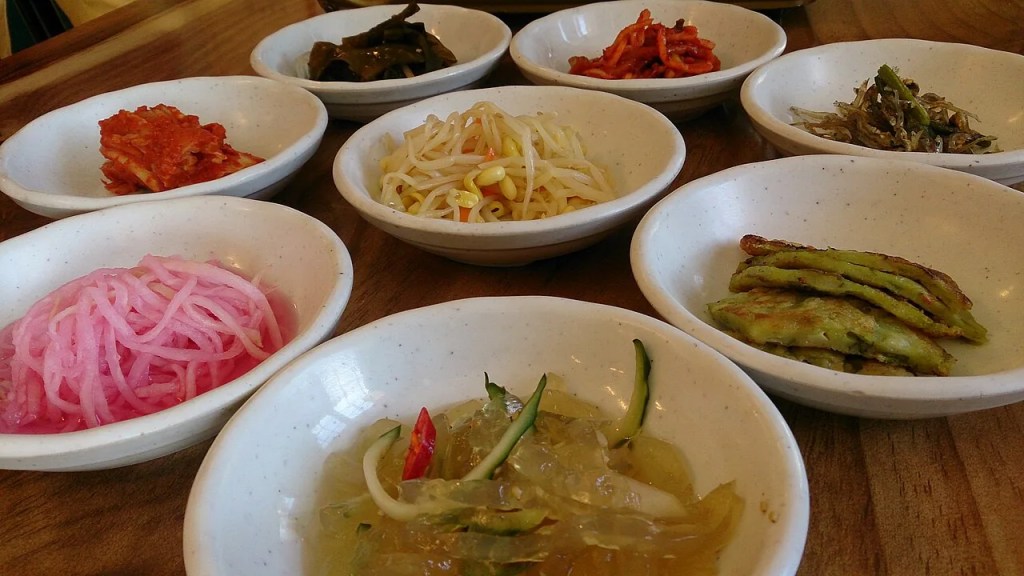
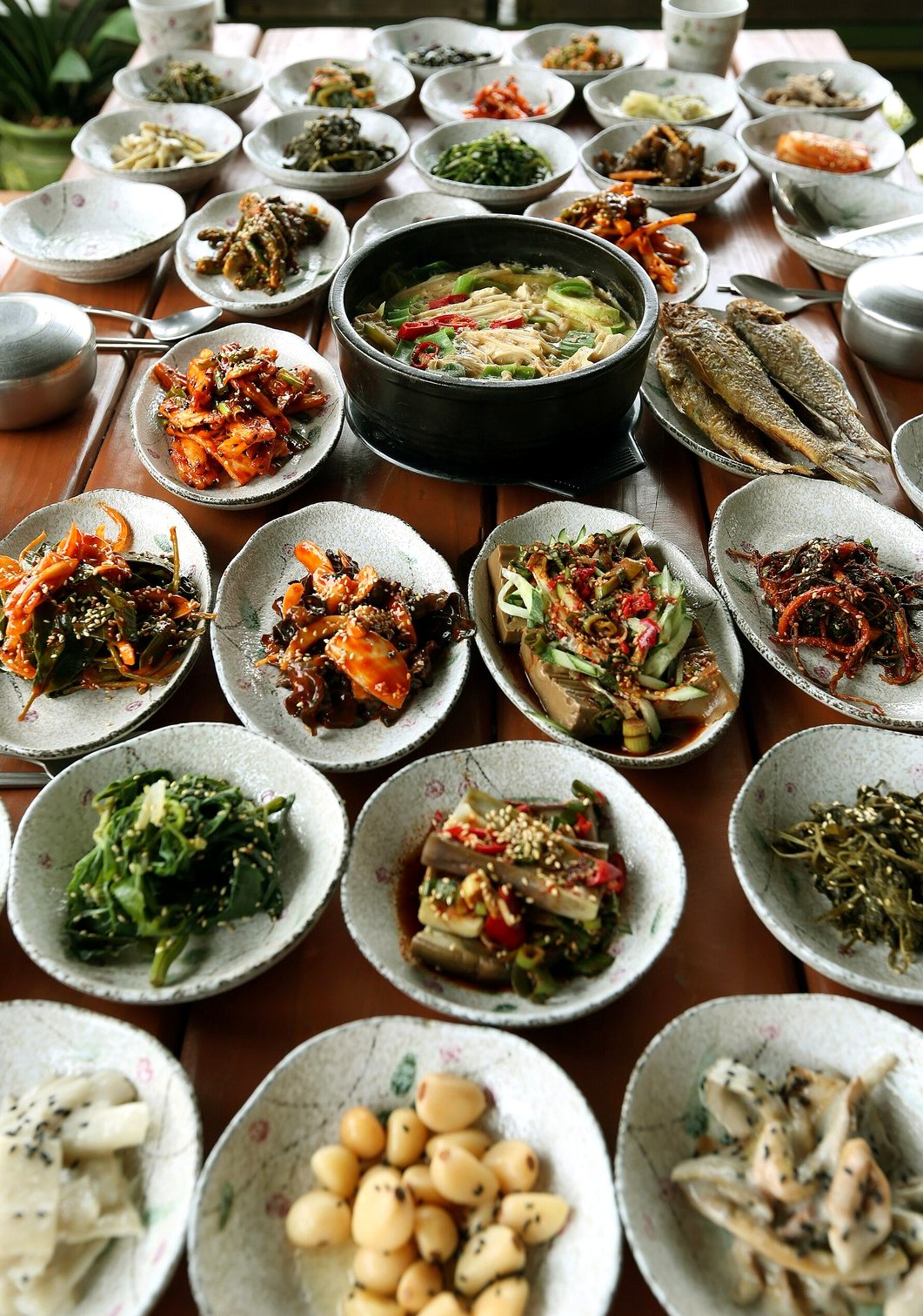
    An overhead spread of Korean banchan, small vegetable and fermented side dishes โ€” korean diet king

    Banchan โ€” the many small side dishes that turn every Korean meal into a spread of vegetables. Photo: Matt @ PEK, CC BY-SA 2.0

    A typical Korean meal follows a simple structure Koreans call bansang โ€” rice at the center, a soup or stew, and a spread of small side dishes called banchan (๋ฐ˜์ฐฌ). Those side dishes are the whole trick. Instead of one big plate, you get a bowl of rice, a light broth, and anywhere from three to a dozen little dishes of vegetables, greens, and fermented foods to share.

    So what do Koreans eat every day? Roughly this: whole or mixed grains instead of just white rice; a soup like doenjang jjigae; kimchi at nearly every meal; several vegetable side dishes (namul); and fish or legumes more often than red meat. It’s naturally high in fiber and vegetables and low in heavy, processed food โ€” which is exactly why “healthy Korean food” and “Korean diet for weight loss” have become such popular searches. And crucially, unlike many modern diets, the traditional Korean diet isn’t built around restriction. There’s no rule banning carbs or fat. The balance just happens: rice, soup, ferments, and a table full of vegetables add up to a meal that’s filling without being heavy.

    Why the whole world suddenly wants healthy Korean food
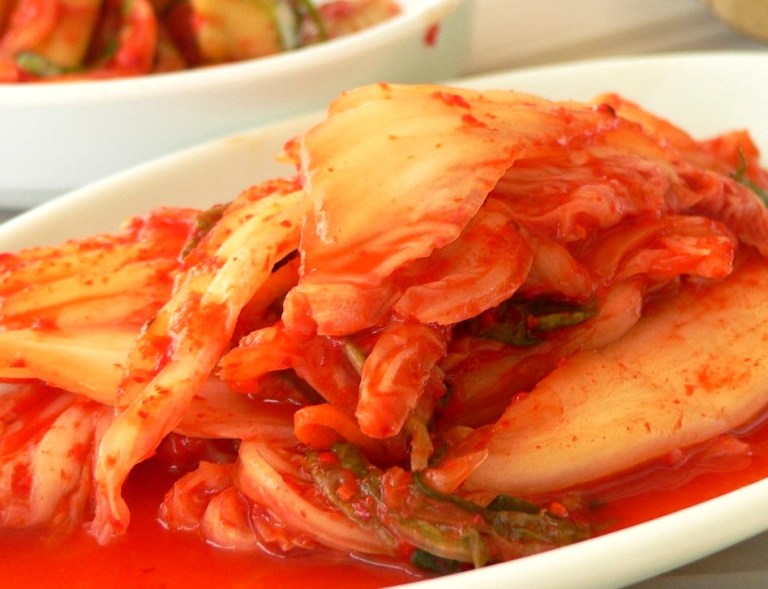
    Assorted Korean kimchi and fermented side dishes in bowls โ€” korean diet king

    Fermented foods โ€” kimchi, doenjang, gochujang โ€” are the diet’s not-so-secret weapon. Photo: Nagyman, CC BY-SA

    This isn’t just a trend hunch. A large 2017 study in The Lancet projected South Korea to reach one of the highest life expectancies in the world by 2030, and the country already sits near the top for healthy years lived. Longevity has many causes โ€” healthcare, income, and lifestyle all matter โ€” but researchers keep pointing at the same suspects on the Korean table: vegetables, and fermentation.

    The star is namul (๋‚˜๋ฌผ) โ€” vegetables and wild greens quickly parboiled, then seasoned with sesame oil, garlic, and soy. Blanching them, it turns out, can strip away harsh or harmful compounds while keeping the good stuff, which is one reason Koreans eat an enormous variety of greens without it ever feeling like “eating your vegetables.” Then there’s the fermented backbone: kimchi, doenjang (fermented soybean paste), and gochujang, all rich in gut-friendly bacteria, some even generating vitamins as they age. Add moderate fish and legumes, keep red meat occasional, and you’ve basically described the traditional Korean plate. Today, nutrition experts would recognize many of these habits โ€” but they’re actually centuries old.

    The king who out-lived everyone by eating less

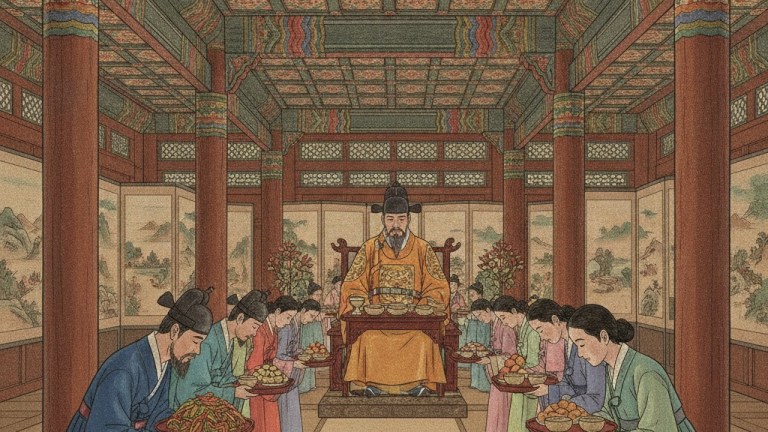
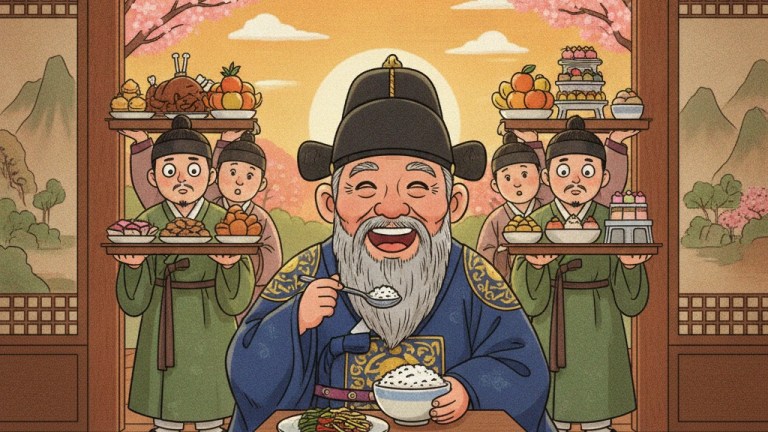
    King Yeongjo simple diet longevity โ€” Korean diet history playful illustration โ€” korean diet king

    King Yeongjo waving away the lavish trays โ€” small table, long life (playful illustration).
    Portrait of King Yeongjo of Joseon in royal robes โ€” korean diet king

    King Yeongjo โ€” the longest-reigning, longest-living Joseon king, and an accidental diet icon. Photo: Chae Yong-sin / Jo Seokjin (public domain)

    Meet King Yeongjo, who ruled Joseon Korea for 52 years and lived to 83. That number needs context: in an era when reaching old age was rare, living to 83 was almost science fiction โ€” the rough equivalent of passing 100 today. And he did it from the one seat in Korea with unlimited access to rich food.

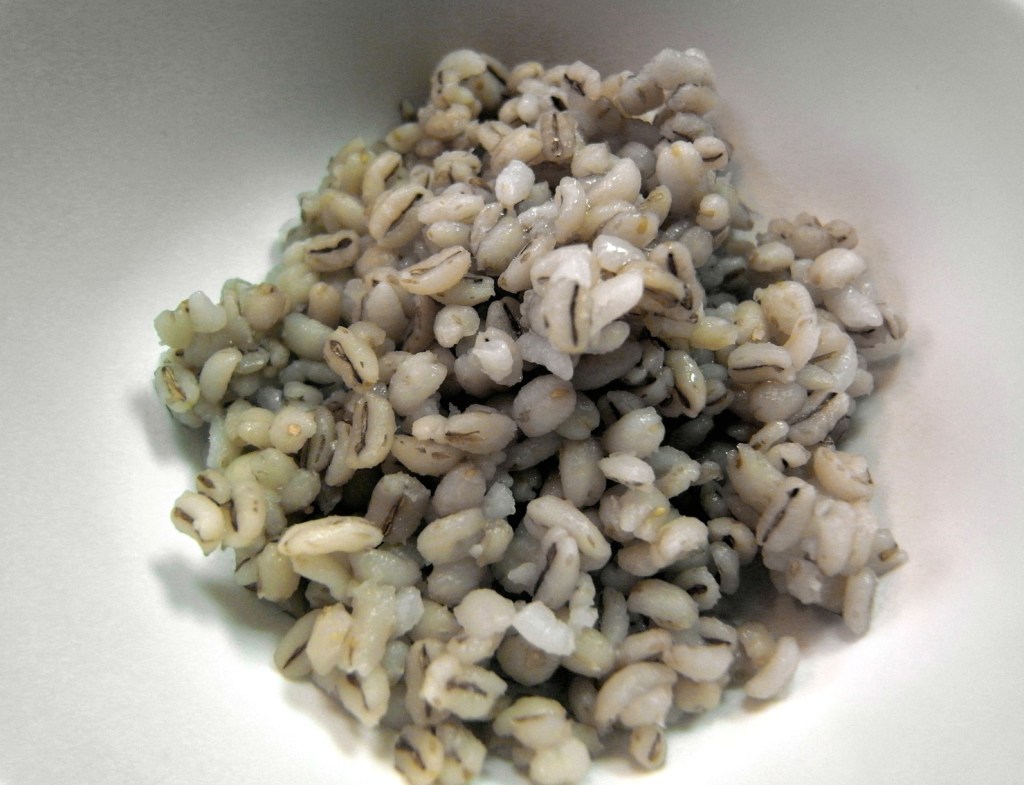
    You already know Korean kings ate like kings โ€” five elaborate meals a day, meat at the center. Here’s what nobody mentions: Yeongjo refused almost all of it. Where other kings took five meals, he took three. His portions were so small that the royal cooks reportedly worried he wasn’t eating enough. He leaned toward seasonal vegetables and namul, plain broths, and restraint โ€” he even preferred humble millet and barley to the polished white rice reserved for royalty. A frail young prince turned himself into the longest-living king in the dynasty, on purpose, one modest meal at a time. It’s a strange kind of willpower to picture: the one man in the country who could have anything, choosing barley over rice at every single meal for decades.

    What was actually on the longevity king’s table

    A bowl of Korean mixed grains and barley rice with vegetables โ€” korean diet king

    Barley and mixed grains over polished white rice โ€” Yeongjo’s quiet preference. Photo: Dalgial, CC BY-SA 3.0

    Strip Yeongjo’s habits down and they look strikingly like the advice a modern longevity doctor would give you: eat mostly plants, keep portions small, favor whole grains over refined ones, and don’t stuff yourself. He wasn’t counting macros โ€” he was practicing restraint as a discipline. In old age he also leaned on ginseng as a restorative tonic, reportedly working through a remarkable amount of it in his later years, in a very Korean marriage of food and medicine.

    The lesson isn’t that vegetables are magic. It’s that the healthy Korean diet everyone’s chasing today isn’t a hack invented for Instagram. It’s a way of eating that a weak prince used to outlast every strong king around him โ€” a table built on greens, grains, and knowing when to stop.

    What actually makes the Korean diet healthy
    A bowl of doenjang jjigae, Korean fermented soybean paste stew, with vegetables โ€” korean diet king

    Doenjang, fermented soybean paste, turns humble vegetables into deeply savory, gut-friendly meals. Photo: Suohros (public domain)

    If you want to actually eat this way, here’s what the traditional Korean plate is built on:

    • Namul (๋‚˜๋ฌผ) โ€” parboiled, seasoned vegetables and wild greens, eaten in huge variety. The real engine of the diet.
    • Fermented foods โ€” kimchi, doenjang, gochujang. Gut-friendly bacteria, big flavor, near-zero effort once made.
    • Whole grains โ€” barley and millet mixed into rice, more fiber and slower energy than polished white rice alone.
    • Fish and legumes over red meat โ€” protein without the heavy saturated fat, most days of the week.
    • Small rice, many sides (the bansang layout) โ€” the shape of the meal itself nudges you toward vegetables and away from overeating.

    3 easy ways to bring the Korean table home
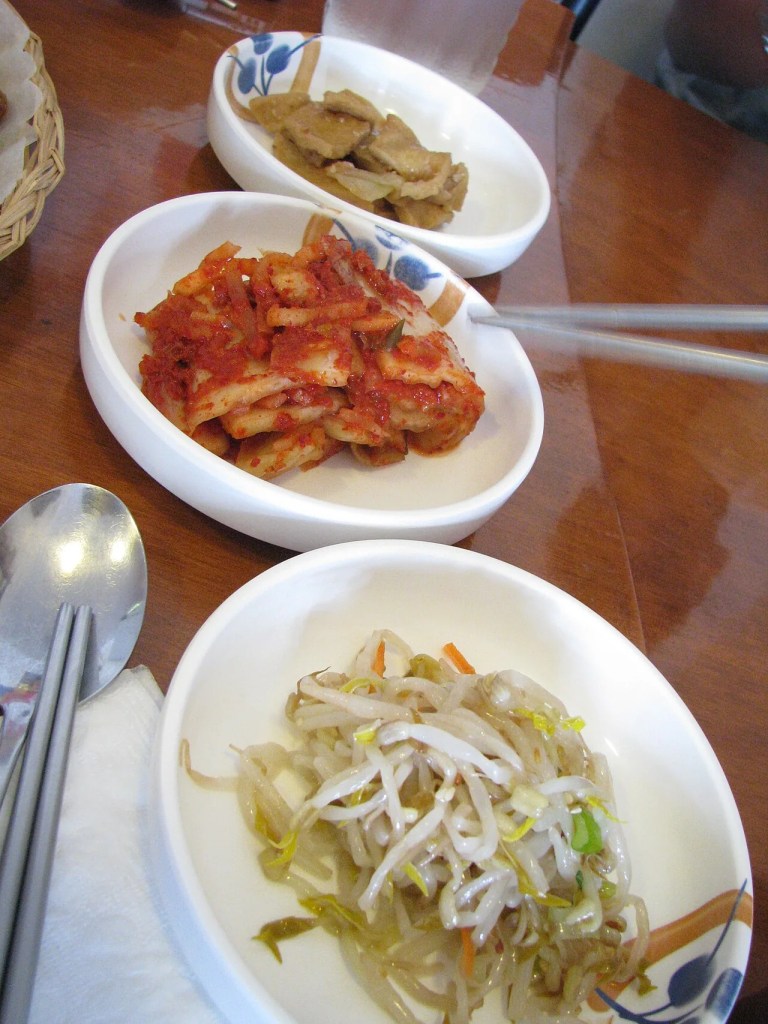
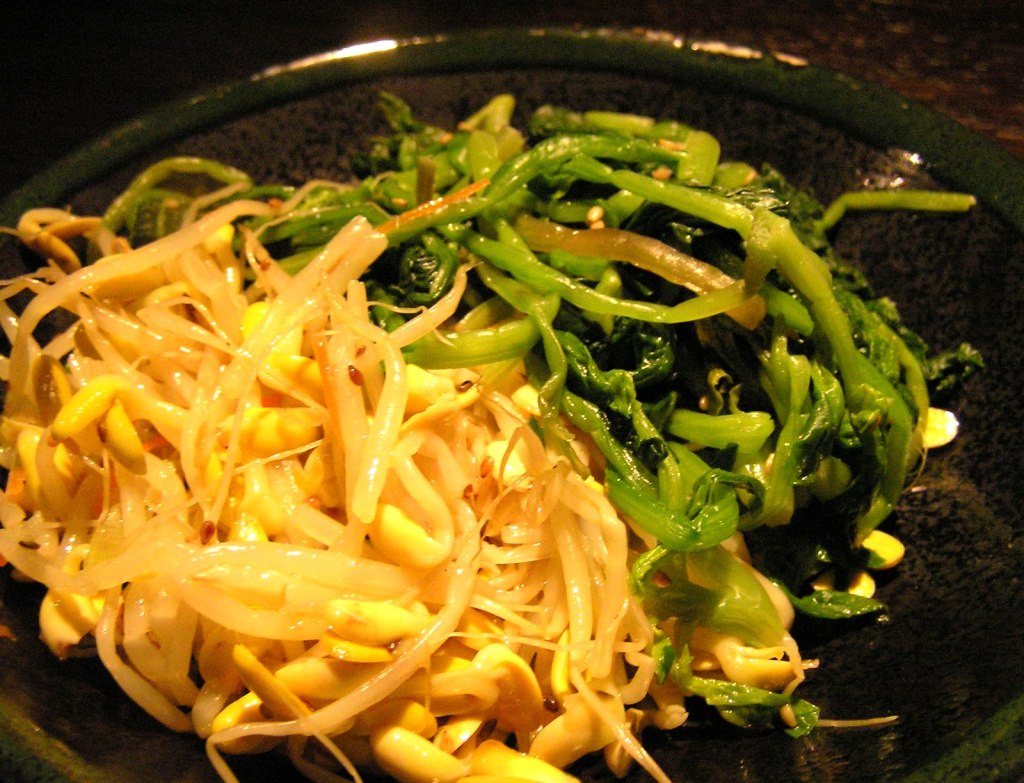
    Korean namul, seasoned bean sprouts and spinach vegetable side dishes โ€” korean diet king

    Namul โ€” quickly blanched, lightly seasoned greens and sprouts. The easiest Korean habit to steal. Photo: Laurel Fan, CC BY-SA 2.0

    You don’t need a Korean grandmother or a pantry of special ingredients to eat a little more like this. Three simple habits get you most of the way:

    • Make an instant namul. Take spinach, kale, or bean sprouts, blanch them for a minute, drain, and toss with a splash of sesame oil, a little minced garlic, and soy sauce. That’s a real vegetable side dish in five minutes.
    • Keep a ferment in the fridge. A jar of good kimchi or a tub of doenjang adds instant gut-friendly bacteria and deep, savory umami to almost anything. When buying kimchi, check the label for a short, natural ingredient list (cabbage, chili, garlic, fish sauce) and few additives.
    • Flip the plate ratio. Let vegetables and a light soup be the main event, with rice playing the supporting role instead of the star. That single switch is the quiet logic behind the whole Korean table.

    Questions people ask about the Korean diet

    What is the Korean diet? It’s a traditional way of eating built on rice, soup, kimchi and other fermented foods, and lots of vegetable side dishes (banchan), with fish and legumes more often than red meat. It’s naturally high in fiber and vegetables and low in heavy, processed food.

    What do Koreans eat every day? A typical Korean meal is rice, a soup or stew (like doenjang jjigae), kimchi, and a few small vegetable side dishes โ€” the bansang structure. Whole grains often replace plain white rice.

    Is the Korean diet good for weight loss? The traditional version tends to be, because its structure does the work: a little rice, a bowl of soup, and a spread of low-calorie, high-fiber vegetables means you eat until satisfied without overloading. (Modern fried and processed Korean foods are a different story.)

    What are banchan? Banchan (๋ฐ˜์ฐฌ) are the small shared side dishes served with almost every Korean meal โ€” seasoned vegetables (namul), kimchi, pickles, and more. They’re what makes a Korean table mostly vegetables by volume.

    Is Korean food healthy? Traditional Korean food โ€” vegetables, fermented foods, fish, legumes, and modest red meat โ€” lines up closely with what research links to long, healthy lives, and Korea is projected to reach one of the world’s highest life expectancies. As always, deep-fried and heavily processed dishes are the exception.

    Did a Korean king really live to 83 on a simple diet? King Yeongjo did live to 83 and is remembered for eating modestly โ€” three small meals, plenty of vegetables, and whole grains โ€” despite having access to the richest food in the kingdom. Historians credit his careful health management, diet included.

    Where to start eating the Korean way

    The next time a wellness account sells you the “Korean diet” as a new discovery, remember the frail prince who quietly out-lived every king around him by pushing the feast away. The whole system is right there on any ordinary Korean table โ€” you just have to load up on the little green plates.

    Want to taste the vegetable side of it? Start with a mountain-herb rice bowl in our gondeure namul bap guide, see how a rainbow of vegetables becomes one perfect bowl in Jeonju’s bibimbap, or wander the endless side-dish stalls of Gwangjang Market.

    Longevity projections from a 2017 study in The Lancet; the roles of namul and fermented foods drawn from published nutrition research and Korean culinary scholarship. Life expectancy has many contributing factors beyond diet. King Yeongjo’s reign length, lifespan, and modest eating habits are recorded in Korean historical sources; some details of his portions and ginseng use survive as court accounts and are noted as such.
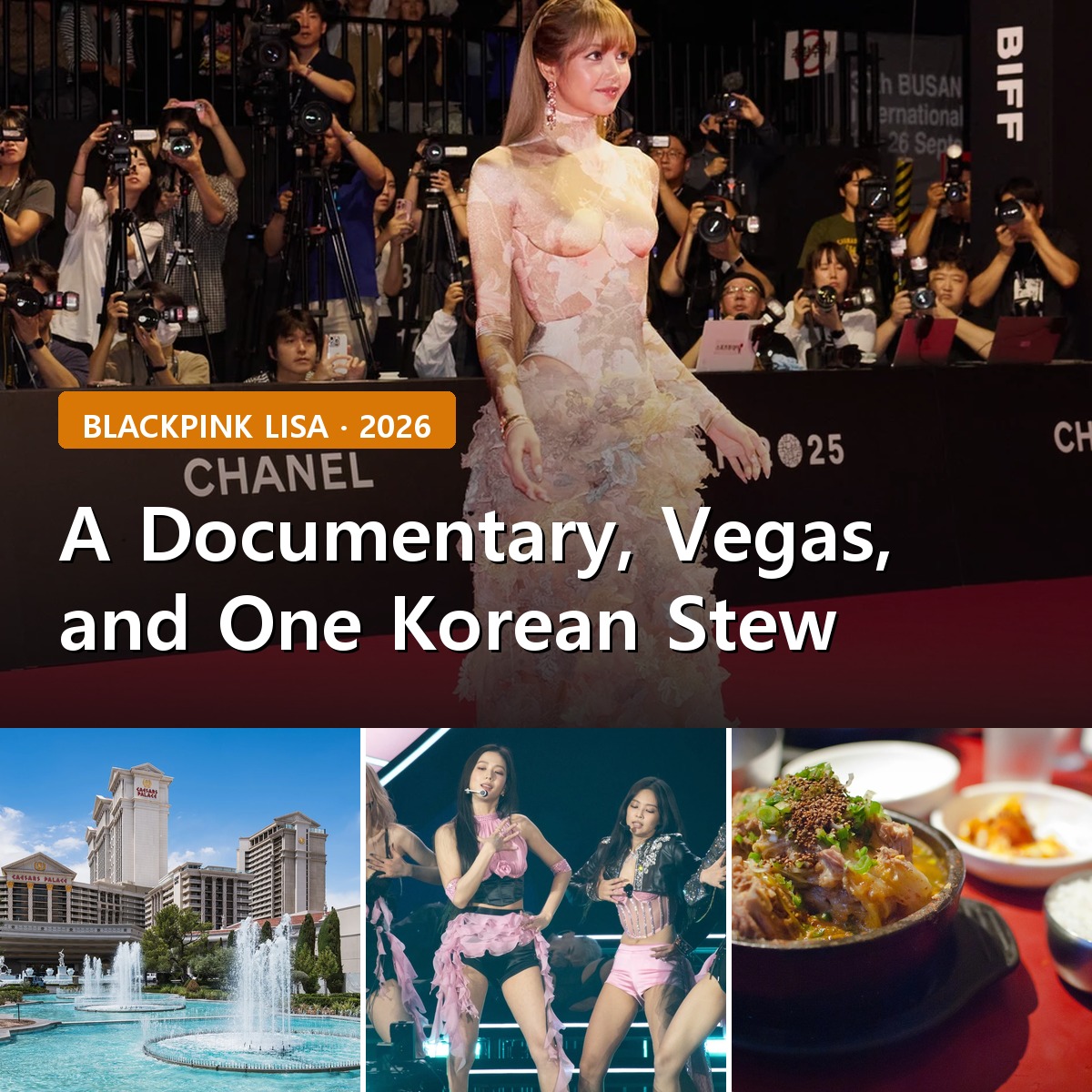

  • BLACKPINK’s Lisa Just Got a Documentary โ€” Here’s What’s Coming Next, and the Korean Stew She Fell For

    BLACKPINK’s Lisa Just Got a Documentary โ€” Here’s What’s Coming Next, and the Korean Stew She Fell For

    BLACKPINK's Lisa on the red carpet at a film festival, the year her documentary was announced โ€” blackpink lisa documentary

    A film festival red carpet, a year before a film festival premiere of her own. Photo: Outhere505, CC BY-SA 4.0

    On Monday, Sony Music Vision announced that BLACKPINK’s Lisa is getting a feature documentary. It’s called Always Lalisa, it premieres in the gala programme at the Toronto International Film Festival in September, and it follows the year she stepped away from BLACKPINK for the first time since she was a teenager.

    Two months after that, she opens a Las Vegas residency. First K-pop artist ever to do it. Tickets went in ten minutes.

    So here’s the short version: the next four months are the biggest stretch of BLACKPINK Lisa’s career so far, and both halves of it โ€” Toronto in September, Vegas in November โ€” were built during a year she spent, by her own management’s description, away from the group that made her famous. What’s strange is what that year was actually for. And that away from all of it, BLACKPINK Lisa keeps going back to one Korean dish that nobody would guess. We’ll get to that.

    “Four members. One of them spent this year proving she didn’t need the other three.”

    ‘Always Lalisa’: The Lisa Documentary Premiering at TIFF 2026

    BLACKPINK's Lisa facing a wall of photographers, the kind of attention her new documentary Always Lalisa captures โ€” blackpink lisa documentary

    The wall of lenses that follows her everywhere. Photo: Outhere505, CC BY-SA 4.0

    The BLACKPINK Lisa documentary announcement landed on 20 July. Always Lalisa, directed by Sue Kim, will have its world premiere at the 2026 Toronto International Film Festival, running 10โ€“20 September. It goes into the gala programme, which is the slot festivals reserve for films they expect people to line up for.

    The framing in the announcement is the part worth reading twice. The film follows Lisa through a year when, for the first time since childhood, she steps away from BLACKPINK for a stretch of independence. Not a hiatus. Not a break. A deliberate year of finding out what she is on her own.

    That’s an unusual thing for a K-pop documentary to admit out loud. The genre normally sells the opposite: the group as family, the members as one organism. This one is built around a member walking out of the frame to see what’s left.

    Viva La Lisa: Inside Her Historic Las Vegas Residency at Caesars Palace

    Caesars Palace and its fountains in Las Vegas, the venue for BLACKPINK Lisa's Viva La Lisa residency โ€” blackpink lisa documentary

    Caesars Palace. In November, the marquee reads VIVA LA LISA. Photo: Christian David, CC BY-SA 4.0

    In March, Caesars Entertainment announced VIVA LA LISA at The Colosseum at Caesars Palace โ€” four shows across two November weekends, on the 13th, 14th, 27th and 28th. It makes her the first K-pop artist to hold a Las Vegas residency.

    If you don’t follow Vegas, that word “residency” does a lot of work. The Colosseum is the room built for Celine Dion. Elton John played it. Adele. Rod Stewart. It is not a tour stop. It’s a stage a city hands to performers it considers permanent. Handing it to a performer from Buriram province in northeastern Thailand is not a normal booking.

    Tickets went on general sale on 23 April. They were gone in ten minutes.

    The Las Vegas Strip lit up at night, where the first K-pop residency by BLACKPINK's Lisa opens in November โ€” blackpink lisa documentary

    A street that has never had a K-pop name on a residency marquee before. Photo: Dietmar Rabich, CC BY-SA 4.0

    What BLACKPINK did in 2026 โ€” and then didn’t

    BLACKPINK members performing on stage, the group Lisa stepped away from for a year โ€” blackpink lisa documentary

    The four of them, back when the calendar belonged to the group. Photo: @aanglerrr (aang), CC BY

    To understand why the documentary exists, you have to look at what the group’s year looked like, because it stopped early.

    BLACKPINK’s Deadline World Tour was their first all-stadium run: 33 shows across Asia, Europe and North America, opening at Goyang Stadium outside Seoul and closing on 26 January at Kai Tak Stadium in Hong Kong. In February they released the EP DEADLINE. All four turned up at this year’s Met Gala together, which for a group that spends most of its time in four different countries counts as a reunion.

    And then the group calendar went quiet. No announced dates. Four solo careers running in four directions.

    BLACKPINK's Lisa, Jennie, Jisoo and Rosรฉ together at an awards show before their solo years โ€” blackpink lisa documentary

    Jisoo, Jennie, Lisa, Rosรฉ โ€” four members, now four separate schedules. Photo: Newsenstar1, CC BY

    The year Lisa spent on her own

    Here’s what she did with the quiet.

    BLACKPINK Lisa performed at the opening ceremony of the 2026 FIFA World Cup. She landed the cover of Vanity Fair‘s summer issue. She sat on the Met Gala host committee, the first K-pop artist ever invited onto it, which is a different thing from being invited to the party. And she has been working on the follow-up to Alter Ego, her debut solo album.

    Read that list again and notice what isn’t on it. Not one of those things is a K-pop event. None of them needed BLACKPINK at all.

    BLACKPINK's Lisa in 2026, the year she built a solo career outside the group โ€” blackpink lisa documentary

    The year she stopped being introduced as a member of something. Photo: Outhere505, CC BY-SA 4.0

    Which is what makes a September film festival and a November residency land the way they do. Neither is a K-pop milestone. They’re the milestones of a solo performer, and they arrive within eight weeks of each other, at the end of the exact year the documentary was filming.

    LISA โ€” ‘MONEY’ performance video. Official clip via BLACKPINK’s YouTube channel.

    Where the group still shows up

    BLACKPINK in concert with Lisa on stage, the group whose members now tour separately โ€” blackpink lisa documentary

    Four solo careers, one shared history. Photo: RAS 99, CC BY

    None of this reads as a breakup, and nobody involved has framed it as one. Jennie is headlining festivals across America and Europe this summer. Jisoo is leading a Netflix drama and has told fans a solo album is coming. Rosรฉ is at Saint Laurent’s table at the Met. They’re not drifting apart so much as running four separate races and meeting at the finish line for photos.

    But Lisa’s year is the one somebody pointed a camera at. And when a documentary crew follows a person for twelve months, it doesn’t only get the stadiums. It gets hotel rooms, airports, and what she eats at one in the morning when the day is finally over.

    BLACKPINK โ€” ‘Pink Venom’. Official M/V via BLACKPINK’s YouTube channel.

    What Is Gamjatang? The Korean Pork Bone Soup Lisa Loves

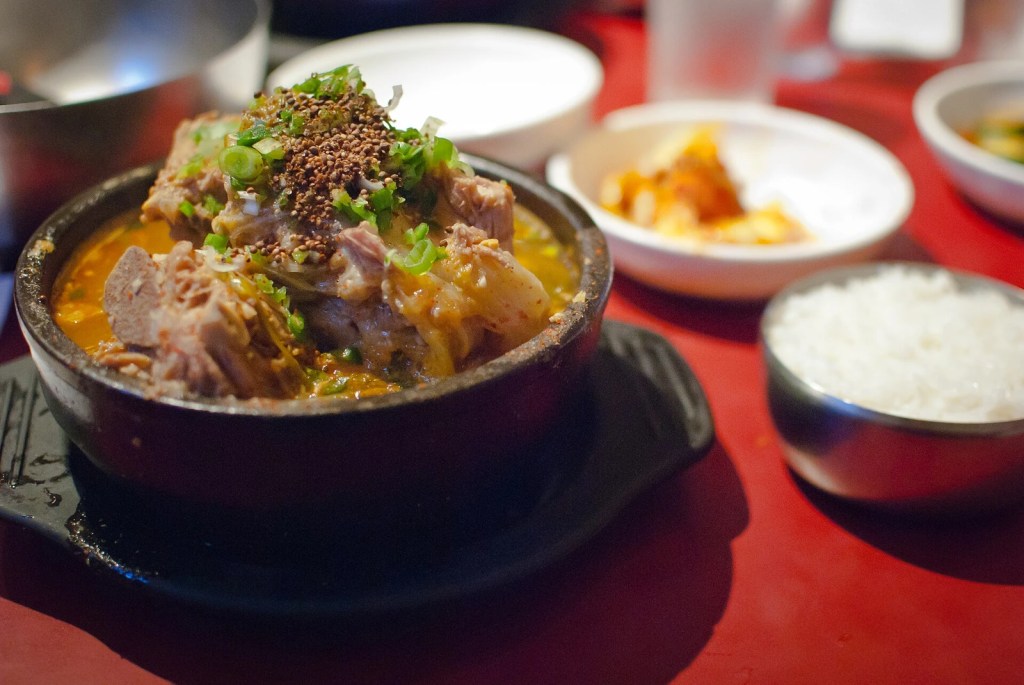
    Gamjatang, the Korean pork bone stew BLACKPINK's Lisa named as her favourite Korean food โ€” blackpink lisa documentary

    Gamjatang (๊ฐ์žํƒ•) โ€” pork spine simmered for hours, eaten with rice and a pile of side dishes. Photo: SteFou!, CC BY 2.0

    You’ve just read the version of Lisa that everyone knows: the Colosseum, the Toronto gala, the World Cup stage. Here’s the part that doesn’t fit any of it.

    Lisa moved to Seoul from Buriram, Thailand, as a teenager to train. Ask her what she eats and the answer isn’t Thai, and it isn’t the tour-bus salad you’d expect from someone whose job is a stage in Las Vegas.

    It’s gamjatang (๊ฐ์žํƒ•) โ€” pork spine boiled for hours with potatoes, perilla leaves and enough chilli to fog your glasses. She’s said she’d never come across it in Thailand and tried it for the first time in Korea, and that it was completely her style from that first bowl.

    Koreans hear that and smile a little, because gamjatang isn’t anybody’s elegant answer. It’s what you eat hunched over a metal pot at midnight, sleeves pushed up, picking meat off bone with your fingers because chopsticks are useless for the job. It’s a construction-site lunch and a 2 a.m. hangover cure, the same late-night register as jokbal, the braised pig trotters Koreans eat with their hands. Nobody puts either on a list of dishes to impress a visitor with. In November she walks onto a stage built for Celine Dion. Her comfort food is the one you eat off a bone, with your fingers, at midnight.

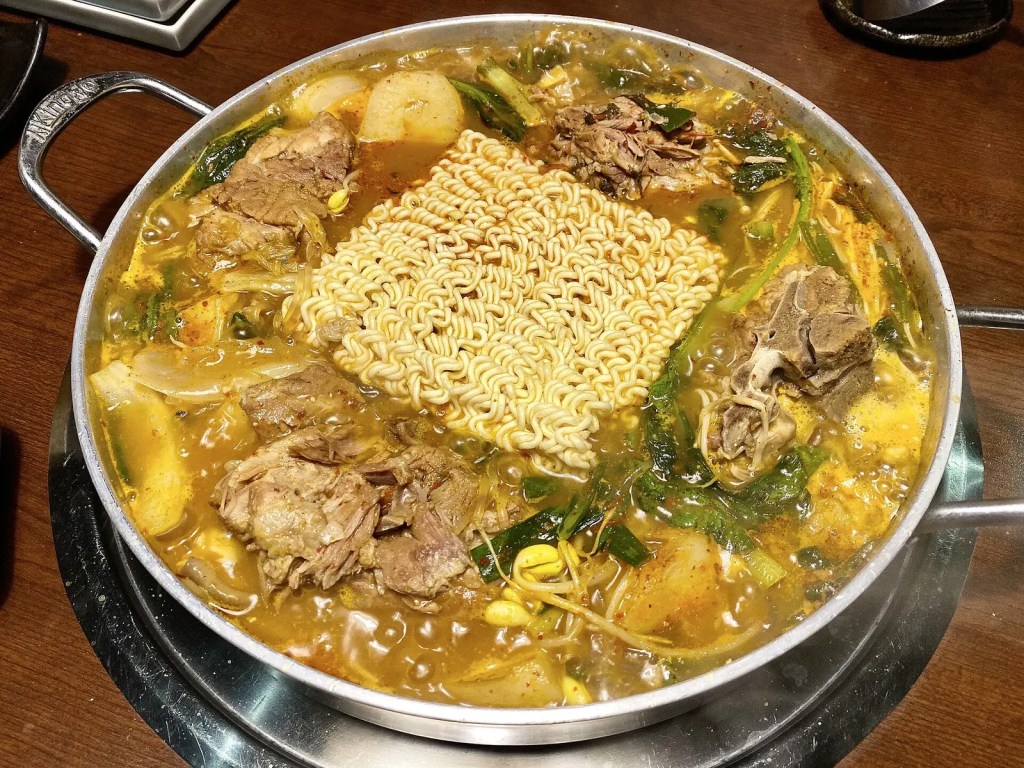
    Gamjatang served with instant ramyeon noodles added to the pot, a common way Koreans eat the stew โ€” blackpink lisa documentary

    When the meat’s gone, ramyeon goes in the broth. That’s the part regulars come for. Photo: bryan…, CC BY-SA 2.0

    Which is exactly why the answer says something. A teenager arrives from another country, doesn’t speak the language yet, and the dish she attaches herself to isn’t the polished one. It’s the one Koreans eat with their hands when they’re tired. You don’t pick that from a menu photo. Somebody has to take you.

    And there’s a limit, which is the part that surprises people most. Asked on a variety show what she won’t eat, she said eel. So the woman who went on Hot Ones and climbed the scoville ladder for Thai national pride draws her line at a slippery fish, while happily wrecking a pot of bones that most first-time visitors won’t go near. Everyone remembers the one who conquered the hot sauce. Nobody mentions the eel.

    Questions people keep asking about BLACKPINK Lisa

    Since the announcement, the same handful of questions keeps coming up about BLACKPINK Lisa in 2026. Here they are, short and straight.

    When does the BLACKPINK Lisa documentary come out?
    Always Lalisa, directed by Sue Kim, holds its world premiere in the gala programme at the Toronto International Film Festival (TIFF), running 10โ€“20 September 2026. A wider release hasn’t been announced yet.

    When is Lisa’s Las Vegas residency?
    VIVA LA LISA runs at The Colosseum at Caesars Palace on 13, 14, 27 and 28 November 2026: four shows over two weekends. It’s the first Las Vegas residency by a K-pop artist.

    Has BLACKPINK broken up?
    No. The group renewed with YG for group activities, released DEADLINE in February and finished a 33-show stadium tour in January. There are simply no announced group dates right now while all four run solo schedules.

    What is BLACKPINK Lisa’s favourite Korean food?
    Lisa’s favourite Korean food is gamjatang (๊ฐ์žํƒ•), a pork bone stew simmered for hours with potatoes, perilla leaves and chilli. She has said she never came across it in Thailand and took to it immediately after moving to Korea. She’s also said she doesn’t eat eel.

    Is BLACKPINK Lisa Korean?
    No. She’s Thai, born in Buriram province, and moved to Seoul as a teenager to train. She’s the only non-Korean member of BLACKPINK.

    If you’re going to eat like her

    There’s a pattern here worth noticing. Ask almost any Korean star what they actually eat and you get the same kind of answer Lisa gives: not the diet-plan version, but the pot-on-the-table version. We went through it member by member with what BTS actually eats when the cameras stop, and the list reads like a normal Korean week.

    If your entry point to Korea was a screen rather than a menu, the other direction works too. Try the dalgona candy from Squid Game has a backstory the show never bothered to explain. And when you want the whole map rather than one dish, start with our guide to what to eat in Korea.

    September in Toronto, November in Las Vegas. Somewhere between the two there’ll be a night that ends late, and if the documentary crew is still rolling, there’s a decent chance it ends over a pot of bones.

    And if a hot Korean stew in the summer heat sounds like her kind of thing, wait until you meet samgyetang โ€” the boiling ginseng chicken soup Koreans line up for on the hottest days of the year, on purpose.

  • BTS Favorite Food: What BTS Actually Eats in Real Life

    BTS Favorite Food: What BTS Actually Eats in Real Life

    BTS group photo, all seven members, whose favorite Korean foods fans track closely โ€” bts favorite korean

    Seven members, seven very specific food orders. Photo: Dispatch, CC BY 3.0

    The internet has convinced millions of people that K-pop idols survive on chicken breast, sweet potato, and pure determination. Then Jungkook orders grilled pork belly. Jin starts daydreaming about cold noodles. V puts on an apron and cooks glass noodles on live TV. The fantasy falls apart fast โ€” because the people famous for impossible diets keep craving exactly what everyone else in Korea eats.

    So here’s the honest answer to the BTS favorite food question: it’s not a diet plan. It’s Korean comfort food, the everyday kind โ€” grilled meat, bubbling stews, cold noodles in summer, fried chicken at 2 a.m. There is no lettuce sadness here. Anyone hoping for a strict diet plan is going to be disappointed, and in the best way. Below, all seven members, and what they actually reach for.

    “Foreign fans see a feast. Koreans just see dinner.”

    BTS members and their favorite foods

    BTS performing on stage in white suits at KCON, the group whose members each have a favorite Korean dish โ€” bts favorite korean

    On stage, the tightest act in pop. Off it, they argue about pork belly like everyone else. Photo: Korea.net, CC BY-SA 2.0

    Here’s the quick BTS favorite food cheat sheet โ€” the dishes each member has talked about over the years:

    • Jungkook โ€” samgyeopsal (์‚ผ๊ฒน์‚ด, grilled pork belly) and kimchi jjigae (๊น€์น˜์ฐŒ๊ฐœ, kimchi stew)
    • Jin โ€” naengmyeon (๋ƒ‰๋ฉด, cold noodles), especially in summer
    • V (Taehyung) โ€” japchae (์žก์ฑ„, glass noodles) โ€” he’s even cooked it on TV
    • J-Hope โ€” kimchi fried rice (๊น€์น˜๋ณถ์Œ๋ฐฅ), and kimchi (๊น€์น˜) in general
    • Jimin โ€” kimchi jjigae (๊น€์น˜์ฐŒ๊ฐœ)
    • RM โ€” famously easy to please; happy with almost anything good
    • Suga โ€” has never hidden his love of meat (๊ณ ๊ธฐ)

    Don’t just take our word for it. Here are the members in full mukbang mode, on their own official channel:

    Jungkook: the samgyeopsal ambassador

    Golden grilled samgyeopsal, juicy Korean pork belly slices on a plate โ€” bts favorite korean

    Samgyeopsal โ€” Jungkook’s not-so-secret weakness. Grilled golden, crisp at the edges. Photo: jinsoo jang (CC0)

    Jungkook has probably done more to promote samgyeopsal than the Korean tourism board. Fans have watched him happily demolish plate after plate of grilled pork belly, talk about it on livestreams, and rank it at the top more times than anyone can count. If you had to bet on one member’s comfort food, this is the safe money. He’s also named kimchi jjigae โ€” a hearty stew of aged kimchi, pork, and tofu โ€” as a go-to. Between the two, you’ve got his perfect night in: something sizzling, something spicy.

    Jin, and BTS when the cameras stop

    BTS in suits at the White House, looking like seven regular guys between meals โ€” bts favorite korean

    Off duty, they’re seven guys who get hungry like anyone else. Photo: The White House (public domain)

    Jin’s answer changes with the weather. When Seoul’s humidity turns cruel, he reaches for naengmyeon โ€” chewy buckwheat noodles in a chilled, tangy broth, the dish Koreans live on all summer. It’s the exact opposite of “idol salad.” He’s also an open, unapologetic kimchi lover. And that’s the thing about all of them: strip away the stage, and BTS eat like any other Korean twenty- and thirty-somethings โ€” big shared meals, late-night cravings, comfort food from home.

    V: the member who actually cooks

    Japchae, Korean glass noodles stir-fried with colorful vegetables โ€” bts favorite korean

    Japchae: sweet-savoryglass noodles โ€” V plated these for real customers on TV. Photo: Korea.net, CC BY-SA 2.0

    Most idols talk about food. V (Taehyung) got handed an apron. On the tvN variety show Jinny’s Kitchen (2023) โ€” set in a tiny Korean restaurant abroad, with Lee Seo-jin running the kitchen and Park Seo-joon and Choi Woo-shik on staff โ€” V joined the crew as the youngest worker and spent whole episodes plating Korean dishes for real, paying customers. Japchae (์žก์ฑ„), the sweet-savory glass noodles tossed with sautรฉed vegetables, is exactly the kind of dish that show turned into an assembly line โ€” and it has its own royal-court backstory, which we unpack in our full japchae guide (์žก์ฑ„). Watching a member of the world’s biggest boy band professionally toss noodles is its own small joy.

    RM, Suga, Jimin & J-Hope: different plates, same table

    BTS performing at the American Music Awards, high-energy on a bright stage โ€” bts favorite korean

    The energy on stage; the appetite off it. Photo: Carolin von Petzholdt, CC BY 3.0

    The other four round it out. J-Hope has talked about loving kimchi fried rice โ€” the genius Korean move of turning leftover kimchi into a fast, satisfying plate. Jimin has mentioned kimchi jjigae more than once. RM is famously easy to feed; he’ll happily eat almost anything as long as it’s good. And Suga has never pretended to be anything other than a meat person. Different favorites, different moods โ€” but the table underneath keeps looking the same.

    The one table they all come home to

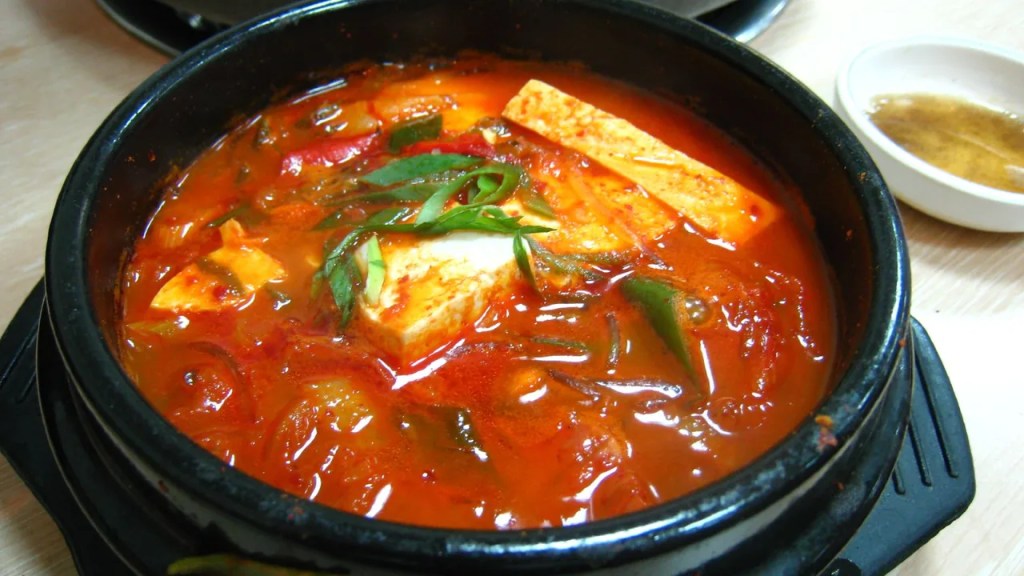
    Kimchi jjigae, a bubbling Korean kimchi stew, the dish two BTS members named as a favorite โ€” bts favorite korean

    Kimchi jjigae โ€” Jungkook’s and Jimin’s pick. Photo: miyagawa, CC BY-SA 2.0

    Line up the favorites and the main dish keeps changing โ€” pork belly, cold noodles, japchae, fried chicken โ€” but the supporting cast never does. Every one of those meals arrives with the same quiet crowd of little dishes: kimchi, seasoned greens, a pickle or two. Those are banchan (๋ฐ˜์ฐฌ), Korea’s free side dishes, and they’re the base layer under everything Koreans eat, idols included. That’s the real BTS favorite food story: not a diet, a dinner table.

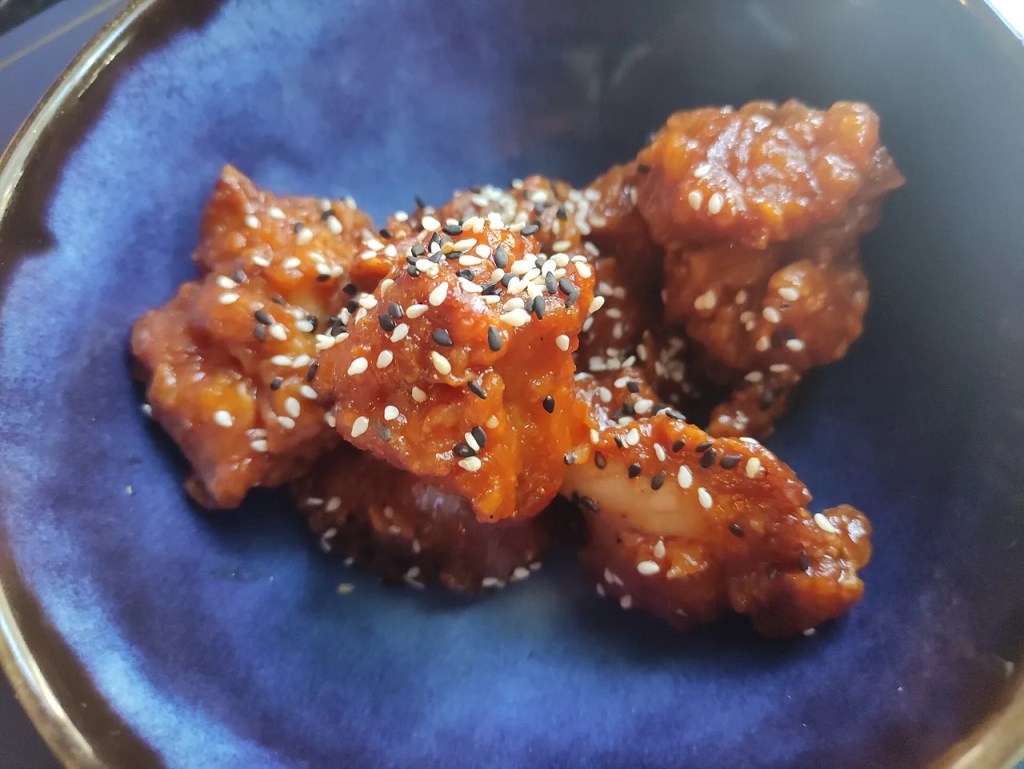
    Korean fried chicken glazed in glossy sweet-and-spicy yangnyeom sauce with sesame seeds โ€” bts favorite korean

    From their BBQ Chicken (๋น„๋น„ํ) ad days to Jungkook’s viral 60 Chicken (60๊ณ„์น˜ํ‚จ) live โ€” chicken follows BTS everywhere. Photo: Francesc Fort, CC BY-SA 4.0

    And the one order that unites all seven? Fried chicken (์น˜ํ‚จ) โ€” and with BTS, that’s practically official. For over two years the group were the faces of BBQ Chicken (๋น„๋น„ํ), one of Korea’s biggest chicken chains, filming commercials for it from 2016 to 2018. Chicken is basically on their rรฉsumรฉ.

    And it still follows them around. In early 2023, Jungkook casually ate fried chicken on a Weverse live โ€” the “ํฌํฌํฌ (LOL)” set from 60 Chicken (60๊ณ„์น˜ํ‚จ), with cheese and corn-mayo dip and a side of pickled radish (์น˜ํ‚จ๋ฌด). The clip went so viral that fans flew to Seoul just to order the exact same box. One idol, one late-night snack, and a chicken shop’s best-seller was reborn. Foreign fans see a feast. Koreans just see dinner โ€” with extra sauce.

    A few quick questions people always ask

    What is BTS’s actual favorite food? There’s no single group answer โ€” it splits by member. The most-cited BTS favorite food picks are Jungkook’s samgyeopsal and kimchi jjigae, Jin’s naengmyeon, V’s japchae, and J-Hope’s kimchi fried rice. Fried chicken is the group’s shared late-night weakness.

    Do K-pop idols really diet that hard? They do watch what they eat around comebacks, but the “only chicken breast and lettuce” image is mostly internet myth. What they talk about loving is ordinary Korean comfort food โ€” stews, grilled meat, noodles โ€” served the normal way.

    Did a BTS member really work in a restaurant? Yes. V appeared on Jinny’s Kitchen (tvN, 2023) as the youngest staff member, cooking and serving Korean food โ€” including japchae โ€” to actual customers alongside Lee Seo-jin, Park Seo-joon, and Choi Woo-shik.

    Which chicken brand is connected to BTS? Two. BTS were official brand ambassadors for BBQ Chicken (๋น„๋น„ํ) from 2016 to 2018. Separately, Jungkook made 60 Chicken (60๊ณ„์น˜ํ‚จ) go viral in 2023 when he ate their “ํฌํฌํฌ (LOL)” set on a live stream โ€” fans then flooded the shop to copy his order.

    Want to eat the way they actually do?

    Strip away the fandom, and the whole BTS favorite food list points the same way: toward an ordinary Korean table. You don’t need a stylist or a schedule โ€” just a table with a few small plates on it. Start with the free side dishes themselves โ€” the rainbow of banchan at Gwangjang Market is the fastest crash course in what Koreans actually snack and share. Then see how a humble side dish becomes an entire beloved meal in Jeonju’s bean-sprout rice soup, or plan a whole trip around it with our what-to-eat-in-korea food guide.

    Skip the chicken-breast fantasy. Grill some pork, ladle out a kimchi stew, and let the little plates pile up. That’s not a cheat meal. In Korea, that’s just Tuesday โ€” and it’s exactly what the people you’re watching on stage are hurrying home to eat.

    Member food preferences drawn from published interviews and variety appearances as compiled by Mashed, Koreaboo, and Sportskeeda; Jinny’s Kitchen (tvN, 2023) cast and V’s role are a matter of record. Video: BANGTANTV (BTS official), “[BANGTAN BOMB] BTS’ Mukbang!”

    And since we’re talking BTS and food, here’s a seasonal one: on Korea’s hottest days, known as boknal, the country eats boiling samgyetang (ginseng chicken soup) to beat the heat โ€” and yes, a certain member was once spotted at a samgyetang place on the hottest day of the year.

  • “We Didn’t Order These” โ€” The Truth About Korea’s Free Side Dishes (Banchan)

    “We Didn’t Order These” โ€” The Truth About Korea’s Free Side Dishes (Banchan)

    Many small white dishes of Korean banchan neatly arranged on a table, seen from above โ€” banchan korean side

    The little plates you see in every K-drama โ€” this is banchan. Photo: Brian Johnson & Dane Kantner, CC BY-SA 2.0

    You’ve seen the tables in a hundred K-dramas โ€” so crowded with little plates there’s barely room for the rice. It looks like a feast laid on for guests. Then it happens to you, at a real Korean restaurant, and for a second you’re sure there’s been a mistake.

    You order one thing. A single bowl of soup. The server disappears. Then the rice comes. Then the soup. Then five small dishes you never asked for. Then another. Then another. You check the menu again โ€” you only ordered one thing. Nobody asks whether you wanted the rest. Nobody mentions a price. Because there isn’t one.

    Those little plates are banchan (๋ฐ˜์ฐฌ), Korea’s side dishes, and yes โ€” they’re free, and the basics are usually refillable. That’s the part that stops people. The part the dramas never explain is everything after: how many you’re “supposed” to get, how to ask for more without looking clueless, and the one habit that quietly annoys every Korean server.

    First, That K-Drama Dinner Table

    Think of almost any home-cooked meal scene โ€” the family in Reply 1988, a late dinner in Something in the Rain, a hangover breakfast in half the rom-coms you’ve watched. The camera pans across the table and it’s a mosaic of small white dishes: something green, something red, something braised and glossy, kimchi in the corner. Foreign viewers see a feast. Koreans see Tuesday night.

    What foreigners usually assume is that this is a special spread, put on for guests. It isn’t. That wall of little plates is just how a Korean meal is built โ€” rice and soup in front of you, and a rotating cast of side dishes in the middle for everyone to pick at. Once you know that, you start seeing banchan in every drama you watch. You can’t unsee it.
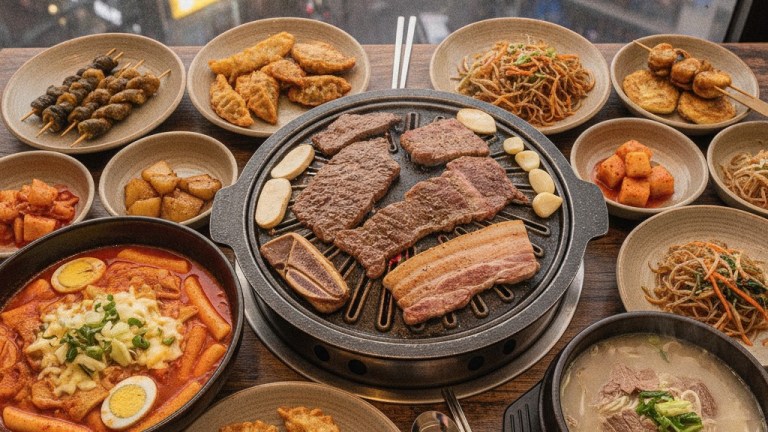
    Wait โ€” Are Korean Side Dishes Really Free?

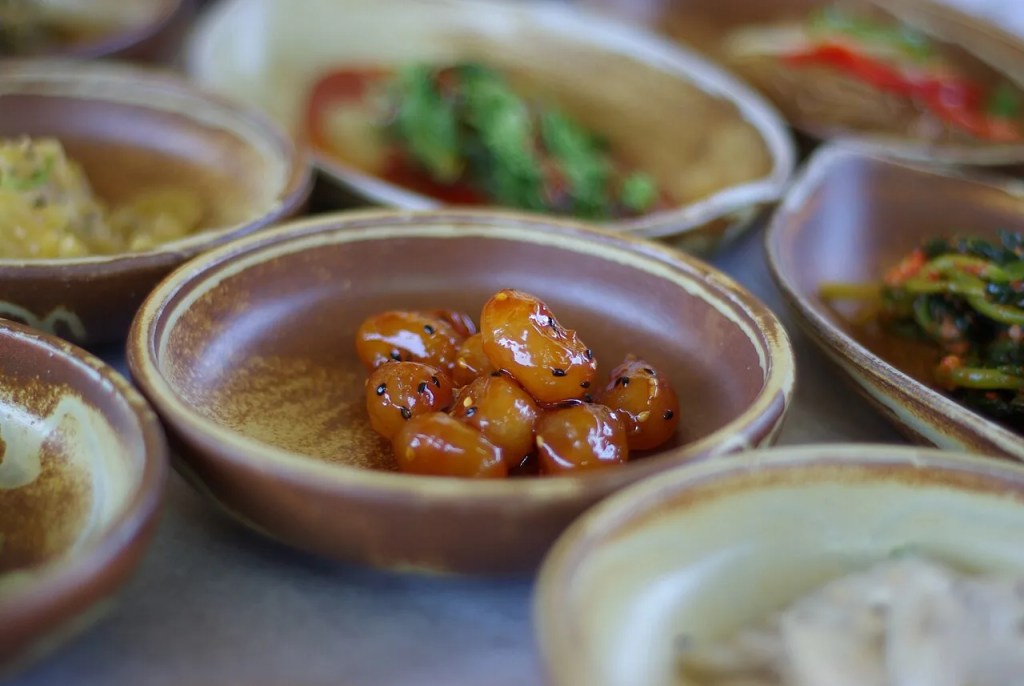
    A glossy bowl of braised, sweet-savory Korean banchan โ€” banchan korean side

    You didn’t order these. You won’t be billed for them either. Photo: egg (Hong, Yun Seon), CC BY 2.0

    You already know the surprise from the moment you sat down: yes, they’re free. There’s no separate “sides” charge on the bill, and โ€” while we’re at it โ€” no tipping either. The little dishes are simply how a Korean meal is served, not a bonus you have to earn.

    What actually trips people up is which ones get refilled. The free top-ups apply to the humble everyday stuff โ€” kimchi, seasoned bean sprouts, pickled radish โ€” not to premium items like a good marinated crab. When in doubt, the basics are the safe bet. To a foreigner it can look like reckless generosity. To a Korean, it’s just how dinner arrives.

    How Many Small Dishes Is “Normal”?

    More than you’d think, and it scales with the occasion. A quick weeknight dinner at home might have three to five banchan. A proper restaurant or a Korean barbecue place can push that to a dozen or more, especially the countryside spots that pride themselves on the sheer number of plates.

    Here’s the fun part the dramas skip. The number wasn’t always random โ€” it used to signal rank. In the Joseon dynasty, a table was described by its cheop (์ฒฉ) count, meaning how many side dishes it carried beyond the staples: a 3-cheop table for commoners, 5, 7, or 9 for the better-off. The king’s table? Twelve. So the next time a period drama shows a royal feast groaning under tiny dishes, that’s not set decoration โ€” it’s a status number you can literally count.

    A Korean home meal spread with many colorful banchan side dishes โ€” banchan korean side

    More plates than you’d expect โ€” bean sprouts, kimchi, greens, all at once. Photo: ProjectManhattan, CC BY-SA 3.0

    How to Ask for More Without Looking Clueless

    Fresh Korean kimchi and seasoned bean sprouts, the refillable banchan staples โ€” banchan korean side

    The free refills are the everyday basics โ€” kimchi, seasoned bean sprouts. Photo: Jerine Lay, CC BY 2.0

    You finished the kimchi and want more. Easy. Catch a server’s eye, point at the empty dish, and say “jogeum deo juseyo” (์กฐ๊ธˆ ๋” ์ฃผ์„ธ์š”) โ€” “a little more, please.” That’s it. They’ll top it up and think nothing of it.

    The unspoken limit is common sense. In practice people ask maybe two or three times, not ten. The refills exist so the table never runs dry, not so you can build a personal stockpile. Ask for what you’ll actually eat and you’ll be a model customer โ€” which brings us to the one habit that does get side-eye.

    Is It Rude to Leave Banchan?

    Korean kimchi and namul side dishes in small white bowls โ€” banchan korean side

    Leaving a little is fine. Piling up refills you won’t finish is the real faux pas. Photo: ayustety, CC BY-SA 2.0

    Good news: no. Leaving a bit of banchan behind is completely normal, and nobody expects you to clean every single plate. You’re sampling, not obligated.

    The actual etiquette runs the other direction. Since the refills are shared and free, ordering a mountain of something and then leaving it untouched is the move that quietly bothers people โ€” it’s waste, and it defeats the whole “help yourself, we’ll keep it coming” spirit of the thing. So the honest rule of thumb is simple: take what you’ll eat, ask again if you want more, and don’t treat the free refill like a challenge.

    The Quick Version

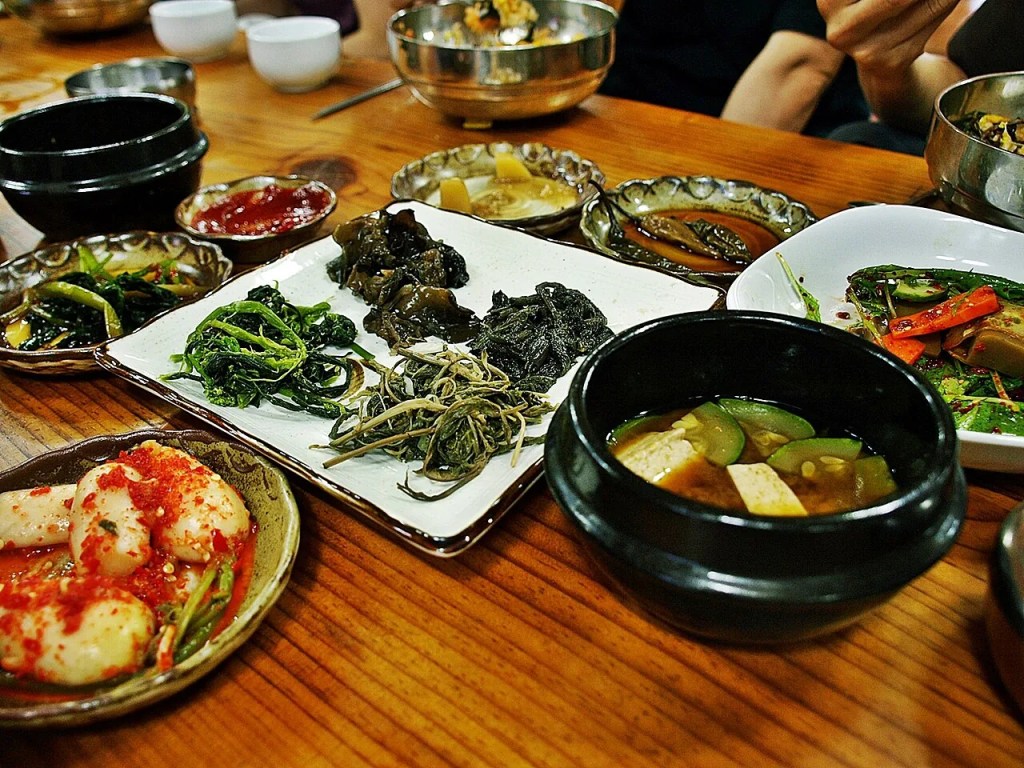
    A tidy Korean temple-style tray of vegetable banchan with doenjang stew โ€” banchan korean side

    Same idea, all vegetables โ€” a temple-style spread. Photo: magicinprogress, CC BY 2.0

    Banchan are Korea’s free side dishes โ€” the little plates in every K-drama meal. Expect three to five at home, up to a dozen at a good restaurant, and free refills on the basics. Say “jogeum deo juseyo” for more, leave what you don’t finish, and don’t over-order refills you won’t eat. The number once signaled rank, all the way up to the king’s twelve-dish table.

    Frequently Asked Questions

    Are Korean side dishes really free?

    Yes. Banchan comes free with your meal at most Korean restaurants, and the basics like kimchi and bean sprouts are usually refillable at no extra charge. There’s no separate sides charge and no tipping.


    How many banchan is normal?

    Three to five at a simple home meal, and anywhere from three to a dozen-plus at a restaurant. In the Joseon era the count signaled rank โ€” the royal table had twelve.


    How do I ask for more?

    Say “jogeum deo juseyo” (์กฐ๊ธˆ ๋” ์ฃผ์„ธ์š”) โ€” “a little more, please” โ€” and point at the dish. Refills of the basics are free, though most people only ask a couple of times.
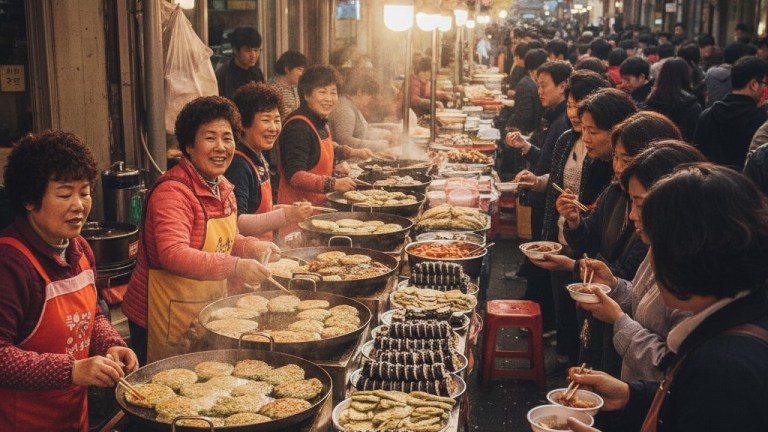

    Is it rude to leave banchan?

    No โ€” leaving a little is normal. The real faux pas is over-ordering refills you won’t finish, since the free refills are meant for sharing, not stockpiling.

    So the next time you put on a Korean drama, watch the table instead of the actors. Those little dishes aren’t set decoration โ€” they’re one of the oldest habits in Korean dining, a whole quiet language of rank and hospitality laid out in white bowls. Nobody in the show will ever explain them. They don’t have to. Every Korean at that table already understands exactly what those little bowls are saying.

    Where to Try It Yourself

    Want to experience it outside a drama? Skip the screen and head to a traditional market โ€” the stalls at Gwangjang Market in Seoul lay out banchan like a painter’s palette. And if you’re curious how one humble side dish can headline a whole meal, the seasoned bean sprouts you meet as banchan grow up into kongnamul-gukbap, Jeonju’s bean-sprout rice soup. For the bigger map, our guide to what to eat in Korea shows where each dish fits.

    Photos are Creative Commons (CC BY-SA), credited under each image โ€” Wikimedia Commons and Openverse. Sources: everyday Korean dining custom on complimentary, refillable side dishes; the Joseon-era cheop (์ฒฉ) table system, with the royal table at twelve dishes. Restaurant practices vary, so treat refill rules as the general norm rather than a guarantee.

  • Korea’s Slow Aging Diet (์ €์†๋…ธํ™”): The Rice Bowl Koreans Are Switching To

    Korea’s Slow Aging Diet (์ €์†๋…ธํ™”): The Rice Bowl Koreans Are Switching To

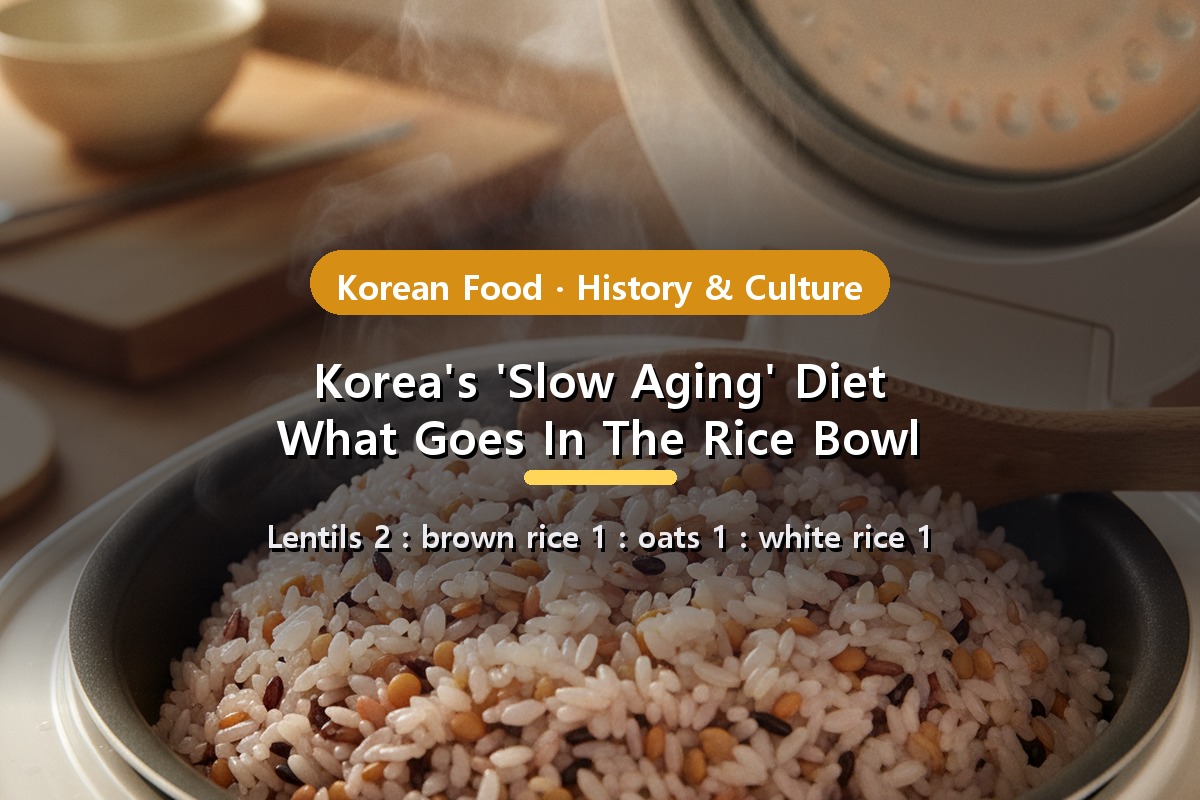
    Korean slow aging diet rice bowl with lentils oats and brown rice served with vegetable side dishes

    The ‘slow aging’ bowl โ€” lentils, oats and brown rice in place of plain white rice

    If you eat at a Korean friend’s home this year, look at the rice. There is a decent chance it isn’t plain white rice anymore. It might be flecked with brown, studded with something orange, a little chewier than you expected. Ask about it and you’ll probably hear the same phrase: ์ €์†๋…ธํ™”, jeoksok-nohwa. It means “slow aging”, and the slow aging diet is what half the country seems to be cooking right now.

    The slow aging diet is the Korean food story of the moment, and it’s a strange one. It isn’t a celebrity diet. It didn’t come from a beauty brand. It came from a doctor who spent his career with elderly patients, and it spread through home cooking โ€” one rice cooker at a time.

    The short version

    The slow aging diet means swapping plain white rice for a mixed bowl built around lentils. The usual ratio is lentils 2 : brown rice 1 : oats 1 : white rice 1. The idea was popularised by Jung Hee-won, then a geriatrics doctor at Asan Medical Center in Seoul, who framed it as a Korean version of the MIND diet โ€” a way of eating built around whole grains, beans and vegetables rather than refined grains and red meat. It is an everyday-cooking trend, not a weight-loss programme.

    Where the Slow Aging Diet Came From

    Korean health trends usually arrive through television or celebrities. This one arrived through a book. Jung Hee-won, at the time a geriatrics doctor at Asan Medical Center in Seoul, published a book on what he calls the slow-aging way of eating, and the core idea was simple enough to repeat at a dinner table: eat the way people ate when rice was expensive.

    That framing landed. He described going back to what Koreans sometimes call the poor household’s table โ€” barley and beans stretched the rice, vegetables filled the bowls, meat showed up rarely. For a generation that grew up being told white rice and grilled beef were the reward for working hard, hearing that the older, humbler table was the better one hit differently.

    What he presented is a Korean adaptation of the MIND diet โ€” short for Mediterranean-DASH Intervention for Neurodegenerative Delay. It borrows from two established patterns: the Mediterranean diet and DASH, which was designed around blood pressure. The Korean version keeps the structure but puts it in a rice bowl instead of on a plate of bread and olive oil, which is why it travelled so easily here.

    The Slow Aging Diet Grain Ratio Koreans Actually Cook

    Lentils oats brown rice and white rice measured in bowls showing the Korean slow aging diet ratio

    Lentils 2 : brown rice 1 : oats 1 : white rice 1 โ€” the ratio Koreans actually cook

    Here is where it gets practical. Korean recipe sites and home cooks converged on one ratio, and you’ll see it repeated almost word for word:

    Grain Share Why it’s in there
    Lentils (๋ Œํ‹ธ์ฝฉ) 2 The largest share โ€” plant protein and fibre
    Brown rice (ํ˜„๋ฏธ) 1 Whole grain in place of refined
    Oats (๊ท€๋ฆฌ) 1 Texture and fibre
    White rice (๋ฐฑ๋ฏธ) 1 Kept in โ€” this is still a Korean rice bowl

    You’ll also see the same thing written as 4:2:2:2. Don’t let that confuse you โ€” it’s the identical proportion, just not reduced. Lentils always carry the largest share.

    The detail I find most telling is that white rice stays. Nobody is being asked to give up rice, which in Korea would be a hard sell no matter how good the argument. It just stops being the whole bowl. That single compromise is probably why the trend spread instead of fizzling out like most health fads here.

    Cooking it is ordinary rice-cooker work. Lentils and oats soften faster than brown rice, so most people soak the brown rice ahead of time and add a bit more water than they would for white rice alone. Korean recipe communities are full of people trading notes on exactly this โ€” how much water, how long to soak, whether the lentils turn to mush.

    It Changes the Whole Table, Not Just the Rice

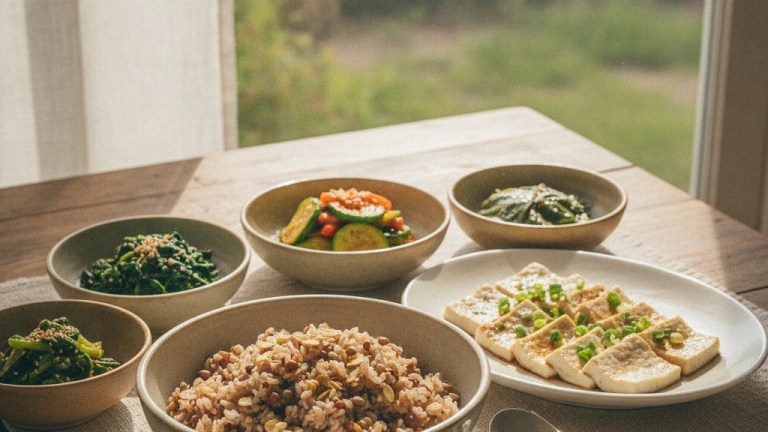
    Korean plant based side dishes with tofu seasoned vegetables and beans on a home table โ€” slow aging diet

    The rest of the table shifts too โ€” more beans, tofu and greens, less red meat

    The rice gets the attention, but the rest of the meal moves with it. The pattern leans on beans, tofu and vegetables for protein and calories, and pulls back on red meat, processed food and sugar. If you’ve eaten a traditional Korean home meal, you’ll notice this isn’t a foreign structure at all โ€” it’s close to how the table already worked before grilled meat became an everyday thing.

    That’s the quiet joke in all of this. In my experience most of what the slow aging diet recommends is just old Korean home cooking with a new name. Gondeure namul bap โ€” rice steamed with mountain herbs โ€” has been eaten for generations and fits the pattern almost perfectly. So does a bowl of kongnamul gukbap, and so does a properly loaded bibimbap, where the vegetables outnumber everything else.

    Food companies noticed too. Walk through a Korean supermarket now and you’ll find zero-sugar gochujang and lower-sodium kimchi sitting next to the standard versions. Whether those taste as good is its own argument โ€” Koreans have strong opinions โ€” but the shelf space tells you where demand went.

    Trying the Slow Aging Diet Outside Korea

    The good news is that the slow aging diet needs no Korean ingredients for the rice itself. Lentils, oats, brown rice and white rice are in any supermarket, and the ratio travels. Start with a smaller share of lentils if the texture is new to you โ€” plenty of Koreans did the same and worked up.

    Where it becomes genuinely Korean is everything around the bowl. Seasoned vegetable side dishes, tofu, a soup that isn’t heavy on meat. If you’re already cooking Korean food at home, you’re most of the way there, and you probably didn’t think of it as a health project.

    One honest note to close on. The slow aging diet is a food trend, and I’ve described it as one โ€” what Koreans are cooking, where it came from, and the ratio they use. It isn’t medical advice, and nothing here should replace a conversation with your own doctor, especially if you have a condition that affects what you eat.

    FAQ

    What is Korea’s slow aging diet?

    Jeoksok-nohwa (์ €์†๋…ธํ™”) literally means “slow aging”. In practice it describes eating built around whole grains, beans and vegetables instead of refined grains and red meat. The version Koreans talk about was popularised by Jung Hee-won, then a geriatrics doctor at Asan Medical Center in Seoul, who presented it as a Korean take on the MIND diet.


    What is the slow aging diet grain ratio?

    Lentils 2 : brown rice 1 : oats 1 : white rice 1. You’ll also see it written as 4:2:2:2 โ€” same proportion, just not reduced. Lentils take the largest share, and white rice stays in the bowl rather than disappearing.


    Is this the same as a K-pop idol diet?

    No. Idol diets are usually about dropping weight fast before a comeback. This is close to the opposite in spirit โ€” it’s about what ordinary households put in the rice bowl every day, and it came out of a hospital rather than an entertainment agency.


    Can I cook it in a normal rice cooker?

    Yes โ€” that’s how most Korean households do it. Lentils and oats cook faster than brown rice, so many people soak the brown rice first and add a little more water than they would for plain white rice. Korean recipe sites are full of people comparing notes on exactly this.

    Related reading

  • Eating Alone in Korea (Honbap): Is It Weird? A Foreigner’s Honest Guide

    Eating Alone in Korea (Honbap): Is It Weird? A Foreigner’s Honest Guide

    A solo diner eating a steaming bowl of gukbap alone at a counter seat in a casual Korean restaurant, honbap eating alone in Korea

    Worried that eating alone in Korea will get you strange looks? Here’s the honest answer: not anymore. Honbap (ํ˜ผ๋ฐฅ) โ€” from honja (ํ˜ผ์ž, “alone”) and bap (๋ฐฅ, “a meal”) โ€” has gone from mild social taboo to one of the most ordinary things you can do in Seoul. And there’s a whole cultural story behind that shift, plus one dish that fits solo dining better than any other.

    The short version

    Eating alone in Korea used to feel awkward because Korean cuisine, and Korean life, was built around eating together. That changed fast. Today, a huge share of diners at lunch are solo, and there’s even a food practically designed for a table of one: gukbap (๊ตญ๋ฐฅ), a single earthenware bowl of rice in hot soup. Below: why the culture flipped, why gukbap is the perfect honbap dish, and where to try it.

    Wait โ€” was eating alone really once frowned upon?

    Yes, and more than most visitors realize. For decades, sharing food was the heart of Korean culture. A pot of jjigae in the middle of the table, side dishes (banchan, ๋ฐ˜์ฐฌ) everyone reached into, the after-work group dinner (hoesik, ํšŒ์‹) โ€” meals were social glue, not fuel. To eat alone could read as lonely, even a little sad.

    In my experience, this is the single thing that surprises foreign visitors most: they expect Korea to be effortlessly solo-friendly like Japan, and are caught off guard to learn that, until fairly recently, a lone diner might have felt genuinely self-conscious here.

    How honbap became normal โ€” a real cultural shift

    A busy Korean restaurant at lunchtime with many people eating alone at separate tables, honbap solo dining culture in Seoul โ€” honbap eating alone

    The turn happened quickly, roughly around 2015 to 2017. A younger generation began to prize efficiency and personal freedom over social obligation, and the word honbap โ€” which barely existed a decade ago โ€” entered everyday speech.

    The numbers explain a lot. Single-person households made up about 35.5% of all Korean households in 2023 โ€” the highest share since the government started tracking it in 2015 โ€” and Statistics Korea’s own household projections put that share at roughly 38% by 2040, a steady climb rather than a sudden jump. When “alone” is already the single most common household type in the country, eating alone stops being a deviation and simply becomes lunch.

    Pop culture pushed it along, too. The K-drama Let’s Eat (์‹์ƒค๋ฅผ ํ•ฉ์‹œ๋‹ค) ran for three seasons making solo dining look genuinely appealing rather than lonely โ€” its lead lovingly narrating single portions of Korean cuisine. It’s a small but telling sign of how far the idea traveled: something once quietly avoided became the subject of a hit show. Even Naver Map now has a filter to find restaurants that are comfortable for one.

    The perfect dish for a table of one: gukbap

    A steaming single earthenware bowl (ttukbaegi) of Korean gukbap rice soup with kimchi side dishes, perfect food for eating alone โ€” honbap eating alone

    If any dish was made for honbap, it’s gukbap (๊ตญ๋ฐฅ) โ€” literally “soup (guk) rice (bap).” It arrives as a single steaming earthenware pot (ttukbaegi, ๋š๋ฐฐ๊ธฐ), the rice either already in the broth or served alongside to tip in yourself. One person, one bowl, no sharing required.

    That structure is the whole point. Unlike K-BBQ or a communal stew, gukbap doesn’t assume a group. Locals often eat it at a counter seat, get a hot bowl set down in front of them, and are finished in about fifteen minutes โ€” perfect for a one-hour lunch break. Nobody reads it as strange, because half the room is doing exactly the same thing. This is honbap when it’s just called lunch.

    Gukbap is also comfort food in the deepest sense. There are many kinds: dwaeji-gukbap (๋ผ์ง€๊ตญ๋ฐฅ), a pork-bone broth with sliced pork that’s a Busan (๋ถ€์‚ฐ) specialty now common in Seoul; galbitang (๊ฐˆ๋น„ํƒ•), a clear beef short-rib soup; and the milky, long-simmered ox-bone seolleongtang (์„ค๋ ํƒ•). If you want the full story of that last one, see our guide to seolleongtang, Korea’s milky ox-bone soup โ€” another classic solo bowl.

    How to order gukbap on your own (it’s easy)

    Walk in, and you’ll often be waved to a small table or counter seat without ceremony. Many gukbap spots have a single hero dish, so ordering can be as simple as holding up one finger. The bowl comes with rice and a few banchan โ€” usually kimchi and pickled radish. Season the broth to taste with the salt, pepper, or salted shrimp (saeu-jeot, ์ƒˆ์šฐ์ “) on the table, tip in your rice, and dig in.

    A quick tip: gukbap is meant to be eaten hot and fast, so don’t overthink it. This is exactly the kind of low-pressure, no-eyes-on-you meal that makes solo dining in Korea genuinely relaxing once you try it.

    Where to eat gukbap in Seoul

    You’re never far from a good bowl, but two long-running spots make an easy, honbap-friendly start. Both are historic institutions where a lone diner is completely unremarkable. Hours and prices can change, so it’s worth a quick check before you go.

    Imun Seolnongtang (์ด๋ฌธ์„ค๋†ํƒ•) โ€” Jongno

    Widely regarded as the oldest restaurant in Korea, Imun Seolnongtang has been serving its milky ox-bone soup since around 1904, and it’s even listed as a Seoul Future Heritage site and in the Michelin Guide. The broth is barely seasoned and made without artificial flavoring, so you salt it yourself at the table โ€” a purist’s bowl. It’s fast, unfussy, and full of solo diners.

    Address: 38-13 Ujeongguk-ro, Jongno-gu, Seoul (์ข…๋กœ๊ตฌ ์šฐ์ •๊ตญ๋กœ 38-13) ยท Hours: Monโ€“Sat 08:00โ€“21:00 (break 15:00โ€“16:30), Sun 08:00โ€“20:00 ยท Search ์ด๋ฌธ์„ค๋†ํƒ• on Naver Map or Google Maps.

    Jaembaeok (์žผ๋ฐฐ์˜ฅ) โ€” City Hall

    Near City Hall Station, Jaembaeok has been ladling out seolleongtang since 1933. It’s the kind of well-worn neighborhood spot where office workers slip in for a quick, quiet bowl โ€” exactly the low-key honbap setting first-timers find reassuring.

    Address: 68-9 Sejong-daero 9-gil, Jung-gu, Seoul (์ค‘๊ตฌ ์„ธ์ข…๋Œ€๋กœ9๊ธธ 68-9) ยท Hours: Monโ€“Fri 10:00โ€“21:30, Sat 11:00โ€“15:00, closed Sun ยท Search ์žผ๋ฐฐ์˜ฅ on Naver Map or Google Maps.

    Frequently asked questions

    Is it really okay to eat alone at a restaurant in Korea?
    Yes. Solo dining, especially at lunch, is completely ordinary now โ€” office workers, students, and delivery riders all do it. At casual spots like gukbap restaurants, no one gives it a second thought.

    What’s the easiest Korean food to eat alone as a foreigner?
    Gukbap (๊ตญ๋ฐฅ) is ideal: it’s a single bowl, quick, comforting, and served at counter-friendly restaurants where solo diners are the norm. Noodle shops and kimbap places are also easy.

    Why was eating alone once considered awkward in Korea?
    Because Korean cuisine and social life centered on sharing โ€” communal stews, shared side dishes, group dinners. Meals were about togetherness, so a lone diner could feel conspicuous. That norm faded as single-person households rose.

    Are there restaurants specifically for solo diners?
    Increasingly, yes. Seoul has seen a wave of honbap-friendly places with counter seats and single-portion menus, and Naver Map even offers a filter to find them.

    What does “honbap” mean?
    It combines honja (ํ˜ผ์ž, “alone”) and bap (๋ฐฅ, “meal”), so honbap literally means “eating alone.” A related word, honsul (ํ˜ผ์ˆ ), means drinking alone.

    A table for one, and no apologies

    Eating alone in Korea isn’t weird โ€” it’s a window into how fast the country’s food culture has changed. What was once a communal ritual has made room for the solo diner, and there’s no friendlier place to start than a steaming bowl of gukbap. For more one-bowl ideas, browse our full guide to what to eat in Korea and the equally solo-friendly Jeonju kongnamul-gukbap If you want the practical, on-the-ground side of it โ€” where to sit, what to order, how it actually works โ€” our travel guide to eating alone in Korea covers that part.. Pull up a counter seat โ€” you’ve earned it.

    Restaurant details such as hours and prices are current as of 2026; please double-check before visiting.

  • Seoul Food Guide: The Best Dishes in Each Neighborhood

    Seoul Food Guide: The Best Dishes in Each Neighborhood

    Seoul doesn’t have one food scene โ€” it has dozens, and each neighborhood does something better than the rest. The trick to eating well here is knowing where: milky ox-bone soup in the old-town lanes of Jongno, hand-cut noodles in Myeongdong, a whole alley of rice cakes in Sindang-dong. This Seoul food guide covers what to eat in Seoul, organized by neighborhood, with links to full guides for each dish and where the locals really line up.

    A spread of must-eat Seoul food dishes, a guide to what to eat in Seoul
    Seoul’s best eating happens neighborhood by neighborhood โ€” this is your map.

    โญ Eating in Seoul at a glance

    ๐Ÿ’ธ Value โ˜…โ˜…โ˜…โ˜…โ˜…
    ๐ŸŒถ๏ธ Spice range โ˜…โ˜…โ˜…โ˜†โ˜†
    ๐Ÿš‡ Easy to get around โ˜…โ˜…โ˜…โ˜…โ˜…

    A personal take from eating across Seoul โ€” value, spice range, and how easy it is to hop between neighborhoods by subway. Yours may differ.

    First time in Korea? This is the Seoul chapter of our bigger guide to what to eat in Korea โ€” start there for the national picture, then use this to eat your way across the capital.

    Jongno & the old city โ€” where Seoul eats history

    Gwangjang Market street food stalls in Jongno Seoul, where to eat in Seoul โ€” eat seoul
    Jongno’s Gwangjang Market โ€” a century of Seoul street food in one loop.

    Jongno (์ข…๋กœ) is old Seoul, and it eats like it. Start at a century-old shop for seolleongtang, the milky ox-bone soup you season yourself and slurp on a cold morning. A few minutes away, Gwangjang Market is the city’s oldest street-food market โ€” one loop for bindaetteok (mung-bean pancakes), mayak gimbap and raw beef, and you’ve had the crash course in Seoul snacking.

    Myeongdong & downtown โ€” noodles and neon snacks

    Myeongdong (๋ช…๋™) is Seoul’s most famous food street, packed with stalls that come alive around 6โ€“7 pm โ€” corn dogs, tteokbokki, grilled cheese, and whatever’s trending this month. Duck off the main drag for a bowl of kalguksu, the comforting hand-cut noodle soup the district is quietly famous for.

    Sindang-dong & Jangchung-dong โ€” one dish, done to death (in a good way)

    Some Seoul neighborhoods are built around a single dish. Sindang-dong is the birthplace of tteokbokki โ€” a whole alley cooking the spicy rice cakes table-side. Jangchung-dong is the go-to for soy-braised jokbal (pig’s trotters), tender and just sweet enough. Pick a neighborhood, and dinner picks itself.

    Korean BBQ & fried chicken โ€” the Seoul night out

    Korean BBQ grilling meat at a table in Seoul, what to eat in Seoul at night โ€” eat seoul
    Korean BBQ and chimaek โ€” the classic Seoul evening.

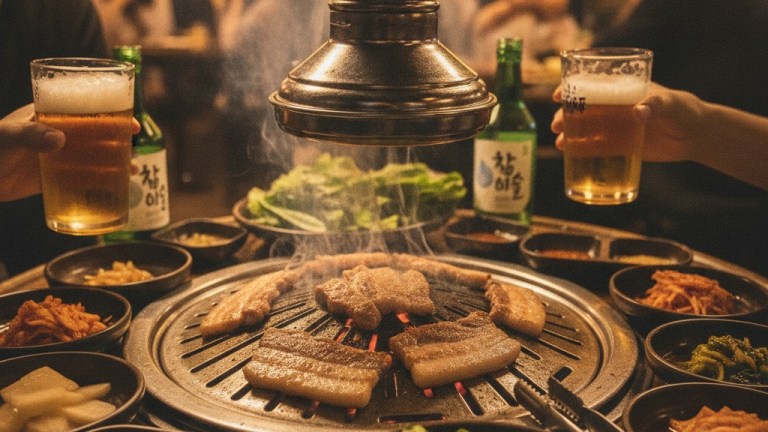
    No Seoul trip is complete without a proper Korean BBQ, grilling samgyeopsal (pork belly) or galbi at your own table โ€” the Mapo area near Gongdeok is thick with smoke and good options. And when the grill’s done, there’s chimaek (์น˜๋งฅ): Korean fried chicken and beer, the country’s favorite late-night ritual. Seoul reportedly has more chicken shops than the whole world has McDonald’s.

    Seoul food guide: the dishes every trip needs

    Korean bibimbap, kimchi jjigae and japchae, must-eat dishes on a Seoul food trip โ€” eat seoul
    A few icons belong on every Seoul itinerary โ€” bibimbap, kimchi jjigae, japchae.

    Beyond the neighborhoods, a few icons belong on every itinerary: a colorful bowl of bibimbap (see our guide to Jeonju’s famous version), a bubbling kimchi jjigae stew, and the barely-spicy japchae glass noodles for anyone easing into Korean flavors. Wash it down with the market’s makgeolli and you’ve eaten Seoul properly. I’d start with Jongno and Gwangjang Market on day one โ€” everything else on this list is an easy subway hop from there.

    Tips for eating your way across Seoul

    Get around: the subway connects every neighborhood here in minutes โ€” grab a T-money card and hop between them. When: markets and street stalls peak from 6โ€“7 pm; BBQ and chimaek run late. How to pick: follow the queues of local office workers, not the English menus. Spice: plenty is mild โ€” seolleongtang, kalguksu, japchae and BBQ โ€” so there’s always a gentle option.

    A few quick questions

    What food is Seoul famous for?
    Street food and late-night eating. Seoul is famous for Gwangjang Market snacks, tteokbokki, Korean BBQ, and chimaek (fried chicken and beer), plus comfort classics like seolleongtang.

    Where do locals eat in Seoul?
    In the neighborhoods, not the tourist traps: Jongno’s old shops and Gwangjang Market, Sindang-dong for tteokbokki, Jangchung-dong for jokbal, and Mapo for BBQ. Look for the stall with a line of Korean office workers.

    What should a first-timer eat in Seoul?
    Start with Korean BBQ and a Gwangjang Market crawl, then add a mild bowl of kalguksu or seolleongtang. Finish with chimaek. That’s a perfect first day of eating.

    ๐Ÿ”— Keep exploring: the full guide to what to eat in Korea, or the Korean street food guide. ยท More on Korean cuisine (Wikipedia)

  • Korean Street Food Guide: What to Eat and Where to Find It

    Korean Street Food Guide: What to Eat and Where to Find It

    The fastest way into Korean food isn’t a restaurant โ€” it’s a market alley at dusk, steam rising off a dozen griddles. Korean street food is cheap, social, and gloriously varied: chewy rice cakes, molten-sugar pancakes, crispy mung-bean fritters, whole markets built around eating on your feet. This guide covers what to try and, just as important, where to find it โ€” with links to full guides for the dishes and markets worth a special trip.

    A Korean street food market alley at night with stalls and steam, a guide to Korean street food
    A market alley at dusk is the beating heart of Korean street food.

    โญ Korean street food at a glance

    ๐Ÿ’ธ Cheap eats โ˜…โ˜…โ˜…โ˜…โ˜…
    ๐ŸŒถ๏ธ Spice range โ˜…โ˜…โ˜…โ˜†โ˜†
    ๐Ÿงญ First-timer friendly โ˜…โ˜…โ˜…โ˜…โ˜…

    A personal take from eating our way through Korea’s markets โ€” how cheap it runs, the spice range, and how easy it is to dive in. Yours may differ.

    New to the country? This is one chapter of our bigger guide to what to eat in Korea โ€” start there for the full picture, then come back here to graze.

    The must-try Korean street foods

    Korean tteokbokki spicy rice cakes โ€” korean street food
    Tteokbokki โ€” spicy rice cakes โ€” is the king of Korean street food.

    ๐ŸŒถ๏ธ Tteokbokki (๋–ก๋ณถ์ด) โ€” the king of Korean street food: chewy rice cakes simmered in a sweet-and-spicy gochujang sauce, ladled hot into a cup. Around โ‚ฉ3,000โ€“5,000 and everywhere. Seoul’s Sindang-dong is its birthplace.

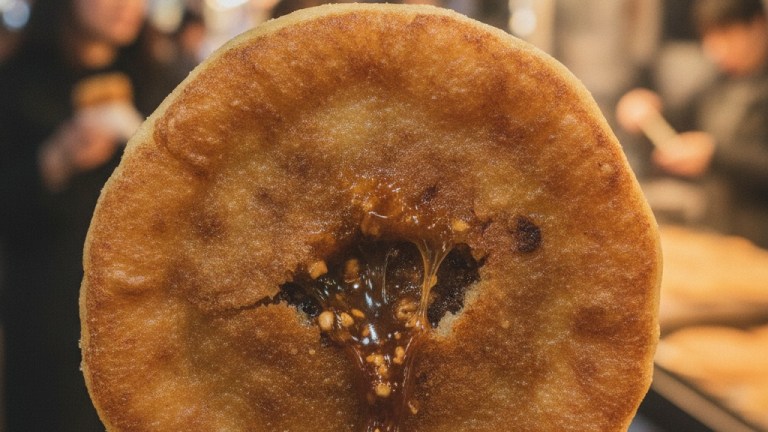
    ๐Ÿฅž Hotteok (ํ˜ธ๋–ก) โ€” a griddled sweet pancake with a molten filling of brown sugar, cinnamon and crushed nuts. Let it cool a second โ€” that syrup is lava. Winter’s best snack.

    ๐Ÿซ“ Bindaetteok (๋นˆ๋Œ€๋–ก) โ€” thick, crispy mung-bean pancakes fried to order, served with soy-vinegar dip and raw onion. A Gwangjang Market signature.

    ๐Ÿ™ Gimbap โ€” seaweed-rice rolls filled with vegetables, egg and ham; the tiny, garlicky mayak gimbap (“addictive gimbap”) at Gwangjang is legendary.

    ๐ŸŒญ Korean corn dog โ€” the viral one: a hot-dog or cheese skewer in a crunchy, sometimes potato-cubed coating, rolled in sugar. Made for a photo and a walk.

    ๐Ÿข Odeng / eomuk (์˜ค๋ฑ/์–ด๋ฌต) โ€” fish-cake skewers bobbing in warm broth, the broth free and bottomless. The ultimate cold-weather โ‚ฉ1,000 pick-me-up.

    ๐ŸฅŸ Mandu & more โ€” steamed or fried dumplings, plus sundae (Korean blood sausage) by the plate โ€” see our guide to byeongcheon sundae for the real thing.

    Where to eat Korean street food

    Diners eating at a Korean traditional market food stall, where to find Korean street food
    The rule at any market: eat where the local office workers line up, not where the tourists do.

    ๐Ÿฎ Gwangjang Market โ€” Korea’s oldest street-food market and the single best place to start. Do one loop for bindaetteok, mayak gimbap and raw beef, and you’ve had the crash course.

    ๐ŸŒƒ Myeongdong โ€” Seoul’s most famous street-food street, best around 6โ€“7 pm when the stalls are set up and fresh: corn dogs, tteokbokki, grilled cheese lobster, and every trending snack of the moment.

    ๐ŸŒถ๏ธ Sindang-dong โ€” the home of tteokbokki, where a whole alley specializes in the dish, cooked table-side.

    ๐Ÿท Jangchung-dong โ€” not a market, but the go-to alley for soy-braised jokbal (pig’s trotters) โ€” street-food spirit, sit-down comfort.

    Tips for eating at the market

    Korean hotteok sweet pancake โ€” korean street food
    Save room for a hotteok โ€” the molten-sugar pancake is winter’s best snack.

    When: markets come alive from late afternoon; 6โ€“7 pm is the sweet spot โ€” stalls stocked, crowds still bearable. How to pay: carry small cash; many stalls are cash-only, though card and mobile pay are spreading. How to pick: follow the locals โ€” a stall with a line of Korean office workers beats an empty one with an English menu every time. Spice: plenty is mild (hotteok, gimbap, odeng), so there’s always something for a tender palate.

    A few quick questions

    What is the most popular Korean street food?
    Tteokbokki โ€” spicy rice cakes โ€” is the icon, followed by hotteok, gimbap and the viral Korean corn dog. Start with tteokbokki and a hotteok for dessert.

    Where is the best Korean street food in Seoul?
    Gwangjang Market for the classic, traditional experience and Myeongdong for trendy snacks. For a single dish done to perfection, head to Sindang-dong for tteokbokki.

    Is Korean street food safe and cheap?
    Yes on both. Stalls turn over food fast and busy ones are freshest, and most snacks run โ‚ฉ1,000โ€“5,000. Carry small cash and eat where it’s crowded. My own rule of thumb: if there’s no line of local office workers, keep walking.

    ๐Ÿ”— Keep exploring: see the full guide to what to eat in Korea, or dive into Gwangjang Market Want the simplest option of all? Our guide to 10 must-try Korean convenience store foods covers the no-restaurant-needed route.. ยท More on Korean street food (Wikipedia)

  • What to Eat in Korea: A Traveler’s Food Guide by Region

    What to Eat in Korea: A Traveler’s Food Guide by Region

    Ask ten Koreans for the best thing to eat and you’ll get ten different answers โ€” and half of them will name a dish from their hometown, not Seoul. That’s the secret to eating well here: Korean food is fiercely regional. This guide is a map of what to eat in Korea, from the dishes every first-timer should try to the local specialties worth a day trip, each linked to a deeper guide on where to find it and the story behind it.

    A spread of must-try Korean food dishes on a table โ€” what to eat in Korea guide โ€” korean food guide
    Korean food is regional โ€” the best meals are often a specialty of one particular town.

    ๐Ÿงญ How to use this guide

    Start with The essentials if it’s your first trip. Then jump to Eat across Korea to plan day trips around a regional dish, or browse by soups & noodles and street food. Every dish links to a full guide โ€” history, how to eat it, and exactly where.

    The essentials: what to eat first

    Korean essential dishes: bibimbap, Korean BBQ and japchae โ€” korean food guide
    Start here: bibimbap, Korean BBQ and japchae are the friendliest first bites.

    If you only have a few meals, start here. These are the dishes that show up on every “must-try Korean food” list for a reason โ€” approachable, iconic, and easy to find in any city.

    ๐Ÿš Bibimbap โ€” the friendliest first meal in Korea: a bowl of rice topped with seasoned vegetables, egg and chili paste, mixed at the table. The city of Jeonju is famous for the best version.

    ๐Ÿฅฉ Korean BBQ (galbi) โ€” grilling marinated beef or pork at your own table is the classic Korean night out. Sweet, soy-marinated galbi short ribs are the crowd-pleaser.

    ๐ŸŒถ๏ธ Tteokbokki โ€” chewy rice cakes in a sweet-and-spicy gochujang sauce, Korea’s most beloved street snack. Seoul’s Sindang-dong is its spiritual home.

    ๐Ÿœ Japchae โ€” glossy, barely-spicy glass noodles tossed with beef and vegetables. It began as a royal-court dish and is the gentlest introduction to Korean flavors.

    Eat your way across Korea (day trips from Seoul)

    Map-style illustration of Korean regional food specialties by city โ€” day trips from Seoul โ€” korean food guide
    Many of Korea’s best dishes belong to one town โ€” and most are an easy trip from Seoul.

    This is where Korea gets fun for a traveling eater. Pick a dish, and you’ve got a reason to see a new town. Here’s a quick map of regional specialties, roughly clockwise from Seoul:

    ๐Ÿ”๏ธ Gangwon (the northeast mountains & coast): Grill smoky dakgalbi (spicy stir-fried chicken) in Chuncheon; slurp seawater-set chodang sundubu tofu in Gangneung; try refugee-born ojingeo sundae (stuffed squid) in Sokcho; and mountain-herb gondeure namul bap in Jeongseon.

    ๐Ÿš The Jeolla & central regions: Jeonju is Korea’s food capital โ€” home of the definitive bibimbap. In Chungcheong, Daejeon pairs Korea’s most famous bakery with spicy tofu in our Sungsimdang & dubu-duruchigi guide; Cheonan has beloved byeongcheon sundae soup; Okcheon has spicy river-fish noodle soup; and the Seosanโ€“Taean tidal flats give us gaegukji & nakji-tang.

    ๐Ÿฅฉ Just outside Seoul: Pocheon is the home of sweet marinated Idong galbi short ribs โ€” an easy BBQ day trip.

    ๐ŸŒŠ Jeju Island: The volcanic south serves silver cutlassfish two ways in our Jeju galchi guide โ€” spicy braised and in a clear soup.

    Soups, stews & noodles

    Bowls of Korean soup, comfort food โ€” korean food guide
    Korea builds a meal around a warm bowl โ€” its soups are top comfort food.

    Koreans build a meal around a warm bowl, and the country’s soups are some of its greatest comfort food.

    ๐Ÿฅฃ Seolleongtang โ€” a milky ox-bone soup simmered for hours, seasoned at the table with salt and scallions; a classic Seoul breakfast. ๐Ÿœ Kalguksu โ€” comforting hand-cut wheat noodles in broth, famous in Seoul’s Myeongdong. ๐ŸŸ Saengseon-guksu โ€” a spicy river-fish noodle soup from Okcheon. ๐Ÿฅ” Byeongcheon sundae โ€” a hearty blood-sausage soup from Cheonan.

    Street food & markets

    Korean market street food stalls โ€” korean food guide
    The fastest way in is a market at dinnertime.

    The fastest way into Korean food is a market at dinnertime. Start at Gwangjang Market in Seoul โ€” Korea’s oldest street-food market, where you can graze on mung-bean pancakes, mayak gimbap and raw beef in one loop. From there, hunt down tteokbokki in Sindang-dong, and tender soy-braised jokbal (pig’s trotters) in Jangchung-dong.

    A few practical tips

    Is Korean food all spicy? No. It has a reputation for heat, but plenty of staples are mild โ€” japchae, seolleongtang, sundubu and Korean BBQ are all gentle starting points.

    What are all those little dishes? Those free side dishes are banchan (๋ฐ˜์ฐฌ) โ€” kimchi, pickles, seasoned vegetables โ€” refilled at no charge. They’re part of the meal, not extras.

    Vegetarian? It takes some care (many broths use meat or anchovy), but bibimbap without meat, japchae, and temple-style dishes are all doable โ€” just ask.

    A few quick questions

    What is the one must-try Korean food?
    If you try only one dish, make it Korean BBQ or bibimbap โ€” both are iconic, widely available, and easy for first-timers. For a gentle, no-spice option, japchae is a safe bet.

    What should I eat in Korea besides the famous dishes?
    Chase the regional specialties. Chuncheon’s dakgalbi, Jeonju’s bibimbap, and Sokcho’s ojingeo sundae are worth planning a trip around, and each makes an easy escape from Seoul.

    What Korean food is good for people who don’t like spicy?
    Plenty. Seolleongtang ox-bone soup, sundubu tofu, japchae glass noodles, kalguksu noodle soup and Korean BBQ are all mild โ€” you control the heat with the side sauces.

    ๐Ÿ”— New to the site? Two great places to start eating: Seoul’s milky seolleongtang and the stalls of Gwangjang Market. ยท More on Korean cuisine (Wikipedia)

  • Japchae (์žก์ฑ„): The Korean Glass Noodle Dish Born in a Royal Palace

    Japchae (์žก์ฑ„): The Korean Glass Noodle Dish Born in a Royal Palace

    Walk into any Korean birthday party, wedding lunch, or holiday gathering and one dish shows up almost every time: a glossy, faintly sweet tangle of glass noodles called japchae (์žก์ฑ„). Koreans don’t treat japchae as everyday food โ€” it’s the dish a grandmother makes for Chuseok (์ถ”์„, the autumn harvest holiday), the platter that empties first at a potluck. Here’s the part almost nobody at that table knows: japchae was invented four hundred years ago in a royal palace, and back then it had no noodles at all.

    Korean family celebration table with a large platter of japchae glass noodles at the center

    Japchae is Korea’s celebration dish โ€” the platter at the heart of holiday and party tables.

    โญ Japchae at a glance

    ๐ŸŒถ๏ธ Spice level (very mild) โ€” โ˜…โ˜†โ˜†โ˜†โ˜†

    ๐Ÿฅข First-timer friendly โ€” โ˜…โ˜…โ˜…โ˜…โ˜…

    ๐ŸŽ‰ Shows up at celebrations โ€” โ˜…โ˜…โ˜…โ˜…โ˜…

    New to Korean food? Start with our complete guide to what to eat in Korea.

    These stars are our own subjective take from eating around Korea โ€” how spicy japchae is, how easy it is for a first-timer, and how often you’ll run into it. Your mileage may vary.

    The short version: japchae is a Korean stir-toss of chewy sweet-potato glass noodles (dangmyeon, ๋‹น๋ฉด) with strips of beef, spinach, carrot, onion, and mushrooms in a soyโ€“sesame dressing that lands gently sweet and savory. It’s served warm or at room temperature, it’s barely spicy at all, and it’s one of the friendliest first dishes in Korean food. The name literally means “mixed vegetables” โ€” and that’s no accident. When it was created for a 17th-century king, japchae contained not a single noodle. Below: the full story, how to eat it like a local, and where in Seoul you can taste the royal version.

    So what exactly is japchae?

    At its heart, japchae is a noodle dish that eats like a salad. The noodles are dangmyeon โ€” long, translucent strands pressed from sweet-potato starch that turn springy and slightly bouncy when boiled. They get tossed with marinated ribbons of beef and a pile of vegetables โ€” usually spinach, julienned carrot, onion, and earthy shiitake or wood-ear mushrooms โ€” then dressed in a glossy mix of soy sauce, sugar, and sesame oil, and finished with toasted sesame seeds.

    Close-up of japchae glass noodles with beef, spinach, carrot and egg garnish glistening with sesame oil

    The close-up: translucent sweet-potato noodles, beef, and vegetables, all catching the sesame-oil sheen.

    The secret is cooking everything separately

    What separates great japchae from a gluey pile is patience. Careful cooks fry the carrots alone, blanch the spinach alone, brown the mushrooms and beef in their own turns, season the noodles by themselves โ€” and only combine everything at the very end. It’s more work than it looks. Honestly, that’s exactly why japchae sits in the “special occasion” column rather than the weeknight one. Each vegetable keeps its own color and bite, so a well-made platter looks like a small festival.

    How to eat japchae like a local

    Don’t overthink it. Japchae is relaxed food, and Koreans eat it several ways depending on the setting. On a holiday or party table, it appears as one shared dish among many โ€” you pick off a chopstick-load onto your own plate next to rice, jeon pancakes, and namul. It’s usually served warm or at room temperature rather than piping hot, which is one reason it works so well on buffet spreads that sit out a while.

    You’ll also see japchae moonlighting as a light main. Order japchae-bap (์žก์ฑ„๋ฐฅ) at a Korean-Chinese restaurant and you get a generous heap of the noodles over a bowl of rice โ€” cheap, filling, and a popular quick lunch. Wherever you meet it, there’s nothing to assemble and no dipping sauce to manage; the dish comes fully seasoned. In my experience it’s the single easiest recommendation for someone nervous about Korean food, because there’s no chili heat to brace for.

    From royal court to family table

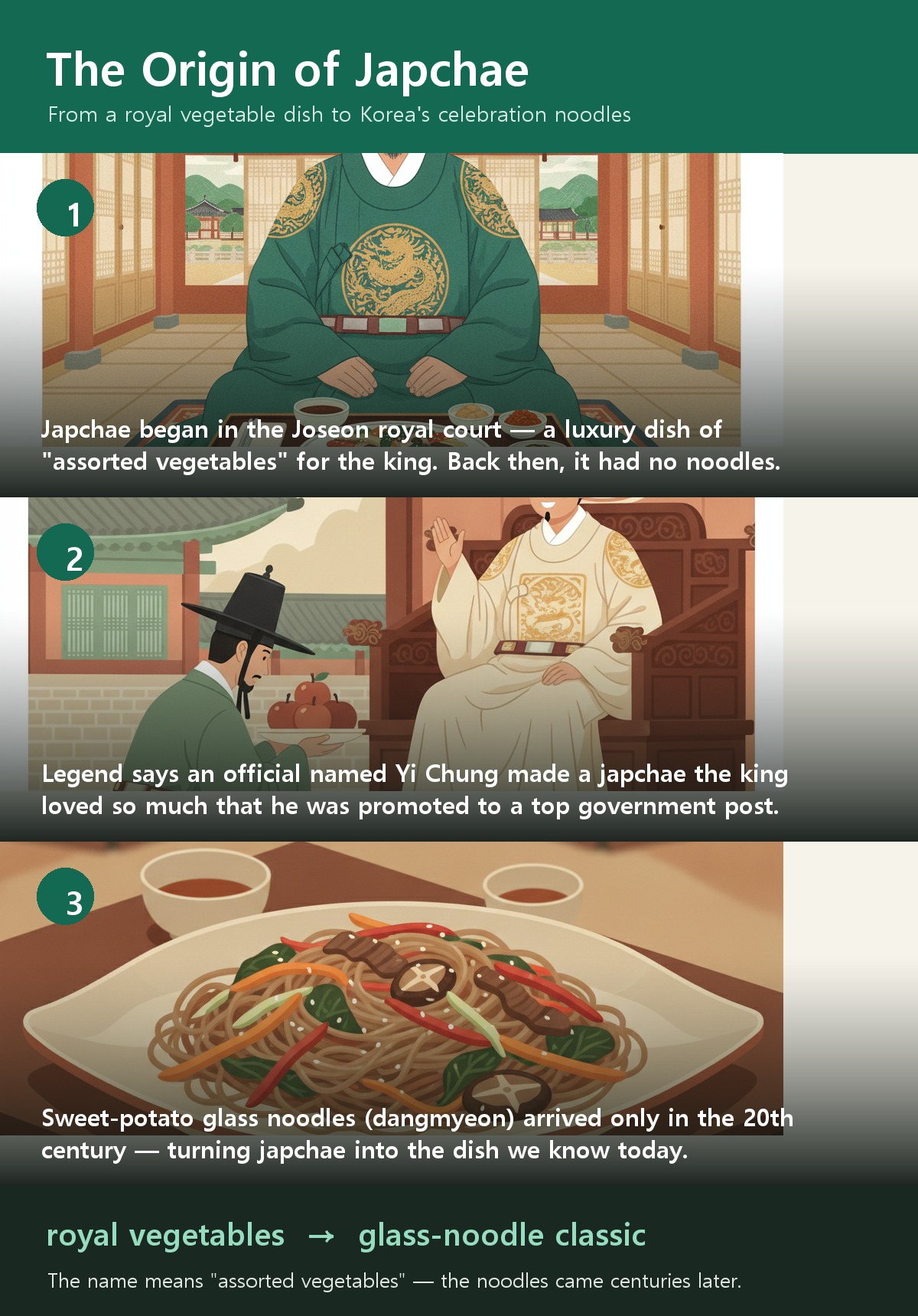
    The origin of japchae, Korean glass noodles, from a Joseon royal vegetable dish
    How japchae, Korea’s glass-noodle dish, evolved from a royal court vegetable dish.

    Korean royal court cuisine table in a traditional hanok with japchae among refined dishes

    Japchae began in the Joseon royal court โ€” a luxury vegetable dish set before the king.

    The minister who cooked his way up

    The name gives the game away. Jap (์žก, ้›œ) means “mixed,” and chae (์ฑ„, ่œ) means “vegetables” โ€” so japchae is literally “assorted vegetables.” And that’s exactly what it was. According to records from the Joseon dynasty, the dish was devised in the early 1600s for King Gwanghaegun (๊ด‘ํ•ด๊ตฐ, r. 1608โ€“1623) by a court official named Yi Chung (์ด์ถฉ). No glass noodles, no meat โ€” just finely prepared stir-fried vegetables and mushrooms, elegantly seasoned and presented as a delicacy fit for the throne.

    As the story goes, the king loved Yi Chung’s japchae so much that he showered the official with favor and promoted him to one of the highest posts in the government โ€” roughly the equivalent of a finance minister. A dish good enough to earn a cabinet seat: that anecdote stuck, and it’s a big part of why japchae still carries a faint aura of luxury. This was palace food, part of the Korean royal court cuisine tradition, and for a long time it stayed a refined upper-class dish rather than something ordinary families ate.

    How the noodles took over

    So where did the noodles come from? Not the palace. Dangmyeon, the sweet-potato starch noodle that defines modern japchae, only arrived in the 20th century. The noodle-making technique came to Korea from China, and in 1919 a large dangmyeon factory opened in Sariwon (์‚ฌ๋ฆฌ์›, in today’s North Korea). Suddenly cheap, shelf-stable glass noodles were everywhere, and within a decade or so cooks had folded them into japchae.

    The noodles changed everything. They stretched a little expensive beef and a pile of vegetables into a big, satisfying platter; they held their looks at room temperature; and that bouncy chew gave the dish a texture people fell for. The noodle version proved so popular that it worked its way into early modern Korean cookbooks and gradually elbowed out the noodle-less original. By the second half of the 20th century, “japchae” simply meant the noodle dish โ€” and because it was festive, colorful, and easy to share, it became the natural pick for holidays and family milestones. A royal vegetable plate had quietly turned into the glass-noodle dish every Korean grandmother makes for Chuseok.

    Minhwa-style painting of a Joseon royal banquet with court officials presenting a vegetable dish to the king โ€” japchae

    The old way โ€” a dish presented to the king, centuries before the noodles arrived.

    ๐Ÿ—“๏ธ Plan your japchae hunt

    When: japchae is available year-round, but it shines at celebrations โ€” Seollal (Lunar New Year), Chuseok (the autumn harvest holiday), first-birthday parties (dol, ๋Œ), and 60th-birthday feasts (hwangap, ํ™˜๊ฐ‘). Visit a Korean home around a major holiday and japchae will almost certainly be on the table.

    Where: you won’t have to hunt hard. Everyday japchae turns up nationwide โ€” Korean restaurants, banchan delis, markets, and Korean-Chinese places (as japchae-bap over rice). For the historic, refined take, look for royal court cuisine restaurants in Seoul (์„œ์šธ), where japchae appears among a parade of delicate palace-style dishes.

    Cost: as an everyday side dish or a bowl of japchae-bap, it’s one of the cheaper things you can eat in Korea. A full royal-cuisine course, on the other hand, is a proper splurge and usually needs a reservation โ€” think special-night-out, not casual drop-in.

    Where to taste royal-style japchae in Seoul

    Good everyday japchae is everywhere, so this section covers the other side of the story โ€” the palace version. A few Seoul restaurants specialize in gungjung eumsik (๊ถ์ค‘์Œ์‹), Korean royal court cuisine, and serve japchae much as it might have appeared at a Joseon banquet. Two well-known starting points:

    ๐Ÿ“ Korea House (ํ•œ๊ตญ์˜์ง‘): 10 Toegye-ro 36-gil, Jung-gu, Seoul (์„œ์šธ ์ค‘๊ตฌ ํ‡ด๊ณ„๋กœ36๊ธธ 10)
    ๐Ÿ•’ Hours: roughly 11:30โ€“15:30 (lunch) and 17:00โ€“21:00 (dinner), closed Mondays ยท reservations recommended ยท 02-2266-9101
    ๐Ÿœ Traditional royal-course menus plus nightly traditional performances ยท opened in 1981 on the historic site of a Joseon scholar’s residence ยท a short walk from Chungmuro Station (Lines 3 & 4) ยท parking available

    ๐Ÿ“ Jihwaja (์ง€ํ™”์ž): B1, 125 Jahamun-ro, Jongno-gu, Seoul (์„œ์šธ ์ข…๋กœ๊ตฌ ์žํ•˜๋ฌธ๋กœ 125 ์ง€ํ•˜ 1์ธต) โ€” Korea’s first dedicated royal-cuisine restaurant, founded in 1991 by the late master Hwang Hye-seong (ํ™ฉํ˜œ์„ฑ). Course-style royal menus, close to Gyeongbokgung Palace. Lunch roughly 11:30โ€“15:00, dinner 17:30โ€“21:30, closed Tuesdays ยท 02-2269-5834

    One honest note: a royal-cuisine meal isn’t a quick plate of japchae โ€” it’s a full multi-course experience, priced accordingly. Think of it as dinner plus a history lesson rather than a cheap eat. Hours, closing days, and menus shift over time (details above are current as of 2026), and both houses run on reservations, so call before you build an evening around either one.

    ๐Ÿ”— More Korean classics worth your time: for another dish with deep roots, try Seoul’s milky ox-bone soup, seolleongtang, or the famous mixed-rice bowl Jeonju bibimbap. Prefer to graze? Wander the stalls of Gwangjang Market in Seoul.

    Frequently asked questions

    What is japchae made of?
    Japchae is built on dangmyeon โ€” chewy glass noodles made from sweet-potato starch โ€” tossed with sliced beef and vegetables (commonly spinach, carrot, onion, and mushrooms) in a soyโ€“sugarโ€“sesame-oil dressing, finished with toasted sesame seeds. The ingredients are usually cooked separately and combined at the end, so each keeps its color and texture.

    Is japchae spicy?
    No. Japchae is one of the mildest dishes in Korean food โ€” sweet and savory rather than hot, with no chili in the classic version. That makes it a great starting point if you’re new to Korean cooking or eating with kids.

    Why is japchae served at celebrations?
    It’s colorful, easy to share, holds up beautifully at room temperature on a crowded table, and carries an old whiff of luxury from its palace origins. Those traits made it a natural for holidays like Seollal and Chuseok and for milestone birthdays like dol and hwangap.

    Did japchae always have noodles?
    No โ€” and this surprises most people. When it was created for King Gwanghaegun in the early 1600s, japchae was a noodle-free dish of stir-fried mixed vegetables, exactly as its name suggests. Sweet-potato glass noodles only entered the dish in the 20th century, after a dangmyeon factory opened in Sariwon in 1919 โ€” and eventually they became its signature ingredient.

    Is japchae vegetarian?
    It can be. Most modern versions include a little beef, but the original court dish was meat-free, and vegetable-only japchae is common and easy to make. If you don’t eat meat, ask for it without beef, or look for a vegetarian version at royal-cuisine restaurants.